
Investology: Investment Management Intelligence · Investment Management Intelligence
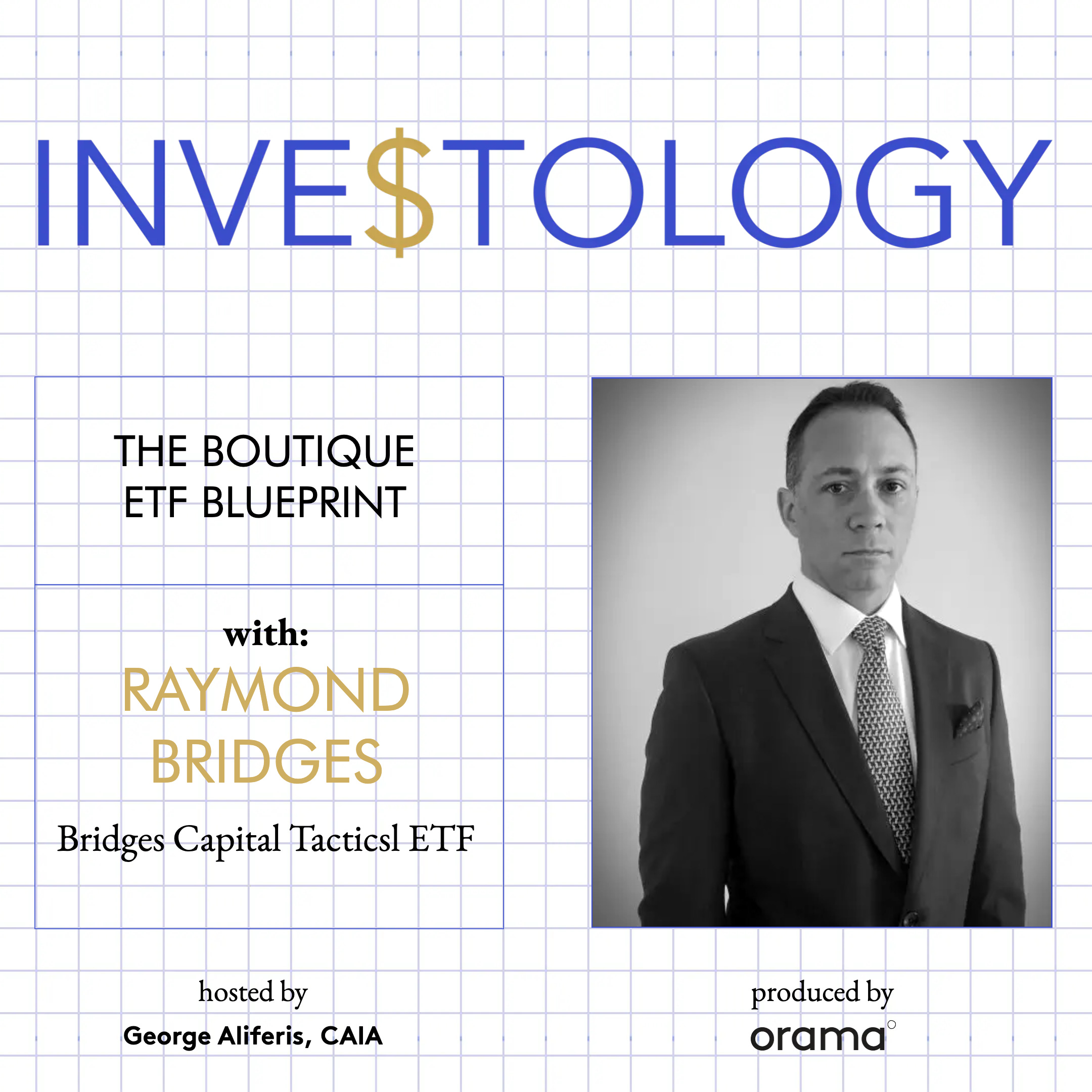
What does it actually take for wealth managers and asset management firms to bring an exchange-traded fund (ETF) to market? I speak with Raymond Bridges of Bridges Capital . Who’s launched the Bridges Capital Tactical ETF in 2023, raised its first $40 million and is now looking for the next stage of growth. I’m very grateful to Raymond for the way he shared everything about the process, the costs, the challenges and the opportunities he sees. Key Topics Covered include: * Regulatory workflows and trust structures * Cost considerations & capital requirements for launch * The role of Authorized Participants (APs) and market makers * Distribution strategies Watch it on YouTube or listen on the Substack player or on every podcast app. Below are a few selected quotes, with my comments: The ETF upside For context: a lot of Bridges Capital advisory clients have moved assets to the ETF. This implied a financial hit as the ETF carries lower fees than the 1% Raymond charged for advisory. There are also one-off launch costs and ongoing operational costs. A lot of clients, they buy you, they buy the investment advisor, they buy an idea and a personality, but there's not really a chart. An ETF gives you that ability to put your performance out there, and it's like the world stage. Everybody can see it. For clients the upside is on fees and tax efficiencies. For the ETF sub-advisor (the technical term for the specific setup chosen by Raymond), it’s the possibility to reach investors without boundaries and through a performance chart. Launching and running an ETF We went through the setup via a whitelabel platform, including the costs: It costs roughly under my program, what I have, it's about a quarter million dollars a year in expenses to have the ETF, where I wouldn't have that expense at all if, I just ran a normal advisory firm. It has become considerably easier and cheaper from what I remember from my time at an ETF issuer. There’s a staggering amount of ETFs, and 2026 saw 1900 launches so far! The number of funds is outpacing the rapid growth of assets and it’s hard to see this trend slowing down. Distribution, Distribution, Distribution Distribution is to the ETF industry what location is to real estate. The big game is distribution. With the ETF, we have a benefit of having the chart, and anybody can buy it as long as you're on an open architecture platform. But som many platforms are actually closed. But while in real estate the repetition is to emphasize on location, I see different types of distribution in ETFs. * Platforms: you need to work to get listed on the ones that don’t do it automatically * Sales: in the case of BDGS it means one-on-one calls with private advisors large and small * “Grassroot distribution”: (for lack of a better term) the one that the industry doesn’t really leverage that I discussed in previous articles: brand became distribution, ETFs should be consumer brands Watch the episode on YouTube or listen to it on every...
0:00SPEAKER_00When the market goes up, everybody looks like a secret star.
0:03SPEAKER_00During COVID, we really did well with protection.
0:06SPEAKER_00The markets were down roughly 40%.
0:08SPEAKER_00With this particular model, we were down 6%, 7%.
0:11SPEAKER_00We did really well coming out of that.
0:13SPEAKER_0010 years to 14 years of sideways market like we did in 2000, both of those would go down.
0:18SPEAKER_00If you're like my clientele and you're retired,
0:20SPEAKER_00you're taking money,
0:21SPEAKER_00distributions every month,
0:22SPEAKER_00you're not putting away money,
0:23SPEAKER_00a market like that could really hurt you during that retirement year.
0:25SPEAKER_00You're going to need some value investing,
0:27SPEAKER_00some active management in order to continue to make some profits.
0:31SPEAKER_01In this episode,
0:32SPEAKER_01I speak with Raymond Bridges,
More Investology: Investment Management Intelligence episodes →