
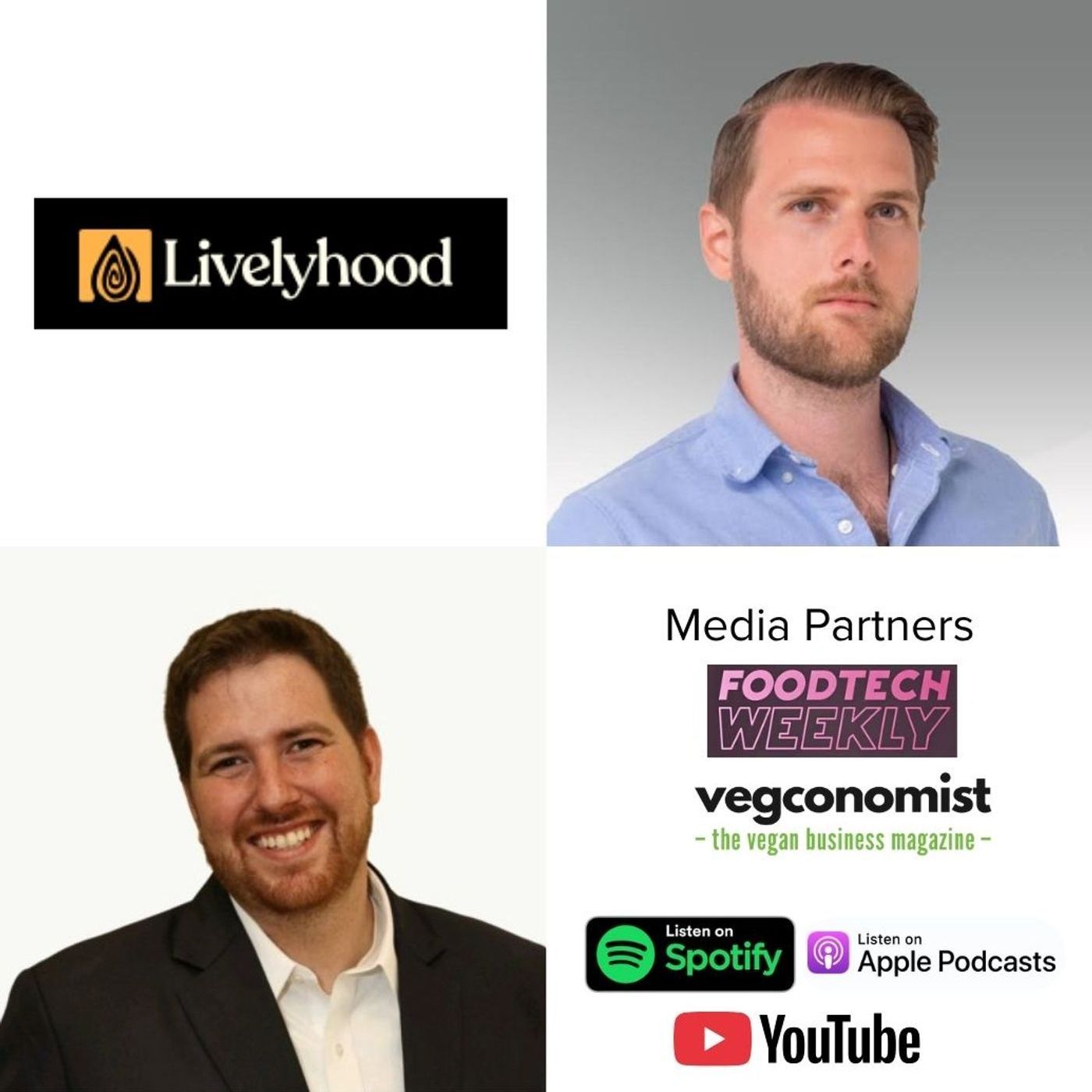
Investment Climate Podcast · Alex Shandrovsky
Episode 120: Re-Examining Technology Adoption: Lance Lively on Market Pull, CPG Unlocking, and Beyond Meat’s Missteps In this episode, I speak with Lance Lively, founder of Livelyhood and former executive at The Every Company and BioLumen. Lance breaks down why the alternative protein industry hit a commercial plateau despite early techno-optimism, challenging standard S-curve adoption models and offering a masterclass in how market demand actually works. Lance walks us through the intellectual foundations of alternative protein, dissecting how pioneers misread historical case studies like kerosene, automobiles, recombinant rennet, and synthetic insulin to build a flawed premise: that "superior" technology inherently guarantees market dominance. He exposes the severe survivorship bias behind the S-curve, explaining why tech features do not drive adoption, but rather how unblocking pre-existing, acute market demand creates the conditions for new technologies to flourish. We go deep on the contrast between pitch-deck promises and real-world supply chains: how animal welfare pledges failed to drive commercial adoption for precision-fermentation eggs until Avian Flu price spikes forced multinational food brands to seek a functional hedge; why plant-based meat stalled sub-1% market share as animal meat was culturally reframed as a healthy, whole food while alt-meat got labeled as ultra-processed; and how CPG breakouts like Gruns achieve explosive scale not through deep tech, but by unblocking friction points for hyper-specific customer profiles. 🎧 Listen to the full episode to hear why kerosene didn't displace whale oil simply because it was "better," but because industrial growth desperately needed evening light right as whale scarcity priced buyers out; how Avian Flu outbreaks turned precision-fermentation egg proteins into an essential supply-chain hedge; why animal meat flipped into a "health food" in the cultural zeitgeist while plant-based meat lost its halo; and how deep-tech founders can stop building in a vacuum by embedding themselves in industry to solve blocked customer priorities. Key Facts & Key Concepts Lance Lively (Founder & CEO): https://www.linkedin.com/in/lancelively Website: https://www.findlivelyhood.com/ Headquarter: USA Core Thesis: Advanced technology does not generate market adoption—unblocked market demand does. Startups that focus on tech specs rather than unblocking customer friction are trapped in survivorship bias. Blurb LIVELYHOOD founder Lance Lively addresses a fundamental question facing food-tech: where is the adoption we were promised? Around 2019, alternative protein pioneers operated on an axiomatic belief that animal-free products would inevitably conquer animal agriculture following the classic sigmoidal "S-curve" seen in smartphones, automobiles, and synthetic insulin. But as plant-based meat market share sits below 1% and former industry darlings struggle, Lance delivers a candid diagnosis of what went...
Lance Lively: stop thinking about the technology and building that out as the first step Stop assuming what customers' projects are and what they're trying to accomplish. instead start embedding yourself in industry, with consumers, observing and inquiring what their top priorities are when it comes to a food that they're consuming, their health, their manufacturing. see where they are blocked from those top priorities And that is the genesis of essentially opportunities for a fast growing startup. Hey Alex, I'm Lance. I was formerly an executive at the Every Company, which is pioneering use of precision fermentation to produce eggs without the chicken. I've also had a number of other roles in the food and health space. was chief operating officer of a metabolic health company called BioLumen, and have engaged in a number of different consulting practices within the venture capital and startup community. And now I'm building my own health tech company in the addiction treatment space using GLP ones. So very happy to speak with you today. Well well Lance, I'm I'm a huge admirer of yours. and we actually if you want to get Alex Shandrovsky: Well well Lance, I've I'm a huge admirer of yours. and we actually if you want to get for our audience to get some more of Lance, you can listen to one of my favorite recordings were Mark Washington of Supergut when we had a chance to interview them together. That was a tremendous fun. But the reason I reached out to you because I saw you wrote an amazing article that addressed head on something I've been thinking for a long time, which is where is the adoption? Lance Lively: our audience gets more of Lance you can listen to one of my favorite reportings when Mark washed them super gut when we had a chance to interview them together. That was a tremendous fun. But the reason I reached out to you because I saw you wrote an amazing article that addressed head on something I've been thinking for a long time, which is where's the adoption Alex Shandrovsky: of the technology that we've been promising for the last four years. W why aren't we seeing the same level adoptions we'd see with other technologies? Lance Lively: of the technology that we've been promising for last four years? Why aren't we seeing the same level adoptions we'd see with other technologies and you were you give a very interesting insight into what drives extra technological adoption. Maybe we can talk about that article and then go deeper. Alex Shandrovsky: And you r you gave a very interesting insight as to what drives extra technological adoption. Maybe we can talk about that article and then go l deeper. Lance Lively: Happy to. And the genesis of the article really was me asking the same question that you just asked. You know, I was in the alternative protein space for nearly five years and you know circa twenty nineteen we all thought that the technology was inevitable. Beyond Meat had just IPO'd. There was a lot of hype in the space, a of people building within different domains. And so it really seemed like the moral arc of the universe was bending towards animal free products. Then you fast forward to the mid-2020s, and it's a very different picture. Beyond Meat's become a penny stock. There's been a essentially what's a mass extinction event within the alt protein. Startup ecosystem, number of restaurants in the space have closed down. The cultural zeitgeist has shifted away from plant-based more to carnivore diet and Maha coded health interests. And so something seems to have fundamentally gone awry. And something about the foundational principles of the space were not correct in terms of how we articulated it. And so this article was really trying to unpack. What are the intellectual foundations of the alt protein space? What were some of the axiomatic beliefs about how technology unfurls and how technologies take over incumbent industries? And really trying to see what turn we took wrong in order to just not quite have a postmortem, but better understand what we could do different going forward to have a different. Alex Shandrovsky: Yeah, well, you know, one image that I get as being someone who has been involved in the in the industry from twenty seventeen is this TED talk from Paul Shapiro, who's a CEO who I tremendously admire, with a harpoon in hand and he's saying, Look, this is in the past they used to hunt these whales for light solutions, and of course we found better ways to do that. So two, why would you wanna kill an animal for the thing that you want, which is actually the meat? Lance Lively: Yeah, well, you know, one image that I get as being someone who's been involved in the industry from twenty seventeen is this TED talk from Paul Shapiro who's a CEO who I tremendously admire with a harpoon in hand and saying, Look, this is in the past they used to hunt these whales for light solutions and of course we found better ways to do that. So two, why would you wanna kill an animal for the thing that you want, which is actually the meat? Alex Shandrovsky: Why has kerosene won and Lance Lively: why has kerosene one Alex Shandrovsky: alternate prod scene has yet to win? Lance Lively: Kerosene's a really interesting example, but it's not the only sort of case study within the alt protein space that informed its intellectual foundations. There's, of course, the kerosene for whaling replacing whaling example, but there's also the automobile replacing the horse and buggy, which Pat Brown and GFI were particularly big promoters of that case study. There's, of course, the adoption of animal free recombinant rennet. and there's the adoption, of course, of insulin for folks with diabetes. So these are some of the case studies that led pioneers in the space to have a fundamental belief that I would frame as techno optimistic. Basically, if you look at the history of technology adoption in general in the world, it often falls what is called an S curve or a sigmoidal curve. And so my article has an image of this from Andreessen Horowitz, but you can imagine it like this: a technology will be tinkering in obscurity for a given period of time. And then suddenly it'll start to rapidly inflect in terms of its adoption until eventually it conquers a majority, if not an outright monopoly of the market. So this curve has been true for radio, for television, for the internet. smartphones, for automobile, and really any technology that governs our day to day life. So, why was the example of kerosene so prominent within the alternative protein space? It's because a lot of the thinkers of protein space were influenced by startup thinkers in general who had this techno-utopist model for adoption. And that model basically says if a technology is sufficiently advanced in terms of its features, is what is quote unquote superior to the existing options and alternatives, it'll inevitably surpass the incumbent industries and conquer the entirety of the market. If you look again, look at that schmodal curve, that seems to jive with history. But what a lot of frankly startup thinkers in general and technologists have missed is that they are engaged in a form of pretty severe survivorship bias. where yes, the technologies that conquered the market do indeed have that S-curve profile, but there is truly landfills filled with the dead bodies and carcasses of quote unquote technologically superior advancements that never really saw the light of day and never broke out of obscurity. Alex Shandrovsky: Great. Okay. Wonderful. Okay. so and I totally kind of have seen a lot of these themes on stages exactly like you shared. The exact these examples were you know almost every pitch deck that I saw during that time was about insulin. Basically, we can do exactly what happened to Kerry C and insulin in the car. Lance Lively: Yeah. Yeah, yeah. Sorry, Yeah, so totally 'cause I I've seen a lot of these themes on stages exactly like you shared. Exac these examples were you know almost every pitch deck that I saw during that time was about insulin. Basically we can do exactly what happened to kerosene and insulin in the car is gonna happen across these variety of other verticals, right? Cheese, milk Alex Shandrovsky: is gonna happen across these variety of other verticals, right? Cheese, milk, sorry cheese and meat. what was then wrong about that assumption? Lance Lively: So cheese and meat. what was then wrong about that assumption? Essentially, what was wrong about the kerosene assumption, the car assumption, insulin, and really any advanced technology is this belief that advanced technology begets adoption. That is, that gets the causality completely backwards. In reality, if you look at both the positive and negative case studies of technology adoption, what you'll realize is that there is a fundamental market force, what's generally a large unmet or blocked demand, that so the conditions for a technology that unblocks that demand to flourish. And so if you look at the specific examples that you mentioned, I think the transition from whale oil to kerosene is a great one. The non-causal explanation, as in the backward causality explanation, states that this superior Energy technology in the form of kerosene led to the collapse of the whaling industry because kerosene was cheaper, more abundant, and essentially a superior lighter lighting agent. And all those features are true about kerosene, but what I take issue with is that causality statement that those superior features are why whaling went extinct as an industry. In actuality, if you study The early adopters of kerosene, it's much more nuanced. Essentially, as the 19th century was rolling on, capitalism was really starting to pick up steam, there became an increased need to keep the lights on even after dark in order to continue manufacturing, continue with textile work, and continuing with economic productivity. If they did not have light, essentially all economic, educational, and other activities would stop when the sun set at 5 p.m. So, what were the options of the day? There was whale oil, there were candles, there were a few other inefficient lighting agents. And historically, whale oil was actually more than sufficient for this need. you know, tallow candles were a little less Let's call it friendly just because of the fat smell that they produced. But whale oil really helped illuminate a space. This started to change in the mid-19th century, though, when whales were really starting to be hunted to the brink of extinction, prices shot through the roof, and much of the working class and many businesses could no longer afford to keep their lights on. That condition provided fertile ground for. Some kind of new technology to unblock this economic demand and displace whale oil. And it turns out that technology was kerosene. So, right as whale oil was becoming scarce and expensive, kerosene was becoming abundant, it was a reliable light source, it was cheap, and therefore it fed it fit the blocked needs of those who can no longer use whale oil. And that's what allowed it to go from essentially zero to one and get a foothold with tradesmen. And then from there, essentially it scaled up and conquered the market as whale oil continued to experience shortages and kerosene began to economically displace whale oil. Okay, so now let's reapply that towards what we saw with say the every company, right? Or with alternatives to Alex Shandrovsky: Okay, so now let's reapply that towards what we saw with say the every company, right? Or with alternatives for meat. Why couldn't the same apply to them, right? Is it because the price of beef was just not high enough yet? Or the price of eggs was just not high enough yet? And if those prices went through the roof and there was a lot a lot less supply? Lance Lively: why couldn't the same apply to them? Is it because the price of beef was just not high enough yet? Or the price of eggs was just not high enough yet? And if those prices went through the roof and there was a lot a lot less supply, Alex Shandrovsky: Then alternate proteins would win. Lance Lively: then alternative proteins would win. So it really depends on the consumer and what they're trying to do or the manufacturing company and what they're trying to do. So I actually think every is a very interesting case study because there's a pretty clear before and after in terms of demand. If you look at every right now, it's actually one of the bright spots in the alternative protein industry where it is continuing to commercialize, they are continuing to expand manufacturing, but that comes after a decade of hard work and labor that did not yield much Progress on the commercial side. And so if you look at the case of eggs in specific, one of the foundational theses for Every was that factory farming of eggs is inherently unjust and a very messy process. A lot of people care about the welfare of chicks and hens, but also about sustainability, and we're making cage-free egg pledges. And so if you could simply Produce the same egg protein and the same egg ingredient as you get with a chicken egg, but without any of that negative welfare or sustainability downsides, then, and as long as you hit the right price and quantity metrics, that new technology would overtake the market. What we found is that a lot of companies and a lot of consumers would pay lip service. To things like sustainability and cage-free egg pledges. But when push came to shove, it was not a top priority for them. It was not a major blocked project for them. They actually found that eggs from hens were good enough in terms of their ethics and their sustainability profile. And so we weren't seeing massive end market pull. That changed, though, in the 2020s. For three, because of three big macro influences. The first was COVID, which was a general supply chain shock for any of the incumbent food products and really anything that was trade globally. That led to a spike in egg prices. But that spike came down with time. The second bigger spike was with the first instance of avian flu in the early 2020s. Which led egg prices to essentially quadruple, they became very scarce. A lot of companies that were dependent on eggs as ingredients suddenly could no longer manufacture their products. But again, that ameliorated over time. And so while it was a shock to the system, people treated it as a black swan, you know, once in a few decades event. And there wasn't still strong urgency for an alternative. Protein source. But it was in more of the mid-2020s with the most recent avian flu. Yet again, just a year and a half later, where the industry's finally recognized not only are egg prices high, but there's a massive structural issue with producing eggs from hens. They're going to keep having this volatility over time. Consumers are going to eventually move away from products with eggs because of that volatility. And so they have to find a more steady, stable hedge supply so that when egg prices spike, they are able to one, maintain supply of their key ingredients, not go out of business, and two, maintain a steady price so they don't lose customers and go out of business. start up again. Yeah. And again for for for the listeners, I think for you need to understand that eggs, you know, associate an egg specifically is something you have like for your breakfast with your omelette. Alex Shandrovsky: And again, for for for the listeners, I think we need to understand that eggs, you may associate an egg specifically as something you have like for your breakfast with your omelet, but eggs are a massive ingredient in the industry, right? There's binders and have a lot of a lot of uses. So it it the applications are quite large. Lance Lively: But eggs are a massive ingredient in the industry, right? There's binders and a lot of a lot of uses. So it it it applications are quite large and therefore if I'm a company and I'm seeing all these spikes or the lack of supply, I'm really gonna try to look at options that will protect my my my entire product line, right? 'Cause I don't want I can't compromise Alex Shandrovsky: And therefore, if I'm a company and I'm seeing all these spikes or lack of supply, I'm really gonna try to look at options that will protect my my my entire product line, right? 'Cause I don't want I can't compromise it. Lance Lively: it. Exactly. You hit the nail on the head. We as consumers, you know, egg, it's what's for breakfast in the morning. Maybe we put it in a cake or an occasional baked good, but we primarily think of it as this white and yellow food that you know crack a shell and just eat as is. Within the food industry, that is very far from the case. And so the reason why it's so prolific as an ingredient within the food industry is because eggs are in. Incredibly powerful functional ingredients. And when I say functional ingredients, what I'm referring to is their binding or gelation capabilities, their foaming capabilities, emulsification, which is what makes mayonnaise, mixes oil and water, and truly dozens and dozens of other key functions. And so you'll find them in every product imaginable, including ones that you never would think would have an egg. You take out the egg. There historically have not been great functional substitutes, certainly not nearly as powerful or versatile as eggs. And so a lot of products will just not be able to be manufactured if there's suddenly an egg shortage. And that's precisely why many of the largest multinational companies post the two avian influenza crises were really pounding on every's door, trying to get access to a more reliable. supply of dysfunctional ingredient. Alex Shandrovsky: So if we're seeing this lack of supply inc increasing of prices, this challenging evolution in the ingredient supply chain happen in eggs, we're still seeing rock such high price points for beef. Prices are poultry rising, all these commodity prices are continuously rising, there's demand is going up. Lance Lively: So if we're seeing this lack of supply inc increasing in prices this challenging evolution in the ingredient supply chain happen in eggs, we're still seeing such high price points for beef. Prices are whole share rising. Commodity prices are continuously rising, this demand is going up. Alex Shandrovsky: Where is plant based meat? And will it follow, say, the same successful trajectory that you think that every has followed? Lance Lively: Where is plant-based meat? And will it follow us in the same successful trajectory that you think about every has followed? Alex Shandrovsky: I speak with founders raising every day and they're all telling me the same thing. It's harder than ever to find investors who are actually deploying and getting access to those leads takes time. Founders just don't have. Every month fundraising is a month burning runway. This is why we created FTW plus a community of founders actually fundraising the world's most accurate agri food tech investor database. plus connecting you directly to ideal target investors and a community of support and accountability. Guaranteed results or your money back. Apply today at www.joinftw.com-hub. Lance Lively: It's a really good question and probably the one of the bigger examples in the space of disparity between what we hoped would happen with the advent of a novel technology and how demand is actually unfolded. If you look at plant-based meat, You would think, based on the taste price, convenience paradigm, that it would be following a trajectory more similar to plant-based milk. So plant-based milk is about 10% of the milk market. but right now plant-based meat is sub 1% of the meat market. Prices of beef, as you mentioned, are spiking in meat in general. I think the Quality of many plant-based products is quite good, certainly not all of them, but there's a subset that are incredibly high fidelity and are very enjoyable eating experiences. And they are available virtually anywhere. You can find them in Walmart and local stores. And so, according to the both the theory of technology adoption and taste price convenience, plant-based meat should be doing better than it is. Why is that not the case? If you rewind back to 2019, when plant-based meat was actually growing quite rapidly, if you think about the consumer perspective, you can actually see a pretty clear reason why consumers were pulling for plant-based meats. A lot of consumers at that time were concerned about the health profile of particularly red meat, which had a number of negative studies tied around it. but they loved the taste of meat. Americans just Love their meat, love their barbecues, love their hamburgers, as is most of the world. So the notion of being able to have the enjoyable hedonic eating experience of a bloody burger with the health benefits and health profile of plants and vegetables really to me was the key unlock and key cultural resonance. That caused a lot of that rapid adoption, caused beyond meat to IPO at crazy valuations, caused impossible to raise billions of dollars in venture capital. What shifted for consumers? To me, yes, inflation on met promises can be factors, but fundamentally the project that consumers have and the cultural zeitgeist. Shifted when it came to perceptions of animal meat. Animal meat over the last five years shifted from this negative health product into actually a health food. People are treating beef in the carnivore diet as a way to enter a ketogenic state, as a way to avoid ultra-processed foods, as You know, important for protein and building muscle and boosting testosterone and a lot of other myths that have really taken cultural hold, especially in the United States. And so if you think about it again from that consumer perspective, what has happened is their existing options of wanting to be healthy and enjoying the taste of meat are now satisfied by animal meat, whereas plant-based meat is now viewed as ultra-processed. less enjoyable of an experience, does not have the same protein profile. And so actually plant-based meat is the junk food and unhealthy and doesn't meet the hedonic needs, whereas animal meat kicks all three. And so that's why we're seeing, in my view, that resurgence and shift. The other thing I'll say is that's true for more of the omnivore segment. What I've also seen with Some of the more flexitarian and vegan leaning segment is a similar shift away from ultra-processed foods and believing that those are not healthy, and shifting more towards less processed plant-based proteins, such as tofu, tempa, seitan, or even more veggie-forward burgers. And so I think it's that one-two punch that is really clip the wings for a lot of the. existing plant based meat products and companies. Yeah, if if you guys wanna understand a little bit more about that you should look at the interview I had with the C of actual veggies. Right. And their approach of how they're looking at the burger aisle where and where the veggie burgers needs to be, right? veggie forward, plant forward. And in the shape of a burger. Alex Shandrovsky: Yeah, if if you guys wanna understand a little bit more about that, you should look at the interview I had with a C of actual veggies, right? And their approach of how they're looking at the burger aisle where and what a veggie burger needs to be, right? veggie forward, plant forward, and in the shape of a burger rather than a burger that happens to be made from plants. again, where's the emphasis? That's it definitely changes and where the flavor explanations are. Lance Lively: rather than a burger that happens to be made from plants. again, where's the emphasis? That's it definitely changes where the flavor explanations are. Alex Shandrovsky: So, you know, I I I I live in the Middle East, right? So for us, plant based is is very much part of the culture here, but it'll be homous. I wouldn't be expecting a beyond meat homous coming, you know, like hummus beans are their own source of protein. Lance Lively: So, you know, I I I I live in the Middle East, right? So for us, plant based is is very much part of the culture here, but it'll be homous. I won't be expecting a beyond meat homous coming. Like homous beans are their own source of protein. Alex Shandrovsky: And like, you know, it's pretty easy in terms of expectation what the dish is gonna feel like. Lance Lively: Yeah, it's pretty easy in terms of expectation what the dish is gonna feel like. Be careful, Alex. You might give Beyond an idea. You saw what they did in the beverage space. So Beyond Thomas might not be out of the cards. Either I I'm sure they're working that in in El the lab at the moment. Take me then to plant-based milks. What was the problem that was solved there? Was Alex Shandrovsky: You know, I'm sure they're working that in in El the lab at the moment. Taking me then to plant based milks. What was the problem that was solved there? Was it Lance Lively: it Alex Shandrovsky: the allergens? Was it just the historical preference for some cultures towards a plant based milk? Lance Lively: Plant-based milk has followed a very different trajectory. but if you actually unpack plant-based milk into different subcategories, what you see is not a steady rise or sigmoidal curve. You actually see a lot of the products rise and then fall in demand. It's just the case that they are replaced in that demand, often with other plant-based products. So Soy was the OG. Soy fell out of favor. Rise of time that almond milk became more popular. Almond milk has remained steady and popular, but oat milk has taken off. And the reason for that profile for all of the plant based milks, you can pretty clearly trace to a consumer dissatisfaction with the health profile of bovine milk, cow milk. and a belief for various plant-based milks over the time that they had a superior health benefit or profile. But what that health benefit was has evolved as the cultural zeitgeist has evolved. So let's rewind to the 90s and the explosive takeoff of soy milk. Soy milk had been in the US for you know almost a century prior to that. Obviously, it was brought by Asian immigrants from China. Obviously, it's been a staple in China and other parts of Asia for millennia. but when it was in the US, it was mostly consumed by Seventh-day Adventists and folks who either had lactose intolerance or otherwise believed that milk was unethical. It wasn't until the 90s. That a new cultural project emerged that caused soy milk to really break out into the mainstream. And that cultural project was heart health. People were becoming really, really concerned with the high fat profile of dairy milk, especially whole milk. They were becoming very concerned with the impact of cholesterol and different fats. on cardiovascular system. And around that same time, soy milk had a few papers published talking about its benefit for heart health. So what really catalyzed the takeoff of soy milk given this cultural zeitgeist was the FDA specifically coming out and saying that soy at a sufficient quantity could be heart healthy. That was the point at which consumers became aware of soy milk, became aware that it could solve the health problems that they were concerned with, and they could find it in mainstream markets. And it went from essentially a niche couple million dollars a year category to a multi-hundred million dollar behemoth. You then fast forward to 2008, the FDA revoked that heart health claim for soy milk. right around the same time that people were beginning to view soy milk not as a health enabler, but a health detriment, particularly because of the estrogen myth when it came to soy milk and the GMO concerns for soy production. And so if you look at the adoption of soy milk, 2008 was the peak and then it has completely cratered where you know it's close to back of the pack in terms of milks that are consumed. But when we look at plant-based milk overall, rates remained high because people shifted from soy milk to almond milk as consumers shifted from this heart health concern more to a low calorie concern. Alex Shandrovsky: So then take us with the insights you just shared and examples that you you gave us introduced us across plan-based meat, milk, and then an entire adoption of this S-Curf technology. If I'm a founder and I'm building in a space, like how would you advise me to build my narrative? Lance Lively: So then take us with the insights you just shared and examples that you you gave us, introduced us across, plan based meat, milk, and then the entire adoption of this S curfe technology. If I'm a founder and I'm building in a space, like how would you advise me to build my narrative? Alex Shandrovsky: Is the narrative that I really have to have a really strong position and data around health? Lance Lively: Is the narrative that I really have to have a really strong position and data around health? Alex Shandrovsky: Is should I be targeting products that are potentially could be under danger of supply chain limitations? they're extremely important, but they're gonna come under limitations. Obviously, we have in the food industry now additives like Lance Lively: Is should I be targeting products that are potentially could be under danger of supply chain limitations? They're extremely important, but they're gonna come under limitations. Obviously, we have in the food industry now additives. Alex Shandrovsky: colorants or or synthetic preservatives. You know, where would you advise founders to look or build a narrative given your more Lance Lively: like colorants or synthetic preservatives. You know, where would you advise founders to look or build a narrative given your more mature understanding of this Alex Shandrovsky: mature understanding of this S curve. Lance Lively: S-curve? Health projects for consumers and supply chain difficulties for food manufacturers are good places to start. But I would generalize the founder's job into essentially a very different framework for how versus how startups work today. And the way I would frame that is stop thinking about the technology and building that out as the first step and Stop assuming what customers' projects are and what they're trying to accomplish. And instead start just actually embedding yourself in industry, actually embedding yourself with consumers, really observing and inquiring what their top priorities are when it comes to a food that they're consuming, their health, their manufacturing. see where they are blocked from those top priorities or they're Really rate limited in some way. And that is the genesis of essentially opportunities for a fast growing startup. If you can really find a project area, whether it's heart health, whether it's protein maxing, whether it's just being able to manufacture your number one product, and you're seeing that there is something that they're Really blocked from accomplishing that because of the existing products. any technology that unblocks that is going to have a pre-existing market that rapidly grows and allows you to take even a very deep, complex technology and bring it to market. This is very much in contrast to how startups think and operate today, for the most part, especially with first-time founders. We mostly, again, think that like There's a general problem in the world. We have a vision for how the world should be. We have this novel technology that, in theory, if it comes to fruition, will completely revolutionize the industry and solve the problems that we see in the world. And all we have to do is just get the technology specs right, design it right, bring it to market, and it'll inevitably be adopted the way that internet. cars kerosene was inevitably adopted. And the reason that that is an incorrect assumption, and is often why ninety-nine percent percent of startups ultimately don't make it, is because it's a misunderstanding of how technology adoption works. Alex Shandrovsky: Whew. I mean, I I'll I'll t I I'll I'll share that that's part of the reason why I'm I'm pretty vocal and excited about the company I work in, which is and we're focusing on real ingredients already in the market, the locked in by supply chain and finding essentially a a faster, better way of building those existing ingredients rather than educating about novel ingredients. again, I think it lines up pretty well with the thesis that you sh you shared. Lance Lively: Whew. that's part of the reason why I'm I'm pretty vocal and excited with the company I work in, which is and we're focusing on real ingredients already in the market. The locked in by supply chain. Finding essentially a faster, better way of building those existing ingredients rather again, I think it lines up pretty well with the thesis that you should be shared. Alex Shandrovsky: Is there one or two more examples you think that you've seen of the food industry at where great products have launched successfully and taken strong market share, where it was a combination of market pull and technology, specifically in the food industry? Lance Lively: Is there one or two more examples you think that you've seen of the food industry at where great products have launched successfully and taken strong market share? Where it was a combination of market pull and technology, specifically in the food industry? I'll give a lower technology example. That's probably my favorite example to study in the food space because it completely breaks the deep tech. Thesis that a lot of investors and founders have. there's this company called Gruns, which is quite well known at this stage. They produce a essentially a greens gummy, so think athletic greens powder, but in a much more hedonically pleasant gummy form. and they just in its pa span of essentially two years and change went from zero to being acquired for a billion dollars. insane in the CPG space. For a product that should be a commodity, plenty of people are making gummies. you know the differentiation in theory is unclear. They don't have like special patents or technology or moats, at least nothing that really blocks competition. and yet they had this stupendous outcome. Why was that the case? It's because the founder had personally experienced A pretty big friction when it came to athletic greens and green powders, which was that it was a he wanted the nutritional benefit, but it was an incredibly messy experience. It was unpleasant, it gunked things up, it took way too much time. It felt like a chore and pain in order to be healthy. And so he spent a lot of time really validating that there were other consumers like him that were dissatisfied with the existing options. Their special project was, of course, getting their greens in, getting their vitamins, being healthy. And then he crafted a product that essentially was able to unblock those consumers. But he didn't stop there. He took that initial insight and then found other adjacent ideal customer personas who were blocked in some way because of a health project, and then crafted the entire Top of funnel ad experience, landing page experience, messaging experience around each of those ICPs. Examples of that are people who experience gastrointestinal side effects for when they're taking a GLP1, or people who are experiencing hair loss. I really recommend studying some of their ads and just seeing how specific a lot of their verticals are. And that basically enabled them to grow very, very rapidly. And so my advice to any startup founder, whether you are a CBG founder with a light tech stack, or even more importantly, a deep biotech founder with a very expensive deep tech stack, my advice is really, really understand what your target customer is trying to do. Try to pre-sell them if possible, and really see. Where they're blocked and where they're pulling for, and then craft your entire business, your experience, your product, everything else around that ICP. Ignore everyone else and just focus solely on unblocking them and finding more people like them that you can unblock. You can do that. that is the key to rapid growth in the startup space. So if if we take that like a slow bit of a step deeper then if Alex Shandrovsky: So t if if you take that s like a slow bit of a step deeper then if if you are an ingredient company though, right, how you how would you identify the ICP and maybe with the the example of of like poppy or gums, maybe I'm I'm really curious are those actually effective from a health standpoint solutions? Do they actually quote unquote work? Lance Lively: If you are an ingredient company though, right, how you how would you identify the ICP and maybe with the the example of of like poppy or gums? Maybe I'm I'm interested are those actually effective from a health standpoint solutions? Do they actually quote unquote work? Or is the marking layer so strong that it's almost secondary to are they effective or Alex Shandrovsky: Or is the marking later so strong that it's almost secondary to are they effective or not? Lance Lively: not? Alex Shandrovsky: Because a poppy is better than a Coca Cola. Lance Lively: I'd say to really retain market share, your product has to do the thing that consumers are purchasing you to accomplish. It's not enough to just say that it works. That'll get you initial rapid growth. But in order to get the retention that you need and continue maintaining market share, consumers at least need to believe for one reason or another that their intended outcomes are. being accomplished. And so if you take the Grunz example, it needs to be the case that consumers who have GI symptoms from a GLP one, when they consume Grunz gummies, have those symptoms ameliorated. If they don't, they're simply not gonna purchase and they're gonna try to find another solution that can solve their pretty dire crisis. so that for the most successful companies, I think it's important to actually have a product that works. Should go without saying, but it does seem like a lot of folks, especially in the health and supplement space, treat the outcome as secondary and just focus on trying to convince customers. Alex Shandrovsky: Yeah, and and lastly Poppy, what's your thoughts on them? Lance Lively: unless if Poppy, what's your thoughts on them? Poppy's a case I haven't studied incredibly deeply, though I'm obviously familiar with the case. but my understanding is essentially the project for consumers are people increasingly regarded their existing option soda, whether it's diet or regular soda as unhealthy for you. There became increased awareness of the negative metabolic impacts of Sugar, the importance of prebiotic fiber for gut health. And so there was this like innate dissatisfaction with existing soda options, but they wanted a beverage for either cultural reasons or just hedonic experience reasons that had the same sensorial profile as a soda. There's a reason why people drink soda instead of water from a pleasure standpoint. And so what poppy and other prebiotic sodas really cleverly accomplished was they essentially crafted a product around that soda drinking experience and occasion, but backed out the sugar, which was causing a decrease in adoption of sodas, put in prebiotic fiber, which was becoming an increasingly heroic ingredient, and essentially unblocked that demand for a Healthier beverage that improved gut health. Alex Shandrovsky: look, amazing analysis and I'll ask just last question take us out, 'cause this has been super fascinating. We'll need to just any I'm basically looking at every one of your articles, unless it should be just a song podcast. But we'll start with this one for now. Do you see our industry in agri food tech coming back those highs of twenty one, twenty two, twenty sorry, twenty twenty, twenty nineteen, twenty twenty one? are Lance Lively: Look. Amazing analysis and I'll ask just the last question to take us out 'cause this has been super fast and we need to just any I'm basically looking at every one of your articles and that should be just a song podcast. But we'll start with this one for now. Do you see our industry and agriculture coming back those highs of twenty one, twenty two, twenty sorry, twenty twenty, twenty ninety, twenty twenty one? Alex Shandrovsky: you bullish around the changes happening or Lance Lively: Are you bullish around the changes happening or has the market in your mind peaked at that time? And your opt is towards the space is still be similar to traditional CPG. But the in late investment in deep tech solutions will definitely not come back to the levels that were in twenty nine twenty nineteen, twenty twenty. Alex Shandrovsky: Has the market in your mind peaked at that time and your optimism towards a space is still be similar to traditional CPG, you know, with with its ups and downs, but the in late investment in deep tech solutions will definitely not come back to the levels they were in twenty nine twenty nineteen, twenty twenty. Lance Lively: It's going to sound weird for me to say this, but I what I would say is unfortunately, I do believe that these technologies will have their moment in the sun again. That's a weird thing to say, right? Unfortunately. But the reason why I use that word is because our existing supply chains are breaking. They're every day agricultural prices are increasing, animal protein prices are increasing, zoonotic diseases are becoming more frequent, not less. We're asleep at the wheel when it comes to regulation and guarding against these diseases. We're running out of land, the planet's getting hotter. These are all conditions that are going to cause our brittle existing system to break. And so yes, this is this will become increasingly an enormous opportunity for deep tech and light tech tech businesses to displace those legacy technologies as they no longer are able to satisfy consumer and customer demand. But it's unfortunate because it essentially requires our planet breaking, a lot of people suffering, a lot of animals suffering to reach that catastrophic crisis point. Will the potential be as high as it was in 2020? if they completely displace the market, which is quite possible, yes. I just don't think we're necessarily gonna be happy living in that world because of what it's gonna take to get us there. I'll I'll add one last thing to you and my thoughts about this is that I see it's very much like dot com crash where a lot of the solutions were actually presented, like either the web van and others you know, they made a lot of sense actually, just the timing was not the right timing or the lessons were not learned, or the application of capital was not appropriate. Alex Shandrovsky: Yeah, I'll add one last thing to you. My thoughts about this is that I see this very much like the dot com crash where a lot of the solutions were actually presented. Like you look at WebVAN and others, you know, they made a lot of sense actually, just the timing was not the right timing, or the lessons were not learned, or the application of capital was not appropriate. So I I'm very excited about our space because I think it's not just about that the the existing problems are still then going to get worse. Lance Lively: So I I'm very excited about our space 'cause I think it's not just about that the the existing problems are still there and going to get worse. Is that we have all the learnings of the things that have happened over the last five years and then founders who can study these learnings and can make much better businesses. That's what I see now where people people are building really really strong businesses where they could talk to the consumers and also their valuations are Alex Shandrovsky: Is that we have all the learnings of the things that have happened over the last five years. And then founders who can study these learnings and can make much better businesses. That's what I see now. Like people people are building really really strong businesses where they could talk to consumers and also their valuations are can make money at a half billion dollar exit. Where most of these technologies, when they were f when they were Lance Lively: can make money at a half billion dollar exits. Where most of these technologies when they were f when they were being funded with the rounds they were like you couldn't make money on a half a billion dollar exits. You just it just wasn't even a one point five billion dollar would be a wash. So when when we see good exits at half a billion dollars, you'll see more money flowing. When you see more like this the Hewlic position the grounds like this is happening. Alex Shandrovsky: being funded with the rounds of the word like you couldn't make money in a half a billion dollar exits. You just it just wasn't even a 1.5 billion dollar exit would be a wash. So when when we see good exits at half a billion dollars, you'll see more money flow in. When you see more like this the Hewlich acquisition, the Grams, like this is happening, more money is gonna start flowing back into the system because people are starting to make money in it. So to your point, I'm I am Lance Lively: More money is gonna start flowing back into the system because people are starting to make money in it. So to your point, I'm I am you know, I understand the world is unfortunately not going to learn its impact and we're gonna meet these challenges, but on the other hand, the companies are gonna come out are gonna be much better. Wha what what's your thoughts about that? Would you Alex Shandrovsky: you know, I understand the world is unfortunately not going to learn its impact and we're gonna need these challenges, but on the other hand, the companies are gonna come out are gonna be much better. Wha what what's your thoughts about that? Would you concur? Lance Lively: concur? I completely agree. And that was essentially the genesis for me writing a series of articles about my time and reflections on the space, a way to pay forward some of my learnings and just try to help entrepreneurs, especially in this space, reframe their thinking, learn from the past, and have a much better chance of success in the future. And I will say, I the response I've gotten, you know, there are plenty of people who are upset by the articles, which I think it's always good to Rock the boat against the paradigm, especially when it's not working. But I've had a number of people, entrepreneurs, investors in the space, thinkers within the philanthropic animal rights movement, approach me sharing their thoughts, sharing how my articles have resonated, and really taking some of these lessons to heart and focusing on how we can do better for round two. So completely agree. You know, it's unfortunate that a lot of things are going to break to create opportunity, but crisis is always the genesis point of opportunity. And I do think the next generation of entrepreneurs are more hardened. They learn tough lessons. They have a lot of case studies to work through. And I think there's an enormous upside for the space and the industry in general from here. Alex Shandrovsky: Yeah, okay. So the so Lance, you've been in the space and one of the leaders in the agri-food tech space for you know almost a decade, right? It's and now you've recently started a startup yourself. You've you've you've you decide to make the insane plunge. what space are you playing in and why are you playing in that space specifically? Lance Lively: Yeah, okay. So the So Lance, you've been in the space and one of the leaders in the agri food tech space for almost a decade, right? And now you've recently started a startup yourself. You you if you you decide to make the insane plunge. what space are you playing in and why are you playing in that space specifically? Yeah, yeah. Talk only gets you so far at some point, action actually. Doing is the biggest proof point. perhaps quite surprisingly, the venture that I'm working on right now is not in the agri food tech space, but was born out of my experiences when I was at the Every company. And also was born out of my experiences Alex Shandrovsky: Hmm. Lance Lively: from childhood. So when I was at Every, this was around the time that GLP1s were starting to Really make their debut and enter into the cultural zeitgeist as miracle weight loss drugs. We were developing protein products focused on servicing these GLP1 users. But when I was interviewing a lot of these consumers, I stumbled upon something that was very surprising to me. It turns out that GLP1s were not just reducing people's desire to. Eat and shifting people away from junk food to more healthy food. But it was also reducing their addictive cravings for a variety of other substances and behaviors. People were drinking less alcohol, smoking less, less marijuana, gambling less, shopping less. Alex Shandrovsky: Mm-hmm. Lance Lively: It seems like anything that was tied to a runaway dopamine loop Alex Shandrovsky: yeah. Lance Lively: was solved by GLP1 medications. and that was very interesting to me because the Second half of my life and the first half of my life are very different. Second half my life I've been very privileged, been in the startup ecosystem, variety of Ivy League institutions. But first half of my life, I grew up in a family below the poverty line in the deep south of the US that was severely impacted by drug addiction and behavioral addictions. I lost a lot of the male members of my family, including my father, to addiction when I was growing up. And so when as an adult I stumbled upon a potential solution that changes people's addiction And so when I stumbled upon this potential solution to addictive cravings that fundamentally rewires people's desires in the way that they think and pulls them out of this addictive loop, I realized maybe finally there's a way to help people the way that I wish my family had gotten. Help when I was growing up. And so what I'm doing now is I am building livelihood, which is focused on pioneering the use of GLP1 medications for addiction, starting with alcohol. We're taking a D2C approach where we are providing access to medications and really crafting the experience around those who are experiencing intense alcohol cravings and want to reduce or cease. Alcohol consumption. But over time we'll expand to other behavior changing molecules and will provide additional wraparound care to ensure that people not only are able to reduce their drinking or get sober, but can stay sober, avoid relapse, and build lives that they're excited to live over the long run. Alex Shandrovsky: And and Lance, if we take the lessons you've highlighted through this podcast and the and articles you wrote around this S curve adoption, like w curious what makes you bullish about that the consumer will adopt this form of using GLP ones for addiction and but also not just the medication itself, but also this community support and guided support that you're providing in the in the tool. Lance Lively: And Lance, if we take the lessons you highlighted through this podcast and the and the articles you wrote around this S curve adoption, like w curious, what makes you bullish about that the consumer will adopt this form of using GLP ones for addiction and but also not just the medication itself, but also this community support and guided support that you're providing in the in the tool. Alex Shandrovsky: What why is it time now for consumers to actually adopt this approach? Lance Lively: Well why is it time now for consumers to actually adopt approach? The reason that I'm bullish is because I'm actually not thinking about it as a here's a GLP one, let's see who will buy. But rather because I when I started building livelihood, I started out by really examining folks who are attempting to recover from alcohol addiction, really embedded myself with them, tried to understand what they were. Trying to accomplish, where they were blocked, why things like AA, existing medications, the existing addiction support system weren't working. And only then did I start thinking about the myriad of different solutions, technologies, or support systems that could help them. And so GLP1 actually, even though I had this insight that brought me into the space, was not what I started out with. I started by exploring a much broader range. of things from peer support to institutional housing to novel medications. And only when I found that GOP1s were the best fit for what people were trying to accomplish is when I built the company around that and started to accelerate our growth. Alex Shandrovsky: And for those listeners who really got a lot of value from you and the gifts you share with us, what kind of support do you need now over the next six months? you know, who should be reaching out? How should they be helping you? Lance Lively: Those listeners who really got a lot of value from you and the gifts you share with us, what kind of support do you need now over the next six months? you know, who should be reaching out? How should they be helping you? We just went live last week and so we are now servicing folks who are trying to reduce or cease their alcohol use, especially those who That consumption is getting in the way of their performance, their lives, their time with their families. And so I would say the best way to help us is to help others. And by that I mean if you know someone who is struggling with their alcohol consumption or other addictive behaviors, and they need support that is beyond what the existing system is capable of. then you can find us at findlivelihood.com and we're happy to see if we can help them or otherwise connect them to an appropriate source so that they can get the recovery care that they need. Alex Shandrovsky: Amazing. Thank you so much, Lance. This is an awesome conversation. Lance Lively: Thank you so much, Lance. This is an awesome conversation. Appreciate the time, Alex.