
Investment Climate Podcast · Alex Shandrovsky
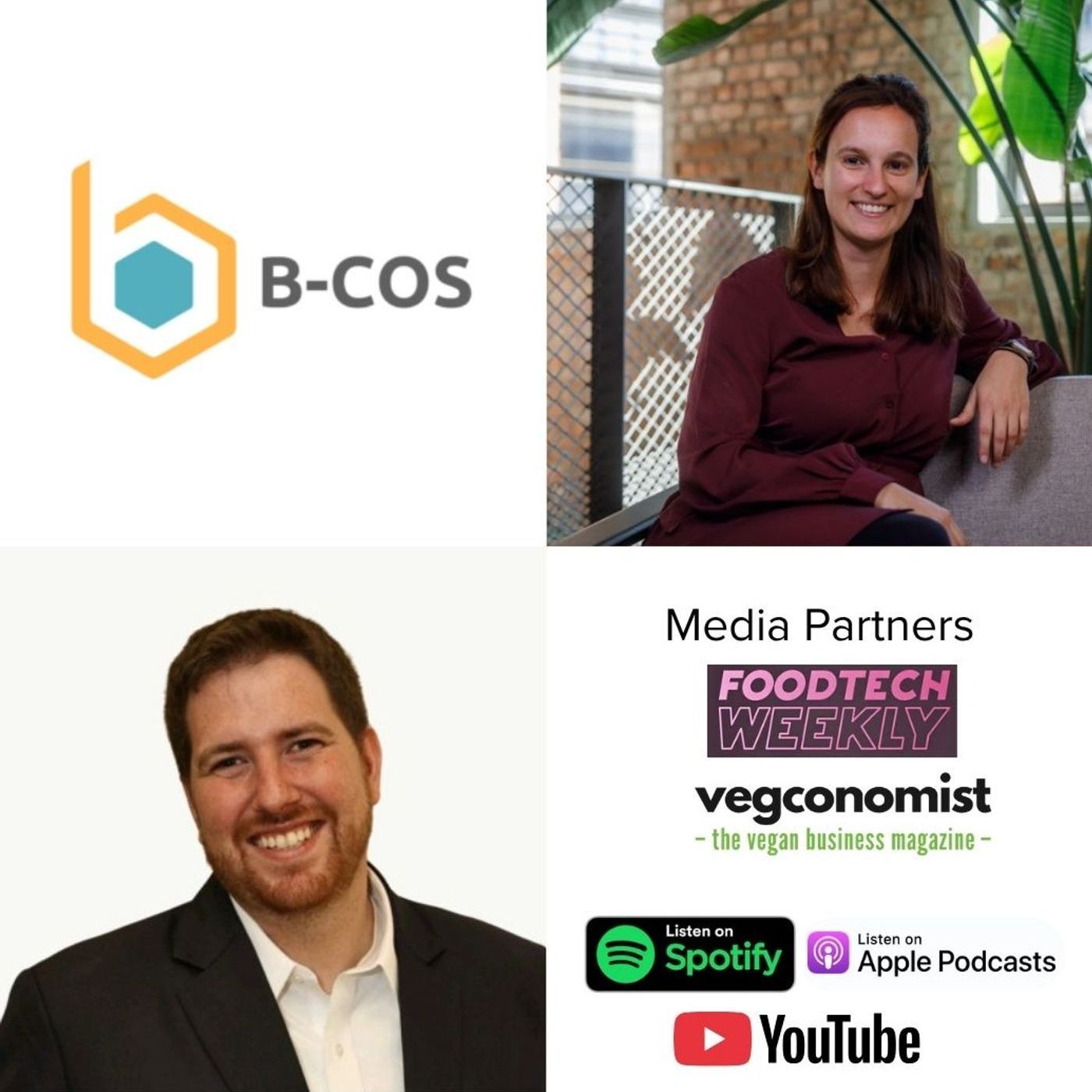
Episode 117: B-COS: Chiara Guidi on Ghent's Founder-Friendly Spin-Out Playbook, Plant Vaccines Over Pesticides, and Why Lean Beats Big in AgTech In this episode, I speak with Dr. Chiara Guidi, Co-Founder & CEO of B-COS — a University of Ghent spin-off, incubated at Biotope by VIB, that is building "plant vaccines": carbohydrate bioactives (chito-oligosaccharides) produced by precision fermentation that switch on a crop's own defense system, making it more resilient and cutting the need for chemical pesticides. A year out of academia, Chiara and her team have raised €1M combining VC and grant funding. She gives an unusually candid look at what it takes to commercialize 15 years of university research: how B-COS became the very first company through Ghent's new "Fast Lane" spin-out program — a standardized, founder-friendly deal (low equity, low royalties, a worldwide exclusive perpetual license) that let them incorporate in a month instead of a year — and why a brand-new deal structure that no investor had seen before became one of the trickiest parts of the raise. We dig into how she turned public research into a de-risked asset investors love, how she built commercial traction at pre-seed through 100+ customer conversations, the two-track product strategy (long-horizon crop protection plus faster-to-market biostimulants), the reality of Belgium's grant ecosystem, and a refreshingly disciplined, "lean-and-mean" philosophy on valuation and survival. 🎧 Listen to the full episode to hear why a spin-out license can hand investors 15 years of de-risked science essentially for free, how B-COS answered the "there's nothing here yet" objection at pre-seed, why you often need funding in hand before you can win a VLAIO grant, how Chiara benchmarks valuation in a market with only five or six possible acquirers, and her answer to the question every deep-tech founder dreads: why won't the giants just crush you? Key Facts: B-COS Chiara Guidi (Co-Founder & CEO): https://www.linkedin.com/in/chiara-guidi- Website: b-cos.eu Headquarters: Belgium What They Do: "Plant vaccines" for sustainable crop protection. B-COS uses precision fermentation to produce carbohydrate bioactives (chito-oligosaccharides) that activate a crop's natural defense system — improving resilience against fungal disease, nematodes, and drought stress, and reducing chemical pesticide use. Initial focus crop: Funding: €1M pre-seed (VC + grants), backed by Agri Investment Fund (AIF) and VP Capital, with support from Biotope by VIB, a VLAIO research grant, and EIT (European Institute of Innovation & Technology). Blurb B-COS is built on an elegant idea: instead of spraying crops with chemicals to kill what attacks them, teach the plant to defend itself. Using precision fermentation to brew carbohydrate bioactives — chito-oligosaccharides that act like a vaccine for plants — B-COS switches on a crop's own immune response, building resilience to fungal disease, nematodes, and drought while...
Chiara Guidi: there was the potential, the technology, a team, amazing results from the lab. the license with the university, the IP and everything that's for the investors at that moment, it was very difficult to do due diligence on that because it was more about what will happen in the future and what's the potential, but not really what's there at that moment. I'm Chiara. I have actually a PhD in synthetic biology, so scientist from backgrounds. and now a year ago we started BECOS, so it's a spin-off of the University of Ghent, and what we actually do we make this kind of plant vaccines, so they are carbohydrates that when you put them on the crops, they actually activate the defense system of those crops so that they're getting more resilient and can defend themselves actually against diseases. So with a big aim to reduce pesticide usage. And we've raised now one million euros. It's a combination of funding from VCs, but also grant funding. Alex Shandrovsky: Amazing. I'm so so excited to have this conversation with you and congratulations. Having more academics move into commercialization is very exciting to me. It's like a it's kinda scary. You know, like leaving the Chiara Guidi: Yeah. Alex Shandrovsky: comfort of the lab to like, we're gonna build a business now. Chiara Guidi: Yeah, yeah, it's also very nice because you yeah, as a as a scientist, you get into the research because you believe in it or you want to yeah, you want you want to research it, but you also want to create an impact. And the fact that you can do that as a scientist, that you can get out there and out of the lab and really yeah, valorize that research, that's for me a very big drive to yeah, to start and to start a company and also now to do what we are doing. That's that's very nice, yeah. Alex Shandrovsky: Amazing. So how did you meet your lead investor? Chiara Guidi: Well, we we don't really have a lead investor. So it's we there were two investors that were that normally actually invest so so we have the agri investment fund and and VP capital. They normally invest in a later stage, but they really saw the potential of our of our technology and of the products and of the team. and they then now invested in the in the pre seeds round. So they were a bit maybe a bit combined leads, but not really not really the the lead as you see for a classic in in investor round. and how we met them, how I was actually already in contact with them for some for one of them actually for years. I met them yeah when I was still a postdoc at university. and I contacted them to have like first chats to introduce about what we were doing at the at the lab and what we wanted to create in the in the spin-off company. and then I had several updates with them over the years. they also yeah gave me some input on on how they saw the market, how they saw the market evolve. I also incorporated that in my in my strategy. and that is yeah that By actually knowing them already for quite some time, that really helped them to when we really needed now to fundraise that they already know us, that I knew them and that there was a kind of trust that we could start from. Alex Shandrovsky: Amazing. And what what I'm curious about when I sp hear about spin outs, the first thing I'm curious about is how did you negotiate the deal to spin out the tech from the university? 'Cause a lot of j deals just fall apart right there. Like you don't have full use of the tech, you have to have high royalties, they w the university wants to send you cap table and you usually university is a terrible, you know, cap table partners. Like how how do you do that practically? Because this was research you developed in the university or this is somebody else's research that you took? Chiara Guidi: No, no, yeah, was indeed it's really or part of my research. Of course, there was research that was going on already for 15 years at university, and I joined then now eight, nine years ago. so there were a couple of patents, also a lot of data, of course, knowledge. but what now the University of Ghent did, they have like this FOST lane program. so it's a new, very standardized standardized deal structure. So you cannot really negotiate a lot of things, it's more about yeah. They they create also templates for the shareholder agreement, for the license agreement. And there are a couple of things, of course, wording and stuff that you can that can still change, but the deal structure is is fixed. and that's all with the idea so that you can incorporate very fast. that that when there is really a potential in technology and there is a team, that there is indeed not negotiations of of sometimes more than a year. and that is that is how we could actually incorporate in. In only a month, time because we had that fixed deal structure. But that also made it yeah a difficult hurdle during the fundraise and and the conversations with investors because it's it was a new type of deal structure that no one ever saw. And we were also the first company to to spin out in that deal structure, and it was sometimes for investors, but also for us, yeah, difficult to really understand how. how y do we work with this with this deal and what what what are the implications for example Alex Shandrovsky: Can can you open up the deal? No, maybe not the specifics, but what are the elements that are in the deal? Is it royalty? Is it equity? Is it a buyout when you hit a certain amount of revenue? Like what what what is the deal structure? Chiara Guidi: It's a combination of royalties and of equity, but all very low numbers. so that makes it also very interesting. It's very founder friendly because the equity share is very low, also the royalties are very low. that that makes it and also the IP is only transferred after after a fixed amount of years, and then you can or it's not immediately transferred, but you can get into the negotiations about a potential transfer. So there's a lot of elements there. that also makes it I don't say it's complicated, but there are a couple of elements. And that's also something that was never done before and that makes it sometimes, yeah, difficult to really understand what will happen with every element, what is the implications on the IP, what is the implications and on the royalty, because it's also aligned of course to your business model and you go to market. and that took some time to to really understand all these different elements. Alex Shandrovsky: So so like if if we just open up, you know, I I consulted for a company that was actually in p and AI development for pesticides as well. to to not be named. They didn't make it. so I can't say it because that one didn't make it. Chiara Guidi: Yeah. Alex Shandrovsky: but the one of the reasons it didn't make it was the issue was the fact that the licensing was extremely narrow. And also it was like only this crop, only this geography, like, how narrow is your license? Chiara Guidi: No, it's it's very broad. So it's it's really a worldwide license, it's exclusive for us, it's perpetual, it's it's non non-irrevocable, so that's all very nice. And it's also we are in crop protection and in agricultural yeah sector, and it's also focused on that. Course we have a platform technology, our products can also be used in other markets. and we even have options for a couple of those other markets if we if we get into those markets that we can also use actually the license for that or or get back to the university and be the first to negotiate with them. but you also have a lot of other markets yeah that we probably will never get into and for that we don't have have access. But that that doesn't mean that we always can go back to the university and and speak about it. So it's it's actually still it's a very good license and it's as it's it's really what we need at this moment. Alex Shandrovsky: So that's an interesting question. I I'm curious about if you would put a dollar sign to all the amount of research that went into this development of this technology over the years. You it's like a fifteen year project or so. That's headcount, that's equipment, that's rent. Can you good can you give a number? 'Cause you'll see where this is heading, but a number to how much you think if you had to recreate all of that as a for profit company, how much would that be as a number? Approximately. Chiara Guidi: Yeah, that's a couple yeah, that's a couple of million for sure. it depends on what you all put into it, of course, and and if you take into account the salaries of everyone. because as a scientist at university, you get it in Belgium you get paid very well. but then yeah, if you count everything together, the the lab equipment and and also the the patents and IP maintenance. I mean ev all the all the subsidies that we also asked for that we got, I mean that's yeah that's really a couple of million. Alex Shandrovsky: Yeah, and I think to our listeners, this is why like I really love these deals. Because as an investor, you're essentially getting all of that for free. Like, you know, you're getting n something that maybe another texture would not would be like a seed stage TRL and you're paying pre seed funding on it. Right. So the there are complications, obviously, about ownership, LP, license, yeah. But I love deals like this. Like it's really a great deal if I'm looking from an investor from de-risking the science, because All the public funds went into de risking this technology. Chiara Guidi: Yeah. Yeah. But on the other hand, it's also often the only thing that's there that that's there at this at that moment. And especially for us, yeah, we were when we were really into the deal in into the conversations with investors, it was around September, October 2025. So we were only incorporated for a couple of months. Of course, there was there was the potential, the technology, there was a team, we had we had some amazing results from the lab. But that's that's that's it. I mean, and and then the license with the university, the IP and and everything that's that's for the investors at that moment, yeah, almost the only thing that that's really there. And you also saw in our discussions and negotiations that that was a very important topic. because everything else, yeah, they they didn't It's it's it was very very difficult to put yeah, to do to do due diligence on that because it was more about what will happen in the future and what's the potential, but not really what's there at that moment. Alex Shandrovsky: So Kara, so how did you deal with those objections? Like so it sounds like you're what I'm hearing from you is that there was a lot of concern about commercialization. Like, is there a client pipeline? Is there like a proof that the market needs this solution? Is there maybe a regulatory pipeline? Like what were the big objections that you were seeing and how'd you deal with the subjections? I speak with founders raising every day and they're all telling me the same thing. It's harder than ever to find investors who are actually deploying and getting access to those leads takes time. Founders just don't have. Every month fundraising is a month burning runway. This is why we created FTW plus a community of founders actually fundraising the world's most accurate agri food tech investor database. plus connecting you directly to ideal target investors and a community of support and accountability. Guaranteed results or your money back. Apply today at www.joinftw.com-hub. Chiara Guidi: Yeah, even even at the pre-seed stage, I mean you also have to show your commercial traction or that the market indeed is looking for your solution. So what we are doing really from the from the beginning is to talk to a lot of potential customers so we could really show what's the the voice of the customer and and what they want. I mean that was very important at our stage of the fundraising, but also now we we get into really More structured deals with those companies. And and even if it's a in a very early stage, but that they can, for example, test our product, that they understand how it works, how how it feels, how to how it could be incorporated in their portfolio. Because also, as you said, regulation-wise, it will take a very long time. We are in crop protection. it's yeah, that that's especially in Europe, it it can go up to more than five, even to ten years. And so if you have to show to your investors that there is already interest now and that you can or maybe keep that interest for several of years. and that's even that's that's also very important in the pre-seed stage. yeah, because even if if it's for some founders and especially probably for aca academic people, they will feel very soon that you really have to get into those conversations with the customers, but that's so important. and especially in agri tech at this moment. Alex Shandrovsky: Okay. So what I would love to hear is how do you get in front of those customers? Because you have like what is your offer to them? Is it you're asking, hey, like help and just honest feedback? And you're going to university and saying, Hey, university, you have all these connections probably with these corporates. Can you arrange meetings? Or is it we have a sample and would like you to test a sample? Like, what is the value? What's the offer that you're bringing? 'cause sometimes you just say, Hey, I'm just looking for a nice guy or a girl who can give me some feedback and we got nothing but would like your thoughts on this problem and they're just happy to do it 'cause it gives meaning to their life, 'cause they're giving it like a chance to a startup. Or was there no, we have a sample, we wanna you know, we'd like you to put in trials, it's gonna cost you of you know, X amount for every sample. Let's have a commercial agreement. What was it like? Chiara Guidi: Yeah, that and that evolves over time. So in the beginning, when we were not incorporated yet, that's as you said it was reaching out to the people or via the network of the university or or my own network is is just to k can you Are you willing to have like a 30-minute conversation to talk about it? About what the pains are of the sector and what you as a potential customer in the future would look for. And what also very what helped very much, I was part of the EIT food seed pets program in 2022. So that was still a postdoc, actually only for a year. But that program was really yeah based around having more than 100 meaningful conversations in in like four to six months, and they also helped us to. get connections to these different corporates and for me it really helped me to to shape and to yeah to have these types of conversations and then my offer was more what is the the technology what's the potential of the technology asking a lot of questions about what and the the problems would be and how we could solve that problem But now it evolved more to now we really have samples, now we really have a product, we have a minimal viable product, and we reach out to those potential customers in do you want to test it? Do you want to buy a sample? and we get into conversations with them. Yeah, probably you have to use that product in that way for that type of crop. that timing and application frequency will be the best. so it really evolves from first understanding what a customer wants. And then to really having an offer and a sample and a product to that to that customer. That's that's how it worked for us. And I use the network of the university first, but now we I also have a very nice co-founder. She's also really coming from the industry, from the agri tech. She has that very broad network in the agri tech space, and that's that's yeah, that helps enormously that she can just pick up the phone and call someone of her network like gig. I'm now part of this team and Yeah, it it's really an amazing technology and they also trust her for her experience already. and that that yeah helps to further build that commercial traction. Alex Shandrovsky: Okay, amazing. Amazing. And how do you generate revenue before you get regulatory approval? Is there a path where you can generate revenue or or do you see us look, it's gonna take ten years. We're basically gonna need a million dollars, a million million and a half dollars a year. Okay, so I need to raise fifteen million dollars. Gosh, it's probably gonna need to d double that, twenty-five million dollars. Okay, I need twenty five million dollars. Is that the way you're looking at it? And then maybe a third that would come Through grants, okay, that's a path. I mean sixteen million dollars in the next 10 years I need to raise, and that's a path around. Or is there a way to sell your sell your way out of this? Chiara Guidi: Yeah, it's as you said, and then for us it will be around fifteen million that we will need in total, probably. and we have actually two types of products. So we have our whole product pipeline that goes into crop protection. So that's a long long regulation route, and that means also, yeah, long yeah, it will take a long time before we get some revenue. But we also have a product that's in in biostimulant sector. the regulation there is also yeah, more easy. It's also national based so we actually there already filed registration in in Belgium and there our vision is also that we can already start selling the product. so we we have the aim to have a first distribution deal by 2028-2029 so in that way we can actually really start generating revenues and that's also we now have a a bit of of revenues from of course selling the the product samples that that that we we can really show to investors that there is a a willingness to pay or that they are really interested in the product, but also from funded development. so for example the crop protection companies that are interested in the in the product and the technology and that all already want to fund some of the research and of the development together with us. Alex Shandrovsky: Okay, wonderful. T guide me through the grant ecosystem because I know I I I love talking about grants and governments. So how do you see that piece of the puzzle playing in? And then I d I've done a lot of looking at Vlayo and and Belgium. Like I'm a huge fan of Belgium because I cannot share with you the stories of how many times I've been to Belgium to try to figure this out. it's not Chiara Guidi: Okay. Alex Shandrovsky: working then, but it wasn't my choice, it was somebody else's choice. But like how are you envisioning the grant ecosystem supporting your solutions and what's the appetite in Belgium for that? Chiara Guidi: for us grants is and will be a very important part of the puzzle because it's it's agri tech. I mean the exit horizons are also not that fixed. so it's it's for us a combination now of grant funding and then also open and and open funds and family offices so that we can also extend our timeline a bit. And we have indeed a VLIO research grant and also feasibility grants. so in in in that regard, Flanders is Yeah, it's a very nice ecosystem to be in. on the other hand, it's also not always that easy to get LIO funding because what is very important is that you have all that you can also show that you have runway for the entire project. and it when the funding comes in and that creates your runway, that's not good enough. You really have to have the funding for the already for the entire Yeah, for the entire duration of the of the project. And that makes it also very challenging that often you have to raise funding before you actually can get a VLIO research grant. And it I mean it's also it also makes completely completely sense, of course. but that makes it of course challenging. but we are also applying, of course, for European grants. but I see there that's that yeah, the success rates are often so low. You have to apply for a lot of these different grants. You put a lot of time and effort in it. and then but that's yeah, very low success rates. but that's yeah, that will also be always be a very important part of the puzzle to also get funding from a European level. Alex Shandrovsky: Okay. Yeah. It's it's it's interesting that would you mention it around you know you need money in order to have these reimbursement grants or research grants and th that's I I tell I tell founders I think about about this myself is that the best way the best time to raise money is when you have money. Chiara Guidi: Yeah. Alex Shandrovsky: Right? Or you bake it into a this capital stack proposal in your round, like look We think we can raise a million here, but immediately that million is gonna fund another three hundred thousand of grants. And that's what you're deploying against, right? and you're you're you're building that capital stack model in agrifruit tech, otherwise it's just gonna be very, very difficult. last couple of questions have been this has really been a pleasure. You're really, really enjoyed speaking with you. How do you look at valuations, right? How how did you it's so hard when you don't have exit history in the space to bench against like like when I think about CPGs like we've had some really good CPG exits recently in in few in Huel and Gums like so we can know like okay their revenue is this line there's abilities this line we know how much they bought enforce is gonna be like from four to six X maybe top line revenue like with you how do you bench your because you know you have probably four companies that can acquire you in the world five Chiara Guidi: Yeah, indeed. Yeah, yeah. Yeah, yeah, that makes it very challenging. I mean, there are indeed five, five or six that dominate the agri tech world and that could yeah follow into a merge and acquisition or access strategy is an IPO, but I don't know if if that's really the way to go in the agri tech space. so how I then do the valuation is is is more in for example, I I know what is needed to or which type of money I need and how much money I need. And I also want to be very lean and mean in that. So that it's not that we raise for some companies they raised even hundreds of millions of euros. But if you have that if you have to convert that it into an exit, yeah that will be extremely different in AgriTech. So I really and that's also how I I see it now, is we really want I really want to focus on a couple of products. to bring them to market to really show to the investors but also to the to the market okay we can do this we can bring these products to market we can create revenues and and the platform works but not with with 100 millions of euros or more but really with only what we need be also a lean and mean team and in that way build our our valuation and that it's always Yeah, realistic. Of course, it's not the valuations as they were five or six years ago. but that I can show to investors with every round we further increase our valuations with these milestones. and that is just realistic and that indeed can get a certain multiple with with what they invest. but that is my main yeah opinion at this moment is not to raise those those very big amounts of of money. Alex Shandrovsky: Mm. And last question on that, you know, what makes you optimistic? Right? there's been a lot of challenges, obviously, over the last three years. What what makes you optimistic to start a company and to leave the conference academia? what makes you optimistic about winning? What in your mindset tells you you're gonna win? Chiara Guidi: Huh. yeah, when when I think about our company, it's it's really the the team that we brought together. I mean, for a very long time in academia I was on my own. I mean I was the the postdoc and of course there was also the PI that I that I worked with and and I mean she's amazing and she really encouraged me to also start the company. But I was I was for a very very long time alone also to to then get the subsidies and and and lead that that team also a bit of PhD students. But then from the moment I got to meet Nawater and Mike, so they were then my two co-founders, and that we could really that we can share that vision and mission mission. That for me was a very big incentive to also start a company. And now also that we see how the product works and and yeah, really see the results on the field. that for me really yeah, I'm becoming very optimistic that we can really create that value that we are yeah, that we are creating, of course. Alex Shandrovsky: Yeah. And and it's I don't know, I feel like he also looks like having fun. Chiara Guidi: Yeah, yeah, yeah, of course. Yeah. And that it's that's also I don't say that I didn't have fun in academia. I mean, but it's yeah, it's a bit of an ivory tower that you're in. and for some of the the things you're also working on your own island and now you're really working with a team and you go into the same directions and so it's of course also very challenging at a lot of times, but you're in that in that together and that that I really like. Alex Shandrovsky: a and then one more thing I just always asked this and forgot, which is, you know, when I think about especially the the area you're in, like there's so many giants with like unlimited resources. Like why can't they just destroy you? Like like you're like three people, you raise a million bucks. For them, a million dollars is like it just like it's a joke. I mean they could just why can't the Jews do exactly what you're doing? Do it faster, better get all those connections, they have unlimited cash. Like why are you gonna succeed when you have these big giants who control the market, have unlimited resources, unlimited PhDs. If they really wanted to throw themselves at this problem, they'll just throw themselves entirely into this, it would just squash you. Chiara Guidi: Yeah, that's that's true. And probably there are some that that can do that. but what I also see is that yeah, you also have to do that. I mean we we also in contact sometimes with very big corporates that also say, but yeah, you are the ones that that have the experience and the expertise to do the R and D and the time and and yeah the drive behind it. and they are often looking at us at these small teams that are very resilient. and that actually because of the fact that we don't have that big money, we also really want to spend it very wide. But every euro that we have, we really turn it a couple of times or try to use it a couple of times to actually create the same value as what they are doing. or to also really stress test a lot of things before we actually get into a certain experiment. I think that is also yeah, the fact that you don't have a lot of money. I really believe that sometimes you can actually create more value than that you have all the resources available. yeah. Alex Shandrovsky: Amazing. Kiara, you've been such a gift to our audience. what do you think you can, you know, offer to them? what kind of conversations would you like to have? How can you give to our audience? You know, if if I'm listening, I'm gonna say a founder or, you know, is there something that you feel like, yep, you could reach out to me about this or I like thinking about this issue? Chiara Guidi: Well, for me for sure, of course, I'm coming from academia. So everyone that wants to start a spin-off company or that just started a spin-off company or the deals with university and how to approach that or how to approach those negotiations. I'm very open to have a have a coffee, have a chat. I think that's also for me was very important in the last couple of months, was to reach out to those people and to understand how they tackled everything. so that is really what I want to give back to the to the community. And hopefully in the next years when I grow further into the role, it will be also more about the fundraising, of course, and and how to tackle the negotiations with investors. That would also be very nice if I can further grow into that. Alex Shandrovsky: And then how can we help you? What are you looking at in the next six to twelve months? What are the challenges you guys are facing? What kind of conversations you're looking for, or you know? Chiara Guidi: Yeah. Well in the in the next six months we will probably start fundraising again. so we just had our pre-seed round, but we are really preparing now for the for the seed round for really a bigger a bigger round so that we can really accelerate on a lot a lot of stuff. so of course the connections to investors, I mean that's that's always important, but we also want to further grow the team at that moment when we close the round. So also people that are very interested in the technology or or in that space and that that can that can help already have a a first conversation. I'm also very open to do that. so that is that's something that I'm for sure I'm looking for. Or people that in the sector that already did a fundraise, a seed round or a series A would also be very nice to have a a chat with them. Alex Shandrovsky: Amazing. Well, thank you for this conversation. Learned a lot and congratulations. Chiara Guidi: Thank you. And thank you for for having me.