
Investment Climate Podcast · Alex Shandrovsky
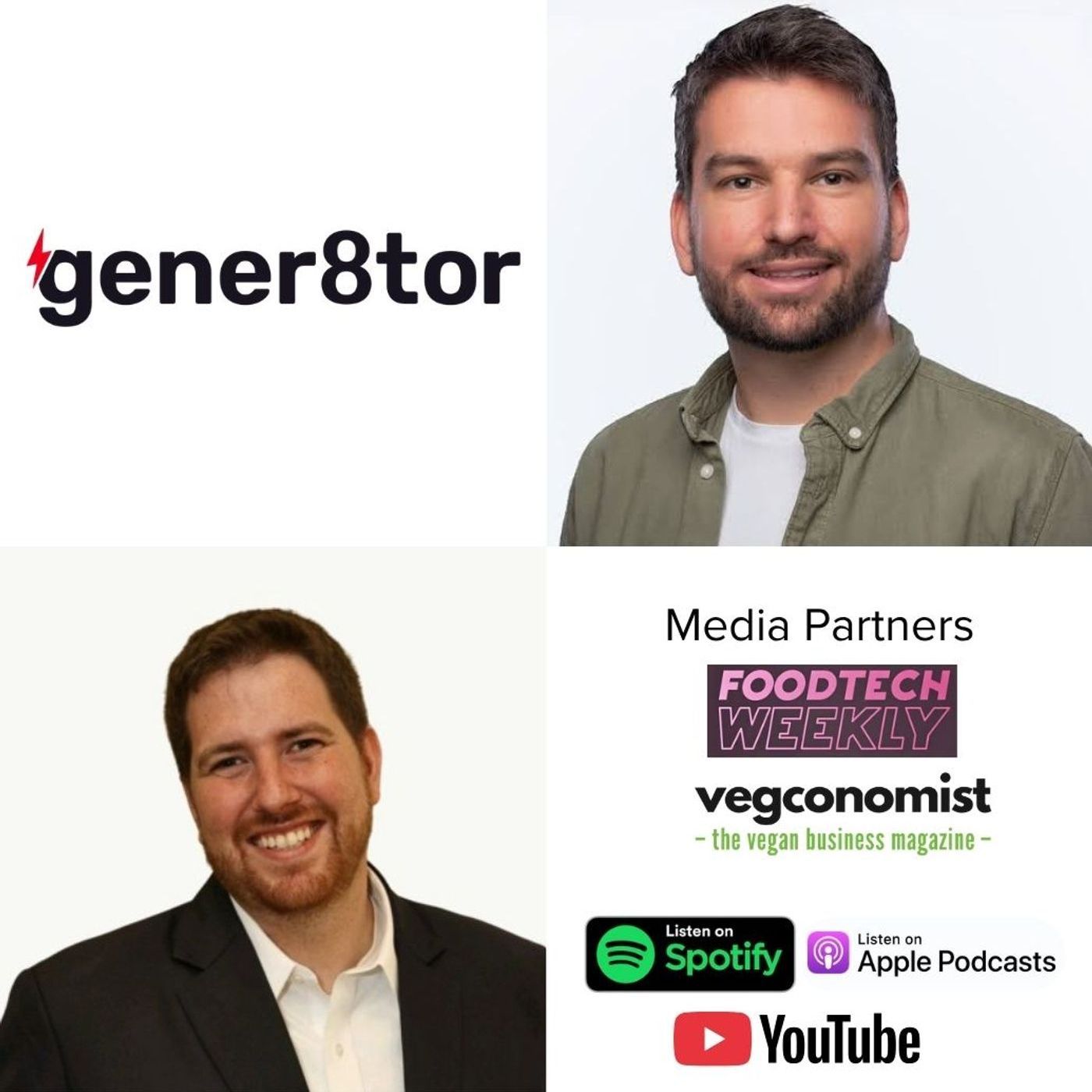
Episode 115: BEAM Circular Accelerator (Powered by gener8tor): Darko Mandich on Crossing to the Other Side of the Table, Off-Take Agreements Over LOIs, and Turning Almond Waste into a Bioeconomy In this episode, I catch up with my friend Darko Mandich — Managing Director of the BEAM Circular Accelerator (Powered by gener8tor) and Ag Practice Chair at gener8tor — for a rare look at fundraising from the investor's seat. Darko knows both sides intimately: he built and exited MeliBio, the bee-free honey pioneer (acquired by Switzerland's FoodYoung Labs), and has now crossed the table to back early-stage founders turning agricultural waste into value. He shares what genuinely surprised him about the investor side — how many internal "yeses" it takes to cut a single check, and why founder patience is so misunderstood — and makes a passionate case that the founders winning in 2026 are commercially driven, not science driven, doing far more with far less. We dig into why LOIs no longer cut it (investors now want signed off-take agreements), how gener8tor and BEAM Circular are attacking the CapEx barrier head-on by building a shared California Bioeconomy Innovation Campus in Modesto, and why California's Central Valley — with 80% of the world's almonds and mountains of hulls and shells — is one of the best launchpads on earth for the circular bioeconomy. 🎧 Listen to the full episode to hear the single biggest mistake founders make when following up with investors (and the "keep delighting us with news" approach that works instead), why aggressive AI-generated outreach lands you in the spam folder, how building in public and authenticity get investors to source you, what BEAM Circular looks for in an applicant, and the incentives that make the Central Valley — not just San Francisco — a place to scale. Key Facts: BEAM Circular Accelerator (Powered by gener8tor) Darko Mandich: https://www.linkedin.com/in/darkomandich Websites: gener8tor.com · beamcircular.org Program Base: Modesto, California Focus: Early- to mid-stage startups in biomanufacturing, waste transformation, and circular solutions across agriculture and natural resources — turning agricultural side streams (e.g., almond hulls and shells) into materials, fuels, ingredients, and chemicals. Support (per company): ~$100K in combined support — a $15K non-dilutive grant, a $35K investment, and $50K in California Bioeconomy Innovation Campus credits — plus mentorship and partner perks. Blurb The BEAM CIRCULAR ACCELERATOR, powered by gener8tor, is built on a bet about geography and timing: that the next wave of the bioeconomy won't be built only in San Francisco or Boston, but in places like California's Central Valley — where 80% of the world's almonds are grown, and where the hulls, shells, and side streams once treated as waste are becoming feedstock for materials, fuels, ingredients, and chemicals. In partnership with the Modesto nonprofit BEAM Circular, the program pairs small, concierge...
Darko Mandich: If they are a company, they're a company, they're not an academia project. They have to move faster. They have to work on initiatives that are strongly validated. LOIs were maybe sufficient five or six years ago, but today you need off-take agreements, sign contract. We're seeing concepts that are lighter or harder on CapEx, but there's an absolute mind shift change where teams that are obsessed about the coolness of their science are just not getting the chance. They are being run over by teams that are driven commercially that see science as a tool. Hi everyone, my name is Darko Mandich, and I'm a managing director at Beam Circular Accelerator Powered by Generator. And I'm also Ag Practice Chair at Generator. Generator exists for 15 years now, and we are one of the top 10 most active accelerators globally. And I'm personally on the sustainability team and leading an accelerator program that backs early stage. innovation that turn agricultural waste into value. We look at startups globally, but we look for the ones that are ready to scale in our California Central Valley ecosystem that we are building together in partnership with Beam Circular, a nonprofit from Modesto, California. And I'm excited to talk to you today, Alex, and chat about everything AgTech, circular bioeconomy, as well as you know, how is it like to be on the both sides of the table as I've been doing food tech and ag tech for the past fifteen years in many multiple roles. Alex Shandrovsky: Well, first of all, Argot, you're a close friend, a soul friend. You know, one of the things that I love about this industry is we grow together for many years, d during many different changes. and you know, when you and I met, you were doing a company that was mimicking or bimicking honey. and a successful company that eventually had an exit, and then you moved into this now investor role. So just curious about the change from being a founder now to sitting another side of the aisle and what you're seeing and learning about investment now that may be surprising. Darko Mandich: I'm learning a lot, Alex. And you would think as a founder, you know a lot about how investors operate, early stage, late stage VCs, because you're part of that ecosystem. Only when you actually cross on the other side of the table, you realize how much of work happens on on this side that maybe sometimes as a founder, maybe you're not just aware of. And yeah, I'm I'm glad to be in this conversation and share. And for all of the people out there. Who have an opportunity sometimes to join your investment climate founder dinners? I strongly encourage people to do that because for those of you who don't know, Alex chose the best dinners out there that are happening all across the world, from London to Singapore, San Francisco, New York, timed with amazing events like AgriTech, future food tech week, or things like that. Because Yeah, I I I I I really enjoy those events and you know I'm glad to be on this on this podcast and share more about my point of view. after MeliBio, I I really wanted to stay engaged in the industry. However, I felt that for me, Meli Bio was an idea that has been cooking for many years. the pain points that MeliBio is solving was something that I felt being an executive in ingredients companies dealing with B products. So I felt that I can't force a new idea, but I really love all the people, communities, and ecosystems and relationships that I built. so I decided that I want to stay but change the seat at the table and cross on the other side. And when this opportunity with Generator came across, I was really excited. And I promised that one thing that I'm gonna do differently is that I'm gonna be representing founders. As a recent former founder on the other side of the table. We all joke, we all used to joke when we were founders, and founders do joke that investors sometimes don't understand how businesses are run. And many of them never ran a lemonade stand, if you will. So that is true, but being on this side of the table, you know, being an investor requires a different skill set. However, my goal is really to be An investor that founders can talk to, that founders can have a conversation about almost anything that goes from you know filing that incorporation in state of Delaware, which I did myself for MeliBio, all the way to kind of selling the company and and chatting about all the processes and everything that can go into these activities. So for me, that was that number one dedication: that crossing on the other side of the table. I appreciate I'll be doing a different job. I'll be learning about that job. But what I will be taking to that table is empathy for founders and Alex Shandrovsky: Well. Darko Mandich: ability to have a conversation with them as an investor from a position of doing that myself and hopefully gain a closer relationship, respect, and trust on the basis of walking that walk myself. Alex Shandrovsky: So so so take me then through that seat, right? So give me like a real life example, maybe we can learn from that. So then there's there you know you're gonna have a cohort that could be bet in applying for your next accelerator, right? Which maybe you can tell us when that is. Tell us, like if I am a company and I think of applying, right? How do I think I'm a good fit? And then What are you looking for as an investor now? What lens are you putting on on the application that will make them consider going to the next stage? Darko Mandich: After running almost 500 accelerators in over 50 communities, here at Generator, we really value and we're focused on initiatives that are called research to startups. We work with academia partners and we identify university teams that are ready to venture out and you know, get out of academia and take that fantastic research into the world by creating amazing startups that are reshaping the industries. So one thing that I can offer there is really helping founders early on put themselves in the entrepreneurial mindset and respectfully and gracefully leave the research mindset at some point and think as entrepreneurs. I've led a fantastic scientific team at Mellybio, together with my co-founder Aaron Schaller, and we were really proud of taking things to market with less dollars, with almost no capex, and and really installing this entrepreneurial mindset mindset in a world class scientific team with people coming from Stanford, Berkeley, Davis, Harvard, Yale. So that's number one thing that I can offer to these teams to really, you know, appreciate them for everything they've done on the research side, but help them build that bridge so that one day they would probably say that they are almost like a former scientist. Turned Alex Shandrovsky: Well Darko Mandich: entrepreneur. Alex Shandrovsky: so so are the companies that are gonna be applying for the accelerator typically, you know, very early stage, looking to commercialize science from the lab and they have maybe commercialized the like maybe they already took the IP out of the university and now they're you know, just two founders now looking to, you know, get their first institutional check. Is is that the type of founder that you're looking for? Darko Mandich: We have many programs at Generator. Some are free accelerators that are called G beta, seven-week programs that are super, super early for teams that are maybe just having DD or concept. But we also have investment accelerators, and I'm running one of those where we are looking for a little bit more than just the two founders or a solo founder wanting to do something after their time at academia. We're looking for some of the initial proof points, we're looking for Early customer traction, that those could be LOIs, conversations with customer, and some sort of a prototype or early a proof that the science is working. So Alex Shandrovsky: Okay. Darko Mandich: specifically, specifically for my programs, we are looking for folks that are ideally, let's say they're ideally in their ending their year one of their work, and they are ready to accelerate that into what their year two or three of their work. Might look Alex Shandrovsky: Are are they typically already have have they raised money before or or typically this is be their first check? Darko Mandich: So a a little bit of money raised before is a great proof point from us. And those can be that can be angel checks, friends and family, that those can be SBIR opportunities and non-dilutive funding. We count all of that as a early proof point that founder is able to raise. If you look at our last cohort, which was the second cohort of the Beam Circular Accelerator, all five companies that we got into the program previously raised some funding. We had three pre-seed companies, one seed company, and one pre-Series A company. We only do small cohorts, concierge support, because we believe that large cohorts and canned content is not what founders need from Accelerator. Founders need the best partners, and we believe that happens through small cohorts. Alex Shandrovsky: Makes perfect sense. And then what is the typical check size? Like w you know, when you make the investment it is that check size then converted into the accelerator so you have to pay some of that perc some of that money back into the housing, the plane, you know, like just getting yourself there and you know Darko Mandich: That's not the case with Generator. We don't we don't charge startups for our services. For our beam circulars, last cohort we had a 100k support broken into three categories, and all of that it was non-dilutive capital that we put into companies. We have other programs within the sustainability team, such as the program the clean tech accelerator, that where food tech and ag tech accelerators can apply to. We run that program in Atlanta with Cox Enterprises. We have a 250k investment in that program on terms that are disclosed on the website. So we have various programs depending on geography, depending on the partners. Alex, what's really cool about Generator is that we understand that post-ZERP time, when the VCs are not the only players that we can count on supporting startups, we understand that partnering with government agencies, states, philanthropy. private sector, dilutive, non dilutive capital is essentially the way how you build a diverse c stack of portfolio, of a capital portfolio and essentially help engage all the players in the market that help startups out. That's why Generator is very special. Alex Shandrovsky: Yeah. So we talked about this before, my friend, that you know the Central Valley in California is quite interesting where there's quite a few incentives that try and put in place to attract solutions that can use maybe some of the upcycling ingredients that are happening in that region. So let's maybe understand first what are the you know, the companies that are applying. You said to to us it's usually first year. Maybe it's second year they've had some success, some LOIs, some maybe traction. what else when you're looking at those companies now through the investor hat, that maybe also is surprising for you now that you're an investor that you didn't understand as a founder? Darko Mandich: Yeah, as you mentioned, Central Valley is an amazing place. The US food market is $2.5 trillion. And one in four food bites in the US actually originate from the agricultural produce that happens in the in the Central Valley. it's you know, it's an amazing place to scale. And together with our main partner, Beam Circular, we're building an ecosystem that is based on a couple of important things. First and foremost, California is a state where we have a lot of specialty crops. We have eighty percent of almonds that are globally produced, they are produced in California. Alex Shandrovsky: Well. Darko Mandich: After those harvests, we have a lot of almond byproducts, almond shells, almond hulls. You gotta do something with it. And we are seeing amazing innovation in startups that use almond shells and hulls and turn that into materials, into fuels, energy, all of that. So I would say then one thing that I learned in this job is really how important of a launch pad California is when you think about how you can deploy science and technology on top of available and diverse feedstocks that used to be just waste and now are a starting point and inputs into an output that ends up producing products And services across different verticals that in the end strengthen the supply chain and the biomanufacturing systems that happen in the US. I would say, Alex, as someone who launched a company in 2020, that was when I launched MeliBio. What I'm seeing in 2026 that is really different is founders doing way more with. significantly less availability of resources, specifically capital, in the early stages. I remember when I raised you know almost six million dollars seed round end of 2021 and 2022. I remember what were the metrics for that seed round compared to what I'm seeing founders now doing at pre-seed with maybe only a couple of grants and two angel investors that back them. So it's really You know, it has been hard out there for everyone, for VCs, for investors, for everybody in the agri-food tech. But the beauty of it is that what came out on the other side of this struggle in 2026, and I'll I'll be seeing that in 2027, is founders doing way more with less and founders being commercially driven, not science driven. Founders are not using science as a solution looking for a problem. Funders are deploying science early on re in conversation with market, with pilot customers, and they already have people and customers ready to grow when they are ready to grow into the next stages. Alex Shandrovsky: Yeah, so first of all, totally, totally agree with you. I mean, I I I've been also in the industry, my gosh, more than ten years now. And yeah, we've s we've kinda seen the boom and we've seen the the bust, right? And I actually think that we're heading into a very good time, in our space. Very, very good time. I'm very optimistic. but to your points now as an investor looking at companies that are going through accelerator, like You know, I are you worried about them being able to raise money moving forward, or are you specifically looking at things that are not as deep science, for example, that require a lot of capex, that may you know, that that your mindset as an investor has changed to what is viable from investing in in technology? I speak with founders raising every day and they're all telling me the same thing. It's harder than ever to find investors who are actually deploying and getting access to those leads takes time. Founders just don't have. Every month fundraising is a month burning runway. This is why we created FTW plus a community of founders actually fundraising the world's most accurate agri food tech investor database. plus connecting you directly to ideal target investors and a community of support and accountability. Guaranteed results or your money back. Apply today at www.joinftw.com-hub. Darko Mandich: CapEx is a very important barrier to entry. A lot of ECs burn a lot of money investing in startups that build CapEx, and we read these big headlines about certain startups, you know, just not existing after you know hundreds of millions of dollars invested. Capex is a big barrier, and one of the ways we're solving CapEx, our main partner, Beam Circular, is building a California Bioeconomy Innovation Campus in Modesto. And that campus will go live. The first phase will go live towards the end of this year, the beginning of 2027. It's a huge investment where a lot of money, you know, a couple of hundred millions of dollars will be invested in facilities, in lab, pilot, manufacturing facilities, all of that will be invested so that startups don't have to do it by themselves, so that the VC capital doesn't have to go into CapEx. So we don't run away from Capex. We're actually building the ecosystem that will remove that barrier so that people building in Central Valley and San Joaquin Valley, which is the northern part of Central Valley, which is only like one hour and thirty minutes drive from San Francisco, is the place where people will not need to build their own facilities. They will come to the beam campus and that will exist. So we look at folks that require you know, CapEx. We've Invest in companies like Crocos Bio, which is a plant cell culture company. We invest in company like Groby Bio that's turning agricultural side streams into a whole platform for food ingredients and and and and and and other chemicals that are produced naturally. So we what but what we look at is the founding teams and the teams that understand that. If they are a company, they're a company, they're not an academia project. They have to move faster. They have to work on initiatives that are validated, that they have validated demand for those into the market, that that valid demand is strongly validated. LOIs were maybe sufficient five or six years ago, but today you need off-take agreements, sign contract. you you need to talk to those customers to really understand. That there's a strong pull. So I would say, I would say that there's no, I don't think that the appetite has changed. We're seeing concepts that are lighter on CapEx or harder on Caps CapEx, but there's an absolute mind shift change where teams that are obsessed about the coolness of their science are just not getting the chance. They are being run over by teams that are driven commercially that see science as a tool. Alex Shandrovsky: Hmm. Amazing. Incredible. And again, the the engagement with the customer, the buyer earlier on is is, you know, it's definitely been a I see across the board, people are talking commercial conversations much earlier on. What what else has been surprising to you being an investor now? Like that or what else wish you you wish you would have known as a founder when you look at investors? 'Cause we do we do talk about a lot of shit. I mean honestly, like Darko Mandich: Yeah, I yeah, yeah, yeah. Alex Shandrovsky: investors, like what do they do? Yeah, like Come on, they they have no understanding of of the of the actual science or the business. They went you know, they maybe went to grade business school but under st but that's like this is not SAS, right? It's it's a whole different animal. Darko Mandich: I want to talk about some of the initial insight that that I've learned about joining Generator. you know, Generator launched in twenty twelve when two VC attorneys based in the Midwest realized that there are startups that exist outside of Silicon Valley, outside of New York, Boston, LA. They do exist and they're smart people in each and every community, but the opportunities are not equally distributed. And that the that was the initial DNA, and that's still in the DNA of Generator to look at various regions everywhere in the world, in India, in Saudi Arabia, in Japan, all across the US. We backed AgTec related companies in 33 states across the US, showing that smart people, innovation, great universities, amazing team exists in places like Central Valley, in places like Alabama, Arkansas. in Alaska, it's just that you have to bring those ecosystems closer to the opportunities that exist in these major hubs. So that was for me mind blowing because you know I immigrated from Serbia to San Francisco and being here for the past seven years, you know, my thinking about startups and the bubble that I was drawn was pretty kind of San Francisco and Silicon Valley bias. So knowing that each and every one of you building out there in India, Philippines, you know, The world has changed. You have opportunities and look for them. And you're not in a worse place building elsewhere. You just have to partner with the right people that will update you to what's laced in some of these leading hubs. And for your question around what's different on this side of the table, especially around like what we used to, and I dare to say bitch as a founder when we were not happy with due diligence is moving slow, getting so many no's. I think one thing that as founders, when you're in that process, and that process is not easy, you're like energized, maybe a little bit nervous. As the process takes a little bit more time, you're more nervous. I think you kind of disconnect from the reality of the complexity that happens at the background on our side of the table, investor side of the table, around how many yeses need to happen so that we can cut you a check. You know, you usually get to talk to us. We tell you, hey, we have a you know, meeting next week, we'll bring this up next week and I'll get back to you. But maybe next week a person that was supposed to be in that meeting doesn't show up. And that gets to move to another meeting. So, like there, there there's a lot of moving parts on our side of the table that quite often make you think, my god, like what's happening? They didn't get back to me. So that kind of a patience and understanding. it's hard because you know you wanna complete that fundraising, you want to get back to building, but there are way more way more things that happen in the background that that you have to think and like you can imagine that lead us into saying yes. And there are two ways to go about it. A wrong way is to be that annoying person that's that's like, hey, like you told me you're gonna get back to me. Like, look, guys, we have way more startups than we can make investments. If you are that person, that annoying person. There's a good chance that you can annoy me to a point that I'm just gonna like look elsewhere and chat with a founder that I feel like there's more chemistry, that the conversation is more easygoing. the right way to follow up with investor is like keep delighting us with news. Like if we talked this week and you told me that you're gonna have a pilot, first pilot run in two weeks, when you follow up with me in two weeks, don't like check in and follow up on me. Like, tell me about that pilot. Tell me how awesome it was. And if you keep being that awesome person, trust me, investors will want to associate themselves with you. And do know that in the psychology of investors, it's in our minds that we want to associate ourselves with the best founders, with the best people, with the best teams. And we wanna we wanna hunt for you. We wanna, you know, we we wanna make sure that you don't leave us and go to some other investor and and for us to lose that opportunity. If you are the annoying person, I'm sorry. If you keep doing that enough, that will create a counter effect. Alex Shandrovsky: Yeah, that tell I hate and right now gosh, sorry I'm gonna just just vent to my friend Darko and our listeners are gonna listen, but I'm getting so much crap right now from LinkedIn on people j just following up or just pushing us to the top. Like like just stop. And actually I've I've Darko Mandich: You you're going into spam, guys. If you don't know me and you send me this big message and you show in a deck and a link of a deck there, and I'll see it, I'll probably won't respond. And then if you keep aggressively following up, you're just gonna be marked as spam and and and that's that's a wrong way to do it. And there are so many right ways to do it. If you see me and Alex, if you see my if you go to my LinkedIn profile, see Alex, you know Alex. And you know, you can ask Alex, hey, Alex, do you mind reaching out to Darko on my behalf? Like there are so many like right ways to get in front of an investor that's just not ending up in a spam hide folder. Alex Shandrovsky: i and well I'll I'll add what what's disturbing you but the way I felt like just 'cause I have a lot going on. I was like, okay, maybe I can use some of these AI tools to do like and as and I started getting some of these messages myself. And like, gosh, I really don't wanna do this to my s like from my friends. Like and I s and I got like, you know, this a Cleveland AI generated message from a friend. And and I'm like, my God, am I doing this? Like I gotta figure this out, 'cause we have to be very careful. We have to super careful right now, cause it's so easy to create content or create messaging. And what I think Dark, you're saying is, you know, if your messaging is about positive updates, about good things happening in your life that you wanna share with people, great. But if it's about no message should be, hey, why did you not answer? aka p p you know, just bring us to the top. Like if you say and and and Dark, just to add to that. A lot of the AI, unfortunately, if you ask them to create sequence, that's exactly what they recommend you to do because it's been trained on really bad recommendations. It's like j Darko Mandich: Yeah. Alex Shandrovsky: just just every three days, just send him another message and he'll ultimately realize that he missed to answer you. Like, trust me, we have plenty to do. Nobody is nobody is not busy, trust me. Darko Mandich: Look guys, I've I've landed in San Francisco in 2019, didn't know anybody here. I I I realized I can do two things. In the real world, I can do a lot of meetups. That's not that hard. There's a lot of meetups and events in San Francisco. In the on the online world, I can build in public and post about my startup on LinkedIn. So what I started doing at some point when we had samples of our world's first beef honey, I started going to restaurants, meeting chefs and filming them when they taste our product. I would be meeting Alex and other people at World AgriTech. And having them try the honey and and asking them if they're willing to do a testimonial. It's so easy. Just be genuine, just build in public public, just be yourself, just put your authentic self out there. And you would be amazed how the algorithm connects you with the right people. Because if you know Alex and Alex comments on your video and I saw that and I like that, that keeps showing up in my feed even if when we're not connected. So there's, you know, LinkedIn rewards authenticity. If you continue being authentic, you will build your audience and what people will be reaching out to you. And there's no better way to land an investment than investor proactively sourcing you versus you kind of pulling investors by their sleeves. Because that's what most companies do every single day. Most companies send these big messages in my inboxes and and they they reach out without context. But the right people they're authentic. They have the you know I see them and I reach out to them or my friends and my network bring bring my attention to them. Or maybe multiple touch points happen at the at the same time. Alex Shandrovsky: Yeah, yeah, okay. Session. Yeah. Dargot, take us now, just as we close up, what's coming up right now? Just tell us a this is what's around the corner. This is who I want to speak with. That if you want to win, these are the traits I'm looking for at the moment. this is when we make decisions, this is how we make decisions. take us through the whole process of what the next couple of months looks like for our listeners. Darko Mandich: Each and every one of you building in the agri-food tech space, sustainability, a clean tech, anything that touches agriculture and food. And that can be agriculture as a starting point that creates fuels or materials. The output doesn't have to be the food or agricultural product, but agriculture being part of the process counts. If you are building in this, if you are building in this space around the world, I want you to go to generator.com website. And I want you to look at various programs that we have that have various conditions lined out out there. And I want you to apply for those programs. I want you to fill out the application. I want you to schedule office hours with various staff that are running those programs. If your solution is specifically focused around turning agricultural waste, byproducts, side stream into value, and you are considering California to be one of the regions where you want to strategically scale up. We're not looking for you to leave your existing regions. We're not looking for you to move permanently. But if you see value in Central Valley feed stocks in collaboration with Beam Circular around the campus that's being built, I want you to reach out to me on LinkedIn or book office hours true generator website or put an application in True Generator website and you will find the Beam Circular Accelerator section. Or reach out to Alex to ask for an introduction. Or anyone that you see that I'm connected on LinkedIn. Alex Shandrovsky: And absolutely. And I guess like here's just a few objections that come to mind. I'm just curious, just as a f if I'm putting myself in the shoes of those individuals, right? Like, first thing is like, gosh, like California is really expensive and I'm gonna burn I'm gonna just get destroyed real fast. Like say I'm a founder in like the go go you know, say in Eastern Europe, like you know, and you're thinking, move to Sa California, I'm like how the heck am I gonna do this, even say with a hundred thousand dollars, like Darko Mandich: Yeah. Of course. Of course, Alex. Yeah, that's a it's Alex Shandrovsky: I'm not gonna be able to make it, right? is there some i how would you address that? That's a k kind of fear I have. Darko Mandich: it's a fantastic question, Alex. specifically, the program that I'm running here in California is a 12-week program. Nine weeks are done over Zoom and virtual, and three weeks are in person. And next to that, within Generator, we have a special support for we call it soft landing pad companies. Those are the companies, for example, that are looking to potentially relocate on a longer term basis and and come to the US, we are there to help them. But for this specific program in California, we are requiring you to be here three weeks. Alex Shandrovsky: Okay. So the other thing that comes to mind I spent a lot of time in South Korea in the Netherlands, you know, that's where I do a lot of focus. And because of the incentives from the government to full like I'm a little surprised, are you saying there's real like incentives on the government level, in the regional level, of opening businesses in Central Valley that we might not be aware of? Darko Mandich: Absolutely. You know, there are many counties and regions in California that are not, you know, as technologically advanced as let's say San Francisco. And since a lot of these regions sit on the on the wealth and abundance of agriculture, there are incentives of creating high paying jobs. And there are counties like San Joaquin County or Merced County or Stanislaus County. That are looking to partner with companies and support them, and quite often support them with additional capital for their major projects that involve bringing jobs into those communities, specifically jobs that are high-paying jobs, because most of the jobs in the agricultural counties in California are agricultural. And these counties are investing in scientific and technological projects that will bring high-paying jobs. And some of the funding. For our programs here with Beam Circular come from those programs as well. Alex Shandrovsky: And and then lastly, how do you see the next step? So see, you have a demo day. What what what's the next level of support that you're seeing? you know, we we know obviously like we have both relationships with like SOS Ventures and IndieBio and others, there's YC. Like, how do you see the next step for your alumni and and and like what the benefit of that? Darko Mandich: Our alumni receive continued support. We are proud of our programs at Generator. We have you know over 80 MPS score out of 100 for our program. I'll just say that for our past cohort, all five out of five companies landed more customers within the program, and three out of five, three out of five secured funding within the 12-week program. So we are proud of our network and the ecosystem. I also want people to put Beam circular events on their radar, next to the SOSW, next to the you know, agri tech, food tech, and climate week events, because Beam organizes two events a year, Bio Circa and Bio Catalyst. And those are in the Central Valley, just one hour and 30 minutes drive from San Francisco. So I want you to look at those other events than the usual suspects in the Food AgriTech week. And I want you to follow me on LinkedIn. I want you to reach out, I want you to book office hours with me and chat. come to my universe, I'll tell you more about these programs, about generator and beam circular, and I'll help you, if nothing else, as a former recent founder, now turned investor, and in those half an hour I'll give you my wisdom and feedback on your concepts. Alex Shandrovsky: Yeah, and and I think this is a really great perfect way to to end 'cause I've found one of the things that Darkwood is a hundred percent is a a a soul that gives. We need more individuals like this. I was very worried, like Darko when when you exited from Milibayou that my gosh, you see gonna start selling AI? I was like, please, for God's sakes, no. Like I just prayed that good people are not gonna leave our industry and they're just lifers. 'Cause it's very hard. Like, you know, a the last couple of years have been challenging and it's like We're so glad that people like you are in the position you're in. and excited, very excited to have our listeners take part and you know, enjoy the benefits of you being in this position. Darko Mandich: Thank you for having me, Alex, and thank you for all of you out there who are building in these industries and making a world a better place while, you know, providing food and turning agricultural in into something awesome. Alex Shandrovsky: W when is the ta just give us the last question? When is the deadline? Just so we get a sense of timelines. Darko Mandich: So our next cohort will be Beam Circular Accelerator 2027, starting in the winter, just you know, we'll be selecting startups after the new year and the program will start in February or March. Alex Shandrovsky: So so people should have like a few months to like understand if they're fit, have conversations with you, have initial screening. Perfect. Darko Mandich: Yeah. Yeah. Yeah. Yeah. Yeah. however, if you look at our generator website, you'll see some of the programs that you can apply sooner. Alex Shandrovsky: Awesome, my friend. Beautiful. Congratulations. Darko Mandich: Thanks for having me, Alex.