
Interplace · Brad Weed
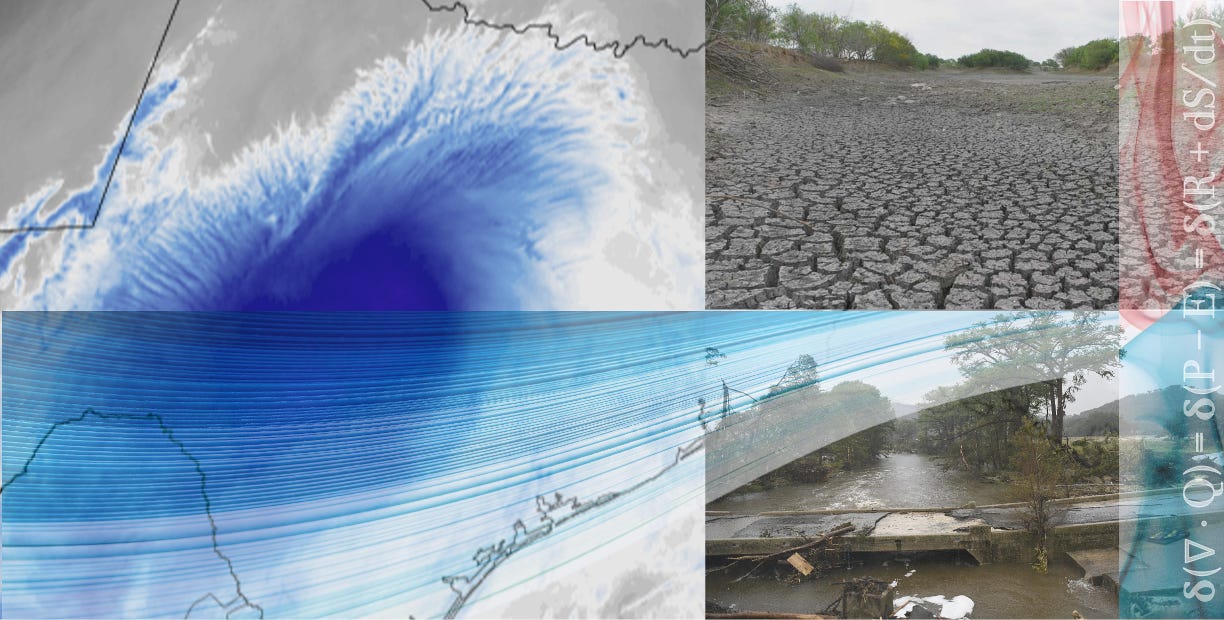
Hello Interactors, It’s hard to ignore the situation in Texas, especially as I turn my attention to physical geography. 'Flash Flood Alley', as it’s called by hydrologists, had already been pounded by days of relentless rain, soaking the soil and swelling the rivers. It left the region teetering on the edge of catastrophe. Then came the deluge. A torrent so sudden and intense it dumped a month’s worth of rain in under an hour. Roads turned to rivers. Homes were lost. Lives were too. As the floodwaters recede, what remains isn’t just devastation — it’s a lesson. One about a changing water cycle, a shifting climate, and a stubborn way of thinking that still dominates how we plan for both. DROUGHT AND DELUGE Is Texas drowning due to climate change? Just three years ago, we were told it’s drying up. That’s when a record drought emptied reservoirs and threw aquifers into steep decline. From 2011 to 2015, 90% of the state was in extreme drought. This seesaw between soaked and scorched is the kind of muddled messaging that lets climate deniers laugh all the way to the comment section. The truth is Texas is drying up AND drowning. This paradox isn’t just Texas-sized — it’s systemic. Our habit of translating global climate shifts into local weather soundbites is failing us. According to hydrologist Benjamin Zaitchik and colleagues, writing in Nature Water in 2023, two dominant narratives frame how these events are explained. Public and policy reporting on patterns like those in Texas usually falls into two camps: * The "Wet-Get-Wetter, Dry-Get-Drier" (WWDD) hypothesis — climate change intensifies existing hydrological patterns, bringing more rain to wet regions and more drought to dry ones. * The "Global Aridification" (GA) hypothesis — warming increases the atmosphere's "thirst," drying out land even where rainfall remains steady. Both frameworks can explain real conditions, but the recent Texas floods expose their limits. If a region long seen as drying can also produce one of the most intense floods in U.S. history, are these ideas flawed — or just too rigidly applied? WWDD and GA aren’t competing truths. They’re partial heuristics for a nonlinear, complex water system. Yet our brains favor recent events, confirm existing beliefs, and crave simple answers. So we latch onto one model or the other. But these simplified labels often ignore scale, context, and the right metrics. Is a region drying or wetting based on annual rainfall? Soil moisture? Streamflow? Urbanization? Atmospheric demand? Texas — with its sprawling cities, irrigated farms, and dramatic east–west gradient in rainfall and vegetation — resists binary climate narratives. One year it exemplifies GA, with depleted aquifers and parched soil. The next, like now, it fits WWDD, as Tropical Storm Barry — arriving after days of relentless rainfall — stalled over saturated land, unleashing a torrent so fierce it overwhelmed the landscape. Zaitchik and his team call for a clarification approach....
0:09SPEAKER_00Hello, Interactors.
0:11SPEAKER_00It's hard to ignore the situation in Texas,
0:14SPEAKER_00especially as I turn my attention to physical geography.
0:18SPEAKER_00Flash Flood Alley,
0:19SPEAKER_00as it's called by hydrologists,
0:21had already been pounded by days of relentless rain soaking the
0:25soil and swelling
0:26SPEAKER_00the rivers.
0:28SPEAKER_00It left the region teetering on the edge of catastrophe.
0:32SPEAKER_00Then came the deluge.
0:34A torrent so sudden and intense,
0:36it damped a month's worth of rain in under an hour.
0:41SPEAKER_00Roads turned to rivers.
0:42SPEAKER_00Homes were lost.
0:44SPEAKER_00Lives were too.