
Interplace · Brad Weed
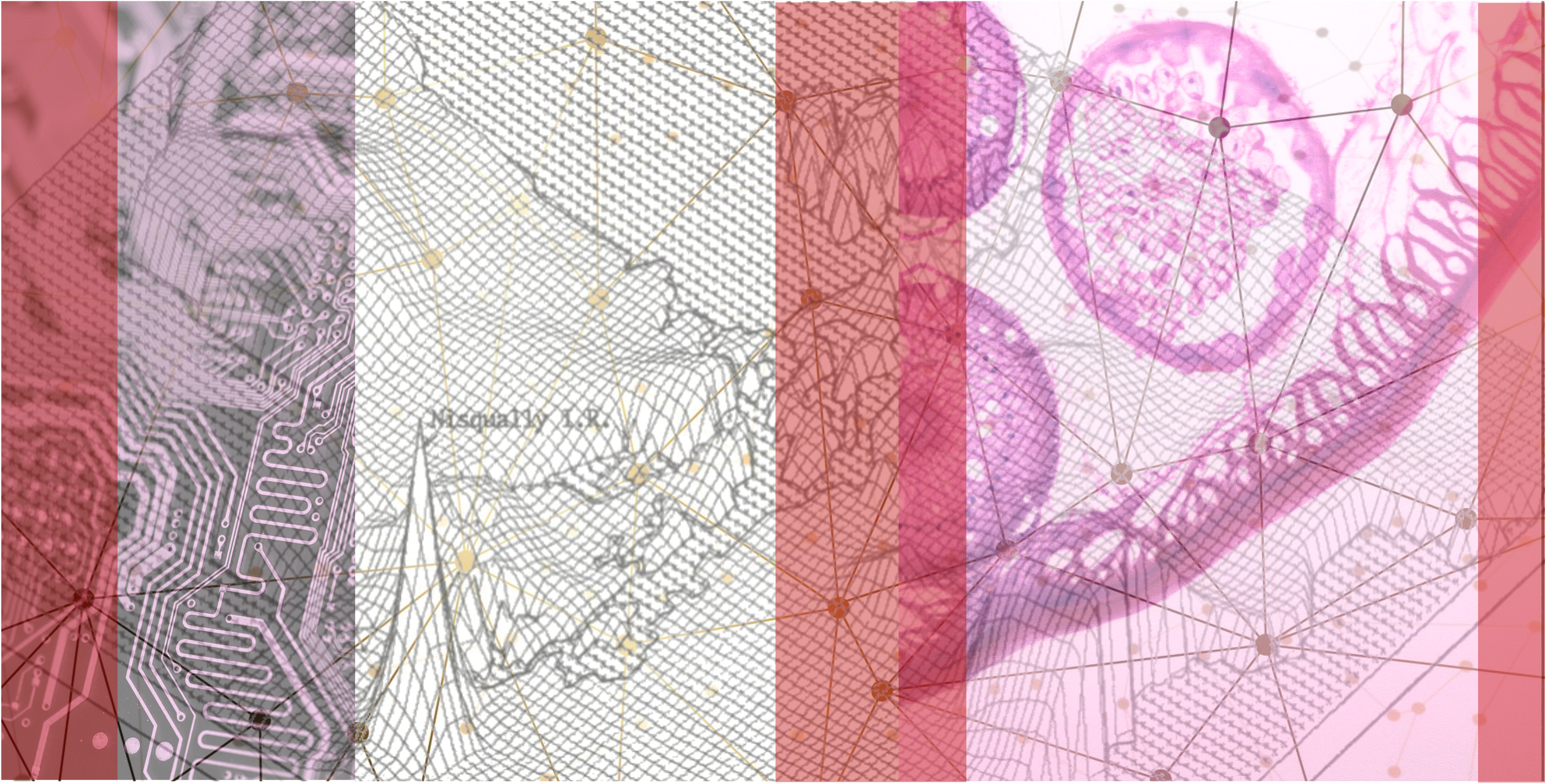
Hello Interactors, It’s been a while. Traveling for family, and a bit flooded by the relentless sneaker waves of unsavory world events — the kind that usually inspire me to write but lately threaten to pull me under. Spring in the northern hemisphere means Interplace turns to geographic information science and spatial analysis. How might we look at the complex unfolding of world events through this lens — and what happens when we push it further than emergence alone can carry it? That’s what I attempt to explore here. PATTERNS PRECEDING PHYSICAL PLACES Geographic information science is a relatively recent field. It emerged from mid-20th-century cartography and land-use planning. Computer cartography and quantitative geography of the 1960s is often considered the first true digital Geographic Information Systems (GIS). It became a science (GIScience or GISc) in the late 1980s and early 1990s when Michael Goodchild questioned if there was a genuine scientific discipline lurking within the software. His answer was yes. He built an institutional home for that argument at the National Center for Geographic Information and Analysis at the University of California, Santa Barbara, my alma mater. Goodchild was my senior advisor in 1989 as UCSB was becoming a generative intellectual hub in the field. UCSB’s geography department continues to push the question of what space means analytically, not just how to map it. I’m personally invested in better understanding how GISc may be a natural partner for complexity science, a field I’ve been attracted to since I started researching and writing. This partnership isn’t new. GISc provides a powerful framework for dissecting the spatial dimensions of complexity, where systems defy reductionist analysis and emerge through nonlinear interactions. In the early 2000s, geographer David O’Sullivan, and others, articulated this as the study of “the behaviour of macroscopic collections of many basic but interacting units endowed with the potential to evolve in time” emphasizing these characteristic elements of complexity science: self-organization, path dependence, and the irreducibility of wholes to their parts. Around the same time, sociologist John Urry (and others) extended this to global scales, portraying globalization as co-evolving systems marked by unpredictability, irreversibility, and positive feedback loops that amplify disorder within pockets of order. These parings are a good start, but computational biologist Michael Levin offers what can be seen as a genuinely unsettling upgrade. His recent work on the origin of cognitive and morphological patterns suggests the dominant appeal to emergence as an explanatory endpoint may itself be, in his words, a “mysterian” position — one that “does not facilitate further advances.” When a surprising pattern appears in a complex system, the emergentist says “that’s just what happens” and catalogs it. But Levin proposes these patterns are not random facts to be noted and...
0:06SPEAKER_00Hello, Interactors.
0:08SPEAKER_00It's been a while.
0:09Traveling for family and a bit flooded by the relentless
0:12sneaker waves of unsavory world events.
0:16The kind that usually inspire me to write,
0:18but lately threaten to pull me under.
0:22Spring in the Northern Hemisphere means interplace turns to
0:24geographic information
0:26SPEAKER_00science and spatial analysis.
0:29How might we look at the complex unfolding of world events
0:32through this lens?
0:33And what happens when we push it further than emergence alone
0:37can carry it?
0:39SPEAKER_00That's what I attempt to explore here.
0:46SPEAKER_00What the world points to.