
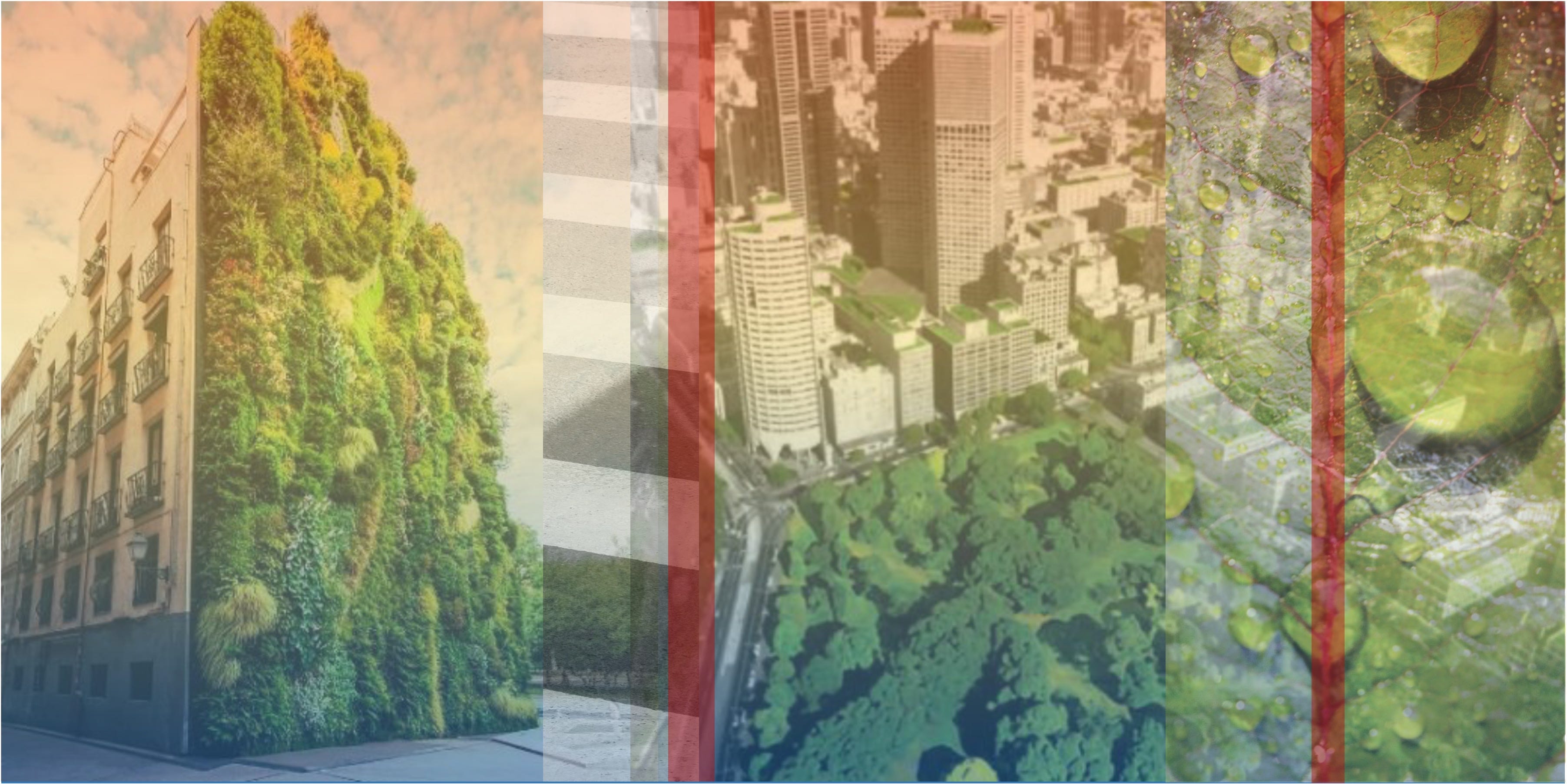
Interplace · Brad Weed
Hello Interactors, I’ve long been a fan of “regreening” cities, imagining replacing bits of asphalt and concrete with trees, plants, mini-parks, and green roofs to cool them down. In many cases these are indeed good interventions. But even these celebrated nature-based solutions to the “urban heat island” effect require closer inspection. It turns out any land cover change alters energy, water, and momentum exchanges between the Earth’s surface and the atmosphere. Which are the right ones and where? To understand why cookie cutter greening plans can fail and how planners and policy makers can build cities that can handle climate change, we need to understand how land and the air interact. Environments vary from place to place, and this puts limits on what we can do to land to create urban climates that are both beautiful and healthy. To get a handle on what the research says, I found a literature review from 2025 that synthesized findings from 84 peer-reviewed studies. In was published in the journal Climate Risk Management. Let’s see what they, and others, found. BEATING HEAT WITH BIOPHYSICAL FEATS What better place to start than science. Let’s just delve right into how urban green spaces affect temperature. It starts with determining the energy balance at the surface of the earth. This comes from a budget equation found in physical geography. When sunlight hits the Earth’s surface, it breaks down into three main fluxes, or ways heat moves around * Sensible heat flux: the heat that directly warms the surrounding air, which we measure as temperature. * Latent heat flux: the heat that’s used to turn water from a liquid to a gas, like when we sweat or plants release water vapor (transpiration). * Ground heat flux: the heat stored in building materials, asphalt, and soil. In conventional urban environments dominated by concrete and asphalt, latent heat flux is minimal because we’ve built cities in ways that rapidly drain water away as ‘waste’. As a result, incoming solar energy is funneled into sensible heat. This raises daytime air temperatures that gets stored as ground heat, which is slowly radiated back into the city at night. Urban greening can reshuffle this thermodynamic budget through three interconnected physical mechanisms: shading, evapotranspiration, and albedo modification. Mechanism 1. Shading: Intercepting Solar Radiation Shading — the most immediate and reliable cooling mechanism provided by vegetation — requires precise microclimatic quantification. Vegetative canopies act as physical shields, intercepting incoming shortwave solar radiation before it strikes impervious surfaces like concrete or asphalt. By preventing these dense materials from absorbing heat and emitting sensible heat flux back into the boundary layer, shading dramatically lowers surface temperatures and reduces the baseline thermal energy transferred to the surrounding air. (Bowler, D. E., et al. 2010) The cooling benefit of urban trees is non-linear,...
0:00[music]
0:09SPEAKER_00Hello, Interactors.
0:11SPEAKER_00I've long been a fan of re-greening cities.
0:15SPEAKER_00Imagining replacing bits of asphalt and concrete with trees,
0:19SPEAKER_00plants, mini parks, and green roofs to cool them down.
0:25SPEAKER_00In many cases, these are indeed good interventions.
0:29SPEAKER_00But even these celebrated nature-based solutions to
0:32SPEAKER_00the urban heat island effect require closer inspection.
0:37SPEAKER_00It turns out any land cover change alters energy,
0:40SPEAKER_00water, and momentum changes between the Earth's surface and the atmosphere.
0:46SPEAKER_00Which are the right ones, and where?
0:50SPEAKER_00To understand why cookie-cutter greening plans can fail,
0:54SPEAKER_00and how planners and policymakers can build cities that can handle climate change,
0:58SPEAKER_00we need to understand how land and air interact.
1:02SPEAKER_00Environments vary from place to place,