
Interplace · Brad Weed
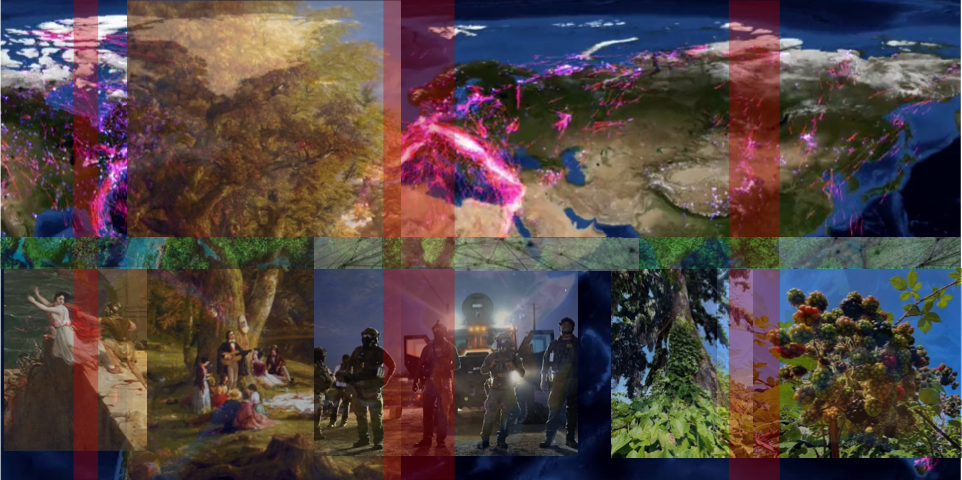
Hello Interactors, It’s been awhile as I’ve been enjoying summer — including getting in my kayak to paddle over to a park to water plants. Time on the water also gets me thinking. Lately, it’s been about what belongs here, what doesn’t, and who decides? This week’s essay follows my trail of thought from ivy-covered fences to international borders. I trace how science, politics, and even physics shape our ideas of what’s “native” and what’s “invasive.” INVASION, IVY, AND ICE As I was contemplating this essay in my car at a stop light, a fireweed seedling floated through the sunroof. Fireweed is considered “native” by the U.S. Government, but when researching this opportunistic plant — which thrives in disturbed areas (hence it’s name) — I learned it can be found across the entire Northern Hemisphere. It’s “native” to Japan, China, Korea, Siberia, Mongolia, Russia, and all of Northern Europe. Because its primary dispersal is through the wind, it’s impossible to know where exactly it originated and when. And unlike humans, it doesn’t have to worry about borders. So long as a species arrives on its own accord through wind, wings, currents, or chance — without a human hand guiding it — it’s often granted the status of “native.” Never mind whether the journey took decades or millennia, or if the ecosystem has since changed. What matters is that it got there on its own, as if nature somehow stamped its passport. As long time Interactors may recall, I spend the summer helping water “native” baby plants into maturity in a local public green space. A bordering homeowner had planted an “invasive species”, English Ivy, years ago and it climbed the fence engulfing the Sword Ferns, Vine Maples, and towering Douglas Fir trees common in Pacific Northwest woodlands. A nearby concerned environmentalist volunteered to remove the “alien” ivy and plant “native” species through a city program called Green Kirkland. Some of the first Firs he planted are now taller than he is! Meanwhile, on the ground you see remnants of English Ivy still trying to muster a comeback. The stuff is tenacious. This is also the time of year in the Seattle area when Himalayan Black Berries are ripening. These sprawls of arching spikey vines are as pernicious as they are delicious. Nativist defenders try squelching these invaders too. But unlike English Ivy, these “aliens” come with a sugary prize. You’ll see people walking along the side of roads with buckets and step stools trying their darnedest to pluck a plump prize — taking care not to get poked or pierced by their prickly spurs. This framing of “invasive” versus “native” has given me pause like never before, especially as I witness armed, masked raids on homes and businesses carried out by U.S. Immigration and Customs Enforcement (ICE) agents. These government officials, who are also concerned and deeply committed citizens, see themselves as removing what they label “invasive aliens” — individuals they fear might overwhelm the...
0:13SPEAKER_00Hello, Interactors.
0:15SPEAKER_00It's been a while,
0:17SPEAKER_00as I've been enjoying summer,
0:19SPEAKER_00including getting in my kayak to paddle over to a park to water plants.
0:24SPEAKER_00Time on the water always gets me thinking.
0:27SPEAKER_00Lately, it's been about what belongs here, what doesn't, and who decides.
0:33This week's essay follows my trail of thought from ivy-covered
0:37fences to international borders.
0:40SPEAKER_00I trace how science,
0:41SPEAKER_00politics,
0:42SPEAKER_00and even physics shapes our ideas of what's native and what's invasive.
0:51SPEAKER_00Native or not, how science, politics, and physics decide who belongs.
0:58SPEAKER_00From fireweed to migration waves, rethinking the boundaries of belonging.
1:10SPEAKER_00Invasion,
1:11SPEAKER_00Ivy,