
Interplace · Brad Weed
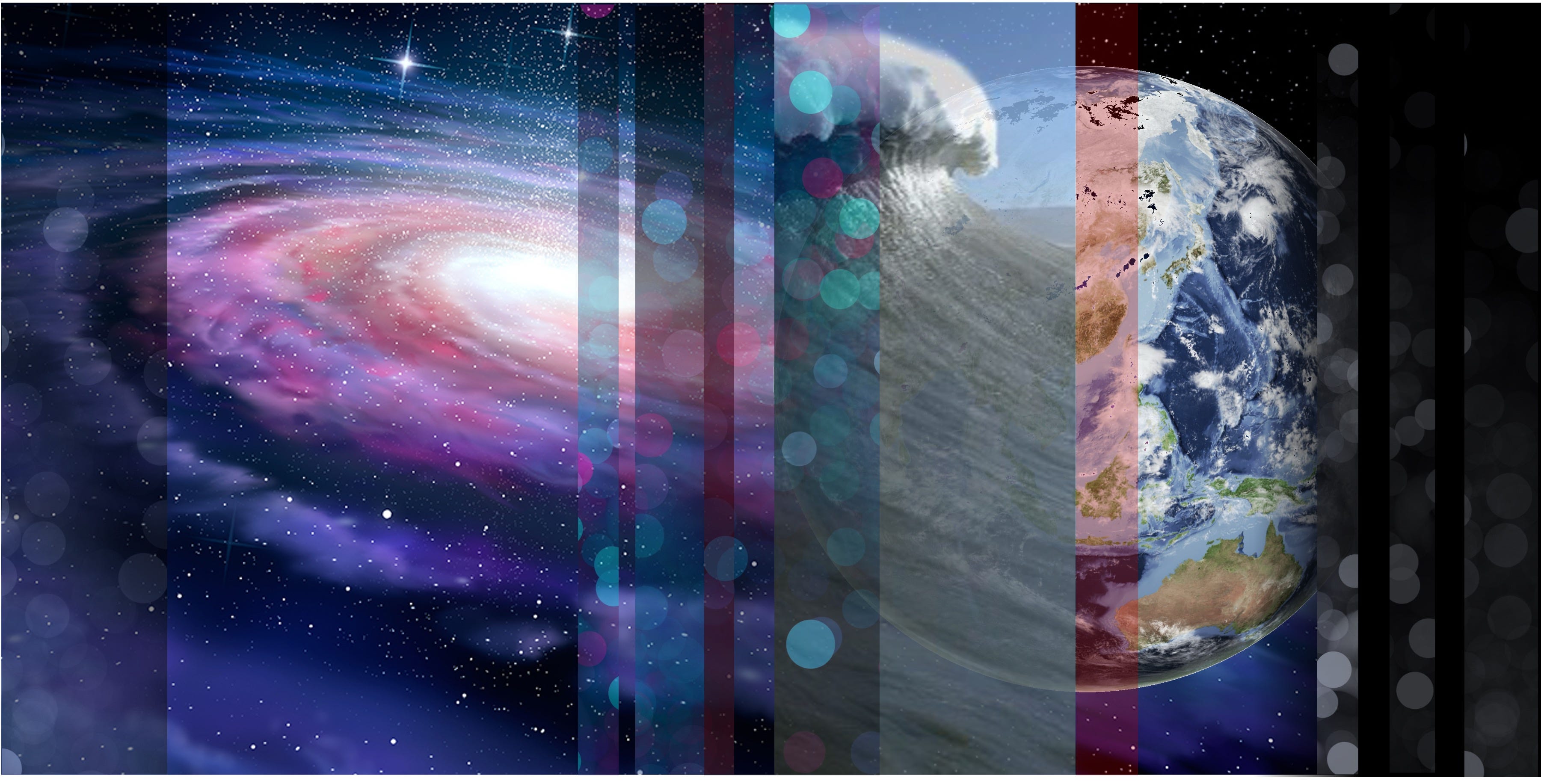
Hello Interactors, My wife and I recently started watching the mini-series 100 Foot Wave, which follows extreme surfer Garrett McNamara’s quest to ride the mythical 100-foot breaker. The show has put Nazaré, Portugal on the map — not just as a place, but as a symbol of human daring against forces far larger than ourselves. At the same time, I’ve been listening to physicist-philosopher Sean Carroll’s recent “solo” podcast on the emergence of complexity, tracing how the universe began in simplicity and blossomed into stars, life, and consciousness. These two threads — towering waves and cosmic arcs — collided in my mind, stirring something that has been swelling in me for years: how to reconcile wonder at life’s improbable flourishing with despair at its accelerated unraveling on Earth. Should despair be the only response? Or is it possible, like the surfers at Nazaré, to recognize the peril without surrendering to it — to ride, however briefly, the wave that could also destroy us? THE COSMIC WAVE Beneath the lighthouse bluff at Nazaré, Portugal opens a canyon 140 miles long and three miles deep — three times deeper than the Grand Canyon. Born of tectonic fractures and sculpted over millions of years, it is less a static feature than a force in its own right: a conduit that gathers the ocean’s momentum and hurls it shoreward. Swells that elsewhere would pass unnoticed are here magnified into walls of water, indifferent to whether they become playground or grave. Geography conspires — wind, current, and rock — but the canyon itself is an accomplice, a reminder that Earth is never merely stage but actor. For today’s surfers, this is possibility. For centuries of fishermen, it was peril. The waves have not changed, but the stance we take toward them has — and that, too, becomes part of the story the canyon tells. So it is with complexity. Every wave begins simple, a long low swell born of distant winds, that crescendos into chaos at the shoreline. It swirls and curls into turbulent foam piqued in curious but dangerous beauty, only to dissolve back into undertow, bubbles, and silence. Our own cosmos follows the same rhythm, driven by the logic of entropy — the tendency of energy to spread, of order to give way to disorder. In the beginning, we know the universe was astonishingly simple and ordered: a hot, uniform plasma, almost featureless in its smoothness. Imagine the origin of life sitting at origin of a graph. It exists orderly in low entropy and low complexity. But entropy is restless. As it advanced diagonally up and to the right disorder increases in a straight line. This opens space for complexity to emerge. Early on in the cosmos tiny quantum fluctuations stretched into patterns, atoms gathered into stars, stars fused new elements as galaxies spun, coalesced, and collided. Imagine this as the complexity line on our graph. It also grows with time but takes the shape of a parabolic wave climbing upward to a smooth crest as it increases in...
0:14SPEAKER_00Hello, Interactors.
0:16SPEAKER_00My wife and I recently started watching the miniseries 100-Foot Wave,
0:21which follows extreme surfer Garrett McNamara's quest to ride
0:25the mythical 100-Foot
0:27SPEAKER_00Breaker.
0:29SPEAKER_00The show has put Nazará, Portugal, on the map.
0:32not just as a place,
0:34but as a symbol of human daring against forces far larger than
0:38ourselves.
0:40SPEAKER_00At the same time,
0:41I've been listening to physicist philosopher Sean Carroll's
0:44recent solo podcast on
0:46SPEAKER_00the emergence of complexity,
0:48SPEAKER_00tracing how the universe began in simplicity and blossomed into stars,
0:53SPEAKER_00life,