
Interplace · Brad Weed
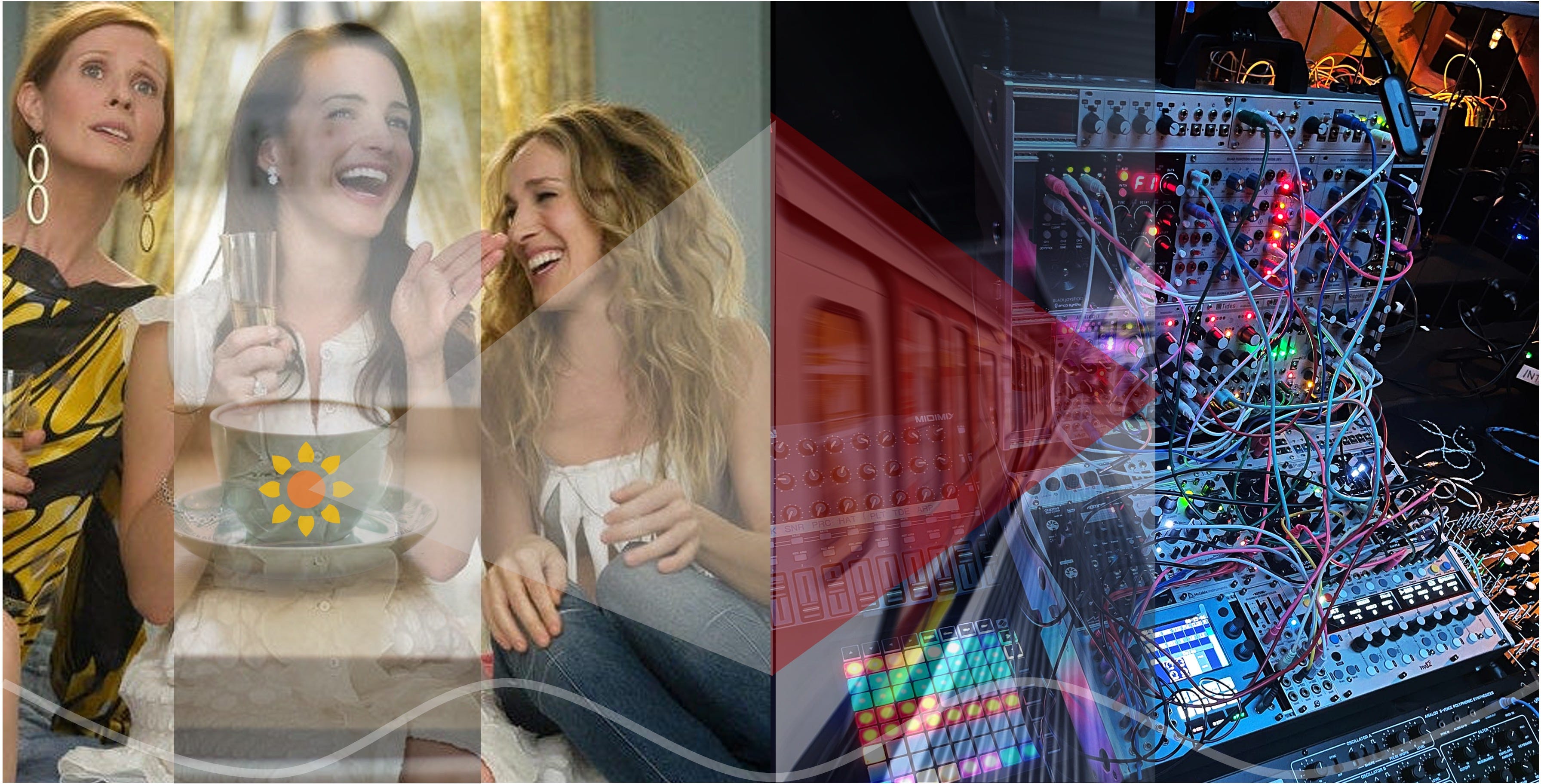
Hello Interactors, My daughter in Manhattan’s East Village sent me an article about the curated lives of the “West Village girls.” A few days later, I came across a provocative student op-ed from the University of Washington: "Why the hell do we still go to Starbucks?" The parallels stood out. In Manhattan’s West Village, a spring weekend unfolds with young women jogging past a pastry shop in matching leggings, iced matcha lattes in hand. Some film it just long enough for TikTok. Across the country, students cycle through Starbucks in Seattle’s U-District like clockwork. The drinks are overpriced and underwhelming, but that’s not the point. It’s familiar. It's part of a habitual loop. Different cities, similar rhythms. One loop is visual, the other habitual. But both show how space and emotion sync. Like an ambient synth track, they layer, drift, and return. If you live in or near a city, you exist in your own looping layers of emotional geography. FLASH FEEDS My daughter has been deep into modular synthesis lately — both making and listening. It’s not just the music that intrigues her, but the way it builds: loops that don’t simply repeat, but evolve, bend, and respond. She’ll spend hours patching sounds together, adjusting timing and tone until something new emerges. She likens it to painting with sound. Watching her work, it struck me how much her synth music mirrors city life — not in harmony, but in layers. She’s helped me hear urban rhythms differently. Like a pop synth hook, the Flash loop is built for attention. It's bright, polished, and impossible to ignore. Synth pop thrives on these quick pulses — hooks that grab you within seconds, loops that deliver dopamine with precision. Urban spaces under this loop do the same. They set a beat others fall in line with, often flattening nuance in exchange for momentum. This isn’t just about moving to a beat. It’s about becoming part of the beat. When these fast loops dominate, people start adapting to the spaces that reflect them. And those spaces, in turn, evolve based on those very behaviors. It’s a feedback loop: movement shaping meaning, and meaning shaping movement. The people become both the input and the output. In this context, the West Village girl isn’t just a person — she’s a spatial feedback loop. A mashup of Carrie Bradshaw nostalgia, Instagram polish, and soft-lit storefronts optimized for selfies. But she didn’t arrive from nowhere. She emerged through a kind of spatial modeling: small choices, like where to brunch, where to pose, where to post are repeated so often they remade a neighborhood. Social psychologist Erving Goffman, writing in the 1950s, called this kind of self-presentation "impression management." He argued that much of everyday life is performance. Not in the theatrical sense, but in how we act in response to what we expect others see. Urban spaces, especially commercial ones, are often the stage. But today, that performance isn’t just for others in the room....
0:17SPEAKER_00Hello, interactors.
0:19My daughter in Manhattan's East Village sent me an article
0:22about the curated lives
0:24SPEAKER_00of the West Village girls.
0:27A few days later,
0:28I came across a provocative student op-ed from the University
0:31of Washington.
0:32SPEAKER_00Why the hell do we still go to Starbucks?
0:35SPEAKER_00It was titled.
0:36SPEAKER_00The parallels stood out.
0:39SPEAKER_00In Manhattan's West Village,
0:41a spring weekend unfolds with young women jogging past a pastry
0:45shop and matching
0:46SPEAKER_00leggings,
0:47SPEAKER_00iced matcha lattes in hand.