
Intentional Motherhood: stress relief, self-care, biblical encouragement for overwhelmed Christian Moms · Kelsey Redd | Christian Mompreneur, Homeschooler, Meditation Teacher, Mental Health Counselor
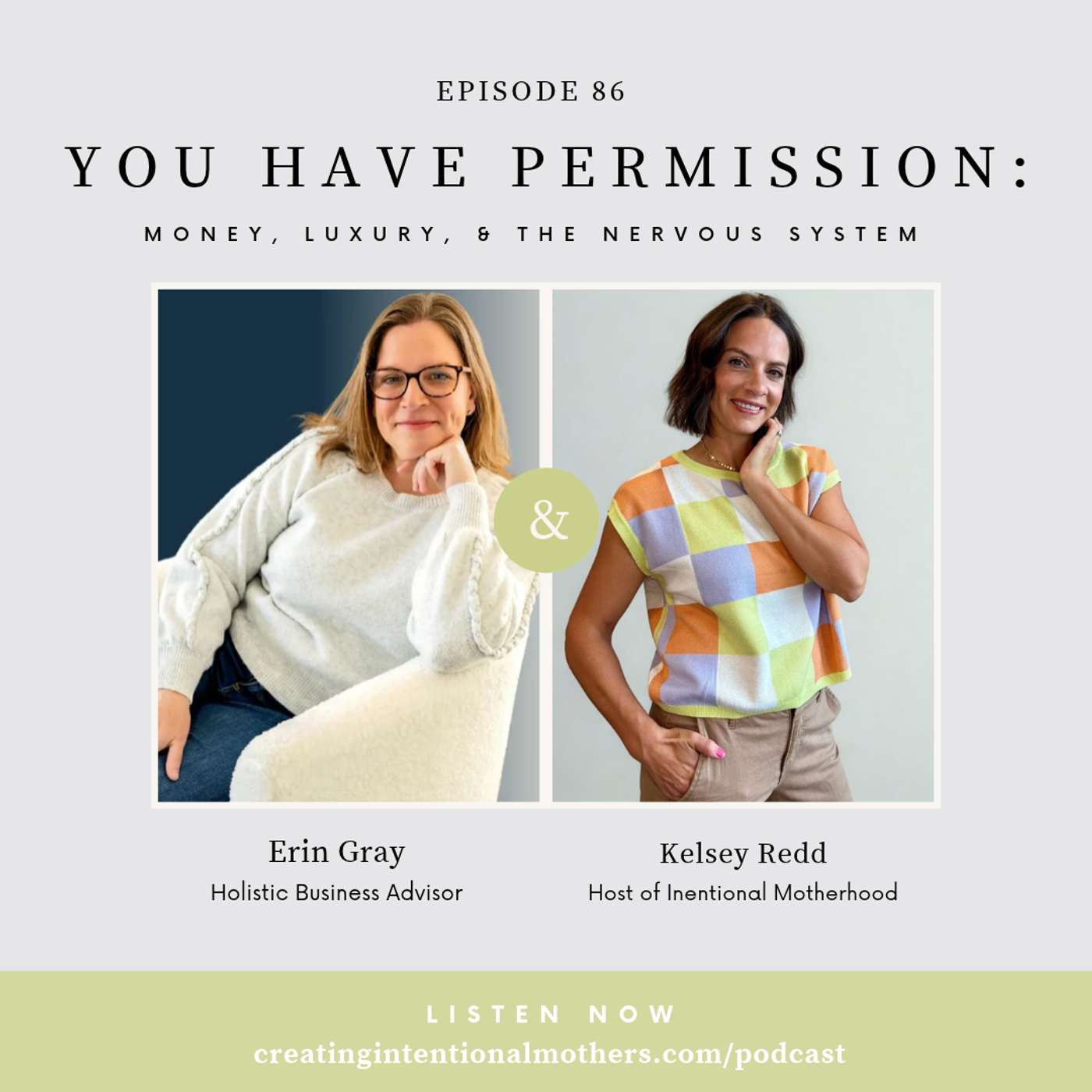
When was the last time you did something just for you, not because you earned it, not because everything else was done first, but just because you wanted to? If you had to think about that for more than two seconds, this episode is for you. Host Kelsey Redd sits down with Erin Gray, strategic advisor to seven figure female founders, former certified financial planner, and recovering people pleaser, who spent over a decade helping run a multimillion dollar family construction business before finally asking herself the question that changed everything: is this actually the life I want? What followed was a complete rebuilding, from walking away from the family business to moving her family across the Pacific to Maui, to landing in Boise and building a coaching practice that helps women run wildly successful businesses without sacrificing the lives they actually want to live. This conversation goes way beyond business strategy. This one is for every mom who is running on pressure, guilt, and a very long list of things she thinks she has to do before she gets to rest. In this episode you will learn: How to know when you are living a life built on obligation instead of desire, and what to do about it Why your nervous system is calibrated to rush and pressure and how that is quietly running your life The real reason you cannot receive, whether it is a compliment, help from your husband, or money, and how to change it What luxury actually means and why you do not have to spend a dime to start practicing it The three stages of awareness that every woman goes through when she starts putting herself first Why stop saying you do not have enough time is actually the most practical advice you will hear all day How to have the conversations with your husband you have been avoiding that would actually give you more space Why the dishes can wait and what actually cannot Plus Erin gives every single listener an official permission slip to stop earning their rest and start living like they actually matter, because they do. Connect with Erin Gray: Listen to her podcast, Your Money, Your Rules YouTube Channel: https://www.youtube.com/@yourmoneyyourrulespodcast Instagram: https://www.instagram.com/theeringray Subscribe now, share this show with a mom friend, and join the conversation! Want to be in the know? Get on the email list Find more resources at www.creatingintentionalmothers.com/resources Connect with Kelsey @creating.intentional.mothers There’s a vision you have for your life. Let’s create it with a 3 or 6-month Dream Activation Private Mentorship. Learn more about the STOP THE SPIRAL Mini-Course here. Grab your 4 Part Apology Poster here! Get your FREE Self-Care Planner here Get your Purposeful Living Journal HERE. Click here for 50% off your 4 Week Nature Reset to start spending more time in nature in a practical way! ★ Support this podcast on Patreon ★
Kelsey Redd: Hey friends, welcome to Intentional Motherhood. I'm so glad you're here with me today and we have a really special treat. I have a guest here who I have been excited to talk about for months. Her name is Erin Gray. Let me tell you just a little bit about her and then we'll start chatting. Erin Gray is a strategic advisor and thinking partner to seven figure female founders who want to grow their businesses without building lives that they no longer want to live. A former certified financial planner who spent more than a decade helping to run her family's multi million dollar construction company, Erin brings together the three d side of business, money, strategy, operations, and leadership with the deeper work of identity, intuition, nervous system regulation, and self trust. Her work is rooted in helping women create profitable, sustainable businesses that support the lives they actually want to live, rather than lives built around supporting their businesses. Erin, thank you so much for joining us. Welcome. Erin Gray: Thank you for having me. So excited to be here. Kelsey Redd: Great. So just give us a brief little summary of your life journey into the construction business, into financial planning, and eventually shifting away from that and now coaching the way you do, helping women who are also trying to build their businesses? Erin Gray: Yeah, obviously, it didn't happen overnight. This is what, been twenty years in the making. So my background is in finance and financial planning. And I did that for about six years and burnt myself out with that. And then decided, I would help. I was kind of just like, I don't wanna the way that the firm went, they were making some changes. And I was like, I don't wanna go off on my own and join two other men that I was kind of working with already. And I was like, okay, so what do I wanna do? And I just kinda sat, you know, for about a month, which is typical my style, old Erin. And my dad was like, hey, can you help me come do a little bit of work here? I need somebody that I can trust. You know, I don't have anybody. And he had a bookkeeper, but nobody that, like, would oversee things. And a little bit of work brief quickly ran into, like, holy smokes. What in the world? How have you guys been operating for thirty years like this? And so I just kinda rolled my sleeves up and got busy with making lots of changes. And, you know, that over the course of, you know, with a small business, I say small business. Yes. It's multimillion dollars, but we probably had about 30 ish, 32 employees when I started. And it was my uncle and my father that owned the company. I came on, there was another brother that we were doing a whole dissolution of that partnership. So there was a divorce of one brother, you know, with the business. So seeing all of that, seeing what payroll was like, seeing where we have b or c employees that don't need to be here anymore, and we need to cut the fat there. Like, was just so much that I was able to be privy to and be, you know, quickly got indoctrinated in with because, you know, it was a thirty year business and there was that trust, instant trust with, you know, my father. And also me earning, you know, the in the best way earning this the opportunity to sit in the seat to be able to advise him, you know, so, and I did that for about eleven years and we had gone back and forth for years about buying the business and then, know, who was gonna, he wanted me to be a partner with someone and I was just, I didn't have the language at the time, but I was like, absolutely not. Like we are not on the same wavelength. I would never have him as a partner. I saw the writing on the wall and when I had to sit and ask myself like, why would I purchase the business? It was gonna be just for money. It was just because that's just what I did. It could be an easy transition. It wasn't for a love of it. And so really deciding like, I don't wanna do this and walking away and saying, I don't wanna do this and having all of the thoughts I had about disappointing my dad and what would happen and all of this kind of stuff. And like it was my grandfather started the business. So that was gonna end at that, if I wasn't gonna buy it. And so recognizing like, no, I actually want to live a life I want to live. And the life that I've been living for the last twenty, I know forty years, but twenty years of working years isn't the life that I want. I wanted to travel more. I wanted to spend more time with my daughter. And so making that decision, that's like where I hired my first coach of like, I I came to her and and I she's like, what do you want help with? And I was like, I wanna be able to leave my family's business. And she was like, that's your goal. And I was like, to me at the time, it felt like an astronomical goal. Like, I don't know if I could do that. And so, yeah, so that's where I hired my first coach and started working on that. And then phase out over about a year of me not working there and then starting my own practice of advising and coaching, and then really realizing, like asking my heart, like, what do you actually want? And the answer was to take time off. I had never taken time off. I sadly scheduled my only child's birth around payroll when working at the business and just so many things that I had done that I felt like I had to do because that's kind of how I grew up. And so fast forward taking time off, which this is I'm giving you the very abbreviated version of how this happened. It didn't happen overnight. Moving our entire family across the Pacific Ocean, living in Maui, traveling, living out of suitcases, landing in Boise, and then really figuring out, like, what do you actually wanna do, Erin? How do you want to use your gifts to help women and money? And through all of my journey of recognizing, once I stopped working, all of my money, deep, deep money stories and fears came up. And recognizing like, you know, kind of like when your hindsight is twenty twenty, you get to see like, oh, that's where that came in. Oh, that's where that came in. But how much I had recognized and saw where people were making decisions around money and business from a very fear based place and various somatic place versus, you know, really working through that. So then ultimately deciding, okay, I wanna work with 7 figure founders who, you know, really want I mean, I wish I would have had a me in my corner back then, you know, someone that could have kinda given me the, I don't wanna say shortcuts, but I learned a lot of things on my own and paid a lot of advisors, meaning, you know, attorneys and mainly CPAs to help me understand that business side. And so really now landing on really helping women to not only run really good fun, successful, profitable businesses, but like have fun and live lives that they actually want to and not be chained to something just because it's grown to a point where, it's just gotten bigger than what they've envisioned it to be. It's just, they just kind of gone along the way as the suggestions versus like, they've really built it intentionally in the way that they want to do it. Kelsey Redd: Yeah. You mentioned a few really interesting things in there. You talked about I definitely wanna get into the money stories that we tell ourselves and all of that. But before we even get there, you've you talked about how we sometimes just fall into living this life that we think we just have to stay in or we feel stuck in or we feel like it's suddenly we didn't realize that we had gotten ourselves in so deep and now there's no way out anyways. So what does it look like? How do we recognize when we're like just doing this out of obligation or guilt or whatever it might be? And what does a successful life that you actually enjoy look like? What are we striving to get to? Erin Gray: Yeah. I think to answer your first question, I think it's how you feel. Like, I was frustrated and probably angry not knowing it and probably suppressed a lot of it, but I was frustrated a lot. And that is for everybody. It's gonna you know, whatever emotion or lower vibration emotion it is, you will feel that on the regular. I'm not saying we need to be high vibe all the time. That's not what I'm advocating for. But what I'm saying is that every single day, if you were to look back and you're like, know what? The last couple of years of my life, I feel, you know, depressed or I feel, you know, frustrated or angry a lot of the times that's or bitter or resentful. That's probably a very good indication that's, you know, I always call it like your compass, you're off track. And so you have to start there of like, why do I feel this way? And then second is it's gonna be different for everybody, right? Like my success, what I deem successful, what I used to to think success was is a lot of money, a lot of investments, a lot of assets, a successful business, all of that. That's what I used to deem as successful. But now it's more so of like, having money is fun. Having assets is great. And also like, what is my quality of life? Do I enjoy waking up in the morning? Do I look forward to going to work? Do I look forward to being with my kid? And am I present with my child when I'm with her? Or am I doing 30 different other things? Do I get to travel the way that I want to? Do I get to be present? And I think that everybody has to sit down and that you have to stop looking outside of yourself. And you have to define like, what does success mean to you? Because if you don't know what it is, more often than not, we'll just follow along and figure out from someone else. And then we end up frustrated or resentful. And so it's really taking the time to see what that looks like. I mean, I ask myself all the time, like if it's, I want both, right? I want to make a lot of money and I wanna have a lot of fun and enjoyment and freedom. But if I have to choose one, like that's kind of the thing. I'm gonna choose freedom over more money because more money doesn't, like there's always an opportunity for us to earn more money. The freedom and the way that you wanna work and who you wanna work with and how, you know, like your hours in a day that you wanna work, like that's important to me. And so you really have to define what that looks like for you. Kelsey Redd: Yeah, yeah, that makes sense. And being able to just identify your values to make sure that you are being drawn towards that true north, and not getting distracted along the way and then realizing you've come so far only to realize that was never what I wanted anyways. I feel like sometimes as moms though it can get a little tricky because we do feel like we I mean there is this responsibility for the children we are raising and for the family that we're managing and so sometimes it can start to feel a little bit like what we want and what we dream about doesn't matter as much or that we just have to grind through the day to day you know, work and chaos of motherhood while there is a dream that we just kind of set aside onto the shelf. Is there a way to bridge that gap? Is there a way for moms who are busy with their kids to also find fulfillment and and live for their own dreams? Erin Gray: Yes. I think it's our duty. I don't like the word obligation, but I think, like, I have a daughter, and I think that we are probably the first generation that has probably had the opportunity to parent differently and to show our children, what actually being a mom is like. I don't think being a mom is sacrificing everything for your children and being completely unhappy. And then at some point, maybe down the road at twenty or twenty two years when they decide that they are ready to go do their own thing, that you get to do what you want. And I think that we aren't like, when I think about, like, what is the most loving thing to do? It's to also teach our children, like, to have what you want and to put yourself first because nobody's gonna do it for you. And this isn't something that I have always known how to do. Like, this has been a process over years because I totally put her first. I put everyone else. Like Erin, Erin didn't even exist on a list. There was no Erin on the list. So, I think it's natural for women because we're such givers. We want to do that. We are genuinely giving and pleasing, and you have to be really mindful and aware of when does that come to giving to, like, self abandoning or to putting everybody else before you. And this is a practice. And when I, you know, talk to clients, it's like, it's not gonna feel good in the beginning. Right? Like, we think that we're gonna make these changes, and it's gonna be like, oh, okay. Well, I'm just gonna put myself first. No. When I decided I'm gonna sit and I'm gonna lay on this couch, and I'm gonna let my kid play with herself, and my husband's gonna cook dinner. I felt guilt while I sat on the couch and watched Netflix. And that happened for a long time until you start to change the patterning, what your nervous system is used to. Like, it's almost like you watch Netflix, your body serves up guilt. Right? Until we start teaching the body that we need to serve up a different emotion, we'll continue to keep doing it. Because the guilt is what has us then not doing it. Right? We feel guilty. We don't like how that feeling feels in our body. And so we have to learn how to say no. Like, that's a very simple basic answer. And then that's like the 10% of the iceberg. And then the 90% of the iceberg of saying no is, you have to feel whatever feeling you are avoiding feeling by saying yes to everyone. So what is that? Is that resentment? Is that guilt? Is that shame? I think shame and guilt were probably my most two practiced emotions that I would feel. Because by saying no, I would feel shame because my upbringing, right? Like you please everybody else, you make sure everyone else feels okay. So we have a lot of like, ma'am. I think a lot of moms do, women do because that's kind of how we were raised. And, I think it's important to teach our children that and when I say put ourselves first, that doesn't mean ignore other people. It doesn't mean it just means are you taking care of yourself first in order to be able to then take care of other people? And, you know, there's when we don't do that, we have disease in our body. You know? What happens to our marriage when we do that? Like, how can you have an amazing lit up marriage when you feel depleted? How can you show up for your kids when you're, like, frustrated because you feel like you haven't gotten to do anything for yourself? And so bridging the gap, another thing that I would say is, what's one thing that you can do? And we don't have to start big. What's one thing that you're gonna do for yourself in the morning before you do anything for anybody else? And and that is going to feel uncomfortable because we're probably used to making breakfast first. We're making used to like, what does my husband need? What do the kids need? And everything that I say is nuanced. So, I mean, obviously, you know, when I was breastfeeding my daughter, I was feeding her first. But also it's like, okay, after you've done that, what can you do for you? Can you take yourself for a walk? Like, what do you enjoy that is fun for you that you can do before you start taking care of everybody else for the day. Kelsey Redd: Yeah. Even that is can be a hard thing for moms, especially moms of young children who are very physically, you know, just need their moms at what feels like all hours of day and night. But to be able to recognize that I am worth giving myself ten minutes of me time in the morning so that I can just fill my cup enough to go help serve my family the rest of Erin Gray: the day, Kelsey Redd: that that may be just, you know, the thing that's causing the problem is not even feeling like we're worth that and recognizing that actually I have worth as an individual and as a woman and as a person aside from just what I can give to everyone else. For sure, you know, you've I've loved so many of your podcast episodes and I highly recommend that my audience go over and find you on anywhere you can find podcasts, Your Money, Your Time. Am I saying that right? That's the title. Erin Gray: Your Money, Your Rules. Kelsey Redd: Yeah. Sorry. Money, Your Rules is the name of your podcast, so I hope they go find it. But one thing you talk about is this permission to actually desire things, nice things even, luxury, and I love the way you redefined luxury. And when motherhood so often just is equated with self sacrifice, how do you give moms permission and how would you help a mom who doesn't even know how to allow herself to desire something for herself or to or feels guilt and shame if she even wants luxury. Erin Gray: Yeah. I think with the permission piece, I give you permission. All of you listening, I give you permission. You know? There you go. And also, I think going back to like, we go first, the more of us that we get to see that we are doing it, the more I think it gives permission for others. Right? I think for I don't know about you, but like my mom and generations above her, like, she never they never my grandma never put herself first. My mom never put herself first. Like, I'm probably the first woman in my family generationally who's actually said, no. I'm gonna go first. And I think that growing up, my dad used to make a lot of comments about, my mom, like, wanting he wouldn't say luxury. It's like my mom was always trying to make the house look beautiful and do, you know, modifications or, redesigns or whatever it might be. And I took what he would say about her, and I internalized that and was like, okay. That creates friction between the two of them. So I just kind of stopped wanting things that were really nice because I knew what kind of friction it created within them. Whether I I mean, I I definitely probably was not aware of this. But, like, after reflecting, on that, like, I think how much I kind of dim down some of my desires because I knew what it created within the family. You know? And so really starting going back to the same thing that we've already talked about is really starting to ask yourself, what do you enjoy? What do you find that is, you'll probably never find me with any type of handbag or any type of, like I typically wear Target clothes or there's this one brand I really like, but like, I'm not that girl. And that's okay if you are. Like, if you like that kind of stuff, then go get that kind of stuff. But my type of luxury is more like travel and, you know, beautiful things in my house and lots of space in my day. And granted, like when Grayson, our daughter, was younger, I didn't have a lot of space. Right? So this is in seasons. This is this comes with time, but you can give yourself ten minutes. If you say to yourself, you don't have ten minutes, then we have even more things that we need to discuss before we start talking about this. Right? So it's first and foremost, like, you can give yourself ten minutes of luxurious time to sip your coffee or your tea, look out your patio or whatever it might be, or go for a nice walk. Like, you really have to start being like, what what feels luxurious to me? Luxurious also feels like giving myself plenty of space and time to make decisions. Like, I don't make quick decisions anymore. That that came from a family where it's like, hurry up, Erin. Like, I I see how much we were conditioned as children. I love my parents, but I'm also recognizing like, oh, I've kind of had to be a certain way because my parents were like, well, what's taking you so long to make a decision? Well, I know now I have to feel into something. Like, it it depending on how, you know, like, me buying a car, that probably was like a year process. Right. Because I thought I wanted this one and I went and drove it and I sat in it. Then I was like, no, I don't. And then I really want this one. So it's like giving yourself. And this comes back to knowing yourself. And this is also a process. Right? This didn't happen overnight. This has been years in the making, but allowing myself to be like, what do I value? What do I like? What does, you know, light my soul on fire and what drains my energy? And I think we, you know, allow ourselves, I think, also too, if you if I were to say to you or would you let me say it this way. Would you ever tell me or your friend what you tell yourself? Would you ever tell me you don't you can't take ten minutes to after you fed your baby to just sit there and let them kinda hang out in the bouncy chair and, you know, let you do your own thing? Like, would you ever tell me that? The answer probably is no. So it's like, why do we think that we're any different? And we somehow have in our minds made it okay to to tell ourselves that we're not worth that. But you really have to start digging into, like, why? Why do I believe that? Why do I wanna continue to believe that? You know? Like, is that really serving me to have the most lit up life? And I'm not talking about, you know, crazy luxury and travel and everything, but, like, lit up life is like, I love waking up in the morning and being with my kid. Or I love just being able to when my husband comes home, like, I'm present with him because I've actually had given myself two minutes to think by myself. And so I think that there's several things that we have. There's lots of things, right, that we have to work on and work through. But it has to start with a willingness. Like, are you willing to give yourself permission? And if you're not willing, then you have to ask yourself why? Why am I not willing to give my own self permission to bridge the gap and and give myself, you know, the luxurious time or whatever it is that I'm wanting? Kelsey Redd: Yeah. And even as you're saying that, like, can feel all these emotions rising up in me where I'm like, like, almost just started crying when you said, like, would you tell a friend that? Because I'm like, there are so many things. I I just remember when my twins were babies, well probably after my third was born and I had three under two, that like literally almost choking on food because I was scarfing it down so fast because I knew I had like I may only have thirty seconds to take this bite before a new baby is crying. And like literally I remember like almost choking and being like, maybe I should slow down enough to actually chew and swallow my food so I don't die so that I can continue to be a mom, you know? And but I laugh now, but it literally is heartbreaking to think about. And yet, you know, when you talk about just that willingness, like are we even willing to give ourselves that permission? I feel like this is when we start to get into all that nervous system stuff because suddenly it's like, that's scary. Or, oh, something feels so uncomfortable in there that I'll just continue doing what I'm doing so that I don't have to feel what that brings up in me. Can you talk to us a little bit about the nervous system and how this relates to this whole shift in our mindset of permission and allowing and even being able to enjoy and accept and receive money and abundance and luxury? Erin Gray: Yeah, I think that you know, a lot of people talk about like, what do we need to do? Like, it's always the strategy. It's like, tell me the thing to do. And I'm like, no, tell me what your body feels, and then we'll talk about what you need to do. You know? Because the nervous system, you know, in terms of where it where are you calibrated? Like what you were talking about, let's use you as an example. You were calibrated in like rush and pressure. Like that was what was fueling you. And I think so many of us, I mean, lot of my clients are this way and I'm sure your women are this way too. It's like, we were straight a students. We were always earning the love. We were earning something. We were earning the recognition. Like that's how we received. Right? We didn't we weren't ever taught to receive just by being, you know, on this planet. Like, there there was a point in time. And typically, what I find with people when I ask this question, there was a point in time somewhere between age 10 to 14 where we were taught that it was not safe or okay to receive just for being us. And maybe our parents meant well. Like, I know my parents meant well, and they were trying to teach me the value of a dollar and all of these things, but they tied my earning to my worth. Right? You have to earn to do something. You can't just be on the couch. That's being lazy. Like, what have you done in order to rest? And so I think for women, a lot of us are not great receivers. I know for a long time, I was not a good receiver because in order to receive that meant I had to do something all the time. I had to give something first before I was able to receive. And so from the nervous system standpoint, we have to teach it the body that it's safe to receive. And if we've taught the body and all of the body knows is to be on alert, to be to look out, you know, to be stressed, to be under pressure, to be making sure everyone else in the room is okay or whoever's not in the room and just people in our family are okay before we are, we haven't taught our system that it's okay to just be. It's okay to relax is the word that comes to mind. Right? And relax just like, you know, the other emotions we talked about are going to feel uncomfortable because that is not it doesn't mean that it's wrong. It just means we haven't practiced it enough in our bodies. So if, you know, if I tell if I ask you like, oh, how do you get to your closest grocery store? To You're tell me the way you always go because that's the way you always go. But I could tell you, oh, well, what about this way? And that is another way we could get there. Doesn't mean that the way that I'm suggesting or the way you're suggesting is right or wrong. It just means it's a different way. And it's going to feel funny because you're always used to just taking the quickest way to your grocery store. Right? But if I'm like, hey, let's take this scenic route and let's enjoy the sides and let's have some fun. Let's talk a little bit. You know, that's gonna feel like, woah, I'm used to going this way. And so it's kind of the same thing with our nervous system. Our nervous system is used to fastest point from a to b, sending the synapses to down the nervous system, down our bodies. And most of that time, we've built it from a very pressured and stressed state. And so when we start doing things that aren't pressured, when we start relaxing, when we start being more in that parasympathetic state, which is that rest and digest, where you don't feel like you're getting eaten by a lion, because the body doesn't know whether are stressed because you're reading 30 emails and you're trying to nurse your baby and you're trying to coordinate the doctor's appointment. Or if you're literally being chased by a lion, the body does not know any different. And so it's really teaching the body, okay, it's safe. Nothing's gonna happen. I'm not gonna be eaten. Nobody's gonna yell at me. I'm not gonna be in trouble with anybody. Like it's some of that stuff that we haven't done for ourselves. Like I would have to tell myself and then actually like feel that feeling of like, it's safe to do nothing right now. It's safe to just sit and watch the birds. Right? And this is some of the uncomfortable work that that doesn't feel good. Like we're so used to picking up our phone or there's something to do because that's just what we've trained the body. It doesn't mean it's wrong. It's just mean we've done that for the last thirty five, forty years. And so having some grace and some compassion with yourself while you're doing this of like, of course, you're gonna set out and you're gonna be like, okay, I'm gonna give myself permission and, you know, to have what I want. And I'm gonna say this. And also I might go back to my old way. Like before I even know it, my awareness is like, oh my gosh, I've already taken care of everybody else before I've even asked myself what I want. Of course, that's gonna be that like expect that to happen until you get to the awareness. Like it, I always say like awareness happens in three stages. It's going to be after the fact, In the beginning, you've already taken care of everybody and you're like, oh, I just did it again, right? But not a problem. Okay. And then your awareness becomes in the middle, like you're in the middle of taking care of everybody. And you're like, oh, I see what I'm doing here. And then it happens a little bit before then, right? But this is practice. This is us doing it. This is being willing to do this and then be like, oh, okay. My husband asked me if I could do this for him. And before I said yes, I stopped myself and I said, have you taken care of you? Have you done what you needed to do today before you said yes to him? Okay. But that doesn't happen like, oh, I listened to this podcast with Erin and Kelsey, and then I'm just magically doing all of this. This is this is months in the making, and this is okay. And I think a lot of, like, you know, I know you talk a lot about manifestation, but, like, the manifestation world talks about, like, quantum leaping and all of this kind of stuff. But this is the this is the nitty gritty stuff that I don't think a lot of people are talking about is, like, you're gonna set out and you're gonna have these intentions, and you're gonna set out to feel these feelings, and you're gonna do all of these things. And then the body's gonna show you what it actually runs at. And then it's in that awareness and in that consciousness that you're like, okay, how do I actually wanna feel? What do I actually wanna do? What does luxury feel like to me? Luxury right now feels like, you know, maybe and that's where I had to start. Like, I you know, when I talk about like, traveling by myself. I didn't start there. I started with I'm gonna go walk around the block on my lunch break that I never took, and I'm not gonna answer the phone with any employee. Like, that's literally where I started. I didn't start, like, overnight trips by myself. It was like, can I actually take a lunch and not answer employee phone calls? Okay. I'm gonna try. I'm gonna do it, you know, but we'll see. So I think it's like, where are you in your journey and giving yourself grace that maybe where you are might not be where someone else is. And that's okay because your Mount Everest is going to be completely different than somebody else's. Kelsey Redd: Yeah, for sure. And I'm glad you brought it back to that because I think a lot of the moms listening to this might feel that way, feel like, well, but I literally don't have time for luxury. So how do I implement all these strategies when literally who else is going to make the lunch and who else is going to dress the kids and get them off to school? So how just maybe in closing here, how would you help a mom who feels that way and is wondering, okay, but how? How do I do this without feeling like there has to be more hours in the day or more Erin Gray: To do. Yep. I think for starters, stop telling yourself you don't have enough time. Like just stop saying that. Because if you're saying you don't have enough time, you probably say you don't have enough money or you don't have enough fun or you don't have enough. A scarcity thing running through and through and through. So just stop saying you don't have enough time. And then this goes back to the empoweredness of you get to choose. You get to choose if you wanna make your child breakfast. You get to choose if you wanna ask your husband for help. This also goes back to having some of those tougher conversations with our husbands that we haven't. I recognized for years, I made it so easy on my husband because it felt really uncomfortable for him when I would say, like, if I would ask him to do something and then he said he would do it and then he didn't do it, he would feel disappointment. So I was always trying to, like, cater to him to not feel disappointment versus me asking him to do what I want him to do, him not following through, him feeling disappointment and me being like, yeah, that feels terrible that he feels disappointed, but that's where we need to be right now. Yeah, you need to know. You said yes to me and you didn't do what you were gonna do. I am upset. Yes, I am. And so that was even a little bit of from the marriage standpoint of I had to start being like, okay, well, what kind of husband? And we are all deserving of having husbands that show up and whatever your family dynamic is. But if you want a husband that's gonna help you with certain things, then you don't have that desire and drive for nothing. Like, you're meant to have that. And so it's having those conversations. So I would say with stop saying that you don't have any time, you get to choose what you wanna do. And sometimes things had to like dishes had to not be done. Right? Of course, I'm gonna breastfeed my baby every time she needs to be fed. But you know what? Maybe the dishes didn't get done that day because I wanted to sit on the couch and just veg out for five or ten minutes instead of get up and go do the dishes. And you really have to start thinking about not everything needs to get done. That's what we tell ourselves. Right? Here you go back to the pressure and how the body feels. But what actually needs to get done, you need to eat, your baby needs to eat, you need to be a healthy mom, you need to be a mentally healthy mom, an emotional healthy mom for your babies. That's basically it where we need to start with, right? The room can stay. I mean, we look at pictures of when Grayson was little because I have like an MS one drive and she loves to, she's 14 now, but she loves to look at pictures because I have it all of like all the years. And she likes to look at pictures mainly when she was like zero to two years old. And our living room was a wreck constantly. Like it was very rarely picked up. Just like, you really have to, maybe you don't need to go grocery shopping. Maybe you need to Instacart it. Maybe you don't need to cook dinner. Maybe you need to, you know, pay for some dinners out or, you know, have some ready made meals or like just start thinking creatively instead of saying, I don't have time. If I did have time or I wanted to create another hour in my day, what would I do differently? Because that's gonna have you thinking at a different level. If I wanted to create another hour of my time, and then maybe you need to think about, like, what are the things that I'm tired of doing? Do I wanna ask my husband if he wants to do it? Do we wanna outsource it? Do I just wanna let it go? And that was another thing. Like, dishes were never in the sink in my house when Grayson was younger. And then I just got to a point where I was like, I'm literally getting so frustrated over the simplest things. Like, who cares at the end of the day? Yes. Does it feel good to have a clean kitchen? Absolutely. But does it feel even better for me to get the sleep or to sleep in or to be present with her instead of putting her in her Boppy chair and me trying to do the dishes right now? And so again, it's all nuanced and it's you gotta run it through your filter, which is what I always say. And also it's like, what's important to you? Like if if this season of your life, not everything can get done the way you want it to get done, What are like the top three things that you wanna make sure get done? And then some of those things have to just fall by the wayside temporarily. Yeah, Kelsey Redd: think what you said about the seasons is really important because there's a time and a season for everything. And I remember my midwife checking in on me after my third baby was born and just mentioned about the messy room and just said, yeah, you know what, it's gonna be messy for some years and then it won't be messy anymore and you'll miss it. And I was just like, Oh my gosh, she's so right. Like this is just how it's gonna be for a while and then all of a sudden in a blink of an eye it won't be. And what was all the stress about? What was all the frustration for? What was all the pressure and rushing for? But I do think we just get really bogged down in all the shoulds. You know, we just get that should mindset and we just think we have to have to have to. But I really appreciate all the insights you've given about how to just give ourselves permission. And you guys heard Erin earlier in this episode, and now I'm reiterating, you have permission. There it is. There's a permission slip. We all have permission. We've now granted permission to every one of our listeners to allow just the luxury of time, of space, of convenience sometimes, and knowing that the time and the seasons will shift and you'll probably priorities will shift again. But Erin, where can my listeners go to find you, to work with you, to learn more about your the work that you do? Where's the best way for them to be in touch? Erin Gray: Probably the podcast is probably the easiest way. And then through there, I've got links like Instagram and my website and things of that sort. But if they're listeners, then they can come over and listen to me. I'm audio and also on YouTube. Kelsey Redd: Awesome. It's been a great conversation and I know you have opened my eyes to several things that I need to be working on, several things that I need to allow myself to feel, questions I need to ask myself, and I hope you've done the same for several of my listeners and I really appreciate you being here with us. Erin Gray: Thank you for having me. It's always a pleasure. I enjoy it. Thanks. Kelsey Redd: I hope you guys got as much out of that interview as I did. It was such a pleasure talking to Erin and don't forget to check out the show notes below to find ways to connect with her on her podcast, Your Money, Your Rules, on YouTube, Instagram, LinkedIn, wherever you want to find her. I'll see you next time on Intentional Motherhood. Thanks for listening to Intentional