
Inspire Change with Gunter · Gunter Swoboda & Miranda Spigener-Sapon
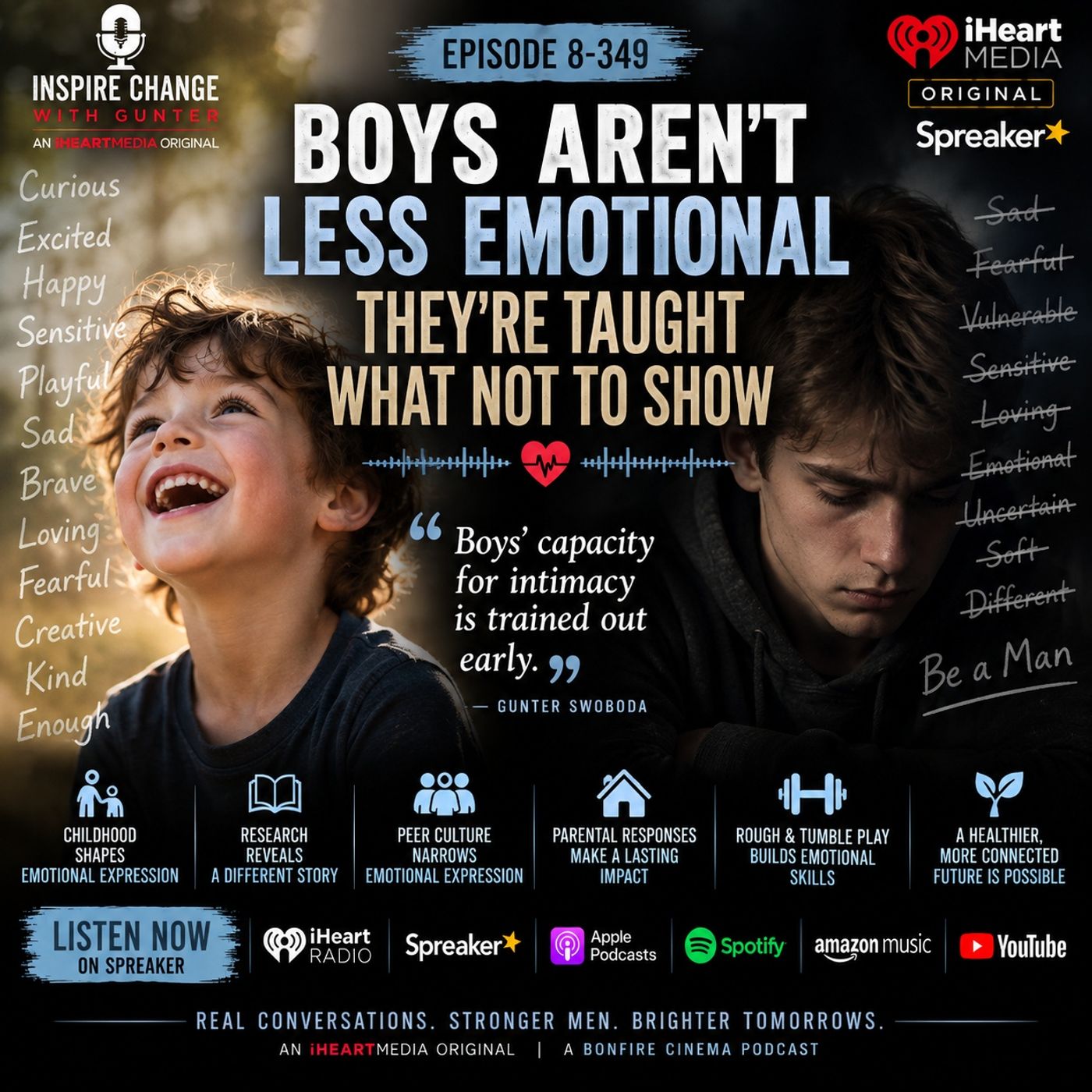
Are boys actually less emotional than girls—or do they simply learn very early which emotions they're allowed to show?In this episode of Inspire Change with Gunter, psychologist Gunter Swoboda examines how boys learn to manage, conceal and communicate their emotions from childhood—and how family, peers and the adults around them can shape that development long before boys have the language to explain what's happening.Research into children's emotional expression reveals an important distinction: what a child feels and what a child displays are not necessarily the same thing.Boys learn to adjust emotional expression depending on who is watching, what response they expect and what displaying vulnerability may cost them socially. As Gunter asks:“Are boys less emotional than girls? That's the wrong question.”The episode explores the early architecture of emotional suppression and what Gunter describes as the development of the masculine introject—the internalized expectations through which boys begin learning what being male is supposed to look like.Peer culture can narrow that emotional vocabulary even further. Fear, sadness, tenderness and vulnerability may carry social consequences, particularly as boys grow older and become increasingly conscious of their standing among other boys. “Fear costs a boy his standing among his mates.” Gunter also examines the role adults play in this process. How parents and caregivers respond when a boy is frightened, hurt or distressed can influence how he eventually learns to regulate—and whether he feels safe expressing—those emotions.The episode also looks at the decline of rough-and-tumble play, not simply as physical activity but as an informal emotional curriculum through which children can learn boundaries, regulation, trust, negotiation and how to read one another.Ultimately, this isn't about making boys more emotional.They already are emotional.It's about creating environments in which boys can develop a broader emotional vocabulary without learning that connection, intimacy or vulnerability threatens their identity. Because, as Gunter puts it: “Boys' capacity for intimacy is trained out early.” And if it can be trained out, perhaps we can become much more intentional about helping boys preserve it. Chapter HighlightsIntroduction and Episode Overview Are Boys Really Less Emotional? What Research Reveals About Children's Emotional Displays The Early Architecture of Emotional Suppression Peer Culture and the Narrowing of Emotional Expression How Early Relational Skills Become Restricted The Crisis of Connection in Adolescent Boys Adult Responses and Meta-Emotional Philosophy Rough-and-Tumble Play as an Emotional Curriculum Strategies for Fostering Emotional Openness in Boys Become a supporter of this podcast: https://www.spreaker.com/podcast/inspire-change-with-gunter--3633478/support. THIS PODCAST IS SPONSORED BY DISTIL UNION Inspire Change with Gunter is brought to you by Distil Union, creators...
0:01Speaker 1We're on the lookout for sponsors to join us on
0:04Speaker 1our incredible journey with Inspired Change with Gunter. If your
0:09Speaker 1organisation cares deeply about meaningful conversations around masculinity, self-development and
0:16Speaker 1mental health, we'd love to partner with you. Our podcast
0:21Speaker 1has a wonderful, dedicated audience committed to personal growth and
0:26Speaker 1positive social change. By sponsoring Inspired Change with Gunter, Your
0:31Speaker 1brand will connect with listeners who truly value thoughtful discussion
0:37Speaker 1and support initiatives that promote real transformation. We're incredibly proud
0:44Speaker 1to be ranked number one in Australia and number five
0:48Speaker 1in the USA on Feedspot's Top Men's Mental Health Podcast.
0:54Speaker 1For more information on how to become a sponsor, please
0:58Speaker 1reach out to mirandaspigner.com Sapon, our showrunner and executive producer.
1:04Speaker 1We'd love to explore how we can work together to
1:07Speaker 1inspire change. Now, thank you for your continued support and
1:11Speaker 1let's keep inspiring change together.