
Innovation Unpacked | Mike Boysen · Mike Boysen
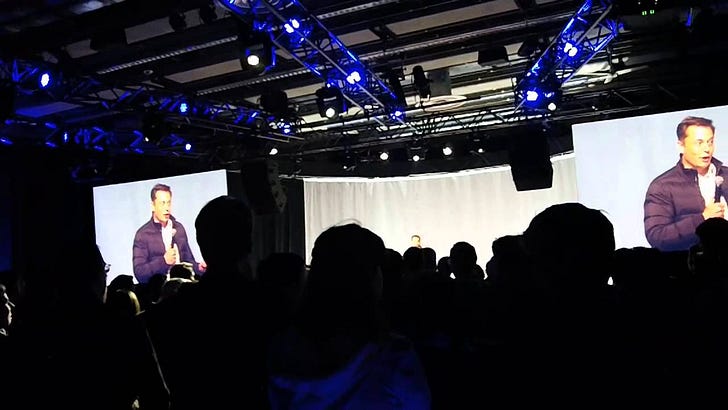
Disclaimer: this video was created 99% by my Grok Bot. The other 1% is my knowledge base and Innovation Lattice (which both power my Venture Proof platform. I’m trying to deliver quality content to you, but have limited bandwith. I hope you don’t mind as I experiment in the open. Feel free to contact me if you’d like to learn more. Contact info is at the end. Thousands of Starlink satellites fly over empty ocean every minute, with almost nobody below them. That empty bandwidth should be waste. Instead it’s part of SpaceX’s biggest business. In my last video, we saw that AWS wasn’t built on spare servers and that idle capacity usually pays when it’s pooled from many owners, like Airbnb. Starlink has just one owner. In this video, I look at why that works: why the idle capacity is built in by physics, why selling one more ship costs almost nothing, how SpaceX sells the spare sky (maritime, aviation, rural, roam, direct to cell, Starshield and community gateways), how its prices follow congestion, why many-owner marketplaces like Getaround struggled, and how reusable rockets made the whole thing affordable. Then we ask whether SpaceX created value by adding or by subtracting, and what it means for idle capacity in your own business. Chapters0:00 The one-owner puzzle0:53 The rule from my last video1:51 Idle by physics3:44 What one more ship costs5:04 How SpaceX sells the spare sky7:13 Prices that follow the physics8:26 The numbers9:16 Why many owners is hard10:33 The rocket under it all12:23 Add or subtract?14:00 Where it can break: three questions14:58 Close Clips used (short excerpts for commentary, each credited on screen) * Elon Musk, SpaceX Seattle event, Jan 16, 2015 (about 27 s). Video: “SpaceX Seattle 2015” by Cliff O (audience recording): * Gwynne Shotwell, SpaceX President, TED 2018 (about 31 s). Video: TED, “SpaceX’s plan to fly you across the globe in 30 minutes”: * Elon Musk, Air Warfare Symposium, Feb 28, 2020, Air Force Association fireside chat (about 33 s). Video: DVIDS: https://www.dvidshub.net/video/741194/2020-air-warfare-symposium-day-2-fireside-chat-elon-musk (also re-uploaded by The Space Archive: B-roll: Pexels (free licence): Alexander Bobrov (6857819, 2943126), Matthias Groeneveld (17818434), Jake Houglum (7714718).Music: ElevenLabs music bed. SourcesCelesTrak satellite catalog via KeepTrack and Satellites Tonight (Oct 2026); NOAA Ocean Service; PCMag (Starlink laser links, 2024; Q2 2026 subscribers; demand surcharges and regional savings); SpaceX update (Aug 2026); SpaceX S-1 coverage via Sacra; Quilty Space and Payload Space (2026 analyst forecasts); SatelliteInternet.com; Starlink plan pages via Orbital Intel, Global Satellite and Sea Bits; Airline Starlink Tracker; T-Mobile T-Satellite; DefenseScoop (Space Force contract, May 2026); Open Falklands (community gateway); Airbnb AirCover for Hosts; TechCrunch and SEC filings (Getaround); CSIS Aerospace Security Project and NASA (launch costs); Space.com (booster reuse)....
0:00SPEAKER_01Right now, there are thousands of satellites racing over the Pacific Ocean.
0:05SPEAKER_01Below most of them, there's nobody.
0:07SPEAKER_01No towns, no homes, just water.
0:10SPEAKER_01Each one is ready to beam fast internet down.
0:13SPEAKER_01And most of the time, almost nobody is there to use it.
0:17SPEAKER_01Now here's the strange part.
0:19SPEAKER_01That empty sky is part of one of the best businesses in the world.
0:23SPEAKER_01It's called Starlink.
0:24SPEAKER_01And it breaks a pattern I talked about in my last video.
0:28SPEAKER_01Airbnb and Getaround tried to make money from idle stuff by pulling it together
0:33SPEAKER_01from lots of owners.
0:34SPEAKER_01Starlink has just one owner.
0:36SPEAKER_01SpaceX builds the whole network, owns every satellite, and sells its own spare bandwidth.
0:43SPEAKER_01So today,
0:43SPEAKER_01let's figure out why that works,