
Industrial Complex · Industrial Complex
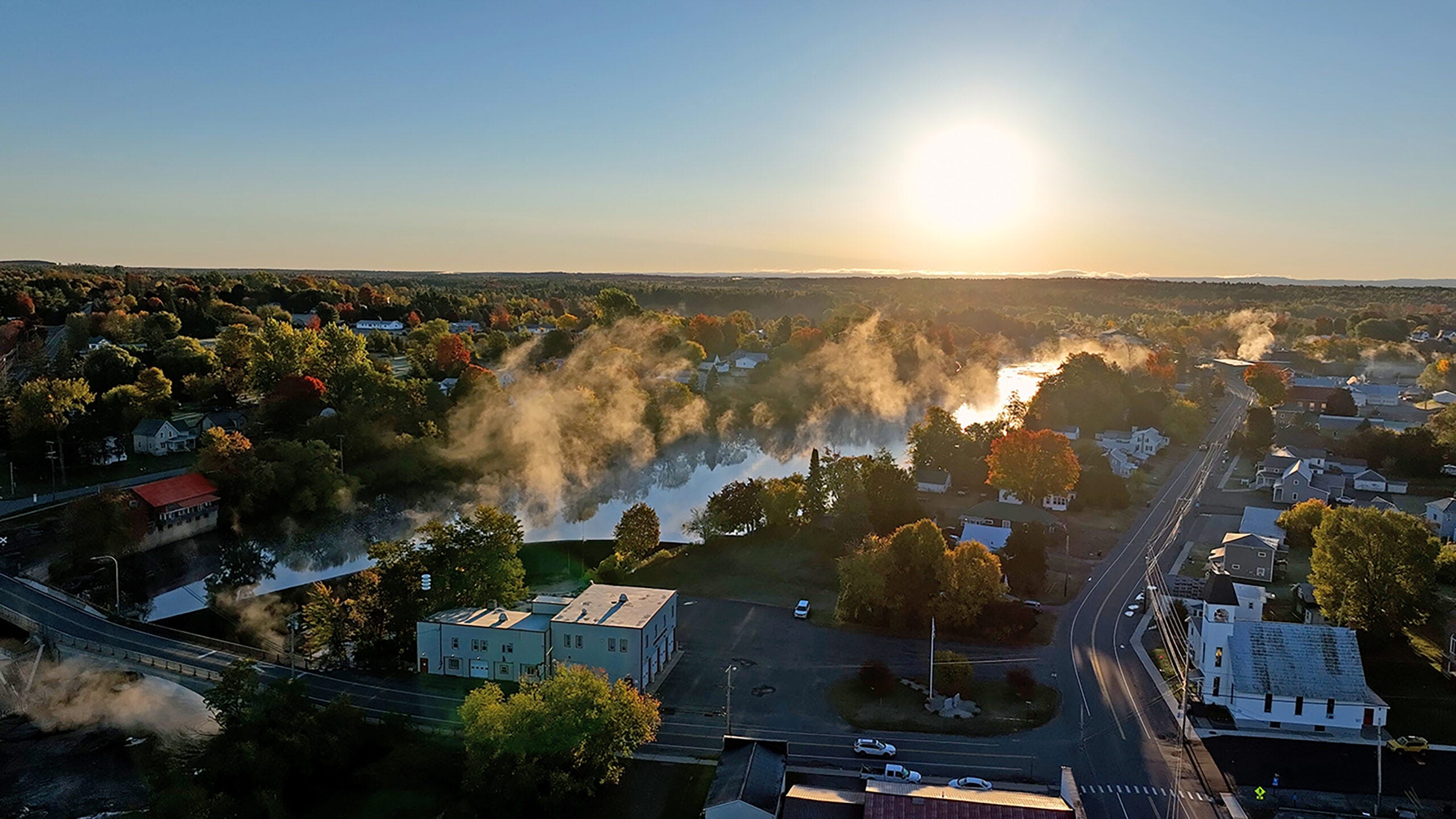
Late last year I wrote a grant for a video piece that was to involve interviews with seasoned (64-88 years old as it turned out) local residents, in which they’d be encouraged to talk about experiences from their childhood, and more specifically about the politics of this very rural area (NY-21, Stefanik’s district), and even more specifically about feminism and racism and the economy, and still more specifically about language as it relates to these. When I’d filmed the interviews and started to work with them, I found that my usual procedural approach felt disrespectful to the source material (I posted some of this stuff a few weeks ago). So I started a new stream of work that preserved the narratives while still being sufficiently “out” to satisfy the inner editor, and that’s this. It’s semi-generative and semi-procedural, and also more edited and stepped-on than I would have normally put together, I think. But again, I had impulses to make it much more accessible than I’d initially envisioned, and I guess I’m glad I did that; it was accessible to the whole range of knowing-or-caring-about-academic-or-fine-art-b******t, and there were some good conversations afterwards. I should note that the video above is only one possible permutation of the piece; that is, much of the work went into the engine which processes the source material — additional iterations of this were created, and this is the one I chose to do the final treatments on and premiere. 20 minutes of my normal video output in a public place would actively piss people off. (Unless in a club where I’m doing the A/VJ schtick.) It premiered in Ives Park, our little town green, on August 16. The video of the performance was lost, but here’s everything that survived. That afternoon I mixed a really dismal DJ set, after which I showed a bunch of other related and unrelated pieces (this part went better), then tried to hold a dialogue about art and AI ethics (during which I had a hard time getting anyone to participate). This piece took its name from one of the posters from ‘68 Sorbonne activities and its Frenchness added (I thought) somewhat to the grant application - to tie the work to local Francophonesse. Everyone should try to get at least one grant. Especially if you’re intimidated by it. The process was surprisingly straightforward, and there was no point where I got any negative vibes about not having an MFA or about being an outsider. It was smooth going for this self-taught, maybe-senior-apprentice artist. If one could do, say, twenty grants per year, that’s a decent living. But is that feasible? If your life is grant-funded I’d love to hear about how that works for you and what the administrative workload is. This is a public episode. If you'd like to discuss this with other subscribers or get access to bonus episodes, visit djic.substack.com/subscribe
0:10[music]
0:35SPEAKER_02It seemed that regardless of your political party back then, people agreed to disagree.
0:42SPEAKER_02A lot more civil about civil discourse.
0:47SPEAKER_02Not like they are now.
0:48SPEAKER_02Now it's, if you're not the same political party ... ... ... ... ...
1:07SPEAKER_02I've known the guy for five years.
1:10SPEAKER_02When he left Delta Force, being commander of Delta Force, he became the
1:35SPEAKER_02Commanding General of the 82nd Airborne Division.
1:38SPEAKER_02Every two years,
1:39SPEAKER_02my unit has a reunion at Fort Bragg,
1:41SPEAKER_02welcomed by the senior officers of Fort Bragg,
1:45SPEAKER_02brought right in the war room,
1:47SPEAKER_02given the State of Union from the 82nd's perspective,
1:51SPEAKER_02introduced all the young paratroopers every two years.
1:54SPEAKER_02So we've known Chris for...