
India Tech Report · Hari Arakali
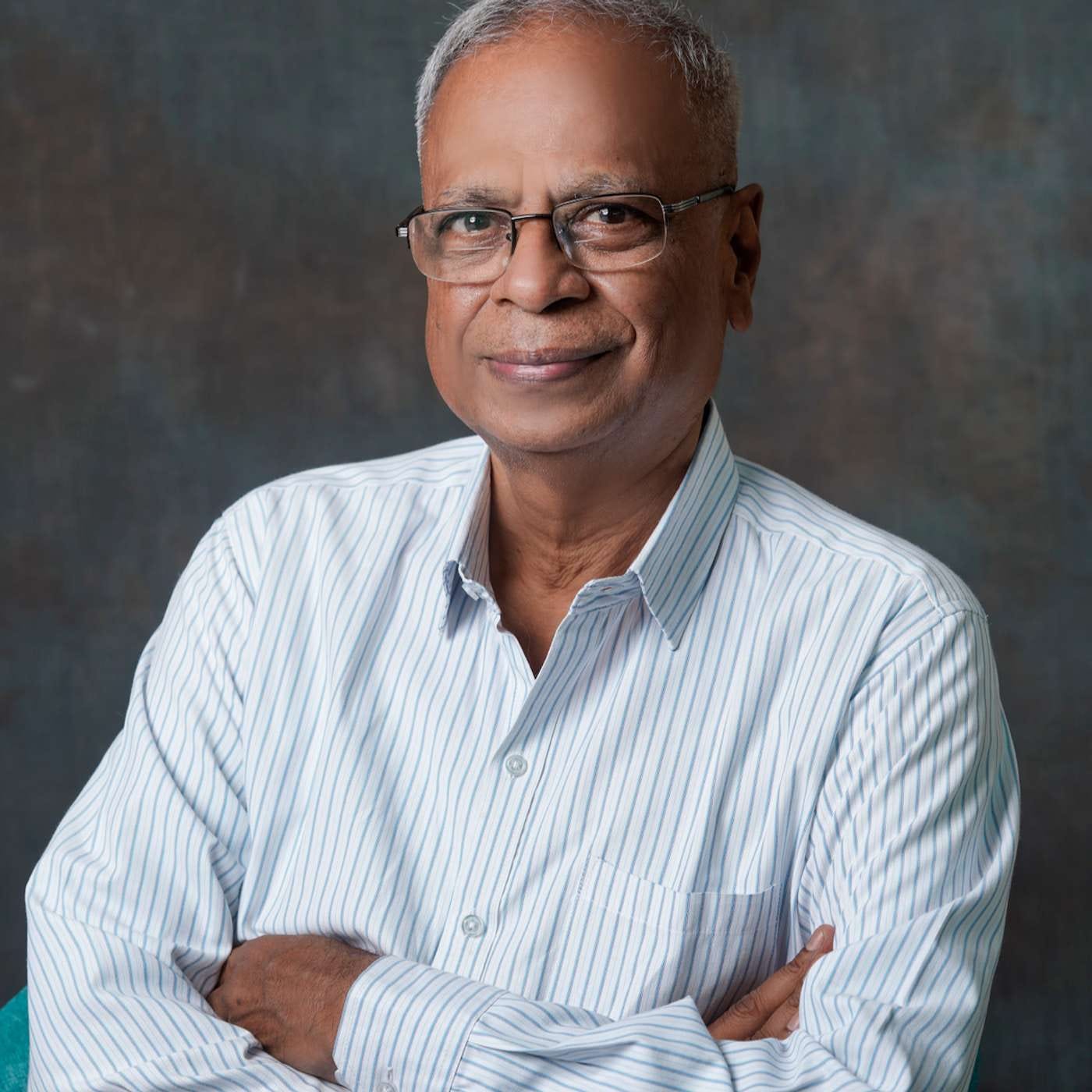
In this episode, I’m are joined by Professor Ashok Jhunjhunwala, a doyen among India’s champions of technology-led innovation for the masses, to discuss his latest moonshot venture: the ITEL Foundation (Immersive Technology and Entrepreneurship Labs). After decades of bridging academia and industry at the IIT Madras Research Park, over the last two years, Professor Jhunjhunwala has been chairing this ambitious industry consortium-led initiative to transform India into a global “product nation.” We dive into ITEL’s unique model of forming scientific consortiums and nurturing young “Ranchos” to solve India’s most infrastructure problems – such as the need for affordable and reliable rapid mass transport, for example. Eliminating waterlogging in our cities after rains and floods, and slashing chemical fertilizer dependency in agriculture are other examples. Join us as Professor Jhunjhunwala, who turned 73 last week, explains why achieving true technological sovereignty requires 20 million entrepreneurs who view failure as a mere stepping stone to success, a critical badge of experience. Discover how ITEL is building the future of Indian innovation, one impossible challenge at a time. #Conversations Chapters (01:19) The birth of ITEL and the vision for a product nation: Professor Jhunjhunwala discusses the founding of the Immersive Technology and Entrepreneurship Lab (ITEL) and its goal to transform India into a global leader in technology. (05:48) Leveraging scientific consortiums and nurturing young “Ranchos”: The strategy for ITEL involves bringing together India's top scientists from across the country and providing intense mentorship to young, talented engineers. (08:40) Solving impossible problems from urban transport to waterlogging: Professor Jhunjhunwala outlines the "impossible" challenges ITEL is tackling, including reducing long commutes to 20 minutes and freeing cities from waterlogging. (17:33) Navigating the three layers of funding for deep tech: The conversation details the specific roles of grants, government funds, and venture capital in supporting high-risk, high-impact innovations. (25:33) Why India needs 20 million entrepreneurs to achieve sovereignty: Drawing inspiration from Mahatma Gandhi, the Professor argues that true technological sovereignty requires a massive scale of grassroots entrepreneurship. (36:36) Challenging large Indian conglomerates to lead global innovation: Professor Jhunjhunwala critiques the reliance of large companies on imported technology and urges them to acquire and scale Indian deep tech startups. (38:58) Embracing failure as a critical component of learning and growth: Using the analogy of a child learning to walk, he explains why incubators must allow entrepreneurs the freedom to fail and fall in order to eventually succeed. (45:25) The roots of service: how childhood values shape leadership: The Professor reflects on how his teachers and Hindi poetry instilled the desire to serve society...
0:00SPEAKER_01So on day one,
0:02SPEAKER_01I have to figure out that if this is all that I'm going to charge,
0:05SPEAKER_01will the system pay for itself?
0:08SPEAKER_01Will it be economically viable?
0:10SPEAKER_01That cannot be afterthought.
0:11SPEAKER_01That has to be built in from day one.
0:14SPEAKER_01And once, if you find a solution, so there are three parts of it.
0:20SPEAKER_01First of all, is it technically doable?
0:24SPEAKER_01Second is, is it economically viable?
0:29SPEAKER_01Third is change management.
0:32SPEAKER_01The change management is where we'll have to introduce it and convince the user,
0:39SPEAKER_01get them to start using it.
0:42SPEAKER_01In this case, the cities.
0:44SPEAKER_01Not a easy task.
0:46SPEAKER_01But let me tell you, if you do it in one city and show that it works.