
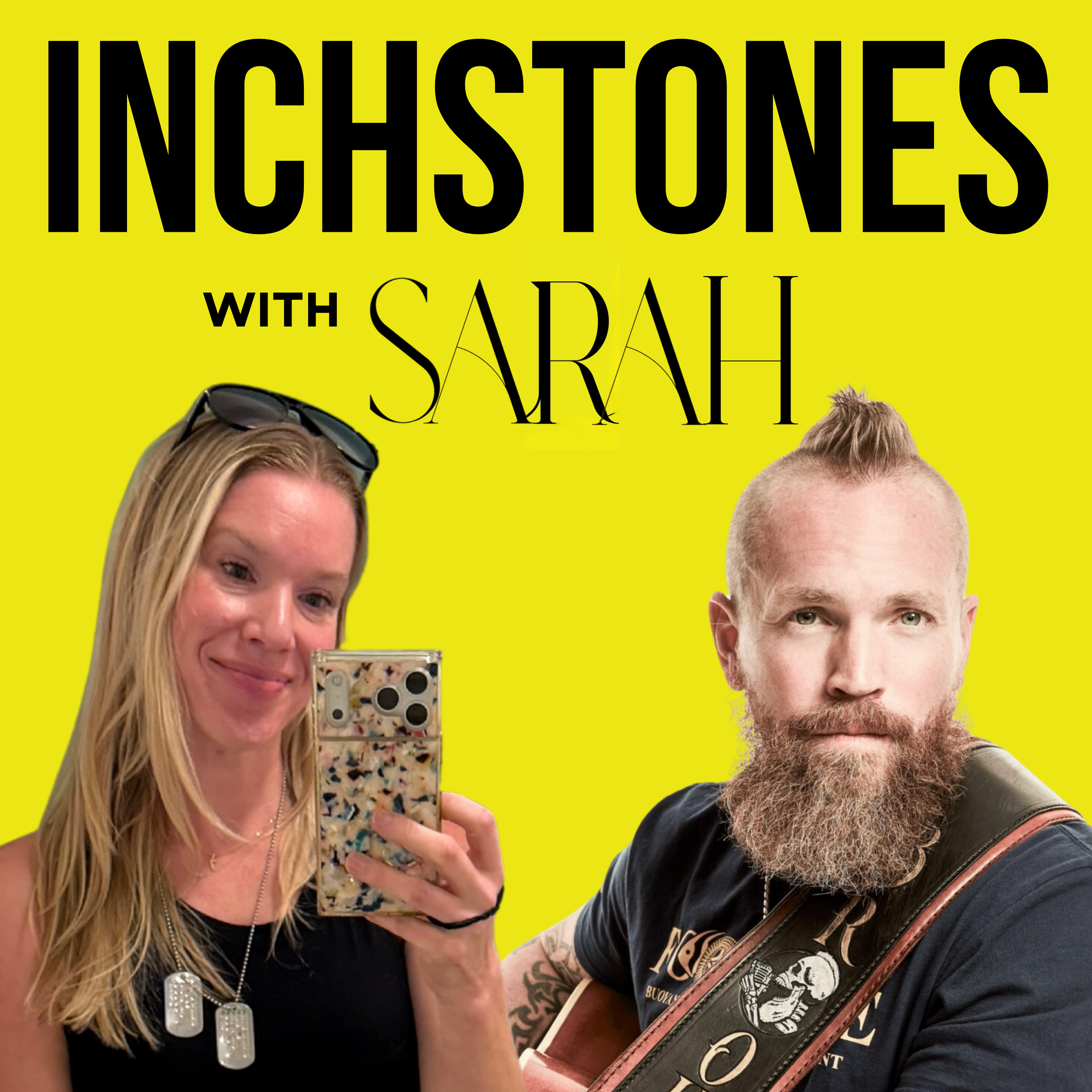
Inchstones with Sarah | Autism Advocacy & Caregiver Stories · Sarah Kernion | Profound Autism Mom and Caregiver Advocate
What does disability inclusion look like when nobody is trying to make a statement—they're simply helping someone fully enjoy the moment? Nashville singer-songwriter, Navy veteran and former physical therapist Brooks Herring joins Sarah Kernion after a video of him singing a young woman's favorite song directly to her reached millions of people. Brooks shares how his relationship with disability was shaped by his younger brother Mark, who has Down syndrome, and why music has become one of the ways he creates connection across disability, veterans' communities and live audiences. Sarah and Brooks talk about accessible experiences, controlling the environment when outings feel overwhelming, the power of favorite songs and why the smallest moments can become enormous. Because belonging isn't simply being allowed into the room. It's getting to fully live in the room once you're there. Topics Discussed: disability inclusion, disability family stories, sibling relationships, Down syndrome, special needs siblings, inclusive communities, music and disability, accessible live music, disability advocacy, nonverbal communication, caregiver experiences, sensory-friendly outings, community participation, sibling advocacy, veterans, physical rehabilitation, joy, belonging, inclusion, sobriety, role models and meaningful moments. Key Questions Answered 1. What does authentic disability inclusion look like in everyday life? 2. How did having a brother with Down syndrome shape Brooks Herring's perspective? 3. Why did Brooks' interaction with a young woman with disabilities resonate with millions of people? 4. What can music offer when spoken language isn't the primary form of connection? 5. How can caregivers make live music experiences more accessible or manageable? 6. Why can quieter times and smaller environmental changes make community participation easier? 7. What can artists do to help people with disabilities feel genuinely welcome? 8. Why are seemingly small moments sometimes enormous for people with disabilities and their families? 9. What's the difference between access and belonging? 10. How can siblings and allies become meaningful advocates without making disability about themselves? Resources Brooks Herring Follow Brooks Herring for his music, live performances and work connecting with audiences through music. Watch the Viral Video INCHSTONES Podcast Subscribe to the INCHSTONES Podcast for caregiver stories and honest conversations about special needs parenting, profound autism, disability, inclusion, communication, caregiver wellbeing and building meaningful lives for people with significant support needs. Chapters (00:00:00) - Introduction to Brooks Herring and the viral moment (00:01:24) - Growing up with brother Mark and finding connection (00:04:04) - The story behind the viral 'Every Rose Has a Thorn' video (00:06:02) - Nonverbal communication and the power of the moment going viral (00:07:36) - The Buddy Cruise and gaining...
0:00Speaker AHey everyone. Welcome back to the Inchstones podcast. As you know, there are so many conversations that I love to have about disability that begin with what someone needs, right? Services, therapies, supports, accommodation, safety, care. And today's conversation begins somewhere much, much simpler. It begins with a young woman hearing a song she loves and having. Oh, man, I'm getting choked up here. At the intro. Songs she loves and having the absolute time of her life today. My guest here is Brooke Herring. He's a Nashville based singer, songwriter, Navy veteran. Go Navy. A former physical therapist, and someone whose relationship with disability began long before the video of his went viral. Brooks grew up alongside his brother who has down syndrome. And we're going to talk today about how being a sibling shaped the way he sees people and understands disability and really ultimately the experiences, the audience that are in front of him. And you know, recently Brooks was performing when the parents of a young woman with disabilities told him how much she loved to hear a particular song. And he played it and she recognized it and she lit up and that video reached millions of people. And I just, again, once I saw it, I had to reach out because something that the Inchstones mission is at its core is why and how something so ordinary feels so extraordinary to so many of us. So, Brooks, welcome to the Inchstones podcast.
1:23Speaker BThank you so much for having me.
1:24Speaker AI want to begin where it began. Before we talk about music, tell me about your brother and what it was like to grow up along someone with disability and how did that shape, you know, how you understand it as a, even as a man and a musician.
1:37Speaker BSo to, to be fully transparent, I mean, we didn't grow up next to each other. So my little brother is the same age as my oldest son. He just turned 21. He's actually two months younger than my oldest son. I was already enlisted in the Navy when my brother was born, so I didn't get to spend a lot of time with him as he was growing up, you know, but, but the more I was able to be home and especially after I got out and I moved back to South Carolina and started spending more time with my mom, I, I got to spend a lot more time with Mark and, and really, you know, just get a, a, a, a, a bird's eye view or, or you're like an up front, you know, up close and personal view of that world. And you know, since, since I got out of the military, I mean, I, I love going to see Mark. I mean, it's just, it, it just, he is his own light, you know,
2:26Speaker Ayou know, there's, you know, I'm glad that you clarified that. It also allows us to have a conversation that family doesn't have to mean growing up alongside it. Family can mean having what you said is a bird's eye view. And I always talk and say ad nauseam, getting a bird's eye view. I would welcome a documentarian team into my life because you need to have a bird. You need to have an intimate view inside the walls of a home or a place of residence to understand that light and know that it's very deeply complex and it sits right next to the really hard challenges. You can. You can from the outside. You know, sometimes it's only the glossy positives of that light you want to go on the inside, and you see the complexity of it. But that dichotomy is why it becomes so powerful, whether you're an older brother and sibling or not. And coming in and out and even.
3:12Speaker BEven without, you know, without having, like, grown up together. I mean, we. We have a great relationship. I mean, you know, every time I call mom, I can hear Mark in the background. Bubba.
3:21Speaker AThat's right. You know, that's right. That's right.
3:23Speaker BEvery time he goes to a camp, you know, my mom will reach out. She'll be like, hey, you know, Mark's going to this camp and he wants you to go with him. And I just. I just love, you know, I love that. The relationship that we have. And I love, you know, being one of his. His go to people.
3:35Speaker AYeah, that's that invisible thread. You can't really divorce. Once you are integrated into the world of a. Of a human with. Of an individual with special needs, you realize how much they know what connection really is. I call it a life luxury. You can't purchase it. There are people that would. That would pay so much fricking money to have that kind of acknowledgement and connectivity that you cannot buy. So I, you know, you're, You're. You're speaking to the. You're preaching to the choir here. You know what? Let's. So then let's. Let's go back. Let's go now. Let's talk about this. This, this video. You know, what did you know about that young woman before that moment? And what happened when you realized how much hearing that that particular song was going to mean to her?
4:17Speaker BI didn't. I really didn't know anything at all. I. So I. I play at Jelly rolls every. Every Tuesday afternoon. It's. It's. You know, some days are busier than others. I remember that that night was, you know, it was pretty slow, so they were able to. To be, like, right up at the front, you know, next to the. The front corner of the bar. And it was. It was pretty. Pretty easy to. To tell that that, you know, she had disabilities. You know, she was there with her caretaker, who I later learned she was okay. Yep. And, you know, and it was just, you know, I just, you know, do my best to kind of, you know, make eye contact and sing towards them or to them, you know, just anything to make her feel seen. And, you know, and my. My girlfriend was there at the show, and she talked to them, and she came up to me and she was like, hey, her. Her favorite song. You know, Every rose has a thorn. Can. Can you do that? You know, I was like, yeah, absolutely. You know, without. Without even a second thought. It was just kind of like, yeah, that's what she wants to hear. Absolutely, I'll do that. And we started to play the song and. And her. Her mom brought her up to the stage and just. And there was just. There was a. There was a visible change in her demeanor that she was just excited and she was, you know, singing along and her face lit up. But I mean, just. Just to see. Just to see that. That little. That joy, you know, just from hearing that song. And so. And I saw the way she lit up, and so I just decided to. To go down to her and sing to her. You know, why not? I actually. I had no idea that my girlfriend was recording that video. I had no idea that she was recording in it. And I didn't even know that she posted it until, like, the next day.
5:51Speaker AI love it.
5:52Speaker BShe. She has access to my social media. Like, she recorded the video and she cut it up, and she. She posted it on social media the next day. She was like, hey, this video is blowing out. I was like, you might want to
6:04Speaker Acheck on your Instagram. Well, you know, there's so many things come to mind here. One, you know, I. My background is in, like, communication science, so I love the idea of, like, how our brain works when it comes to communication. Right. But specifically nonverbal communication and the way that the right hemisphere just lights up in. In the way in which words can't describe. And when I watched that, it was like, I wish I could do a dissertation. If I was, like, going back for my PhD on this exact moment, like, this is. This would be the foundational example in a study for me on nonverbal communication and the binding. The binding qualities, because it all and then from a spiritual lens, it is the thinnest veil of heaven, is what you did right there is that you, you were acting upon such a deep connectivity from whatever your experience has been as a man, and maybe what you learned through your brother Mark and absorbed to then being able and being put in that position to give that experience to someone. And I think that the reason these. I, I, you know, maybe I'm a glass half full kind of chick, but the reason those things go viral is because those people know. Know that too innately. And people want to see that. People want to see those moments where you weren't. You were reacting. You were reacting based on who you are. It was, it was an unconscious, subconscious moment for you to be like, absolutely, I'm down there, I'm down there. I'm giving the. And, and what you got back from that wasn't. The virility of the moment was actually what you experienced.
7:31Speaker BYeah, and I think it is actually. It goes, it, it, it stretches far before that. I mean, as far as, like, what I got out of it, I, I feel like I had already received something, you know, from, from that population that I'm trying to pay back. So I'm, I'm actually wearing this shirt right now from the Buddy Cruise. We went on the Buddy Cruise last year with my brother and my mom and I as a, as an artist and just, I'm so busy. I have so many things going on in my life and I have so many problems. You know, so many, you know, I've got songs I need to put out, I got shows I need to book and I got travel I need to pay for and this and that and this and that. And we got, we got to that ship and we got on board that ship and we got introduced to the whole Buddy Cruise crowd. And I mean, every disability from, from down syndrome, autism is just the whole. Everything was representative. I mean, there, there was, you know, there, there were children, there were adults, you know, there were wheelchairs, there were. There were other assistive devices and just like, just everything. And we got into that room the first night and they were so excited. They were so happy. They were so thrilled, full of joy, and just so happy to be there. And in that moment and throughout that week, I just realized, man, my problems are like this big, and it just really gave me a better perspective on life in general. And so I just try and pay that forward and pay that back.
8:56Speaker AYou know, there's so much to be said for the power of the present moment, and I never In a million years, like would have chosen to be the mother of two children with such profound disabilities. Yet I was always a student in trying to learn through my faith or my own day to day how to stay present. You know, like, the biggest gift that they give you is that they're always present. They're never, they're never looking far, they're never reflecting so deeply to become paralyzed by their past choices. And they're not even looking down the road to think what they have. They need to do what they have to do. It's the greatest thing to be surrounded by humans that do that. And I think that's sometimes what the universe or God or, you know, life gives you in those moments, whether it's a buddy cruise, you know, for me, I get to go to my children's school a lot and just be around their classroom of other kids that are like them. And I think that, you know, you're hitting on the head like you press pause. But what you're given in that actually becomes the fuel for you to keep doing what you're doing. Do you, you know, you built obviously your career around performing for audiences and, you know, resilience and connection and life. Do you think, you know, do you think that your audiences understand more that your performances are more meaningful because of, you know, your life experiences and, and what you've chosen and building your life? I was reading before this that, you know, you've done a lot with not only just people with disabilities, but, you know, work with veterans too. And that's something that my, My own partner, my. He's a, he's a USMC vet. And there's a lot of overlap in that, in that world when it comes to, I guess people want to say therapeutic benefits, but that music is connective in both populations. Do you find it, find it true?
More Inchstones with Sarah | Autism Advocacy & Caregiver Stories episodes →