
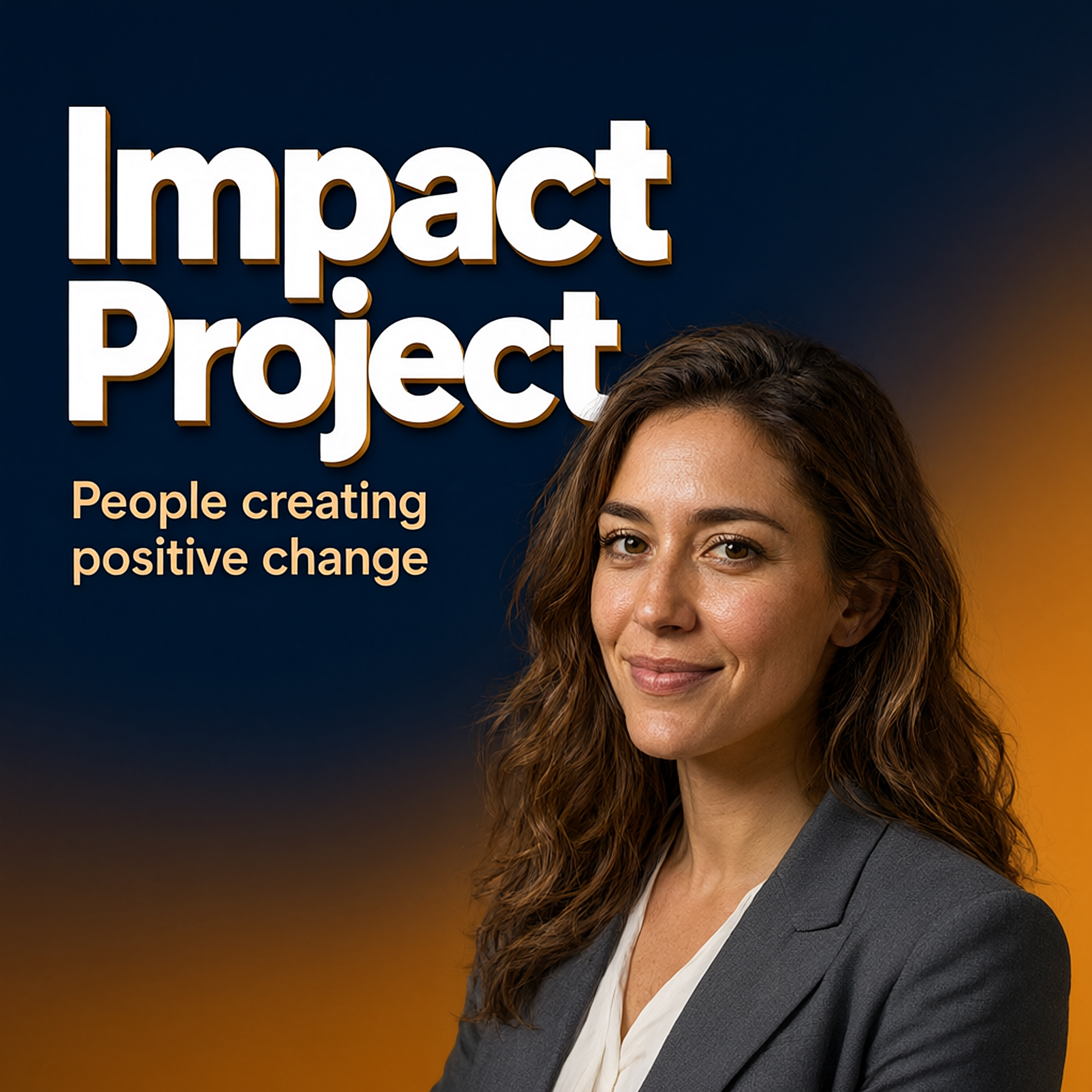
Impact Project: People creating positive change · Rhonda Harper
In this episode of Impact Project, host Rhonda Harper explores the profound healing power of handwritten letters as a remedy for social isolation and loneliness. This guide is designed for anyone seeking meaningful ways to connect with others, particularly elderly individuals or seniors who may feel invisible in our digital age. The conversation moves beyond simple charity, framing letter-writing as an act of reciprocity that restores dignity and humanity to both the giver and the receiver. By slowing down from the constant noise of notifications and emojis, listeners learn how tangible, analog communication creates a lasting anchor for those struggling with solitude. Rhonda shares personal anecdotes, including her visits with her neighbor Arthur, an eighty-two-year-old former history teacher whose life has shrunk due to lack of connection. Through these stories, the episode highlights the stark contrast between fleeting digital messages and the weight, texture, and intention behind physical mail. Listeners will discover concrete strategies for overcoming the fear of inadequacy when writing to strangers, understanding that simplicity and genuine curiosity are more valuable than poetic flair. The discussion emphasizes asking open-ended questions that invite elders to share their histories, effectively handing them a microphone to validate their existence and memories. The episode also provides practical steps for finding local senior centers, nursing homes, and outreach programs that facilitate pen-pal initiatives. It addresses the mutual benefits of this practice, noting that volunteers often experience reduced stress, increased purpose, and a deeper sense of community belonging. By engaging in this slow, deliberate act of kindness, individuals not only combat loneliness in others but also cultivate patience, compassion, and a stronger connection to their own neighborhood fabric. This approach transforms isolated rooms into spaces of shared humanity, proving that small ripples of attention can create big currents of change. Join Rhonda Harper on this journey to rediscover the joy of human connection through the simple, revolutionary act of writing a letter. Whether you have a specific elder in mind or want to support a local organization, this episode offers the inspiration and tools needed to start today. Your words have the power to heal, to remember, and to remind someone they matter. Support the Impact Project and help spread this message of hope by visiting our website link below to get involved or donate. More from Impact Project: https://humanitymedia.org/impact-project-4 Topics: combatting loneliness, handwritten letters, senior isolation, intergenerational connection, social impact projects, volunteering for seniors, mental health and wellness, community engagement, philanthropy tips, digital detox benefits, elderly care ideas, meaningful connections, humanizing technology #loneliness #handwrittenletters #seniors #communityimpact...
There is a specific kind of silence that settles into the corners of an empty room, heavy and waiting. It’s not just about being alone; it’s about feeling invisible to the world. I want you to take a breath with me right now. Just one deep, slow inhale. Let it out slowly. Good. We spend so much of our lives rushing from one notification to the next, scrolling past headlines that scream for our attention, yet we rarely stop to consider the quiet spaces in between. The spaces where people like my neighbor Arthur sit, staring at a phone that hasn’t rung in three days. Arthur is eighty-two. He used to be a high school history teacher, a man who could make the French Revolution sound like gossip over tea. Now, his biggest excitement is whether the mail carrier will bring his pension check or another bill he can’t quite pay off. I visited him last Tuesday. He didn’t say much at first. He just poured two cups of coffee, his hands trembling slightly, not from age, but from the sheer effort of maintaining dignity when the world has stopped knocking on your door. What does this actually feel like? It feels like fading. Like being a book that no one is reading anymore. And here is the truth that keeps me up at night sometimes: isolation isn’t just a personal tragedy for them. It’s a loss for all of us. When we lose connection with our elders, we lose our history, our context, and our humanity. But here is the good news, the really beautiful, radical news. We have the power to change that narrative, starting with something as simple, as analog, as a piece of paper. We live in an era of instant connection, yet I have never felt more disconnected than I do today. We send emojis. We send voice notes that are convenient but fleeting. We text 'thinking of you' which is lovely, but it disappears into the ether of the chat thread, buried under memes and work updates. There is a profound difference between a digital ping and a physical letter. A letter has weight. It has texture. It requires time, intention, and a level of care that a thumbs-up emoji simply cannot convey. When you write a letter by hand, you are giving someone a piece of your presence. You are saying, 'I sat down. I thought about you. I chose my words carefully.' For someone isolated, especially an elder who may not navigate smartphones with ease, a handwritten note is a tangible anchor. It proves they exist in the minds of others. I remember receiving my first letter from a former student years ago, written on lined notebook paper with blue ink. She had moved across the country and started a family. That paper sits in my desk drawer still. I pull it out when I need to remember why I do this work. It’s not just paper; it’s proof of impact. It’s proof of love. And imagine how powerful that would feel for someone who hasn’t received a gift of attention in months. Let’s look at the hands doing the work. Your hands. They are capable of creating comfort. They are capable of bridging gaps that technology cannot fix. Now, I know what you might be thinking. You might be feeling that familiar ache of inadequacy, that whisper telling you you’re not qualified, or that your writing isn’t good enough, or that you don’t know what to say to a stranger. Please, let me stop that voice right there. You do not need to be a poet. You do not need to write a novel. In fact, simplicity is your greatest ally here. The goal is not to impress; the goal is to connect. Think back to the last time you wrote a birthday card. Remember how you searched for the right sentiment? How you wanted to make sure they knew you cared? That is exactly the energy we are bringing here. Start small. Write about your day. Tell them about the rain, or the bakery down the street, or the funny thing your dog did. Share a memory. Ask a question. 'What was your favorite meal growing up?' 'Did you ever travel anywhere special?' These aren’t just questions; they are invitations. Invitations for the other person to share their story, to feel seen, to feel heard. When you ask someone about their life, you are handing them a microphone. You are saying, 'Your story matters.' This is not charity in the traditional sense, where one person gives and the other receives passively. This is reciprocity. You are getting the gift of perspective, of patience, of wisdom. Small ripples, big currents. One letter can start a conversation that lasts for months, even years. So, how do you find someone to write to? It might seem daunting, but the infrastructure for this already exists in our communities. Look around your local area. Are there senior centers? Nursing homes? Churches with outreach programs? Many of these organizations have pen-pal initiatives specifically designed to combat isolation. If you don’t know where to start, call a local senior center and ask. Say, 'I’d like to write letters to residents who might be lonely.' They will likely light up with gratitude. You don’t need to visit in person if you aren’t ready. Writing is a safe, gentle way to build a relationship. You can start with a brief introduction. Introduce yourself. Share a little about your interests. Keep it warm and open. Avoid overwhelming them with too many questions at once. Think of it as a slow dance. You learn each other’s steps over time. Some people might respond with long, detailed letters. Others might write short notes. Both are victories. Both mean connection. Do not judge the length or the grammar. Judge the intent. The intent is love. The intent is presence. And that is enough. More than enough. It is everything. Let’s talk about the ripple effect for a moment. When you write to an isolated elder, you are not just changing their day. You are changing your own. Studies show that volunteering, even in small ways like writing letters, reduces stress, increases purpose, and combats depression in the giver. But beyond the statistics, there is the human experience. You begin to see the world differently. You start to notice the elderly neighbors you walk past every day. You start to wonder about their stories. You become more patient, more compassionate, more connected to the fabric of your community. This practice teaches us that everyone has a history. Everyone has scars and triumphs. Everyone deserves to be remembered. And in remembering them, we remember ourselves. We realize that we are part of a continuum. We are links in a chain. And when we strengthen those links, we strengthen the whole structure. Imagine a neighborhood where every resident knows their neighbors’ names. Where the young write to the old, and the old write back. Where loneliness is met with curiosity and kindness. This is not a utopia. This is a choice. And it starts with you, picking up a pen. Here is my challenge to you this week. I want you to find one organization near you that connects volunteers with isolated seniors. Sign up. Or if you know someone personally—an aunt, a neighbor, a friend’s parent—write them a letter. Not a text. Not a call. A letter. Put it in an envelope. Seal it. Drop it in the mailbox. Feel the weight of it in your hand. Know that somewhere, someone will hold that same weight and feel less alone. You might not see the immediate impact. You might not get a response right away. But trust that it lands. Trust that it matters. Trust that you are doing something radically practical, something deeply human. Let’s look at the hands doing the work. Your hands are ready. Your heart is ready. The rest is just details. Address, stamp, postage. The magic is in the message. So go ahead. Write. Speak. Connect. Be the neighbor you wish you had. Because in a world that often feels fractured and fast, slowing down to write a letter is a revolutionary act. It says, 'You matter. I am here. We are together.' And that is a truth worth sending. Thank you for listening, for caring, and for being part of this community. I’m Rhonda Harper. Go write something beautiful. And remember, you are never truly alone when you choose to reach out. Until next time.
More Impact Project: People creating positive change episodes →