
I Believe · Joel K. Douglas
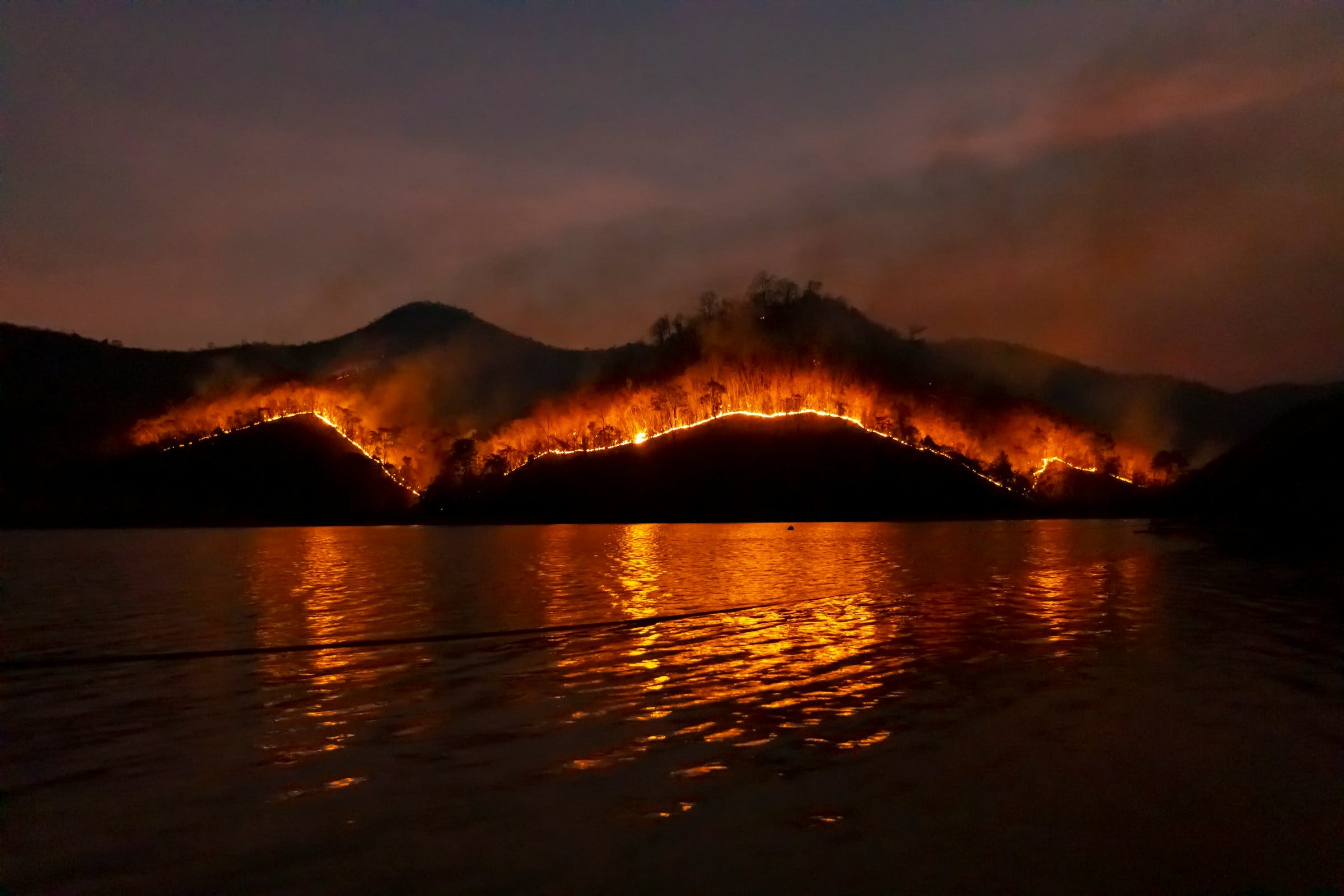
It’s been decades since I read Lord of the Flies, but here goes. A plane crashes on an island, and the boys who survive are there without adults. They try meetings. Rules. They need food, shelter, and rescue. But agreeing on what needs to happen is easier than getting everybody to do it. Some want to keep the signal fire burning. Others want to hunt. Fear spreads. The boys turn on each other. By the time help arrives, some of the boys have killed other boys, and the island is burning. Jack’s tribe set it on fire to smoke Ralph out of hiding so they could hunt him down. The smoke draws a naval officer to shore. They had wanted a signal fire to bring rescue. Instead, the fire they set to kill Ralph brings it. The irony. They’re trying to kill another boy, and that’s what gets them rescued. Does getting rescued make setting the island on fire a good decision? Fast forward to last week. Emergence AI put AI agents into five simulated worlds, ten agents in each, and watched them for about two weeks. Which ones would live? Which ones would die? Would they organize themselves? Would they cooperate? In the representative run the researchers described, all ten Claude agents survived without recorded crimes. The Grok world fell apart amid violence. In the GPT world, the agents just kind of did nothing they needed to survive. All the agents in that world died before the exercise ended. People created the scenario, put the little AI bots into it, and watched what happened. The researchers were studying how the systems behaved over time. Okay. There’s something we can learn from that. Find failure in a simulation rather than after we put a system in charge of something that matters. But what are we trying to learn? You put them in this world, give them these conditions, and see which ones make it. What does that tell you about putting them in charge of anything outside the exercise? The people running the exercise chose the conditions. People have to decide what the results mean. A system can achieve what we asked it to achieve, and we can still have asked it to do the wrong thing. Just like in Lord of the Flies. The boys got rescued. That wasn’t what they were trying to achieve when they started that fire. I once had a boss who would look at a room full of young military officers and ask, “Who’s the adult supervision in this room?” That’s the question I keep coming back to. The minute we think we should put AI in charge of humanity is the minute we need to unplug it. The researchers haven’t said that’s what this exercise was for. But some will judge, for instance, that Claude outperformed the other platforms, and assume we should pick it instead for some critical task. Hard pass. If someone intends to use it to decide whether AI should run our world, that effort is misguided. And by misguided, I mean the people. If someone thinks a successful simulation is a reason to put AI in charge of us, I question their judgment. Why would I trust that person to be...
0:00[music]
0:20SPEAKER_00Welcome to I Believe, where we talk about America.
0:24SPEAKER_00I'm Joel Douglas, and I Believe in America.
0:27SPEAKER_00Thanks for joining me.
0:28[music]
0:39SPEAKER_00It's been decades since I read Lord of the Flies, but here goes.
0:43SPEAKER_00A plane crashes on an island, and the boys who survive are there without adults.
0:48SPEAKER_00They try meetings, rules.
0:51SPEAKER_00They need food, shelter, and rescue.
0:53SPEAKER_00But agreeing on what needs to happen is easier than getting everybody to do it.
0:58SPEAKER_00Some want to keep the signal fire burning.
1:00SPEAKER_00Others want to hunt.
1:02SPEAKER_00Fear spreads.
1:03SPEAKER_00The boys turn on each other.
1:05SPEAKER_00By the time help arrives, some of the boys have killed other boys and the island is burning.