
I Am The Artisan's PEN · Jodi Lynn Serino-Barbour
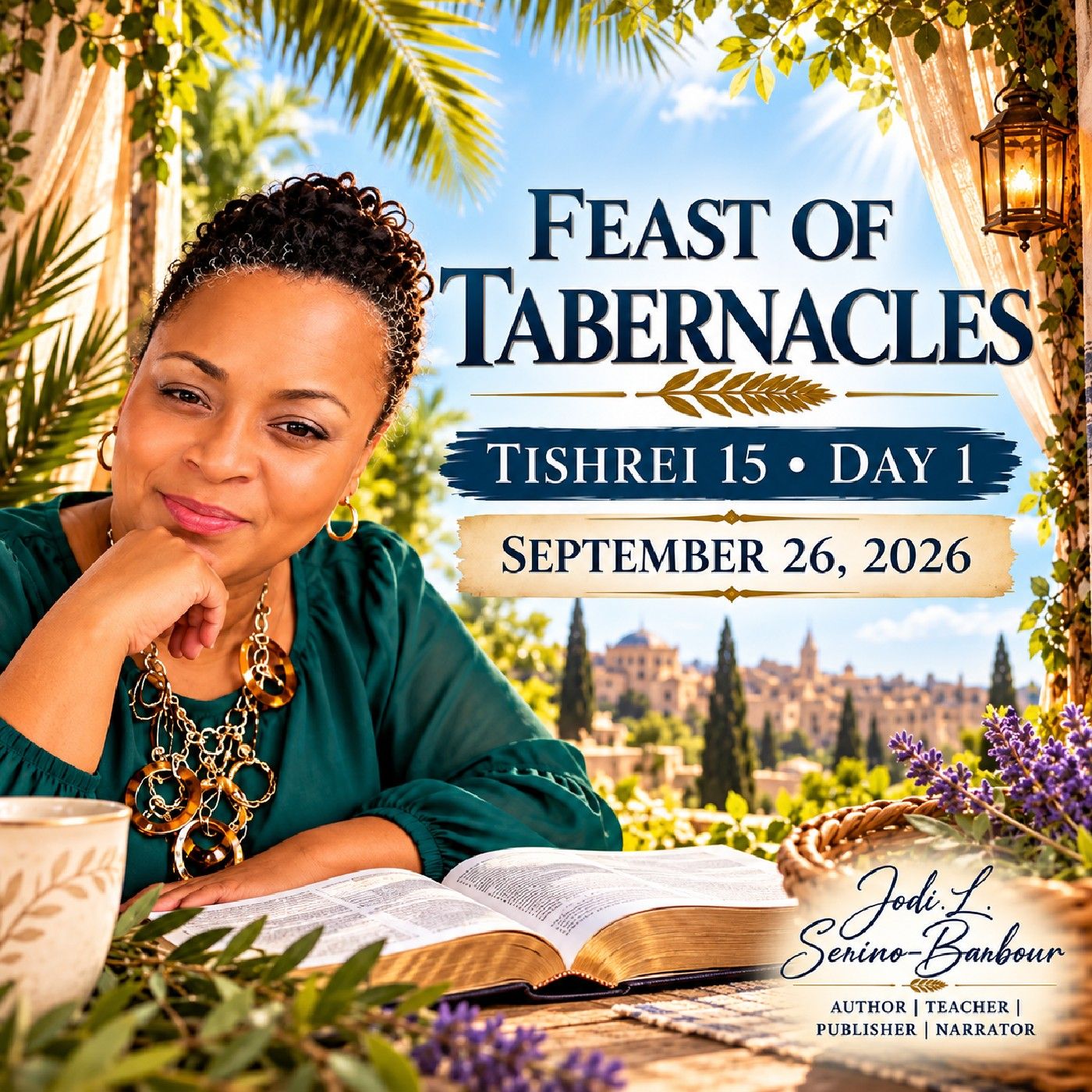
A Christian Experience: Celebrating the Feast of Tabernacles — Day 1 What does celebrating the Feast of Tabernacles look like for a Christian today? On September 26, 2026, I began Day 1 of the Feast of Tabernacles with that question—not attempting to recreate ancient Israel's observance, but approaching the appointed time as a Christian who desires to understand what God established, what He instructed His people to bring, and what those instructions can teach us about walking with Him today. I began in Numbers 29:1–2. I expected to continue reading. I didn't get very far. There was too much sitting inside those first verses. God gave Israel specific instructions concerning the offering that was to be brought before Him: a young bull, a ram, and seven lambs in their first year, without blemish. The offering was described as a sweet aroma to the LORD. But as Christians, we need to establish something clearly before examining these animals: We do not sacrifice animals today. Jesus Christ has already become the sacrifice for us. This study is not an invitation to return to animal sacrifice, nor is it an attempt to suggest that the blood of bulls, rams, or lambs is required from us. Instead, I began asking another question: Why those animals? Why was God so specific? If God could have required anything, why a bull? Why a ram? Why seven lambs? What distinguished these animals from one another? And could examining their characteristics help us understand something about the kind of praise, worship, obedience, and heart that we bring before God today? That question opened the door to an unexpected study. The bull led me back to the biblical imagery of the bulls/calves of our lips—the offering of words and praise before God. The ram caused me to consider the mature sheep. And then there were the lambs. Seven lambs. Young sheep. And suddenly I found myself thinking about the childlike curiosity Jesus calls us toward—the willingness to come before God wanting to learn, willing to ask questions, willing to look again, and unwilling to assume that because we have read a passage before, we have exhausted what it contains. That became part of my Day 1 experience. I came before God as an adult with praise on my lips, while approaching His Word with the curiosity of a child. And somehow, I couldn't get past verse 2. This first day became about much more than studying an ancient offering. It became an examination of what I am bringing before the Lord. What does my praise look like? What does my worship look like? Am I approaching His Word believing I already know what it says, or am I still willing to sit down like a child and ask Him to teach me? And is what I bring before Him a sweet aroma? Day 1 also became part of a larger journey I began exploring during this Feast: what it means for God to dwell with us, for us to walk with Him, and for that relationship to continue beyond a particular feast or appointed day. Not simply...
0:00Speaker 1Hello and welcome Artisans Pen. From September the 26th through
0:07Speaker 1October the 3rd, 2026, which corresponds with Tishri the 15th
0:12Speaker 1through the 22nd on the Hebrew calendar, I had the
0:17Speaker 1opportunity to once again honor and celebrate the Feast of Tabernacles,
0:23Speaker 1which is otherwise known as Sukkot. Throughout those days, I
0:28Speaker 1shared my experience as a Christian celebrating this feast. I
0:33Speaker 1shared what I was doing, what I was studying, and
0:36Speaker 1most importantly, what I was learning as I spent this
0:40Speaker 1appointed time in the presence of the Lord. In the
0:44Speaker 1episodes that follow, I'm going to share those experiences and
0:48Speaker 1studies with you just as they unfolded during the feast.
0:54Speaker 1So come along with me. as I share celebrating the
0:58Speaker 1Feast of Tabernacles, a Christian experience. So initially, I did
1:13Speaker 1not think that I was going to do a video today.
1:17Speaker 1I'm actually preparing right now as we're speaking. I am