
Humans of Martech · Phil Gamache
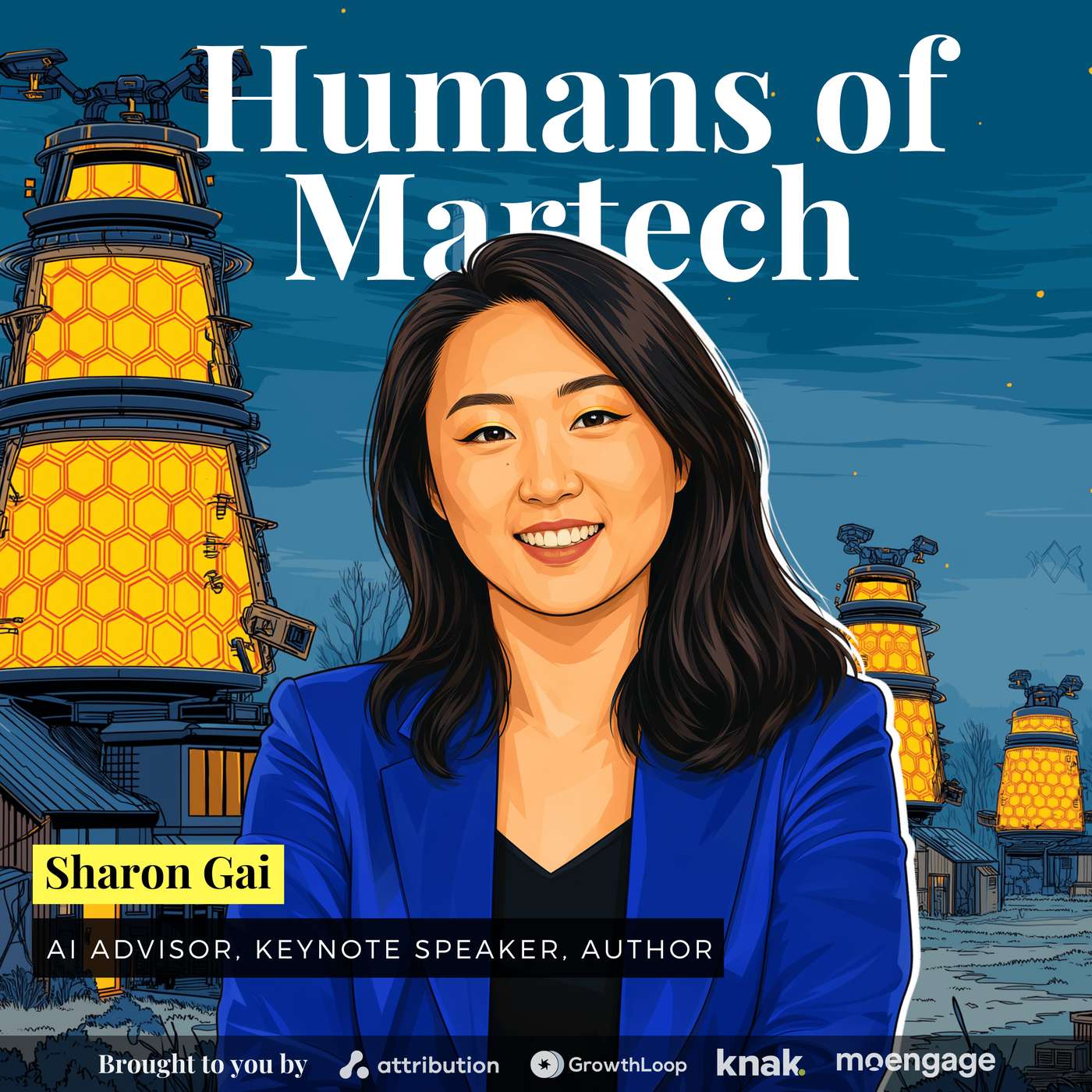
What's up everyone, today we have the pleasure of sitting down with Sharon Gai, author, keynote speaker, and educator. We'll cover: (00:00) - Intro (01:21) - In This Episode (05:20) - How AI Moves Marketing Creativity Up the Abstraction Layer (09:08) - Why Taste Is No Longer a Durable Human Skill (15:33) - What Human Work Looks Like After AI Learns Taste (20:41) - How to Codify Taste Into Your AI Systems (27:20) - Why Hands-On Execution Still Builds Judgment AI Can't Copy (36:48) - How to Build a Personal AI Strategy and Learn How to Learn (39:31) - Why Seeing Your Job as Tasks Rather Than a Role Future-Proofs Your Career (48:12) - Why You Should Tinker With AI Before You Cut Back on Meetings (54:13) - How Students Can Adapt to Graduating Into an AI Economy (01:02:13) - How to Decide What Deserves Your Energy Summary: Sharon Gai wrote a book telling everyone that taste and judgment were the durable human skills AI couldn't touch, then went on record to take half of it back. In this episode she walks through why taste is now codifiable, why originality still belongs to humans, and how she pulled a McKinsey-grade deck out of Claude by feeding it her own best work. We get into the lost generation of junior executors, the beekeeper mindset that separates orchestrators from busy bees, and a token-maxing hot pot dinner that made her swear off wasting agents. She even hands over a deathbed test for deciding what deserves your energy. If you've ever wondered which of your skills actually survive the next few years, this one is a map.About Sharon Gai Sharon Gai is an author, keynote speaker, and educator who helps professionals future-proof their careers in an AI-driven economy. She teaches on Maven and speaks to audiences around the world about how AI is reshaping creativity, work, and the roles people play inside their companies. Her latest book uses the image of busy bees and beekeepers to argue that the future belongs to the people who orchestrate AI rather than execute every task themselves. Before writing and speaking full time, she spent years in enterprise tech, starting out helping IT directors and CIOs build data centers at the dawn of the cloud era. That hands-on background shows up throughout her work, especially in how she thinks about the difference between doing the work and orchestrating it. How AI Moves Marketing Creativity Up the Abstraction Layer When cameras got cheap, painters thought they were finished. Why spend weeks rendering a face in oil when a machine could capture it in a fraction of a second? Plenty of people called photography mechanical, soulless, artless. The threat was real, and the outcome was stranger than anyone expected. Freed from copying the world exactly, painters walked through a door cameras couldn't follow, into Impressionism, Cubism, and everything that made modern art feel alien at first. Sharon sees the same door swinging open for marketers right now, and the word she keeps returning to is...
[00:00:00] Sharon: a lot of tech CEOs came out with: [00:00:01] "Oh, the only durable skills are taste and judgment." And you go anywhere on the internet right now, and you'll find that narrative. taste is something that's codifiable. [00:00:10] something that we can teach the models. It's not a durable human skill. taste is 10,000 hours spent on something and becoming an expert. they've seen the, ill versions, and they've seen the really good versions, and they've just seen it 10,000 times. [00:00:24] is almost like a mini LLM 'cause they've just been pummeled with experiments! [00:00:29] why can't we give those 10,000 hours over to an LLM or an AI to train it to have better taste? Maybe the thing that still is missing is the originality part [00:00:40] creativity does not equal to originality. [00:00:43] I think humans can still be original, but AI can't really be truly original. They can be creative. Maybe that's the ultimate reward that AI gives us, is time to think. [00:00:55] [00:01:21] In This Episode --- [00:01:21] Phil: What's up everyone? Today, we have the pleasure of sitting down with Sharon Guy. She's an author and keynote speaker whose latest book is all about future-proofing your career in an AI-driven economy. In this conversation, we explore how AI moves marketing creativity up the abstraction layer, why taste is no longer a durable human skill, and how it can be codified, why hands-on execution still builds judgment AI can't copy, how to build a personal AI strategy, and why seeing your job as tasks rather than a role future-proofs your career. [00:01:53] All that and a bunch more stuff after a quick word from two of our awesome partners [00:01:57] [00:04:02] Phil: Sharon, thank you so much for your time today. I'm really excited to chat [00:04:06] Sharon: Yeah, thanks Phil. Um, thanks for your book recs of the Bobbi verse and, um, The Red Rising from last time. So I'm excited to hear more [00:04:16] Phil: Yeah, uh, I'm full of book recs. Uh, [00:04:18] I feel like we could do a whole episode here, Sharon, on, on sci-fi, our, our, our combined love for sci-fi here. Um, we're actually gonna talk about a book today, but it is not a fiction book. It's a non-fiction book. So I just finished reading, uh, my copy of your book. Uh, we'll share out a link to, um, listeners to, to check it out. [00:04:38] But it, it's the biggest reason that I reached out to you to come on the podcast, saw you sharing about it on LinkedIn, and, uh, I loved the subtitle of your book. It really pulled me in, Future-Proofing Yourself in an AI-Driven Economy. Felt like it was the perfect combination with the mission of the Humans of MarTech podcast, which is all about future-proofing our careers and all the humans that are powering the marketing [00:05:00] tools behind the scenes. [00:05:01] So I've read your book, and I'm excited to dive into a couple different parts in depth. My favorite chapter I think is probably the one on redefining creativity, and you open it by comparing the advent of LLMs and AI tools to photography. I've got two photographers, professional photographers in my family, so this one really struck a chord with me. [00:05:20] 1 — How AI Moves Marketing Creativity Up the Abstraction Layer --- [00:05:20] Phil: You mentioned how the intro of photography disrupted the field of painting back in the day, and lots of folks fought the advancement. Like, photography is mechanical, it's soulless, it's artless. Sounds a bit familiar as you kinda call out in the book with LLMs. But you explore how the result with photography liberated painters from having to paint real world to explore new realms of expression, and it sparked totally new movements like, uh, I think you said like Impressionism, Cubism. [00:05:49] So my first question for you is, what are those new realms of expressions for marketers with LLMs now and AI that allow us to explore subjectivity, uh, motion, [00:06:00] contraction, and chaos? What are your thoughts there, Sharon? [00:06:04] Sharon: Yeah, I think from all of that, the, the word that I think of is abstraction, and I was talking about this with, like, some friends before too, where, um, like in, in that photography to impressionism world or modern-- We call that, I guess, modern art. Like, you go to, um, any art museum from... and then you see works of art from, like, the 1800s, and it's, like, the portraits that are drawn to precision and/or, like, a battle scene with, like, horses and whatnot, and the, you know, that's like the ocean and landscapes, and you can clearly see that that was what art was back in the day. [00:06:44] And then you go to something like a MoMA, like a modern art museum, and some people will look at pieces of art there, and they'll say, you know, "Oh, I could have done that." That's like one thing that some people say. Um, but the other thing is it's harder to understand, and you [00:07:00] kind of have to s- stand there and look at it a bit to soak in, like, what does this actually mean? [00:07:09] And you kind of have to dive a little deeper and almost understand the context of who the artist was, where did he or she grow up, and why they, like, painted this, like, chose this black over a, a, a lesser, lesser black. Um, and it's just more abstraction. Um, and then couple that and mirroring that to what we see in AI today, it's just abstr-abstraction once again, which is, um, like before we were doing everything ourselves. [00:07:45] We were creating, drawing up a Facebook ad and designing the banner and then loading it onto Facebook's back end, and now all of that can be automated. So now the Facebook ad maker or marketer, [00:08:00] what does this person do now? Like, do they think about the better banner or visual to present, or do they think about, like, the system of, like, maybe before we're just testing one ad versus now it's several hundred ads that we can run that's very personalized to the person that's ultimately looking at it. [00:08:20] Is it gonna be still 2D, an image, or maybe video is better, and if it's video, what should be on the video? Like, there's so many more things that we can think about now, and I think that the theme there is just how do you... is abstr- is abstraction. Um, like, what are you taking from the original process and you're giving the mechanical parts to AI and, and, and, and then exploring what, what are you left with and how can you do better with... [00:08:51] And, and how, yeah, how can you do better with that abstracted layer? [00:08:56] Phil: Yeah, your example of ads and, and banners comes up in, in your [00:09:00] books a, a couple of times as like one of the, the tipping point moments for you where you realize like, "Whoa, this is totally going to change everything." Um, [00:09:08] 2 — Why Taste Is No Longer a Durable Human Skill --- [00:09:08] Phil: but on the taste and judgment side, like in your book, well, one of your, uh, explanations was that like AI changes creativity from execution into originality, taste, judgment, direction. [00:09:20] Um, but I wanted to like get your take on this because I saw a recent clip on Instagram where you posted that back, uh, where you kinda like pushed back on your idea that like taste and judgment are durable human skills because those can also be codified into models. Has your thinking kind of evolved since you wrote the book? [00:09:38] I'm sure there's like a long-standing process of getting published and stuff like that, so maybe your, your thoughts have evolved a little bit. But like are those two ideas operating at different time horizons for you? [00:09:48] Sharon: Yeah. Um, I think sitting where I am, I'm amongst a swirling, um... Like s- it's, it's, it's like swirling narratives, right? And [00:10:00] I think a couple of months a- and of course, in AI years, like one day in AI time is like, uh, feels like a, a year in actual time. And right now we're in AI time. So it's l- it's just like more content, more explo- uh, more explosion of different narratives coming from different which ways. [00:10:16] Um, and I think a couple of months ago, um, a lot of tech CEOs came out with, "Oh, the only durable skills are taste and judgment." And you go anywhere on the internet right now, and you'll find that narrative. Um, and I, and I'm... And, and I was... And I thought the same too back in the day. Um, but now as these models are getting better and better, I'm slowly realizing that taste is something that's codifiable. [00:10:46] Like, taste is something that we can teach the models. It's not a durable human skill. Maybe judgment is, um, but taste is something that it's ultimately a... Like what is taste for an [00:11:00] expert artist even, but 10,000 hours spent on something and becoming an expert at something? Uh, th- and this person has better taste because they've seen the, the, the ill versions, and they've seen the really good versions, and they've just seen it 10,000 times. [00:11:17] So in a way, that taste, that taste expert, um, is highly tr- is, is almost like a mini LLM in and, in, in and of himself or herself 'cause they've just been l- like pummeled with experiments that they've done b- before. And then from that, they developed, "Oh, this is now my taste, and this is what I think is good quality." [00:11:44] Um, so, um, ta- And, and, and so if that's just 10,000 hours of different scenarios, why can't we give those 10,000 hours or scenarios over to an [00:12:00] LLM or an AI system of some sort and to, to train it to have better taste? Maybe the thing that still is missing is the, the originality part. Um, but I'm open to hearing pushback on that too, because, um, I don't know if I wrote this part in the book, but, um, s- I do a lot of speaking and, and one slide I used to have is creativity does not equal to originality. [00:12:24] Like, these two words sound so similar to somebody, somebody who's very creative and somebody who's very original. Like, on the surface, it sounds like kind of similar things, but, um, creativity and originality are, are actually two very different concepts. And originality is when something that's developed, that's very novel, that's not, um, that's not appeared anywhere before. [00:12:49] And, and I still kind of hold onto the thought that h- I think humans can still be original, but AI can't really be truly original. They can be creative. They can [00:13:00] paint the, the, the, the impressionist paintings and create something that's similar to what you can see in MoMA, I guess. But it can't be truly original because everything was pre-trained [00:13:13] Phil: Yeah, it's an interesting debate between creativity and originality, 'cause then, like the middle ground is, is it original or is it creative to come up with a preexisting idea but apply it to a whole new different field or a new different way of thinking about it? Like, you could argue it's not really original 'cause it's not brand new thought, and an LLM could have access to it, and so it, it's maybe more on the creative side. [00:13:37] Is that fair, you think? [00:13:39] Sharon: Yeah. Or, um, you know, uh, so, so, so when I looked at, um, just the definitions of AI and what AGI was, a-at, at its core, what is the difference between AGI versus the type of AI that we have today, which is more we colloquial call it narrow AI, is that narrow AI [00:14:00] is only trained on a specific domain versus AGI can... [00:14:05] AGI has the ability to kind of see parallels from two different domains, or take something that you've learned in one domain and apply it to another. And that, in general intelligence, that's general intelligence, and that's something that humans do very well. Because when we're babies and we're growing up, we've learned, you know, the, um, uh, like something in, in physics class, um, and then we can apply it to something in biology. [00:14:34] Um, or we learn something in, in construction, and then we, we applied it to, um, I don't know, when we're, like, doing molecular gastronomy, and we're, like, building something when we're cooking or something . Um, so we're able to, to, to, to take two disparate principles or domains and apply something that we know from one to another, but it's harder for AI to do that. [00:14:59] Um, [00:15:00] however, models are always getting better and better . So I think, you know, a year ago when this book was, um, was started to be written, it was, um, it was... I think it looked at AI in a certain way, and so that it comes back to the question that you were asking earlier, which was, um, I wrote that taste is something that hum- humans would have. [00:15:23] And I think in 20-- June, specifically June of 2026, my opinion is that taste is, um, not a human skill [00:15:33] Phil: Gotcha. [00:15:33] 3 — What Human Work Looks Like After AI Learns Taste --- [00:15:33] Phil: So let me dig into that a little bit, 'cause like if taste is partly thousands of hours of pattern recognition, and we're theorizing that like pattern recognition is exactly what AI is good at absorbing, and the idea is like does taste become less of a human moat and more of a training asset? So my question to you is like once we teach models how we think, what is the human supposed to do next? [00:16:00] [00:16:00] Sharon: you know, that's why there's things like UBI that's being talked about. Like, what will work look like truly in 2030 or, um, somewhere in the future? Like, are we even gonna be doing the things that we're doing today? Um, I think all of that, uh, a lot of that is, is pr- predictions because, um, if you just look at reality, you know, there's a lot of bottlenecks too with AI development. [00:16:27] Like, we're short on energy, we're short on chips, we're short on, um... Like now, I think incrementally, um, uh, like b- w- from the GPT-2 to GPT-3, you increase the number of parameters. You're training this model, and this model is incremental, exponentially better, whereas now it's incrementally better, or it's just, um, d- it's, it's getting better, um, in a lot, uh, sh- in a lot l- less than before. [00:16:54] So there's a lot of s- um, bottlenecks to how this will go [00:17:00] also. Um, there's also a ton of dissension. Like, there's a lot of negativity toward AI. There's a lot of, like, um, from the, the commencement speeches that's, that's, that we've had recently where people, CEOs have talked about AI, and then they're being booed off stage. [00:17:17] Um, there's a lot of that too, and I think, you know, when we thought about, oh, this UBI world of we no longer have to work, I think that's under the pretense that the whole world will just obediently accept AI and embrace it and envelop it in our everyday lives as if we were not really h- true humans with agency in deciding, you know, what to use and what not to use, um, that we would just blindly accept this new paradigm. [00:17:53] Uh, I think that was thought with that, um, uh, pretense. And [00:18:00] so It's hard to know what sort of might happen, um, in the future, but if, uh, yeah, so I, I guess it's like if, if all goes well or if, if the whole, um, if this AI trend keeps on going with the speed that it has and these bottlenecks are then removed, then maybe in the future work will just look very different. [00:18:25] Um, we'll probably go on a lot more podcasts. I think there will more, be more people that start podcasts. I think people will become philosophers, um, if not like hedonists or, or more hedonism, um, and just w- spend more time experiencing life, like trying to be a true human, which is, you know, you're born and you ex- like just more experiences, um, s- because there isn't, isn't really any work left. [00:18:59] And if you [00:19:00] did wanna work, it would be, you know, things that you truly wanted to do, um, like writing poetry if that was your thing or doing stand-up comedy if that was your thing, or some sort of expression. Um, because the, the, the, the, the coding side of work or the, um, you know, the, the financial anas- analysis or the accounting parts 'cause because that's already... [00:19:29] Because AI would be good enough to, would be better, would be better suited to do those roles than humans. Um, and so those sort of jobs are sort of minimized. Uh, yeah. So I guess, uh, going back to the photography thing, it's kind of similar, right? Because back in the day, we didn't have cameras, and we would take a paintbrush and sort of try to accurately depict what the world was, and then once photography came along, [00:20:00] artists be- began to draw up or create things that were kind of very abstract and hard to understand. [00:20:09] But it was a different form of expression, um, and that piece is probably something that humans would do more of also, um, if, if this AI train does keep going. So I think the big caveat is will this AI train continue at the speed that it has? Yeah. And I think that's the big question mark because I don't fully buy in to, um, to that part [00:20:37] Phil: the part that I find interesting that I wanna double-click on is, um, like [00:20:41] 4 — How to Codify Taste Into Your AI Systems --- [00:20:41] Phil: this idea of codifying taste in- into our systems. Maybe some listeners like heard you say that, and it, it sounds cool in theory, but what does that mean actually? Like, how do we do this in, in our systems? Like, should we be thinking about how we can encode judgment as rules in the marketing stuff that we do, like the constraints and the evaluation criterias when it comes to like the MarTech stack? [00:21:06] For example, can, can we use automated quality gates or brand guidelines, incrementality tests to operationalize? Like, that- that's the part that I find, like, the theory behind taste is that it, right now it's in a lot of people's heads. Like, you and I have individual tastes on what is a good sci-fi story, but it's like it's, it's in our head. [00:21:26] We can codify it, but like how, how do we get that out of our head, and how do we do that in, in our marketing systems? Curious your, your take there. [00:21:35] Sharon: Um, the other day I was creating a PowerPoint with Cowork, with Claude Cowork. [00:21:41] Phil: Mm-hmm. [00:21:42] Sharon: Um, and somet- and sometimes... And, and it spits out a version, right? Everyone sort of has a version of a deck that they make, and it, like, it doesn't even have to be a deck. Like, this, this little, like, artifact can be anything. Um, it's just a piece of content. [00:21:57] Um, and, um, it was [00:22:00] okay quality, and then I, I, I then took, um, a deck that I h- manually made about three years ago, um, that was, like, an industry analysis that was a lot more detailed. It was very data-oriented, and it was just created in a way that, you know, like, this looks like a McKinsey consultant-produced 10K type of deck versus something that AI spat out. [00:22:26] Like, this, this, this deck looked like something that you literally paid many... a team of consultants to come up with, um, versus some, like, uh, something that AI gives you. Um, and so that's, I think, taste in a PowerPoint slide format. Um, and then I used that as a basis to put into Cowork to then, um, uh, adjust it to the topic that I did need to make a deck for, and that thing that came out was m- 10X better than [00:23:00] something that, you know, you just kind of more simply give Claude Cowork to do. [00:23:05] So that's, um... I think it, it's, it's, it's, it's the same as that, where you're just feeding or you're teaching Claude or Gemini or ChatGPT or your favorite AI tool what is good, um, and updating its memory and feeding it good examples and bad examples and just g- gradually sort of personalizing your AI assistant in, in teaching it what is good and what is not good. [00:23:33] Um, and I, and I haven't even sort of started to train it to the degree that I want it to. Um, like, if I go to my Claude Cowork today, and I just very quickly tell it to produce me something, it probably won't look like that, um, that, that McKinsey type of deck. It probably looks like more something that AI just blindly creates. [00:23:56] Um, but That's [00:24:00] a, that... Yeah. So I, I think that's an example. Um, the other day I was also talking to a friend, um, from Meta who also uses the, like, his own internal tools at Meta to generate decks or, uh, PRDs or, or documents. And his opinion is it's still not giving him something that is readily sendable to his boss. [00:24:25] Like, he still has to go in and tweak some things, um, even though he's worked with that tool for a long time. Um, and so I think in, in his exercise of teaching taste to his AI tool, it's, it's not exactly there. Um, and yeah. So I think it's like a, it's a process that we, that everyone is trying to, to do. I mean, every single day where we're trying to get an answer or an output that is of desirable quality, we are trying to infuse taste into our [00:25:00] AI systems. [00:25:00] And if you, if you walk back to, you know, i- if I compare the, the Claude answers that I get today in June versus what I had in January of 2026, that's already a remarkable difference of the, the level of, um, personalization and accuracy of what it knows about me, um, and what it th- thinks that I say, would say is of good quality [00:25:32] Phil: Yeah, I love it. So the best way to, like, kinda encapsulate that is, like, good taste can be codified in a sense of, like, it's almost context engineering, right? Like it's, uh... I think actually called out, um, I don't know if you're a fan of Scott Brinker. He's like the, the grandfather of, of, of MarTech, and, uh, he wrote this really cool report in 2026 about context engineering, and good taste, I think, like, jumps up in one of those, like, overlap circles. [00:25:57] He called it, like, critical judgment, and it's [00:26:00] used to kind of align the technical systems with, like, the customer goals, human empathy. But a big part of that is feeding the context to the models of what is good and what is not good. Then we can get into a whole conversation about, like, y- the layers and the rag pipelines to actually feed that information in the best way and limit context rod and fragmentation and blah, blah, blah. [00:26:22] Um, I, I, I wanted to, like, ask you about execution because in, in this whole topic here, like, I, I was reading your book, and part of my POV is always gonna be the marketing ops person, the marketing automation manager, like, hands on keyboard, like, doing the work, sending out the emails, as people like to think marketing operations is. [00:26:41] We just press the send button in, in Marketo, and we, we blast out our emails. But, like, I feel like you spent the better part of your career in tech also working, like, tough, long hours, and a lot of listeners will empathize with you there, like myself included. A lot of us are battle tested, and we've put in the reps, and we've [00:27:00] developed our craft over the years. [00:27:01] We have this taste of, like, what is good, what is bad, whether it's copywriting, design, digging through API docs or sending emails in Salesforce or HubSpot, whatever. Um, we've all kinda bled and, and most of us have all had to do the work at least earlier in, in our careers. [00:27:20] 5 — Why Hands-On Execution Still Builds Judgment AI Can't Copy --- [00:27:20] Phil: The part that I struggle with the most about framing creativity as, like, judgment plus direction is the risk of underselling the value of execution and actually having spent hours doing the work in the real world of marketing. [00:27:33] Like, what are your thoughts on, like, this blood, sweat, and tears of the craft you've developed versus just the high level choices you've made? Do you think if execution degrades, good judgment may not really matter? What, what's your take there, Sharon? [00:27:46] Sharon: Yeah, I think, um, that makes me think of, you know, like the, uh, how AI is wiping out white collar job or entry-level jobs. And so we're, we're-- there's like a missing tier of people, uh, whether it's the [00:28:00] interns or the lower IC roles. And, uh, those were the people that did the blood, sweat, and tears. Those were the executors. [00:28:07] And it, it's a lost generation of those people because when the middle managers and the VPs start to retire and leave, who are, who are we going to fill those roles with? Um, so I, I mean, I think that the, the, the, the thing that you gain from the execution part maybe is... Like I remember in my first job I was, um, we would get these like server specs. [00:28:38] So for context, my, my first role was helping IT directors and CIOs build out data centers or like create, um, like they would expand a new data center, and they would need a lot of server networking equipment and storage, and how do we connect it together? And so a lot of my job was listening to those calls and [00:29:00] then drawing up that diagram, um, and then sending it to the IT director, and then pulling quotes and pulling pricing. [00:29:06] So [00:29:06] Phil: That's so cool. This was all like pre-cloud data warehouse days? [00:29:10] Sharon: It was in 2011, 2012. It was, it was like the start of cloud. Yeah, yeah, yeah. So AWS, Azure, it was starting, but people were like, "Oh, what is this cloud thing? Is it even secure?" It's kind of similar to this AI phase that we have now. Like, what is this AI thing? Is it even secure? Should I even trust- Like, if I use it... [00:29:29] The most common question I get is, "If I use ChatGPT, is it gonna train off of my data?" Uh, and I'm just like, "I don't think your data is that important." Like, your pers- like, Social Security numbers and whatnot aside, but, you know, it's more like your, I don't know, your, your preferences of, I don't know, what you like to eat for dinner. [00:29:48] It's, it's not that... Like, I don't think we need, like, data privacy laws around that. Um, yeah, so it was those days, and I look back at that job now, and I, and I sometimes [00:30:00] wonder, and I even think about calling back my old company and asking them, "So what are you guys doing right- Like, are you still getting hundreds of people to do that work right now, or is it all AI automatable?" [00:30:11] Um, I'm gonna let you know what I find out. But thinking back now, all of that work is AI-able, and if we put a human to do that work, that's probably a waste of that person's time. But that was my execution hours, or those, those were my execution hours. Those were my blood, sweat, and tears. Um, and then it's like, was it worth going through all of that? [00:30:35] I mean, I think the thing, the, the things that I gained was, um, was more, like, about reading the room. Like, if I wrote out a diagram wrong or if the pricing was off or if I sent out a quote for a pricing that should've been a lot higher but I did it a lot lower, I was then in trou- So it's like those pieces th- o- of execution [00:31:00] that is my takeaway instead of the l- literal drawing up the diagram. [00:31:05] Um, it's the what hap- what was the consequence of when something went wrong? Of... Or what was the consequence when I made a mistake? Um, that, that, those were my takeaways. Or what did I do in a certain project or deal that closed it, um, that got a yes? Um, that was... Or what, what, how did I tell a story or sell something in a way that got internal buy-in really quickly? [00:31:36] Um, how did I spin it up? How did I, how did I, how did I convince people? The convincing part, that's part of blood, sweat, and tears that is not AI-able, I don't think. Um- But back to your question, is the execution part, um, worthy? I think, yeah, it is. I [00:32:00] think within any type of even very B work or r- uh, rote mechanical tasks, there's probably an element of a humanness to it that you can take away from that exercise, um, that we don't often think of maybe because it just then blends into our intuition. [00:32:26] Um, w- I think very few times do we spend a lot of time reflecting on our failures and successes at work. So sometimes I think a project works out well, like a campaign works really well, and we don't really think through the steps of why we won there. And then when something doesn't go right, we kind of just brush it off and move on to the next thing. [00:32:51] We don't, we don't spend so much time in reflecting what went wrong. Um, I think AI allows [00:33:00] us to do that because, because now you have freed up time, you have more time to think. Maybe that's the ultimate reward that AI gives us, is time to think. Because m- mentally, in a day, say you're working eight hours a day, you only have enough m- mental bandwidth to either be executing something or producing something, and there's very little time that, like, n- in none of our work calendars do we have a block of thinking time or, like, reflection. [00:33:33] Like, maybe we do that once a quarter in our reviews or once a year when we're, uh, considering who to promote, we'll chunk down a time. Like, let's think about what happened. Um, but now maybe this can be a daily exercise where you're more s- you're spending more time thinking about what has worked, what hasn't worked, um, and then capitalizing on [00:34:00] what has worked [00:34:00] [00:36:04] Phil: one of the other parts that I really liked in your book when you, you, you laid out, like, all the awesome ingredients to an AI strategy for a company. [00:36:12] Um, like, there's, like, the data, the infrastructure side of it, build versus buy, governance, guardrails. All the Marketing Ops listeners are, are gonna enjoy that part of your book. But I love how you frame it like it's not just this top-down company-wide thing or even a project-specific mandate. For most of us, it's individuals that are forced to change our roles, and i- i- it calls back to, like, your answer in the pr- in, in, in the previous question is all, like, self-reflecting and, and AI's impact on you personally. [00:36:43] Like, obviously it has an impact on the company, but it trickles down to the individual. [00:36:48] 6 — How to Build a Personal AI Strategy and Learn How to Learn --- [00:36:48] Phil: Do you think most individuals should think about their personal AI strategy as a thing with, like, our own AI maturity curve? What are your thoughts there, Sharon? [00:36:57] Sharon: Uh, like for your personal life? [00:37:00] Yeah. Um, I don't... Yeah, I guess none of us think of it in that way. I'm a small business, so it's, it's more, it's more blendable for me. Um, you know, like the use of Obsidian, um, that started to popularize where the... or the notion of building a second brain. Um, there's this guy who wrote this book called, I think his name is Tiago Forte, he wrote this book called Building a Second Brain. [00:37:25] Um, and it's how do I, how do I automate more of the work that I normally would spend time doing, whether it's filing taxes or, uh, like looking at my 401or, um, uh, what is my, what are my kids' calendars, um, and, and looking at using AI for those things. Um, I, I think, uh, yeah, I think, I think very few of us have thought of a personal AI strategy, for sure. [00:37:59] I [00:38:00] think a lot of people are even very lost as to what is my personal AI learning journey. Like, how can I even catch up to what my work is telling me? Um, because what I see right now, at least in enterprise America, is there are very few companies that are very clear with how will we raise AI literacy in our company? [00:38:20] How do we measure it? Uh, because the, the way of measuring by how many tokens we're burning or, um, how many user, how many users are, I don't know, logging into this new AI tool, that's definitely the wrong way to measure, uh, AI literacy or AI usage because, um, you know, you're just, you're just measuring for the wrong thing. [00:38:41] Um, so I think, I think a lot of people are, are gonna try to figure out what is my AI learn... Like, what is the framework I'm gonna use to learn AI? Uh, is it every Monday, um, I get a little recap of [00:39:00] a new tool that's happened, or every Tuesday I test out a new tool, or every Wednesday I'm diving deep into, like a certain concept in AI. [00:39:10] Like how, what is the framework to learn? Um, I think that's a open-ended question, and that's probably the thing that a lot of people should, should think about, um, is like learning how to learn. It's very meta, but, um, we don't... I think a lot of us don't know how to learn. [00:39:28] Phil: I actually love your concept in, in, in your book about [00:39:31] 7 — Why Seeing Your Job as Tasks Rather Than a Role Future-Proofs Your Career --- [00:39:31] Phil: thinking your job as a series of tasks instead of a role, and that being kind of the ultimate key to future-proofing yourself. [00:39:39] We talk about this concept a lot on the show about, like, specialization, T-shaped marketers, like, deep generalists, but your concept is all about organizing and categorizing your tasks, like, thinking, reflecting on, on what you're doing in the day, and then, like, putting them into boxes. Like, which can you outsource to AI? [00:39:57] Which do you double down on 'cause it requires, [00:40:00] like, judgment and taste? But you have a really good example of a, a real n- job description that you kind of pulled up, and you walked through each responsibility. I'm curious to ask you, like, how often do you encourage people run this exercise? 'Cause like you said, you know, like AI changes all the time. [00:40:16] Uh, I feel like that's the part that is, like, lesser known as higher value input here is on the AI capability side. Maybe today you say that AI can't even partially take over this task, but you need to be confident about that, um, that, like, you're gonna spend the next, like, year diving in and that's gonna be your specialty. [00:40:34] And then, like, Cloud Cowork releases this new thing, and you were completely wrong about that. Like, how, how can you be w- like, h- I'm curious, like, do you think there's even, like, evergreen things that won't change even with AGI? I feel like that's the gold question. People look at their tasks and they're just like, "Yeah, like, some of these things I can't really outsource today, but which one of those things do I pick to double down on for my [00:41:00] career to future-proof my skills?" [00:41:01] What are your thoughts there? [00:41:04] Sharon: Um, I think it's the learning how to learn an abstraction part, which is the hardest human skill. Like, it's not even a m- human skill that we humans have mastered very well. Um, yeah. But, but back to the, the exercise. So the whole, the, the... Just to share with listeners of why there's a bee on the cover, which is, um, the whole thesis is pre- my, my take is 2022 is that pivotal year, where prior to 2022, uh, we were all working like busy bees. [00:41:44] So we were the executors. We open our laptops on Monday mornings, and then we look our to-dos, and we combine with a lot of leftover to-dos from last week, and then we decide what am I gonna tick off in the to-do list now. Whereas post-2022, the better [00:42:00] role to be in is to be an orchestrator of work. So, uh, now you have Claude, now you have Gemini, now you have all these AI tools at your disposal that were AI agents that you can spin up. [00:42:11] Um, and those B tasks, the more rote and mechanical things are things that you can think about outsourcing to an AI agent, and then ultimately your job is to be a good human. A good human means to more wisely spend human hours, because right now so much of our human hours are spent on B things, or things that AI can do. [00:42:36] And so the reflective exercise is, um, taking some time to look at your role and kind of, uh, list out all of the major tasks that make up your role, and then finding out which one of these tasks can be outsourced to AI. I do this exercise even for myself every three months or so, because I did it, I think, [00:43:00] start, starting last year, and every, every month, every six months or so I do it again. [00:43:05] what I've noticed is my tasks have started to be more, more human. Yeah. Whereas like before, I think a lot of it was writing scripts or, um, writing a proposal, creating some sort of deck, or writing some sort of email, or looking at like a CRM system. It was a lot of that, and now if I look at my notes any given week, what am I doing? [00:43:34] It's I'm on some, some sort of Zoom call. Uh, like I'm definitely talking to more pe- there's a lot more, um, time that I'm spending in human-to-human interaction, which th- yeah, so for me, that was a big change. Uh, whereas a year ago, it was like I could only take on a certain number of calls because I [00:44:00] needed time to actually produce. [00:44:02] Uh, and now it's a lot more time is spent in buy-in, or are we at the same page, or, uh, kind of like a check-in, building relationship, relationship building. Um, that is something that is very hard to outsource, relationship building, getting buy-in, being on the same page. Like are we agreeing or are we, you know, still very far, m- like the negotiation part. [00:44:29] Um, that's very hard to do as of this moment. because I think it's hard to do as of this moment, uh, because humans are still the ones in charge, kind of in the ste- the steering wheel. Um, and we're deciding, you know, what is the next campaign to execute, or what is the new SaaS tool to buy? Like we are still in control deciding. [00:44:54] Um- I think work right now as of June 2026 has [00:45:00] not been so automated that we've let a lot of that, that decision-making go. I think we're gradually letting more and more stuff go, um, like even on Claude's side with managed agents or, um, I think there's like a, a... What is it called? I think it's, like, called, uh, ghost mode, uh, on Claude Code where, like, you, you know how on Claude Code you have to... [00:45:25] It, it's always asking you for permission, like, "Can I do this now? Can I do this?" And then you're like, "Yes, allow," or always allow. Um, on a certain mode in Claude Code, you can just let it run, and it will just run for six, seven hours on time without asking you for anything. And so it's free to be creating new databases or j- like spinning up new anything, spinning up new, uh, virtual machines. [00:45:50] Like it could be off on its own doing anything, and that's us letting go of control. I think right now we're kind of... It's like a, it's like a tussle or [00:46:00] a, like... Because I think, I don't even think that the people that work at Claude trust Claude that much. So they are also in a moment of, "Okay, we're gonna let some of our control go, see what kind of shapes out, um, and then we'll let, let it go a little more and see what happens. [00:46:18] And then once something goes wrong, we'll probably rein it back in." I think everyone is at that stage right now where we're, we're getting more comfortable with using AI, so we're gradually letting go of decis- or, like, us making the, the call or the decision. Um- I think, like, the, the golden thing that is hard to AI-ify in AGI is probably maybe, like, ultimate decision-making. [00:46:50] Like, which customers to take on, or, like, what contracts to ultimate... Like, sign-off of contract [00:47:00] is probably still a human thing, I think. Um, um, like, those are, uh... And so if you look at, like, what, what is in essence that, I think that's judgment at the end. It's like decision-making/judgment. It's like making decisions, uh, or making, like, very large, impactful decisions is still something that's very human. [00:47:27] Um, yeah. So how do we get better at making better decisions? That's like the ultimate human skill to crack, because that's hard to outsource [00:47:39] Phil: Yeah, it's a super cool take, Sharon. It, it, it really grounds this whole, like, the people side of marketing and, and marketing ops. Like, anyone that works in revenue operations between sales and marketing knows that, you know, it's not just about the tech, it's the humans and that whole collaboration piece. [00:47:56] And sometimes the rolling out and, like, AI [00:48:00] transformation, MarTech transformation, it's, it's always easier said than done when it comes to, like, people and internal processes and approvals and transformation, collaboration, blah, blah, blah. Um, it, it's interesting because... [00:48:12] 8 — Why You Should Tinker With AI Before You Cut Back on Meetings --- [00:48:12] Phil: So one of my favorite episodes this year, one of my favorite people in marketing technology, his name is Austin Hey. [00:48:18] Um, he was on the podcast in episode 214. He was also on, uh, a couple year or the year before. Um, but he has an, a counter take to what you just said. So you just said basically, like, allowing-- uh, AI is allowing me to now spend... I find myself spending more time in meetings, like on Zoom calls, meeting more people, doing the human-to-human stuff, and he actually has the opposite take. [00:48:41] He says, like, "If you're spending all your time in meetings today and not tinkering in cloud code and learning these new things and keeping up, you are cooked." And that's, like, his opinion. And I feel like you're not saying to not be tinkering and just spend your time in meetings, like you're doing both, and by doing the reps in [00:49:00] AI, it's allowed you to then spend H2H. [00:49:02] But curious your take there on, like, that, the counter side of that, where it's like, if you are doing just human-to-human stuff, what are you doing with your time right now? Like, how are you keeping up with, like, automating the pieces that require human intervention? That's, like, his whole thesis is, um... Like, I was pulling up his episode here to, to make sure I have it right. [00:49:23] But, um, yeah, just curious your take there. [00:49:25] Sharon: Yeah, I don't think what he's saying is opposite to what I'm saying. Um, yeah, yeah. I think I got to the spending more time with humans part after the tinkering was done. A- and then now this is my realization that this is where I should spend my time. Um, and the m- and the, the meetings that I'm saying is not the update type of meet- like the... [00:49:46] You know, when you go through a meeting, you're like, "Why do we, why was that a meeting? It should've been an email"? [00:49:50] Phil: Yeah, yeah [00:49:51] Sharon: not, I'm not doing that type of meeting, um, because that should've been an email. And that like pre-AI, post-AI, that should've been [00:50:00] an email type of meeting. It, that's like a different nature in meeting. [00:50:04] Um, uh, I think also it depends on like number of hours you wanna spend working in a day. So if you're capping it at eight, um, if you're capping it at 8, the, and you know, then, then you should slot in time for Claude coding and tinkering. Um, I'm not saying to not tinker. I'm absolutely saying to tinker because after you get to know what AI can do for you, then you kind of move on to like a higher, um... [00:50:36] You're just, you're just wiser with how to spend time. But that's only, that wisdom you can only get after you have learned what AI can do. So that's sort of step one. Um, I think for me, my tinkering time is like late at night. [00:50:51] Phil: Hmm. [00:50:52] Sharon: like before I go to bed and I can't sleep, I'll go on Claude Code to like try out some new like slash, some new command. [00:50:59] [00:51:00] Um, so I mean, you can call that work. I call that just like I'm finding something out. Um, so I, or I guess you can also say I work 24/7. It's kind of non-stop. It's like never shutting off. I don't know. Um, I mean, I have, like I was just having hot pot with like some friends where like we, uh, I don't know why this is a badge of honor, but I think this is a very bad badge of honor. [00:51:26] But they, they were pulling up, um, like the Claude mobile app and the, the... And then it's like, "Look at how many sessions I'm running. Like I'm eating hot pot right now with you, but look at how many AI agent sessions I'm running." And it's, and then this other guy like pulls out his phone, um, and it's like, "Oh no, I have more than you." [00:51:46] And it's like, guys, like let's not... That's like token maxing to the core, and I don't... Yeah. I mean, you could say that, you know. I mean, they are, you know, founders and they're like building things, so [00:52:00] you could say that it's not for nothing. Like they are building things. But, but I also think like there's a bit of Uh, even for me, like for a lot of my Claude schedule tasks, um, I started canceling a lot of them, the ones that, um, I just don't find so much use for. [00:52:23] Like, I don't think we should be token maxing. I'm, I'm actually quite against that. Like, what... Like, yes, I pay $100 and it's kind- it's rather unlimited for me. Um, I'll, I'll hit a certain thr- threshold by a certain point. But should I be, like, wasting... Like, I know it's, it's not incremental dollars for me, but I don't wanna be wasting, um, tokens either for something that is not useful to me. [00:52:52] Um, whereas I think most people, I think, are just maxing it out and just blowing it to, [00:53:00] um, their threshold or making things that are maybe not entirely useful. I mean, I, it's, I think it's good if you're in like a tinkering mode and you're just learning. But once you've learned or, like, once you understand what you're doing, um, to not do that. [00:53:17] But, but yeah, I'm, I... You can push back on that. I, I, [00:53:20] Phil: No, actually 100% agree. Like I, yeah, I always feel like this need to maximize token efficiency. I'm also spending 100 bucks, and sometimes I think like, "Should I downgrade plans?" Like, I really only need that many tokens when I'm like doing a batch process of like production for episodes. Like, aside from that, like the research stuff, like all the other scheduled tasks that I have are pretty low lift and I'm like not making the best use of that $100 plan. [00:53:47] But anyways, I feel like there's a whole episode to have on, on token maxing there. Uh, definitely a different lifestyle if you're a founder and, and pulling up a number of sessions while you're, you're having, uh, hangout time with [00:54:00] humans. Um, couple last questions for you, Sharon. Um, uh, I feel like you're really tapped into this like societal sentiment with AI, and you actually have a full chapter in your book on the future of education, and [00:54:13] 9 — How Students Can Adapt to Graduating Into an AI Economy --- [00:54:13] Phil: I wanted to get your take on, you kinda teased this out at the start of the conversation, but like the viral students booing AI videos from commencement speeches. [00:54:21] Um, the speakers mentioned AI and students like immediately start booing. The media's like pushing this narrative that this is signal of like American rebellion against AI. Do you think people are overreacting here? Like, I have deep empathy and, um, friends that have like older kids that are graduating right now, because like they're receiving mixed messages, right? [00:54:42] Like, "You can't use AI in your assignments. You'll get penalized, but also AI will probably make your degrees worthless." Uh, you even say in your book, like, "No degree will last you for a decade now compared to a couple years ago." Oh, and we're also telling students like, "Now that you're graduating, unless you use and understand AI, you're [00:55:00] never gonna find a job." [00:55:01] Like, it's such a weird time to be graduating right now with AI. What are your thoughts there? [00:55:06] Sharon: Yeah. Um, it's kind of similar to like COVID how, uh, like during COVID, you know, uh, I don't know if you've heard of this narrative, which is like a l- the, like I've heard from other people that they think that when they're speaking to somebody of the Gen Z age, like it feels like they can't hold a conversation Or when they're wa- when they're, like, uh, listening to a keynote or some sort of presentation, like, on the left side it's, like, the slide. [00:55:40] On the right side it's, like, the, the t- the, the, the tomb run thing. Have you seen that on [00:55:45] TikTok? and and I've watched those videos. I'm like, "Why is this l- Or, like, there's some sort of weird, like, cube that's being cut, or, like, there's basically two things happening on this screen. And then you're just like, "Which one do I pay attention to?" [00:55:59] [00:56:00] Um, but that's, like, the norm for, um, I guess information to be, uh, like, transpired for this group of people. And it's kind of similar to, um, during COVID where, you know, they couldn't, um... When they were at home and they learned through Zoom instead of getting drunk with their peers and falling on the side of the road, and, like, that was part of college life for four years, um, or, like, working on assignments with people, um, or just being in person. [00:56:43] Like, that whole experience probably really threw them a curve ball because prior generations didn't do that. Prior generations were more normal. Like, we were... Yeah, like we w- we, I think, went through a more traditional type of [00:57:00] college, and that changes how you then become an employee at a company, um, and the rest of your life. [00:57:09] Um, and I think it's the same thing that's happening to what AI is having to the current, this current year of grads, where, yeah, there's so many disparate and, uh, dissenting points of view where, like, some schools don't allow AI to be used, and then some are like, "You have to use it." Uh, some are not changing the way that computer science is being taught. [00:57:33] Some are changing it. So, um, I think it's a, it's like a test of adaptability for these... Yeah. Like, I can empathize too with this generation of, you know, like 'Cause the world was built in a more, f- for the traditional college graduate to enter corporate life and climb the corporate ladder. The world was built in that way, but they came [00:58:00] in at such a odd time. [00:58:04] Um, and so what can they do to, uh, swim and not sink? I think, not to harp on this again, but I think it goes back to, like, are you good at learning how to learn? [00:58:17] Phil: Hmm. [00:58:18] Sharon: Yeah, like, are you good at adapting to this current time? Are, are y- are you good at, um, are you good at sifting signal from noise? Are you good at making decisions? [00:58:31] I think it's like... I think it goes back to those four things. Um- I saw, I spoke to somebody recently who, uh, lost their job because of AI. She was a UX designer. Um, and, um, there, there is a lot of dissension because, uh, recently I was at a conference and this man raised his hand and said, "I, I don't like AI, uh, because of what it's [00:59:00] doing to our kids. [00:59:01] Like, I have a, um, I have a kid who can't find a job because, um, uh, they have a master's degree, um, but they, um, they, they cannot... Or they're, they're still trying to find their footing." Um, and then he connected me to this person, and so this is the person that I spoke to. Um, and I think, yeah, like listening to this person's story, they did kind of everything right. [00:59:26] Like, they, they did get the master's degree. They, they entered corporate life. They tried to cl- climb the corporate... Like, they were very heads down. Oh, and then the advice I gave to this person was, and this is probably the thing that, you know, if you are in a current role that I would advise more people to do is this thing called systems thinking and almost like being nosy. [00:59:47] So, um, I think in that older traditional world, you were hired into a role and you just put your head down and started working. Um, and you did what your role called [01:00:00] you to do without really thinking about how does your output impact the rest of the company or the rest of the team? Or, like, what is th- like, how... [01:00:11] What is the push and pull relationship between what you're producing and the things around you? And that includes your bosses and your peers and your sister departments and your, the dotted lines and, like, ul- ultimately the o- overall as a company. Like, so you ha- kind of have to be nosy. Like, you have to, you know, make friends with maybe, like, a director or VP that you don't roll up to, but you should probably get to know them and you should probably get to know what are they, what do they care about? [01:00:42] What are they working on? Uh, does what you're producing affect w- what their trajectory is? Or like whatever they're doing, h- how are you helping them or kind of, you know... Like, that, like, it, that's kind of like being, I [01:01:00] call it being nosy or being curious I guess is a better way to put it. Um, like what's happening around you? [01:01:07] Um, because that's also something that AI can't do. Um, and if you're really good at knowing what is happening around you, what are the decisions and, uh, you know, where's the, I guess the, the sentiment or kind of the vibe of where the whole thing is going, you will be, um, um- Like, it's probably harder to, uh, automate you because you're too intertwined with, you're too intertwined with d- like the other pieces of, of this blob that is a company [01:01:47] Phil: That's cool. Yeah, a really cool way of, of thinking about it there. Do you, do you have time for one last one, Sharon? We're, we're, we're over time there, but I didn't ask the happiness question. Uh, we can totally skip it if, uh, y- you have a hard stop. [01:01:57] Sharon: Mm-hmm. Yeah, no, I'm good[01:02:00] [01:02:00] Phil: All right. Um, we ask this question to everyone that comes on the podcast. [01:02:04] We kinda like tie it all back to the humans. Sometimes we get into, like, super technical discussions. We talk about MarTech. I feel like for us, we did talk about the humans throughout the conversation here. [01:02:13] 10 — How to Decide What Deserves Your Energy --- [01:02:13] Phil: So you're obviously an author, speaker, teacher, coach, but you're also a sci-fi book enthusiast like me, m- a music festival explorer, and you said you were a tourist in the city that you live in. [01:02:23] One question we ask everyone is: how do you decide what deserves your energy at any given moment, and what's your personal system for staying aligned with what actually makes you happy? [01:02:34] Sharon: Ooh, good question. That's also like three questions folded into one. [01:02:38] Phil: Yeah, I do that [01:02:43] Sharon: What do I spend my energy on? The, the first thing I thought of when you asked that question was, um, like, how do, how do I deal with, um, like, emotional strife? Um, because that was something that we were th- like earlier, several [01:03:00] conversations ago, I was, I was talking to pe- because I think a lot of people get, um, emotionally, um, um, like, kind of like bothered or triggered or a- anxious from certain things, and there's just so many things that's happening in the world right now. [01:03:16] Um, I think where I spend my energy on is I ask myself... Or, like, if a not so positive thing entered my life, um, the thing I ask myself is, is this thing gonna matter three years from now, five years from now, and also when I'm dead or, like, when I'm on my deathbed? If the answer is no, no, and no, then I am definitely not spending energy on that. [01:03:42] If it's like, if it's like yes, yes, and then no, then I'm like, "Huh." I'm like, "Okay." [01:03:47] Phil: Mm-hmm. [01:03:49] Sharon: Um, and so, um, yeah. Like, is it gonna matter um, as, as time moves forward? Because, yeah, there's just too [01:04:00] much strife happening in the world. Let's, let's preserve our positive energy on things that need positive energy, because positive energy is such a scarce resource right now. [01:04:12] So let's like, let's let it flow. Um, uh, that's how I, that's how I spend energy. What makes me happy? I think what truly makes me feel fulfilled is, um, when I, um... L- like, when... I think f- like, when I try to... When, when I, when I'm, like, elucidating something for someone, where, like, uh, like, maybe s- this person is having very conflicting thoughts, and it's hard for them to figure out the through line, I try to give that to them, where, um, I try to, like, point them in the direction of, um, like, there's X and there's Y, but the through [01:05:00] line is here. [01:05:01] Or, um, or, like, making them realize that it's not as bad or... as, as things might be, or some sort of realization. Um, I think that's why I do what I do, which is the, the keynoting part, and I think I, I notice a lot of that where I think it... I see it in people's faces in, in audiences, um, where they realize something. [01:05:23] Like, before it was a, like, a thing of dissension, an internal struggle, um, 'cause it's not that or this. Um, but by the end of it, they realize that, oh, it's, it's, it's actually not as conflicting as I thought. [01:05:38] Phil: Super cool, Sharon. Uh, I'm happy you didn't say that, uh, happiness comes from, uh, token optimization 'cause, uh, we would've ended on a, on a sadder note here. But really appreciate your time. Thank you so much for coming on. Uh, thanks for checking out the book recommendations. I'll, I'll keep blasting you with some, uh, if, if you're curious. [01:05:55] But yeah, thanks so much for joining. We'll share links out to the book and, uh, all the [01:06:00] other stuff that you do, the newsletter, and, uh, yeah, really appreciate you coming on. Thanks so much for your time. [01:06:05] Sharon: Thanks. And, and now I can say thank you for having me. [01:06:09] Phil: Boom.