
Humans of Martech · Phil Gamache
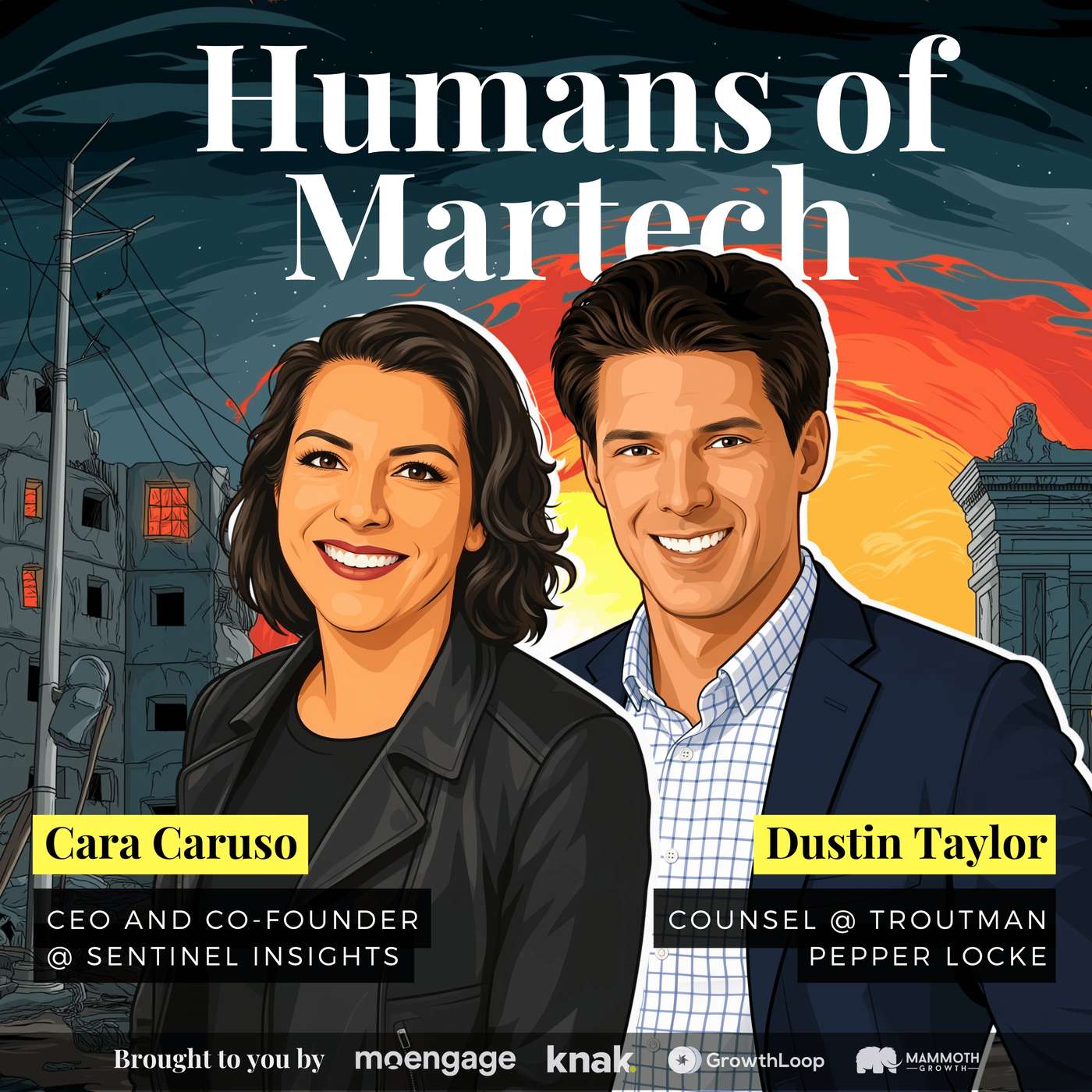
What's up everyone, today we have the pleasure of sitting down with Cara Caruso, CEO and co-founder of Sentinel Insights, and Dustin Taylor, counsel at Troutman Pepper Locke. We'll cover: (00:00) - Cara-audio (00:53) - In This Episode (04:40) - 1 — Why Your Website Is Running More Tracking Tools Than You Know (08:17) - 2 — How a Plaintiff's Firm Turns Your Website Into a Lawsuit (17:55) - 3 — The ECPA Wave and the Privacy Policy That Sues You (20:53) - 4 — What Consent Drift Actually Looks Like (25:16) - 5 — Who Actually Owns Privacy Compliance (30:49) - 6 — The Business Case for Privacy-First Marketing (35:52) - 7 — What Marketing Ops Can Do About Privacy This Week (42:35) - 8 — Why Email Marketing Is the Next Privacy Lawsuit (48:04) - 9 — AI, Consent, and Being Forced to Delete Your Data (51:46) - 10 — Why Small Companies Get Privacy Lawsuits Too (58:42) - 11 — How to Decide What Deserves Your Energy Summary: A privacy-software CEO and a litigation defense attorney walk into a podcast and proceed to scare every marketer in the room, in the most useful way possible. Cara Caruso has scanned over 10,000 websites and found nearly 90% of them non-compliant, while Dustin Taylor has defended more than 100 companies against the exact lawsuits that follow. Together they trace how a forgotten tag from three years ago becomes a seven-figure settlement, why your own privacy policy is the document most likely to sue you, and how one month of a broken cookie banner turns into 10,000 dollars per visitor. Then they flip the whole thing and make the case for why clean, consented data actually performs better. Stick around for the part where your email open rates might be illegal and the FTC makes companies delete four years of data.About Cara Caruso and Dustin Taylor Cara Caruso is the CEO and co-founder of Sentinel Insights, where she leads a platform that monitors websites in real time for consent violations and privacy exposure. Before starting the company she spent more than 25 years in data and martech, building and scaling teams across technology and financial services in both B2B and B2C. She pairs strategic planning with hands-on execution, and she's also a certified yoga instructor who has been known to bring a workshop into the office. Dustin Taylor is counsel at Troutman Pepper Locke, where he defends companies at the intersection of privacy law and marketing technology. He's defended more than 100 companies in ad-tech privacy cases involving cookies, pixels, session replay, and website chat, secured dismissals at the pleading stage in federal court, and argued in California, New York, Florida, Texas, and New Jersey. He started out with an advertising degree before law school, which makes him fluent in the martech stack in a way most litigators never are. He also publishes monthly privacy litigation reports and tracks ECPA filings with AI. Why Your Website Is Running More Tracking Tools Than You Know Most marketing teams believe they...
[00:00:00] Cara: we've scanned over 10,000 websites in the last year, and what we have seen is nearly 90% of websites are not compliant. we haven't had a new customer come on board yet where we're not like, "Hey, we found some extra stuff on your site they're off by two, three, four times as many tags as they expected because the ghost of the past, somebody three years ago put something on, There's piggyback tags One tag is loading four more tags. [00:00:25] Dustin: The, the ECPA is the federal equivalent, and the reason it matters so much is because it has $10,000 statutory damages per class member, [00:00:35] let's say that your banner wasn't working properly for just one month. [00:00:38] How many people interacted with your banner in that one month? [00:00:41] Multiply that by 10,000, and suddenly these, like, seven-figure settlements that we're talking about start to make a little bit more sense. [00:00:48] [00:00:53] In This Episode --- [00:00:53] Phil: What's up, everyone? Today, we have the pleasure of sitting down with Cara Caruso, CEO and co-founder at Sentinel Insights, where she monitors [00:01:00] websites for consent violations and privacy exposures. We're also joined by Dustin Taylor, counsel at Troutman Pepper Lock, where he's defended over 100 companies against ad tech privacy claims, and he publishes a monthly privacy litigation report. [00:01:13] In this conversation, we explore why your website is running more tracking tools than you know, how a plaintiff's firm turns your website into a lawsuit, what consent drift actually looks like, the business case for privacy first marketing, and why email marketing is the next privacy lawsuit. [00:01:31] All that and much more stuff after a quick word from two of our awesome partners [00:01:35] [00:01:35] [00:04:00] Phil: Cara, Dustin, thank you so much for your time today. Really excited to chat with both of you [00:04:04] Cara: Couldn't be a better day to talk about privacy first marketing [00:04:09] Dustin: I'm happy to be here as well. I started my career in advertising, and then I went to law school. So all of this is a little bit of a return of home to me [00:04:17] Phil: Yeah. When Cara said that you were gonna be joining us, Dustin, I had a bit of, uh, uh, time looking at your, your LinkedIn, and that was the first thing that I saw, like advertising degree. And I was like, "This is, this is gonna be fun." Not your average lawyer. You got the background there on, on some of the digital privacy stuff. [00:04:32] So, uh, let's get into it. There's, there's a lot of fun stuff that we wanted to cover today. We'll see how much time we have to, to, to cover all these topics. But [00:04:40] 1 — Why Your Website Is Running More Tracking Tools Than You Know --- [00:04:40] Phil: I wanted to start by unpacking how far off most companies are when it comes to privacy compliance. I've worked with and chatted with a lot of folks that are dealing with this, like, risk-reward balance when it comes to, like, doing a campaign or spending time on reviewing banner compliance policy, and it's like, "This isn't gonna drive revenue for us. [00:05:00] It's good enough for now. We reviewed it last year. Let's kind of move on." Um, I, I would love to ask you, Cara, just to start off with you, like the company you started, Sentinel Insights, monitors websites for consent violations and privacy exposure. And you said that most marketing ops teams totally underestimate the number of tracking tools that they use on their site. [00:05:20] I have a theory of why this is the case, and I've, like, been suspect of this myself. Like, you buy a tracking tool, and you think it's just that one tool, but that tool is actually loading a bunch of third-party trackers, and you're also like, as a marketer, working with the ghost of marketers past before you who did a bunch of stuff, and you don't always know. [00:05:40] Is that the case? Like, walk us through that. [00:05:43] Cara: Yeah. You know, it's fascinating. Um, from our experience, we've scanned over 10,000 websites in the last year, and what we have seen in, uh, just from that perspective is nearly 90% of websites are not compliant. Now, once we actually put our tool in and [00:06:00] we look at the real-time monitoring, what I can tell you is we haven't had a new customer come on board yet where we're not like, "Hey, we found some extra stuff on your site that you weren't prepared." [00:06:11] And every time they tell us, "We just did this. We're g- we're fine. Here's the little list." And they're off by two, three, four times as many tags as they expected because the ghost of the past, somebody three years ago put something on, uh, they're not there anymore. Nobody manages it. There's piggyback tags like you mentioned. [00:06:31] One tag is loading four more tags. It was hard-coded to the page by some agency two years ago because they didn't have access to how to actually deploy tags through a tag manager. I could go on and on all day about this, but there are so, so many reasons. And to be honest, as a marketer for the last 15 years, this wasn't even something that really came up until more recently in my career [00:06:56] Phil: Yeah, it, it seems to be popping up more and more for sure, [00:07:00] and I'm curious to get your take, Dustin. Like, does it matter legally whether a marketing team knew about all of those extra tools? Like, how much time should marketers spend on just doing that, like, full audits of the ghost of marketers past and whether tracking tools are using third parties? [00:07:17] Like, like, how much of that time do marketers need to spend? Like, I'm guessing that i- ignorance is, isn't a defense for [00:07:24] Dustin: Ig-ignorance is, is not a defense, um, not at all. Uh, th-there's also a difference between what marketing knew, what IT knew, and what legal knew, and the answer is very rarely the same. Uh, regardless, although these laws do have a knowledge component, uh, the courts look at knowledge differently than a normal person would. [00:07:47] S- courts, when they're looking at the knowledge, say, "Well, as long as that initial act, that person three years ago that made that install, as long as they knew that they were installing something, the knowledge component is met." So [00:08:00] it doesn't matter that marketing knew it was, it was installed three years later. [00:08:04] Courts, when it comes to the liability, are gonna say, "Somebody along that chain knew. You didn't accidentally install something altogether. You just kinda forgot about it," and that's not gonna get you out of the problem [00:08:16] Phil: Hmm. [00:08:17] 2 — How a Plaintiff's Firm Turns Your Website Into a Lawsuit --- [00:08:17] Phil: So when we think about, like, compliance here, a lot of the people I've worked with think of it as we're compliant until someone complains, and you usually think of, like, one person, an individual taking the time to, like, complain about this one little startup. And, and that's why, like, a lot of teams don't see a ton of risk there. [00:08:36] Like, who's gonna complain that we didn't follow TCPA compliance to send that one text message? But through this episode's research, I discovered that, um, there's a whole different mechanic here that folks don't really understand. So we have, like, plaintiffs law firms that are running continuous audits of company websites looking for mismatches between what a privacy [00:09:00] policy says on a company's site and what is actually running from a martech and adtech perspective. [00:09:06] Is that right? Like, can maybe unpack, like, Kerry, your company has, like, similar tech here, right? But, um, Dustin, why, why don't you kick us off? Like, do, do I have that right? [00:09:17] Dustin: It, that's certainly part of it, but they're looking for more than just that disconnect between what the marketing policy says. Um, and you're-- This is also just kind of a weird nomenclature thing. You'll hear privacy policy, and you'll hear privacy notice. It was originally privacy notice, and then California came along and was like, "Oh, we're gonna say policy." [00:09:35] And everyone's like, "What do we do now? I guess we just follow California." So I'll kind of use those two terms, uh, interchangeably. But that, that's part of it. They're looking into that, but they're also looking to see what happens when you first access the website. Is there a banner? What loads automatically? [00:09:51] What happens if they opt out? What happens if they just accept essential and functional? Is there anything that's miscategorized in there? Did [00:10:00] somewhere along the way, somebody that was responsible for this say, "You know, marketing is essential to our business, therefore, it's an essential cookie, and you can't get rid of it." [00:10:10] That logic makes sense, and it, it did then. Um, but then you're getting a demand letter, uh, that's saying you owe, you know, tens of thousands of dollars. [00:10:22] Phil: And Kerry, your company has similar tech, right? Like in- instead of going after companies from like an offensive perspective, you play on the defense side and, uh, it's basically the opposite, right? Like you're flagging companies that need help before legal issues arise. Do I have that right? [00:10:40] Cara: Exactly. We are working more on the defense side or directly with enterprises so that they can prepare in advance a good best faith effort to prevent these consent and privacy issues. Although I'll tell you, unfortunately, still way too many people come to us after they've received some demand letters or after they're already in a class action. [00:10:59] [00:11:00] So I look at it as there's three ways that marketing teams are trying to get, uh, out of hot water. Number one, you want to stay away from these trophy-hunting plaintiff attorneys because they're coming after you, and they're gonna come after you for small amounts, but they could come after you for class action. [00:11:15] Number two, you're looking at things frankly in terms of brand reputational damage from those kinds of things. And three, you've got the state enforcement level at the attorney general level, which honestly, if they're coming after you for inquiries, everyone's not gonna know. But if there's a settlement, that's absolutely gonna be out there as well. [00:11:37] And so I think honestly, what has produced the most change in the last few years is the plaintiff attorneys and the large dollar amounts. But the state AGs, last year, uh, Gartner said three point five billion in fines last year, and they only expect this trend to continue. So if I just told you the state AGs are the small part of the problem, and last year was three point five billion in fines, Dustin's laughing. [00:11:58] If we added up what all [00:12:00] the settlements were... I mean, Dustin, talk to us about what some companies have been, have been paying in these ad tech privacy cases. This is no joke, right? [00:12:08] Dustin: It, yeah, [00:12:09] Cara: d- you've defended so many of these, so you can talk about it at a, at a better level than me. [00:12:14] Dustin: Yeah, and I can talk about the public ones, um, because a lot of the times that we see, uh, Carrie, you- you're right, and it- it's like an iceberg, and, and I think I'll probably come back to this later, where the, the public settlements that you see, the class action settlements, those are in the seven figures. [00:12:31] I mean, those typically, you know, start with a one or a two million or a five million, um, and, and that's kind of what you see above the surface. What you don't see are the individual settlements for, you know, still kind of tens of thousands of dollars, um, sometimes into six figures. Uh, and the-- You have some of those based on lawsuits, and then you have some of those that are just, "I got a letter," a-and you never even see kind of what's out there[00:13:00] [00:13:00] Phil: Yeah, so some of the better-known ones, and especially in my research, like I, I remember seeing those when they popped up, like Kaiser Perpenente, Permanente, 46 million, and it was a tracking pixel. Duke Health was 3.7 million. There was a bunch of other ones. Like, you've defended 45-plus companies in these, like, ad tag privacy cases. [00:13:19] A lot of the companies that are, like, falling fault to this are using a lot of the same tools that marketing ops teams are using today. Like, how did we get there? Like, how did these teams get into that situation? Like, what, what do they do that, uh, makes them like become fault to this? Like, uh, Dustin, what are your thoughts there? [00:13:40] Dustin: Yeah, I mean, th- when I first get that, that call after somebody's got a lawsuit, uh, and I'll, I'll actually kinda say it, um, I think when we, we first started chatting, um, it was 45. Now it is 100 plus. [00:13:55] I mean, it-- this is just growing at such an exponential [00:14:00] rate. Um, but when I first get on that phone call with somebody, I, I tell the client, like, "You've done nothing wrong." [00:14:06] And because Cara said something a second ago about the reputational damage, and in my experience, companies, website operators, they wanna do the right thing. And it's great when I'm working with clients, and I love seeing clients that we're-- the engineering group gets in and they say, "This is who we wanna be. [00:14:25] When somebody says that they don't wanna be tracked or they don't wanna be marketed to, we respect that. We respect our customers." And that is in the, the ethos of a lot of website companies and a lot of companies we work with. Um, so first, you know, they get on, they're like, "What'd we do wrong? Like, we thought we had this figured out." [00:14:47] And I have to say, like, "You haven't done anything wrong." This is a really complicated space, and clients are focused on complying with regulations like the CCPA, um, and avoiding those enforcement actions like Cara mentioned, [00:15:00] and the CCPA doesn't require opt-in consent. And then they get this letter, says that they violated somebody's privacy. [00:15:06] So the first part of most calls with clients is resolving that confusion. Then, um, when we kind of talk about like, okay, where do we go from here? Uh, we like to call, uh, walk clients through what we call the ACT approach, A-C-T. And it is super cheesy, uh, but we came up with it to hopefully help clients as a mnemonic for, to remember what to do. [00:15:31] And you wanna audit, correct, and track. And that audit step figures involves, you know, figuring out what's on your website. And it's like Cara said, you- she-- they go to her, and they're like, "Oh yeah, we have this list." And she's like, "Yeah, you're missing a couple of things." Um, and that's definitely that first part of it, and why I love working with Cara is because having her in on that conversation just really opens people's eyes to saying, uh, what, what's really there.[00:16:00] [00:16:01] it's also part of that audit is then, okay, what-- how are you using these tools? You know, you had something from three years ago you didn't know it was on there. You probably aren't getting a lot of information from it. What vendors are having access to your data? What does your privacy policy say versus what's happening? [00:16:18] And that's kinda where we, um, talked about earlier. That's one component of it. After we do that audit, we wanna correct any gaps that the audit revealed, and then we wanna track future behavior to make sure no additional gaps arise. It's easy to say, "Oh, we did this, you know, last week." Well, what's changed since then? [00:16:35] And if you're only checking the website and working with somebody like Cara on a, you know, yearly basis or even six months, uh, so much stuff can happen between that time. And, and Cara can tell you, websites [00:16:47] are not set it and forget it [00:16:49] Cara: No. I mean, one of the things that all our mobs teams are on here, I mean, they are often putting website u- updates out every two weeks [00:16:59] Dustin: crazy. [00:17:00] Um, [00:17:01] but so [00:17:01] Cara: I think one of the other things that Dustin and I talk about a lot too, um, you know, the problem here is Dustin is trying to talk to his clients as well about state and federal laws. I mean, no wonder marketing ops people are trying to understand what's going on. We have 20 states, 22 soon will be in effect within the next year, and then we have all the federal laws. [00:17:21] So you think that you figured it out in the state you're in, but it might be, uh, the VPPA, uh, Dustin's talking about the video protection. It could be HIPAA. It could be children's data. You take a small issue, add children's data being shared, and exponentially the fines and the lawsuits increase. So it's no wonder that marketing has a hard time understanding all this when you literally have so many different laws and so many different ways that this problem can be attacked [00:17:51] Phil: Yeah. So le- let's talk about, like, how this can actually happen. Like, [00:17:55] 3 — The ECPA Wave and the Privacy Policy That Sues You --- [00:17:55] Phil: Dustin, you've analyzed nearly, like, 200 plus ECPA, Electronics Communications Privacy Act, for the, the non-legal folks in the audience. Uh, a- and you've kinda categorized a lot of them and the specific misrepresentations that are driving them. [00:18:10] Um, y- you, you run a newsletter on LinkedIn that folks can kinda check out. We'll link out to it in, in the show notes. But some of these are things that marketing teams would never see as a problem, like when you just look at it point blank. Walk me through the flavors of... that are most relevant to marketing ops teams. [00:18:26] Like, what are they doing wrong without maybe even knowing it that kinda comes up a lot in, in these analyses? [00:18:33] Dustin: Yeah. Um, I'm so happy you picked up on that. Uh, we're really proud of, of that project and, and kinda where it went through. So from September, uh, '25 through March 2026, there were 197 lawsuits that alleged violation of the ECPA. Some people will call this ECPA. I refuse to be one of those people. Um, it's like a GIF versus GIF thing. [00:18:56] I have made my line in the sand, and I'm calling [00:18:58] it ECPA. [00:19:00] [00:19:00] Phil: or SQL. [00:19:00] Dustin: it's like, uh, no, I'm not doing it. Um, so but the, the ECPA is the federal equivalent, and the reason it matters so much is because it has $10,000 statutory damages per class member, [00:19:14] Phil: Hmm. [00:19:14] Dustin: so it's got some real big teeth. Now, depending on what month you looked at, um, with-- for these 197 lawsuits, that is two to four times as many lawsuits as that same time the last year. [00:19:27] 112 of those 197 alleged that the website misrepresented something to consumers, and this kinda goes back to what Cara was saying about that reputational and the trust. 80 lawsuits said that repres- that misrepresentation was the privacy policy itself said something was false in it. For example, that the website only shared aggregate data about somebody, but then they had a pixel on the website, and that include identifiable information. [00:19:55] 41 of the lawsuits said that consent mechanism, the website's attempt to actually [00:20:00] obtain consent before doing this, was broken, so that when somebody opted out, the website was still tracking them. And for those of you keeping track afterwards, the math does not add up. Uh, 80 and 40 is more than, more than 112, um, because some of those... [00:20:17] Yeah. Lawyers are not great at math, but I did recognize this. Uh, but a lot of those lawsuits alleged both. So we're, we're seeing these, um... And, and those lawsuits are then trying to use that misrepresentation to bring in the ECPA claim. So let's say that your banner wasn't working properly for just one month. [00:20:35] How many people interacted with your banner in that one month? [00:20:39] Multiply that by 10,000, and suddenly these, like, seven-figure settlements that we're talking about start to make a little bit more sense. [00:20:46] Phil: Hmm. li- like you said, this one has, has big teeth. Um, uh, y- you also like teased out like consent drift there. [00:20:53] 4 — What Consent Drift Actually Looks Like --- [00:20:53] Phil: So Cara, would love your, your take on this. Like the importance of knowing what happens on your site when users actually use it versus just how it was designed to operate in the first place when you last checked it like six months ago is a completely different thing. [00:21:08] Like I feel like this is the part that hits hardest for the marketing ops folks that, that are listening right now because it's, it's about like systems doing exactly what they were designed to do and that actually being the problem and why they landed in, in hot water. So walk us through like what consent drift actually looks like. [00:21:27] A company has a complaint set up in January, um, or sorry, a company was compliant i- in January with their setup. What happens over the next six months that like quietly broke it without them knowing about it? [00:21:41] Cara: Yeah, so I think, you know, Dustin and I have talked about this quite a bit, and he just mentioned it. Marketers, they put that consent management platform, and that cookie banner pops right up on the website, and they think they're done. They've implemented it. The cookie banner pops up. And honestly, I believe this. [00:21:57] I, I think, Dustin, you believe this too. They think [00:22:00] they're done. [00:22:00] Phil: Mm-hmm. [00:22:01] Dustin: Absolutely [00:22:02] Cara: and they-- So then a demand letter comes. They reach out to whoever does that, and this is not a knock on consent management platforms 'cause there's a lot of them out there. It's how they're implemented. And they have to be managed and maintained like any other enterprise piece of software. [00:22:18] You do not just set it and forget it. There's a reason your company has an IT team, and you have all these resources. At a minimum, you should be having monthly data governance meetings and reviewing what's happening on your site, reviewing new vendors you're bringing on your site, reviewing the contracts with those vendors. [00:22:35] There's all these things that have to happen that Dustin really gets involved in 'cause at the end of the day, we're coming in as a platform giving you information saying, "Hey, here's the problem. All these pixels are still firing when they shouldn't. People who have opted out, this is what's happening." [00:22:53] And oh, by the way, even with consent, you should not be sharing PII or PHI. When I'm talking about that, I mean [00:23:00] Cara and her birthday and her medical conditions and, you know, all the things you might pre-fill in before you schedule a doctor's appointment. And so that consent drift, it really happens so quickly. [00:23:11] It can happen in a matter of, uh, one website change or one sprint or one tag. And so when we think about the, the consent drift, it happens quickly, and we really don't think people mean anything by it, but it happens [00:23:26] Dustin: Yeah. And, and this is exactly why when we, when we talk with clients and the, the T in ACT is track. It's fix it, uh, figure out what's happening, fix it, and then make sure it doesn't happen again because it can so easily [00:23:42] Cara: Right, and this is where the whole legal, IT, marketing, they all come together. 'Cause the reality is legal knows it's an issue, IT might know it's an issue, but the person who actually manages the website and all the tools is marketing [00:23:57] Phil: So when, when you have like marketers coming to [00:24:00] you, Cara, and you like unpack all of the issues, what are the ones that are usually... Like, they, they come up the most and the marketers are the most surprised by them? Like, "What? This is the thing that is like causing our issue here?" Is there a couple that stand out? [00:24:15] Cara: They are shocked when they find that there's tags on their site that they never expected to be [00:24:20] there. [00:24:21] Phil: Yeah [00:24:21] Cara: And two, they're usually shocked when there's piggyback tags, meaning one tool loaded another tool, which loaded another tool, and they didn't even know their data was going to those companies 'cause there's multiple. [00:24:33] And three, they're usually shocked by whatever their outside marketing agency, 'cause almost everyone is using someone somewhere along the line, whether you're small or some of the largest enterprises. They're doing whatever they want when they, they throw up landing pages. They're probably not following your guidebook. [00:24:49] And so the marketing team has to fix all those errors, and they don't even realize, honestly, they're silently happening. [00:24:54] once you know what's happening, you do also have to fix it [00:24:58] So legal might have a little [00:25:00] part. [00:25:00] Dustin's trying to advise the heck out of them. Uh, IT's like, "Hey, I can help you with a few other things on the back end." But actually it's marketing and usually the an- marketing ops and the analytics team who has to sit down and actually figure it out [00:25:14] Phil: Hmm. [00:25:16] 5 — Who Actually Owns Privacy Compliance --- [00:25:16] Phil: Yeah, I think most of the times, like the breakdown in communication for these things happens between like marketing thinking that it's a legal issue and legal thinking that it's an IT issue, and no one really ends up owning the issue. [00:25:31] Uh, Cara, just curious your take there, like who should own it and who owns it right now? [00:25:36] Cara: I think it's a cross-functional team. I think Dustin and I probably agree on that. Dustin, I'd love to hear your thoughts too [00:25:43] Dustin: Yeah, I, I'm not sure who owns it. Um, and because this is a podcast, I did air quotes there. Uh, but I, I can tell you whose desk it lands on by the time it comes to us, and the an- that answer is legal. And I, I sometimes wonder how many companies are getting [00:26:00] these and ignoring them or getting sued because they didn't have a legal department or contacts with outside counsel. [00:26:06] A lot of these companies know how they're using the data, but not necessarily what that data is sending to others and how others are using that data. Compliance focuses a lot on the former, litigation on the latter [00:26:22] Cara: Yeah, so it's a fair point. It ends up on legal's desk or a privacy officer's desk, [00:26:27] Dustin: Yeah [00:26:28] Cara: and those people then put IT and marketing in the room, and then we all get together and, and attempt a kumbaya. I will tell you that the finger-pointing and the alphabet soup, 'cause everyone uses different languages and terms to explain things, uh, you almost need an interpreter, um, who can really understand. [00:26:47] And so I feel like lawyers have become extremely technical in order to be able to understand, explain. So Dustin, e-even though he has this advertising background, he's like a martech expert, where I've spent years [00:27:00] and years, nearly 30, in data and martech, and Dustin has to be almost as technical as me to understand how these things work. [00:27:10] And so that's also fascinating, 'cause I will tell you, generally lawyers, uh, and the legal profession, they are not technical like that [00:27:17] [00:27:17] [00:29:20] Phil: Yeah. When, when I've had to tackle this in-house, it, a lot of the time is spent on, all right, step one is let's create this Excel sheet where we have a column of all the tools that we're using, and then the next column is explaining to legal and IT why marketing wants this thing and, and what it actually does. [00:29:39] What are the use cases? Is it mandatory? Do we need it? The next column is like, if IT cut this tomorrow, what would happen? What would we lose? Is it mission critical? And I feel like part of that, the, the, the resistance with why marketing ops teams like don't focus enough time on it is it's not, it's not revenue driving on [00:30:00] paper. [00:30:00] Like, there's like a list of priorities that they need to do and projects they need to get out the door, and then IT is like, "Whoa, whoa, let's pause. We need you to document all the tools that you're using and take time explaining to us what this tool does." And so what I liked about your explanation there, Cara, is that like, you know, that, that, that's like saving time a little bit. [00:30:20] Like, Dustin, I don't have to explain to you what like RudderStack does in our stack. It's, uh, like our command line interface, uh, or it's our customer infrastructure tool that's like tracking stuff. And so I feel like, you know, marketers can spend a lot more time understanding the compliance, the legal part of it, but it's kind of like a two-sided coin. [00:30:39] Like, I feel like a lot of legal teams should do vice versa and understand all these martech tools and how fast they're changing. So I like how you're bridging that gap, so to speak. [00:30:49] Dustin: Uh, [00:30:49] 6 — The Business Case for Privacy-First Marketing --- [00:30:49] Dustin: Phil, I wanna, I wanna, uh, you just said something that I wanna dive off of. Um, you said that it's not revenue generating. And because it always fascinates me, um... And again, like I, I, I have one perspective into this. I get brought in typically when something went wrong, and, and that's just like the life of a litigator. [00:31:07] Uh, so we come in and we talk about, "Okay, let's put a consent banner up." And then all of a sudden the companies go, "Oh my God, we're gonna lose revenue. We're gonna lose so much money." And that is what I, I love working with Cara's company because I get to bring her in or r- make a referral to her and say like, "Talk to her about that. [00:31:27] Bring that conversation to her, and she can tell you the difference between improving the quality of your leads and even if the quantity goes down." And, and Cara, I'd kinda hear your... 'Cause you're, you're the best on this, but I love that conversation because that's the resistance we get to kind of a consent and, and some of these tools of, "Oh, we didn't know it was there for three years, but now that you pointed it out, no, no, no, we can't get rid of it. [00:31:51] It [00:31:51] drives, it [00:31:52] drives re-" And it's like [00:31:53] Cara: Yeah. Right, and we get it, 'cause, uh, marketers have had the experience. They started with GDPR in [00:32:00] Europe, so they already saw data drop. So on our platform, we talk to them about clean and consented data. So, um, part of it is you want to make sure that you're getting as much data as fast as you can. [00:32:15] So for example, you're a marketing team, you're mark- marops, you're... Now the mops team ha- launches a brand-new campaign. It's huge. It's a new product rollout. You need to make sure that your campaign attribution is on all those key pages, your UTM parameters aren't missing, 'cause your CMO in two weeks goes, "All right, we've spent $3 million. [00:32:35] Where, where are we at? What's our s- what are our stats?" And online you forgot to tag your pages, and the data answer that you have for that CMO is, "I don't know. We'll just look at hopefully how we can attribute some of the revenue." You've missed it. That is something that we can fix. We can't fix the fact that might- maybe a few people decline cookies. [00:32:58] So what we wanna do is make [00:33:00] sure that you're getting as much good, clean, quality data as possible to offset that there might be a little bit of drop from people who have said, "Please don't track me. I don't wanna do that." And in the U.S. that might be about a 20% drop in certain states, uh, where people are more aware. [00:33:17] In other states it's very little dropping off. Uh, so, so we work very hard to make sure that they're getting as much data as possible, the most accurate data possible that's clean and consented, [00:33:29] Phil: Hmm. [00:33:29] Cara: And so it's a balance to make marketers happy 'cause they're like, "Oh, you can make sure that I have my campaigns? [00:33:35] Oh, you're gonna make sure that my commerce and my analytics data match? Oh, you're gonna make sure I'm not double counting page views for all my Facebook advertising, and I've been throwing more money at Facebook and it actually, I should have been sending it to LinkedIn?" you know, you really get into those business conversations and then they're like, "All right. [00:33:52] I guess I can do this consent thing 'cause I fixed a bunch of other things that have made my data better." [00:33:57] Phil: Yeah. Can you also unpack like [00:34:00] the, the, the Cisco research that you shared ahead of this? [00:34:02] Cara: Yeah. No, I think the-- Cisco put out a really interesting privacy benchmark study. It was, mm, I wanna say like February of this year, so it's pretty current. Uh, there were thousands of people that they surveyed around the world. Ninety-nine percent of companies said they report measurable benefits from privacy investments. [00:34:20] Ninety-nine percent, that's pretty significant. Ninety-six percent say strong data controls enable them to be more agile and more innovative, and ninety-five percent said they see increased trust and loyalty as a result of privacy programs. Now, if I'm in marketing, those are some pretty compelling stats to have thousands of people tell you that by getting the right things in place, they can move faster. [00:34:48] 'Cause nothing makes a marketer happier than to get a campaign out the door, and if you get past legal and past all these, uh, processes quickly 'cause you have a program in place and it's not stalled for six to eight weeks going through [00:35:00] processes, I think that's huge for marketing. Speed to market matters, so as much as we don't like these processes, I think if we put the right things in place, we can move faster together. [00:35:11] And the Cisco study really highlighted the value of privacy first marketing [00:35:19] Dustin: I think it just kind of also echoes what we were talking earlier. Companies want to do the right thing. They, they, they respect their customers. It's, the Cisco research says, like, "Here's what you get by doing the right thing," but also just the inherent value of treating your website visitors, treating your customers with respect and respecting their privacy. [00:35:41] I found that that resonates with most, I mean, I, I say clients, but it, it resonates with most companies [00:35:50] Phil: So what, like I wanna ask both of you, like if, [00:35:52] 7 — What Marketing Ops Can Do About Privacy This Week --- [00:35:52] Phil: if there's someone listening right now who works in marketing ops and, you know, they have access to working better with their legal and, and IT teams, like I want listeners to walk away with something concrete, uh, to do maybe the day after they hear this. [00:36:06] Like if I'm a mobs manager and I wanna understand what's actually running on our website, what's at risk, like what's the first thing that I could do next week? Carol, I'll start with you. [00:36:17] Cara: I think one of the first things I would do is put together a cross-functional team to start having like a data governance council, right? That ownership and accountability across the enterprise, I think makes all the difference in the world. If you start by having a conversation saying like, "Look, we're hearing this." [00:36:35] You might even see your competitors have had multi-million dollar settlements in the news, right? What, what are you seeing in your space? What's happening around you? Have a discussion. And then number two, I'd take a real hard look at your website and what's happening with consent. There's plenty of companies that offer free scanners. [00:36:51] We do too. Just take, take a quick look and say, "Am I even honoring consent just at a high level? Uh, am I, am I following [00:37:00] through with that pop-up banner and what's happening?" Just run a couple quick scenarios, some browser controls, and understand, am I doing what the website is expected to be doing? And if not, it's time to kick off a project to fix that. [00:37:14] That could... Because what we're hearing, um, at conferences, Dustin and I hear from the regulators and from the AGs, they say the website is the door opener to look at many things. So if they go to your website and the privacy policy is three years old, you're not enforcing cookies, you're not honoring the basics, then it opens the door for them to look at all your vendor contracts, all these, uh, there's-- It, it, let's just say Dustin's job becomes much bigger, larger, and you're spending a lot more money. [00:37:43] So start with the basics. Get some of the right people in the room, look at the website, at the basic things you're putting out there to the public that anyone can see, and say, "Do we have a problem or not that we need to address?" There's a whole bunch of steps after that, but that's [00:38:00] what I would do to start the conversation. [00:38:02] Uh, Dustin, I'm sure you would add a few things to that. [00:38:05] Dustin: Uh, call Cara. No, uh, I mean that's, that's, it again, like we, I, I say it's cheesy and I'm, I'm standing by that, but the ACT pro- the ACT program that we follow, step one, one, one, we call it ACT because we want you to take action. It, this is, this is an active, um, role. And but step one of that is audit, and it's exactly what Ca- Cara was saying, figuring out what's going on with your website. [00:38:33] What does marketing know? What does legal know? What does IT know? Um, what are the vendor contracts? When was the privacy policy updated? It's figuring out kind of what is going on. Um, Cara, though, I want ... You said something in your answer that I w- I wanna spin off of, which is what your competitors are doing, and this like industry standard practice thing of, "My competitor's doing the same thing." That may help in the boardroom, and, and I think [00:39:00] it actually does, but from a court perspective, it does not matter. And again, I, I s- um, I have a toddler, uh, but they were doing it too is not a defense. Like, it's like, okay, well- Now you're both in trouble. I, I don't know what you [00:39:18] thought I was gonna-- how I was gonna react to that. [00:39:20] We're both throwing rocks. Okay. Well, [00:39:23] Cara: Great [00:39:24] Dustin: um, but I, I do see industry standard practice have some value in the executive board and their appetite for risk, more so with how the, the law or-- especially with, uh, how they're obtaining consent. And there, there's tons of different options. This is-- could be an entirely separate podcast on how you obtain consent and what-- how the courts look at that, and, and I give presentations on that all the time. [00:39:49] Um, but companies are gonna go, "Okay, well, how is our main competitor? How are they obtaining consent?" And it's all kind of a risk analysis and an [00:40:00] appetite for risk, and, and that's what this comes down to at the end day. Cara and I are not gonna come in and, and tell you, "You have to do X." I... And it's not my job to tell you to how to avoid to get sued. [00:40:14] Like that, that's easy. Don't have a website, you do have a website, don't have any martech on it at all. Don't sell anything. Like, that's like me telling you the best way to avoid getting in a car accident is to just never leave your house. It's effective, but it's not realistic. But what if I say, "Okay, don't drive at 2:00 a.m. [00:40:35] when the bars are closing, and the risk of getting hit by a drunk driver is higher"? Our job is to help you identify the risker- riskier areas and help companies and help you kind of mitigate those with-- while still making the rest of your business operate and, and kind of figuring out that risk tolerance. [00:40:52] And that's where that, like, industry standard practice I do see actually kinda come in because the boardroom recognizes it, [00:41:00] um, even if the courts aren't gonna use it as a defense. [00:41:05] Cara: And honestly, uh, the other thing that's fascinating to me about this is if you're not having these conversations, you might be forced to have them from your own insurance company. Large corporations, um, all carry cyber insurance. Us included, right? Cyber, uh, policies are now... They're looking at websites, they're running scans on their customer sites, and they're saying, "Hey, we found issues. [00:41:30] You have 60 days to remediate, or if you get a lawsuit, we're excluding this from your policy." So that means now these multi-million dollar risks, you have not mitigated with insurance anymore. You're now fully on the hook. That might change the way you look at risk. All of a sudden, a CISO before who said, "Not worried about it, I have five, 10 million in coverage. [00:41:51] These things are coming in at a nuisance." All of a sudden, you're told you have no coverage. All of a sudden, marketing ops team gets calls, and this isn't a joke, [00:42:00] this is happening. We have to fix this right now. You have 60 days to fix it or less, right? Or we have no coverage. So there's also external things that are happening, not even just demand letters, but that might have you reevaluate your risk and your risk tolerance. [00:42:16] Phil: Yeah, talk [00:42:17] Cara: a-- It's a wild, wild west now [00:42:20] Phil: talk about a fast way to get something prioritized. Like you- your insurance company says you have 60 days to fix this, stop what you're doing right now. Um, yeah, I feel like that one's a, a real example. I wanted to also ask about, uh, like [00:42:35] 8 — Why Email Marketing Is the Next Privacy Lawsuit --- [00:42:35] Phil: one thing that's close to my heart is email. Like, I spent a ton of time in my career in email, and email compliance and CASL and GDPR has always been like part of the email marketer's job and the marketing ops person's job, and like working hand-in-hand with, with legal and, and IT on that side. [00:42:52] And Washington's Commercial Electronic Mail Act basically says that it's 500 per email in [00:43:00] statutory damages, and marketing email subject lines are now a class action trigger. I wanted to ask you about this, Dustin, because like, you know, I'm reading some of these like forward-looking things coming down the pipe, and how many marketing teams know that their email programs are a litigation risk? [00:43:18] I don't hear a lot of email marketers talking about this, so why don't you talk to us about that? Is there, is there an acronym that you like using for that one, like, uh, WECMA? [00:43:29] Dustin: I- I've painted myself into a corner here. Uh, I-- no, I, I, I don't have an acronym for that one. Uh, but to answer your question of how many people, you know, are-- how many marketers know about this, hopefully more after listening to this podcast, um, because it, it is things like this. A- and we send out client alerts. [00:43:46] Um, you, you mentioned earlier the, the work that we do on the blog and then I repost on LinkedIn. Um, we're trying to bring this to people's attention because this is definitely a growing area, and it's a newer trend. And it's more than [00:44:00] just Washington. We're seeing similar allegations out of California now too, and that should scare everyone who has s- paid attention at all to the civil litigation and kinda everything that's been out of that. [00:44:13] The tie-in to marketing here is that plaintiffs are using a company's martech practices to satisfy half the legal test for these claims. These claims look at was there a deceptive email that you sent, and did you send it to somebody you knew was a resident of this state? And then they point to the martech and say, "You knew. [00:44:35] You knew that this was somebody in Washington. You knew this was somebody in California because your tools told you that. Now all we have to do is prove it was deceptive." And, and that's kind of where it's huge and why we're so concerned about it. Um, but it is, it's definitely a growing, growing area. [00:44:53] Cara: And if you wanna hear another thing that scares marketing ops people, um, we've had some more guidance this year, and, [00:45:00] you know, certain things that have started in Europe have spread. So in particular, uh, CNIL, that's basically the governing body over France. They're now saying for France, the latest guidance, uh, is talking about even o- tracking opens of emails or click-throughs of emails is now no longer allowed without con- obtaining prior consent. [00:45:23] So you're sending out marketing emails, "Please come join our webinar," and you're, you're spamming a whole bunch of people in France. Well, there's a bunch of rules around that, but you're so proud that you got an open rate of forty-six percent and a click-through rate of thirty-five percent, and that was probably illegally obtained, it's possible that could spread through Europe. [00:45:46] So, like, marketers, the, the very fundamentals that we grew up with, the basics that we are expecting, they are under attack, and we do have to be paying attention to this constantly changing environment[00:46:00] [00:46:00] Dustin: Phil, you should have, you should have had us on like around October so we could just do like a spooky theme. Just we're gonna scare everyone. Uh, but Cara, Cara's right, and, uh, I mean, she, she's, she's always right. Um, that's, that's what you need to remember from this. Uh, no, uh, as defense counsel, we look to what's happening with the European governing bodies. [00:46:22] You can be 100% sure plaintiff's counsel is looking at it too, because being first is so key in this game, because those are the cases that oftentimes get the big litigations before insurance comes in, before kind of the market reacts and there's now a dozen copycat style plaintiff firms. Whoever can be the first on that gets the lion's share, so they're looking for those emerging trends and kind of what's happening, and that's why what, what Cara mentioned, that's why the email thing, that's why these are all kind of really big issues to get fixed now, not when it tips and kind of becomes [00:47:00] a critical thing that everyone's dealing with [00:47:02] Phil: Yeah, that is pretty wild. I, I feel like, um, I didn't know about either of those things as, as an email marketer, and it, it is scary in a sense 'cause, like, you know, we could have a whole conversation about what is the definition of a deceptive email and what is outbound marketing versus deceptive email. [00:47:24] Like, I feel like there's a ton of crossover there, and, like, if email marketers reach a certain stage where this is spread across every country or a lot more countries, and we need to collect consent on tracking opens and clicks, and if we didn't, we have to have a separate instance in our automation platforms where we don't track that data on those users, and what is an email marketer's success metrics look like in a year or two if we don't actively, like, collect that data anymore? [00:47:56] You could argue that that data wasn't super necessary in the first place [00:48:00] anyways, kind of a proxy. But anyways, there's, there's a whole other topic to, to, to have here. [00:48:04] 9 — AI, Consent, and Being Forced to Delete Your Data --- [00:48:04] Phil: But I wanted to ask either of you here, maybe Kerry you can start, but, like, for marketing ops teams that are starting to use AI agents and, you know, this whole category of AI powered data collection to run campaigns and come up with new things to use on the personalization side, like, what does consent actually look like in that world where, you know, we talked about, like, third party piggyback tracking tools? [00:48:30] AI is like a black box in a lot of cases, and maybe is, like, the scariest component in, in this entire conversation. [00:48:39] Cara: Marketing ops teams have to be prepared. Now, years ago, we talked about this as personalization tools. Now we talk about it as AI personalization tools. It's, it's the same concept, we've just evolved the words a little bit differently. But the reality is, if you're building an AI model on data that is not clean and [00:49:00] consented, you could absolutely be told you have to throw away the model and throw away your data. [00:49:05] So as part of some of these settlements, not only could you be, be hitting with fines, but s- one of the things the FTC loves to do is tell you, "You have to remove all your data." Like, uh, when Vizio got hit with tracking data from everyone watching their TVs, they were told they had to get rid of years of data. [00:49:21] You're not even allowed to have it anymore. You misused it, you weren't allowed to gather it, you didn't have consent for it, you've been misusing it, delete all of it. Okay, that m- as a marketer, if that doesn't make you panic just a little bit to throw away your marketing data, it, it, it makes my heart palpitate just thinking about that. [00:49:40] So that's how critical this is. You have to look at your data pipelines and where data's coming in from your customers, making sure you have consent. Do you have consent from the website? Consent to email them? Consent if they become a customer? You're looking at it across all these channels to make sure that you have the [00:50:00] consent so that you can then build those customer data lakes and those custom data platforms, and build all the models on top of that data that you're allowed to have. [00:50:09] I think that's just so important. And again, if somebody told me I had to delete four years' worth of our marketing data, you would find me crying in the corner with a blankie [00:50:18] Phil: I was gonna say heart palpitation, but lots of tears. Probably a lot of tears. [00:50:23] Cara: Yes [00:50:25] Phil: Anything you wanna add there, Dustin? [00:50:27] Dustin: I mean, Cara, Cara said it perfectly. I think the only thing that, um, non-attorneys may not appreciate as much is it's not just the retroactive, uh, especially with these kinda FTC, uh, consent [00:50:41] Cara: That's true [00:50:42] Dustin: Um, it is, okay, well, you have to throw away the past four years of data, and you have to report to us for the next five. And if there's that forward a- looking thing, and, and that is a huge difference on the enforcement side than from the litigation. [00:51:00] Litigation, typically it's monetary. There, there may be some kind of promises to change, but they're gonna be more minor. FTC is, "Okay, you're, you're reporting to us for the next however long. [00:51:11] And now you... " You [00:51:13] Cara: Or state AGs, FTC [00:51:14] or state AGs, any of the ef- enforcement bodies, right? The two to five years, you're gonna have to show them everything [00:51:21] Dustin: Yes [00:51:23] Phil: When I've worked at smaller companies, startups or SMBs, like in that like 200 to 300, 400 employee range, it was super different. [00:51:33] Like it was out-house counsel, maybe one person in IT. Marketing ops is doing 700 different things, and compliance is, eh, like whose job is it? And like we kinda talked about who knows what it falls under. [00:51:46] 10 — Why Small Companies Get Privacy Lawsuits Too --- [00:51:46] Phil: And I feel like there's this myth where, you know, people at risk of compliance issues and litigation are only bigger companies. [00:51:53] If you work right now at a smaller company, an SMB, and you're listening to this, maybe part of the conversation you were thinking like, "Ah, [00:52:00] I'm fine. Like I don't follow all those rules. We haven't refreshed a policy. Our banner is old, but like we're a 200-person company. Like we're fine." Is it... C- can you dispel that myth? [00:52:10] Like is it as big of a deal for the SMB as it is for the enterprise listeners out there? I'll start with you, Cara. [00:52:18] Cara: I think Dustin's the one to answer this, 'cause certain states have certain revenue thresholds, and let me tell you, some of them are a lot lower than people expect, right? So again, this is the fun fact for marketers. We have to sit here and tell you that every state have different thresholds as to whether their data privacy laws apply. [00:52:34] But then there's other things that are just globally apply, like HIPAA, right? Uh, across the US. I shouldn't say globally. I should say globally across the US, across all 50 states, right? So Dustin, talk about what are some of the bare minimums, right? Let's talk about that [00:52:51] Dustin: I, yes, and, um, that focuses on the enforcement perspective. And Carrie, we are talking like revenue thresholds, but it's [00:53:00] also not just revenue. It's also, uh, you know, California also looks at whether you're buy, selling, or sharing personal data of 100,000 or more California residents. That's-- a lot of times, you know, companies come in, they're like, "Well, I don't have 26-- more than 26 million in revenue." [00:53:16] All right. Well, let's, let's ask the second question. So figuring out... And, and we have, um, like an, an audit kind of package that w-we just-- it's a fixed fee thing that we just kinda look at the website. And part of that is also figuring out what state laws are you subject to, and because that's, again, that's part of the, the audit step of act. [00:53:36] Um, but it's not just enforcement. It-- this go- this job candidly can be really frustrating sometimes because I have companies come in that are like, "We have X amount of revenue a year," and I'm talking like below six figures, and they've gotten one of these letters. And they're saying, "Well, you know, they're-- they want $15,000, [00:54:00] and we make $20,000 of revenue a month." [00:54:04] And it's, it's heartbreaking 'cause you, you have companies that are trying their best and not yet past that critical threshold. And that's not even the, you know, 200 employees. That's the mom and pop shops. That is the, you know, I do camper van conversions with my husband, and I, I, I mean, I'm from Colorado, so maybe that's more of a common thing here. [00:54:25] Um, but you have companies getting these things, and that's a huge impact. So getting ahead of this, thinking of consent can, um, thinking of avoiding enforcement actions, but it, it can just have such an importunate impact because the plaintiff attorneys, there's so many of them at this point that they're not just going after the big companies. [00:54:47] They're, they're sending letters out tons, and, and that-that's a whole other topic. But it, it is an issue for everyone [00:54:56] Cara: And for small teams, you can outsource this as, like, a managed service. [00:55:00] Just have someone manage the tools. We do that, too. We're not-- We're a software platform. We're not a services company. We have amazing partners. Not lawyers. They don't wanna put hands on keyboards. Uh, the lawyers help us with the legal advice, right? [00:55:13] But they could be part of that as part of a monthly c-cadence of calls. Um, so you get the legal side of it. You kinda run that council monthly for them, and then you use the tools and do the remediation each month past that monthly meeting. So sometimes it's just easier to outsource it. Pay someone, let them run the program, and let them, let them handle it with you if you're really running lean. [00:55:34] But, but again, ignorance and saying, "I didn't know," it's just not good enough [00:55:39] Phil: Yeah, not good enough. I feel like that's a, a good heartbeat of, of the conversation here. Uh, I got some fun, uh, last questions to, to ask both of you. Uh, before I get to that though, like I, I feel like we scared marketers at the start of the conversation with like the litigation numbers and, and the big teeth numbers, and then we kinda like turned the coin a little bit and we [00:56:00] said, you know, like, "There's a business case to doing this stuff anyways, even if you don't get into hot waters." [00:56:05] And then we like ended by scaring people again with like some of the other stuff. So any like last final things you wanted to share, Cara, for like the marketing ops folks that are listening that, you know, have felt the rollercoaster of emotions as, as we walked through this here? Like e- end, end on a, on a happier note maybe. [00:56:22] Cara: Look, we know you're super busy. We know that you're managing things that are literally breaking and changing on you every week. We understand that your world is crazy, but there is a way to s- to set up a plan that truly will allow you to stay compliant and then be able to go focus on other things. And so I, I do believe for as complicated a topic as it can be, we can very much so simplify this down to some simple steps that you do every month, and that you can stay compliant so that you just stay out of the fray and stay out of the news. [00:56:58] It's... People make it sound like this is a [00:57:00] multi-million dollar project. You gotta hire 25 people to do this. That is not the case. Talk to us. There's absolutely ways to do this at a very reasonable price point and get this under control so that you're not dealing with it as a fire drill [00:57:16] Phil: Anything to add, Dustin? [00:57:17] Dustin: Uh, I mean, not re- I would just say, like, I actively work against my own interest. Um, I try to put myself out of a job, uh, because a lot of this is avoiding litigation. And, um, that, that's my ultimate goal is I want the, the companies with whom I work to not have to need me. And we, we have, um... at our firm, we have compliance folks, um, that are, I mean, seriously some of the best in the world. [00:57:49] Um, like globally ranked. It's, it's crazy. And we work very closely-- As a litigator, I work very closely with them, and we're always just kind of looking out and trying to help clients avoid... It's like what you said about [00:58:00] the email, um, "Hey, fix this." Uh, we-- Something we did very recently, this is so silly, um, we sent an, uh, an email out to our contacts saying, "That statement you have in your privacy policy that says, 'We respect privacy,' just take that out." [00:58:16] Um, because, like, we see that plaintiffs are kind of focusing on these things, and they c- you can make these small corrections that have bigger impacts, and that's something we try to just kinda help people do, is... Yeah, it's just, it's, it's free. It was just a, like, do this. Um, there are small steps that you can take that have a bigger impact. [00:58:39] Phil: Love it. Appreciate, uh, both of you sharing those. [00:58:42] 11 — How to Decide What Deserves Your Energy --- [00:58:42] Phil: Uh, so Cara, I got one last question for you. You're obviously a CEO and founder, but you're also an avid yogi and, uh, also spend a bit of time teaching on the side, and you're also a fun aunt. One question we ask everyone is, how do you decide what deserves your energy at any given moment? [00:58:58] And do you have a personal [00:59:00] system for staying aligned with what actually makes you happy? [00:59:03] Cara: Yeah. You know, it, when I think about it, it comes down to time. No matter what I do, I can't get more of it. And so I really do think very carefully about how I spend my time, and if I'm doing something, I'm all in. So if I'm excited about work and I wanna throw myself into it, I am. And when it's time for me to be the fun aunt and take my nieces and nephews to the pool and jump in the water and play, I'm all in. [00:59:29] And you know, one thing I, I talked to one of my brothers about, I remember just a few years ago, he was running his first company, and he had a one-year-old child, and he was still mowing his lawn every Saturday. And he's like, "I don't... I'm, like, I'm stressed out, I'm trying to mow the grass. It's long. I gotta deal with the pool and the weeds, this, that." [00:59:45] And I said, "You know what, brother? You're trying to run a company. You're actually doing really well. How about you hire a landscaping firm? Because what's more important to you on a Saturday? Do you wanna get up in the morning and make your kid pancakes that you love to do and throw the ball around with him, or do you wanna be rushing out the [01:00:00] door to mow your lawn?" [01:00:01] And it's the... And I, I think that story encapsulates the same way how I think about it and where I wanna spend my time and stressing the importance in covering those things that are important to me [01:00:13] Phil: I love it. What a great answer. Same question to you, Dustin. You're obviously not just a lawyer, a litigation expert, an MR tech expert, but also a dad and a dog dad. Uh, same question to you. What, uh, what would you add? [01:00:25] Dustin: Man, I wish I had gone first, um, because now it just sounds like I'm gonna copy Cara. No, the, the answer is, is largely the same. I, I would phrase it as I'm a very segmented person. When I'm at work, I'm there. Um, I use... And this is, this is not a plug for it, there's tons of tools out there, but I use the Bric device to stay off my phone. [01:00:46] Um, because when I'm here, I'm, I'm focused. I mean, it's no- not a real secret, attorneys measure things in six-minute increments, like every... It's crazy. Uh, but every 0.1 of an hour [01:01:00] matters to me. So when I'm here, I wanna be here. And then when I'm at home, I'm there. I'm on the ground playing with my kid. I'm taking a road trip with my wife and, and talking with her and focusing on her, um, with the dog in the back, of course. [01:01:14] Uh, I don't like to mix those two worlds. I don't wanna-- This is really important to me. I don't want to, you know, my kid to remember me being on my phone reading work emails when I'm supposed to be playing with him. Um, so just having that segmentation and, and kind of s- as Cara, Cara's word of being all in, um, just respect the things that you're doing and give them the time that they deserve. [01:01:38] Phil: Love it. What's the brick device that, like, locks your, locks your phone out on a timer or [01:01:42] something? [01:01:43] Dustin: Um, this is like Instagram ads. This is, this is martech. This is Instagram ads being effective. I- my wife bought it, and then I use it more than her. But, um, it's basically, uh, it's an NFC chip that you have to actually tap to unlock. So we put it in the, like, [01:02:00] most annoyingly located position in the house. [01:02:04] Um, it's got a magnet, so it's like high up on something. So you have to, like, actually to undo it, you have to go, uh, tap it, and otherwise there's like a schedule. So like during my work hours, um, like I can't get on Reddit, which is a killer for me. [01:02:18] Uh, but like I, I can't, I can't just scroll. Uh, I have to, to kinda just [01:02:23] Cara: It's awesome [01:02:24] Phil: Hmm. Very cool. Awesome. Uh, a couple last questions there. Uh, [01:02:28] 12 — Books Worth Reading --- [01:02:28] Phil: any books that you guys are reading right now, uh, worth calling out? I'm a huge nonfiction fan and fiction fan. Uh, Cara, I'll let you go first again. [01:02:36] Cara: Oh no, I gotta give this one to Dustin, 'cause if I give another good answer, he's gonna yell at me after today. We're gonna have drama in this podcast. You're gonna have to do part two. So Dustin, go ahead. What's your favorite book, my [01:02:47] Dustin: Oh my God. Um, so I really wish I could tell you I, I read sophisticated nonfiction books and like Tolstoy or so- I don't, I don't, I don't. Um, reading... the the nonfiction book that I've [01:03:00] been reading is, like, the IAPP CIPA US book. Uh, reading, I know. My wife is gonna listen to this, guys, and she's gonna laugh at me. [01:03:09] Um, I- reading is my escape. I read every single day. Within the past year, I've read the entire Cosmi- Cosmere Series by Brandon Sanderson, [01:03:21] Phil: Hmm. [01:03:21] Dustin: like 20-some books. I am rereading the, uh, Red Rising series. [01:03:27] Phil: Nice [01:03:27] Dustin: want... For any of, like, the nerdy MarTech people on this book, like, both series are phenomenal. [01:03:34] Um, but read- reading is my escape. I almost really just read fiction [01:03:39] Phil: I love it. At three books into the Red Rising series, and I'm waiting to read the next three until Red Gold comes out, and so I can read all four of those at the end. But yeah [01:03:51] Dustin: I, did that, this is my reread, and I was like, "Oh, Red Gold's coming out." So I started rereading it, and that's how it got delayed, and I was like, I'm on Lightbringer right now. [01:04:00] [01:04:00] Phil: Nice. Yeah, huge [01:04:03] fan [01:04:04] Cara: All right, well, I can save you on the nonfiction. So, uh, there's somebody that I've collaborated with over the years. His name's Ben Rabner. We met when we both worked at Adobe many moons ago, over a decade ago now, and he turned me onto this book, Orbiting the Giant Hairball: A Corporate Fool's Guide to Surviving with Grace, and I love this book. [01:04:24] I've used it as I've built out teams and future leaders 'cause it basically says, look, when you're working in a big company, you can always get sucked into those mundane everyday tasks, but how do you get creative and innovative and think outside of that box and outside of that giant hairball, right? And start orbiting in your own world the things that are important that can truly make a difference. [01:04:45] And so that is one of my favorite nonfiction books, and it's something I'll pass around from time to time with people that I'm mentoring and working with [01:04:53] Phil: I love it. We'll, uh, we'll add those recs to the end of the episode there. This is super fun. I really appreciate your time, [01:05:00] uh, both of you for, for coming on and scaring, but also, like, bringing people back down to Earth here and, uh, realizing that, you know, like, sometimes there's little things you can do that could have huge impact to your own compliance and data privacy. [01:05:11] So thank you so much, both of you, for doing this on a Friday. Really appreciate the, the, the tech setup also at the start. Thank you so much [01:05:20] Dustin: Thank you [01:05:20] Cara: Thank you.