
Hope for the Animals · Hope Bohanec
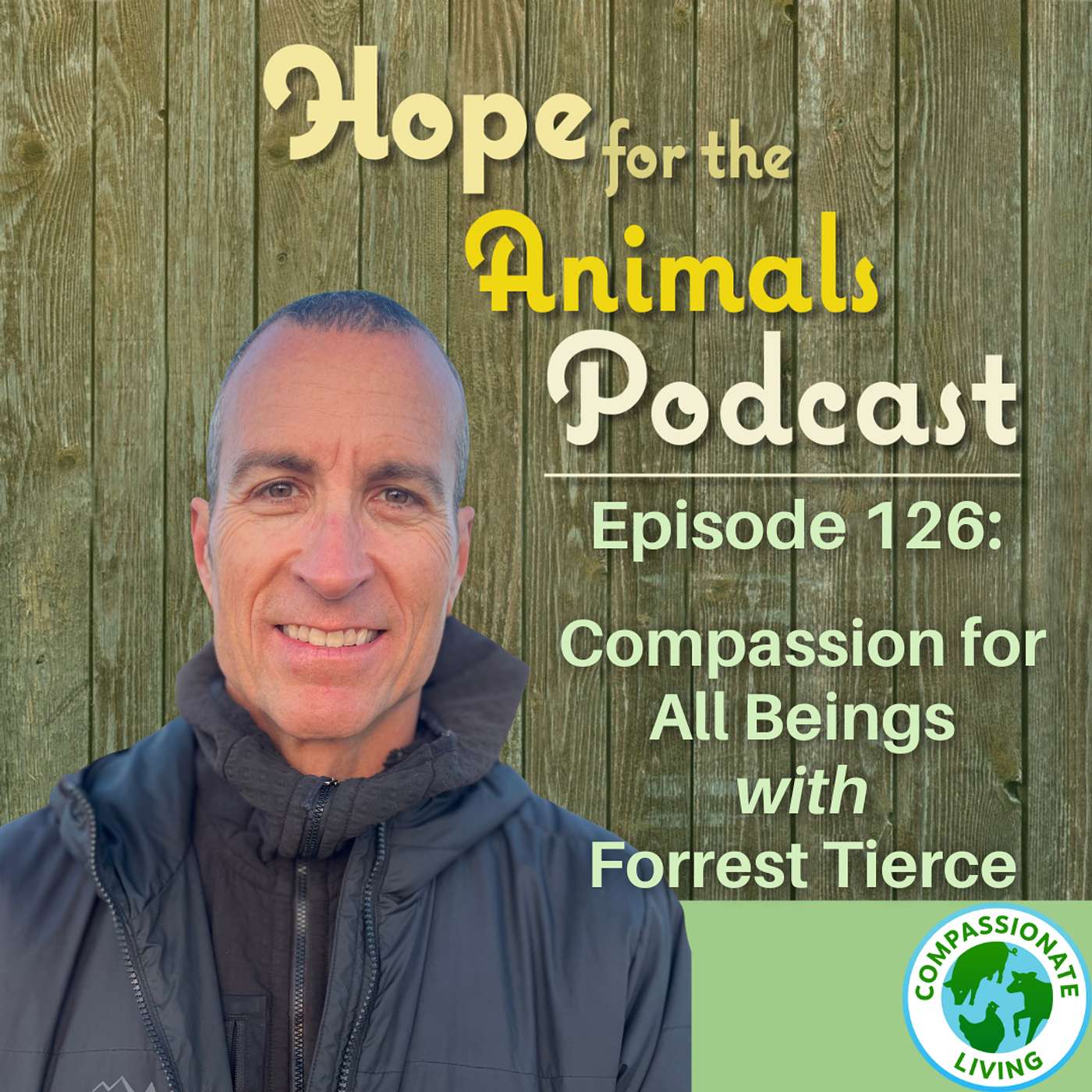
On this episode we explore Buddhism with Forrest Tierce, U.S. Project Director for Dharma Voices for Animals (DVA). DVA works to raise awareness on the connection between the ecological crisis caused by animal agriculture and Buddhist ethics—helping individuals and communities align their food choices with sustainability and compassion for all beings. Forrest has been a dedicated vegan for 18 years and draws from two decades of Buddhist practice across multiple traditions, with a deep commitment to the heart of the Buddha’s teachings—especially the Five Precepts—as guiding principles for compassionate and ethical living. Forrest’s story of transformation is inspiring. He grew up in Texas, his father worked in poultry industry, and in this youth, he hunted and fished animals. Forrest shares how he transformed to a life of nonviolence through Buddhism and vegan living. He talks about how practitioners of the teachings of the Buddha strive to reduce the amount of suffering in the world, but how that can too often leave out animals exploited for food. His new campaign with DVA is called the Sustainable Sanga Collative That supports Buddhist sangas and retreat centers in serving plant based foods. Forrest also tells us about when he was a park ranger and how he would incorporate vegan ethics into his presentations for park visitors. Resources: Dharma Voices for Animals Sustainable Sanga Collative Ahimsa Living Circle Support this podcast: Hope for the Animals Podcast Compassionate Living Social Media: Facebook Instagram YouTube
0:08SPEAKER_02Welcome to the Hope for the Animals Podcast, a project of compassionate living.
0:13SPEAKER_02I'm your host, Hope Bohanick, and today our guest is Forest Tears with Dharma, Voices for Animals.
0:20SPEAKER_02We're going to talk about the connection of Buddhism and veganism.
0:26SPEAKER_02But before we get into the conversation with Forest, just briefly, a friend sent me an article in psychology today, and it was about research done on people's attitudes towards animal issues and animal policy.
0:41SPEAKER_02And they found something interesting.
0:43SPEAKER_02And I think it's it's something that is interesting for us to know.
0:48SPEAKER_02They called it pluralistic ignorance.
0:51SPEAKER_02And it's this phenomenon where people mistakenly believe that others have different opinions or different feelings from them on certain issues.
1:03SPEAKER_02And people will underestimate other people's support of something or or feeling the same way as you do.
1:11SPEAKER_02So they feel like they're the only ones feeling this way.
1:14SPEAKER_02Right.
1:15SPEAKER_02And so they found this is very strong around animals and animal issues.
1:21SPEAKER_02So people really do support animals and animal issues and not wanting to see harm come to them, but they they don't think others care about it as much as they do, right?
1:32SPEAKER_02But there's a very high percentage, apparently, of people that do care about animals, according to this study, and according to lots of studies.
1:39SPEAKER_02I mean, we see this all the time.