
Hoops Through Life · Elsebeth Birman
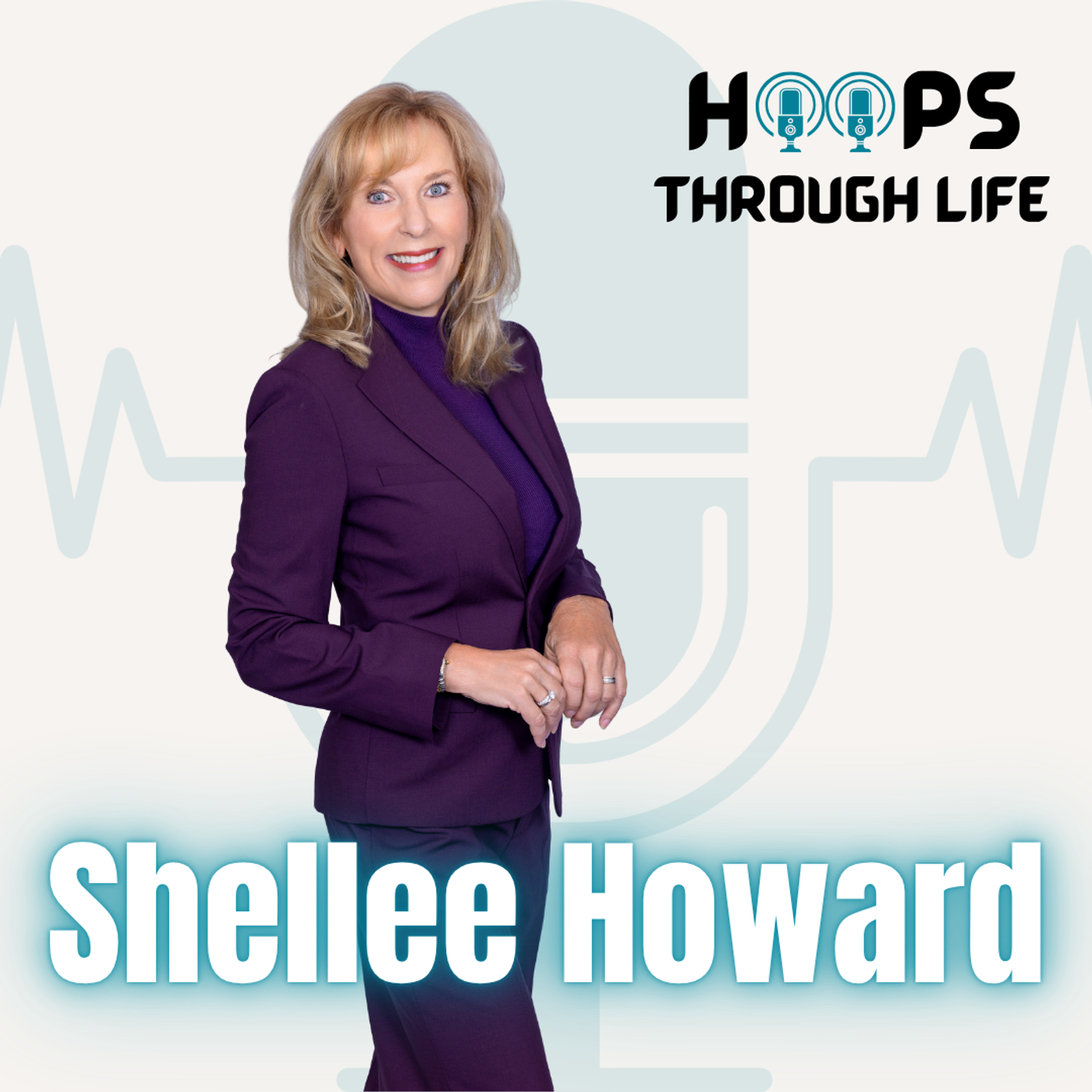
On today’s episode, we have Shellee Howard. Shellee is the founder of College Ready, a company built on a simple belief: every student deserves a plan, a champion, and a path to the right fit. With over 18 years of experience, she has supported over 2,700 students through the college process. On this episode, we discuss: How she sent all of her children to college with no debt and zero money out of her pocket! Shellee’s discover, plan, prepare, and achieve approach to the college process How to go through the college process doing more than checking a box How to think about AI during the college process Why it’s important to start the process early Two common misconceptions about the college process And much more! Parents: Is your teen College Ready? Podcast Shellee's Books on Amazon Sign up for a clarity call with Shellee here If you have any questions for me or our future guests email [email protected] If you're interested in connecting or working together, let's have a conversation - send me an email today - [email protected] Check out Hoops Through Life on: Hoops Through Life Website X Instagram Facebook The views and opinions shared by coaches and other professionals on this podcast are solely their own and do not necessarily reflect those of Hoops Through Life. Hoops Through Life is an independent entity, not affiliated with any school or coach, and is not responsible for the opinions expressed by these individuals.
speaker-1: Welcome to another episode of Hoops Through Life, a podcast where we discuss everything related to women's basketball player development, the collegiate recruiting process, and the transition from high school to college. I'm your host, Elsbeth Beerman. Our guest today is Shelly Howard. Shelly is the founder of College Ready, a company built on a simple belief every student deserves a plan, a champion, and a path to the right fit. With over 18 years of experience, she has supported over 2,700 students through the college process. Shelly, I cannot wait to get into it. Thank you so much for being here. speaker-0: It is my pleasure and I look forward to giving your listeners a ton of information and resources. speaker-1: Perfect. All right. So let's let's start here. Can you just share a little bit about yourself and what led you to create college ready? speaker-0: Absolutely. So I am a five-generation Californian, and that in itself was kind of unique. But when I was in the process of asking my parents, should I go to college? It was a house divided. I was a softball player. And so I was, do I play my sport? Do I go academically? Do I combine the both of them? And you know, I wanted the best of all worlds. And so I did ⁓ end up playing for only a year though. And I didn't do a lot of things right. So I knew that when I had my own children to go through the process, I would do things a little bit different. I didn't have any support from my high school and I didn't have much support. My parents didn't go to college. And so I was really navigating it on my own. My high school coach, he he wasn't sure what he was talking about. So we we just kind of were tripping over ourself all the way through. And so when my firstborn came home in middle school and said, Mom, I know exactly what I want to do after high school, I was a bit shocked to say the least. And so that's when college ready got started. It was my own family's need. Since then, I'm let's see, eighteen years, eighty million dollars my students have received in scholarships. And all four of my kids have gone in and out of college completely debt free, and I didn't pay a dime. speaker-1: That that's yeah, that is amazing and and and it's really I I'm sure it's really refreshing to hear that this was not that this it had to be this way, but it was started out of your family's need and I think families can really relate to that because it's it wasn't something that ⁓ I I kind of I'm sure you had all the knowledge, but it's like I have all the knowledge I can help others. It's like, no, I need to figure this out for my kids and and when parents have something that they need to do for their kids, you know that it's gonna be something where they're kinda gonna go the extra mile. And so and and I think that's the case when you say that they all went to school and you didn't pay anything out of pocket. That's pretty incredible. speaker-0: Yeah, it was a need. I I you know, as a parent, you take that responsibility. I don't want to mess up what they've created. And that was what my big challenge was. He had big hopes and dreams. He wanted to be a brain surgeon and go to an Ivy League school. And he was a good soccer player, but soccer was not his gift. And so I didn't think he would be playing at a D one school for sure. And so he had to make that same decision. Do I go with my sport? Do I go academically? And how do I how do I combine that? And since then I've been helping, I think we're well over twenty seven hundred students over all the years navigate the process. And it's important that families know what their options are, because I think that's really the critical piece in all when you have to make the decision. speaker-1: And was w did did he say in middle school that he knew he wanted to be a brain surgeon? Because that would be pretty intense. Yes. ⁓ wow. speaker-0: Yeah, so he he came home spring of his eighth grade year and he's like, Mom, I know what I want to be after high school and I was like, What happened at school today? And he's like, Well, that lady, she came from the high school and she said we need to pick our classes for our freshman year and we should probably know what we want to do so we take the right classes and so I just decided I wanna be a brain surgeon and I wanna go to one of those Ivy things because I think it would be a great a great opportunity for my future. speaker-1: Wow. I don't know what that that lady said to elicit that type of a response, but that seems like I don't know, was there a T V show or was there anything he was really interested in or speaker-0: ⁓ yes. What was that show? ⁓ Hauser. ⁓ it was that young, really smart ⁓ doctor. Doogie Hauser, I think was his name. And then of course there was all of the sitcom medical shows that he was watching. We have no medicine in our family. And I asked him, just like you're curious, I'm like, why? What speaker-1: Okay. speaker-0: Where where's this coming from? And he says, Mom, we've been doing community service since I've been walking. And I'm always happiest when I make a difference in somebody's life. And I thought, well, I'm not gonna mess with that answer because I feel like a pretty darn good parent right now. speaker-1: Yeah, you don't yeah, don't it's like, okay, we'll we'll figure this out and we'll get you to to one of those Ivy places that you wanna go to, right? So, okay, so then with with College Ready, I I was I was on the website and it and there's so much information. So I wanna I just wanna don't I don't wanna get too scattered because there's so many directions we can go in. But one thing that stuck out to me as I was looking through is is your system. And so it was speaker-0: Exactly. speaker-1: It was like the discover, plan, prepare and then achieve and that was your approach. Can you just share a little bit more about that? Because I think that that could set like a really good structure and a foundation for like where we can maybe attack with with different questions and stuff. speaker-0: Absolutely. So back in the day, parents would just say to their student, just go to college and figure it out. That was the guidance they got. And you're smiling because you maybe hit it close to home. Yeah, that was me too. I changed my major five times. I was still really unsure. And so that's why at College Ready, we start with the most important part of this equation. Who's the student? Who are they? What's important to them? And what have they done to prove it? Because if we don't know who we are, how are we going to find the best fit school academically, socially, or financially or athletically? And so we start by discovering, and not in a cell phone, not on a computer, by having conversations. And we help students get clarity about, you know. They look at their life through a cell phone, everybody's best day on Instagram. And they think I'm not that tall, I'm not that smart, I'm not that fast, I'm not I'm really not. I'm probably not gonna even get in. And they start building up this case where I'm not enough, and I'm like, no, no, no, no, no, no. We're approaching it completely different. And so I approach it as an athlete. Until I'm proven wrong, let's go do it. And so I tell students. Let's go do that. So if that you want to be a business major, let's go start the business. If you want to be ⁓ an engineer, let's go write a research paper. And all of a sudden they take away the I can't, and they're like, well, if she thinks I can, then I guess I can. And and so we start with self-exploration, then we get into clarifying what kind of life are they looking to achieve after high school. In other words, does money matter? And it usually doesn't until they figure out that their parents are not their parents' checkbook is not coming with them when they adult. Then all of a sudden, well, money kind of does matter. And then we also get into how how much do you love school? Do you want to go on to your MBA, PhD, law school, medical school? Like what does that look like? And then we start talking about what are some potential careers That would give you the opportunity to use your strengths, your gifts, those things. You know, you know that this is a basketball show, right? So think about when you gave your two or three-year-old a basketball and they looked at you like this is a big heavy ball, what do you want me to do with it? And you're thinking, Well, don't you know it goes in the hoop? The problem is that's what college feels like to students. Adults are saying, what do you want to do? And they're like, I don't know. High school teachers are saying, study hard. It'll be worth it. And they're like, really win. And then parents are saying, I'm really concerned. I want you to be successful as an adult. And they're like, I don't even know what that looks like. So now you have all of these emotions going on and the student still doesn't know who they are. So we first discover, then we build. And what does that mean? We try out all the different positions, right? Are you an outside shooter? Do you ha wanna be an entrepreneur? I mean, there's there's some risks involved with every single opportunity. And so we encourage students to actually take risks, not in scary ways, but if you have a gift of math, don't do what everybody else is doing. Challenge yourself in that gift and watch yourself really impress yourself in others. Don't play small. So we really encourage students to step into what they are truly gifted at. Then we build from there and we help them to get clarity about community service and what that does for them in their community and leadership and what it feels like to be voted in to be. Captain or president, and then to lead others to create something that's so meaningful, a sport, a marching band, ⁓ a school project, and then how to balance life with extracurriculars, either their sport, their music, their friends, what does that look like? And then connect with teachers so you get wonderful opportunities to learn from them and then get wonderful letters of recommendation. And then ultimately you have this incredible essay to write about your experience going through the process. So many people want to check boxes. Colleges know, and they're not impressed. And so it's really, really important when you think about preparing for college, think about preparing for life. What would you do to prepare for life? You would try new things, you would look for your strengths. And then you would look for confirmation. So that's how we're able to help students prepare and be successful. speaker-1: I love the deep dive approach, ⁓ especially in that discover phase, because just just like you said, adults, teachers, coaches, they use this language that they think resonates with a young athlete when really they don't have the context or the understanding to know what And also definitions are different. Like you said, be successful. It's like, what does that even mean? Like your definition of success is different than my definition of success. And that's okay. And and what I think the the deep dive does, it puts a lot of of like it visuals and context to what those things could mean for the for the student. And even just your just now taking the process and putting it into basketball terms, I I imagine that when you're talking to a student, you're able to put it in terms that they can understand too, right? Based on what you're learning through the conversations. And and I'm sure that really resonates with them and they can understand what you're saying. And and this is a and this is a question that I think about sometimes as as like I talk to to young athletes and in especially coaching at the college level, talking to like first years versus seniors. And and it's just, you know, how 'cause everything changes so much and and I assume you're starting these conversations, you know, ninth grade, tenth grade, and they that's what, fourteen, fifteen years old. How how do you balance their answers right now and understanding who they are in this moment, but also understanding that things can grow and change? speaker-0: Hmm. It's actually quite fun. And I've actually created a game to kind of help families navigate this. And it's called Do You Want to Be a Millionaire? And it's a true question because money is not success for everybody. And a lot of people put it as the ultimate success. But students are not always financially literate. So I'm how I'm having them Verbalize what's important if I took away all potential no's. So I give them all the money, all the time, everything they need to choose the answer they want to choose. And it's simple as if I gave you a million dollars cash, and if they're not smiling, you know that money is a big deal. Okay. And then I'm like, okay, million dollars cash, and you had 24 hours to spend it, or you had to. Give it all back to me. And I've had some students buy a a a Learjet and a yacht and take all their friends all over the world for a year. And I'm like, one million. Not multiple million. And they're like, Yeah, one million. And you're like, ⁓ boy, we've got some work to do. And then I've had other students where they say, Well, I'd buy a fixer up property and then I'd work on it with all my free time and then I'd sell it and I'd buy two more. And then I'd fix those up and I'm like, what do your parents do for a living? They're like, ⁓ they flip homes. I'm like, ⁓ you are listening. And then I have other students who are like, I have no idea what I want to do. And when I ask them, what would you do with a million dollars? They don't know. They're terrified of the thought of having to make a decision on how they would spend that money. So ironic. The reason they don't know about what they want to do is they don't even know if they were given free money to do whatever they wanted, what they would do with it. And that really comes down to most of the time, not all, they don't want to fail. And so in order not to fail, they don't try. And by not trying, they have no idea what they're good at. And so now we're spiraling back into they. They just don't know themselves. And so it's my job in College Ready's desire to help them get to know themselves because ultimately college is a stepping stone to adulthood. It's not the end game. You don't go to college, you're like, yep, I made it. I'm good. Right? There's lots of students who are still trying to figure out what do I do after this college thing. And so by giving them that gift early on, wow. They navigate it in such a better way. And scholar athletes, the same. They're struggling with their identity of I'm a really good athlete. And now all of a sudden, if they don't go pro, they're struggling with wow, who am I now that I'm done being my greatness? And what does that look like? And how to how do I bridge that gap? So there's a lot of identity. That students are struggling with and social media just made it harder because now they see everybody's best day, not everybody's worst day. speaker-1: Mm-hmm. With that ⁓ understanding of of like identity and it's starting to explore who they are, how how do you support how do you support because I know athletes that I've coached, I know friends that I've had, and like you said yourself, you changed your major five times when you were in college, right? And and I guess so if you were to think back about when you were in high school going through that process. And let's say college ready was a thing at that time, how may have you how may have you have approached yourself and starting to understand and whether or not that would stop you from switching majors, who knows? Because things change, right? But how how might you have started to help yourself explore and learn some of those lessons before? Because I mean, things do change and you change, you know What what's important what was important to me when I was fourteen is not what's important to me now, right? And and that's a g I think that's a good thing. And and so how do you help through that period of of transition even? speaker-0: So you asked me pointedly, so I'll answer that first. Okay. I knew really early on that I wanted to own my own business. Twelve years old, I started my first business. And both my parents were entrepreneurs. So I really didn't know what it looked like to like have a boss and a place you have to be at a certain time and all of these like parameters. But At the time there wasn't like an entrepreneur major. It was just like, I guess I'm gonna go into business major. And that's kind of where I was headed. And that was the problem, is I knew what I wanted, but college didn't offer what I wanted yet. And as a scholar athlete, I knew that I was really competitive. And I knew that I could work harder than anybody else to be successful. And so those were some self like realization that I knew, but I also knew I didn't particularly love school. That was like a means to an end. It wasn't like, ⁓ I can't wait to read another novel, be tested on it, and da-da-da-da. And so I looked at it as this is the you know, what I have to do to get to what I want. And so it would have been really great had I had what College Ready offers. Because I can call out an entrepreneur and I can say, Amazing, guess what? They now have degrees called entrepreneur. Well, they can call it several things, but it will go towards that degree. And they feel so much better. They feel they don't feel like odd anymore that they don't have like, you know, some kids they knew by playing Legos they wanted to be an engineer. I remember. My parents saying I should be a lawyer and I asked why and they said, You love to argue. I'm like, Okay, but does that mean I should be a lawyer? Like, I don't get that. And so there were things that I learned, but nobody ever helped like build the p puzzle for me. So I saw life and I was kind of building the out outside pieces, like I'm good at this, I'm good at that, but I was really tied to my sport. And when I played softball for the USA, I kept thinking, I want to start a softball league for women, like professionals, and I was all fired up. And then I looked at how much money that potentially they were gonna make and I'm like, ⁓ no thank you. I could do something so much better with my time. And so I went through a lot of that realization, like when would my sport end? And how was I going to adult? So for me personally, it would have been so much easier had somebody been able to help me to say, listen, you have lots of gifts and talents. You're a problem solver. You're competitive. Guess what? You can be all of that. And this is how you can do it. You can do it on your own with your own money and take chances, or you can go and get educated on marketing and finance and all of the other wonderful business things that you're gonna need, like a business plan, and you'll be so much faster out of the gate. I would have been set. I would not have had to change my majors. I would have not had to take summer school and winter school and and had all that punishment of all those extra classes. But ultimately, you know, I I found my significant other at university, my best friends, my alum, like there's so much more. My network. And so I tell families, even though it wasn't like an easy, straight shot like my my own children, I still wouldn't give up it for the world. And it it definitely was worth it. And the fact that I didn't go into debt made it really worth it. speaker-1: I love the puzzle analogy that you just used because I it put a vision in my head, right? The the way that I'm thinking about it now is you are the puzzle master, right? You're talking to a student and they're giving you all of the pieces of their puzzle, but it's all jumbled up and they have no idea how it fits together. And and what I think you do in my sense is that you you do it really well, even just through this conversation that we're having, is You in college ready you take those pieces and you can say, ⁓ these pieces can fit like this. Do you like this picture? No? Okay, well, it could also fit like this. How about what do you think of this picture? And then it shows them all of these pictures of how they can use all of their skills and their interests and and what that could look like. And I think that like I can't I I can't state enough how important that is, especially if I think back to e even just, you know, as I was a a young adult, even just getting out of college and and thinking, you know, I have all of these things that I like and and these skills and these things that I think that I'm good at and I have no idea how to put them together. And and so to have somebody who is on the outside of that to say, ⁓ I noticed you said this, this and this and this and this. This is what that could look like. W how do you what do you think about that? I I think is just super valuable and especially to have even the practice at somebody doing that at such a young age, then it just trains your brain too to s to say, ⁓ I I can think about things a little bit differently. speaker-0: Yeah. And then we take it a step further. So once we get some clarity and they can start to articulate who they are, then we take it to another level and we're like, let's look at these three careers. Let's look at the majors or education that will feed into these careers. And now we even put another layer on and will AI be doing your job before you do. And so we want families to be thinking, do not go and get a college degree in something that AI is already showing that that is going to be their lane, or at least the entry level of that. And so not to discourage students, it's actually to encourage them and see how do I fit into this new world? Collaboration and leadership and mentorship and really helping them to see the skills they're gonna need. And how they're gonna have to learn to pivot. This is a very fast world we're gonna be moving in faster. And I want students to be able to go in eyes wide open. These are my gifts and my talents. Here's the things I can provide for the world. This is what I wanna do. Is it something that's sustainable at least for the next three to six years? speaker-1: And I love that you brought up AI because one of my questions also was it and this could be an answer to that is, you know, throughout your experience working with students and how many years you've been working with students, what's something recently that you're noticing that students have to be thinking about or the way that they're just changing, you know, how they're navigating through the process? speaker-0: So there's two things. One of them is AI, and I'll come back to it. That's the actually the easier one. The harder one is this. Two generations ago, people were told just go to college, pay whatever you have to pay, figure it out when you get there. It's all gonna work out. That was my generation. They just said, hey, just go. And we went. And luckily, my parents were like, ⁓ we're not going to take any loans. This is how we're gonna do it. But there's a lot of families who took on massive loans. They graduated, they did not use their major, and now they have this very sour taste in their mouth about college. Because to them they're paying on their student loans still. They didn't use their major and they are like, that's a broken system. So the system is not broken. I want to reassure every listener. What is broken is the advice we were given. And that is just go, assume the loans, it'll all work out, and you'll figure out who you are in the meantime. And that is disaster. That's like, here, walk onto a basketball court. I'm not going to tell you the rules of the game, but I want you to win. And you're like, whoa, I'm going to get. Bowled over here is what's gonna happen. Same situation. So what can we do to stop that? Is let's have some open discussion about return on investment of time and money, about a career as a school teacher or a career as a Wall Street stock exchange person, right? An investor or a salesperson. And what does that look like? How does that fit you? I say, you know, we try on different clothes in the changing room. Why don't we try on different ideas of what we want to do? And so that has been a huge change because now those parents have children in this generation and they're saying, Don't go to college, it didn't work for me. What That's what that's silly. If they don't go, then what? I mean, to me, it's like, okay, that's one idea. But maybe if they want to be a doctor, a lawyer, a CPA, an engineer, there's no other choice. They're going to college. Teacher, whatever. There's lots of things. So now you get into the question of this is what I want listeners to hear. If not college, then what? That's it. And it's the big pause. I'm totally okay with no college. I have influencers that I help and they have no idea how to do a business plan. Guess what they teach in college? I have athletes who want to go professional. They get injured. Guess what? They still have their brain. They're still gonna be okay. So my my speaker-1: Mm-hmm. speaker-0: Desire is to approach the hard question and look at it as we learn something from every generation. And I want to take that from that generation and go, wow, that was a doozy. You're right. That was pretty painful for a lot of people. But that doesn't mean that's how this generation is going to approach it. And now to AI. So a lot of students this year. Who graduated college booed at their commencement when AI was brought up because they were terrified that AI was going to take their job. AI is not taking their job. AI is a wonderful tool, but it does not think on its own. Somebody has to guide it. Somebody has to ⁓ give it the prompts. Make sure that it's correct. There's so much. That AI is still not. But what it does do is it can do some very entry-level basic things. Like right now, it checks my email at the beginning of every day and tells me where's my urgency. I had an assistant that used to do that. I could see that that would be a problem. But that assistant is now doing my social media and my marketing. Like she just went to another level. Because she got promoted and AI promoted her from doing the very simple tasks that she really had more bandwidth than she was using. So I want students to listen and learn that AI is not taking your job. And parents listen to this the best way you can think about it. There was the the the horse-drawn carriages who looked at the first car and said, that is the craziest silly thing I've ever seen. That is gonna make people fat and lazy. Well, we still have cars. Then it was the calculator. Everybody's gonna be mush. No more math brains. It's awful. There's still some pretty genius mathematicians. The cell phone. ⁓ that's not gonna last. That's just a new silly toy. We have a computer in our hand. I say lean in. Students, parents, lean in. It can be in a wonderful tool as long as you don't swap out your brain for it. Right? That intellectual curiosity, that's what colleges want. That's what employers want. That's what's gonna keep them in a really good career. speaker-1: Yeah, I and I love how you how you laid out those two very specific potential worries or or roadblocks that that maybe parents and students have a lot of questions about. ⁓ so yeah, I I think I think that's excellent. ⁓ Okay, if we are thinking about or let's let's get broad I guess. Let's get a little bit broader. So what what do most people who who come to you or most people that you find, ⁓ students or parents, what do they what's a misconception about this process or where do they generally get stuck or or they have maybe they don't take it as seriously as they should? speaker-0: I would say the larger there's two of the largest misconceptions. Number one is that we don't need to worry about it till we're well into our junior or senior year in high school. That's disaster. Gone are the day that you type on a typewriter with whiteout, put a stamp on, and hope it gets to the university. That's gone and so has starting your junior and senior year. Now I will say I just took a call right before this podcast. A mom said my kid didn't think they wanted to go to college and now they do. Can you help? Yeah, we can. It's gonna be a bit like a fire hose, but hopefully they'll mature and we can get them through it. But is it ultimate? No way. We start students as young as seventh and eighth grade doing self-reflection. We're not hammering where do you wanna go, what do you want to major in, none of that. We're we're talking about How do we prepare them for life and make college admissions easier? But the real best time to get started is before you've made any mistakes, and that's as soon as you promote from eighth grade. Because every class means something. Every activity, honors, and award means something. On the common app, you'll have to list 10 activities, honors, and awards. On the University of California app, it's 20. If you are waiting until your junior or senior year, you can't catch up. It's just really difficult. So then we talk about to the students, what does this process look like? Number one, colleges want to know who you are, what matters to you, and what have you done to prove it. Okay. Seems pretty easy until you get into how do you do that? I don't know who I am. How am I gonna prove that I Want something done. And so we have lots of opportunities for students to do community service, passion with purpose, research, internships. I mean, sky's the limit, but don't check boxes. Colleges are not interested in box checkers. It's just generic. They want to know who are you? You can't just check a box and let them guess. I fed the homeless. Well. Did you enjoy it? Did it terrify you? Do you care about food? Like help me understand why you do that. And again, if you love to feed the homeless, keep doing it. But if you're terrified to go every time, probably not a good fit for you. So it's really thinking about you and what matters to you. And what we do at College Ready is we put together the academic fit, the testing fit. Community service that they deeply care about, leadership on and off the sport or band or theater, extracurriculars, right? Then letters of recommendation, and then the essay. All of that needs to be done. Back in the day it was a GPA and a test score. That's why we can't wait. The second misconception is we can't afford. For my child to go to college. That one's huge. In my first book, How to Send Your Student to College Without Losing Your Mind or Your Money. I have the 10 schools, universities that are tuition free. Go to Amazon, get the book, have it on sale for your listeners, four dollars. Just so you know. There's ten. All you have to do is work, right? Nothing's free. And then there's four buckets of money. There's the institutional bucket, the merit bucket, the independent bucket, and the need bucket. Most people can tap into three of the four buckets. That's a lot of money. In 18 years, our students have earned $80 million in scholarships. The money is there, and your student can start applying to independent scholarships in fourth grade. So the on-ramp is much longer. speaker-1: Well speaker-0: If you want to get in and out without debt. speaker-1: In and with so the financial piece, 'cause I know that is a concern even for student athletes because at the as you know, the you know, the division two and the division three level, well division two there is ⁓ athletic aid, but depending on how the coach structures it, it could be a little or it could be a lot. And at the division three there's no athletic aid. And so I would encourage you just answer this question, right? If if you if you get the book, you can have a lot of access to to those scholarships, like you said, the four buckets, but is there anything else you would add to to talk about the financials? if if an a student athlete is is like, well, I'm between this school because a lot of times what I hear as a coach and what I heard as a coach is, well, division three, it's ⁓ it's much more expensive. You know, I have a division two scholarship right now that's on the table. I would love to go to you, but ⁓ money is such a such a thing. So I I'm gonna choose the division two program. Like how how might you be able to help in that circumstance? speaker-0: So it's important to to really consider each family uniquely, but in generalities I tell students this. How much have you paid for your sport up to this point? How many private coaching? How much clubs, clinics, combines? On and on and on. I played softball, I spent plenty of money. My daughter was a competitive cheerleader. ⁓ yeah, 10,000 a year, just like that. So When it comes to money, I often say you want to be mindful of where you're putting your money and your resources because academically a college has to maintain a certain GPA. And so if you are somewhat skilled with a very nice GPA, you can balance that team out for the student who really struggling but is really gifted. So sometimes you have opportunities just because you care to do well in school and in your sport. So that's the reason I bring that in up is you're tapping into both the academic money and the athletic money. That covers the gap. Right? You don't have to choose if you're you're doing merit or institutional or independent. I have a student this year, one student. four hundred and twenty seven thousand dollars of independent scholarships. She's making money while attending college. It took a lot of effort, but she's going for free. speaker-1: Well, That's all. I'm sure she would say it was well worth the effort. speaker-0: Absolutely now, while she was in it, just like every other teenager. Why do I have to do this? speaker-1: Yeah, yeah. I'm glad that you say that too, because I think sometimes the the misconception is well everybody you know, this person well they just they they can do that because that's them and they can sit down and they can crank out those applications or they can do this or that, but that's not me. But I'm glad you say that because it it can be you, right? Like it can it can be you 'cause, you know, as she was doing it she was not happy, but I'm sure at the end of it she was very happy. And you know, she's in col I I assume she's in college now. But it's like she's walking around campus like maybe she doesn't have to to get a second job. Maybe, you know, she's making money, maybe that's covering certain things. So it it's well worth it to do some of that work early, I think. speaker-0: Absolutely. And you can start as young as fourth grade. So why is everybody waiting and then saying they can't afford college? So it's just lack of knowledge? There's a ten thousand dollar scholarship right now if you're a vegan. Ten thousand a year. speaker-1: That's it. speaker-0: How hard was that? There's so much money. speaker-1: I I I just looked at the time. I feel like everything flew and I feel like we just barely kind of scratched the surface. But ⁓ but I incur or I have a couple questions and then we'll we'll wrap it up. But I have a couple questions I ask all the guests and ⁓ I'm gonna switch up this question a little bit because I think it's it's more appropriate for you, but but what what book or podcast would you recommend? I'll I'll go with well, either one, parent or student, for them to to read or listen to as their starting out trying to prepare for for college. And if and if you say your book, that's completely fine too, because I have a feeling it would be super helpful. speaker-0: ⁓ it's funny ⁓ you you read my mind. So actually I was gonna say my podcast. My podcast is Parents Is Your Teen College Ready. And I bring in a village, I bring in everybody you would ever want to meet or talk to as you plan to get your child ready to launch. So that would be my recommendation. Parents is your teen college ready. And of course, my two best selling books on Amazon are incredibly. incredible places to start. Of course, it's the foundation, but it you have to start somewhere and it gives you step by step. Do this first, do this next. And for some families it's just easier that way. speaker-1: Yeah, and I'll I'll link to your podcast when I put the show notes up and I'll link to the the Amazon link so it's easy for everybody to find as well. And then the last question is ⁓ what what's something about the admissions process or the transition to college that you believe that other people in your industry might disagree with? speaker-0: ⁓ so much. There's actually ⁓ so much. ⁓ most people in my space, college admissions counselors, even high school counselors, don't ever talk about return on investment of money. They simply say, ⁓ you want to be an engineer, go to MIT. Nobody talks about can or should a family do that. And so for me, that's a very big difference in that I care about your return on investment of time and money. And so I wish more people did as well. speaker-1: Yeah, I love that. ⁓ Shelly, I really ⁓ again, I I feel like we just barely scratched the surface, but I encourage anybody listening to check out your website which I'll also put in in the notes, ⁓ just because I think there's you have such a wealth of knowledge and and I think that you you c I know you already do, but you can help a lot of a lot of students. yeah, so I and I'll ask, you know, is there anything that you have coming up? I don't know if you do like workshops or anything like that, is there anything coming up or how can what's the best way for people to connect with you if they're interested? speaker-0: Absolutely. So for your listeners, if you go to college ready plan, pl a n dot info, I n f o, I gift your listeners 30 minutes with me for a clarity call. Where are they at? Where do they want to go? What do they need to do? And so that would be the best recommendation versus the other resources of the podcast and the books that I would I would think would be helpful for families. speaker-1: Okay, awesome. Yeah, I inc I encoura there's you know, I encourage anybody to to check it out because I even just thirty minutes I imagine would be really valuable for them. So Shelly, thank you again so much. It was a pleasure talking to you. speaker-0: ⁓ same. Thank you so much. speaker-1: Thank you so much for listening. If you aren't already, I would highly recommend subscribing to the podcast so you can get updated once new episodes are dropped. If you're a fan of the show, go ahead and leave it a review. It really helps spread the word to more athletes, parents, and coaches. Now, if you have any questions for myself or future guests, feedback, or you're curious on how we can work together to help you reach your basketball goals, let's have a conversation. Feel free to email me at l at hoopsthroughlife.com today to set that up. That's E L at H O O P S T H R O U G H L I F E dot C O ⁓ Thank you, and I look forward to hearing from you soon.