
Home Health Revealed (+Palliative and Hospice) · Hannah Vale, M.Ed.
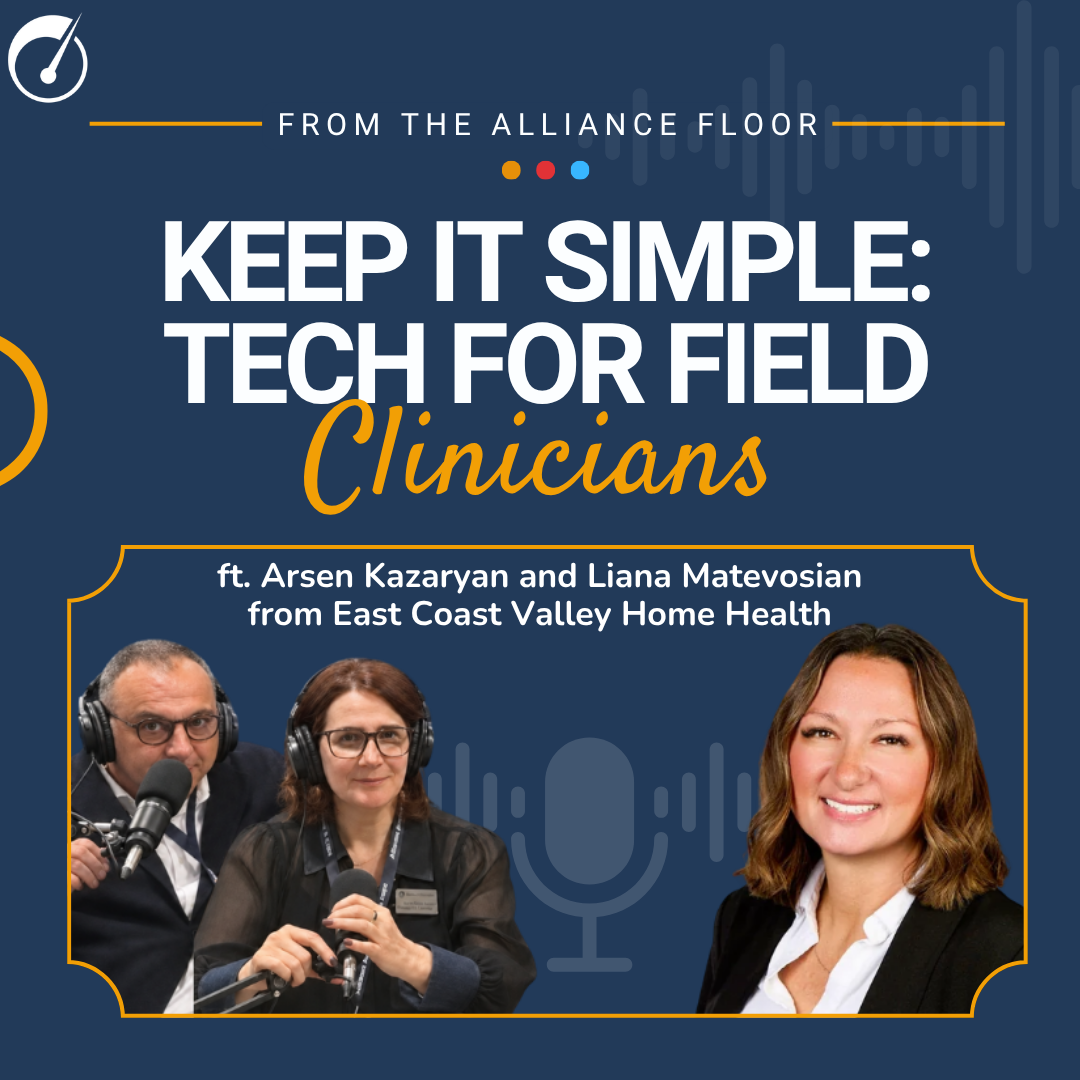
What should home health agencies look for when they choose software and AI tools for clinicians in the field? An agency owner and a nurse practitioner who runs his Northern Virginia agency discuss it in a conversation recorded live at the Alliance conference in Washington, DC. On this episode of Home Health Revealed, Arsen Kazaryan, owner of West Coast Valley Home Health, East Coast Valley Home Health, and the home health software company CuraSoft, joins Liana, a nurse practitioner who is CEO, administrator, and director of nursing at East Coast Valley Home Health. Why does patient education work better at home? Liana compares hospital and home care. In the hospital, patients are anxious and short on sleep. At home they are in their comfort zone, and clinicians have time over several visits to teach, for example, diabetes care, and to help keep patients out of the hospital. Why does trust matter so much? Home health clinicians work in the patient's own space, and referral sources need to know the agency will do the right thing. How should agencies evaluate technology? Arsen's answer is simplicity for field staff. Many clinicians work per diem across several agencies and several systems, so tools in the field should be easy to pick up. Office teams can handle more complex features. Liana sees AI as a way to cut down on documentation so clinicians can focus on the patient, and she stresses that clinicians still have to review its output and use their own critical thinking. In this episode: Hospital vs. home health: where patient education sticks Trust with patients and referral sources All-in-one systems vs. add-on apps Making field documentation simple for nurses and therapists Where AI helps clinicians, and where clinical judgment has to lead Guests: Arsen Kazaryan: owner, West Coast Valley Home Health, East Coast Valley Home Health, and CuraSoft (curasoft.org, per the guest) Liana, NP: CEO, administrator, and director of nursing, East Coast Valley Home Health (Northern Virginia) Timestamps: 00:00 Intro: Home Health Revealed 00:20 Meet Arsen Kazaryan and Liana of East Coast Valley Home Health 02:33 Hospital vs. home health: teaching patients where they live 06:20 Building trust with patients and referral sources 07:33 At the Alliance, and looking ahead to Seattle 08:15 Why CuraSoft was built as an all-in-one system 10:55 A nurse practitioner's view of documentation in home health 14:45 Serving Northern Virginia 15:05 How should agencies evaluate AI and software? 16:30 Keep it simple for field nurses 17:50 One tool vs. extra apps 19:40 AI as a helper, not a substitute for clinical judgment 20:50 Where the technology is going 22:35 Keep critical thinking, plus wrap-up Want cleaner coding and OASIS behind your documentation? Learn how HealthRev Partners supports home health agencies: https://healthrevpartners.com/oasis-poc-review/ Chapters (00:00:02) - Introductions and the Valley Home Health Companies (00:00:45) -...
0:02Speaker A: You're listening to Home Health Revealed, where the business of home health comes to life. Hosted by Hannah Vail, each episode brings real conversations with the leaders, innovators and experts shaping the future of the industry. From reimbursement and technology to leadership and growth. This is Home Health Revealed.
0:19Speaker BWe're at the alliance in Washington D.C. and I would love for you to introduce yourselves and tell me what it is that you do.
0:27Speaker CSure. So my name is Arsene Kazarian and I co own three companies. Two home health companies, one in west coast, one in east coast called West Coast Valley Home Health and East Coast Valley Home Health and a software company that is a home health software company called Curasoft Inc.
0:45Speaker BWow. Okay. Did you develop the software for your own agencies?
0:49Speaker CWell, that was the idea initially, but now that it went to become a way bigger thing that we initiated, we've decided to make it more public, so to speak and so we can sell it to other agencies. Because the way we developed this software was our vision of daily issues that we, you know, that occur during our day to day operation when we run our agencies. So every little issue we addressed in this software, so it's all in one. It's the one that has a big screen over there, you've probably seen it.
1:28Speaker BOkay, so you're on the, on the showroom floor in here. Yeah. So you get to attend as an attendee as well as getting to share. If you created it for yourself, knowing what you needed, there are other people out there who likely need
1:43Speaker Cthose same things,
1:44Speaker Bright?
1:44Speaker CYep.
1:45Speaker BOkay, let's get you introduced here.
1:48Speaker DMy name is Liana Matteozian. I'm a CEO and the nursing director of East Coast Valley Home Health. The Home health is the sister company from West Coast Home Health company and we do skilled care, nursing pt, ot, speech therapy, social worker to like a care at home for the patients. I have more than 17 years of healthcare experience. Started as a registered nurse, then became a nurse practitioner. Practice in three different hospitals. But currently my major job is main job is the home health and I love it. It's interesting
2:32Speaker Byou do so between the hospitals and home health kind of. Tell me your observation. Just between those two different environments.
2:39Speaker DThe environment in a hospital, if you can think of someone being very sick from just an idea of oh, I'm hospitalized, they're so anxious. Even the youngest population goes through anxiety. Those people are sleep deprived from being waking up from the nursing aide to nurse, the doctors different consults. Regardless how much the nurses provide an education in the bedside. I would say like 70% of that information doesn't get where it has to be. Then when I started a home health what was interesting, they're in their comfort zone. You are not rushing them. You have time from each visit to identify their problems and target start with a small example is diabetes. Diabetes for me became in a home health is like minimum four visits because you cannot walk in and say you have to do this and that and that these are the meds. Because it's very interesting. I see more compliance in a home health than in a hospital
3:54Speaker Breally. And the education piece really saturates Then you see in home health that they're able to actually learn more about what they're dealing with and their issues so
4:04Speaker Dthey can take better care of themselves to keep them home, prevent re hospitalization. And then it's very interesting area of practice.
More Home Health Revealed (+Palliative and Hospice) episodes →