
Home Health Revealed (+Palliative and Hospice) · Hannah Vale, M.Ed.
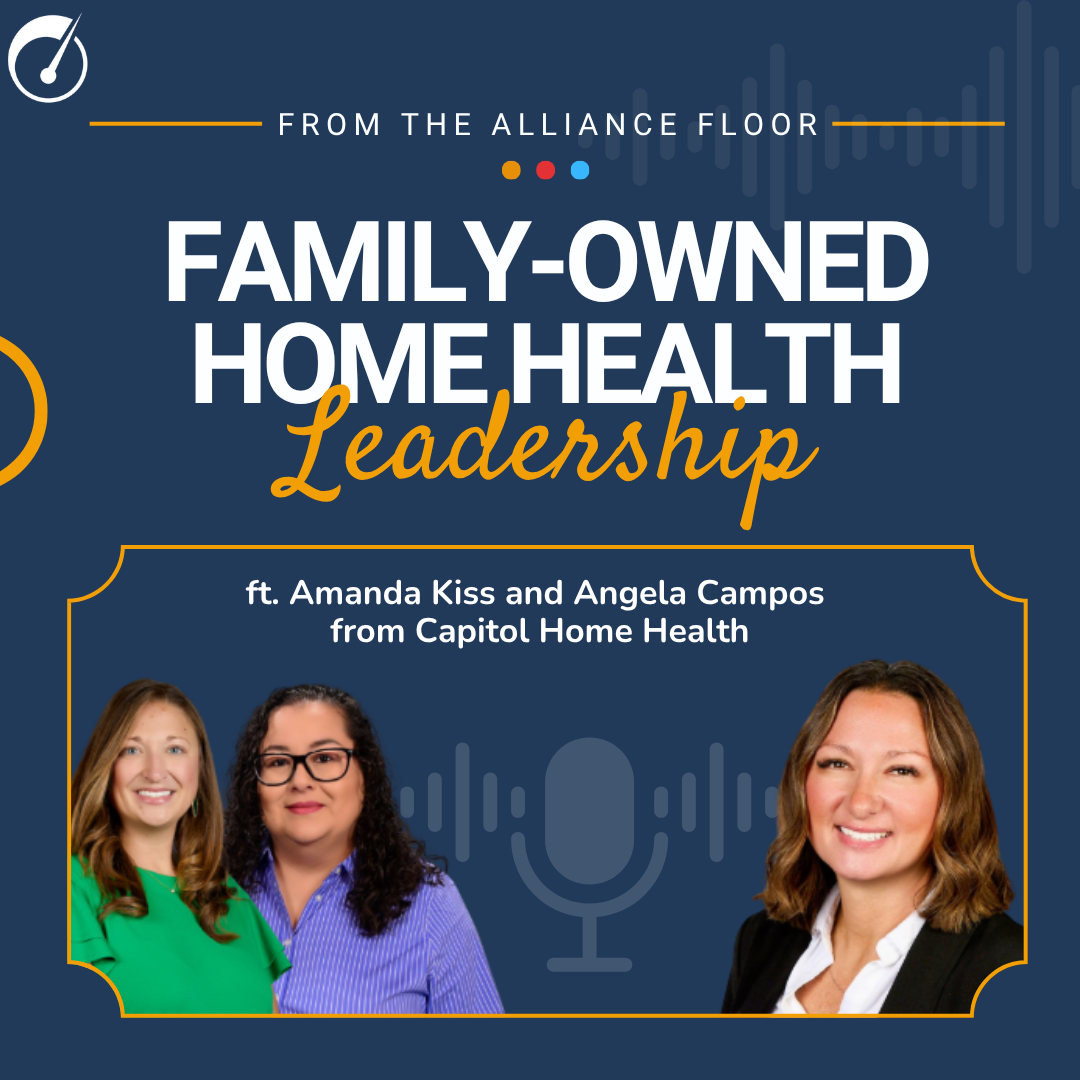
How does a family-owned home health agency keep its clinicians, use its data, and stay transparent from leadership to the field? Two RN administrators from Capitol Home Health in Texas talk it through, recorded live at Alliance 2026 in Washington, DC. On this episode of Home Health Revealed, Amanda Kiss, RN, administrator of Capitol Home Health's Austin agency, and Angela Campos, RN, administrator of its San Antonio branch, describe how a family-owned agency picks the right technology and keeps its clinicians engaged. How do they choose among AI tools and platforms? They look ahead before their clinicians ask, run interoffice polls, and use daily standups so the team buys in before a change. How does data support transparency? Clinical supervisors run outcome reports constantly. QAPI is reviewed in real time rather than "put on the back burner," and the results are presented to the governing board and then to clinicians. How do they keep clinicians? They review every patient survey, recognize clinicians by name in weekly case conferences and the monthly newsletter, and stay open to feedback because, as one guest puts it, "healthcare is a thankless job." In this episode: Choosing AI and software without losing sight of patient care Transparency from owners to administrators to clinicians Using QAPI and CMS reports as a live tool Recognizing clinicians through patient surveys and reviews Leadership takeaways: what to start, stop, and continue Questions about the moratorium and the Review Choice Demonstration Guests: Amanda Kiss, RN: administrator for Capitol Home Health's Austin, Texas agency, with a branch in Temple, Texas Angela Campos, RN: administrator for Capitol Home Health's San Antonio branch Capitol Home Health on LinkedIn: https://www.linkedin.com/company/capitol-home-health/ Timestamps: 00:00 Intro: Home Health Revealed 00:20 Meet Amanda Kiss & Angela Campos of Capitol Home Health 00:56 Choosing AI and platforms while protecting patient care 03:00 Low turnover and staying ahead of clinicians' needs 04:56 Transparency from owners to the field 06:01 How data and QAPI drive transparency 07:48 Sharing QAPI results with clinicians 10:02 Reviewing every patient survey and recognizing clinicians 11:33 Conference takeaways: start, stop, continue 14:45 The moratorium and Review Choice Demonstration 15:43 Seeing the industry face to face Want cleaner OASIS and coding behind your data? Learn how HealthRev Partners supports home health agencies: https://healthrevpartners.com/oasis-poc-review/ Chapters (00:00:02) - Introductions at Alliance 2026 (00:00:45) - Scaling challenges and finding the right tech solutions (00:02:06) - Learning from other agencies across regions (00:02:56) - Supporting clinicians and preventing turnover (00:04:36) - Transparency and communication with staff (00:05:57) - Using data and QAPI for continuous improvement (00:07:48) - Open feedback culture and family-owned advantage (00:09:40) -...
0:02Speaker A: You're listening to Home Health Revealed, where the business of home health comes to life. Hosted by Hannah Vail, each episode brings real conversations with the leaders, innovators and experts shaping the future of the industry. From reimbursement and technology to leadership and growth, this is Home Health Revealed.
0:20Speaker BOkay, so let's go ahead and jump in. Go ahead and introduce yourselves.
0:24Speaker CMy name is Amanda Kiss. I am an RN and I'm administrator for our home health agency in Austin, Tex. We have a branch and temple as well.
0:33Speaker BOkay. And
0:35Speaker Dhello, I'm Angela Gonzos, rn. I'm also an administrator for our San Antonio branch with Capital Home Health.
0:44Speaker BVery nice to have both of you. We're at the Alliance 2026 in Washington, D.C. so just wanted to get to sit down and talk with you all about some of the things you're facing, some of the challenges that you're having. Go ahead and jump right in. Amanda, will you start?
0:58Speaker CSure. So we're a family owned agency. We're very blessed. We just have a great group of people that we get to work with every day. And I think our biggest challenge right now is the growing industry, all the different platforms. AI now is the word out that we're just trying to find what's the right solution for us so that we can scale, we can grow, but all while providing the best patient care that we can. That's why we're in this. And I think it's somewhat of a pressure because you want to make the right choice for your clinicians. We don't have a lot of turnover, which is wonderful. So our clinicians are relying on us to make the best choices that, you know, that they can use whenever they're taking care of their patients so that they have all that access and resources that they need. So it's just a lot of layers within the industry, within our team, and just trying to make sure that we're making the right choices. And that's kind of why we're here at the alliance is really seeing where other people are struggling. And it's the same from our ladies in Rhode island that we talked to this morning from California. You know, it's. We're all having the same challenges, but differently. I guess it was nice just kind of seeing how rural folks do it because we're in Texas, so we have city, we have rural. Like, how does Montana do their, you know, patient visits as opposed to, you know, Rhode Island? Yeah, it was. It's just, it's a lot of learning and seeing how people do things. But we all are trying to get to the end result, which is having, giving great patient care, keeping our patients in their home, but also supporting your clinicians and helping them to feel a part of the team so that we can grow. Because if you lose your clinicians, you're not going to grow because now you're trying to find people who are going to go see these patients. So it's a lot of layers. So trying to figure out just the right solutions for our team.
3:00Speaker BNow are your clinicians pushing for this? Have they come to you and asked for some of these solutions or are you out here just kind of preemptively?
3:09Speaker DWe're out here preemptively. Our clinicians are great. Like she says, our tenure is really good. We do not have a lot of turnaround on our clinical staff, which is amazing.
3:21Speaker BThat is amazing.
3:21Speaker DWhich is, you know, it's great for a patient to go, oh, you know, I want to be seen by therapist, so and so. And they're still with us, so it's pretty amazing. And you know, as, as a company as a whole, like we say, we are family owned and we're very blessed. They are very big advocates for work life balance. So they're kind of seeing all the changes in our industry, you know, trying to do more with less. What can we do to make things easier for our clinicians? Because when they're not stressed and they're happy, they're providing the best patient care that we can ask for. And we are very patient driven. So preemptively we're out here looking for what's the best AI solution, you know, how can we make their job easier so that way they can just concentrate on that great clinical care for our patient.
4:09Speaker CAnd they do like, they rely on us to tell them what's coming up the pipe. Like what are we looking at? And we communicate so well with our team. We do daily standups, everybody knows what's going on. And the different softwares that we have allow us to communicate with the entire team with all the branches. So if something is coming up the pipe, hey, what do you guys think about this? You know, is this something that you think you'd want to add to your day to day? Is this going make your life easier? I mean we do, you know, we do interoffice polls. We do, you know, we're getting everyone's opinion all the time. So it's every, the buy in is there because they've known what's going on along the way. So it's, it's one it's, it's just a really great setup that we have and we have a wonderful leader and so she makes sure that nobody ever feels left out.
4:55Speaker DYeah. One thing I have to say, you know, working with Capital Home Health is we are very transparent. You know, we have both worked with other employers, you know, where you kind of find out last minute or you don't find, find out at all, you find out second hand. One of the great things about our leadership here at Capital is that they're very transparent with us as administrators. And as administrators, we're very transparent with our team. And I think that's something that they really do respect. And then we both attended the leadership conference that was here prior to this conference starting. And it's one of the big factors that they talked about is the communication and transparency is what makes, you know, a good leader. And the fact that, you know, our owners, you know, our governing staff that are very transparent with us, we practice a transparency with our clinicians, you know, even as well with the patients when they sometimes come with questions. You know, we're very transparent with what we can and cannot provide. And I think that's what makes us stand out.
5:57Speaker BYeah, it definitely starts with leadership and trickles all the way down. So aside from the daily standups I know you mentioned, what are some other things you do really to provide that transparency? And I, I would like to ask specifically about data, because I know you mentioned data when we first sat down and just the inundation of all of the data we have at our fingertips. But how does data play a part in that transparency?
6:21Speaker COh, our clinical supervisors and case managers we have in office, they're running reports on our clinicians in the field all the time. So we know who's not having the best outcomes, who needs a little bit more help in certain areas. There's so much data. So, you know, our QAPI program, you know, we, we are not an agency that's putting QAPI on the back burner like we are every quarter. We are talking about things we are in real time. These are our numbers, this is what we look like. You know, we've demoed quite a few different things. And so just trying to, I mean, there's some that are out there right now that we're looking at that can tell us what we're going to look like in a year, two years, what we're on track to make, what we're not doing so well at so we can make changes now. Like there's, there's just so Much information at your fingertips. If you had like a month, you would still not have enough time to find all the data that you might want to be pulling. But of course, your CMS reports and things like that. So we are in all of our reports constantly on, you know, discharge, function, score, you know, all the things that matter for reimbursement and all the things that CMS is throwing at us constantly. We have to shift adjustments, make new changes. And that's healthcare, right? Like, you have to be able to shift and change with the times and what information you're given and how much time you have to do it. But your main question was, the clinicians too, they know. So I invite them to our qapi. So we do our QAPI presentations with our governing board and then we present it to our teams. So after I've presented it and I've gone through all the data with them and they have questions or recommendations and I need a new game plan, maybe I'm not doing something as great as I should have been, or I missed something. Like, we're just so open to feedback. Like, I'm okay to say that I'm wrong about something and because I need to grow always. So if there's a better way that I can be doing something, you know, Angela's so amazing. She's gonna be like, this is how I've been doing it and it's been really effective. And I'm like, that's amazing. Like, if it's finding a new vendor that is gonna give my, you know, clinicians a better option on supplies and it's gonna cost, you know, it's gonna cut my cost like 50% on a foam dressing or something, you know, like just all the little things matter. We just, we work together every day and we want to be on the same page. And that's been really important to us as leaders in growing this company is that we have one another and our governing board and just our leaders in the industry itself. We're family owned. So it's not like I gotta wait from someone in another state to tell me if I can do something. Yeah, it's been really nice.
More Home Health Revealed (+Palliative and Hospice) episodes →