
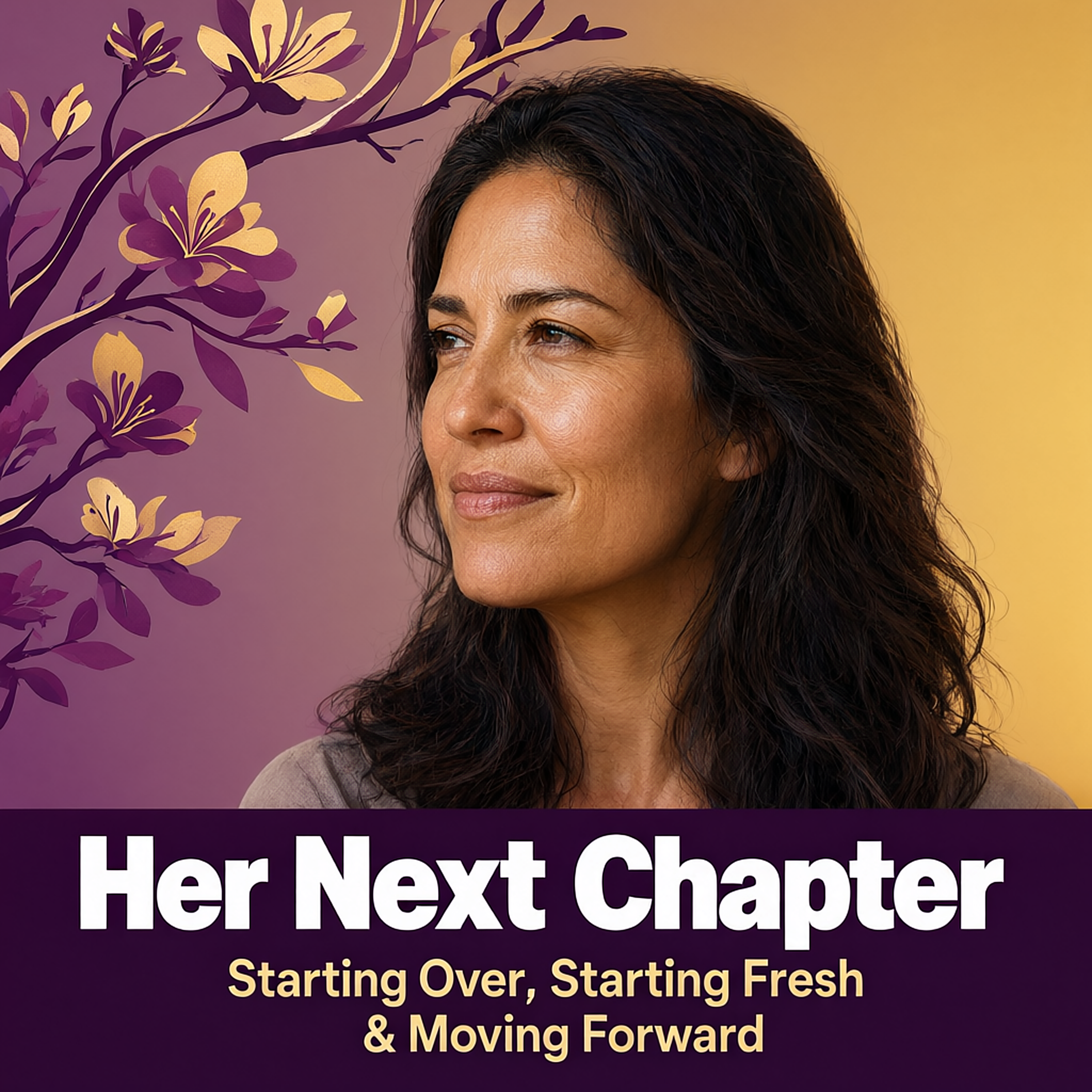
Her Next Chapter: Starting Over, Starting Fresh & Moving Forward · Natalie Baker
In this deeply personal episode of Her Next Chapter, host Natalie Baker explores the emotional journey of selling her wedding dress three years after a divorce. This story is for women navigating post-divorce healing, the stigma of starting over, and the complex grief attached to physical symbols of failed promises. Natalie candidly shares how holding onto the dress became a burden of shame rather than respect, revealing that letting go is often an act of self-liberation rather than erasure. More from Her Next Chapter: https://humanitymedia.org/her-next-chapter Topics: divorce recovery stories, selling wedding dress, starting over in your thirties, post-divorce healing, emotional closure, letting go of the past, women's mental health, self-worth after breakup, her next chapter podcast, navigating single life #divorce #healing #startingover #weddingdress #selflove #movingon #mentalhealth #closure #newbeginnings #podcaststory Transcript: https://cdn.humanitymedia.org/transcripts/her-next-chapter/2026-11-04.txt
There is a specific kind of shame that settles in your chest when you type 'lightly worn' into the description box for something that used to be your entire future. I stared at the screen, my finger hovering over the post button, waiting for the floor to open up and swallow me whole. It’s been three years since I took that dress out of its garment bag. Three years since I stood in my living room, holding a garment steamer like it was a weapon, trying to remove the wrinkles from a life that had already ended. You know the one. The white, lace-heavy, cathedral-train monstrosity that cost more than my first car. For years, it lived in the back of my closet, wrapped in tissue paper that turned yellow with age, a silent monument to a promise I didn’t keep. I remember the day I finally decided to sell it. It wasn’t some dramatic cinematic moment. There was no thunderclap or sudden epiphany. I was just cleaning. Actually cleaning. Not the quick wipe-down, but the deep sort where you move furniture and find dust bunnies the size of small dogs. And there it was. That box. The one I’d told myself I’d donate in six months. Then a year. Then two. Let’s unpack that. Why do we hold onto these physical anchors to people who are gone? We tell ourselves it’s respect. It’s nostalgia. But mostly, I think it’s fear. Fear that if I let go of the dress, I’m letting go of the version of me who believed she could have a forever. And if I let go of her, who am I left with? A woman in her thirties, divorced, living alone, wondering if she’s broken beyond repair. So I sat down at my laptop. The blue light of the screen felt accusatory. I opened a browser tab and started typing. 'Wedding Dress. Size 6. Silk Satin.' I wanted it to sound professional. I wanted it to sound like I hadn’t spent the last eighteen months crying into it, literally. I took photos. This was the worst part. Taking pictures of your own failure requires a level of detachment I didn’t possess. I laid it on my bed, smoothing the fabric with trembling hands. I tried to capture the beauty of it, not the stain on the hem from when I tripped on the way to the altar. That detail matters. That moment was the turning point. The stumble before the end. I wrote the description. 'Perfect condition. Only worn once.' I lied about the condition, but not the single wear. Technically, I had worn it twice—once for the rehearsal dinner undergarments check, and once for the ceremony. But nobody needs to know about the rehearsal dinner panic attack. Nobody needs to know that I spent the vows checking my phone because I knew, deep down, that this was a mistake. What’s the next right move? Well, the next right move was to hit publish. To put my vulnerability out there for strangers to judge. To price it so low that it would sell in twenty-four hours, because I couldn’t bear to look at it for another minute. Within an hour, my inbox pinged. One message. Just one. My heart hammered against my ribs like a bird trapped in a chimney. I clicked it open, expecting a polite decline, or worse, a joke. Instead, it read: 'Is this still available? I love vintage lace. Can I see it?' A stranger. A woman I would never meet, probably someone getting married in three months, someone who dreamed of walking down an aisle in this exact dress. She saw beauty where I saw trauma. She saw a fresh start where I saw a tombstone. I felt a surge of anger, hot and sharp. How dare she want this? How dare she step into my shoes without knowing how much they hurt? But then, beneath the anger, there was something else. Relief. Someone else was going to carry this weight now. Someone else was going to get to feel that sparkly, terrified excitement. I typed back. 'Yes. It’s available.' Simple. Direct. No emojis. No fluff. I didn’t want to attach emotion to this transaction. Emotion was dangerous. Emotion made things sticky. I needed this to be clean. I needed it to be done. We agreed to meet at a coffee shop. Neutral ground. Public. Safe. I brought the dress in a plastic bag, folded tightly, looking less like a bridal gown and more like a sheet I’d stolen from a hotel. The buyer arrived ten minutes late. She was young, maybe mid-twenties, wearing jeans and a t-shirt, her hair pulled back in a messy bun. She looked nothing like the bride I imagined myself to be. She didn’t ask about the history. She didn’t ask why a woman in her thirties was selling a dress online. She just unfolded it, ran her fingers over the lace, and smiled. 'It’s gorgeous,' she said. 'The silk is incredible.' I watched her face light up as she imagined herself in it. I saw the reflection of my own former self in her eyes. The hope. The belief that today was the day everything changed. And for the first time, I didn’t feel jealous. I felt... proud. Not of the marriage, obviously. But of the fact that this dress could still serve a purpose. It could still bring joy. It didn’t have to be a symbol of my failure. It could just be fabric. Beautiful, expensive, useless fabric that belonged to someone else’s beginning, not my ending. She paid me in cash. Exact change. Twenty dollars. That’s what my wedding dress was worth to me now. Twenty dollars. I held the bills in my hand, feeling the texture of the paper, the security of it. It wasn’t much. It wouldn’t pay the electric bill. But it felt like closure. As she walked away, clutching the dress to her chest like a treasure, I stood there on the sidewalk, watching her go. The air was cold. I should have felt sad. I should have felt a pang of loss for the future I thought I’d have. But I didn’t. I felt light. Unburdened. Like I had finally dropped a heavy backpack I hadn’t realized I was carrying for three years. I walked to my car, got in, and drove home. The silence in the vehicle was different this time. It wasn’t empty; it was spacious. Room to breathe. Room to exist without the ghost of a past life haunting every corner of my apartment. I realized then that the humiliation I had feared—the idea that selling my wedding dress would mark me as damaged goods, as a cautionary tale—was entirely in my head. To the world, I was just a woman clearing out clutter. To me, it was an exorcism. People talk about moving on as if it’s a linear path. You grieve, you heal, you move on. Simple. Clean. But real life is messier. Real life is sitting in a coffee shop, handing over the physical embodiment of your broken heart for twenty bucks, and realizing you’re okay. More than okay. You’re free. I kept the twenty dollars. I bought a really nice cup of coffee and a scone. I sat there and ate it slowly, watching people walk by. Life went on. The sun came out. The world didn’t end. In fact, it seemed to expand. This episode isn’t just about a dress. It’s about all the things we hold onto that no longer fit us. The jobs we hate but stay in for the title. The relationships that are comfortable but dead inside. The versions of ourselves we refuse to bury because we’re afraid of who comes next. Selling that dress taught me that letting go doesn’t mean erasing the past. It means making space for the present. It means trusting that you can handle whatever comes next, even if it looks nothing like the plan. Especially if it looks nothing like the plan. Because the plan was flawed. The plan assumed I would stay. The plan assumed I would be happy. And neither was true. But I am here. And I am still standing. And that has to be enough. Thank you for listening. Thank you for letting me share this piece of my history with you. Remember, it’s okay to be messy in progress. You don’t have to have it all figured out to be worthy of joy. I’m Natalie Baker. This is Her Next Chapter. Take care of yourself out there.
More Her Next Chapter: Starting Over, Starting Fresh & Moving Forward episodes →