
Heartbeat: US Biathlon Podcast · US Biathlon
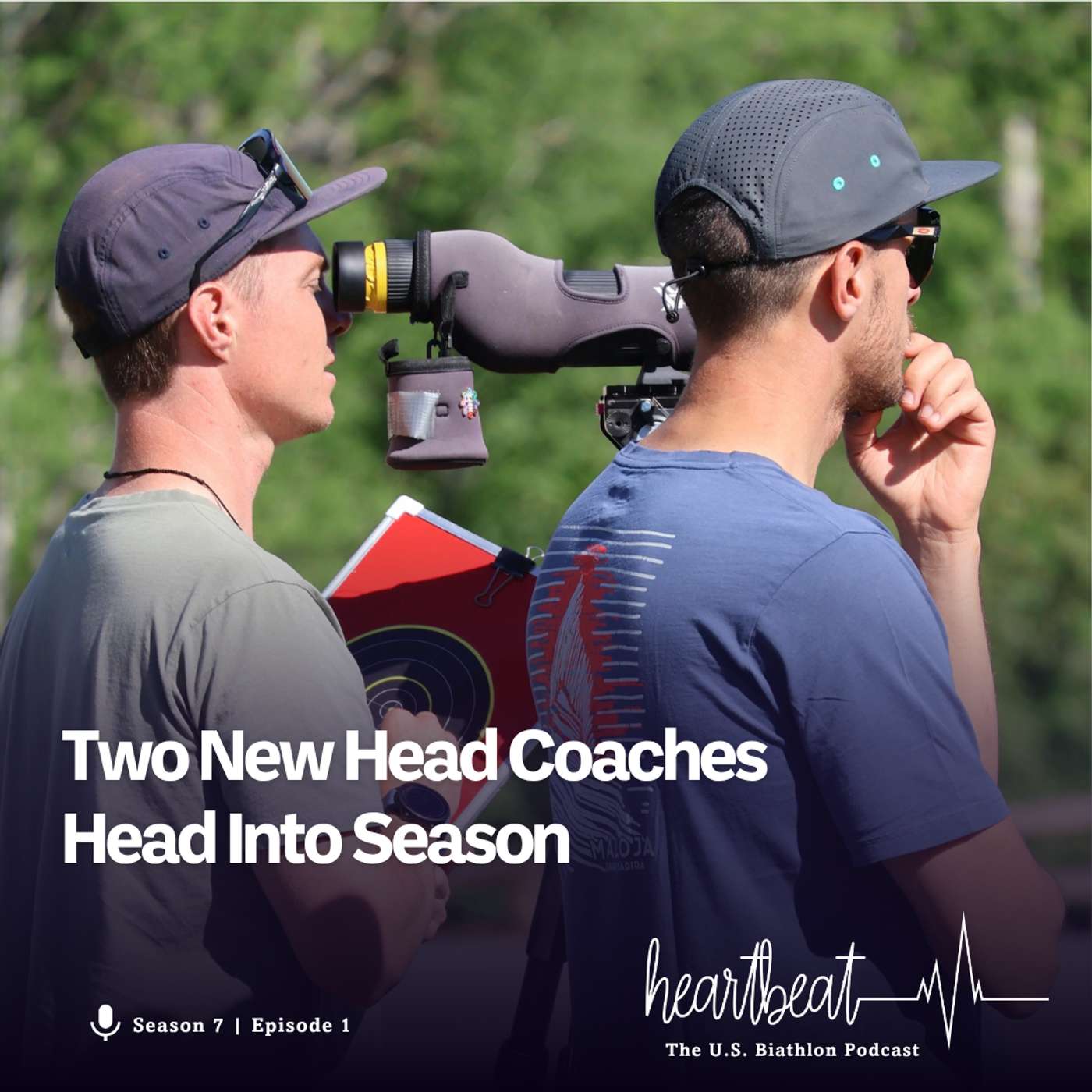
With the LaVita IBU World Cup Biathlon opener just over a month away, new head coaches Emil Bormetti and Mike Gibson are in Utah’s Soldier Hollow as athletes prepare for the season ahead. In the opening episode of Season 7 of Heartbeat, host Tom Kelly gets with the two coaches as the team begins a new four-year Olympic cycle. They talk about their new roles, the evolution of the national team program, and why the annual fall camp at Soldier Hollow is such an important bridge from summer training to the World Cup season. Gibson, who grew up skiing and racing biathlon in Vermont, competed with the Green Racing Project at Craftsbury before moving into coaching. His career has included coaching at Craftsbury and extensive experience leading U.S. athletes on the IBU Cup circuit over the past two seasons. He now takes over as head coach of the U.S. women’s team. Bormetti grew up in Livigno, Italy, and moved into coaching after ending his competitive biathlon career at age 21. He coached athletes from Australia, New Zealand, and Brazil before joining U.S. Biathlon following the 2022 Beijing Olympics. After four years as an assistant coach, he now leads the U.S. men. While the new structure provides separate head coaches for the men and women, Gibson and Bormetti emphasize that the two groups remain closely connected. Training camps largely overlap, and the coaches continue to work across both programs, supported by shooting specialist Matt Emmons, new Head Physiology Coach Justin Wadsworth, and new Head Development Coach Raleigh Goessling. At Soldier Hollow, the team is putting greater emphasis on altitude training this season, while completing its final domestic camp before heading to Europe. With athletes showing strong progress and competition for World Cup opportunities intensifying, both coaches express optimism about the season ahead—and the longer road toward 2030.
S7 Ep1 - Head Coaches - TRANSCRIPT_mixdown. wav Tom Kelly: And welcome everyone. It's our first episode of Heartbeat for the season, and we're going to take you today to Soldier Hollow, and with me. My guests today are Mike Gibson and Emil Bormetti. And thank you, guys, for joining in the middle of your camp out there in beautiful Utah. Mike Gibson: Thanks for having us. Emil Bormetti: Thank you very much. Tom Kelly: Yeah. So what's going on in the camp? Just to we're going to talk a little bit more about it, but have you guys been having a good camp so far? I know you're right at the front end. Mike Gibson: Yeah. We've been having a great camp so far. We're only a couple days in, but I think it's been a lot of good work from the athletes. Some interesting adaptation. We're staying a lot higher this year. So it's a new experience, a new place for us. But everyone's doing great work. Tom Kelly: Cool. We're going to circle back to that in just a little bit, but I want to first of all, introduce you to our listeners on Heartbeat, with some changes in the team structure, this structure. This year, Taylor has retired as the head coach for both the men and the women. Those programs are now coming under each of you, Mike. You're handling the women. You're handling the men. But starting with you, Mike, can you give us just a little bit of a background on yourself, how you got into biathlon, how you got into coaching? Mike Gibson: Yeah. So I competed in biathlon for, for quite a while. grew up skiing. I'm from Vermont. So it was easy to get on skis really early. That was the maybe the cheapest daycare after school. fell in love with biathlon for, I think no reason in particular and all the reasons everyone falls in love with it. It's a, it's exciting, challenging sport. competed on the green racing project out of Craftsbury for, for a number of years, decided to stop and switch over to coaching and, and became an intern for U. S. Biathlon. Then assistant coaches coached for them for one season and continued my coaching journey, went back to Craftsbury, led that program for a little while, came back to the national team two years ago, full time. and yeah, it's been it's been great so far. Tom Kelly: Good. And what has your role been the last couple of years with U. S. Biathlon? Mike Gibson: So for the last 7 or 8 years, I've been the head coach and team leader for the IBU Cup. which has been an awesome challenge and a lot of learning opportunities leading that group of athletes internationally. Tom Kelly: And we're going to go over to you, Emil now. And, you grew up, I know in Livigno. So give us a little background on how you made your way into the sport and eventually the U. S. Biathlon. Emil Bormetti: Yeah. So I was also a biathlete and, I stopped my career pretty early when I was 21 years old. And then I took the opportunity to start coaching for the Australian team. So I was working with Australian New Zealand. Then sadly, we have also Brazilian team and I worked with them for six years. And then after the Olympics in Beijing Olympics game, they offered me the job for the US team as assistant coach, working with, yeah, with Armin. And so the last four years I was, was like, yeah, assistant coach. And now is the, the new year, new rule. Tom Kelly: How has that step up been moving up into the head coach's role for, you know, one of the big teams on the, on the, on the international tour? Emil Bormetti: It's cool. More responsibility for sure. But yeah, honestly, like, doesn't feel like such a big change compared like the past years. But yeah, for sure there's more responsibility and more things like to plan and to see and to work with. Tom Kelly: Mike, you've been around U. S. Biathlon for a few more years. You two are stepping up to a higher role. How has that transition been for you and how are you looking forward to the opportunity? Mike Gibson: I think it's been a pretty smooth transition. I think I'm very fortunate to have that experience leading that IBU Cup crew. because I think in a lot of ways it was, it's been a good stepping stone. there's a lot of that planning and leadership of, of that team that I think I've, I've learned and grown a lot through those experiences and hopefully I'm bringing those forward into this new role. Tom Kelly: Mike, you mentioned earlier a little bit about the elevation and some of the things that are changing up a little bit with the camp at Soldier Hollow. For both of you, let's explore the Soldier Hollow camp. The importance of it. Some of the new things that you guys are bringing in. Mike, I'll start with you and then we'll go over to your side. Mike Gibson: This is a really important camp every year. I mean, all of our camps are important for different reasons. And we have different focuses as what we're trying to get done with the team at each of them. And Utah is a really important one every year. It's the last domestic camp of the season. It's kind of the first real stepping stone into the winter season. And this year we made the decision to treat the altitude exposure a lot more seriously, try to get as many benefits as we could out of it. But, you know, it can be a double edged sword there. Where you have to be a little bit more careful about monitoring how people are doing, how they're adapting to the training load. so it's been, it's been a little bit of a learning experience for all of us. but so far, I think people are doing really, really well with it. Tom Kelly: Emil, how about you? How has this camp, evolved for you? And, on the men's side? Emil Bormetti: Yeah. I mean, I can't just agree with the. With what? Everything like. Yeah. Mike said, it's something completely new. And, like, this camp is really important for us because it's the one that we can actually finalize all the work we did through the summer with like the racing and like with some of the workouts more guiding to like fast and speed and, yeah, the thanks working with like other people on the side, we came up with the idea to have this camp a little bit more higher than what we were usually used to have. And, yeah, hopefully we're gonna see benefit from them. So far, athletes are like responding pretty well. Like we are monitoring them like daily and, we get good response from that. So hopefully we'll be like, we will get good answers from that. Tom Kelly: Being a Utah resident myself, you know, I'm always wondering about some of the little things, like you're now training at an Olympic venue site of the 2002 Olympics, and it will also be the venue for 2034. Is there something special to coming back to a place like that has world class trails, that has an enthusiastic fan base? Mike Gibson: Definitely. We love coming back to this venue. I think it's come a long way. Even in recent years, it needed some work, and it's really in very good shape. So we're really always happy to be back here. Tom Kelly: Emil, how about you? Emil Bormetti: Yeah. Like, like, yeah, like the I remember like the first time I came over here, like the venue was, was in one way. And now you can see like all the development, like with the new building, the new setup, like we have more access to the facilities. Like, yeah, they are like improving a lot. And, like, like you say, like you can see people here are pretty enthusiastic. Like for the sport and for sure, like it's the same for us coming here, we always feel welcome. And, there's so many sports that we discover every year for any kind of training, like outside the roller ski trail, like for any, like over distance we do with the athletes. Like, yeah, it's just amazing. Like new paths, new road is as beautiful. Mike Gibson: And well. Tom Kelly: Let's take a look back over. Go ahead Mike. Mike Gibson: Well, I was going to say one of the coolest things in recent years was just how busy this camp has become. We have races that happen during this camp, and you can really see how much the community has grown, even not to. In the distant, distant past, these races were really quite small. And just seeing how much they've grown, it's, it's a, hopefully a great sign, and it feels like a great sign of where the sport's going in the country. Tom Kelly: Yeah, I think there's definitely an enhanced energy for biathlon right now in Utah. Guys, let's take a look back. Over the last few months, you both got into your new roles this spring when Armin left the program, and you all of a sudden tasked with running these teams, the men's team, Mike and the men's team. Emil and the women's team. Mike. talk about how you transitioned into that and what your summer camp program has been like over the last few months. Emil, why don't you kick it off? Yeah. Emil Bormetti: So the big difference we had this year, like from the beginning of, of the season is like, we usually had a camp in bend, Oregon in May, to like start the season like on snow. And this year we decided to skip that camp to give the athletes a little bit more freedom after like, an intense season, like last year because of like qualification Olympics game and everything. So the first game we actually had was in June in Lake Placid, two weeks there. And then we went for like the men's team had a camp in Europe, in Font-Romeu in France, and the woman team was in Craftsbury and then another camp in Lake Placid, and the one here in, in Utah. Tom Kelly: Mike, how about your program? Mike Gibson: Yeah, I think it's been running very well. and just echoing what Emil said, you know, we wanted to give people a little bit more freedom and a little bit more time to decompress from that stressful season. And by the time they came back in June, you could see that they were rested and ready to get into the training season. Tom Kelly: And I'm curious, do you do your two teams run different training schedules in the summertime? Do you overlap a bit? Mike Gibson: We overlap a lot. You know, we when we first kind of approached this, this new coaching structure, we talked to all the athletes that yes, we are having a little bit of division of women's team and men's team rather than a singular head coach. But something I'm really happy about, really proud about is how well Emil and I work together and how close our teams still are. maybe there's some small tweaks, in differences between the women's training or the men's training, but by and large, we're at the same place doing the same thing and it's just who is focusing on, on which athletes work on any given day. Tom Kelly: When, when you guys came into this last spring, did you have any sort of a roadmap or did you get together with Lowell and start to talk about the strategy on how do we run these two programs separately? Having had a coach running the both the men's and the women's program, one coach over the last few years. But was there any sort of strategizing, strategizing session last spring to figure out, okay, how are we going to make all this work? Emil Bormetti: Yeah, we did have like a talk for sure for that. And, like Mike and I, we, we agree with the fact that like, yeah, like Mike said before, like now the team is going to have a head coach for the men and one for the women, but we still want to run like camps together, works together and keeps like the teams together, like the athletes have their point of contact, but we will try to work as much as we can together because that's how we keep the team together. Mike Gibson: And something we really wanted to, something we really wanted to stress early on was Emil has a great relationship with a lot of the women, and I have a good relationship with a lot of the men, And it's not like we're trying to say, oh, don't go and talk to Emil. Oh, don't go and talk to Mike. No, we're just we're two coaches coaching this group of athletes working all together. Tom Kelly: And the two of you also have access to a range of coaches in other specialties to support both of your teams. Right? Mike Gibson: Yeah, absolutely. We, we still have Matt Emmons coming back on board, being our shooting specialist, we, which has been a tremendous asset to the team. And this year, we brought in Justin Wadsworth, who has a wealth of knowledge and has been a huge benefit for, for both Emil and I, talking through training plan, talking about ski technique. this is one of the best setups I think that our team has had. Tom Kelly: And Emil, how is that working for you on the men's side? Emil Bormetti: Oh, that's like super like Mike said, the setup is great. Like we are really able to coordinate training and like having okay, the men focus would be the shooting. Matt is there and we work with that. And then the other side, like Mike can focus more on the ski technique side with Justin. And then we just rotate that like he makes really the camp running super, super smooth or like having like two expertise like them coming into the camp beginning of the camp, we can set up a good base either shooting and technique and then keep follow through like the weeks, the second week of the training camp or the third week of the training camp. Tom Kelly: When you when you guys get on snow and when you have service support, will that be shared support between the men's and the women's teams? Mike Gibson: Yeah, absolutely. So it's the same service staff. they're a tremendous group of guys, the wax cowboys. so we're going to be getting on snow November 8th for our early season camp. it's a, it's a quick ramp up from the first touching of snow to the first races. But, our, our service guys will be there with us helping test skis test the, the new skis that they've been picking through the summer and testing through the summer on, on any of their, their, on snow testing. Cool. Tom Kelly: Where is the early on snow camp? Emil Bormetti: Obertilliach. As the same, the same way we ran last year. So was the first time we ran like Obertilliach this, previous season. We were always going to be in Finland, and last year we decided to try something different, maybe get a little bit more sun at the beginning of the season. And athletes reacted really good, to be fair. So no reason why to change the place. Tom Kelly: Yeah, I'm curious why. How does Obertilliach get good early season snow. Emil Bormetti: The storage. There's no depot. And yeah. That's why. Tom Kelly: And what kind of a track can they give you in early November? Emil Bormetti: Last year, suddenly the when we were there, conditions were, pretty warm for that time of the season. So we started with a pretty short lap. It was around like one K and a half, and then they were able to make it longer. But by that time, we were already on our way to go to the first World Cup. Tom Kelly: Will you will the athletes get a break after that camp, or is it right onto the World Cup. Emil Bormetti: Right into World Cup? Tom Kelly: And we're almost there, aren't we? Emil Bormetti: yes we are. Mike Gibson: It feels that way. Tom Kelly: You know, it's crazy when the leaves start turning and you start to think, oh, this thing is almost upon us. And we are getting really close to that. I'm just kind of curious to, you know, you're going into a new four year Olympic cycle right now. Have there been any changes overall in the high performance direction for either the men or the women? Mike Gibson: You know, I don't think that we need to change a tremendous amount in through this next four year cycle. We're treating altitude. We're trying to treat altitude, that kind of training and that kind of exposure a lot more seriously than we have in the past. That might be one of the biggest changes. I think the, the staff set up with this, this new, team of four essentially on the high performance team. That's a really pretty big change. it comes a lot with like how much, how much trust there is in each of us and being able to delegate and get a lot of really productive work done inside these camps. But as far as training plans, we've always had a really good training plans and we don't need to reinvent anything dramatically. Yeah. Tom Kelly: Emil, how about you? Emil Bormetti: I can just agree with that. I would say exactly the same things. Tom Kelly: That's totally fine. I want to take a minute now. And we've been talking about the process about you guys as coaches, but let's talk about your athletes. These are the ones who are going to be going on the starting line in the IBU World Cup in just a really short amount of time. Mike, why don't you kick it off and just give us a little overview on what to watch on the women's team this year. Mike Gibson: Sure. So you know, our women's team, national team training with us this summer. Deedra is in a really good place. she's been training. Training really well and looking very, very strong on skis. both Lucy and Margie have always also been very, very strong on skis and have increased their shooting a ton. Chloe has put in a great summer of training, so I think our, our, the four that we've been working with, really look very strong. And I think we can have a quite a successful year. I'm excited about it. Cool. Tom Kelly: Emil how about the men's side? Emil Bormetti: So, yeah, from the men's side, like coming out from like a, I would say a successful season last year, like, we got that fifth spot for the World Cup and, but we also know on the other side that like Jake and Paul retired. So there will be like more an open door for like people, being in the World Cup and, I can say that like people feel that feel it's not, I would not say feel the pressure, but like they know they're gonna face World Cup. And I never seen a team like, like more motivated than like dizzy are like athletes are training really good. they're really putting their, their best in every session in every training because they know they're gonna face that. So it would be really interesting to see. I think it's gonna be a good season. Tom Kelly: Yeah. Do you know for both of you, U. S. Biathlon has been steadily climbing over the last few years. At least that's my observation of it. setting aside your high performance plan and all of the, the details that you have to deal with as coaches, but just in your, in your gut, your instinct. and I'll start with you, but how, how do you feel U. S. Biathlon is positioned for the future as we head into the next four years? Emil, you go first and then over to you. Mike. Emil Bormetti: Yeah. I mean, as a young team, what it says like is a young team and looking ahead in four years. Like I think like we can really like aim for, for good results, good like seasons and yeah, like, like having like a new, new idea for the, like, for, for the next four years, like what Mike mentioned before, like the implement more altitude camp and, and like, yeah, some little change on, on the training, like, we will make a group that like they were already working in past like, like with this. I don't know what to say, but like, well, I, I, I don't know how to explain that, but, I think like with the confidence, like to, to the program, like we, I don't know, I think like, we just have to, to get like good results for the next four years. Tom Kelly: And I'm sure we will. Well, Mike, how about you? What are your thoughts in your gut? Mike Gibson: I feel really positive about this team and definitely it's been improving steadily, but also pretty rapidly over the last couple of years. the, the highs of the results and the depth of the results have, have really been improving. But I think the, one of the things I don't think many people realize or recognize so much is we're also talking a ton about development too. the team has really been fortunate to, to bring Raleigh Goessling onto the team. and he's making some great, great pushes in, in development and helping bridge that gap, between the junior age athletes and developing seniors. so even though we feel like we're in a good spot, you know, I think a lot of our, our secret and our, that's not a secret, but our philosophies that relentless improvement and relentless development. and folding Brian and the junior team in Moore, that's, that's really kind of what we're looking forward to these next couple of years is even though we're in a good place and improving, we want more. Tom Kelly: One last serious question for you before we have a little fun at the end and I'll. Mike, I'll go to you first and then to Emil. Both of you are heading into the season this year. You're seasoned veterans, but you're in a new role. You're head coach of a U. S. Biathlon team. What are your thoughts heading into the season as to what this means and how this added responsibility is something that you're really embracing. And Mike will start with you. Mike Gibson: It's an interesting question. I, I tend to look for more of the similarities than the differences. I, I care a lot more about how I work with each individual athlete and that group of athletes. And so while Emil definitely touched on that, there's been some more some more planning, some more, you know, talking about long term goals and things like that in this role rather than the other role. I don't see my role with each individual athlete having changed really at all. You know, it's about that one on one interaction, the small group interaction on a daily basis and at every training camp that, that's felt really very similar this year, which I'm happy about because that's, that's the stuff that I really love. Tom Kelly: Good stuff. Emil, how about you? Emil Bormetti: Yeah. For me, like with these rules, like the, the biggest change for sure, like, okay, the last four years was, a little bit more in touch with like the, the World Cup athletes. And, definitely the biggest change will be like the taking decision that will be a big change. Like we are like now in a position that we gotta make some calls and like take decisions for stuff and like, yeah, more responsibility. But like, that's part of like the position. Tom Kelly: Well, it's, we're confident in both of you in these roles and it's an exciting time to look ahead and see where things will go. We're going to wrap it up with a section that we call on target. I have some just completely unrelated to biathlon questions for you to just wrap things up and have a little fun. The first one I am going to take you back to the Olympics in Milano Cortina. for each of you. What's one memorable experience that you had in Milano Cortina that had nothing to do with your role at us? Biathlon? Okay, now I know I can see you guys in the screens thinking, but Mike, we'll kick it off with you. One memorable experience that you had at the Olympics that had nothing to do with your role at U. S. Biathlon. Mike Gibson: Am I allowed to cheat and give you the answer Emil should give you. Tom Kelly: You can cheat. Mike Gibson: Maybe he should go first. It was a. It was a very cool experience because it's a. It's a venue and it's a place we know really well. And so we know we know the people really well. We've been there a bunch. And in the last couple of years, certainly we've had, issues with snow, you know, as, as everything's getting a little bit warmer. and there was one day in particular that there was just a tremendous amount of snow came down and the road closed down and, Emil and Campbell or Emil and. Emil Bormetti: And Paul. Paul too. Mike Gibson: And Paul, had to walk down from the venue. And so while you're in this, it's the, it's this dichotomy of like the highest stage, there's people all around, but then it feels very, very small town of like, you just got to walk down the valley from the venue. Tom Kelly: I really love that one. Yeah. Do you have I mean, do you want to enhance that or do you have something to top it? Emil Bormetti: I mean, yeah, I took that one from me since I was the one walking down. But it's fine. no, something I really, for me was really like, yeah, different. And everything is like, yeah, the Italian control, like getting into the venues was something beautiful for me. And like all the police asking for pins. So it was pretty, pretty easy to corrupt people with pins. Yeah, that really showed. And that's my country. So I was like, yep, here we are. Tom Kelly: I love that. You know, I love the fact having I've worked a dozen games in my career. The fact that you still today can get into areas at venues with pins is awesome. You know, I hope that continues. Okay, now let's just take a look over the summer. I want you each to think about one fun, exciting thing that you've done over the summer outside of biathlon. Emil, why don't you kick it off? One fun thing that you've done over the summer that was outside of biathlon. Emil Bormetti: Do you mean still with the team? Tom Kelly: Just me. No, just anything you did on your own. Emil Bormetti: Well. Tom Kelly: It doesn't have to be, you know? Maybe you rode your bike, 1000km or whatever it was. Is that you did? Emil Bormetti: Yeah, maybe. Maybe the holiday I had in Engadin with my new roof tent for the car. Yeah, that was the fun thing I did this summer. Tom Kelly: Beautiful. Mike, how about you? Fun thing that you did over the summer. Mike Gibson: Yeah, it's a certain type of fun, but maybe that speaks to who I am. I, I've been doing a bunch of house construction over the last couple of years, and I love having those kinds of projects. So like starting off the, the spring building some landscape stairs and planting some new flower gardens and that sort of stuff. I like getting my hands dirty. And it's a, it's a cathartic process. Tom Kelly: Beautiful. Then the last question, your favorite gelato stop on the World Cup tour. Mike. Mike Gibson: Well, so I've been mostly on the IBU Cup, over the last…. Tom Kelly: That's fine too. That's fine too. These are new questions this year. Mike Gibson: Yeah. These are good, tough questions. you know, I think, I think it's, it's, it's not on the tour, but so last summer we had a great camp, great summer camp in, in Livigno. And you know, part of it's the, the experience, the atmosphere, as, as well as, you know, how good the gelato is itself. Tom Kelly: And Emil, do you know the spot? Emil Bormetti: Yeah, roughly. for me, I would say I would play safe and I would say Antholz. Okay. There is, there is a nice, a nice bar where they make like this nice cap with the gelato. And yeah, that's probably the best one. Tom Kelly: Beautiful. Well, coaches, thank you so much for taking the time to join us here on Heartbeat. as we record this, we're just over a month to the World Cup season. We wish you both the best of success and, taking this team up to new heights over the next four years. So thank you very much, Mike. Emil, appreciate you joining us on Heartbeat. Emil Bormetti: Thank you very much, Tom. Mike Gibson: Thank you. Emil Bormetti: Tom. Thank you very much for having us.