
Heartbeat: US Biathlon Podcast · US Biathlon
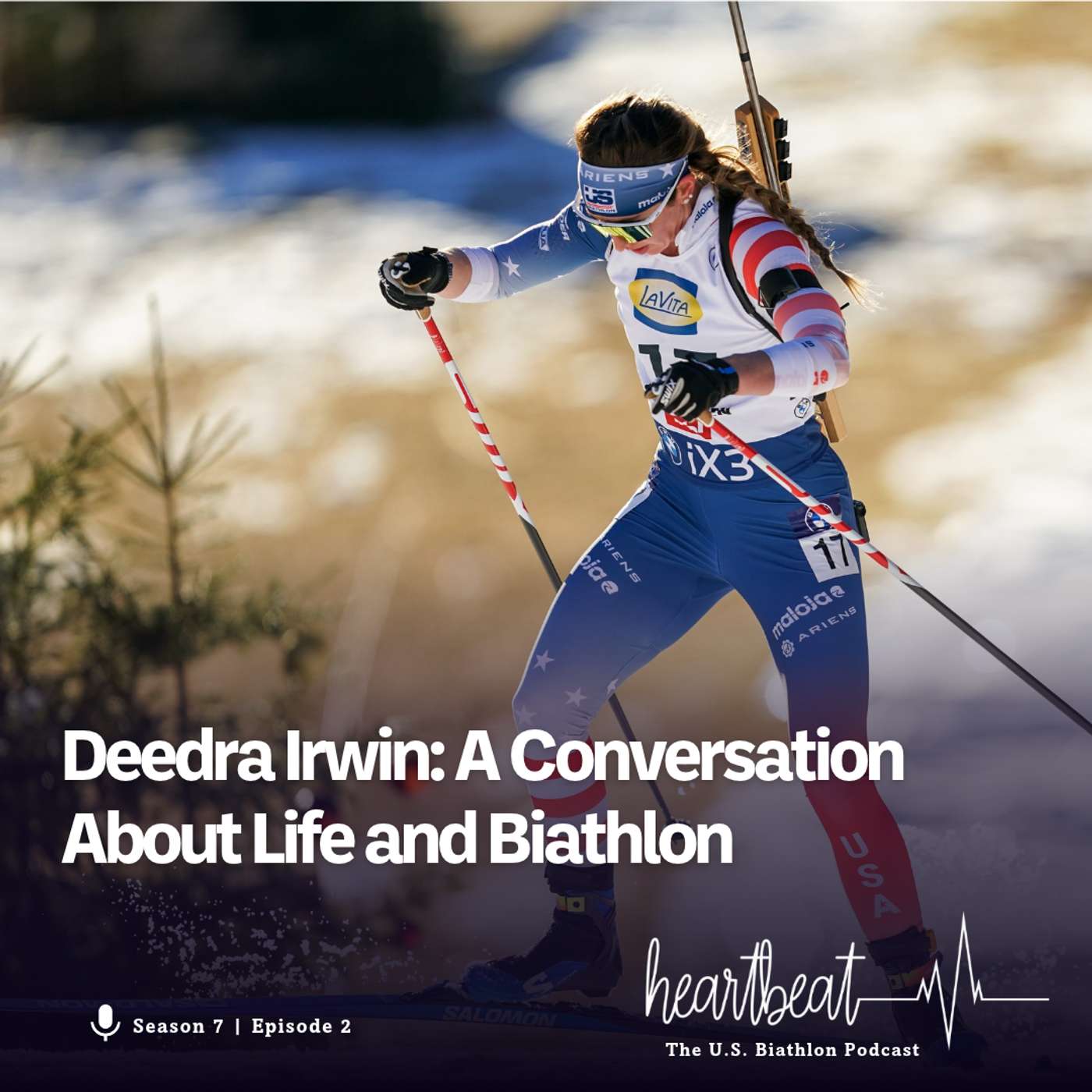
Wisconsin native Deedra Irwin has plenty to celebrate. The two-time Olympian and Vermont Army National Guard soldier is coming off the best biathlon season of her career, finishing 29th in the world rankings and helping lead the U.S. to a historic World Cup relay podium. Now, with the Milano Cortina Olympics behind her, she's embracing a new chapter that includes marriage, a new home, and a puppy named Sprite. On this episode of Heartbeat, Irwin joins host Tom Kelly to reflect on Olympic memories, a breakthrough season for U.S. Biathlon, and the challenge of balancing life and sport as she looks toward another Olympic cycle. For Irwin, the highlight of her second Olympics wasn't a race result. It was looking into the grandstands in Antholz and seeing her family cheering her on. After experiencing Beijing without family in attendance, having her parents, brothers, and soon-to-be husband alongside her in Italy brought an emotional dimension to the Games. "Being able to look up at the stands and see my entire family was still the most incredible experience," she said. Irwin's season also marked a milestone for American biathlon. Racing alongside teammates Maxime Germain, Campbell Wright, and Margie Freed in Otepää, Estonia, she helped secure a historic mixed relay podium, the first for the U.S. in the event. It was her first World Cup medal, capping a season of remarkable consistency that elevated her to 29th in the world rankings. Now based in Stowe, Vermont, Irwin is looking ahead with renewed energy. A new U.S. Biathlon coaching structure and fresh training approaches have brought exciting opportunities, including a September altitude camp in Utah. But life beyond racing is becoming increasingly important. Irwin married snowboarder Robby Burns, whom she met at the Opening Ceremony of the 2022 Beijing Olympics. The couple eloped on April Fool's Day. Amidst packing bags for the opening on-snow camp in Obertilliach, she and Robby are moving into a new home. And they’ve welcomed a puppy named Sprite into their family. Irwin remains enthusiastic about another Olympic cycle, even as her priorities evolve. For this proud Green Bay Packers fan, the competitive fire still burns brightly as she prepares for another winter on the World Cup tour.
Tom Kelly: [00:00:00] And welcome back to Heartbeat. Great to have you with us here for another episode, as the season is almost upon us. And given that Deedra Irwin, I imagine that you are deep in the throes of packing for a winter in Europe, right? Deedra Irwin: [00:00:14] I'm packing for a winter in Europe. I'm packing to move into a new house. I am, I'm packing. Tom Kelly: [00:00:23] Yeah. And, and we'll probably touch on this a little bit later too. But, biggest news for you in the past year has been. Deedra Irwin: [00:00:32] Getting married to a my amazing husband, Robbie Burns. yeah, we met at the Olympics in Beijing. And so being together for the past four years and going through another Olympic cycle has been amazing. And yeah, we decided to pray a little April Fool's joke on everybody and elope on April 1st. And it's been incredible. He's the most supportive, most amazing human that, you know, I could have been blessed with. Tom Kelly: [00:00:58] Well, I know our listeners can't see you, but I'll tell you listeners that she looks very, very happy. And for somebody packing her bag, you know, there must be a lot of happiness from this past year. Now, I want to before we get into biathlon, we're both natives of Wisconsin. I unfortunately moved away 40 years ago. but, Deedra, I know you're a big Packer fan. You probably stayed up late to watch the win last night on Thursday Night Football. But how about those Milwaukee Brewers, huh? Deedra Irwin: [00:01:30] It's incredible. It's been so cool to be able to watch history be made. I'm not a huge baseball fan. I don't follow it a ton. But you know, when anything that big is happening in Wisconsin, I all of us show up. We have to watch. We have to cheer them on. And hearing about that history and hearing how close they've been in the past and how long it's been since I've been back, like they were dominating. It was so cool to watch. I stayed up, obviously eastern time now. I stayed up super late watching game four and five. and I'm so, so happy that they, they got the trophy and it was super cool to watch them, walk into the Packer game last night and see the entire stadium just light up for them. So cool. Tom Kelly: [00:02:18] Yeah, it just personified Wisconsin. Now I know you've left Wisconsin. You're living in Vermont right now. Do you live actually in one of the cooler places in New England? Right? Deedra Irwin: [00:02:27] Yeah. I mean, Stowe, Vermont is an incredible town. it gets really busy during leaf peeping season, I'll say that. but it's been super cool to experience this, this little town and, and to, yeah, to just enjoy the falls in, in Vermont. me and my dog, my new puppy. we just did an interval session up the toll road on Mansfield and, and even though it's getting colder and colder every day. It's still just gorgeous here. It's been such a blessing to be in Vermont for the past. Oh my gosh, almost eight years now. Tom Kelly: [00:03:02] Yeah, it's a great spot. Okay, let's get into biathlon a little bit. This is an interesting year. It's the year after the Olympics. So you're starting another four year quad. Does that change your approach on summer preparation at all. I mean how was the last few months as you get ready for the on snow season? Deedra Irwin: [00:03:21] Yeah, I mean, I think a lot of people approach this summer post-olympics a lot differently. focusing more on the life stuff, as you guys can tell how much I've packed into this last summer, just, you know, getting married and, you know, getting a dog and buying a house and all those things. so I think a lot of a lot of people all over the biathlon community are kind of looking at this summer as a little bit of a mental reset, you know, deciding some people are deciding if they want to go through another quad or if they're just doing a couple years, and it's been really cool to see how many biathletes are starting families. Super sweet. So I think everybody's kind of just approaching the post-Olympic year per usual, which is, you know, enjoying the training, but also kind of prioritizing life a little bit more. And that has been super great, I think, for our entire team. Definitely for me. and it's going to be really cool to see kind of how that mental perspective kind of goes into the season, hopefully a little more relaxed. I think we'll see a lot more surprises this year. because people aren't putting so much pressure on themselves. They're just enjoying, kind of being in the journey. Tom Kelly: [00:04:37] Yeah. Can you trace back on what you did for camps? I know you spent time at Craftsbury, at Lake Placid and, and even out here at Soldier Hollow in Utah. Deedra Irwin: [00:04:47] Yeah. I mean, we, I think we started the season. Yeah. In Lake Placid as a team in June. And that was super cool. kind of that was the first time we got all of our new coaching staff together in their new roles, and it was really exciting for me. I think, you know, we've kind of had the same system for the past eight years with Armin. And obviously Mike and Emil have been a big part of that, but kind of seeing them step up into these new roles and then also getting Justin on board and getting his perspective. It's been a really like not too different. It's pretty much the same, but it's been really different kind of atmosphere and, you know, a lot of different ideas going around, which is always exciting, especially for someone like me. I'm in my 30s now. I need a little bit of a mental and physical change up to see, you know, if we can push my body a little bit more, if I'm kind of just riding the train right now. So it's been really cool to work with all of them and see all their different perspective and kind of see them with their, their, like restrictions off, you know, just like, very like I said, this, this summer is definitely the summer of a little bit more experiment, a little bit more of try this, you know, keep doing this. But it's been really cool. So we had camp in June. That was, a nice little fire kind of seeing all the new staff get together and seeing what everybody's doing. Deedra Irwin: [00:06:08] then we got to all stay home ish. You know, Lucy had to come over for Craftsbury camp, which was nice for me. I got to spend a lot of time at home, which I love. You know, like I said, spending time with my husband and my dog can't get enough of it. and then, yeah, Utah was a really great camp. We all went out there. We tried something a little different. We stayed at 8000ft, for sleeping and recovery, which definitely puts a lot more stress on the body. But now that I'm, I guess two weeks out from that, it's been really cool to feel that altitude, altitude, doping, we'll call it. It's been really cool to see how my body has adjusted to that and, and definitely do that experiment with, with Justin and the team. So, so yeah, it's been really, really fun, very similar. Like we're keeping it feels very familiar. the locations and the dates and the camps and everything, but there's definitely, you know, these added new twists with the coaches stepping up into their new roles and getting Justin and, and, you know, it's been really cool. And also like, we have a lot of the same athletes coming back, but we've also had a lot of athletes that have had to step up into those, those shoes to fill for Paul and Jake and, and, Kelsey and, gosh, I'm trying to think of who else we all lost last year. So it's been a really cool, cool summer to kind of see where everybody's at and kind of everybody's doing. And yeah. Tom Kelly: [00:07:35] I want to touch on the altitude again. And Justin Wadsworth, who I work with when he was a cross country skier at the U.S. Ski Team, has come to the team to work in physiology. And one of the first things he's done is really put in this altitude work. I'll call it. But talk a little bit more about that. You stayed up high in Deer Valley and then you went down to Soldier Hollow. How did that work for you? I know this is the first time the teams really tried that at this Utah camp. Deedra Irwin: [00:08:02] Yeah, I mean, it was definitely while we were there, pretty tough. we were all really tired. And I think people could tell by like even the results at the Chutes and Ski Festival, like, you know, we weren't probably skiing nearly as fast as we normally do when we're there. but it was a lot of really good work, quality work, you know, not just quantity, not just, you know, intense. it was a lot of quality work. And then, like I said, when I first left, you know, I also dislocated my shoulder on my last training day. So I've been in a little bit of a recovery mode, but I've been able to do a lot of running and, I'm running faster and easier than I have in a long time, which is crazy to say and really cool to experience. And I think definitely, I've definitely been prioritizing running a lot this summer because I had to go to Army school for like a month, and everything, but to, to see my, my splits, you know, still dropping in the fall after altitude camp. That was pretty cool. Just to have that feeling of it's, it feels a little easier, even though it's really not any easier, but just feels a little easier and recovering a little faster now that I got some oxygen and red blood cells and everything going. So, really cool experiment definitely makes me intrigued for what we might try before some of the bigger races in the next couple years over in Europe. but yeah, that was my first time really trying it to that extreme. And I so far am enjoying the benefits of it. Tom Kelly: [00:09:43] Yeah. It's an interesting geography here in Utah, because you have the ability to very easily drive up and stay in decent places up at elevation. Okay, let's go and take a look back at last season. Pretty good season by many, many measures. You, ended up in the top 30 in the world. You had your first podium. How did you do you evaluate your last season? Deedra Irwin: [00:10:08] man, it's taken me a really long time to accept kind of the last season because I think there's been there's always so much pressure on the Olympics. And you really just look at that couple of weeks as if you've succeeded or failed in that season. and I think I had a really good Olympics. I mean, I cleaned the sprint, which is incredible. We just didn't necessarily nail the skis every day. but it's, it was really hard for me Once I ended the season to like, be excited about what I had accomplished through the entire season. But the more I've been able to absorb it, and the more I've been able to look back and kind of like see that those four full months of racing, I was able to get top 30 in the world and get a couple top tens. And I am shocked, excited, elated. I don't know, it was it was not what I expected. Definitely what I've been reaching for sure. but to actually have it happen and have it happen in such a, I guess natural, consistent way, was a little hard to, I guess, absorb at the end of the season, especially an Olympic season. but I definitely am super proud of how well I was able to shoot and ski all season and how consistent I was able to be. Deedra Irwin: [00:11:45] How healthy I stayed. it really, really makes me excited for another four years and trying to see if I can maintain that consistency. Not necessarily big results. I know I'm not like a big results person. Like I'm not as, I'm not as fast or as talented as like Lou and you know, all and like Lisa and stuff like that. But, being able to see how that consistency and how those very small, improvements can really make a huge difference in the entirety of your season. And that is kind of what I'm holding on to is if I can improve just a tiny bit every single year, on my shooting or my ski speed, I think I can definitely stay in this sport and stay competitive for another four years, into the next Olympics. So, so it was, it was an interesting season. I want to have a hard time being like, yeah, it was the best season ever because it was a really emotional, hard season. but when I, when I look at my results, when I look at my stats, I am super proud of what I was able to accomplish and what I was able to hold on to for the entire season last year. Tom Kelly: [00:13:01] Well, I concur with you. It's always tough in an Olympic year because the public in particular, and I know athletes as well, you really measure so much around the Olympics. But when you take a step back and look at the season, man, there's really a lot of bright spots. But the one that I really want to go to that, that I just think really symbolizes where this team, this U.S. biathlon team has come, is the podium spot that you took with your teammates in Otepää. And, you know, you look at who was on that team, you know, it's you, Margie Campbell, Maxime. you know, you're just a group of athletes who've now kind of become veterans together in representing the USA. Tell us about that day. Deedra Irwin: [00:13:40] That day. Man, it was one of those. It's windy. You can see a lot of athletes kind of freaking out and struggling a little bit. And you know, the snow was gross. Let's be honest. Like it was pretty warm in Ithaca. and so I think a lot of people, you know, and I think those are the days that kind of U.S. team shines is, you know, those days where we know we just have to do the job and do it well as best as we can. And, you know, kind of not necessarily wait for other teams to like mess up, but definitely just know that we belong amongst the best and you just got to wait and see what happens. You know, it's, it's hard to shoot in the wind. It's hard to race in those conditions. and so it was super cool to see how well Max led off. I mean, that was incredible. really fun to watch Campbell be so tactical and then just dominate on his last leg. and then they handed it off to me and I just had to relax. Honestly, I just had to not mess up too bad. And I feel like that's always the scary part when you're leading a race, and especially when you have a gap, you have everything in you that wants to go hard and wants to like be like, okay, now I got to be perfect. But all I was thinking about during that race was that I just needed to stay consistent how I have been doing and not completely mess up. You know, I knew I could make a few mistakes here and there, but like, don't completely mess up. Deedra Irwin: [00:15:20] so it was really cool. And then Margie, you know, she has been getting better and better every single race last season. And it was really cool to see her, you know, fight it out with some of the best people in the country and really just hold her own. She also didn't have a perfect leg, but you know it. It was a testament, like you said to our team. Our team is not the best team out there every day. On the start line. But we are fighters. We have grit. And we're definitely going to continue to surprise people on those really crazy, surprising days. especially with the wind and everything. Otepää is not an easy place to shoot and ski, and so it was really cool, especially going into a world champs. I think, it was, it was a really cool moment to have to have my first medal be a relay. I mean, I started off in, in biathlon being just a relay leg for the World Cup, you know, however many ten years ago I was getting bumped up from the IBU Cup just for the women's relay. And so relay is always hold a special spot in my heart. And I'm super proud of the fact that our team was able to get that podium. I didn't even realize we had never podium before. So always cool to, you know, be the first in history and, and, you know, surprise the world. Let's be honest, we surprised the world a little bit. Tom Kelly: [00:16:44] Yeah. And you know, the, the fans just get so excited about that. And it's just, you know, great to see that you are going back there, as you mentioned, for world championships this year. So you can take those memories back. But I know it's a challenging place though, isn't it? Deedra Irwin: [00:16:59] Definitely. I'm hoping that we're going a little earlier in the year, so it'll be a little colder and the snow will be a little more firm. I guess I'm personally getting really tired of skiing and slushy snow, but that's just the world we live in these days. And what they were able to pull off with making the snow has been incredible all over the world in every place that we've raced. and so I'm really excited. I think I really like the course, how it flows. And so if there's a way that we could get some firm, beautiful ski races. Oh, that make me so happy. Tom Kelly: [00:17:35] Well, fingers crossed on that. Let's dive into the Olympics a little bit. And one of the things that I find interesting is that the Olympics usually is at a fairly new place to, to many athletes, especially in snow sports. This time you're going back to the venue that probably all of you know the best. What was kind of the difference in going to Antholz for an Olympics than if you were going for a traditional January World Cup? Deedra Irwin: [00:18:00] Honestly, it didn't feel that different. man, the world champs was there how long ago? I mean, and I, I was the alternate for that. So I got to watch everybody race those. but the World Cup is always huge. There's always so many fans there. There's always so many people. so the biggest difference I guess for, for us was, you know, us media being there, which was really cool. the, the woman that was reporting. And at the finish line, she was incredible. Everyone loved having her around. She was psyched to be a part of, you know, the biathlon, which was really cool. and then I guess, and this is where like, I'm gonna get emotional. Ah. Tom Kelly: [00:18:48] It's okay. Deedra Irwin: [00:18:48] Being able to look up at the stands and see my entire family was still the most incredible experience. Tom Kelly: [00:18:58] You know, I think people don't think enough about how difficult it was. And you lived in Beijing and you've lived Milano, Cortina. And I totally hear what you're saying. And I think for all of us as fans, we were really happy for the athletes that you didn't have to go through a games with no one at your side. Deedra Irwin: [00:19:19] Yeah. And Beijing was special in so many other ways. and honestly, I think there was a little less pressure because we didn't have that, but being able to experience my, I guess my first Olympics with my family, with my husband, with his parents, I mean, I had so many people in the stands, to just really boost my spirits throughout the entire experience. Every time I stepped on the start line, my brothers and my husband are so loud and you could just hear them chanting USA or chanting Deedra and I could always find them because they were so loud and, being able to finish the sprint, cleaning the sprint at the Olympics, which is never easy, and looking up and having my parents be able to come down and immediately say hi to me. I mean, that was just incredible. I mean, you can never really take that for granted. And I think for a lot of people, they don't realize how rare it is for us athletes to have, our families is with us when we're racing, and definitely how rare it is to be able to have them experience the Olympics with us. And so it was it was really incredible. I don't remember the last time that my parents and both of my brothers have been able to watch me do a race. I think that was the maybe oh, wait. No. Utah. Utah. They were able to all be there. So outside of the US. that was the first time that, my parents and my brothers were all able to be there together and watch me on such a big stage. And that will always be, I think, the highlight of the Milano Cortina Olympics for me. just being able to, to experience that, to have the good races, to have the bad races and to have them there. You know, they're such a huge part of my journey. And it, it was so, so special to share that with them, especially after not being able to share Beijing with them. Tom Kelly: [00:21:27] Yeah, I really appreciate the way that you've told this story. I'm going to wear my Utah 2034 hat for just a minute. One of the things that we at Utah 2034 identified was that importance of family. And we're looking to actually create an athlete family village. So that family members from around the world will have that opportunity to be with their sons and daughters and brothers and sisters. And, and it is such a difference. And I know that you're a part of a generation of athletes that lived both experiences. And wow, what a great time and great opportunity in Milano Cortina to have them there. Deedra Irwin: [00:22:06] Definitely. I think, it'll be something we'll always remember as a family. Really, really incredible experience. Tom Kelly: [00:22:16] We're heading into another Olympic quad, and I know that those of us who work in sport, we kind of measure things by Olympic quads as an athlete. How do you look at it? Do you look at it now as this season is the first of four, or do you just look at this as another season? Deedra Irwin: [00:22:35] I think, oh gosh. I think as athletes we do we do the Olympic year, which is huge. the post-Olympic year, which is relaxed. and then you have the pre-Olympic year, which is you can maybe prequalify, you can get a lot of media before the Olympics. and so there's probably, I guess, yeah, two years that are really, really kind of stressful and important, which is the pre-Olympic and Olympic year. And then there's two years that are just kind of a little more, I guess, casual. I won't say they're casual. I mean, we're all out there trying to like win, you know, win medals and, you know, get better and everything, but it's definitely, it feels more just like it's part of the job, you know, like I love my job. And so I am blessed that I be able, that I'm able to continue my job through all these last four year cycles and everything. But yeah, I think these next couple years are kind of the years that a lot of athletes are going to be either deciding if they retire, they're going to be, starting families or if they're younger athletes, they're going to be really trying to push through to prove that they belong at the next Olympics. so it's a little bit different for everybody depending on like what part of the journey they're in. if they're already been to a couple Olympics like me, it's kind of, can I maintain, can I live life and can I do another four years, especially at my age? and then for some of the younger athletes on our team, they're definitely trying to see, can I consistently get on the World Cup? Can I get those top 60s? Can I get those top 40s? Scoring World Cup points is huge for our team, so I think it just depends on kind of where you're at and how you that's, that's how you perceive the four year cycle. Deedra Irwin: [00:24:37] But yeah, I think for some of us who are a little older, we're taking it year by year a little bit more. And then obviously a lot of the younger people are like, yep, I'm committed four years. Let's go. so, so for me, I definitely am committed to doing another Olympics. but you know, if, if life happens and, and there's reasons for me to retire or take a step back, I'm definitely going to embrace that and kind of see what, you know, what that looks like. Like I said, this past year, since the Olympics happened this past summer, I guess life has just been happening to me and my family, and we've been embracing it and we've been pushing through and making it all work, and it's all very exciting and very new. but you know, it's, it takes a little bit away from the athletic part for sure. Tom Kelly: [00:25:27] Yeah. But it's important to have that blend, right? Deedra Irwin: [00:25:31] Mhm. Definitely. I think actually, saw an interview, somebody must have been asking Jesse Diggins kind of why? Why now? Why retire? And she explained it really well. It was, you know, like the, the drive and the passion to race, was really, really high when she first started. And, you know, the, the family priority or the, you know, well, before she had a husband that was a little bit lower and kind of the scales seemed to tip, as you know, you get a little bit further and eventually they might be equal where the drive to race is equal to the drive to have, family and be close to everybody. But eventually the scales do tip in the other way and the drive to stay home and be with your loved ones and to, you know, not travel for four months of the year. Or actually, it's more than that because we travel all summer to, we'll say more like eight months of the year, you know? And so it's for me, I definitely feel those, those scales tipping a little bit more towards the family part, but I'm still feel like I'm in a nice balance where I love racing, I love training, I love traveling, and I'm super excited to get back on the road and see what our team can accomplish this season. Tom Kelly: [00:26:43] Cool. You have a new coach now this year. Mike Gibson, not a new coach to you, but in a in a new role. how has that helped you? Deedra Irwin: [00:26:52] Like I said earlier, it's been cool to just see a different perspective. and, you know, kind of feel like there's a lot of, ideas in our younger coaches here with Mike and Emil, there's a lot of ideas that, they're super excited to push forward and, you know, there's, there's a lot of experience with physiology, and everything. It's, you know, if I could get into their brains and kind of figure out what they're trying to, to do, I'd probably get a little confused, but I'm really embracing every single little new thing they're trying with us. we're doing a lot of different physiology stuff. Like we said with Justin, we're doing a lot of, I guess I don't even know, technological stuff with MSU and Kinesis and all these cool new gadgets and gizmos they have us wearing and testing us with. So it's been, it's been really cool to kind of just, get a new perspective, especially like I said later in my career and see if there is more, you know, technique efficiency I can find if there's more speed, I can find somewhere, if there's more recovery, I can find somewhere, more balance. so Mike's been really incredible about, you know, working with me on that and definitely Respecting where I'm at in my career and where I'm at in my life. And so that's been really cool to work with him in this capacity. Like, like I said, we, we met, my gosh, 2018 when I first started biathlon and he was still racing and then he retired that year. So it's been cool to kind of see his career. you know, shift and grow alongside of my athletic career in biathlon. And he's become a huge part of the U.S. Biathlon community. and definitely a subject matter expert in a lot of different parts of biathlon. So it's been really cool to work with him. Tom Kelly: [00:28:55] Cool. We're recording this on October 30th, and I know you're getting ready to head over. What is your next month look like in terms of on snow preparation in Europe and then starting the World Cup? Deedra Irwin: [00:29:07] Yeah. So we head over. The team will head over on November 7th, landing on the eighth. and we'll have gosh, I think there's like three solid weeks in Obertilliach. on snow, which will be really cool. It's a place we've been to a lot. It's a high altitude, so we'll be able to, you know, work on a little bit of that altitude training before we go to Kontio, which is very much sea level. but yeah, I think a lot of what we're working on is just, you know, the same consistency, efficiency, you know, it's, it's an easy puzzle from the outside to talk about, you know, ski fast, shoot straight, all those things. but I think, for our women's team, it's a lot of just building on the experience we already have. Lucy and Margie are still relatively new, but they're improving every single camp and every single race that they get to get into. And Chloe is one of our most solid athletes. so she's going to be great. Just her. Her. I mean, she's probably as much of a veteran as I am. You know? So she's been shooting longer than me. and she's an incredible athlete. So I think we have a good mixture of, you know, veterans that are really consistent. Deedra Irwin: [00:30:30] And we have a good mixture of, you know, athletes who are still, you know, getting a few seconds here and there on the range and, you know, definitely speedy on the course. So it's going to be really cool. And, we have some new athletes coming up. I was super impressed with Aurora Kramer at Utah trials. I mean, she dominated that first race. It was really cool to see. I was watching her V2 all the way up her modes like crazy. so it's really, it's gonna be cool to get her on snow and get her some more biathlon racing experience internationally and kind of see what she blossoms into this season and, and yeah, on the men's side, I mean, that's just going to be fun. Let's be real. Like they put themselves in such an awesome spot. Campbell's a power horse. and you know, all the guys have stepped up, you know, for Paul and Jake retiring. and so it's going to be just, it's going to be just fun for them. I hope it's fun for them. I like really enjoy watching the men train and race together. Deedra Irwin: [00:31:34] They're, they're such a, such a cool team. and then yeah, the addition of Will Koch now just kind of coming in and lighten some fires and it's going to be really cool to see how he also develops as a biathlete. I mean, he, I think we got to chat a little bit after his last race where he was like, yeah, I only missed two this time. That's super fun and addicting. And I was like, welcome to the club, man. Like it's going to be, it's going to be fun and addicting forever because you're going to be able to consistently eventually only miss two. And then there's going to be one day where you miss a lot and you're going to be like, oh, I have to get back out there and do better. So, so he's, he seems like he has a really good head on him and he's obviously a really fast, talented skier. So I'm really excited for our team. And you know, I think it's just going to be a matter of yeah, getting on snow, getting used to the European time zone again and getting over to Kontio and seeing everybody what we got, showing everybody what we got. Tom Kelly: [00:32:38] Cool. I want to go back to Will Koch for just a minute. I know that his father's silver medal in 1976 was long before you were born. But, but did you know, you know, when you were growing up in the sport. Did you know his father, Bill Koch. Did you know who he was? Deedra Irwin: [00:32:55] I did not grow up in Nordic skiing, so I did not know anyone at all. I started skiing when I was 16. I don't even know if I started watching the World Cup until probably. I don't I don't know when I probably started biathlon. I mean, especially back in the day, it wasn't easy to just like find it on the internet. Yeah. so, so yeah, I mean, I definitely, didn't know until I guess I moved out here to Vermont. and I started hearing about like the Bill Koch League. Yeah. And I was like, well, that's cool that it's, you know, that must be a cool guy. and then, you know, obviously watching results and getting to hear the name Will Koch and everything, out since I've been out here. and then when I heard he was gonna try biathlon, it was a really cool. I mean, that's kind of what we need in our sport. We need people excited to bring some speed and some enthusiasm, about shooting to biathlon and get more people interested in it. So, so yeah, I was one of those super naive, I mean, people love telling the story about when I first met Andrea Henkel. Now Burke in Lake Placid, she did a whole like it was, I think, the talent ID camp that I went to. She did a whole camp with us and she was like telling us all about all this stuff, and I was just so naive. I was running with her. I was like, yeah, I've been to Sun Valley. I went to like U23 worlds, this, that, and the other thing. And eventually people were like, you know who that is, right? And I was like, nope. No idea. And then they told me and I was like, oh my gosh, I've been like, just so unaware that I've been chatting with a, a biathlon legend. Yeah. So, so yeah, I'm a little, I'm a little naive when it comes to, the Nordic legends of pre, I guess pre when I started biathlon. So pre 2018. Tom Kelly: [00:34:57] Well that's okay. Naivety is is really can be a fun thing. bill Koch won his silver medal in 1976. that was 50 years ago. So understandably, you don't remember that. thank you so much for joining us. We're going to lighten it up just for our closing on target section. Really appreciate you diving into, your past year and looking ahead to the future, but let's just have some fun and tell us about your puppy. Deedra Irwin: [00:35:24] Oh my gosh, she's the cutest little nugget ever. She's right there. She's sleeping. her name is sprite. me and Robbie were talking about getting a dog earlier this year. and then when the opportunity came up, I found her on a website called For the Love of Dogs Vermont. And we matched. I got to talk to her foster parents down in Louisiana, and I just loved everything they were saying about her. and so they drove her all the way up from Louisiana to Vermont. And we picked her up and brought her home. And she has just been such a blessing and a gremlin. She's a little bit, you know, she's a puppy. But it was really fun to bring her to biathlon camp in. Gosh, that was in September. she's like the team range dog now. She heard the first shot go off and was a little sketched out, but now she's a staple on the range. She loves just sitting there and getting treats and pets in between all of our shooting and skiing. so yeah, she's, she's the best. I love her, like I said, she just did intervals with me this morning. So she's, I think she's loving life. Tom Kelly: [00:36:40] Okay, so let's talk about the Packers as we speak right now. The Packers coming off a big win over the Carolina Panthers at Lambeau Field on Thursday night. But they're five and three and they're last in the NFC North. What's your optimistic outlook for the rest of the season for the Packers. Deedra Irwin: [00:36:59] I mean I'm always going to say they're going to go all the way always. I mean, they're the best there. And Wisconsin sports is on a high right now. Everybody's feeling it. Even the Packers. So I think I mean I've seen it before. They can win all the games for the rest of the season. And they can definitely make the playoffs. And they can, you know, keep going. It's it's part of our DNA in Wisconsin. We have to believe. We have to, you know, fight through adversity and cold and snow and ice. And they're gonna do it. They're gonna do it. Tom Kelly: [00:37:39] Well, I'm excited. I'm, as you know, I'm a fan. I grew up in the 50s in Wisconsin, the Lombardi era. So it's embedded in me. Okay, last question. Your favorite Wisconsin beer. Deedra Irwin: [00:37:50] I mean, I kind of have to say Spotted Cow just because it's Spotted Cow and you can only get it in Wisconsin. But New Glarus also makes this IPA called Moon Man. Yes. And I do love IPAs. So when I'm home, my mom always has a case of Spotted Cow and a case of Moon Man in the fridge so that I can, you know, have a little bit of a snack after my workouts. Tom Kelly: [00:38:18] Well, I will tell you that during the World Series and remember, I go back a little further than you. I did pull some Miller High Life out of the fridge to enjoy during the Brewers games. Deedra Irwin: [00:38:30] I mean, that's iconic. You have to I mean, same with like PBR that's made in Milwaukee too, right? Yeah. I mean, all the Milwaukee beers, they're iconic. Tom Kelly: [00:38:40] They are. Deedra Irwin, thank you so much for taking time to chat with us on Heartbeat. We're excited for you for the season ahead and all the best to you as you head out onto the World Cup tour. Deedra Irwin: [00:38:51] Thank you so much, Tom. It was awesome to chat with you. Tom Kelly: [00:38:56] Okay.