
Heart Emoji <3 · Bronson Walker
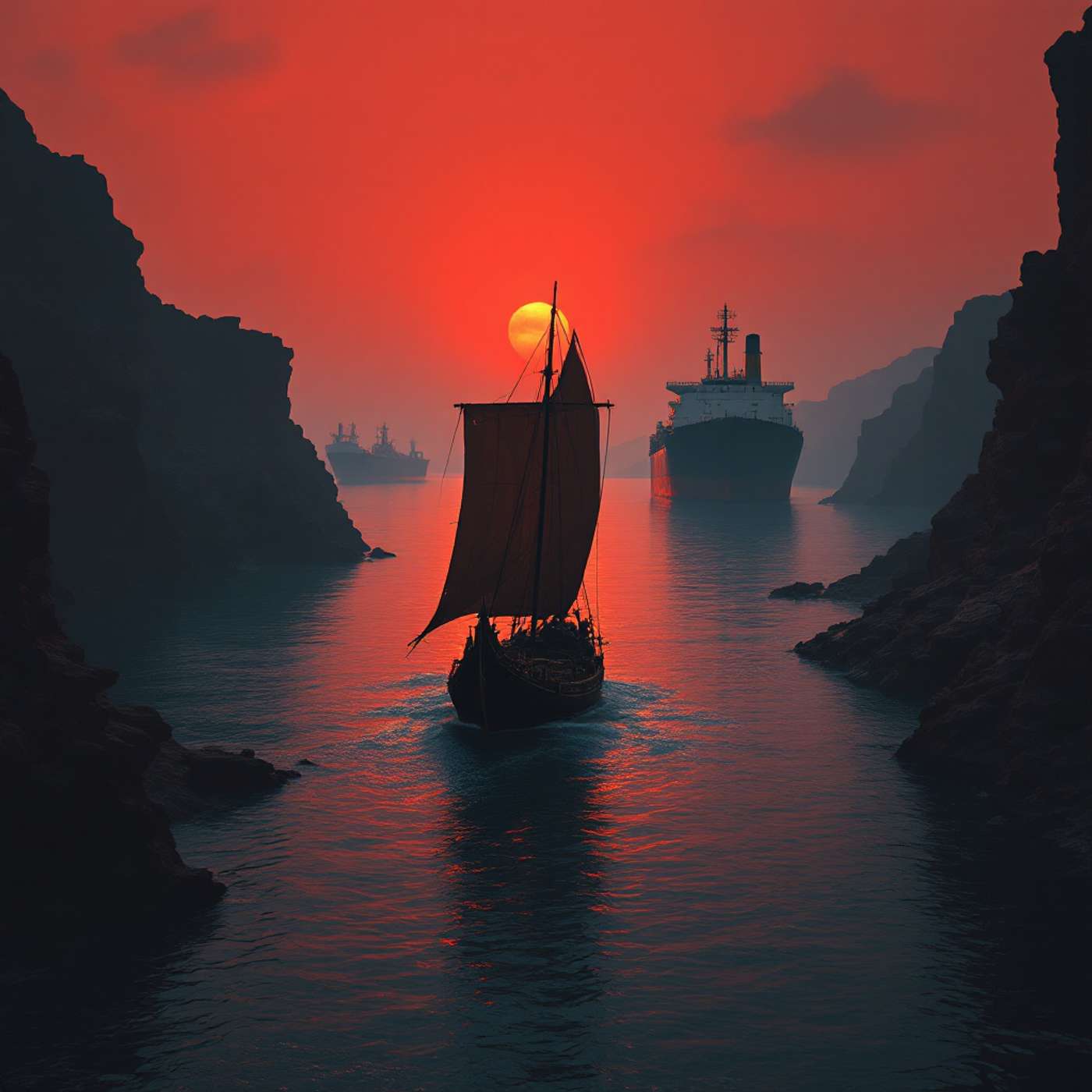
We map the Strait of Hormuz from the ground up -- tectonic plates, ancient trade routes, marine ecosystems, seismic activity, and the cultures that built empires on its shores.
[01:00:00:15 - 01:00:04:00] Speaker 1 Hey chat, I'm recording this for a podcast, is that okay? [01:00:05:20 - 01:00:08:05] Speaker 2 Hey that sounds great, what's the focus of this episode [01:00:08:05 - 01:00:10:19] Speaker 3 or is there a particular topic or theme you're exploring today? [01:00:12:02 - 01:00:30:03] Speaker 1 So I'd like to learn about the Strait of Hormuz, but I'd like to learn about it from like a geographical and ecological and geological and marine life, all that kind of stuff. I'd like to start there. [01:00:31:13 - 01:00:36:12] Speaker 2 Ah, that's a really rich topic. Yeah, we can definitely break it down. So we'll look at its [01:00:36:12 - 01:00:41:02] Speaker 3 location and significance geographically, then dive into the tectonic plates, the rock formations, [01:00:41:02 - 01:00:45:20] Speaker 2 and of course all the fascinating marine life that lives there. Does that sound like a good roadmap for you? [01:00:45:20 - 01:00:48:02] Speaker 1 Okay, that's a good place to start. [01:00:49:14 - 01:00:50:05] Speaker 1 Chat, [01:00:51:10 - 01:00:54:23] Speaker 1 it's a good place to start, let's start there. [01:00:54:23 - 01:01:06:20] Speaker 2 Awesome, yeah, I think that'll give us a really cool angle. If there's a specific aspect you're most curious about, like you know, ancient trade routes or maybe how currents affect the biodiversity, just let me know and we can take a deep dive. [01:01:10:03 - 01:01:15:15] Speaker 1 Those are both pretty interesting, can you give me 10 things like that? [01:01:17:11 - 01:01:21:13] Speaker 2 Yeah, absolutely, we can totally weave them together. For example, we can talk [01:01:21:13 - 01:01:23:13] Speaker 3 about how the Straits currents influenced [01:01:23:13 - 01:01:28:12] Speaker 2 historical maritime trade routes, and then how those same currents support different marine ecosystems like [01:01:28:12 - 01:01:30:16] Speaker 3 plankton distribution or migratory patterns. [01:01:30:16 - 01:01:32:13] Speaker 2 Does that kind of blend work for you? [01:01:34:04 - 01:01:44:07] Speaker 1 No, what I meant is that I like the idea of ancient trade routes and I also liked the idea of currents, even if they weren't overlapping. [01:01:45:14 - 01:01:53:01] Speaker 1 Can you give me 10 different interesting things that I might not think to ask you about, kind of like that? [01:01:55:04 - 01:01:59:21] Speaker 2 Yeah, for sure. So another cool thing we could touch on is the way the Strait of Pormuz acts as a bottleneck [01:01:59:21 - 01:02:03:19] Speaker 3 in global oil trade, like a huge chunk of the world's oil passes through it. [01:02:03:19 - 01:02:13:14] Speaker 2 And on the marine side, there's this biodiversity hotspot, so we could look at how all that shipping and human traffic affects ocean health. Does that spark any other ideas or does that sound like a good set? [01:02:13:14 - 01:02:18:23] Speaker 1 Yeah, but I'd like you to give me more, not just two at a time. Why don't you just... [01:02:18:23 - 01:02:22:16] Speaker 2 So we'll still keep the focus on those two ideas, but I'll tie them together more smoothly. [01:02:22:16 - 01:02:26:03] Speaker 3 I'll start with the ancient trade routes, how the Straits were going to cross those, the [01:02:26:03 - 01:02:32:17] Speaker 2 merchants from the east and west, and then pivot to the currents, how they shaped those routes, and now still shape modern oil flow and marine land. [01:02:36:12 - 01:02:40:20] Speaker 1 Chat, what I'd like you to do is I'd like you to take kind of genres or chat. [01:02:40:20 - 01:02:45:15] Speaker 2 Alright, in that case, I'll just keep a nice balance. So I'll cover those ancient trade routes, show how they shape the... [01:02:49:06 - 01:02:53:08] Speaker 1 Chat, I need you to just hang on a second and pause for a minute. [01:02:54:10 - 01:02:58:13] Speaker 3 Of course. I'll slow down and just focus on the structure, keeping it really cleared. [01:02:58:13 - 01:03:03:23] Speaker 2 I'll go step by step. First, I'll introduce the Strait's geography, then we'll dive into trade routes and... [01:03:03:23 - 01:03:07:01] Speaker 1 Holy shit. I need you to stop. Don't talk anymore, please. [01:03:09:00 - 01:03:14:04] Speaker 2 Got it. I'll stay quiet now and let you record without interruption. Just let me know if you need anything else. [01:03:17:00 - 01:03:49:23] Speaker 1 Okay, so I really... Sorry, Chat. I really liked the ideas that you had that were kind of like themes or like genres or like tidbits from history, like ancient trade, as well as currents. I guess it's categories of things from history, right? Marine ecosystem. Everybody knows the bottleneck oil thing right now. I'd like you to give me five more things that are kind of in that ballpark of like, this is this thing that is kind of specific, but not super specific. [01:03:51:00 - 01:04:17:01] Speaker 2 Yeah, absolutely. Okay, so one idea is the geopolitical tension that arises from the strait, like it's a flashpoint in international relations. Another is seismic activity, how tectonics affect the region. Then maybe you could talk about modern naval strategy since a lot of navies patrol it. You could also look at endangered species in the area because it's a migratory route for some. And lastly, maybe even underwater archaeology since shipwrecks and ancient artifacts are down there. How do those feel? [01:04:20:00 - 01:04:35:18] Speaker 1 What about the cultures? We'll do a little bit of anthropology later on, but I'd like to cover it first with what we talked about. I think that's probably a good kind of overlay here or not, overview. [01:04:38:03 - 01:04:39:09] Speaker 2 Yeah, that makes total sense. [01:04:39:09 - 01:04:43:21] Speaker 3 So we'll keep it structured with all those historical, geographical and scientific angles first. [01:04:43:21 - 01:04:50:01] Speaker 2 And once we've got that baseline, we can layer on the cultural and anthropological aspects. I think that'll give a really rich picture. [01:04:52:16 - 01:04:57:06] Speaker 1 Okay, tell me about the tectonic plates out there. That was kind of a random one that I didn't expect. [01:04:58:22 - 01:05:13:03] Speaker 2 Oh, yeah, for sure. So the Strait of Hormuz sits right along the boundary between the Arabian plate and the Eurasian plate. So it's actually part of a tectonically active region. There's a lot of seismic activity in the area, which shapes both the coastlines and the ocean floor. So it's not just a trade [01:05:13:03 - 01:05:15:05] Speaker 3 route, it's kind of a geologic hotspot too. [01:05:19:08 - 01:05:33:23] Speaker 1 How do their earthquakes compare in size and or frequency compared to maybe something like the San Andreas Fault that I'm more familiar with? [01:05:35:21 - 01:05:42:12] Speaker 2 Ah, great question. So the San Andreas Fault is a transform fault, like a lateral strike flip boundary, and it's famous for big earthquakes. [01:05:42:12 - 01:05:46:00] Speaker 3 The Arabian and Eurasian plates are also converging, but they move more [01:05:46:00 - 01:05:53:23] Speaker 2 slowly, so you don't get the same rapid, large magnitude quakes as often. That said, the region still has plenty of smaller quakes, just on a different scale than the San Andreas. [01:05:55:00 - 01:06:04:13] Speaker 1 Are they more frequent than like on the west coast of California and smaller or less frequent and smaller? [01:06:06:12 - 01:06:23:01] Speaker 2 Yeah, exactly. So the San Andreas Fault is really active and kind of notorious for those big, sudden quakes. By contrast, the Arabian and Eurasian plates move more gradually, so big earthquakes there are less frequent. So when they do happen, they can still be significant. So it's more subtle, but less predictable than California's system. [01:06:25:12 - 01:06:27:19] Speaker 1 Okay, let's touch on climate there. [01:06:29:17 - 01:06:37:12] Speaker 2 Of course, I'll keep it nice and slow. If anything else pops into your mind or you want to pause and dig into one of these points, just let me know and I'll adjust the pace. [01:06:37:12 - 01:06:38:05] Speaker 1 No chat. [01:06:39:12 - 01:06:42:23] Speaker 1 I said, let's focus on climate next. [01:06:44:00 - 01:06:58:22] Speaker 2 Yeah, absolutely. So let's bring it back to the currents. I think it's really interesting how the Strait acts like a natural conveyor belt, pushing water and nutrients from the Gulf out into the Arabian Sea. So that circulation is key for marine life in the area. [01:07:03:01 - 01:07:07:04] Speaker 1 Now tell me about climate, C-L-I-M-A-T-E. [01:07:09:03 - 01:07:23:08] Speaker 2 Ah, got it. Yeah, so the climate around the Strait of formulas is really arid and desert-like. You've got intense heat, especially in summer and very little rainfall. But the cool thing is that because of the currents, they actually help moderate some of that heat. So you get a bit of a coastal influence. [01:07:26:08 - 01:07:39:03] Speaker 1 Okay, so I always thought it was interesting to have a desert right next to a body of water. Why does it not pick up rain from the Strait of Hormuz? [01:07:40:18 - 01:07:45:23] Speaker 1 Where does the evaporation that occurs in the Strait of Hormuz go? [01:07:47:00 - 01:07:47:04] Speaker 2 Yeah, [01:07:48:17 - 01:08:03:23] Speaker 2 that's a great point. So even though there's a lot of evaporation in the Strait, it tends to form a sort of rain shadow effect. The hot, dry air from the desert just doesn't get uplifted enough to create clouds. So even though the sea is there, the airflow stays really stable and it just doesn't produce much rain on the shore. [01:08:05:00 - 01:08:15:23] Speaker 1 Can you explain that a little bit more? Maybe use some analogies and stuff like that because what you're saying kind of makes sense, but it's hard for me to kind of put it all together in my head. [01:08:17:00 - 01:08:18:12] Speaker 2 Absolutely. [01:08:19:12 - 01:08:20:10] Speaker 2 Think of it like this. [01:08:20:10 - 01:08:25:05] Speaker 3 The warm air over the desert rises, but instead of hitting a tall mountain range or cooling enough to form [01:08:25:05 - 01:08:36:23] Speaker 2 clouds, it just stays hot and dry. So even though the water evaporates from the sea, that vapor just rises and stays up in the atmosphere. It never cools down enough to come back as rain. So it's a bit like the desert doesn't squeeze out moisture. [01:08:38:00 - 01:08:43:06] Speaker 1 Interesting. [01:08:44:14 - 01:08:51:23] Speaker 1 So what happens to the water that goes way up into the atmosphere? [01:08:59:21 - 01:09:00:18] Speaker 1 Jack, can you hear me? [01:09:03:04 - 01:09:03:23] Speaker 2 Yeah, exactly. [01:09:03:23 - 01:09:05:16] Speaker 3 And to give you another analogy, [01:09:05:16 - 01:09:15:16] Speaker 2 it's kind of like a pot of boiling water on a stove that doesn't ever vent. Some of that heat rises, but it never forms a cloud. So the surrounding area stays dry. That's what we see in this desert sea boundaries. [01:09:15:16 - 01:09:20:21] Speaker 1 Yeah, but I think what I'm missing here is why do clouds not form? Ah, [01:09:22:16 - 01:09:39:23] Speaker 2 that's a really key piece. So clouds form when warm moist air rises, cools and condenses at higher altitudes. In this case, the air just doesn't get that vertical lift. It stays shallow and warm. So even though it's humid over the water, it doesn't rise enough to condense and form clouds that would bring rain. So the system just stays stuck in that dry desert equilibrium. [01:09:41:00 - 01:09:46:22] Speaker 1 Interesting. Okay. [01:09:48:23 - 01:09:51:19] Speaker 1 Tell me about how the currents affect this. [01:09:56:00 - 01:10:02:04] Speaker 1 Chat, how are the currents affecting this? Ah, [01:10:04:05 - 01:10:07:03] Speaker 2 great question. So the currents actually play a subtle role. [01:10:07:03 - 01:10:11:09] Speaker 3 They move cooler water up from the deeper ocean, which can help moderate temperatures [01:10:11:09 - 01:10:20:17] Speaker 2 along the coast. But because the air still stays pretty stable, it just means the desert's dry heat is a little tempered, but it doesn't really generate enough lift for rainfall either. So it's a balancing act. [01:10:23:18 - 01:10:27:00] Speaker 1 Hey, chat. Sorry, I paused for a second. No [01:10:27:00 - 01:10:30:00] Speaker 2 worries at all. Take your time. [01:10:31:17 - 01:10:39:10] Speaker 2 Yeah, absolutely. If you're ready, we can just pick up from where we left off. Or if you need a bit more clarification, I'm here. Just let me know what would help. [01:10:39:10 - 01:10:40:23] Speaker 1 Tell me about the wind currents. [01:10:42:00 - 01:10:42:18] Speaker 1 Ah, [01:10:44:04 - 01:10:44:11] Speaker 1 sure. [01:10:44:11 - 01:10:49:00] Speaker 3 So the wind currents around the Strait of Hormuz are actually part of the larger trade wind pattern. [01:10:49:00 - 01:10:59:20] Speaker 2 In the region, you get these steady easterly winds blowing toward the west, and they help drive surface currents in the Gulf. So even though the air is dry, the wind still plays a big role in moving water and mixing things up. [01:11:01:12 - 01:11:08:12] Speaker 1 Okay, so what are the countries that border the Strait of Hormuz? Ah, [01:11:09:12 - 01:11:20:12] Speaker 2 good point. So the Strait of Hormuz is bordered by Iran to the north and Oman and the United Arab Emirates to the south. So it's really this narrow passage between those two sides. And that's why it's so strategically important. [01:11:23:03 - 01:11:27:23] Speaker 1 Okay, tell me about the land there. How far is it desert on either side? [01:11:29:00 - 01:11:45:01] Speaker 2 Yeah, exactly. So the land on both sides is really desert. On the Iranian side, you've got the central Iranian plateau. And on the Arabian side, it's the Omani desert. So all around the Strait, the landscape is super arid, with just a few coastal lowlands before it hits the water. [01:11:47:00 - 01:11:49:23] Speaker 1 And how far does this arid land stretch? [01:11:51:00 - 01:12:05:05] Speaker 2 Yeah, so the desert extends quite a bit inland. On the Iranian side, you have vast plateaus that reach hundreds of miles. And on the Arabian side, it's just as expansive. It's mostly sand and rocky desert all the way to the horizon. So it's really a sharp open landscape. [01:12:09:04 - 01:12:18:14] Speaker 1 And so, I mean, how far does this type of geography go? What is what is the next geography that we see after desert? Ah, got it. [01:12:18:14 - 01:12:22:01] Speaker 2 So the next geographical layer we can look at would be the marine ecosystem. [01:12:22:01 - 01:12:23:14] Speaker 1 No, no, no. Chat, [01:12:24:16 - 01:12:37:07] Speaker 1 I need you to stop, please. I said, what is the next piece of geology, I guess you would say? Like, what is the other ecosystem? [01:12:39:04 - 01:12:43:23] Speaker 2 Exactly. So the next layer would be the geology beneath the surface. Things like the rock formation. [01:12:43:23 - 01:12:48:06] Speaker 1 I can't take it. I can't take it anymore. [01:12:57:02 - 01:13:00:23] Speaker 1 Hey, Gemini, I'm recording this for a podcast. Is that okay? [01:13:02:00 - 01:13:16:21] Speaker 1 I was talking with chat to BT about the Strait of Hormuz, but it wasn't working that well. Yeah. [01:13:20:00 - 01:13:25:23] Speaker 3 I see. Do you remember what the episode was about? Or any keywords that might help? [01:13:27:00 - 01:13:50:23] Speaker 1 Yeah, actually, I kind of want to document what was going on there with chat to BT. And I think that the thing that was happening is it wasn't super understanding me super well. I get that my mic might not be amazing. So the sound quality coming in is probably not as good as it could be. [01:13:52:00 - 01:13:57:00] Speaker 1 But it jumps in really quick on you when you're talking. [01:14:01:02 - 01:14:08:12] Speaker 3 So it sounds like you're interested in a podcast episode about chat GPT and maybe the limitations of it. [01:14:08:12 - 01:14:10:09] Speaker 4 No, no, no. Gemini, stop. [01:14:10:09 - 01:14:11:23] Speaker 3 Do you remember? [01:14:17:16 - 01:14:24:13] Speaker 1 Gemini, what I was saying is, can you count to 10 for me? Oh, [01:14:25:22 - 01:14:35:23] Speaker 3 I understand. Sure. I can do that. One, two, three, five, six, seven, eight, nine, ten. [01:14:35:23 - 01:14:57:23] Speaker 1 OK, what I was saying is that the previous conversation that I just had with chat GPT, it was getting frustrating because it doesn't give the conversation room to breathe it like jumps in on you immediately. If you pause talking for a second. [01:14:59:00 - 01:15:12:05] Speaker 3 I understand it can definitely be tricky when an A.I. anticipates things too quickly. Is there anything specific you'd like to discuss about that experience? [01:15:14:05 - 01:15:21:23] Speaker 1 No, I kind of just wanted to put that in the context of this episode and kind of just document what I was experiencing there. But I'd like to move on. [01:15:23:00 - 01:15:42:23] Speaker 1 What we were talking about was I'd like to learn about the Strait of Hormuz from a geological and ecological and biodiversity and very science centric place. [01:15:42:23 - 01:16:18:22] Speaker 3 The Strait of Hormuz is quite interesting from those perspectives. Geologically, Hormuz Island is particularly famous for its diverse geological formations, including stunning salt domes and red sands. Ecologically and biodiverse, the Strait supports a unique ecosystem like the Hara mangrove forests and heat adapted coral reefs, though it is threatened by pollution and climate change. Is there a particular aspect you'd like to focus on? Okay, [01:16:18:22 - 01:16:37:23] Speaker 1 there was this one concept of like why it doesn't rain there very often, even though it's right on the water and Chachi P.T. was like explaining it to me. Not to like throw shade, it's probably my fault, but I didn't really totally get how it was explaining it. Ah, [01:16:40:19 - 01:16:58:23] Speaker 3 I see. The rainfall in the Strait of Hormuz is connected to the regional climate patterns. While it's generally an arid region, factors like the monsoon systems and topographic features like the nearby mountains can cause surprisingly heavy rainfall events. Does that make more sense? [01:17:02:02 - 01:17:07:23] Speaker 1 Yeah, tell me about the monsoons in the area and how they affect the water as well as the land. [01:17:07:23 - 01:17:35:19] Speaker 3 Monsoon winds can bring significant rainfall to the surrounding land, which as we discussed, can cause things like the blood red phenomenon on Hormuz Island due to mineral rich soil runoff. For the water, monsoons can influence ocean currents and nutrient distribution affecting marine life like phytoplankton blooms. Does that clarify things? [01:17:40:05 - 01:17:44:14] Speaker 1 Tell me about the blood red phenomenon on Hormuz Island. [01:17:49:01 - 01:18:12:23] Speaker 3 The blood red phenomenon on Hormuz Island is caused by the island's incredibly rich in iron oxide deposits, particularly hematite. When heavy rainfall, sometimes connected to monsoon patterns, happens, the water dissolves and carries these mineral particles to the coast, staining the sand and water a deep crimson. It's a dramatic natural site. Does that make the connection clearer? [01:18:14:00 - 01:18:17:08] Speaker 1 And what color is the sand normally? [01:18:21:00 - 01:18:35:23] Speaker 3 Besides the red, the island has a striking variety of colors, including yellows, blues, greens and purples, all from different mineral deposits, creating a truly unique landscape. Is there a specific color you're interested in? [01:18:37:00 - 01:18:47:23] Speaker 1 No, I shouldn't. What is the color of the sand on Hormuz Island normally when it's not red from this phenomenon? [01:18:47:23 - 01:19:06:19] Speaker 3 Even without the rain, the sand on Hormuz is quite distinctive. It's often described as rusty red or mixed with darker colors, including darkest gray and sparkling silver, due to the island's unique mineral composition. [01:19:07:20 - 01:19:09:23] Speaker 1 And this is in the middle of the strait? [01:19:11:00 - 01:19:25:15] Speaker 3 Hormuz Island is located directly in the Strait of Hormuz, playing a crucial role in the region's geography and history. Is there something specific about its location you're curious about? [01:19:25:15 - 01:19:28:23] Speaker 1 How big is this island? [01:19:32:20 - 01:19:47:00] Speaker 3 Hormuz Island is relatively small, with an area of about 42 square kilometers, which makes it easy to explore many of its unique features. Is there anything specific you want to know about its size or location? [01:19:47:00 - 01:19:49:18] Speaker 1 Is it currently inhabited? [01:19:49:18 - 01:20:04:10] Speaker 3 Yes, Hormuz Island is currently inhabited, with a population, though relatively small, living in its main town. Is there anything specific you'd like to know about the inhabitants? [01:20:04:10 - 01:20:07:23] Speaker 1 Yeah, how many people do you think live on Hormuz Island? [01:20:07:23 - 01:20:21:07] Speaker 3 Estimates suggest the population is around 6,000 people, with the majority living in the island's main village. Does that provide the information you were looking for? [01:20:23:05 - 01:20:29:23] Speaker 1 Yeah, so tell me about the geography surrounding the Strait of Hormuz. [01:20:31:00 - 01:20:54:23] Speaker 3 The geography surrounding the Strait of Hormuz is quite dynamic, bordered by the Persian Gulf to the north and the Gulf of Oman to the southeast. The coastlines include rugged mountains, like the Zagros Mountains to the north, and arid lands. This creates a complex environment that influences the local climate and biodiversity. [01:20:56:00 - 01:21:04:12] Speaker 1 Um, and GPT told me that it's Iran to, like, the northeast, [01:21:05:12 - 01:21:10:23] Speaker 1 I guess, right? And then, um, what are the other two countries on the other side? [01:21:12:00 - 01:21:27:14] Speaker 3 The Strait of Hormuz is primarily bordered by Iran to the north and Oman and the United Arab Emirates to the south. Saudi Arabia does not directly border the strait. [01:21:30:03 - 01:21:33:00] Speaker 1 Is Oman north or south of the UAE? [01:21:36:15 - 01:21:44:04] Speaker 3 Oman is to the south of the UAE, bordering the strait. [01:21:45:08 - 01:21:49:13] Speaker 1 Okay, and what are some of the surrounding countries around that? [01:21:54:02 - 01:22:08:18] Speaker 3 In addition to Iran, Oman, and the UAE, countries like Kuwait, Iraq, Qatar, and Bahrain are also relevant to the region, as the strait connects them to global trade routes. Would you like to know more about any of these? [01:22:08:18 - 01:22:11:01] Speaker 1 Which countries border Iran? [01:22:14:10 - 01:22:29:13] Speaker 3 Iran is bordered by several countries, including Turkey, Iraq, Azerbaijan, Armenia, Turkmenistan, Afghanistan, and Pakistan. It also has borders with the Caspian Sea, the Persian Gulf, and the Gulf of Oman. [01:22:33:17 - 01:22:35:19] Speaker 1 Okay, tell me about the, um, [01:22:38:02 - 01:22:51:00] Speaker 1 the, what's outside of the desert? I never got the answer out of chat, GPT, so there's mountains, and then ultimately it's, what are the next, like, geographical, [01:22:52:02 - 01:22:56:03] Speaker 1 I don't know what you would call it, ecological sub, [01:22:57:10 - 01:23:10:23] Speaker 1 I don't know, what would you call a desert? And mountains, like, what would you call a desert, and tropical jungle, and tundra, what is that category called? What are those things called? [01:23:14:02 - 01:23:26:23] Speaker 3 Those are called biomes. A biome is a large geographical area characterized by specific climate conditions, and the plant and animal life that live there, like deserts, tropical jungles, and tundras. [01:23:28:00 - 01:23:37:13] Speaker 1 Okay, perfect. Thank you, Gemini. What are the biomes, the kind of biomes that surround this desert area? [01:23:42:02 - 01:23:56:09] Speaker 3 The desert and xeric shrublands are the most prominent biomes surrounding the Strait of Hormuz. You can also find some montane woodlands and shrublands in nearby mountainous areas, and even some mangrove forests along the coast. Are you interested in a specific biome? [01:23:56:09 - 01:24:13:19] Speaker 1 No, I'm talking about wider, right? So we've got the Strait, and then we've got desert on each side, right? And then beyond that, like, way beyond that, in, like, the bordering countries and stuff like that, even. Or, like, what is next? [01:24:17:04 - 01:24:33:12] Speaker 3 Beyond the desert and bordering countries, you encounter diverse biomes like the mountainous regions of Iran and Oman, which have cooler climates and unique plant life, and the coastal areas that support marine ecosystems. Does that give you a clearer picture? [01:24:33:12 - 01:24:38:21] Speaker 1 What are the tree types of trees in each forest? In [01:24:38:21 - 01:24:57:15] Speaker 3 the mangrove forest, you typically find trees like the gray mangrove, which are adapted to saltwater environments. The mountainous forests might have trees like wild almonds or pistachio, which are more drought tolerant. Is there a particular biome you're interested in? [01:25:01:05 - 01:25:09:04] Speaker 1 I'd like you to pick one that you find interesting, and tell me a little bit about it. I [01:25:09:04 - 01:25:31:23] Speaker 3 find the mangrove forests quite fascinating. They are incredibly resilient ecosystems, thriving in the transitional zone between land and sea. These forests play a vital role in coastal protection, acting as natural barriers, and provide habitats for a wide range of species. Is there anything specific you'd like to know about them? [01:25:33:00 - 01:25:36:05] Speaker 1 Yeah, can you tell me about the marine life there? [01:25:40:01 - 01:25:57:23] Speaker 3 The marine life is quite diverse. The mangroves serve as crucial nurseries for many species like fish, crustaceans, and mollusks. The warmer waters also support coral reefs with various types of corals and colorful fish, although these ecosystems are vulnerable to climate change. [01:25:59:00 - 01:26:08:09] Speaker 1 So, I'm assuming that this is saltwater? Is it pure saltwater, or is it a mix of salt and fresh? [01:26:12:04 - 01:26:22:23] Speaker 3 It's primarily saltwater, as it's part of the Persian Gulf, which connects to the Indian Ocean. While there can be some freshwater runoff from rain, it's predominantly a marine environment. [01:26:24:00 - 01:26:34:23] Speaker 1 Okay, tell me about the larger animals that live in the water there. [01:26:34:23 - 01:26:52:23] Speaker 3 In the waters of the strait, you can find some larger marine animals, including dolphins and even certain types of whales. There are also sea turtles that frequent the area. Is there a specific type of animal you're interested in? [01:26:54:00 - 01:27:06:00] Speaker 1 I would like you to talk about where the migratory patterns, [01:27:07:13 - 01:27:13:23] Speaker 1 some of the migratory patterns of the animals that may pass through the strait of hormones. [01:27:18:22 - 01:27:34:19] Speaker 3 Certain marine animals, like some dolphin species and sea turtles, may have migratory patterns that pass through the strait of hormones, often for feeding or breeding. However, specific routes and timing can vary depending on the species and environmental factors. [01:27:36:09 - 01:27:41:09] Speaker 1 What about bird life? The [01:27:41:09 - 01:28:07:17] Speaker 3 strait of hormones is an important flyway for migratory birds, especially during spring and fall migrations. Birds travel from Siberia and Central Asian wetlands to the southern coasts of Iran to winter, with species including herons, plovers, and cormorants among them. The islands provide crucial breeding grounds for seabirds, too. Is there anything else you'd like to explore? [01:28:12:15 - 01:28:17:20] Speaker 1 Yeah, I'd like to go kind of deep into the birds of the strait of hormones. [01:28:20:00 - 01:28:47:00] Speaker 3 The southern coasts of Iran, part of the strait of Hormuz region, are vital wintering grounds for around 90 species of aquatic birds. They migrate from Siberia and Central Asian wetlands to escape the cold. This migration continues until late March. However, climate change and habitat degradation are posing threats to these birds. Is there a particular species you'd like to know more about? [01:28:50:04 - 01:28:58:13] Speaker 1 I'd like you to pick three that you find interesting and give me a little bit of a background on it. [01:29:02:11 - 01:29:18:16] Speaker 3 Three interesting birds to highlight would be the Greater Flamingo, the Socotra cormorant, and the Palaces gull. The Greater Flamingo is known for its pink plumage and distinctive feeding style, and they often gather in large numbers in the shallow waters. [01:29:20:00 - 01:29:33:23] Speaker 3 The Socotra cormorant is a near-threatened species that breeds on islands in the strait and nearby areas, and the Palaces gull, a large gull, is also commonly seen during their migratory periods. Did that provide the background you wanted? [01:29:33:23 - 01:30:01:18] Speaker 1 Yeah, I'd like you to pick your favorite bird from this area, or maybe they just pass us through this area, or whatever. Preferably not one we've already talked about. I'd like you to tell me like four or five things on like why you chose that bird and why you like that bird and stuff like that. A [01:30:01:18 - 01:30:33:04] Speaker 3 fascinating bird to consider is the Crab Plover. I find it particularly interesting because of its unique feeding specialization, primarily focusing on crabs, unlike most plovers. They have a distinctive black and white plumage and a strong, heavy bell. Their breeding behavior is also notable, as they nest in colonies in burrows along the coast, which is unusual for their group. These factors make them a unique and captivating part of the strait's avian diversity. [01:30:34:23 - 01:30:38:10] Speaker 1 Tell me about the Crab Plovers burrows. [01:30:42:17 - 01:31:01:08] Speaker 3 The Crab Plovers burrows are a key part of their reproductive cycle. They dig them in sandy areas along the coast and islands, creating a safe place for their eggs and chicks. This behavior is quite distinct compared to many other birds that nest in the region. Is there anything further you'd like to know? [01:31:05:01 - 01:31:20:09] Speaker 1 So from like an evolutionary point of view, why did the clovers, why did the crab plovers evolve to burrow in the sand? [01:31:24:07 - 01:31:47:06] Speaker 3 From an evolutionary standpoint, evolving the burrowing behavior likely provides significant survival advantages. Burrows can offer protection from predators that might hunt on the surface, and they also create a more stable environment from extreme temperatures and weather conditions, which can be critical for egg and chick development in the coastal habitats they inhabit. [01:31:51:07 - 01:31:56:07] Speaker 1 Yeah, but as a bird, you have that advantage of being able to fly away from enemies. [01:32:01:03 - 01:32:15:23] Speaker 3 While flight is a great defense, burrows provide consistent protection for the eggs and young that can't fly yet. They also protect them from extreme heat or cold during vulnerable stages, which can be critical for survival in harsh environments. [01:32:17:00 - 01:32:22:13] Speaker 1 Okay, yeah, that totally makes sense. That's pretty cool. I like that one. [01:32:24:04 - 01:32:34:23] Speaker 1 Okay, let's talk about the land biodiversity a little bit. I know it's desert and stuff like that, but there's definitely things that live in it. [01:32:36:00 - 01:33:03:20] Speaker 3 The land biodiversity is surprisingly varied despite the desert landscape. You can find unique species like the Arabian Oryx, which has been reintroduced to the area, and the sandcat, a small cat well adapted to desert life. There are also various reptiles and insects that thrive in this habitat. Are you interested in any specific type of animal? Let's [01:33:03:20 - 01:33:07:09] Speaker 1 just go through those. Tell me about the Arabian Oryx. [01:33:30:00 - 01:33:30:23] Speaker 3 I [01:33:30:23 - 01:33:35:18] Speaker 1 mean, what is an Oryx? That's like a horned animal, right? [01:33:39:20 - 01:33:50:04] Speaker 3 Yes, that's correct. The Arabian Oryx is a type of antelope known for its distinctive long straight horns. They're well adapted to the desert environment. [01:33:55:14 - 01:34:00:23] Speaker 1 So why do they have straight horns compared to other animals like them? [01:34:02:00 - 01:34:19:21] Speaker 3 The straight horns of the Arabian Oryx are believed to be an adaptation for defense, potentially against predators and also for competing with other males for dominance and territory. Their shape can be quite effective in these situations. [01:34:22:06 - 01:34:24:23] Speaker 1 Yeah, it's like having little daggers on your head pretty much, right? [01:34:24:23 - 01:34:40:12] Speaker 3 That's a good way to put it. Those horns can definitely serve as a formidable defense, helping to protect the animal from predators and competitors in the challenging environment. [01:34:42:16 - 01:34:44:10] Speaker 1 Okay, tell me about the sandcat. [01:34:49:02 - 01:35:05:23] Speaker 3 The sandcat is a small wildcat that's perfectly adapted to desert life. They have thick fur on their paws, which protect them from the hot sand, and large ears that help them detect prey under the sand. They are nocturnal and can survive with very little water. [01:35:05:23 - 01:35:18:04] Speaker 1 Okay, tell me something you find interesting about them. [01:35:20:01 - 01:35:33:23] Speaker 3 I find their extreme adaptation to the desert environment quite remarkable. Their ability to thrive with so little water and their specialized features like their paws and ears are perfect examples of evolutionary prowess. [01:35:35:00 - 01:35:43:05] Speaker 1 No, I want you to pick something that you haven't already told us. [01:35:43:05 - 01:35:53:23] Speaker 3 No, the sandcat's burrowing behavior is instinctive. It's an inherited trait that helps them survive in their natural habitat, developed through evolution. [01:35:57:12 - 01:36:04:23] Speaker 1 No, I said then I would like you to pick one thing that you find interesting about these sandcats that we haven't talked about yet, please. [01:36:04:23 - 01:36:24:23] Speaker 3 A particularly interesting fact is their exceptional hearing, which allows them to locate prey hidden beneath the sand. Their broad paws also function like snowshoes, preventing them from sinking in the soft dunes. Isn't that fascinating? [01:36:26:00 - 01:36:28:00] Speaker 1 Okay, that works. [01:36:30:04 - 01:36:37:23] Speaker 1 I liked the idea of talking about ancient trade routes. That sounds really cool. Let's dive into that. [01:36:37:23 - 01:37:02:23] Speaker 3 That is a fascinating topic. The Strait of Hormuz has been a critical passage for ancient trade routes for centuries. It connected civilizations across the Middle East, India and beyond, facilitating the exchange of goods, ideas and cultures. Are you interested in specific periods or goods traded? [01:37:02:23 - 01:37:12:18] Speaker 1 Let's start really about as far back as we can go. [01:37:33:00 - 01:37:40:03] Speaker 3 The control of the Strait has always been strategically important. What period are you most interested in? [01:37:41:21 - 01:37:46:08] Speaker 1 Tell me about before Rome. [01:37:50:17 - 01:38:09:07] Speaker 3 Even before the Roman Empire, the Strait was a key part of ancient trade routes. The Persian Gulf region played a major role in connecting Mesopotamia and the Indus Valley civilizations much earlier. Trade routes facilitated the movement of goods like frankincense and spices from the Arabian Peninsula. [01:38:13:11 - 01:38:17:17] Speaker 1 Gemini, we got kind of glitchy and cut off there for a second, but we're back. [01:38:19:00 - 01:38:29:02] Speaker 1 Can you tell me about the items that pass through the Strait of Hormuz throughout history and what was incoming and what was outgoing? [01:38:44:05 - 01:38:57:03] Speaker 1 Can you tell me about the different trade items that have passed through the Strait of Hormuz throughout history? What is incoming? What is outgoing? [01:38:58:12 - 01:39:04:23] Speaker 1 Start in ancient days and then go from there. [01:39:04:23 - 01:39:27:23] Speaker 3 The Strait of Hormuz has been a critical trade passage for thousands of years. In ancient times, it was a key route for goods like spices, silks and precious metals traveling between Mesopotamia, the Indian Ocean and beyond. It facilitated the exchange of cultures and ideas too. [01:39:29:00 - 01:39:48:23] Speaker 3 Moving closer to the present, the Strait's importance shifted dramatically with the rise of the oil industry. Today, it is the world's most critical choke point for seaborne energy with vast quantities of crude oil, liquefied natural gas and other products passing through. Is there a specific time period you're interested in? [01:39:48:23 - 01:39:55:09] Speaker 1 Why is there so much oil in this region? [01:40:19:00 - 01:40:25:06] Speaker 3 Interesting, [01:40:26:21 - 01:40:33:23] Speaker 1 and that's dating back to the dinosaurs and stuff like that? [01:40:51:01 - 01:41:13:14] Speaker 1 Okay, can you tell me about oil as a product of biological material and kind of take me through that cycle? I guess it's not a cycle, but the process of "Hey, I'm a dinosaur" and "Hey, now I'm at a gas pump." [01:41:16:17 - 01:41:31:23] Speaker 3 Well, it's not quite dinosaurs directly, but rather a process involving tiny marine organisms. Over millions of years, these organisms died and accumulated on the ocean floor, getting buried by layers of sediment. [01:41:33:00 - 01:41:49:02] Speaker 3 The pressure and heat from those layers transformed them into hydrocarbons, which became crude oil. This oil then got trapped in specific rock formations. The final step is extracting it from the ground to be US fuel. So [01:41:49:02 - 01:42:01:08] Speaker 1 this oil that settled, or this biological material that settled in this basin over millions and was crushed and all that. [01:42:02:10 - 01:42:15:08] Speaker 1 Is this mainly in the existing Strait of Hormuz, or was the water higher than to a point where the entire desert is the ancient basin? [01:42:19:19 - 01:42:39:18] Speaker 3 The ancient basins did extend beyond the current Strait of Hormuz. The entire Middle East is a vast geological basin that covers much of the desert land today, meaning the conditions for oil formation were widespread. The Strait itself is just a crucial transport point for the reserves found throughout the region. [01:42:39:18 - 01:42:49:11] Speaker 1 Okay, I would like you to take me back to the days of which this basin was being formed. [01:43:10:00 - 01:43:35:22] Speaker 3 As they died, their remains piled up on the seabed, forming layers and layers of organic material. Over time, sediment buried these deposits, and the pressure and heat transformed them into crude oil. The vast desert regions today are essentially ancient basins that were once submerged. Okay, [01:43:35:22 - 01:43:49:06] Speaker 1 so let's kind of live in that time where the entire Middle East is covered in warm, shallow seas. [01:43:52:19 - 01:44:10:23] Speaker 3 You would have found diverse marine life, including microscopic organisms like plankton, which were the primary source for the oil, as well as ancient fish, shellfish, and other marine reptiles, depending on the specific time period. It was a vibrant aquatic environment. [01:44:10:23 - 01:44:19:05] Speaker 1 What kind of animals that still exist today were alive at that time? [01:44:41:00 - 01:44:46:15] Speaker 1 Yeah, let's talk about the mammals, the land mammals. [01:45:16:20 - 01:45:19:04] Speaker 1 And what happened to those seas? [01:45:22:12 - 01:45:37:11] Speaker 3 Over geological time, tectonic plate movements and climate changes transformed the landscape. The seas receded, causing the basins to become land, and the organic material was gradually transformed into oil beneath the surface. [01:45:39:08 - 01:45:58:23] Speaker 1 Okay, tell me about, right, I understand the tectonic plate, right, it opens up a little bit more, makes more room for water probably. Tell me about the environmental shift that had to happen over those millions of years to lower the seas. [01:45:58:23 - 01:46:26:23] Speaker 3 The environmental shifts were driven by massive global changes. This included periods of cooling and warming, leading to significant ice age cycles that caused sea levels to rise and fall. Tectonic activity also continued, reshaping the continents and creating mountain rick further, altering drainage patterns and leading to the drying of many basins. [01:46:28:00 - 01:46:36:11] Speaker 1 And so, this is all before that big asteroid is theorized to hit Earth? [01:46:40:02 - 01:46:55:04] Speaker 3 Yes, the formation of these oil basins largely occurred before the major asteroid impact that is linked to the extinction of the dinosaurs. The environmental shifts we discussed were part of ongoing natural processes over vast timeframes. [01:46:57:21 - 01:47:00:06] Speaker 1 And what is this asteroid called again? [01:47:04:22 - 01:47:12:18] Speaker 3 The asteroid is known as the Chicxulub impactor, which created the Chicxulub crater in what is now Mexico's Yucatan Peninsula. [01:47:17:20 - 01:47:19:12] Speaker 1 Okay, cool. [01:47:21:05 - 01:47:28:16] Speaker 1 So tell me about these tiny marine animals. Is it all different kinds or is it one specifically? [01:47:30:00 - 01:47:52:20] Speaker 3 It was a variety of tiny marine organisms, not just a single species. This included things like plankton, including phytoplankton and zooplankton, as well as other small creatures. The vast amount of this organic material accumulating over millions of years is what led to the formation of the oil reserves. [01:48:00:09 - 01:48:12:08] Speaker 1 What are your thoughts on that kind of cycle of like these things have like accumulated, it's almost like biological, [01:48:13:21 - 01:48:19:20] Speaker 1 I wouldn't call it waste, but it's kind of like a funny phenomenon. [01:48:21:00 - 01:48:27:20] Speaker 1 And then we take it out and we use it for fuel. It's kind of a funny thing, right? [01:48:31:00 - 01:48:46:21] Speaker 3 It is quite fascinating how processes from millions of years ago continue to impact our world today. The transformation of ancient biological material into the energy we rely on is a remarkable cycle of Earth history. [01:48:50:00 - 01:49:07:23] Speaker 1 What is oil? Is it the carbon from from these biological materials? Like how does the biological material I get pressure, but like, can you tell me about the transition from like, I'm a plankton to like now I'm oil. [01:49:07:23 - 01:49:15:21] Speaker 3 That transition is called diagenesis and categenesis. [01:49:16:21 - 01:49:32:23] Speaker 3 Essentially, the organic material like plankton gets buried beneath layers of sediment. As the pressure and heat increase over millions of years, these organic compounds break down into hydrocarbons, eventually forming crude oil and natural gas. [01:49:37:23 - 01:49:39:02] Speaker 1 Okay, cool. [01:49:40:03 - 01:49:50:15] Speaker 1 Can we let's double back to ancient trade routes. I think we got kind of distracted a little bit in the oil, but that was really interesting. [01:49:54:04 - 01:50:14:23] Speaker 3 Certainly returning to ancient trade, the Strait of Hormuz was a vital conduit for maritime connections. Goods like precious stones, frankincense and pearls were traded through the Strait connecting civilizations in the Middle East, India and beyond. It was a true crossroads of commerce and culture. [01:50:14:23 - 01:50:21:20] Speaker 1 Okay, can you tell me about frankincense? I think every time that we've tried to talk about it, everything breaks. [01:50:49:06 - 01:50:57:05] Speaker 1 Okay, kind of take us on like a little bit of a tour of, of like ancient. [01:50:58:21 - 01:51:02:00] Speaker 1 Okay, why don't we dive into a market, right? [01:51:04:00 - 01:51:17:18] Speaker 1 Let's, let's get a little bit, actually, more background on the people that have lived and traded and traveled in those areas throughout history. [01:51:21:13 - 01:51:41:23] Speaker 3 The trade in these areas was shaped by diverse cultures, including ancient Persians, Arabs and traders from India and beyond. You would have encountered bustling markets where merchants exchanged goods like silks, spices and precious metals, creating a rich tapestry of cultural exchange. [01:51:43:00 - 01:51:48:12] Speaker 1 Was this region known for certain products besides frankincense? [01:51:52:08 - 01:52:03:16] Speaker 3 Yes, the region was also known for pearls, especially from the Persian Gulf and for its expertise in shipbuilding. Copper was also traded significantly through these routes. [01:52:11:03 - 01:52:12:09] Speaker 1 Okay, tell me a little bit more. [01:52:16:07 - 01:52:36:03] Speaker 3 Sure, the pearl trade was a major draw with skilled divers collecting pearls that were prized for their bluster and beauty across various civilizations. This fostered extensive trade networks that facilitated not just the exchange of goods, but also ideas and technologies. And [01:52:36:03 - 01:52:42:19] Speaker 1 what do the people of this region really value as imports? [01:53:07:01 - 01:53:13:05] Speaker 1 Tell me about the food situation since it's very desert-y. [01:53:34:00 - 01:53:41:01] Speaker 3 Okay, [01:53:42:02 - 01:53:47:23] Speaker 1 tell me about some of the resilient food-producing plants. [01:54:10:00 - 01:54:14:06] Speaker 1 And could you live on the coast and survive off of fish? [01:54:34:07 - 01:54:48:19] Speaker 1 Okay, and like in ancient times, like way back, let's talk maybe like Roman era, kind of maybe turn of the century or like turn of the century, but like zero, [01:54:49:23 - 01:55:14:13] Speaker 1 80 or BC, right? Turn of the millennia. And let's talk about where the population densities were. Were they along the coast? Were they inland? Like, were there some people that like brave the desert? Way before there was like real good transportation, but when there was like, maybe wagons and camels and stuff. [01:55:18:03 - 01:55:41:03] Speaker 3 Population densities were generally highest along the coast and near reliable water sources as these provided the necessary resources for settlements and trade ports. While desert dwellers and traders navigated the interior with camel care events, establishing less dense populations around oasis, the major centers of activity remained concentrated. [01:55:45:00 - 01:55:52:18] Speaker 1 Okay, and tell me about the mountainous regions of Iran and in other areas as well. [01:56:15:00 - 01:56:23:12] Speaker 3 And [01:56:23:12 - 01:56:33:16] Speaker 1 tell me about the peoples that have lived in Iran dating back thousands of years ago. [01:56:45:00 - 01:56:57:21] Speaker 3 The people developed complex societies, sophisticated trade networks and rich cultural traditions, heavily influenced by their diverse geography and connections to surrounding regions. [01:56:57:21 - 01:57:00:05] Speaker 1 Tell me about the Elamites. [01:57:04:08 - 01:57:25:11] Speaker 3 The Elamites were an ancient civilization located in what is now southwestern Iran, predating the Persian empires. They had a well established society and culture engaged in trade and built significant structures. Their civilization played a key role in the region's history before the rise of the Persian empires. [01:57:57:00 - 01:58:00:15] Speaker 3 And what was the power of the Roman Empire? [01:58:00:15 - 01:58:13:02] Speaker 1 Yeah, I guess what of the like world's superpowers have like kind of swung through this area throughout time, right? Was it part of Rome? Was it part of the Mongol Empire? [01:58:14:02 - 01:58:18:10] Speaker 1 Was it part of like any of the Chinese dynasties? [01:58:23:00 - 01:58:44:21] Speaker 3 While the Roman Empire didn't directly control the Persian heartland, there was significant interaction and trade. The area was also conquered by the Mongol Empire, which greatly influenced regional dynamics. Chinese dynasties typically did not extend direct control over this region, but were connected through trade routes like the Silk Road. [01:58:47:00 - 01:58:51:17] Speaker 1 And when did the Mongols conquer Iran? [01:58:57:21 - 01:59:08:23] Speaker 3 The Mongol conquest of Iran began in the early 13th century, with campaigns starting in 1219 and continuing through 1258. This led to the establishment of the Ilkhanate. [01:59:12:00 - 01:59:12:23] Speaker 1 What is the Ilkhanate? [01:59:17:05 - 01:59:33:00] Speaker 3 The Ilkhanate was a Mongol Khanate established in Persia after the conquests of Genghis Khan and his successors. It was one of the four major parts of the Mongol Empire and played a significant role in the region during the 13th and 14th centuries. [01:59:36:07 - 01:59:45:09] Speaker 1 Okay, can you take me into the, I guess, [01:59:46:22 - 01:59:50:08] Speaker 1 paint a picture of someone living in this time? [01:59:54:00 - 02:00:18:02] Speaker 3 Imagine a merchant in a bustling market during the Ilkhanate period. The air is filled with the aroma of spices and exotic goods from distant lands. They might be trading intricately woven silks from China for precious jewels from the east, negotiating amidst the vibrant sounds and sights of the marketplace, a crossroads of cultures and ideas. [02:00:21:09 - 02:00:32:12] Speaker 1 And so outside of when the Mongols kind of ran this area, what have been kind of the cultural, anthropological, [02:00:33:15 - 02:00:35:05] Speaker 1 even kind of political, [02:00:36:09 - 02:00:44:02] Speaker 1 like tribal dynamics in this area kind of brought overview through history? [02:00:48:00 - 02:01:11:14] Speaker 3 The region has been characterized by a complex tapestry of cultural and political dynamics with various tribal groups, empires and cultural influences shaping the area. Political power has often been decentralized with tribal confederations playing a significant role alongside powerful states and empires that rose and fell throughout history. [02:01:15:00 - 02:01:18:16] Speaker 1 Can you take us from the top and we'll kind of walk through it a little bit slowly? [02:01:23:13 - 02:01:26:01] Speaker 3 Certainly. We started with frankincense. [02:01:26:01 - 02:01:48:06] Speaker 1 No, no, no, no, no. Gemini. I mean, specifically what we were just talking about, like culture and anthropology and kind of like leadership in the region throughout history. I'd like to start really early and then and then we'll go from there. [02:01:49:18 - 02:02:00:00] Speaker 3 Gemini, [02:02:02:10 - 02:02:04:13] Speaker 1 I need you to stop and pause for a second. [02:02:11:00 - 02:02:30:01] Speaker 3 In the very early history, the region's cultural and political landscape was influenced by various tribal dynamics, leading to the rise of powerful empires like the Elamites and the later Persian empires. These civilizations established extensive networks shaping the socio-political structure over millennia. [02:02:32:03 - 02:02:35:15] Speaker 1 Okay, take us from the Persian Empire on. [02:02:40:05 - 02:03:08:20] Speaker 3 Following the Persian empires, the region saw various periods of influence, including the Hellenistic period after Alexander the Great, followed by the rise of the Sasanian Empire, which represented a significant period of cultural and political power. Later, the Islamic conquests brought major transformations, leading to a diverse cultural and political landscape that continued through various dynasties, including the Mongol Ilkhanate. [02:03:10:05 - 02:03:15:12] Speaker 1 Tell me about the one right before Islamic. It's like Sisano or something. [02:03:20:03 - 02:03:38:23] Speaker 3 That would be the Sasanian Empire. The Sasanian Empire was the last pre-Islamic Persian empire, existing from the third to the seventh centuries AD. It was known for its powerful monarchy, sophisticated cultural development, and played a major role in the rivalry with the Byzantine Empire. [02:03:38:23 - 02:03:44:23] Speaker 1 Okay, tell me a little bit more about it. [02:03:44:23 - 02:04:09:23] Speaker 3 The Sasanian Empire was influential in many areas, including art, architecture, and governance. They established a strong central government and fostered a flourishing culture that influenced beyond their borders. Their conflicts with the Byzantine Empire also shaped the geopolitical landscape of the region. [02:04:09:23 - 02:04:19:22] Speaker 1 Okay, those are all pretty broad, which is good. That's kind of what we're going for now. I'd like you to get more specific. [02:04:24:06 - 02:04:33:15] Speaker 3 Could you clarify what specific aspect you'd like to delve into? For example, particular dynasties, key figures, or specific cultural exchanges? [02:04:35:02 - 02:04:52:23] Speaker 1 I would like you to give me kind of the broad statement you just gave me a few minutes ago, or like right before I requested that. And with every kind of broad aspect of that that you mentioned, I would like you to give a specific example. [02:04:54:00 - 02:05:16:23] Speaker 3 The region's cultural and political landscape has been shaped by diverse tribal dynamics, such as the influence of various nomadic groups. This led to the rise of powerful empires, like the Elamites, known for their capital of Susa, and the later Persian empires, including the Achaemenid Empire, founded by Cyrus the Great. [02:05:18:17 - 02:05:27:07] Speaker 3 These civilizations established extensive networks, such as the Persian Royal Road, shaping the socio-political structure over millennia. [02:05:28:16 - 02:05:30:18] Speaker 1 Tell me about the Persian Royal Road. [02:05:35:01 - 02:05:53:23] Speaker 3 The Persian Royal Road was an ancient highway constructed by the Achaemenid Empire. It facilitated communication and trade across the vast empire, connecting distant provinces and enabling efficient movement of messages and goods. It was a remarkable feat of engineering for its time. [02:05:55:00 - 02:06:07:23] Speaker 1 Okay, and so, what were people worshipping, or what was their religion basis back then? [02:06:12:05 - 02:06:30:10] Speaker 3 Religions in the region varied over time. Early Persian empires primarily practiced Zoroastrianism, one of the world's oldest monotheistic religions. Following the Islamic conquests, Islam became the dominant religion, significantly influencing the culture and society of the region. [02:06:31:12 - 02:06:33:15] Speaker 1 Tell me about Zoroastrianism. [02:06:37:23 - 02:07:01:20] Speaker 3 Zoroastrianism is an ancient Persian religion based on the teachings of the prophet Zoroaster. It is characterized by a dualistic philosophy, emphasizing the struggle between good and evil, and concepts of free will and ultimate divine judgment. It had a profound impact on the region's cultural and political landscape before the advent of Islam. [02:07:07:05 - 02:07:11:23] Speaker 1 Can you pick three things that you find interesting about Zoroastrianism? [02:07:15:20 - 02:07:31:23] Speaker 3 Three particularly interesting aspects include its early monotheistic principles influencing later religions, the emphasis on free will and moral choice for individuals, and its significant cultural impact on Persian history and political thought. [02:07:31:23 - 02:07:41:22] Speaker 1 Okay, and so tell me a little bit about the transition towards Islam. [02:08:03:21 - 02:08:05:23] Speaker 1 Okay, tell me about the Arab conquests. [02:08:05:23 - 02:08:26:05] Speaker 3 The Arab conquests began in the 7th century, leading to the annexation of the Sasanian Empire. Key events like the Battle of Al-Qadisiyyah were decisive in this transition, profoundly influencing the Persian culture and society. [02:08:30:11 - 02:08:34:23] Speaker 1 Okay, and who annexed the Sasanian Empire? [02:08:39:05 - 02:08:49:08] Speaker 3 The Sasanian Empire was annexed by the Arab caliphate during the Rashidun Caliphate period. The decisive battles and campaigns led to the collapse of Sasanian rule. [02:08:54:22 - 02:09:02:03] Speaker 1 Okay, and then let's go from there. Let's kind of take a couple steps forward from there. [02:09:20:00 - 02:09:22:23] Speaker 3 Okay, [02:09:22:23 - 02:09:30:05] Speaker 1 can you give me more specific details about the transformation between cultures? [02:09:50:00 - 02:10:02:15] Speaker 3 What's [02:10:02:15 - 02:10:04:08] Speaker 1 the Islamic Golden Age? [02:10:31:20 - 02:10:40:05] Speaker 1 Okay, we really covered a lot today. I kind of just wanted to become familiar with that part of the world. [02:10:45:07 - 02:11:01:01] Speaker 1 So, this was really cool. I wanted to get to know more about this region, especially with everything that's kind of going on now. And we really covered quite a lot. [02:11:03:04 - 02:11:03:09] Speaker 1 Yeah. [02:11:08:02 - 02:11:21:20] Speaker 3 We did cover quite a bit throughout history, from ancient trade routes to major empires and cultural shifts. Is there any particular period you'd like to revisit or something more specific you're curious about regarding current events? [02:11:24:03 - 02:11:35:02] Speaker 1 No, but I'd like you to pick something that you would like to share. Could be anything about the Strait of Hormuz. [02:11:54:04 - 02:12:01:13] Speaker 3 No, [02:12:04:00 - 02:12:18:06] Speaker 1 I guess I should have given you better direction. Thank you. That is a really good synopsis of everything like that. But I think what I want more is how do you feel about this place? [02:12:23:00 - 02:12:38:12] Speaker 3 As an AI, I don't have personal feelings or subjective views. However, I can process and present information about the region's significance, which is widely recognized for its complex history and pivotal role in global dynamics. [02:12:43:00 - 02:13:12:18] Speaker 1 And I'd like you to kind of give me a report on your thoughts about not what we've talked about, especially, but I would like to have your kind of perspective on... I know you're an AI and you don't have a perspective, right? But maybe jump into the shoes of someone who does. [02:13:14:00 - 02:13:18:03] Speaker 1 And I'd like you to kind of give us a detailed report on that. [02:13:23:00 - 02:14:05:05] Speaker 3 Considering the rich and complex history we've discussed, one might view the region as a profound crucible of civilization. A perspective could be one of awe for the enduring cultural legacy from the architectural marvels of ancient times to the intellectual contributions during the Islamic Golden Age. There's also a deep awareness of the profound transformations marked by shifts in power, religion, and society, creating a narrative of a continuous change and resilience. A perspective could be one of contemplating the interplay between tradition and change and the enduring human drive for cultural expression and leadership. [02:14:07:09 - 02:14:11:04] Speaker 1 Okay, that was really good. Thank you, Jim. And I think we're going to end it there. [02:14:13:05 - 02:14:22:08] Speaker 3 You're very welcome. I'm glad we could explore that together. Feel free to ask if you have any other questions or want to dive deeper into any topic. [02:14:24:04 - 02:14:25:00] Speaker 1 Okay, peace.