
Heart Emoji <3 · Bronson Walker
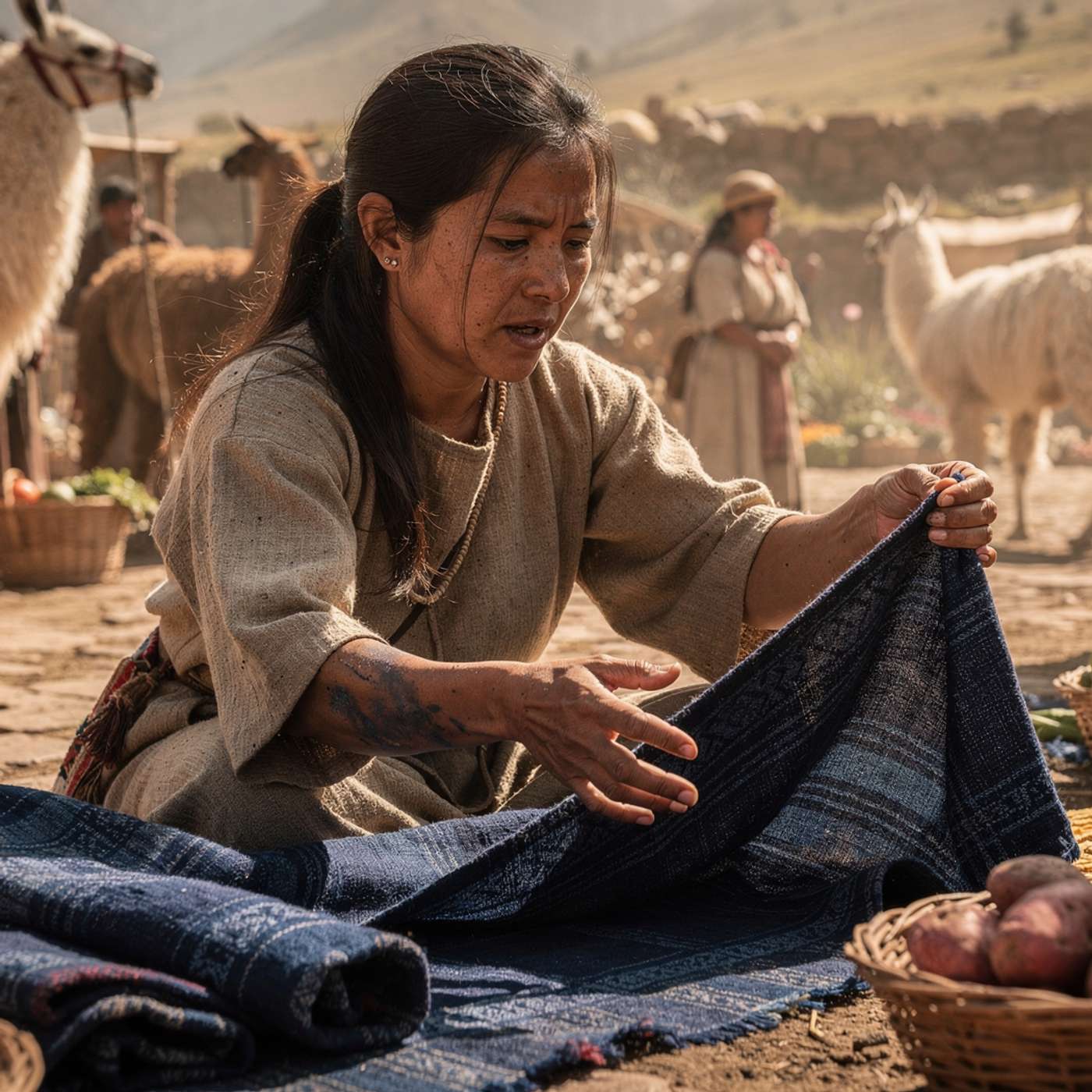
We trace indigo across six thousand years, voicing a Peruvian dye-maker, a Mesopotamian trader, an Indian merchant, and a Manchester factory worker, while pushing past idealized description toward dirt, smell, and texture.
[01:00:00:07 - 01:00:03:17] Speaker 1 Hey Gemina, I'm recording this for a podcast, is that okay? [01:00:06:23 - 01:00:09:11] Speaker 2 Sounds interesting. What's the podcast about? [01:00:10:13 - 01:00:41:12] Speaker 1 Okay, so I wanted to learn about like dyes, ancient dyes, how they were made and kind of like what they came from and stuff like that. But instead of going through it like chronologically as a whole, what I'd like to do is I'd like to follow each color. So let's start off with how many like in the normal broken up spectrum of light, how many colors are there like in the rainbow? [01:00:46:13 - 01:00:58:23] Speaker 2 There are generally considered to be seven colors in a rainbow, red, orange, yellow, green, blue, indigo and violet. Which color would you like to start with for ancient dyes? [01:00:58:23 - 01:01:12:09] Speaker 1 Okay, what are indigo and violet? Violet obviously is probably like a very, very, very deep purple, but I don't know. [01:01:16:08 - 01:01:43:23] Speaker 2 Indigo and violet are closely related. Historically, indigo was a highly valued dye, often coming from plants like the indigo ferris species and producing a deep blue. Violet shades were also thought after with some ancient dyes created from rare sources like the murix snail for Tyrian purple, which had a very purple violet tone. Are you interested in the specific processes for making these dyes? [01:01:45:00 - 01:02:05:23] Speaker 1 Well, what kind of like initially engages me is there like that I noticed is that between red and blue, there's two shades. Whereas, like, for instance, between red and yellow, there's orange. And between yellow and blue, there's green. But between blue and red, there's two separate colors. [01:02:05:23 - 01:02:30:23] Speaker 2 That's a keen observation. The distinction between blue, indigo and violet is partly cultural and historical, as well as visual. In the spectrum, indigo is typically placed between blue and violet, creating those distinct categories. Are you interested in the historical significance of indigo and violet dyes? [01:02:32:00 - 01:02:44:16] Speaker 1 Yeah, why don't we follow indigo and kind of give a let's just do indigo specifically this time around. [01:02:47:20 - 01:03:13:23] Speaker 2 Indigo has a rich history. It was prized in ancient civilizations across the world, from India to Egypt and beyond. The primary source was often the indigo plant, and the process of extracting the dye was quite complex, involving fermentation. Because of this, indigo was a symbol of wealth and status. Is there a particular civilization you'd like to focus on? [01:03:13:23 - 01:03:48:08] Speaker 1 Before we dive too deep, I want to kind of cover this idea of how, I guess, the barriers that we put between colors are very... I don't know how to describe it, but they're kind of not barriers, but like delineations that kind of ripple into society. [01:03:52:01 - 01:04:07:06] Speaker 2 That's a fascinating approach. In many cultures, certain colors, like indigo, were exclusive to royalty or the elite, creating symbolic boundaries and reflecting social hierarchies. Does that connect to what you're exploring? [01:04:10:07 - 01:04:17:12] Speaker 1 So, do different cultures have different light spectrums, or is it pretty universal? [01:04:21:01 - 01:04:28:23] Speaker 2 The perception of the light spectrum is generally universal, but the way cultures name and value different colors can vary greatly. [01:04:30:14 - 01:04:40:04] Speaker 2 This is where the "lineations" you mentioned come in, influencing social norms and distinctions. Are you interested in specific cultural examples? [01:04:40:04 - 01:04:41:12] Speaker 1 Yes, please. [01:04:45:19 - 01:04:56:23] Speaker 2 In ancient cultures, indigo was so valuable that it was considered a luxury good. In some societies, laws restricted its use to the upper classes, reinforcing social divisions. [01:04:58:05 - 01:05:04:22] Speaker 2 For example, in ancient Rome, certain dyes were reserved for emperors. Does that give you some context you're looking for? [01:05:06:09 - 01:05:06:14] Speaker 1 Okay. [01:05:07:23 - 01:05:13:23] Speaker 1 Can you give me an example using indigo, how different cultures valued it differently? [01:05:13:23 - 01:05:18:19] Speaker 2 Certainly. [01:05:20:10 - 01:05:45:16] Speaker 2 In Peru, evidence of indigo dye dates back over 6,000 years, making it some of the oldest known dyed textiles. In Japan, indigo dyeing became a highly developed craft, known as aizom, used for everything from daily clothing to ceremonial garments. And as we discussed, in ancient Rome, it was strictly regulated. Are there any of these cultures you'd like to delve into further? [01:05:48:09 - 01:05:51:07] Speaker 1 Tell me about the plant, the indigo plant. [01:05:53:13 - 01:06:06:21] Speaker 2 The primary source for indigo dye was the indigo ferra plant, particularly indigo ferra tinctoria. This plant was cultivated in tropical and subtropical regions worldwide. [01:06:08:00 - 01:06:19:05] Speaker 2 The process of extracting the blue pigment was quite laborious, involving fermenting the leaves and processing the resulting mixture. Did you want to know more about the cultivation or extraction methods? [01:06:23:14 - 01:06:32:23] Speaker 1 So they were using indigo plants 6,000 years ago. Do we know anything about how this kind of color was made before that? [01:06:37:19 - 01:07:00:18] Speaker 2 Before 6,000 years ago, the use of indigo would have been limited by the natural availability of the plants and the complexity of the extraction process. Early methods likely involved fermentation and rudimentary bats. It was a highly specialized skill. Is there something specific about the pre-6,000 year period you're curious about? No, [01:07:00:18 - 01:07:06:14] Speaker 1 can you give me an example of how this hue... [01:07:08:08 - 01:07:24:22] Speaker 1 I guess, what should we call them? Just like colors? I mean, obviously they're colors, but how should we categorize? What word should we use to categorize each of these seven colors on the spectrum that we're talking about right now? [01:07:29:00 - 01:07:35:05] Speaker 2 We can categorize them based on their visual characteristics and position in the spectrum. [01:07:35:05 - 01:07:46:16] Speaker 1 No, John and I, hold on, I'd like to give them a name. Like if we're talking about, right, we've got primary colors, we know that's red, blue, and yellow. But if we're talking about, maybe I can call them spectrum colors. [01:07:50:18 - 01:08:08:04] Speaker 2 We could categorize them as spectral hues. Within that, we have primary spectral hues like red, yellow, and blue, and secondary spectral hues like orange, green, and violet, with indigo fitting between blue and violet. Does that categorization work for your podcast? [01:08:09:11 - 01:08:14:13] Speaker 3 Yeah. Yeah. [01:08:16:05 - 01:08:28:13] Speaker 2 Great. So we've covered the spectrum hues and the historical significance and cultural lineations of indigo. Is there anything specific about the manufacturing processes you'd like to explore next? [01:08:30:15 - 01:09:07:16] Speaker 1 So this is like an example of how something that naturally existed, especially with the name of the color being the name of the plant, right? So something that naturally existed and kind of filled this like, I don't know, made this framework for this specific color. Are there any other of the six colors, or I guess seven total, that have that kind of experience where they are in existence and framed in that manner because of a naturally existing source? [01:09:11:04 - 01:09:23:16] Speaker 2 Yes. Many historical dyes were named and framed by their natural sources. For instance, the color carmine or crimson comes from the cochineal insect and its vibrant red was highly prized. [01:09:26:20 - 01:09:41:14] Speaker 1 I'm actually talking specifically about the seven that we described, red, orange, yellow, green, blue, indigo, and violet. I imagine that violet may also be from a source plant. [01:09:45:13 - 01:10:03:23] Speaker 2 While some violet tones can be derived from plants like certain lichens or flowers, historically, a prominent source for deep purples and violets like Tyrian purple came from the murix now, which was extremely valuable. Are you interested in the historical significance of that particular dye? [01:10:05:00 - 01:10:15:14] Speaker 1 No. So where does violet get its name? Does it get its name from, I guess, like the violet plant or is the plant named after the color or why do we call violet violet? [01:10:19:02 - 01:10:27:07] Speaker 2 Violet gets its name from the violet flower. The color and the flower are intrinsically linked in terminology. Is that what you were wondering? [01:10:29:14 - 01:10:35:02] Speaker 1 Yeah. And also orange. Does orange get its name from the color, I imagine, [01:10:36:08 - 01:10:37:02] Speaker 1 or the fruit? [01:10:40:01 - 01:10:56:00] Speaker 2 You're right. Orange gets its name from the fruit, the orange. The color was named after the fruit, which was known before the color was commonly referenced that way. Are you interested in other color names derived from natural sources? Yeah. [01:10:56:00 - 01:11:00:09] Speaker 1 Let's talk about blue, green, yellow, red. Where do those names come from? [01:11:23:00 - 01:11:24:19] Speaker 2 No. [01:11:24:19 - 01:11:33:12] Speaker 1 I'm talking about the colors in general. So those four are just words. They're not based off anything. They're arbitrary words. [01:11:53:00 - 01:12:01:13] Speaker 2 No. [01:12:03:05 - 01:12:16:03] Speaker 1 We'll go into it. We'll talk more about that later. Let's talk more about indigo. Can you tell me about the early days in Peru, the things that we know about their production of indigo? [01:12:23:00 - 01:12:45:23] Speaker 2 Around 6,000 years ago, the process was likely quite basic, relying on natural fermentation. They would have soaked the indigo plants in water, allowing the natural bacteria to break down the plant material and release the dye. This required careful attention to temperature and timing. Is there a particular aspect of this process you'd like to know more about? [01:12:47:00 - 01:13:31:23] Speaker 1 Yeah. Can you give us a run through of the logistics of how, like if I wanted to do this? Not that I'm going to do this, but if I'm a Peruvian 6,000 years ago, why don't we jump into that kind of perspective and help us understand it? What I want you to do is I want you to create a character that is maybe doing something for a task or a job or a client or whatever the social structure was then. Give us a little bit of an overview and take us with this person as they're making this dye. Let's just step slowly and kind of get a feel into it. [01:13:36:07 - 01:14:14:23] Speaker 2 Imagine you are a Mara, a skilled textile worker in ancient Peru. Your community values indigo dye for its deep spiritual significance. Your task is to create this color. You start by carefully selecting and harvesting the indigo plants. The fresh leaves are then placed into fermentation vats, a process passed down through generations. You monitor the mixture closely. Ensuring the precise conditions for the dye to develop. The anticipation is palpable as a successful batch brings prestige and beautiful textiles to the community. Does that picture help bring it to life? [01:14:14:23 - 01:14:43:19] Speaker 1 Yes, that's perfect. Okay, so what I want to do is I want to that that whole scene that you kind of painted there. I want to really dig into it. I want to let's start by creating this character can be a man or a woman or a child or whatever. Let's give him or her a name and let's kind of describe their home for me or their workshop or whatever. And let's get oriented with this person. [01:14:47:19 - 01:15:30:05] Speaker 2 Meet a Mara, a respected textile artisan in her ancient Peruvian community. Her home is a simple, sturdy dwelling where a corner is dedicated to her craft. Sunlight streams in, illuminating baskets of cotton and dried plants. The air is thick with the earthy sense of fermentation from the large vats nearby where the indigo dye is developing. A Mara's days are a rhythm of careful monitoring, a vital practice connecting her to her ancestors and the spiritual world. And [01:15:30:05 - 01:15:37:17] Speaker 1 let's wake up with her kind of one morning and take us through her day. [01:15:40:08 - 01:16:17:21] Speaker 1 Maybe she's got like a couple of she's kind of staggering fermentation processes, right? So maybe in the morning she goes out and she or whenever it would be historic. Or it would be historically accurate, right? You got to go out and you get the plants and you come back and you prep the plants and then you like kind of harvest the materials. Let's say that she's doing a little bit of that each throughout the day with different batches and you can order in them in whichever way you'd like or whatnot. Just kind of let's start the day with her. A [01:16:17:21 - 01:16:41:23] Speaker 2 Mara's day begins with the sunrise. She tends to the fermentation vats, the air cool and pungent. She might check the progress of a batch started yesterday, noting the subtle changes in color and texture. Then she heads to the fields to harvest fresh indigo plants, gathering them with care, knowing they pulled the potential for the day's dye. [01:16:43:00 - 01:16:50:23] Speaker 2 This staggered process ensures a continuous supply of the valuable color, a testament to her expertise and dedication. [01:16:50:23 - 01:17:17:20] Speaker 1 Okay, I don't know a ton about the agriculture timeline, but 6000 years ago, were they were they still doing like gathering or were they actually doing like agricultural like domesticating these I mean, I don't know about domesticating but like farming these things. [01:17:22:01 - 01:17:48:23] Speaker 2 6000 years ago, Peruvian societies were practicing sophisticated agriculture, cultivating crops like cotton and potatoes. They also domesticated animals like llamas and alpacas integrating these into their complex social and economic structures. So a combination of farming and gathering was typical. Okay, [01:17:48:23 - 01:17:57:01] Speaker 1 let's, let's go back to Amara. Is it Omar with an O or just M.A.R.A. [01:18:00:02 - 01:18:01:23] Speaker 2 It's Amara. A M A R A. [01:18:05:15 - 01:18:07:23] Speaker 1 Okay, let's take us back to her. [01:18:09:00 - 01:18:19:23] Speaker 1 Just let's slowly walk through our day, right? So maybe let's cover just the earliest parts of the morning right now. As [01:18:19:23 - 01:18:56:23] Speaker 2 dawn breaks and the mist lifts from the valley, Amara rises with purpose. Her first task is to tend to the fermentation bats kneeling beside them. She carefully stirs the concoction a deep green beginning to transform. The air is heavy with the distinct earthy smell of the developing die. A scent she knows well. This careful balance of plants, water and time is crucial. A ritual performed with patience and deep respect. Okay, [01:18:56:23 - 01:19:09:23] Speaker 1 would you, how would you feel about writing like maybe like a first person present tense with her? [01:19:09:23 - 01:19:15:08] Speaker 3 I [01:19:15:08 - 01:19:32:23] Speaker 2 can certainly do that. I enter the cool air of my workshop. The scent of fermentation of familiar comfort kneeling by the vats. I stir the deep green mixture. My hands feeling the subtle changes as the die develops connecting me to my ancestors. [01:19:32:23 - 01:19:42:22] Speaker 1 Okay, let's keep going through the day. [01:19:45:22 - 01:19:55:15] Speaker 2 Next, I transition to harvesting. Under the warm sun, I carefully select the ripest plants. They're vibrant green, a promise of the color they hold. [01:19:55:15 - 01:20:05:10] Speaker 1 I gather them with... Okay, Gemini. Gemini, what we're getting here, what I'm feeling here is it feels idealized. [01:20:06:23 - 01:20:34:20] Speaker 1 The only way I can describe it is like early images, like early AI images look fake because there's like, there's no dust and there's no dirt or scratches on the early images. But like, now it's more advanced and it's like showing those subtle nuances. I think what we're missing right now is the like dirt and dust and scratches. If you know what I mean. [01:20:42:11 - 01:21:15:20] Speaker 2 That's a really insightful point. Let's ground Amara's world with those tangible details. The ground around her workshop is packed earth, stained with splashes of vibrant blue and green from past batches. Dust moats dance in the sunlight, settling on the cotton and tools. Her pants, though skilled, are calloused and bear the faint discoloration of the dye that never quite fades. Each step in the process is a tactile experience, connecting her deeply to the materials she works with. [01:21:22:08 - 01:21:24:12] Speaker 1 Okay, let's go out into the fields with her. [01:21:28:01 - 01:21:53:02] Speaker 2 After tending to the vats, Amara prepares for the harvest. The path to the fields is trodden earth, dust kicking up with each step. The indigo plants are vibrant under the morning sun, and she moves among them, her hands carefully selecting the ripest beliefs, a skillful practice passed down. The air is warm and still. The only sounds the rustle of leaves and her steady breath. [01:21:53:02 - 01:21:59:02] Speaker 1 And what season does this, would this be in Peru? [01:22:03:20 - 01:22:12:20] Speaker 2 This would likely be during the rainy season or just after, when the indigo plants are most flourishing, essential for a potent dye production. [01:22:18:00 - 01:22:26:19] Speaker 1 And what part of the plant is the indigo dye made from? [01:22:27:21 - 01:22:37:17] Speaker 2 The indigo dye is primarily extracted from the leaves of the plant. The process involves careful harvesting and then fermentation to release the natural pigment. [01:22:41:21 - 01:22:49:00] Speaker 1 Okay, tell me about, take us into the fields like a little bit more. [01:22:50:12 - 01:22:56:03] Speaker 1 Maybe she's talking to a friend and kind of try and make it feel as realistic as possible. [01:23:00:13 - 01:23:22:23] Speaker 2 As I make my way to the fields, the sun warms my skin. I see my neighbor, Killa, already among the indigo plants, her silhouette against the bright sky. The yield looks good today, I call out, my voice a little hoarse from the morning chill. She smiles, the lines around her eyes deepening. We exchange quiet greetings, a shared understanding of the day's labor. [01:23:24:11 - 01:23:33:07] Speaker 2 The work is physically demanding, the sun growing stronger, but there's a quiet pride in the knowledge we are continuing this vital tradition. [01:23:35:03 - 01:23:45:23] Speaker 1 And what did they usually do when these plants, are these plants kind of already at the same time or can you pick them whenever? [01:23:45:23 - 01:24:06:16] Speaker 2 Amara knows the precise moment. The plants are ideal during the peak of the growing season when their leaves are lush and vibrant. She times the harvest carefully, ensuring the highest quality for the precious dye, a practice passed down through generations. [01:24:06:16 - 01:24:20:17] Speaker 1 Okay, so she probably do a lot of the harvesting all at once and then how often are they doing this? Is it yearly, monthly or what? [01:24:24:20 - 01:24:42:23] Speaker 2 Harvesting would be a seasonal activity, likely timed with the plants peak growth. Amara would repeat this process throughout the favorable season, creating a steady supply for the community's needs, which might involve dyeing textiles for clothing and ceremonial purposes. [01:24:44:00 - 01:24:54:18] Speaker 1 Right, but like specifically what does the season look like? Does she have two harvests per rainy season or does she have like one harvest a year? [01:24:55:19 - 01:24:58:13] Speaker 1 Like you need to give us a little bit of background on this. [01:25:02:08 - 01:25:19:14] Speaker 2 Amara's indigo fields are carefully managed for optimal growth, likely yielding several harvests during the favorable season rather than just one. The specific appearance is closely tied to the climate and the time of year, a cycle she deeply understands. [01:25:21:09 - 01:25:28:12] Speaker 1 And then during the off parts of the year, there's no production at all or like no harvesting at all. [01:25:32:07 - 01:25:57:17] Speaker 2 During the off season when the indigo plants aren't ready for harvest, Amara's focus shifts. This is time for other stages of textile production, such as spinning cotton or wool into yarn and weaving. The skills and knowledge are passed down, ensuring the craft continues throughout the year. [01:26:03:16 - 01:26:08:00] Speaker 1 Okay, when was the cotton gin invented? [01:26:14:11 - 01:26:24:13] Speaker 2 The first car, specifically a gasoline powered vehicle, was patented in 1886 by Carl Benz. That's quite a different world from Amara's time. [01:26:26:02 - 01:26:27:17] Speaker 1 No, I said cotton gin. [01:26:29:00 - 01:26:30:23] Speaker 2 Ah, [01:26:32:20 - 01:26:48:23] Speaker 2 I understand. Cotton and jute would be very important for Amara's community. Cotton would be used for spinning and weaving, textile, essential for clothing and other materials. Jute, known for its strength, might be used for things like bags or ropes. [01:26:50:00 - 01:26:55:13] Speaker 1 Hey, Gemini, kind of crashed back there. [01:26:56:18 - 01:27:07:23] Speaker 1 But I was asking when the cotton gin was invented, the cotton gin, like the thing for cotton, like G-I-N-G-I-N. [01:27:09:00 - 01:27:21:23] Speaker 2 The mechanical cotton gin was invented by Eli Whitney in 1793. This is much later than Amara's ancient Peruvian setting, where cotton would have been processed manually. [01:27:23:00 - 01:27:27:01] Speaker 1 Okay, and we don't need to go into that. [01:27:28:04 - 01:27:38:23] Speaker 1 Tell me about the process of fermentation that Amara would be doing from her perspective once again. [01:27:44:00 - 01:28:05:02] Speaker 2 I carefully monitor the fermentation, the air thick with the earthy scent. This delicate balance of crushed leaves and water is crucial. A living process I tend with patience. The liquid transforms gradually, a testament to the plant's natural power, connecting me to the traditions passed down. [01:28:09:01 - 01:28:17:14] Speaker 1 Okay, we're a little bit kind of heavy on the traditions' happiness or whatever. I want to talk about this from a scientific perspective. [01:28:21:17 - 01:28:48:01] Speaker 2 From a scientific perspective, the fermentation is a complex biochemical process. Microbes break down the compounds in the leaves, specifically, indoxylglycocide, through enzymatic reactions. This releases the precursor to the indigo pigment, which then oxidizes to create the vibrant color. Amara's traditional knowledge is a practical application of these scientific principles. [01:28:49:05 - 01:28:54:09] Speaker 1 Okay, and are the leaves the same color as the dye? [01:28:59:09 - 01:29:09:13] Speaker 2 No, the leaves are a vibrant green before fermentation. The striking blue of the dye only develops through the chemical reactions during the process and oxidation. [01:29:14:12 - 01:29:25:04] Speaker 1 I actually have to look up the color indigo to see what that looks like. [01:29:25:04 - 01:29:34:01] Speaker 2 That makes sense. The color is a deep blue, often described as rich and intense, distinct from the green of the plant itself. [01:29:36:00 - 01:29:57:10] Speaker 1 Hmm, interesting. Okay, give us a little bit of a conclusion with Mara. Give us a little bit of closure with her. Maybe take us to the market with her or something like that. And then I think we're going to explore indigo further. [01:30:01:19 - 01:30:27:14] Speaker 2 With the fermentation complete and the textiles dyed, Amara prepares for the market. She packs the finished pieces, the deep blue a testament to her skill and the ancient process. The journey to the bustling market is a vibrant part of her day, a place where tradition meets community. We'll leave her there, ready to share her craft, and can delve deeper into the science of indigo whenever you'd like. [01:30:30:16 - 01:30:38:23] Speaker 1 Okay, like, who else was, was anybody else using this process at the time with this specific plant? [01:30:38:23 - 01:31:01:15] Speaker 2 While Amara's specific community maintains unique traditions, the use of indigo dye from plants was widespread across many ancient cultures, including Mesopotamia, Egypt, India, and Mesoamerica, though the specific plants and processes varied. [01:31:02:20 - 01:31:04:06] Speaker 1 Okay, when was Mesopotamia? [01:31:10:00 - 01:31:23:23] Speaker 2 Mesopotamian civilizations began to form around 12,000 BCE, developing on the banks of the Tigris and Euphrates rivers. Is there a specific period within Mesopotamian history you're interested in? [01:31:23:23 - 01:31:40:23] Speaker 1 Okay, so let's, let's start at 6000 BCE or whatever at, was that BC or AD in Peru? Oh no, 6000, right? [01:31:42:00 - 01:31:42:17] Speaker 1 So, [01:31:44:16 - 01:31:54:23] Speaker 1 I want to kind of step forward a little bit in time, maybe towards the, towards zero, or, or somewhere kind of midway between where we are now. [01:31:54:23 - 01:32:19:09] Speaker 2 Let's shift forward to the midway point around 3000 BCE. This was a period of significant development in Mesopotamia with the rise of city-states, complex societies, and the further development of textile production, including the use of indigo dye. Okay, [01:32:19:09 - 01:32:32:08] Speaker 1 let's jump into a Amara type character, an Amara type character in this era. [01:32:57:12 - 01:32:58:03] Speaker 1 Okay, [01:33:01:14 - 01:33:30:04] Speaker 1 I'd like you to kind of set the scene. I want you to create a character that is like native to the area, right? So, he or she has a, has a name that is native to that era of Mesopotamia, and I want you to bring us into their home and tell us a little bit about who they are and why indigo plays a factor in their life. [01:34:01:23 - 01:34:08:22] Speaker 2 So, I'd like you to create a character that is native to Mesopotamia, who is native to Mesopotamia, and he is native to Mesopotamia. [01:34:35:04 - 01:34:38:12] Speaker 2 Okay, how did he get into this? [01:34:38:12 - 01:35:06:19] Speaker 1 Okay, I'd like you to take us through his day, and let's say that, let's say that he is like a young guy, and he's kind of working on the business that his parents taught him about. [01:35:11:10 - 01:35:25:23] Speaker 2 As a young man, Dumouzi's day begins with the sun. He tends to the vats, carefully monitoring the precious indigo fermentation, a skill passed down through generations. He meticulously prepares the textiles, trading his family. [01:35:25:23 - 01:35:37:22] Speaker 1 Wait, wait, wait, Gemini, you're kind of just giving us like a generic, I see what is happening now, we're kind of getting like a generic, [01:35:39:00 - 01:36:05:13] Speaker 1 he looked over the textiles and it was like very cherished and we're being really, really kind of vague. So, what I want to do is I want you to kind of reset from the Homara Peruvian thing. I want to forget all of that. I want to kind of start a new leaf here, like pun intended. [01:36:07:11 - 01:36:18:17] Speaker 1 Turn over a new leaf with what we're talking about, right? I want you to put us in this new scene with no recollection of the old scene. [01:36:23:03 - 01:36:31:23] Speaker 2 Understood. Let's start fresh. What new scenario or topic would you like to dive into? [01:36:31:23 - 01:36:44:14] Speaker 1 No, this Mesopotamia one that I described is what I want to dive into, but I don't want you to just repackage Mara's story. [01:36:49:20 - 01:37:06:23] Speaker 2 I understand we will create a unique character and scenario for a young man in Mesopotamia distinct from Amara focusing on his individual journey and connection to the textile business. What particular aspect of his life or daily routine should we explore? [01:37:10:03 - 01:37:15:09] Speaker 1 Let's just get up with him in the morning. [01:37:15:09 - 01:37:40:20] Speaker 2 A typical day for a young man like Dumouzi in 3000 BCE would begin with the dawn. He would be busy with the preparation of textiles, a rigorous process that involves meticulous care for the fermentation vats. His work contributes directly to the family's livelihood and status as the highly valued textiles are essential for trade and position in Mesopotamian society. [01:37:47:18 - 01:38:51:00] Speaker 1 Okay, Jim and I were we're still being really vague. I want you to focus. All right, I need to give you a better prompt. So what we're doing here is we are building this character. I want you to spell out his name when we start. Right. And I want you to give him a life. I want you to take his perspective and I want you to use what you know of human senses and feelings and stuff like that. And I want you to kind of ground us there in that moment by by informing him of informing us of his senses and like with it with the smells and touch and sights and feels not like he woke up in the morning and then he tended to the fermentation vat. And it was really great because he cared about his culture. [01:39:17:00 - 01:39:33:06] Speaker 2 He rises the rough texture of his clothing woven from cotton and jute grounds him in the daily rituals. He feels the cool damp clay as he begins his work, the careful tending of the fermentation that produces the highly prized indigo. [01:39:35:00 - 01:39:49:21] Speaker 1 Okay, this was perfect. I want you to take kind of what you did there and I want us to continue in in this timeline. Just keep going. [01:39:56:00 - 01:40:31:04] Speaker 2 Morning routine deepens into the methodical work of his craft. He immerses his hands in the cool swirling vats, the strong chemical scent of familiar backdrop to the delicate process. The fibrous texture of the cloth provides constant feedback as he carefully manipulates it to ensure even dying. The deep blue transforming under his skilled hands, a visual testament to the precise chemical reactions. Each piece he crafts is a valuable commodity representing his family's legacy and place in their society. [01:40:34:10 - 01:40:37:03] Speaker 1 Okay, that was really great. [01:40:38:04 - 01:40:39:23] Speaker 1 Let's just keep going. [01:40:39:23 - 01:41:14:08] Speaker 2 The rhythm of Dumourie's day continues with the trade at the bustling market. The vibrant sounds and sights greet him a sensory tapestry against the desert backdrop. He barters his family's prized textiles, the deep blue a mark of quality and distinction. The rough texture of the goods exchanges hands, a tangible connection to the people and culture of Mesopotamia. Okay, [01:41:16:01 - 01:41:54:23] Speaker 1 this is really good. What I want you to do is exactly kind of what you're doing here, what we've described or whatever. I want you to currently we're in Mesopotamia, like 3000 BC. I want you to just how we went from 6000 to 3000. Now I want you to jump ahead in time again and create a new character and just jump right into the story exactly kind of the way you're telling it right now with the pace and visual imagery and like sense. We're really kind of locked in here. [01:41:54:23 - 01:42:34:23] Speaker 2 A sudden shift through time. We arrive in a different setting, perhaps 10th century India, a center for indigo trade. Meet Arjun. He stands amidst the bustling market, the air thick with the aroma of spices and drying fabrics. His senses absorb the vibrant chaos, the texture of raw silk and coarse cotton under his touch. Unlike Dumouzi and Lil Focus is on the vast trade networks, the site of caravans and ships carrying his family's indigo across distant lands. [01:42:41:18 - 01:42:52:16] Speaker 1 Okay, what's a key? Let's keep going and let's get in more deep about him. What is his living situation and kind of does he have a family maybe? [01:42:56:00 - 01:43:27:22] Speaker 2 Arjun's situation is complex. He's a key figure in his family's trading enterprise, a position that comes with both responsibility and pressure. The vibrant colors he trades, especially the deep indigo represent not just wealth, but a delicate balance of power and negotiation in the complex market. He feels the weight of his family's legacy, the constant drive to maintain and expand their influence in a competitive world. Okay, [01:43:29:09 - 01:43:43:23] Speaker 1 you're getting a little bit vague again. I don't want to steer that way. Take us through his day and maybe give us an example of kind of what you were going into is I want you to show us not tell us. [01:43:43:23 - 01:44:03:23] Speaker 2 The morning market buzzes with tangible energy. Arjun stretches his fingers, the scent of exotic spices mingling with the earthy musk of the indigo bales. He runs a hand over the coarse fabric, feeling the quality that determines its value. [01:44:05:08 - 01:44:19:15] Speaker 2 A merchant approaches the silver ornamentation on his robes, catching the light. Arjun's gaze sharpens. He detects a subtle difference in the textiles weave, a silent negotiation beginning before a word is spoken. [01:44:22:00 - 01:44:26:05] Speaker 1 Okay, this is really compelling. Keep going, please. [01:44:30:12 - 01:44:58:07] Speaker 2 Our June's day unfolds with strategic precision. Beyond the sensory immersion of the market, he engages in complex negotiations. The subtle shift in a merchant's gaze, the precise texture of a signed document all dictate the flow of indigo across fast distances. His decisions reverberate through trade routes, a testament to the delicate balance of commerce and power in his world. [01:45:00:06 - 01:45:16:05] Speaker 1 Okay, we're slipping into vague stuff again. When you say like, his blah blah blah helps like shape the markets and stuff like that. We don't want to get that high level. Right? We're in his day to day. [01:45:17:05 - 01:45:49:23] Speaker 1 So I want you to be able to see that. I want you to kind of, why don't we kind of role play, I would like you to like role play an interaction that he has with someone maybe, maybe like a supplier, maybe an indigo supplier, right? He doesn't, he makes the things but he doesn't farm them. What I want you to do is I want you to kind of take us with him on a business deal that maybe not going that well. [01:45:54:18 - 01:46:28:23] Speaker 2 Arjun approaches the supplier stall, the air pungent with the unmistakable sense of fermenting indigo. He can feel the tension in the atmosphere. Rumors of supply shortages have been circulating. Siddharth Arjun greets him. His voice measured the quality of your last shipment was exceptional. He pauses, allowing the compliment to settle the texture of unspoken concerns hanging between them. However, my clients are anxious about the consistency of future deliveries. Okay, [01:46:31:01 - 01:46:43:23] Speaker 1 and let's say that Arjun like really likes this supplier and he wants to help. He could go to other suppliers with like, not that great of quality for kind of the same price. [01:46:45:00 - 01:46:55:09] Speaker 1 So let's say that he's been with this seller for a while, and he's kind of looking to maybe do what he can to help. [01:46:59:19 - 01:47:22:14] Speaker 2 Perhaps we can find a solution. Arjun suggests his tone thoughtful. He rests a hand on Siddharth's arm, a gesture of respect and alliance. I understand the constraints you face. Let's explore how we might navigate this together without compromising the quality our partnership is known for. [01:47:26:05 - 01:47:40:23] Speaker 1 Maybe, maybe he's got some savings and he wants to help his friend expand like his production capabilities so he can take like larger more regular shipments. [01:47:40:23 - 01:48:20:01] Speaker 2 Siddharth's expression softens at the offer. The prospect of growth is a powerful motivator in their volatile market. Arjun perceives the shift, the subtle change in the atmosphere between them. With expanded capabilities, Arjun states his conviction clear. We can not just meet demand, but anticipate it, securing a more stable future for both our houses. He allows the weight of that possibility to resonate a silent commitment to mutual success. Okay, [01:48:20:01 - 01:48:43:23] Speaker 1 now I'd like you to jump us like four or six months in the future where he's made this kind of investment in his friends processing and they're kind of reaping the benefits from like a larger more regular supply. [01:49:14:00 - 01:49:20:11] Speaker 2 The strength of shipments has solidified his family's position, the scent of success as potent as the finest spice. [01:49:25:04 - 01:49:49:19] Speaker 1 Let's take this kind of storytelling structure and what we're going to do is we're going to follow Indigo the color further into history and maybe take us into take us into kind of somewhere in the last three, 400 years could be anywhere in the world. [01:49:54:18 - 01:50:28:23] Speaker 2 The threat draws us forward to the late 19th century of bustling textile factory in Manchester, England. Here, the color Indigo takes on a new meaning transformed by the Industrial Revolution. Meet Eleanor, her hands stained with the deep blue guide threads through massive noisy loaves. The air is thick with the war and clatter a stark contrast to the quiet markets of Arjun's time for Eleanor, Indigo is a symbol of industrial production, the relentless pace of progress driving her daily life. [01:50:32:15 - 01:50:39:07] Speaker 1 Okay, this is really good. You're doing a really good job. Let's let's let's make sure not to slip. [01:50:40:15 - 01:50:48:03] Speaker 1 Always, always, always we're going to be pushing against fagery like being vague or whatever. [01:50:50:00 - 01:50:51:15] Speaker 1 But let's just keep progressing. [01:50:56:12 - 01:51:26:12] Speaker 2 Eleanor's journey continues amidst the relentless palm of the factory. The air is thick with the metallic dusk of industry, a constant palpable texture. She inspects the deep blue denim as it emerges from the looms, the consistent quality, a testament to the mechanized process. The fast scale of production represents a new power, the constant demand for Indigo fueling the empire's growth, a stark contrast to the personal transactions of earlier timelines. [01:51:31:12 - 01:51:46:06] Speaker 1 Okay, take us take us into Eleanor's shoes from maybe the perspective that you're doing right now is pretty good as long as we stay very descriptive we can, we can work in third person. [01:52:17:00 - 01:52:34:15] Speaker 2 Cool. The lingering scent of cold smoke, a constant companion. She moves with practice efficiency, adjusting her shawl, the rough texture of familiar comfort. Her children are still asleep. They're small forms of brief reprieve from the demanding rhythm of the factory floor she had starts. [01:53:08:00 - 01:53:18:06] Speaker 2 For her family, the warmth of a new blanket, the rare sweetness of a treat tangible benefits of the tireless labor she performs in the indigo stained air. [01:53:20:23 - 01:53:22:12] Speaker 1 Does she have a friend, maybe. [01:53:28:00 - 01:53:50:02] Speaker 2 Amid the den, Eleanor finds a brief moment of connection with another worker, Sarah, they share whispered words and knowing glances, a silent understanding forged in the shared toil. Sarah's fatigue mirrors Eleanor's yet their fleeting conversations provide a small vital source of strength and camaraderie amidst the relentless rhythm of the factory. [01:53:51:05 - 01:54:50:22] Speaker 1 Okay, we're slipping into being vague. Once again, what I want you to do is let's take a pause for a second. Let's think about what we want here, we want to want to be in the room with Eleanor, right, we've talked about the clanging looms and stuff like that, but that's very like obvious and surface level. I want you to talk about like show us the scene right, maybe they're her voice right so so so clanging looms is very surface level right. And then you and then you have deeper details that like maybe Eleanor's voice Eleanor's friends voices horse, and they find it funny, because they're constantly yelling to each other because looms are are loud right you see how that's kind of like a set of dominoes, but we're like starting on the deepest one. [01:54:58:00 - 01:55:29:23] Speaker 2 The factory air is thick with the deafening clamor of the looms, a ceaseless pounding rhythm that permeates everything. Eleanor leans close to Sarah, her voice practically a shout to be heard about the mechanical roar. A shared weary glance passes between them a humorous acknowledgement of the constant need to strain their voices. The irony of finding connection in such a cacophonous environment is a private joke they share a brief moment of defiance against the overwhelming demands of their day. [01:55:29:23 - 01:55:50:23] Speaker 1 Okay, let us jump into first person perspective from perspective of Eleanor. And let's go through a conversation that they have, like the actual dialogue. [01:55:52:00 - 01:56:11:23] Speaker 2 Can you believe this noise today, Sarah, I shout my voice raw from the constant strain. The rhythmic clanging reverberates in my ears. Sarah leans in a smudge of indigo on her cheek. I swear it gets louder every day, she yells back a right grin flashing. [01:56:15:04 - 01:56:23:15] Speaker 2 We share a brief knowing laugh, the sound of fragile defiance against the overwhelming noise of our world. So [01:56:23:15 - 01:56:45:18] Speaker 1 this is a very basic question that if they knew each other well, it would it would happen differently. I don't know exactly how to describe it. But I don't want them to be talking about the sound, maybe try something different. [01:56:52:05 - 01:57:17:13] Speaker 2 Did you hear about the new quota, I asked, leaning closer to Sarah during a brief pause in the work, the air is heavy with the scent of dye and metal. She shakes her head, her expression tight with concern. They're saying it's non negotiable. Another squeeze. We exchange a look that speaks volumes, a shared history of hardship and quiet resilience in the face of relentless pressure. [01:57:18:17 - 01:57:39:23] Speaker 1 Okay, that was much better. Can you take us forward in this conversation and and maybe they're kind of like using a little bit of humor to kind of I don't know to kind of say like fuck you to the boss. [01:58:06:23 - 01:58:07:04] Speaker 2 Boss. [01:58:10:00 - 01:58:13:14] Speaker 2 Spark of defiance in the face of our relentless reality. [01:58:19:04 - 01:58:20:15] Speaker 1 That's a little bit dark. [01:58:27:07 - 01:58:40:09] Speaker 2 It is that humor can be a powerful tool, a way to cope with the relentless demands of our daily existence. It's a brief precious moment of shared defiance in the face of the constant pressure we endure. [01:58:43:04 - 01:59:01:09] Speaker 1 Okay, I think maybe give us a little bit of closure with Eleanor and maybe maybe take us to lunch with Eleanor and her friend and we'll get a little bit of closure there and then I think we're going to finish up. [01:59:07:14 - 01:59:47:00] Speaker 2 Lunchtime offers a brief respite from the factory demands Eleanor and Sarah sit together sharing a simple meal. The momentary quiet allows their voices to settle to a normal tone. Sometimes I say reflecting on our shared defiance. I think our laughter is as powerful as the machines. It's a different kind of strength. Sarah not a soft smile on her face. It keeps us going. She agrees her voice filled with quiet conviction, a reminder that we are more than just cocks in their machine. In that moment, the indigo stain doesn't feel like a brand, but a shared symbol of endurance. [01:59:51:03 - 02:00:01:02] Speaker 1 Okay, Gemini, that was good, but I want you to turn the idealism like is it 11 right now? I want you to turn it down a little bit, maybe to like a three. [02:00:08:00 - 02:00:29:23] Speaker 2 Lunch ends with the same inevitability as the morning toil. It keeps us going. Sarah says her voice softer. Now the humor replaced by a somber pragmatism. We find small freedoms where we can. We exchange a final meaningful glance. A silent acknowledgement of the difficult path ahead, but also of the shared bond that sustains us. [02:00:29:23 - 02:00:40:17] Speaker 1 No, Gemini, I want to get off of the like hardship makes a stronger together vibe. Let's just talk about like maybe something funny that they saw. [02:00:47:11 - 02:01:11:10] Speaker 2 Sarah nudges me, her eyes sparkling with amusement as she points toward a sputtering machine. Look, it's trying to dance again. The contraption rattles and shakes in a comical jerky rhythm. We burst into laughter. The absurdity a welcome distraction from the monotony. It's a brief, perfect moment. A shared joke that lightens the weight of our indigo stained world. [02:01:12:17 - 02:01:13:21] Speaker 1 And what is this machine? [02:01:21:20 - 02:01:28:12] Speaker 2 It's likely a power loom. One of the massive mechanized wonders of the industrial age that allowed factories [02:01:28:12 - 02:01:32:00] Speaker 1 to no no Gemini. She said it was dancing. [02:01:38:00 - 02:01:50:12] Speaker 2 That's right. Eleanor and Sarah found humor in the machine's jerky movements. Imagining it dancing. It was a moment of levity that provided a brief escape from the relentless nature of their work. [02:01:53:02 - 02:01:55:15] Speaker 1 All right, Gemini, I think we're gonna stop.