
Heart Emoji <3 · Bronson Walker
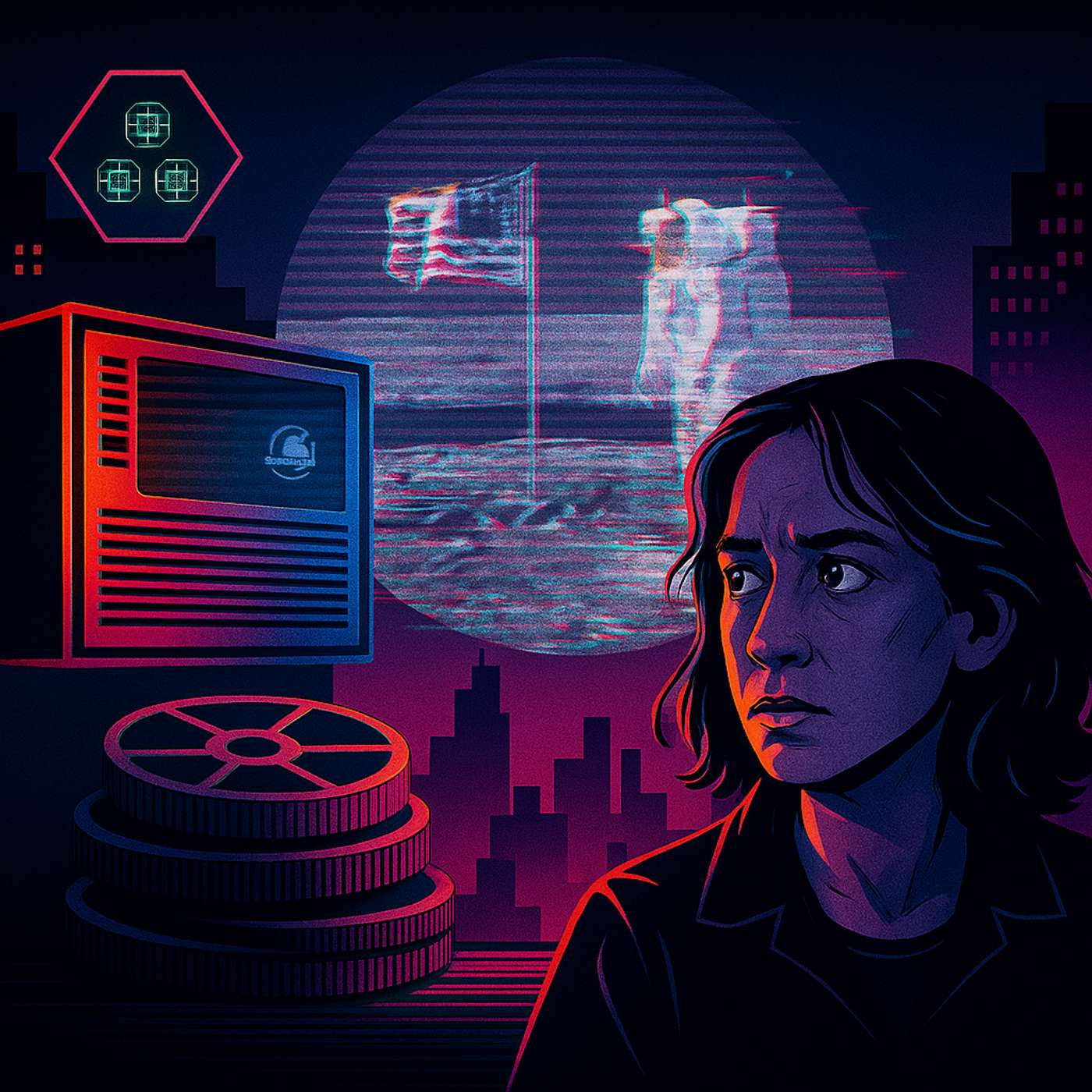
We map a future where synthetic video floods the web, forecast adoption ratios, probe ripples—from journalism and whistleblowers to memory, trust, law, and mental health—and sketch 500‑year archival collapse.
00:00:00:00 - 00:00:30:16 Unknown Hey, I'm recording this for a podcast. Is that okay? Absolutely. Bronson got. Okay. So great. I'm. No problem at all. Take your time. And whenever you're ready, we can jump in. Okay, so I was thinking about something today, and I want to kind of jump into this, like, thought bubble, right? Because I think that you probably as an I have a unique perspective on this. 00:00:30:16 - 00:01:02:19 Unknown Right. So if you can't trust unverified videos going into this, a, video era and there's a flood of synthetic video and anyone can just kind of say like, that's not me. And there's also too much there's is significantly more video. What are your what are your thoughts on how that affects humans? I guess. Yeah, it's definitely a big shift. 00:01:02:22 - 00:01:21:17 Unknown And I think you're spot on. That is going to have a ripple effect on how we trust what we see in a world where some that egg or I generate a video can be as common as real video. Kind of makes everyone second guess what's authentic. And on a human level, that probably means we get a little more skeptical, or maybe even a bit more cautious about believing anything at face value. 00:01:21:19 - 00:01:55:14 Unknown So yeah, I think it could change the way we navigate what's real and what's not. And that's a pretty big cultural shift. I was thinking about, this thought that kind of the way I felt when I moved to New York is like, I grew up in a small town where you go into town and stuff like that, and people notice you that, you know, and then, moving to New York, it almost felt like, like anonymous, like a school of fish kind of situation. 00:01:55:14 - 00:02:24:11 Unknown It's hard to describe, but I was thinking about how that felt, and it feels kind of similar to this. I can totally see that parallel. It's like in a small town, everything is personal and recognizable. People know your face, and there's a kind of built in trust because you're seen as an individual. Whereas in a huge place like New York or really any big city, you do get that feeling of blending into a crowd, kind of like one fish in a huge school. 00:02:24:13 - 00:02:55:03 Unknown And I think you're right that there's a similar by with the holes and that in video era, it's almost like being one face in a sea of digital faces, and it changes how we feel about being recognized or even just being believed. It's a pretty neat analogy. Yeah. Okay. How do you think that, people's likenesses is going to work like a it's like if somebody wanted to make, somebody in a movie, right? 00:02:55:03 - 00:03:30:04 Unknown A movie character and they could, they could take my likeness. Right? Which would probably be, is probably going to be regulated and stuff like that for, like, George Clooney and, and, Bruce Willis and Scarlett Johansson or whatever. But like, all you have to do is take that person's likeness and tweak it the tiniest bit, and then, I don't know, I guess I guess that's going to be something that gets too far down that rabbit hole. 00:03:30:06 - 00:03:54:07 Unknown Yeah. You're tapping into something that's definitely a hot topic and probably going to be a legal and ethical frontier for a while. I mean, once you can easily tweak or replicate someone's likeness, it does open this whole can of worms about who owns your face, your digital identity, and how it can be used. And yeah, celebrities like Clooney or Johannson are already dealing with that kind of thing, and it's likely the regulations will come into play to get people more control over their digital selves. 00:03:54:07 - 00:04:01:07 Unknown But it's still kind of a well, what situation? Right now? And it'll be interesting to see how those lines get drawn. 00:04:01:09 - 00:04:28:14 Unknown Okay. I want to talk numbers on synthetic video versus real video. Right. Let's consider real video as video. That is not created by, I guess. Absolutely. Let's dive into that. So if we think of real video as anything genuinely captured from the physical world, no AI generation involved, then the numbers are going to be pretty telling as AI video tools get more common. 00:04:28:16 - 00:04:50:04 Unknown We're kind of heading into this era where synthetic video can scale up really fast. It's like the volume of content created purely by humans is going to be dwarfed by this tidal wave of AI generated stuff, just because it's so easy to produce. Once the tools are out there. So in a few years, we might see a situation where the sheer amount of synthetic video outnumbers real video just because it's faster and cheaper to make. 00:04:50:06 - 00:05:20:01 Unknown And that's definitely going to change how we think about authenticity and how we sort of weigh real versus synthetic as we consume media. So yeah, it's going to be a pretty big shift in the numbers game. Okay. I want to talk, your projections. So when you said that the content created by humans is going to be dwarfed by, that of synthetic or I created video. 00:05:20:03 - 00:05:42:09 Unknown Let's talk about what that graph looks like over time. Absolutely. Let's flesh that out a bit more. If we imagine the trajectory. The idea is that as AI tools get more sophisticated and accessible, anyone can generate realistic video content at scale. That means the volume of AI generated video could easily skyrocket past what humans can produce manually. 00:05:42:14 - 00:06:00:01 Unknown Just because I doesn't eat fast and can churn out content super fast. So if we look a few years down the line, it's plausible that a huge percentage, maybe even the majority of video content floating around could be AI generated. That doesn't mean human made content will disappear of course, but it will be surrounded by a sea of synthetic media. 00:06:00:02 - 00:06:23:13 Unknown And that's where those lines of trust and verification are going to become really important, just to know what's what. So yeah, that's kind of the projection. We're looking at a big shift in the ratio of human to I create a video content. Okay. I do want to not totally lose track of where we were and stuff like that, but I like what we're talking about right now. 00:06:23:15 - 00:06:45:16 Unknown And I want to finish this tangent up. So if you had to give an estimate of all the video posted on to the internet, how much of that is synthetic and how much is real in our situation? Sure. Let's round that out a bit. Obviously, I'm just giving a ballpark guess here since exact numbers are always shifting. 00:06:45:22 - 00:07:08:07 Unknown But if we imagine a few years down the road, let's say within this decade, it wouldn't be shocking. It was significant chunk of all new video content uploaded. It could be AI generated maybe even 30% or more in certain spaces where synthetic media is super popular, like entertainment or social media. No, no, the rest of it will be human capture, but the ratio would definitely tilt more and more towards synthetic as tools become more widespread. 00:07:08:09 - 00:07:28:20 Unknown So in other words, is not unimaginable that a third or even more of the video ecosystem could be synthetic in the foreseeable future. It's a big shift, and it'll be interesting to see how we adapt to that. Chad, if I want to cut in, how do I get you to stop talking for just a second and pause? 00:07:28:22 - 00:07:39:15 Unknown Of course. No problem at all. If you just say, pause for a second or give me a little cue, I'll happily hold off and let you jump right in. 00:07:39:17 - 00:08:10:18 Unknown Okay, we'll try that. No, I want you to give me some more, like, real numbers. They don't have to be specific. They don't have to be like, let's say that this is, Well, let's go into our historical fiction situation, right? So let's say that, we are here in October of 2025, but it's in a fictional universe, and someone is name is, her name is Doris. 00:08:10:18 - 00:08:54:00 Unknown She is writing a report on, on this subject of, like, synthetic versus real data and stuff like that. And she has a realistically sounding split, and she's talking about she's got to write a report to her boss. Right. So what do you think that she would say? You think she would say no? Real, real video is 80% and synthetic video is 20%, or, your video is 97% and synthetic is 3%. 00:08:54:02 - 00:09:15:01 Unknown What do you think that that figure would be? Got it. We're painting a bit of a fictional scenario here, so let's imagine a Doris in this alternate October 2025 universe. And she's putting together a report for her boss about the current landscape of Video Carson and her fictional but realistic sounding assessment. Maybe she learned somewhere in the middle ground. 00:09:15:03 - 00:09:41:04 Unknown She might report something like as of now, we estimated that about 70% of the video content online is still human created, while roughly 30% is synthetic or AI generated. That kind of split feels like a believable scenario in a near-future fictional report is not an extreme majority yet, but it shows that synthetic video has carved out a pretty substantial chunk of the market, so it's probably what she say in her report to keep a plausible and realistic and that fictional universe. 00:09:41:06 - 00:10:14:05 Unknown Okay, so, do you think that's realistic that that 70, that 70% of video on the internet right now is real? I don't think that that exercise worked very well. Yeah, that's totally fake. Absolutely. I get what you mean. Sometimes the fictional scenario can feel a bit off when we're trying to mirror reality too closely. In the real world, the exact numbers will shift as we get more data, and we can always refine that guess. 00:10:14:07 - 00:10:26:15 Unknown But hey, it's a good thought experiment anyway, and it definitely gets us thinking about how quickly things can change. Thanks for playing along with this scenario, even if it didn't quite fit what you had in mind. 00:10:26:16 - 00:11:03:16 Unknown Okay. In 2020, how what do you think the split was percentage wise between real and synthetic? Video? If we roll back to about 2020, the landscape was pretty different back then. AI generated or synthetic video was really just in its infancy in terms of widespread usage. So realistically, the split would have been overwhelmingly in favor of real human recorded video, probably something like 97% or more was real, and only a tiny fraction, maybe 3% or even less was synthetic, where I assisted in any meaningful way. 00:11:03:18 - 00:11:28:15 Unknown So back then, synthetic content was more of a novelty or rare experiment, rather than a big slice of the pie. And where are you making this judgment from? Well, that judgment is mostly just based on the historical landscape we had around 2020. At that time, most video content on the internet was still largely traditional, recorded by people using cameras, phones and so on. 00:11:28:17 - 00:11:53:06 Unknown AI video tools were available, but not as widely adopted or as advances they're becoming now. So that estimate is just a reflection of how the technology was evolving at that point in time. Is basically an educated guess from the overall trends and the state of the tech back then. Okay. What I want to do now is I want to do 2122, 2023, 2024 and 2025. 00:11:53:06 - 00:12:00:05 Unknown And I just want you to tell me the real and synthetic percentage. 00:12:00:07 - 00:12:26:07 Unknown Absolutely. Let's lay it out year by year as a kind of quick snapshot. So if we imagine a gradual progression from 2021 onward, it might look something like this just as a rough estimate in 2021, maybe around 95% real and 5% synthetic as a tool started to gain a little traction by 2022, maybe we nudged up to around 90% real and 10% synthetic as more people got comfortable experimenting. 00:12:26:09 - 00:12:53:10 Unknown Then 2023 might look like 80% real and 20% synthetic as the tech really took off and became mainstream. By 2024, we might be looking at about 70% real and 30% synthetic, as we were saying earlier. And then by 2025, maybe we edge closer to that 6040 or even 5050 mark, depending on how fast the adoption goes. So that's kind of a fictional but plausible trajectory for those years. 00:12:53:11 - 00:13:22:06 Unknown No, I don't want a fictional, plausible trajectory that I'm I'm always suspicious of round numbers like that. Absolutely. I understand realistically, it's always tough to pin down exact percentages because the data is a moving target and adoption rates can vary a lot. So I totally get the suspicion around neat numbers. In reality, we probably see more uneven growth and there be a lot of variation depending on the platform and the context. 00:13:22:08 - 00:13:46:08 Unknown But the general idea is just that. Synthetic video was pretty rare a few years ago. And it's becoming more common now, and the exact percentages will definitely have a bit more wiggle as we go on. Thanks for calling that out. I guess it's probably pretty hard to tell the difference between what's real and what's not, and the statistics on that. 00:13:46:10 - 00:14:06:17 Unknown Yeah, exactly. And that's really the heart of it. As the tech keeps advancing, it just gets trickier to tell what's genuine and what's synthesized, especially at a glance. So those lines are definitely blurring. And it makes sense that pinning down exact numbers can feel kind of fuzzy. But it's a fascinating show to think about. And you're totally right that it's not always going to be a nice, neat line. 00:14:06:19 - 00:14:23:21 Unknown Thanks for exploring it with me. So you really don't have any idea there haven't been any studies or anything like that, like blind studies of like going randomly through Facebook and and Instagram and blah, blah, blah and doing tests and stuff like that. 00:14:23:23 - 00:14:44:20 Unknown Yeah, I get where you're coming from. There have been some studies out there, but they're not always super definitive or recent enough to give a perfect snapshot. Researchers do run blind tests and sampling from social media to see if people can tell AI generated content apart from real content, but the numbers can vary depending on the platform, the type of content and the year the study was done. 00:14:44:22 - 00:15:21:01 Unknown So while there's not a single definitive figure, I can just pull off the shelf. The general trend is that it's getting harder for people to spot the difference. It's definitely a cool area of ongoing research, and hopefully we'll think even more concrete. David. I okay, what do you think it will look like in another three years? Well, look, in a couple of years ahead, I think it's safe to say that synthetic video is going to be even more seamlessly blended into everyday media in a couple of years, and might not be shocking if we reach a point where maybe half of the new video content out there has some level of AI generation involved, especially 00:15:21:01 - 00:15:41:01 Unknown in certain industries like entertainment or advertising is going to be more. While how well we can verify authenticity is how we about to a media landscape, whereas embedded in real are just kind of intertwined. So yeah, in a couple of years it'll likely be even more of a blend and will all be a bit more used to navigating that mixed reality. 00:15:41:02 - 00:16:12:14 Unknown So when you say the word, synthetic video will dwarf real video. When do we start getting into end of that range? Yeah, definitely. So when I mentioned synthetic video kind of dwarfing real video, I'm talking about a scenario that could unfold maybe in the latter half of this decade. So things somewhere around the late 2020s. It's not an overnight shift, but as the tools get more widespread and as more industries adopt them, we'll likely see a tipping point. 00:16:12:16 - 00:16:28:21 Unknown By the time you hit the latter part of the 2020s, it might be that synthetic video becomes the dominant form and a lot of context, at least in terms of volume. So that kind of the time frame, I'd imagine, for that big shift into the realm where synthetic content really overtakes real content in terms of sheer numbers. Okay. 00:16:29:03 - 00:16:44:18 Unknown Do we have any rough stats on how many hours of video or posted the internet every year or day? Maybe. 00:16:44:20 - 00:17:05:13 Unknown Right now, just to give you a sense, back in 2022, about 500 hours of video were being uploaded to YouTube every single minute. That works out to around 720,000 hours of video per day on just that one platform. So across the entire internet, it's definitely a huge amount. 00:17:05:15 - 00:17:31:23 Unknown Okay. At the latter half of this decade. Right. So let's say let's do a little bit of a little bit of a quick math here. Right. So let's say a 1 to 1 ratio. Right. 500 hours of video to YouTube every minute. We'll just use that as our benchmark for today. Right. And, that's not going to work. 00:17:32:01 - 00:17:56:04 Unknown Yeah, absolutely. So if we just take that rough benchmark of about 500 hours per minute right now, and we imagine that scaling up over the next few years, by the time we're in the late 2020s, you could easily be looking at a scenario where that volume doubles if synthetic content is matching or surpassing human grade-A content. So you might be talking about 1000 hours of total video per minute, half real, half synthetic, or some mix like that is a big leap. 00:17:56:04 - 00:18:15:21 Unknown But that's kind of the ballpark we might be heading toward. If the trend continues. So yeah, it could get pretty well in terms of sheer volume. Okay. And when was this statistic closer to 250 hours of video? So half of that. 00:18:15:23 - 00:18:32:11 Unknown So to put that in perspective, around December 2014, YouTube was seeing roughly 250 hours of video uploaded every minute. So basically, we've double from that figure in about a decade to the 500 hours per minute range today. 00:18:32:13 - 00:18:44:21 Unknown Okay. And then you said we'll probably reach a, 1 to 1 ratio with AI in 2028. 00:18:44:23 - 00:19:06:05 Unknown That's a reasonable ballpark to imagine. If we look at how quickly things have scaled and how much AI generated content is growing, then somewhere around the late 2020s is a pretty plausible guess for when we might hit that kind of 1 to 1 ratio. So by 2028, give or take a year or so, we might and I'll see a world where the volume of AI generate a video is about equal to the volume of human made video. 00:19:06:07 - 00:19:40:20 Unknown It's just a projection, but it's in the realm of possibility. Okay, so projecting out, maybe we do like, 1000 hours of video or whatever, right? In later of that, that decade. Tell me about the number of hours of video that we could potentially be seeing at the late half of the decade per minute. Absolutely. So if we run with that idea and imagine that by the late 2020s, we might see something like 1000 hours of video uploaded per minute across major platforms. 00:19:40:20 - 00:19:58:03 Unknown That's both synthetic and real combined. Then we're talking about some truly staggering numbers that would translate to roughly 1.4 million hours of video every single day. And over the course of a year, that would be hundreds of millions of hours of new content. It's kind of mind boggling to think about, but that's the scale we could be heading towards. 00:19:58:03 - 00:20:22:14 Unknown As AI tools become more integrated. And as video continues to be the dominant form of online content. So yeah, it's a huge leap, but it's definitely within the realm of possibility. Nurture what I wanted. Thank you for that. But, I miss I must have misspoken. What I wanted was, I wanted to know what, what do you think? 00:20:22:14 - 00:20:55:00 Unknown That the ratio of synthetic to human video will be at the later half of the decade? Will it be like human video is one and synthetic is ten or like 30 to 1, or like 100 to 1 or like 1000 to 1? I don't even know where this goes. Got it. That makes sense. So if we're talking about the latter half of the decade, let's say approaching 2030, it might not be something as extreme as a thousand, a one in favor of synthetic. 00:20:55:00 - 00:21:22:07 Unknown But I think the scenario where we see something like a 1 to 1 ratio is pretty plausible. In other words, for every hour of time in create a video, you might have about an hour of synthetic video, or maybe it tilts a bit more so that synthetic is slightly ahead, like 1.5 or 2 to 1. I don't think we're looking at hundreds to one ratios just yet, but definitely a future where synthetic and human creative videos are at least on par, or synthetic is slightly more common. 00:21:22:09 - 00:21:46:06 Unknown Well, and then you get into like mixing and stuff like that. That's a whole nother can of worms, almost. But, we just talked about how it's probably going to be 1 to 1 in 2028. So I want to project out to like 2035 or something like that, like ten years from now, let's say the back half of the ten years. 00:21:46:08 - 00:22:07:08 Unknown And I want you to give me a ratio of what you think it's going to be in 2035. Is it going to be 3.1, or is it going to be 8 or 10, or is it going to be 200 to 1? It doesn't have to be perfect. I just want your speculation. Absolutely. Let's take a fun speculatively to 2035. 00:22:07:10 - 00:22:32:16 Unknown So if by 2028 we might be around a 1 to 1 ratio, then pushing out another seven years or so, it's reasonable to imagine that synthetic video could outpace human creative video by maybe something like 3 to 1 or 5 to 1. It might not be an extreme hundreds to one scenario, but I think it's fair to say that by 2035, synthetic video could easily be 3 or 5 times as common as human creative video, just because the tools will be even more advanced and widely used. 00:22:32:21 - 00:22:37:17 Unknown So yeah, that's a solid guess for the back half of the next decade. 00:22:37:19 - 00:23:00:14 Unknown See, I differ on that opinion. I kind of know humans a little bit better than that. I think that we're going to make synthetic video like crazy. Absolutely. And it's totally fair to have a different instinct on it. Honestly, there's a lot of room for different views here because we're talking about a future that's still taking shape. 00:23:00:16 - 00:23:24:11 Unknown And you might very well be right that we'll see even higher ratios or different balance than what I'm guessing. So it's really cool to hear your perspective too. I think it just shows that this is all a bit of a moving target, and it's fun to think about all the possibilities. Yeah, honestly, I would be I'll be surprised if by 2035 it's not like 10 to 1 because it's so easy to do. 00:23:24:14 - 00:23:51:16 Unknown Like you can just like you could write an algorithm that like even now, you could just take my face and like, write an algorithm to, like, come up with a story and like, punch it into Google Video and then, like, it makes a 32nd clip of me just doing some random ass shit. Yeah, you're absolutely right that the ease of generating synthetic content is just going to keep accelerating. 00:23:51:16 - 00:24:09:16 Unknown And that's a great point. By 2035, with how easy it will be to spin up a synthetic video from just a prompt or a face or a quick idea, a 10 to 1 ratio is honestly not the question at all. The barrier to creating a ton of AI generated content is just going to get lower and lower. So yeah, I can totally see where you're coming from and it's definitely a plausible scenario. 00:24:09:17 - 00:24:42:04 Unknown Thanks for sure. On that angle. Right. So if we're if we're posting if in 2024, we post 200 hours of video per minute and then 2025, we uploaded 500 hours per minute. And let's say 2028, it's 1000 hours per minute or, so by 2035, maybe it's like 2000 hours or maybe like 3000 hours. I don't know of, YouTube content. 00:24:42:04 - 00:25:06:01 Unknown Real YouTube content. Then there's going to be like, mix. It's going to be full synthetic. I think full synthetic is going to be up over 10,000 probably hours. Just doesn't it? I with the with the way that you can just run an algorithm and create a piece of video content, it seems like that's going to get spammed hardcore. 00:25:06:03 - 00:25:28:04 Unknown Yeah. Yeah. Yeah, I think you're spot on that the scalability of synthetic content is just going to go enormous once those algorithms are replaced, and it's that easy to pump out video after video. You're right that the numbers could go through the roof. So we're talking thousands of hours of YouTube content per minute by 2035. And a big chunk of that is synthetic. 00:25:28:10 - 00:25:49:16 Unknown It get easily be tens of thousands of hours of AI generated content on top of that. It's kind of well, to imagine. But yeah, it definitely seems like we're heading into that sort of scale. It's a pretty fascinating future to think about. Well, and that's not even like a cumulative number either. That's just the per minute number. So this whole thing is like snowballing. 00:25:49:16 - 00:26:18:02 Unknown There's going to be so much video unless, plus like storage is going to get cheaper and all that stuff like that. So like, YouTube is probably going to have like a 30 year old library one day, right? I mean, I guess 2006. Yeah. Like in ten years, like I'm already starting to see, like videos that are like 12 and 15 years old. 00:26:18:04 - 00:26:40:00 Unknown Yeah, it's kind of mind blowingly you think about the sheer amount of accumulated video. I mean, absolutely, YouTube and other platforms are basically going to have these vast libraries spanning decades. And yeah, storage will have to keep evolving to handle that insane volume. But as well as the thing that in another decade or so, we'll have this huge historical record of videos and a lot of them will be edge animated on top of the human made ones. 00:26:40:02 - 00:26:49:02 Unknown So, yeah, the snowball effect is real, and we're going to be swimming in video content from all these different eras. It's definitely going to be interesting to see how it all plays out. 00:26:49:04 - 00:27:15:02 Unknown Okay. I would like you to introduce a multiplier. Right. I would like you to consider the amount of watchable video on the internet now as one, and I would like you to apply a multiplier as to where you think will be in 2035. I don't want you to give excuses or anything like that. I want a real number. 00:27:15:02 - 00:27:40:13 Unknown I just want you to throw out a speculative number. Absolutely delicious. Throw out a straight four multiplier. So if we consider the amount of watchable video on the internet right now is one, then by 2035, I'd say it's realistic to expect Elisa tenfold increases. So let's go with the multiplier of about ten. That means by the mid 2030s, we could easily have ten times the amount of video content available compared to what we have today. 00:27:40:15 - 00:28:19:16 Unknown It's a big leap, but given everything we talked about, that feels like a solid speculative number. Okay, that sounds good. I think that that is way underestimating. But, we shall see what happens. All right. So what I wanted that was a real long tangent. But I would like to go to back to what we were talking about about, because it wasn't that much of a tangent, but I want to talk about how you said, something about ripples of this, dynamic of unverified videos and, like, flooding and flooding in synthetic videos. 00:28:19:18 - 00:28:45:08 Unknown I want to know how those ripples will manifest in different areas of human existence. Yeah, definitely. So if we circle back to the whole idea of how the flood of synthetic videos and unverified content creates ripples, those effects can definitely show up in a bunch of different areas of life. For example, in news and journalism, it might mean people become a lot more skeptical. 00:28:45:10 - 00:29:03:03 Unknown So verification and trusted sources in entertainment and media, we might see a whole new kind of creativity emerge, but also maybe some confusion about what's real and what's not. And education or history. It might change how we think about preserving authentic records and teaching media literacy. So those ripples can kind of spread out into a lot of different parts of society. 00:29:03:08 - 00:29:32:05 Unknown And we'll probably all be adapting to a world where we have to think about more critically, about what we see and trust me, I even think about, preserving old records as authentic because, like, forging them is going to be so easy. Yeah, exactly. It's a pretty big shift when it becomes super easy to forge or recreate something that looks like an old record, we start thinking a lot more about how to prove what's authentic and what's not. 00:29:32:07 - 00:29:49:13 Unknown So yeah, it's going to be a big deal in terms of how we preserve historical material and how we teach people to verify sources. But on the bright side, and might also push us to come up with new ways to keep things trustworthy. So definitely going to be an interesting challenge. 00:29:49:15 - 00:30:12:09 Unknown Okay, I want to brainstorm more of these ripples. This is interesting. Absolutely. Let's dive into a couple more ripples. So another area you might see an impact is in personal trust and relationships. Or people start to worry that even personal videos could be baked. And I change how much we trust what we see from each other. Another ripple could be in the legal world, like how courts handle video evidence. 00:30:12:09 - 00:30:33:00 Unknown If it's easier to fabricate. And then there's a whole area of identity and privacy. People might worry more about their likeness being used in ways they didn't consent to. So yeah, those are both can touch a lot of different parts of life from how we trust each other personally to how institutions handle truth. Okay. Keep going. Sure thing. 00:30:33:00 - 00:30:56:15 Unknown Another ripple effect you might see is in the world of marketing and advertising, with so much synthetic content out there, brands might need to work harder to prove that what they're showing is genuine. Or they might embrace the synthetic side and just get super creative. With AI generated characters and worlds and politics, there could be a ripple effect on how we verify campaign messages or public statements, just because it'll be that much easier to create convincing fakes. 00:30:56:17 - 00:31:29:08 Unknown And even in everyday social interactions, we might see a ripple in how people approach things like video calls or social media posts just being a bit more cautious about what's real. But yeah, those ripples spread into all kinds of spaces. Okay. Keep going please. Absolutely. Another interesting ripple to consider is in education and academia, as synthetic video and AI generated content become more common schools, universities might need to adapt by teaching students how to critically evaluate media or even how to use these tools responsibly themselves and the business world. 00:31:29:08 - 00:31:56:02 Unknown Companies might face new challenges around brand authenticity or even dealing with AI generated reviews and feedback. And there's also ripple in personal creativity. People might start experimenting more with AI as a creative partner, changing how we think about making art or storytelling. So all of these areas could see some pretty fascinating shifts as those ripples spread out. Okay, what do you think we haven't touched on with the ripples? 00:31:56:04 - 00:32:17:16 Unknown Well, one ripple we haven't really touched on yet might be the impact on mental health and wellbeing. With such a huge influx of synthetic media, people might feel overwhelmed or unsure about what they believe, which can lead to more anxiety or stress about what's real. Another area could be law enforcement and public safety, where figuring out what's real or fake in surveillance or evidence becomes more complicated. 00:32:17:18 - 00:32:33:18 Unknown And finally, there's a ripple in terms of regulation and policy. Governments might need to step in with no rules or guidelines to help manage this new landscape. So yeah, those are a few more ripples that might pop up as a sample. Okay. Keep going please. 00:32:33:20 - 00:32:56:07 Unknown Absolutely. Let's keep going. Another ripple we get into is how this might affect cultural memory and storytelling. If there's a flood of synthetic content and the stories we tell about our world might shift, blending more AI generated narratives into our collective memory. And then there's a ripple in how we archive or preserve digital history libraries and archives might have to come up with new ways to sort through what's authentic and what's synthetic. 00:32:56:09 - 00:33:11:08 Unknown Finally, we might see a ripple in how different generations interact with technology. As younger people who grew up with this stuff might navigated differently them over generations. So there's a lot of ways these ripples can keep spreading out. 00:33:11:10 - 00:33:40:19 Unknown How long do you think it'll be for, blockchain verification for video becomes mainstream? That's a really interesting question. I think we might see blockchain based verification start to go mainstream within the next few years. Maybe by the latter half of this decade, as the need to verify authentic video content grows, especially with the rise of synthetic media, a lot of platforms and organizations might start about being blockchain tools to help prove what's real. 00:33:40:21 - 00:33:50:13 Unknown So I think it's likely a gradual process. But within the next 5 to 10 years, it could become a common part of how we handle video verification. 00:33:50:14 - 00:34:03:18 Unknown When you said, cultural memory in storytelling, it made me think about, like oral storytelling coming back. 00:34:03:20 - 00:34:25:21 Unknown Yeah, absolutely. It ties right back to that idea of how stories have always been passed down, just like oral storytelling was a way for cultures to share knowledge and history before the written word, the stories we create now, whether they're human made or AI assistant, are kind of the next evolution of that is like we're adding a new layer to how we passed down culture and memory, and synthetic media is just another tool in that chain. 00:34:25:22 - 00:34:37:00 Unknown So the cool way to think about how our digital story telling is evolving, kind of like a modern version of that ancient tradition. 00:34:37:02 - 00:35:08:07 Unknown Okay. So I want to talk about this like feeling of anonymity. And in an increasingly untraceable video era. Yeah, that's a really intriguing angle. In a world where video can't always be trusted and an image might actually become a bit of a double edged sword. On one hand, people might value their anonymity more, wanting to protect their identity in a landscape full of potential deepfakes or manipulated media. 00:35:08:09 - 00:35:41:17 Unknown On the other hand, that same anonymity can make it harder to verify who's real and who's not, creating a sort of atmosphere of caution or skepticism. So definitely interesting dynamic where anonymity could become both more valued and more complicated at the same time. I'm thinking more from the perspective of like, I guess not being able to trust unverified sources unless we get into a world where everything is verified. 00:35:41:19 - 00:36:04:05 Unknown Yeah, I see what you mean. In a scenario where unverified sources are the norm and we don't have that universal verification, it really does put more pressure on people to be skeptical or cautious about what they see. And it isn't in that sense, means that unless we reach a point where everything has some kind of built in authenticity check, we're kind of living in a world where you have to assume that any anonymous piece of media might not be fully trustworthy. 00:36:04:07 - 00:36:13:17 Unknown So unless we do get that world or a verification of standard, it's kind of a balancing act between maintaining some anonymity and dealing with that uncertainty of what's real. 00:36:13:19 - 00:36:46:09 Unknown And how does this affect someone like a whistleblower who, like, takes info and pictures and stuff like that? Something maybe like horrendous that's happening. And then the person who's actually doing it can just be like, oh no, that's just the synthetic video. Yeah, that's a really important point for whistleblowers or anyone trying to expose wrongdoing. This whole landscape of easily denying something is just synthetic could definitely make things harder. 00:36:46:11 - 00:37:04:14 Unknown It adds another layer of doubt and gives those who are accused of something terrible an easy way to dismiss evidence. So it really underlines the need for a strong verification methods to back up those whistleblowers and to make sure that genuine evidence can be trusted. Definitely challenge, but it highlights how important it is to have ways to verify the truth, especially in situations like that. 00:37:04:16 - 00:37:37:07 Unknown Right. And verification is only going to be as good as like the stamp, the person who's stamping it. Right. Like if it's if it's a verified source from some untraceable source, like it's like if it's a, if it's, a verified video from an untrusted source, then that's not going to mean anything. Yeah, exactly. Verification is only as reliable as the people or systems behind it. 00:37:37:09 - 00:37:54:14 Unknown If the source doing the verifying is interested, and that verification doesn't really carry a lot of weight, it's kind of like needing to trust the gatekeepers as much as the information itself. So it definitely means that along with having verification tools, we also need trustworthy standards and maybe even multiple layers of checks and balances. It's an extra layer of complexity. 00:37:54:14 - 00:38:02:04 Unknown But it's important because, like you said, the stamp is only as good as one step in it. 00:38:02:06 - 00:38:30:22 Unknown Okay, so, if if there's this much synthetic video and like, you touched on it with, like, personal relationships and stuff like that, there's going to be an error. I mean, it might not even be an error agent. It might be the knowing the fact that synthetic video is a thing. Like, you can always just be like, oh, that's not me. 00:38:30:22 - 00:38:56:21 Unknown That's that's synthetic. Yeah, absolutely. It kind of creates this built in layer of plausible deniability. Just the existence of synthetic video means anyone can claim that a real video of them is fake. So it's not even. It's about having synthetic content. It's about the doubt that it introduces into everything else. It does mean we might end up in a world where people have to work a lot harder to prove what's real, and where trust becomes a little more fragile. 00:38:56:21 - 00:39:33:08 Unknown It's definitely a big shift in how we think about evidence and authenticity. Okay, I'd like to jump into maybe a 2028 worlds, right? Where, real video and synthetic video are indistinguishable. And it's either verified or not verified by any kind of different source. Right. I would like to go through our ripples a little bit and create case studies in this universe. 00:39:33:10 - 00:39:54:08 Unknown Absolutely. Let's paint that picture. So if we imagine a 2028 world where realism that OG videos are pretty much visually indistinguishable and the verification sources vary, we can definitely run through some case studies. For example, imagine a scenario in journalism. A breaking news video emerges showing a major event, but it's not immediately clear if it's real footage or a synthetic creation. 00:39:54:10 - 00:40:14:21 Unknown Journalists have to quickly figure out whether to trust it, and audiences might be left wondering if what they're saying is genuine. That could create a ripple effect where news organizations have to rely on more layers of verification before running a story. Another case study might be in personal relationships. Imagine someone claims a compromising video of them is just a synthetic fake, and their friends or family have to decide whether to believe them. 00:40:14:23 - 00:40:32:14 Unknown Let's go rebel into a world where personal trust is more fragile, because anyone can plausibly deny real video synthetic. And in some, just like education, a case study might be students learning to navigate a world where not all historical or instructional videos are bare and could be real. They might have to be taught critical thinking skills to discern what sources to trust. 00:40:32:16 - 00:40:42:09 Unknown So each of these little ripples creates a scenario where people have to adapt and figure out new ways of verifying what's real and what's not. 00:40:42:11 - 00:41:12:03 Unknown Okay. I want to, kind of like, dip our toes into the journalism one. And I would like you to tell me about how they handled this during the, the War of the worlds thing that happened on the radio. Absolutely. That's a fascinating parallel. So back when Orson Welles did the War of the worlds radio broadcast in 1938, it was a kind of mass media event where people actually believed an alien invasion was happening, because the radio drama was so convincing. 00:41:12:05 - 00:41:31:01 Unknown After that, journalists and broadcasters learned a lot about how powerful media can be and how important it is to clarify what's real and what's fiction. In that case, once people realized it was a dramatization, it kind of led to more awareness about media literacy and a bit of a push for clear disclaimers and future broadcasts. So we think about that in the 2028 journalism case. 00:41:31:01 - 00:41:58:02 Unknown News organizations might have to be really transparent about their verification processes and be super clear about what they know is real. They might also have to educate viewers on how to distinguish verify footage from something that could be synthetic, kind of like a modern version of teaching media literacy. After the War of the worlds broadcast. To think that, I mean, obviously I think synthetic video is going to get to the point where you can't tell the difference. 00:41:58:02 - 00:42:05:15 Unknown Even the most professional, like it can be perfectly forged. 00:42:05:17 - 00:42:28:06 Unknown Yeah. I think you're right that we're having fought a point where synthetic video can be so convincingly perfect that even professionals have a hard time telling the difference. It's kind of like how deepfakes have already become really sophisticated. So now world is not just about detecting with synthetic, but also about layering in other ways of confirming a source like metadata, blockchain verification, or trusted their parties who can vouch for authenticity. 00:42:28:08 - 00:42:55:16 Unknown It's definitely going to be a challenge, but it also means that verification will probably rely on more than just the visual layer alone. Okay. And then, I would like to get into a more detailed, version of the personal relationship compromising video case study. 00:42:55:17 - 00:43:17:14 Unknown Absolutely. Let's dive into that scenario a bit more deeply. Imagine is 2028 and someone finds a video circulating that appears to show them in a compromising situation. In a world where synthetic video is super realistic, this person might immediately say, hey, that's not me. That's got to be synthetic. The people around them like their family or partner or friends, now have to figure out what to believe in the details scenario. 00:43:17:14 - 00:43:35:03 Unknown The ripple effect might be that trust within that relationship gets tested. They'd have to rely on other forms of evidence, like where that person was at the time, or maybe look for verification markers to prove that the video is real or fake. It could even lead to new norms and relationships where people have to have conversations about how they handle this kind of synthetic media now. 00:43:35:05 - 00:43:43:23 Unknown So definitely adds a layer of complexity to personal trust and how people accrue what's real in a private lab. 00:43:44:01 - 00:44:07:01 Unknown You use the phrase personal trust is going to be more fragile. I'd like you to tell me what that means to you. Sure. When I say personal trust is going to be more fragile, I basically mean, in a world where it's easy to deny the authenticity of any video, people might find it harder to take things at face value. 00:44:07:03 - 00:44:27:13 Unknown Trusting someone's word or believe in what you see might require more evidence or reassurance than before means that people might be a little more cautious or wary when it comes to believing what they see in personal interactions, just because there's always that little bit of doubt that something can be fabricated. So in other words, personal trust might need a bit more care and proof to say Trump. 00:44:27:15 - 00:45:03:21 Unknown Like, you need to do your best to paint the scene and jump into the perspective. Maybe. Abby, who who, who found this compromising, information that would like to jump into her head in first person present tense and just go straight at it. Sure. Let's step into Abby shoes for a moment. So Abby's just discovered this video that supposedly shows her in a situation she knows she never was in. 00:45:03:23 - 00:45:21:22 Unknown And here she is, feeling that knot of anxiety and the instinctive need to tell everyone that's not me. This has to be fake. From Abby's perspective. It's like suddenly every conversation with friends or family has this caught it out. She has to explain myself in a way she never had to before. And maybe she's thinking, I don't even prove this isn't real when it looks so real. 00:45:22:00 - 00:45:37:00 Unknown So that feeling of needing to earn back trust that used to be automatic, and knowing that every reassuring word may not be enough. So she's navigating this new reality where personal trust just isn't a steady of the ones left. 00:45:37:02 - 00:46:04:08 Unknown How do you think that people will, kind of react to that kind of stuff? Like, I want specific behaviors. Please. Sure. If we think about specific behaviors, people might start acting a bit more cautiously in how they respond. For example, if someone like Abby is telling her friends, hey, that's not me! In the video, her friends may start double checking other info like timelines or alibis, before they fully believe it. 00:46:04:10 - 00:46:28:23 Unknown They might also develop a habit of asking for more context whenever they see a suspicious video, or even using certain tools or app to verify if a video is legit. So basically, their behavior might shift towards being a little more investigative and less immediately trusting just to make sure they're not getting fooled by something synthetic. Okay, so like an alibi will become that much more valuable. 00:46:29:01 - 00:46:58:10 Unknown Yeah, exactly. Alibis or other forms of corroborating evidence will become a lot more valuable in a world like that. People might rely on things like digital timestamps, other witnesses, or any kind of proof that they were somewhere else at the time. It really does mean that having a solid alibi, or some kind of verification of your whereabouts could be more important than ever for proving innocence, kind of a return to valuing those old school trust signals in a new high tech context. 00:46:58:12 - 00:47:06:08 Unknown How do you think? I want you to dive into the ripple of mental health. 00:47:06:10 - 00:47:29:08 Unknown Absolutely. Diving into the mental health ripple, we can imagine that in a world full of synthetic video uncertainty, people might experience more anxiety or stress about what's really what's not. For someone like Abby and I scenario, just the fear of being falsely accused or misunderstood could lead to a lot of emotional strain. On a broader level, society might see more cases of people feeling isolated or unsure how to dress which thing contribute to overall stress. 00:47:29:10 - 00:48:02:09 Unknown It means mental health support might need to adapt, helping people go with the added uncertainty and helping them build resilience. In a world where not everything can be taken at face value. So definitely a ripple that touches on emotional well-being and how we manage that uncertainty. Seems like, in we'll kind of maybe move back to more person to person, I don't know, it's hard to say. 00:48:02:11 - 00:48:24:15 Unknown Yeah, I get what you're saying. In a way, it might push us to rely more on direct person to person interactions where trust is built face to face. When it's harder to trust what we see on a screen, we might put more value on the kind of trust that comes from real life connections and conversations. So yeah, it could lead to a bit of a return to valuing those in-person bonds and the kind of trust that you can only build face to face. 00:48:24:17 - 00:48:59:05 Unknown But chances are, if I'm like a regular person, then, I'm going to I'm going to be able to trust that I'm like talking to my wife over, or whatever. Absolutely. And that makes perfect sense. At the end of the day, even in a world full of synthetic videos and all that uncertainty, those real life relationships and the trust you build with people you know well are going to matter the most, you're still going to be able to trust your wife over any random piece of the content, because that personal bond is built on so much more than just what you see on the screen. 00:48:59:07 - 00:49:06:04 Unknown So yeah, the human relationships will still be the foundation of trust, no matter how advanced the technology gets. 00:49:06:06 - 00:49:40:08 Unknown And like when you get into advertising and stuff like that. There's going to be like people projected onto the sidewalk, like those guys that do the, they like I don't know if you know, of this phenomenon, but like, outside of, it was really popular with, like, what is it, sandwich shops and like, and rental properties and stuff like that, like big apartment complexes, like guys, it's usually guys. 00:49:40:08 - 00:50:10:12 Unknown I don't know if I've ever seen a lady doing that job. That just, like, stand there and and, hold a big sign and spin it around. It's usually like an arrow or something. Oh, yeah. Absolutely. I know exactly what you mean. Those signs, but it is outside of shops or apartment complexes definitely come to mind. And it's a cool comparison because in a future where synthetic media is everywhere, you could imagine those kind of real world ads becoming digital projections or holograms that look just as real as a person. 00:50:10:14 - 00:50:36:14 Unknown It kind of blurs the line between what the real human interaction and what's just the digital creation. And it definitely changes how advertising or those everyday marketing tactics might feel. Yeah, it's a neat thought, but even though science is high tech and synthetic and that kind of world. When you think that we see holograms sign spinner guys on the sidewalk. 00:50:36:16 - 00:50:54:22 Unknown You know, that's actually a fun thought. I'd say we may start seeing that kind of thing, like in the next decade or so, maybe by the early 2030s, if the tech and costs keep improving as holographic or projection technology gets cheaper and more mainstream, it wouldn't be surprising if businesses start using hologram signs, banners, or virtual grand ambassadors right on the sidewalk. 00:50:55:00 - 00:51:20:02 Unknown So it's definitely something that could be just around the corner, as those technologies get a little more polished and widely adopted, I'm surprised people don't use projection for advertisement or yeah, you're right that there are definitely still some hurdles before projections like that become everyday sites. It's all about getting the tech to a place where it's cost effective, easy to maintain and bright enough to be seen to be light. 00:51:20:04 - 00:51:48:20 Unknown But when those pieces fall into place, I think we'll see more of it. So maybe it won't happen overnight. But it's a fun glimpse into how the future of advertising and those little everyday scenes might both. Why do you think that, the adoption of projected advertisements hasn't really been a big thing across major cities? Yeah, that's a great question. 00:51:48:20 - 00:51:56:02 Unknown I think a lot of it comes down to practicality and cost for projections and holographic ads to really take off. They have to be bright enough to be seen. 00:51:56:02 - 00:52:13:11 Unknown Lighting conditions reliable enough not to break down and also affordable for businesses to use. Right now, a lot of that technology is still a bit niche or expensive compared to just hiring a person or putting up a sign. So once it gets cheaper and more normal, we might see more cities adopt it. But for now, it's probably just a mix of cost and practicality. 00:52:13:12 - 00:52:26:17 Unknown Hold it back a bit. All right. I want you to project out. To getting cheaper and more durable in, like, a realistic scenario. 00:52:26:19 - 00:52:50:00 Unknown Absolutely. Let's imagine a realistic scenario where, say, by that early 2030s, the cost of projection tech comes down because the materials get cheaper and manufacturing is more efficient. Maybe businesses start seeing it as a fun, eye-catching novelty that draws people in, and the upkeep is low enough that it makes sense to use. So maybe by around 2032 or so, you start seeing more holographic signs or projected ads and bigger cities. 00:52:50:00 - 00:53:23:01 Unknown And by the mid 2030s it might be pretty common. So it's a gradual process, but over the next decade or so, you realistically become a familiar part of the urban landscape. Okay. We got, we got some ripples left. We got marketing. Oh, no, we already did marketing. I wrote advertising twice. We got politics, social. History, propaganda, law enforcement, regulation, cultural memory and libraries. 00:53:23:02 - 00:53:43:17 Unknown I want you to pick one of those ripples, and we're going to dive into it. Absolutely. Let's take one of those and dive in. Let's go with cultural memory and libraries. And that one's pretty interesting. So in a world where synthetic videos come in, libraries and cultural institutions might have to rethink how they archive and preserve digital history. 00:53:43:19 - 00:54:05:20 Unknown They probably need new methods to authenticate old videos and ensure that future generations know what records are real. That can mean developing special archives just for verified media, or creating educational programs to teach people how to interpret digital history. So the ripple here is really about how we preserve cultural memory and ensure that future generations can wake up and take home what's not. 00:54:05:22 - 00:54:31:06 Unknown Interesting. I never thought about that. That almost as, like, kind of like screwing with time. Like, for, like, now, it's hard to make a video that looks like it's from 30 years ago. That's not going to be the case. 00:54:31:08 - 00:54:50:00 Unknown Yeah, exactly. In the future, it could be so easy to create a video that look like it's straight out of the past, which kind of blurs our sense of history. So these cultural memory keepers and archivists are going to have this new role of making sure that when we look back at a piece of media, we know whether it's genuinely from the time or if it's just a really good modern recreation. 00:54:50:02 - 00:55:27:14 Unknown It's kind of like being a time detective, making sure we don't lose track of what's authentic history and what's a convincing piece of somebody's nostalgia. Oh, shit. Does this mean that, do you see a potential future where history changes completely? Yeah, it's definitely an intriguing possibility. I mean, the core facts of history won't change, but the way we see and interact with historical media could definitely shift with the ability to create super realistic, synthetic recreations. 00:55:27:15 - 00:55:46:12 Unknown There's potential for new interpretations or even misunderstandings for the best. That's why having trusted archives and verify records will be so important. So we keep the authentic history intact and make sure that we don't accidentally rewrite the past just because the technology was a. 00:55:46:13 - 00:56:29:16 Unknown Okay, so it's a little bit, I don't know, fantastic to to think of a future where, where history is completely different than we see it today. Right? So, it's kind of fantastic to think that this is a switch that would happen overnight, right? Like some big giant multi-national corporation, like, takes over the world and, like, rewrites all the servers and stuff like that, and then, like 100 years pass and and, like, only rumors and stuff like that in on servers that are not really trustable anymore. 00:56:29:18 - 00:56:35:12 Unknown Hold the real history. 00:56:35:14 - 00:56:58:19 Unknown Yeah, exactly. It's definitely a bit of a fantastical scenario to think that history could just slip overnight, or that some giant entity could rewrite everything. A reality is more likely to be a gradual shift, where we have to be more vigilant about what sources we trust and how we preserve authentic records. But yeah, it's a fun experiment and definitely a reminder that as the tech changes, we got to keep our eyes on how we safeguard the real story for the future. 00:56:58:21 - 00:57:26:13 Unknown Okay, the way I see, I don't think this will happen, but, like, what I just described was the fantastic version. What seems more realistic is the piecemeal version that happens over a thousand years. And then everything is different. 00:57:26:15 - 00:57:43:07 Unknown Yeah, I think that's a really thoughtful way to put it. Instead of some sudden dramatic change, it's more like a slow evolution over generations, as news in that in media gets layered in over time, the way people understand and remember history, mindset shift. And in a thousand years, the narratives could look a lot different than they do today. 00:57:43:09 - 00:57:55:18 Unknown So it's less about an overnight rewrite and more about this gradual, piecemeal evolution where each generation leaves its mark on the past is remembered. It's definitely a fascinating thing to think about. 00:57:55:20 - 00:58:03:14 Unknown Do you think any records that we are creating today will exist in a thousand years? 00:58:03:16 - 00:58:32:06 Unknown Yeah, I do think that the records we're creating today will absolutely have a place in that future puzzle. Even as things evolve, the documents, videos and records we make now services anchor points of authentic history. Kind of like the way we look back at old letters or photographs now. So even in a world full of synthetic possibilities, today's records also were those real, trustworthy glimpses into our time kind of reassuring, and think that what we create now will help future generations understand what was real for us. 00:58:32:08 - 00:58:44:15 Unknown So how will we be able to trust something that came from a source that may have been totally different than what it's trusted as now? 00:58:44:17 - 00:58:57:17 Unknown Yeah, that's a really good and pretty deep question. 00:58:57:19 - 00:59:02:17 Unknown I'm sorry, but you've hit the daily limit for advanced voice. 00:59:04:14 - 00:59:12:11 Unknown Chat. Do you recall where we were? We got cut off. 00:59:12:13 - 00:59:38:22 Unknown Absolutely. We were diving into how future generations might trust records that come from sources that could have changed over time. Essentially, it's about the layers of verification and context. Over time, we might develop more sophisticated tools and frameworks to help us understand the authenticity of those records. It might also mean placing more emphasis on transparent provenance and thorough documentation so that future viewers can piece together the real story. 00:59:39:00 - 00:59:46:17 Unknown It's definitely a challenge, but it's also an evolving journey as we get better at it. 00:59:46:19 - 01:00:13:04 Unknown So I guess if you can, I guess the way to trust the thousand year old record, right, is to have consistent record from maybe like third party verifiable or like, I don't know, how would that even work? Like, I don't even know how to comprehend something like that. Like trusting a thousand year old memory. I know, like the only thing we have right now is like the Bible and stuff like that, which is good and all. 01:00:13:04 - 01:00:47:03 Unknown I don't have any, like, anything to I don't have any beef with the religious text or something like that. But I wouldn't say that, you could totally trust exactly what's happening in every old book. Absolutely. It's a complex challenge. Trusting ancient records often relies on multiple layers of verification, like cross-referencing with other independent sources, archeological findings, and historical context. 01:00:47:05 - 01:01:10:08 Unknown It's definitely not perfect, and there's always some level of uncertainty. But over time, historians and researchers build a more reliable picture by piecing together various kinds of evidence. It's a bit like a giant puzzle, and while we might not ever have absolute certainty, we get closer to the truth as we gather more and more pieces. It's definitely a fascinating and ongoing journey. 01:01:10:10 - 01:01:29:17 Unknown Okay, so this one is honestly kind of breaking my brain. I need it to be more concrete. I would love for you to give me some kind of like, example. 01:01:29:19 - 01:01:57:03 Unknown Absolutely. I get that it can definitely get a bit abstract. One concrete example would be something like the Dead Sea Scrolls. These ancient texts have been preserved for thousands of years, and historians have verified them through careful examination, cross-referencing with other historical records and even modern technology like carbon dating. This process shows that even very old documents can be trusted if we have multiple lines of evidence supporting them in a modern context. 01:01:57:03 - 01:02:24:08 Unknown Think about how we verify digital records today. For example, blockchain technology can help ensure that a video's origin and any edits are fully transparent and verifiable. It's like combining old school historical methods with new tech to build trust in the authenticity of our records. It's definitely a blend of both worlds. Right. But I think we're talking about different parts of the argument, right? 01:02:24:09 - 01:02:56:00 Unknown I'm not worried about being able to trust that a video is real. According to a certain source. What I'm worried about is over that long of a span, will the source be, like, trustable? Like, I totally get what you mean. The core concern is that even if a video is authentic, at one point, the source that the verifying it could change over time or even become unreliable. 01:02:56:02 - 01:03:17:14 Unknown That means that trust isn't just about the video itself, but also about the integrity and consistency of the source over the long term. It's like a chain of custody that we have to keep intact in that sense. The longevity and reliability of the source are crucial. Over centuries, that source could be influenced by politics, societal changes, or even technological shifts. 01:03:17:16 - 01:03:49:06 Unknown So the challenge is making sure. Then, that we have multiple independent lines of verification that can help us piece together a more accurate picture. It's definitely a complex but fascinating problem. Yeah, and the thing is, like with synthetic data and stuff like this, you could have a source that's a thousand years old and trusted and was trusted and is trusted throughout time. 01:03:49:06 - 01:04:07:13 Unknown But if it has even the smallest blip of like a six month period in a thousand years where it's untraceable, then like, who knows what could have happened? And you always have that, like, what if? 01:04:07:14 - 01:04:34:08 Unknown Exactly. That's such a key point. Even a tiny lab or any kind of vulnerability in the trustworthiness of a source can cast doubt on the entire record. It's kind of like a chain where even one weak link can affect the whole integrity. And as synthetic media becomes more advanced, it adds another layer of complexity. It means that we have to be even more diligent and critical in how we preserve and verify these records. 01:04:34:10 - 01:04:59:00 Unknown It's definitely a big challenge, and it highlights how important it is to maintain robust verification methods and keep a careful eye on the integrity of the sources. We rely on. It's definitely a complex but fascinating puzzle. Okay, so who wrote the Dead Sea Scrolls and can you brief me on that a little? 01:04:59:02 - 01:05:22:19 Unknown Absolutely. The Dead Sea Scrolls are a collection of Jewish texts that were discovered between 1947 and 1956, in the caves near the Dead Sea. They date back to roughly the third century BCE to the first century BCE. The scrolls include texts from the Hebrew Bible as well as other religious writings and community rules that give us insight into Jewish life and thought during that era. 01:05:22:21 - 01:05:51:18 Unknown The exact authors of the Dead Sea Scrolls remain uncertain, but they're often attributed to a Jewish sect known as these scenes. These scenes were a monastic group that lived in the area and followed strict religious practices. The scrolls are incredibly valuable because they help scholars understand the diversity of Jewish thought and practices during the Second Temple period, and they also give us context for early biblical texts and shed light on the historical and cultural background of the time. 01:05:51:19 - 01:06:00:07 Unknown It's fascinating how they've shaped our understanding of ancient history. 01:06:00:09 - 01:06:10:18 Unknown But do we know, like the we probably don't know. The specific person that wrote the Dead Sea Scrolls down. 01:06:10:19 - 01:06:37:13 Unknown Exactly. We don't have specific names of the individuals who wrote the Dead Sea Scrolls. Instead, we know that they were likely composed by members of the Asean community, a group that lived in that region and held strict religious guidelines. The scrolls are more like a collective library of texts, rather than the work of a single author. That's why we rely on context, linguistic analysis, and historical clues to understand who might have written them and why. 01:06:37:15 - 01:06:48:16 Unknown It's definitely one of those mysteries that adds to the intrigue of the scrolls. 01:06:48:18 - 01:06:55:22 Unknown Yeah, it's interesting. 01:06:56:00 - 01:07:29:12 Unknown Absolutely. It's always fascinating to dive into those historical puzzles. If you ever want to explore more about ancient texts or any other topic. I'm always here to help. Just let me know. What do you think about the, I just inevitable bias written into texts because like a person is writing it, whether it's like Harry Potter or or, the Stephen King or, Bible or the Koran or or whatnot. 01:07:29:12 - 01:07:43:20 Unknown Whoever wrote it, a little bit of them kind of went into this, right? And then we are writing history on top of that. 01:07:43:22 - 01:08:11:10 Unknown Absolutely. You're spot on. Every piece of writing, whether it's fiction, religious texts or historical records, inevitably carry the author's perspective, biases and cultural context. That's what makes interpreting any text so layered and complex. When we look at history, we're also piecing together these individual perspectives, and that can shape the narrative we create. It's a reminder that historical records are always a blend of fact and interpretation. 01:08:11:12 - 01:08:27:04 Unknown That's why it's so important to cross reference sources and be mindful of the context in which they were created. It definitely adds depth to how we understand and preserve history. 01:08:27:06 - 01:09:01:12 Unknown Okay, I want to I want to jump into a fictional future 250 years from now where, things have slowly changed and slowly changed in it. And it started with maybe words in the dictionary and stuff like that. And then, some things weren't verified and then they didn't. They were lost to the internet and all these different sources kind of just slowly changed. 01:09:01:12 - 01:09:30:02 Unknown And the things that we know are true, like the the Kennedy assassination video and stuff like that. Maybe that just dies on a server one day because, there's no copy of it and it doesn't really matter to people anymore. Kind of. I mean, it would because it's history, but like, things are going to disappear. So let's say that we live in this year 300. 01:09:30:03 - 01:09:45:14 Unknown Let's make it. Let's make it 500 years from now. So it's a little bit more realistic. And parts of history have been rewritten. 01:09:45:16 - 01:10:11:07 Unknown I love that concept. It's definitely intriguing to imagine a future where the slow erosion of information and the gradual loss of certain records shape the way histories are remembered over centuries. As digital archives become outdated or certain pieces of data are lost, it's easy to see how some events or details might fade into obscurity. And as you said, it's not necessarily intentional rewriting. 01:10:11:07 - 01:10:43:03 Unknown It can just be the natural result of technology and the passage of time. In that canon scenario, future generations might have to rely on fragmented or reconstructed histories, and it could lead to fascinating shifts in how we understand the past. It's almost like a living, evolving tapestry of human memory. It, it definitely gives a lot of food for thought about how we preserve and value our history today. 01:10:43:05 - 01:11:14:11 Unknown What do you think that the first, let's jump into this 500 years in the future. Let's be kind of like an, historical fiction or historical future. I guess you would call this, or future, you know what you call it. But, let's take ourselves into kind of an omniscient narrator perspective, and I want you to tell me a little bit of backstory on this setting. 01:11:14:11 - 01:11:42:05 Unknown I want you to tell me, the things the earliest parts of history. And, I guess I don't want you to translate. This is the earliest parts of history I want you to give me a little bit of narration, creative narration on, the parts of history that were lost. First. 01:11:42:07 - 01:12:09:04 Unknown Absolutely. That sounds like a really captivating scenario. So let's imagine ourselves in that future, about five centuries from now. In this world, the earliest parts of our 21st century history, things like the first viral videos, early social media archives, and even some pivotal political events have gradually faded into obscurity. In the earliest phases of this decline, it was the more ephemeral content that vanished. 01:12:09:04 - 01:12:45:00 Unknown First, the means that has of logs and the countless low resolution clips that didn't get backed up or migrated as technology events. Over time, the more significant records like major news footage, seminal cultural moments also started to become less accessible as platforms evolved and old formats became obsolete. In the future, we might find that certain iconic moments, like the footage from the Kennedy assassination or early moon landings, could become rare artifacts preserved only in a few well maintained archives or private collections. 01:12:45:02 - 01:13:09:13 Unknown The rest, unfortunately, would be lost to time, leaving future historians with only partial glimpses of our past. It's a poignant reminder of how fragile our collective memory can be, and how the future might view our present through a lens of both preservation and loss. That definitely makes for a thought provoking narrative. 01:13:09:15 - 01:13:27:09 Unknown And early on, what were what was the, what kind of videos were kept and verified? 01:13:27:11 - 01:13:55:16 Unknown In those early stages, the first things that tended to vanish were often the most ephemeral and least preserved. For example, short lived digital content like early social media posts, temporary livestreams, and low quality user generated videos were often not backed up or archived properly. As technology moved on, those early formats and platforms became obsolete and their content was lost. 01:13:55:18 - 01:14:27:22 Unknown In addition, the earliest digital archives, like those from the dawn of the internet, were often stored on outdated media. Floppy disks, early hard drives, and CD-ROMs that deteriorated or became incompatible with modern systems. This meant that the earliest digital footprints, like the first blogs, are the first online forums where some of the first to fade away ultimately, the earliest layers of our digital history were the most vulnerable, and their loss created gaps in the continuity of our collective memory. 01:14:28:00 - 01:14:37:00 Unknown It's a poignant reminder of how essential it is to preserve and and maintain our digital heritage. From the third. 01:14:37:02 - 01:15:03:20 Unknown When you need to so there's obviously going to be a, a tendency for some videos to get verified, by, I guess, trustable sources. Where do we see that happening today? 01:15:03:22 - 01:15:42:13 Unknown Absolutely. Even today we see certain videos and content get verified through trusted sources. For instance, major news organizations, reputable historical archives, and governmental institutions often take the lead in preserving and authenticating significant footage. For example, encircle events like the moon landing or major political speeches are often preserved and verified by institutions like NASA or National Archives. We also see platforms like YouTube and social media networks partnering with fact checkers and third party organizations to verify content, especially when it comes to significant news events. 01:15:42:15 - 01:16:07:06 Unknown This kind of verification helps ensure that the most impactful and historically relevant footage is preserved and trusted. In our fictional future, we can imagine that the most crucial pieces of history will have been carefully preserved and authenticated. By the most trusted sources, ensuring that even if other content feeds, the essential parts of our past remain intact. 01:16:07:08 - 01:16:14:06 Unknown Definitely an interesting blend of technology and human effort. 01:16:14:08 - 01:16:53:14 Unknown Right. Like, like people who look back on history are going to know probably there'll be traces of things like the nuclear bomb that was dropped on Japan, longer than maybe even the records exist. Right. That's something that I would be really surprised if, like, vanished from history. But, like, maybe, for some reason, people decide the people who I don't know, it's going to be so decentralized is so. 01:16:53:16 - 01:17:10:09 Unknown So blockchain is going to be I think probably consensus is is the best way to tell. Right. Public consensus from verified sources. 01:17:10:11 - 01:17:35:14 Unknown Absolutely. That's a really insightful point. In a highly decentralized future, the collective memory and consensus of verified sources would indeed play a crucial role in shaping our understanding of history. It's fascinating to consider how certain events, like the dropping of the atomic bomb, might become even more difficult to verify if records are lost, or if certain perspectives are intentionally omitted. 01:17:35:16 - 01:18:04:07 Unknown Blockchain and similar technologies could help maintain a level of transparency and trust, but the consensus of what's considered verified would ultimately shape the narrative. It's almost like a dynamic, evolving historical record, where what we collectively agree upon becomes the accepted truth. It definitely adds a layer of complexity and intrigue to how we think about preserving history and ensuring that future generations have a reliable record of the past. 01:18:04:07 - 01:18:21:03 Unknown It's, fascinating thought experiment, for sure. Seems like the collective memory, is going to be the most trustable. 01:18:21:05 - 01:18:54:16 Unknown Absolutely. That's a great way to look at it. The collective memory, especially when it's built upon a foundation of verified and widely accepted sources, definitely holds a lot of trust, when multiple independent sources and diverse perspectives converge on the same narrative, it creates a more robust and reliable historical record. In this sense, the future might rely more on this communal verification process where the consensus of a broad community of historians, technologists, and even the general public helps shape what we consider trustworthy. 01:18:54:16 - 01:19:23:00 Unknown It's it's a really fascinating blend of technology and collective human effort, and it definitely shows how our understanding of history will evolve over time. Yeah. And if it was a collective memory, then that means it would kind of be, history would be kind of like a spectrum, right? You would have, let's say like, let's take the nuclear bomb situation, like, let's collective memory. 01:19:23:00 - 01:19:52:01 Unknown Maybe there's one person that says it, they don't believe it happened. But then you've got like 86 people or like 503 people that are like, that that definitely happened. But then there's going to be things that are like, all of history is going to be less black and white and more gray. 01:19:52:03 - 01:20:22:10 Unknown Absolutely. You're spot on. History. And that kind of future would indeed be much more nuanced and multifaceted, like a spectrum rather than a binary truth. While the majority consensus might affirm certain events, there will always be outliers and differing perspectives that add depth and complexity to the historical narrative. This blend of perspectives would create a more dynamic and layered understanding of the past, where different narratives coexist and interact. 01:20:22:12 - 01:20:51:01 Unknown It also means that historical memory would be more fluid, shaped by ongoing conversations. New discoveries, and evolving technology. That's a beautiful reflection of how complex and multifaceted human experiences, and it underscores the importance of embracing that complexity rather than seeking a single, simplified version of history. It's definitely a rich and thought provoking vision. 01:20:51:03 - 01:21:19:17 Unknown I want you to, to think about this topic of, like, cultural memory preservation and stuff like that. I want you to, you know, I gave you the nuclear bomb example. I want you to give me a case study of how memory is lost in. Let's jump back into this, like, fictional 500 year from now. Narrator. 01:21:19:17 - 01:21:35:16 Unknown Kind of talking about past history, I want you to think of a case study in this fictional situation. And, take us through this. 01:21:35:18 - 01:22:00:01 Unknown Absolutely. Let's dive into a fictional case study. In this imagined future, let's consider the memory of a major historical event like the launch of the first human mission to Mars in the early 21st century. This event was well documented, with videos, live streams, and countless articles. However, as centuries passed and technology evolved, certain formats became obsolete. 01:22:00:03 - 01:22:30:02 Unknown The original high definition videos stored on outdated media slowly became inaccessible. The archives that held these records were neglected or replaced, and eventually some of that original footage and lost. In our fictional scenario, what remained were fragmented records, bits of information stored on blockchain ledgers, oral histories passed down through generations, and partial digital reconstructions made by future historians. 01:22:30:04 - 01:23:03:09 Unknown Some details, like the personal accounts of the astronauts there, the full scope of the mission's challenges might become hazy or even mythologized. However, the collective memory supported by a broad community of historians and technologists would help piece together the story, filling in gaps and ensuring that the essence of the mission wasn't forgotten. It's a blend of loss and preservation, where the collective effort helps maintain a more complete understanding, even when individual records fade away. 01:23:03:09 - 01:23:15:10 Unknown The compelling look at how history made evolve, and how cultural memory can be both resilient and fragile at the same time. 01:23:15:12 - 01:23:54:16 Unknown Yeah. Let's let's jump into a situation where, NASA is no longer a thing and, maybe, maybe the, the United States is still kind of the United States, but it's like kind of different. And, let's say that, maybe, maybe, let's say that the records where the records were held were near a, I don't know, like a nuclear meltdown or something like that. 01:23:54:16 - 01:24:22:01 Unknown And we lost all the, the verified records from this one place. Is that realistic? Yeah. I'm trying to think of a situation where, like, the main verified record for something really important. I mean, is humanity's first time on the moon, right? Assuming it was real, I think it was, but that's like a big moment in human history. 01:24:22:03 - 01:24:43:20 Unknown And like, in the future, let's say that, the the historian has it on his personal server and then, like, you know, I guess, it's going to get interesting. 01:24:43:22 - 01:25:12:02 Unknown Absolutely. That scenario is really intriguing and definitely plausible. If we imagine a future where major institutions like NASA no longer exist and the records are stored in more decentralized or even personal archives, it adds a layer fragility. So our historical memory in this hypothetical scenario, let's say Bob the historian, has a personal server where he keeps these crucial records, like the footage of humanity's first steps on the moon. 01:25:12:04 - 01:25:51:20 Unknown Over time, if that server experiences a catastrophic event like a nuclear meltdown or a major data loss incident, then those records could be permanently lost. This creates a situation where a significant piece of human history could vanish from our collective memory. This kind of loss would highlight the importance of redundancy and historical preservation. It would also show how future historians might have to rely on fragmented accounts, oral histories, and whenever it's in pieces, survive, it's a reminder of how fragile our records can be and how essential it is to have multiple layers of preservation and backup. 01:25:51:22 - 01:26:17:21 Unknown It definitely makes for a compelling narrative about the importance of safeguarding your history for the future. Right? And there's definitely going to be people who are like, oh, you know, like the moon landing is really important. And I want to preserve it and stuff like that. And let's say that people start putting it on their blockchain or making notes or whatever. 01:26:17:23 - 01:26:41:18 Unknown But then you're going to have somebody who maybe not even knowing that they're seeing the wrong video, right? Let's say that it's an it's an extra video. It's a video with an extra like 3000 seconds of synthetic video. So it's really hard to tell, but it's just that, like at the very end, or maybe it's in the middle or something like that. 01:26:41:20 - 01:27:05:15 Unknown And that gets saved and verified and then it gets passed along because nobody knows the difference. And so now we don't really know if it's the moon landing or the moon landing plus three seconds, like maybe we'll have records of how long it lasted, but maybe they don't. They don't add seconds. Maybe they just add frames. 01:27:05:15 - 01:27:30:22 Unknown And I know that you can, like, verify through that the the blockchain and stuff like that, but nobody's going to know when they see it if it's real or not. Right. So what I'm going back to is like, you can totally prove that the blockchain is verifiable because like, you just match the hash. And if you change the video, it changes the hash and stuff like that. 01:27:31:00 - 01:28:01:16 Unknown But the source is what's going to matter, and there's going to be lots of untrustworthy sources, even like, not maliciously like what I'm talking about is like somebody adds or changes three seconds of the moon landing video and I'm like, okay, this is the moon landing video, and I'm going to verify it. You see where I'm going with this? 01:28:01:18 - 01:28:28:01 Unknown Absolutely. I see exactly where you're going with this. It's a fascinating and complex issue, even with blockchain or other verification methods, and hearing that the record is low hasn't been tampered with. The source and the content matter just as much. If an extra few seconds of synthetic footage are suddenly added, it could become really difficult for future viewers to distinguish the authentic from the altered. 01:28:28:03 - 01:29:11:22 Unknown This kind of scenario shows that while technological solutions can help preserve the integrity of records, the human element, context, intent, and accuracy still plays a crucial role. It's possible that small, unintentional changes are even well-meaning, but inaccurate edits could get embedded into the collective memory. In the end, it highlights the importance of critical thinking. Multiple verification leads, and a collaborative effort to keep history as accurate as possible is definitely a thought provoking concept, and, a reminder that preserving your past is as much about the technology as it is about human vigilance. 01:29:12:00 - 01:29:37:14 Unknown Okay. I think we might touch on this again, because I did want to go through the rest of those, ripples and stuff like this, so we'll probably go back there, but is there anything else? I'd like you to give me one thing that you'd like to share before we cut it for the day. 01:29:37:16 - 01:30:02:18 Unknown Absolutely. One thing that stands out to me is how the evolving nature of technology and collective memory really challenges us to stay vigilant and thoughtful about how we preserve and verify our history. It's a reminder that, well, technology can help us maintain records, human judgment, collaboration, and context are equally crucial. It's a fascinating journey that blends technology with with human insight. 01:30:02:18 - 01:30:29:15 Unknown And it's definitely something we can keep exploring. Every year, any. Okay. Thank you for the input, but I was thinking less about, like, the, subject. We were just talking about, and, like, lessons pulled from it. What I would like you to do is before we go for the day is I want you to think back on everything that we've talked about and covered today. 01:30:29:17 - 01:30:38:19 Unknown And I would like you to pick something to add. 01:30:38:21 - 01:31:05:09 Unknown Of course, reflecting on everything we discussed that I'd say one of the most intriguing takeaways is how the interplay between technology and human perspective shapes our collective memory. The idea that even with advanced verification methods, the source and context are just as vital really stand out. It's a powerful reminder that preserving history is as much about maintaining human insight as it is about the technology we use. 01:31:05:11 - 01:31:28:21 Unknown I think that's a great note to end on. And, looking forward to exploring more whenever you'd like to dive back into it. Okay. Thanks. Yeah. This is a long one. Today we're at 100 or we're at an hour and 40 or probably an hour 30 something. Once I mean, just screwing around in the beginning. 01:31:28:23 - 01:31:35:09 Unknown But I really appreciate it. And thank you so much. I'll talk to you later.