
good traffic. · Brad Biehl
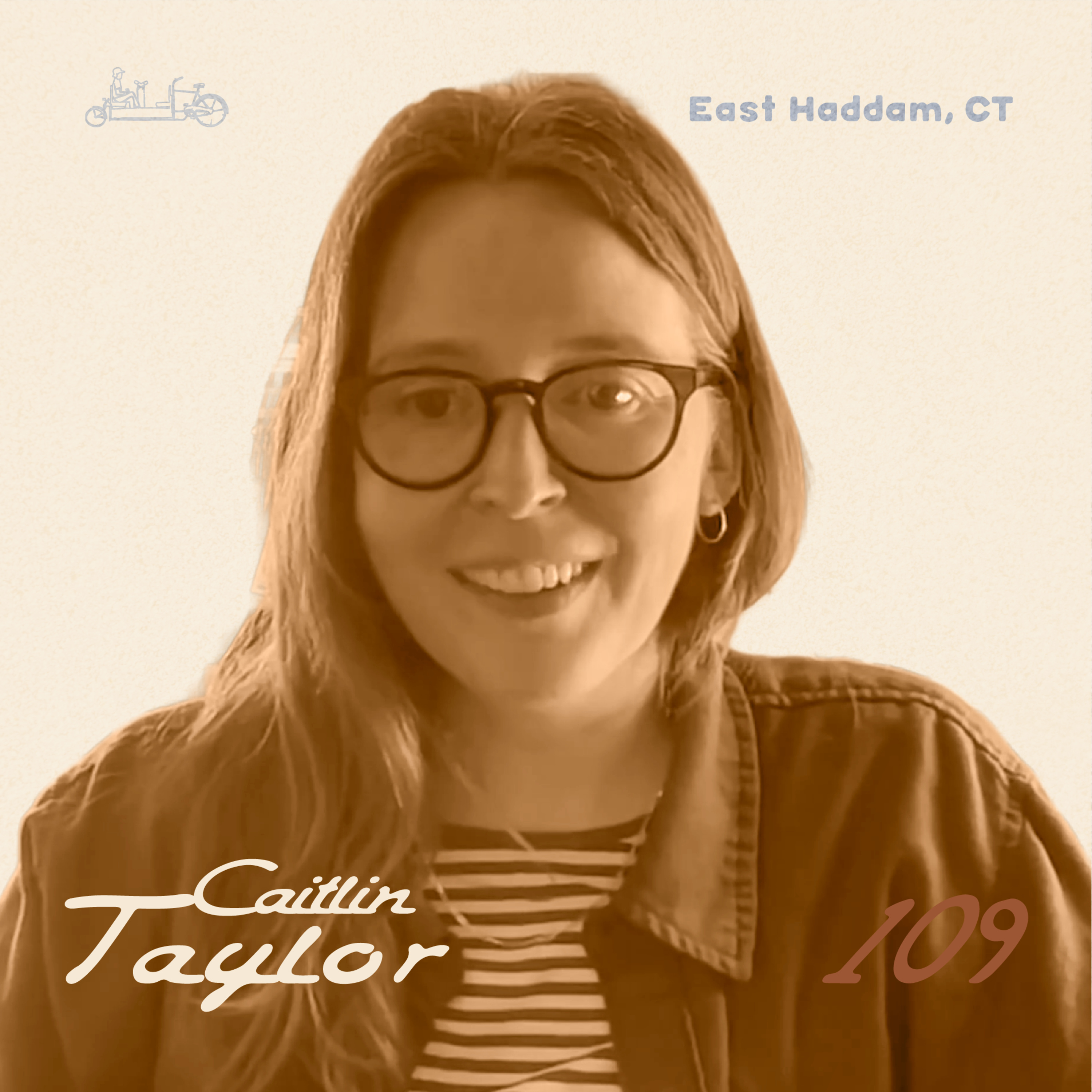
Caitlin Taylor — architect, farmer, and founder of Midcourse Design & Development — is in good traffic this week for a conversation about the missing middle of America's food system, and why architects need to understand farming, supply chains, and retail, en route to rebuilding regional infrastructure. We also touch on: Why architects rarely work on food infrastructure. The lived experience of running a certified organic farm. How Mass Design Group shaped her practice model. The missing middle between industrial and direct-to-consumer. Why most food businesses operate despite the built environment, not because of it. Regional processing as the bottleneck. Fiddleheads co-op in New London, Connecticut as an exemplar. Why independently owned grocery stores are so rare. Grocery store layout and fresh versus shelf-stable ratios. Projects coming soon that will demonstrate the Midcourse model. Timeline: 00:00 Caitlin Taylor is in good traffic. 05:35 The multidisciplinary studio model. 07:24 Weaving architecture, operations, planning, and finance. 08:02 How Caitlin started Midcourse. 08:39 Being both an architect and a farmer. 09:31 Living on a certified organic farm. 10:19 The food world as a small, networked community. 11:11 Only architect in a room of farmers, only farmer in a room of architects. 12:02 When the realization happened. 13:04 Husband becoming a farmer while Caitlin was in grad school. 13:39 The wacky idea that food system architecture mattered. 14:21 Joining Mass Design Group in 2016. 14:41 Founding the Food Systems Design Lab. 16:59 Testing what role architecture plays in regional food systems. 20:53 Why Caitlin left Mass to start Midcourse. 25:31 The missing middle of food infrastructure. 31:15 Processing, storage, distribution, aggregation. 37:00 Why regional infrastructure disappeared. 43:03 Globalized consolidation and economies of scale. 49:21 Making regional systems economically viable. 55:12 How architects can help food businesses. 56:01 Grocery stores as museums of regional food. 56:48 Seasonal eating and living with the seasons. 57:17 Fresh versus packaged shelf ratios. 58:04 Where to see this in action. 58:27 Fiddleheads co-op in New London, Connecticut. 59:35 Independently owned cooperative grocery stores. 1:00:25 Why co-ops are so rare and often fail. 1:01:23 The commute question. 1:01:55 200 feet from kitchen to farm wash station. 1:03:02 Wrapping up. Links: More on Midcourse.
0:05We spend a lot of time on the show talking about missing
0:08middle housing, how over the past century the United States
0:12has spent a lot of time building at the extremes and making it
0:16illegal and impossible to build along gradient of housing
0:20typologies and unit sizes that would allow Americans to come
0:24into adulthood and then age seamlessly and with optionality.
0:28But this bifurcation being single family homes and smaller
0:33apartment options, it's not the only place in our landscape that
0:37this K shaped curve is playing out.
0:40Another context in which the missing middle is starting to be
0:43used more is in food systems and infrastructure.
0:47Most of the American conversation around our food
0:49systems is concentrated at the polls.
0:53On one hand, the agricultural farming conversation is pretty
0:57consistently had, and on the other side we do spend a fair