
Gnostic Reformation, Clear and Simple · Cyd Charise Ropp
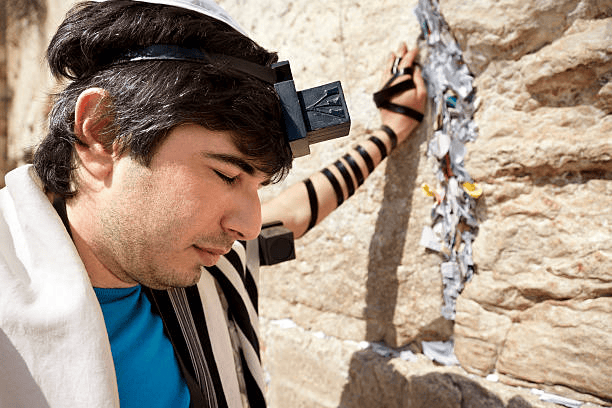
This publication explores philosophical, spiritual, and contemplative subjects whose meanings often depend upon nuance, context, and specialized terminology. Translations are provided as a service to readers and may be generated or assisted by automated translation technologies. Although reasonable efforts are made to ensure accuracy, certain concepts may not be rendered with complete fidelity in every language. Readers seeking the most precise expression of the author’s intent are encouraged to consult the original English version. Today’s episode is a continuation of a discussion of my simple model of memes out of my book, A Simple Explanation of Absolutely Everything. In our previous episode, we discussed the basic model of memes. Memes are any thought a person can have—any piece of information I categorize as a meme. Motherhood is a meme. All religions are memes. Everything is memes. Whatever belief you hold, whether it’s a cluster of beliefs, (and I call these meme chords), or a single belief, (that’s what I’m referring to as a meme). In our previous episode, we discussed political memes, and in this episode, we’re going to discuss exoteric and esoteric religious memes. As it is with all groups, the public image of a religious institution is defined by the memes held by, or rejected by, the members of that institution. These specific doctrines, dogmas, dissertations, rules, and customs are the sets of memes commonly held to be true within a given religion, and the specifics of these memes vary from institution to institution. These public memes are known as exoteric memes, and they’re easily identified and fairly well understood by most of the institution’s members. A few exoteric religious memes are shared by members of diverse religions. Religions generally share, for example, belief in an overarching God meme chord, and generally agree on many of the lesser-included memes that make up the God chord, such as memes concerning God’s omniscience and omnipotence, and the importance of communing with God in prayer. In Exodus, and again in Deuteronomy, the first four of the Ten Commandments lay out a basic God meme of Judaism. The key God meme, Deuteronomy 6:4-5, is known as the Shema. Hear, O Israel, the Lord is our God, the Lord is one. You shall love the Lord your God with all your heart and with all your soul and with all your might. Agreement on this basic God chord was so important to the early Hebrews that they were instructed to teach them diligently to their children, to talk of them while sitting in the house, when walking, when lying down, and then again first thing upon arising. They were also instructed to bind the memes to their hands, on their foreheads between the eyes, and to their gateposts and doors. These containers are known as phylacteries, and they hold within them the fundamental Hebrew memes. In the Christian faith, the Apostles’ Creed states the basic Christian memes. This meme chord is regularly recited in unison,...
0:00[music]
0:19SPEAKER_00to Gnostic Insights.
0:21[music]
0:31SPEAKER_00My name is Dr. Cyd Ropp and I'm your host.
0:34[music]
1:00SPEAKER_00Today's episode is a continuation of a discussion of my simple model of memes out
1:06SPEAKER_00of my book, A Simple Explanation of Absolutely Everything.
1:11SPEAKER_00In our previous episode, we discussed the basic model of memes,
1:16SPEAKER_00and memes are any thought a person can have,
1:19SPEAKER_00any piece of information I categorize as a meme for.
1:24SPEAKER_00Motherhood is a meme.
1:25SPEAKER_00All religions are memes.
1:27SPEAKER_00Everything is memes.
1:29SPEAKER_00Whatever belief you hold, whether it's a cluster of beliefs,
1:33SPEAKER_00and I call these meme chords, or a single belief,