
Geology Bites: An Earth and Planetary Science Podcast · Oliver Strimpel
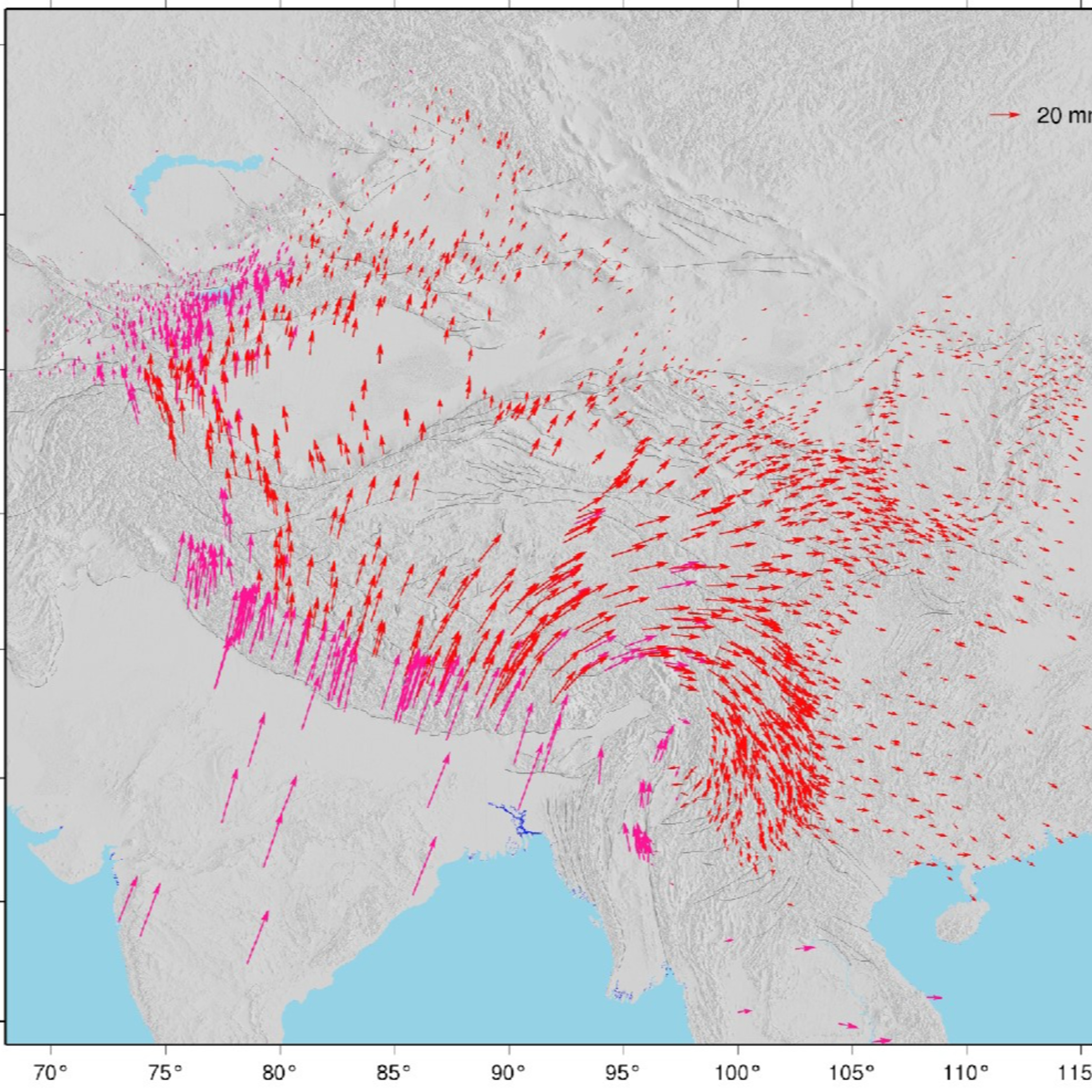
There are three main types of geodetic measurement systems — satellite-based systems such as GPS, very long baseline interferometry (VLBI), and interferometric synthetic-aperture radar (InSAR). While each type of systems has its particular strengths, the cost of satellite-based receivers has plummeted. Millimeter-level accuracy will soon be incorporated into phones. This has broadened the kinds of geological questions we can now address with such systems. In the podcast, Tom Herring describes how these systems are giving us new insight into plate motions, slow and fast deformation associated with faults and earthquakes, the Earth’s rotation, as well as applications in civil engineering, such as dams and tall buildings, and agriculture. Herring is a pioneer in high-precision geodetic analytical methods and applications for satellite-based navigation systems to study the Earth’s surface. He is a Professor in the Earth, Atmospheric, and Planetary Sciences department at the Massachusetts Institute of Technology. Illustrations and full transcript: https://geologybites.com/tom-herring
0:03This is Geology Bites with Oliver Strimpel.
0:08In this episode, we'll be talking about geodesy, and
0:12particularly about accurately determining positions on the
0:15Earth's surface and monitoring how these positions change over
0:18time. Over the past few decades, the
0:22technology involved has improved dramatically and it has become
0:26much more affordable. How can we use this to address
0:30geological questions such as how the Earth deforms during and
0:34after large earthquakes or to see plate motions in high
0:37resolution? Tom Herring is a pioneer in high
0:42precision geodetic analytical methods and applications for
0:46satellite based navigation systems to study the Earth's
0:49surface. He is a professor in the Earth,
0:53Atmospheric and Planetary Sciences Department at the
0:56Massachusetts Institute of Technology.
More Geology Bites: An Earth and Planetary Science Podcast episodes →