
Geology Bites: An Earth and Planetary Science Podcast · Oliver Strimpel
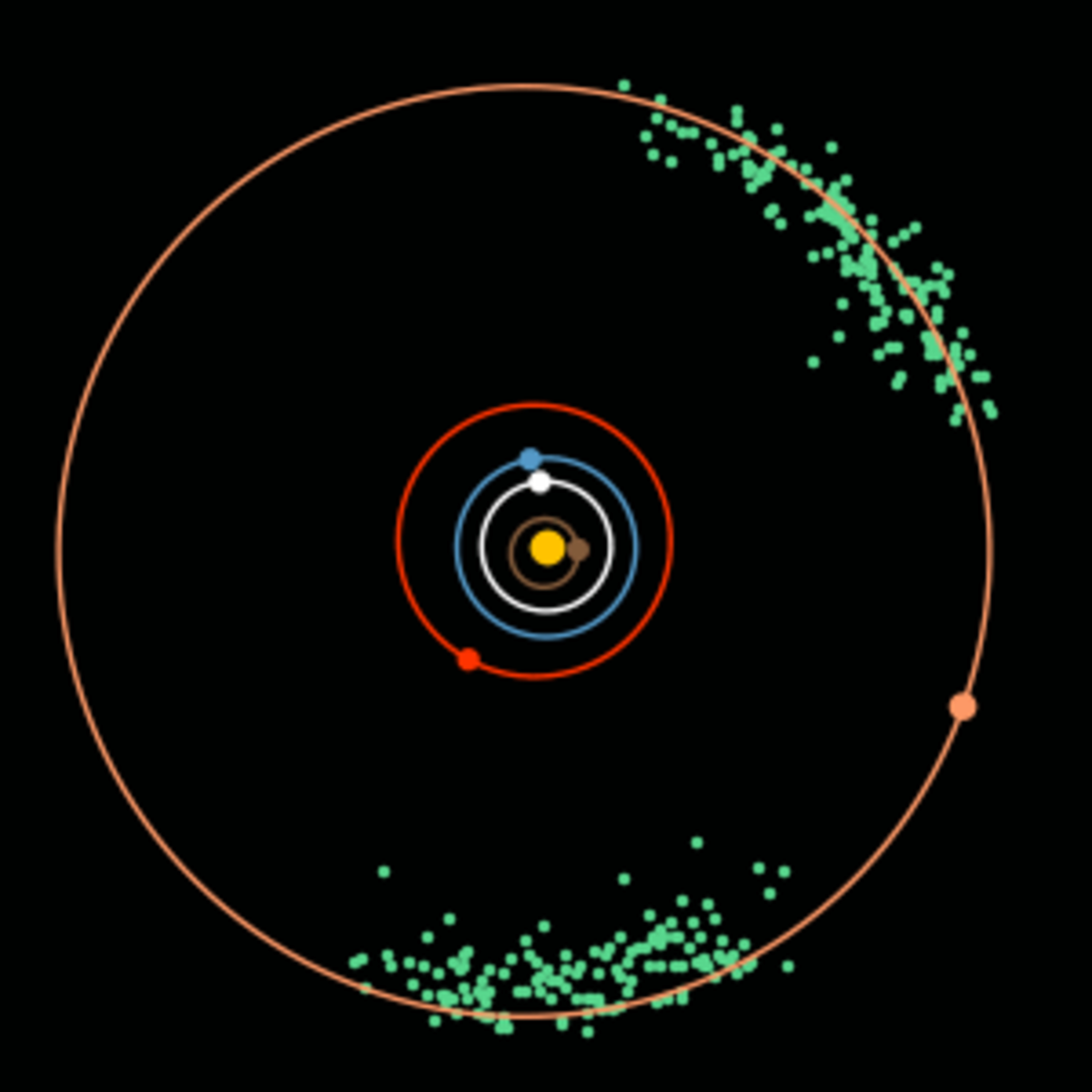
A key question about the early history of the Solar System is whether the giant planets formed roughly at the distances from the Sun they presently occupy, or, as some theories predict, much closer to the Sun. The discovery of other solar systems with radically different configurations of planets has made this question more pressing, since it appears that the configuration of the Solar System might be atypical. In the podcast, Hal Levison explains why the Trojan asteroids of Jupiter offer us the best opportunity to discriminate between the various models of Solar System evolution. And that is why a spacecraft called Lucy is now well on its way to a rendezvous with these asteroids. Hal Levison is the Principal Investigator of the Lucy mission. He studies the dynamics of astronomical objects and, in particular, the formation and long-term behavior of solar system bodies. He is one of the original proponents of the Nice model (named after the city where it was conceived), a scenario that proposes the migration of the giant planets from an initial compact configuration closer to the Sun to their present positions. He is Chief Scientist in the Department of Space Sciences at the Southwest Research Institute in Boulder, Colorado. Illustrations and full transcript: https://geologybites.com/hal-levison
0:04This is Geology Bites with Oliver Strimpel.
0:08In several previous episodes of Geology Bites, such as the ones
0:12with Sarah Russell and Harold Connolly, I've talked to
0:16researchers seeking to understand the early history of
0:19the solar system through studies of asteroids.
0:23Asteroids are especially valuable in this regard because
0:26they preserve a record of the early solar system.
0:31There are many unanswered questions about the early
0:34history of the solar system. In particular, did the giant
0:38planets form roughly at the distance from the sun they
0:41presently occupy? Or, as some theories predict,
0:46have they migrated to their present positions after they
0:48formed? The discovery of other solar
0:51systems with radically different configurations of planets has
0:55made this question more pressing, since it appears that
More Geology Bites: An Earth and Planetary Science Podcast episodes →