
Geology Bites: An Earth and Planetary Science Podcast · Oliver Strimpel
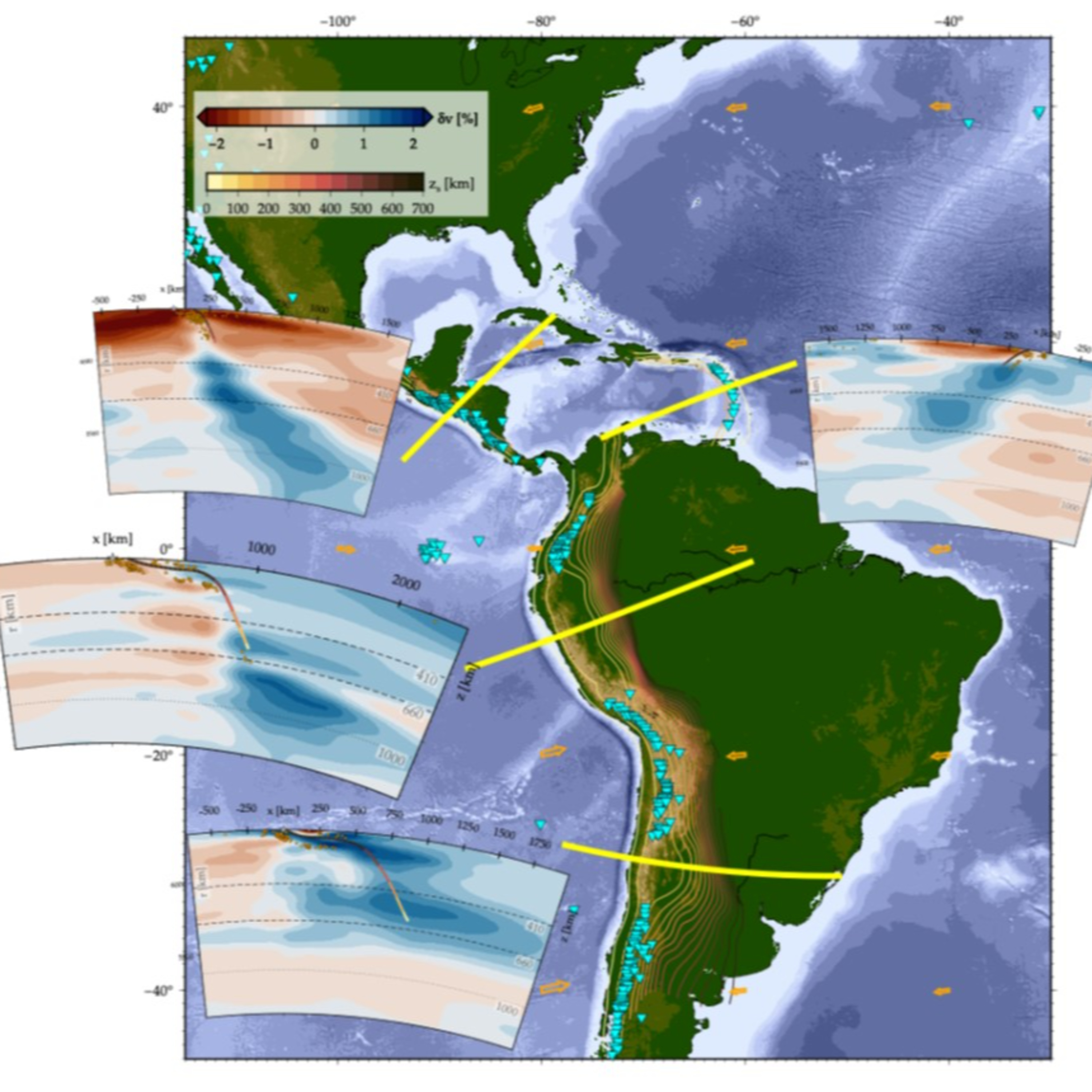
Subduction zones can be very long-lived, persisting for tens of even hundreds of millions of years. During that time they rarely stay still, but instead retreat, advance, move laterally, or reverse direction. In the podcast, Claudio Faccenna discusses the processes that govern these movements. It turns out that they depend not only on the properties of the subducting slab, but also on the environment, including the proximity of other subduction zones. Faccenna has been studying how convergent margins evolve for over 30 years, concentrating particularly on the Mediterranean region. He is Head of the lithospheric dynamics section at the Helmholtz Center for Geosciences at GFZ in Potsdam in Germany and also a Professor at the Department of Science at Roma Tre University. Illustrations and full transcript: https://geologybites.com/claudio-faccenna
0:03This is Geology Bites with Oliver Strimpel.
0:08A subduction zone can last for a very long time.
0:12During that time, it can move forward, backward, or sideways
0:16and get stuck in place. It can even change direction.
0:21What governs how a subduction zone evolves, and how do the
0:25various kinds of evolution manifest themselves on the
0:29surface? Claudio Fachena has been
0:32studying how convergent margins evolve for over 30 years,
0:36concentrating particularly on the Mediterranean region.
0:40He is head of the Lithospheric Dynamics section at the
0:44Helmholtz Centre for Geosciences at GFZ in Potsdam in Germany,
0:50and also a professor at the Department of Science at Roma
0:53Trey University. Claudio Fachena, welcome to
0:57Geology Bytes. Thank you, Oliver.
0:59I'm very happy to be here. We've talked about subduction
More Geology Bites: An Earth and Planetary Science Podcast episodes →