
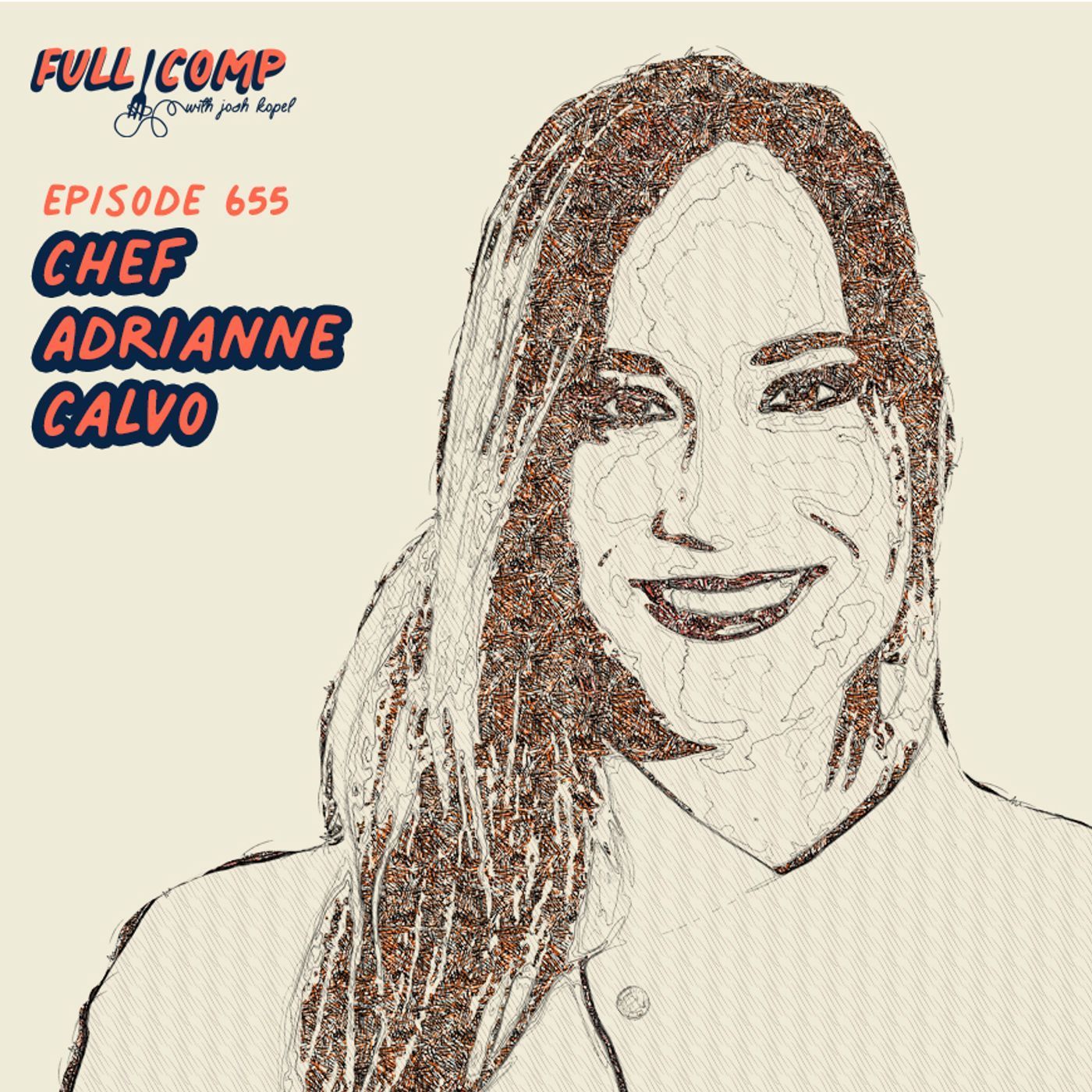
FULL COMP: Restaurant Tactics, Tools, & Strategies · Josh Kopel
What if the next restaurant you open is the thing standing between you and the business you actually want? Adrianne Calvo opened her Miami restaurant at 22, built a multi-concept group, then pulled back to the one place that started it all. Nearly two decades in, it seats 270 and powers a brand far bigger than its dining room. In this conversation, we get into the lease terms she demands before considering any deal, why chasing trends guarantees you arrive late, and how stepping off the line gave her the time to build the brand. If you're winning on paper and quietly wondering whether more growth is worth it, this one gives you permission to choose differently. To learn more about Chef Adrianne's Vineyard Restaurant and Bar and her work, visit chefadriannes.com. _________________________________________________________ Free 5-Day Restaurant Marketing Masterclass – This is a live training where you'll learn the exact campaigns Josh has built and tested in real restaurants to attract new guests, increase visit frequency, and generate sales on demand. Save your spot at restaurantbusinessschool.com This episode is brought to you by Guestologie. Guestologie helps multi-location restaurant groups recognize their highest-value guests the moment they walk in, so your team can deliver better hospitality and drive more visits. Built for groups running 10 or more locations. Full Comp listeners get a complimentary Invisible Guest Assessment at guestologie.com/fullcomp
speaker-0: Ladies and gentlemen, this is it. We've hit the end of the road. As we approach the end of the year, I'm hosting my last free AI marketing masterclass this month. And so if you're looking to create more money without more work, this is your last chance to get it. I want you and your team to deeply understand how AI can help you make more money today. How to become the most recommended restaurant in your area on Chat GPT. How to engineer your menu to scale your average spend, how to get more press. How to scale corporate catering and private event outreach and as a result, sales. And if you don't know how to do these things with AI, or it feels like I'm speaking a foreign language, you need to come to my AI marketing masterclass. I'll break this stuff down at a sixth grade level. The things you need to be building inside of tools like Claude and Chat GPT so that you can hyperscale your restaurant sales with less effort to create more money and more time for yourself. I want to make sure that you set yourself up for success before the end of the year. And so I want you to go to restaurantbusinessschool.com to secure your free seat today. Again, join me for the last session of the AI Marketing Masterclass and secure your free seat by going to restaurantbusinessschool.com. Now here we go. speaker-1: I thought that what I was supposed to want was multiple restaurants and across different tiers. And they were great. Award after award. I mean bangers. We were $10 million restaurants out the gate. It couldn't be better, pretty much, but it wasn't working for me. speaker-0: Welcome to Full Comp, a show offering insight into the hospitality industry, featuring restaurateurs, thought leaders, and innovators. Served up on the house. What if the next restaurant you open is the thing standing between you and the business you actually want? Adrienne Calvo opened her Miami restaurant at 22, built a multi-concept group, and then pulled back to the one place that started it all. Nearly two decades in, it seats 270 people and powers a brand far bigger than the dining room itself. In today's conversation, we get into the least terms she demands before considering any deal, while chasing trends. Guarantees that you arrive late and how stepping off the line gave her the time to build her prolific brand. If you're winning on paper and quietly wondering whether more growth is worth it, this one is gonna give you permission to choose differently. speaker-1: I think that we are changing at warp speed, but in the last two years, peptides, GLP ones and GLP everything. So the way people are dining is different. They're sharing things, smaller portions. I also think that prime dining time has now shifted. People before the prime time was like, let's say 7 to 9 p.m., you would even stretch it till 9 30. That was the time that was coveted most. Now we're looking at where six PM, what you would call early birds at five PM, it's not so much early birds anymore. It's becoming the norm. People are liking to eat dinner early and be home and watching whatever streaming thing they want to watch or binge. And I think that's definitely shifted in the last two years. speaker-0: I want to go back to the first restaurant you opened. I remember mine. And I, I thought so many things about the industry. And I, and I felt a very specific way about how it was going to operate within this. For me, it was a bar, within this venue, and what my life was going to look like every day and all of that. And then over time, I got into fine dining, I got into fast casual. And it's not that the business has changed in any fundamental way. I would argue that I changed, that I evolved, that my priorities evolved. I would ask you the same thing. you've opened so many places, you've started so many businesses, you've written so many cookbooks. So you look at all of these things. And so how has your perspective on the industry evolved throughout your career? speaker-1: My perspective on the industry, I don't think it's actually changed much really to I've done so much and I've been so blessed to be able to do so much. No, I I actually think that it's the way it started is my perspective is that you have to be so in love with it because it's such a grueling, competitive, just again, it's indentured servitude if you don't love it. And you know that saying about like do what you love so you don't have to work a day in your life or something like that, right? This is a hard career. And to be successful at a very difficult career, I think it's eight out of ten restaurants close or something like that. So if you're gonna be a restaurateur, you really gotta love it because you gotta put in 26 hours a day and those two hours don't exist. So think about it. You have to create some type of alchemy. It's not being a chef because a lot of people can cook. There's something that you have to possess to be successful where it's a little bit of A great chef, you have to have a conviction of a certain style and stick with it. You have to have conviction of knowing that your product is worthy of a stage, right? You have to be part accountant, part sports coach, because the restaurant industry, you're it's not a solo project. You are leading a large group of people. For example, my restaurant right now, it's 270 seats. I have over 120 employees. And you are responsible for leading them with your restaurant culture, the culture you want to instill in them and that's gonna convey into your guests. So to circle back, I think that my perspective is it's that it's grueling and you have to be in love with it. It's day one and now twenty years later it's still the same. speaker-0: Well and let's talk about what's changed over that twenty years because it's I think we both came up 'cause we're we're roughly the same age. I got a few years on yeah. I don't know. I speaker-1: I'm forty two. speaker-0: swear. I swear. I I turned forty six this year. my god. speaker-1: my gosh. Okay. I thought that I thought you'd be twenty eight or something. speaker-0: It's the filter. It's the filter. Trust me. Modern technology. It's a marvel. Great. so I think we came up in an era where the whole point was to grow. And very similar to you, right? you open another restaurant to open another restaurant. That's always the thing that you do. And they're at a point in your career, right around the same time as me, where you had grown to the point where you had this large restaurant group. And the scariest thing in the world, and I want your perspective on it. Once I had multiple restaurants across multiple tiers of dining, and then the accolades started coming in, and the money started coming in, but not most of it didn't drift into my pocket. I started thinking to myself, I don't like this. This is what everybody wants, but it's not what I want. And that wasn't like one of those things where it felt like a weight had been lifted off me when I discovered that. It was actually it was fear, it was shame, it was uncertainty. Cause it's like if this is what we all want and I don't want it, then how do I fit in? And so as someone that followed the traditional path, right, and scaled up and then decided that that wasn't the right path for you. Talk to me about what you discovered when you got what you wanted, right? And then the the path that got you a little bit closer to what you actually want. speaker-1: Wow, that's such a great one. And it's funny, out of all the podcasts I've been on, this is the first time I get this question. And I love it. It's it's prolific. It's very good. And I guess because you lived it, it's the only way you could conjure up that type of question. A lived experience. And mine was exactly what you said. I thought that what I was supposed to want was multiple restaurants and across different tiers. Like I had my fast, what I would call fine casual, because it was Elevated fast casual. I had one in a stadium, our biggest stadium here in Miami. I had a seafood restaurant and I had an Italian restaurant and they were great, great award after award. I mean, bangers. We were $10 million restaurants out the gate, but all of them. It couldn't be better, pretty much. But it wasn't working for me. And the mothership, which is my original restaurant, Chef Adrian's Fingered Restaurant and Bar. That's the one that I started when I was 22 years old. But that cooking there is what truly always made me happy. Now I have a great team, but being part woven into the day-to-day, talking about dishes, getting excited about new products coming in, being able to know who my guests are. Some of them I know by name already. Things like that. The bigger that I grew, the farther I was away from what made me really. love chef Adrians for so long. 20 years to be an independent restaurant is a big deal. I don't I don't have a restaurant group or anybody backing me. So this is just cash in, cash out, independently owned. So I know what it takes to keep the doors open at the cost that that comes. And it's not something I take for granted. So when I came back from having multiple restaurants, I was confused also because I'm like, my gosh. Besides I was relieved I did have a big relief, but I was also like, but wait, I don't want this. Where do I fit in? 'Cause my colleagues are all around me are trying to grow and some have grown. And I'm like, Yeah, but no, I I just don't want this and I never want this again. So I felt like I was not where am I supposed to go from here? Same as you. speaker-0: It was horrible. I felt like a big old quitter. This is an industry built on resilience, right? It's like the Navy SEALs training, it's supposed to be hard. But it's one of the hardest things in the world, I I guess for me, is when there is positive momentum in a direction and it's not the direction you want to go. And I always wonder in doing this show with the big audience that we have, how many people are sitting there publicly succeeding and quietly suffering. speaker-1: Yeah. speaker-0: Yeah. speaker-1: So many. So many. I always say that we all have a ticking clock and we got to make sure that we're doing what we really love with the time we have here because it doesn't matter if the world sees you as uber successful, this supernova. Like it doesn't matter because if you're secretly not happy, then it's all worth nothing. So as long as you're happy, it doesn't matter if you're doing it. in restaurant terms, in a ten seater or one that seats five hundred or multiple. If you're happy having multiple, good for you. speaker-0: Right, do it. Do the thing. Grow. Yeah. Absolutely. There are ton of second gins out there you could pick up. Let's talk about partnerships. I've got a lot of trauma around this myself. You talked about being completely independent, right? it's cash in, cash out. This is the nature of the business today. It's certainly a business where nobody's going through traditional financing. Right. Most people are not going through the SPA. Right. Right. speaker-1: no. speaker-0: We're finding rich people that have money to burn and aren't opposed to burning it so they could be like, I own that place. That is how most of us do it. Most of us did not graduate at the top of our class from Cornell University. We're like line cooks and busboys with financing. So understanding that, I would ask you, what is your perspective on partnerships today? What did you learn through it? We can obviously keep it broad and anonymized, but every decision you make, especially as it relates to who you take money from, right? None of that is free. It all comes at a cost. What did you learn about partnerships through that growth period? speaker-1: So I Chef Adrian's was always mine, like independently mine, is mine. Never had partnership in my or cracked by Chef Adrian. But when I took on Redfish and I took on Forte, I had a partner. And you know what? It was great because that partnership allowed me to, I guess, be in that space. And allowed me to the now be like, okay, I did that. And where I was never gonna be able to do that on my own. So very grateful for the experience, but just didn't align for me. But grateful because it brought me to where I am now. speaker-0: So let's talk about that. So if it was a positive partnership, knowing that there are many unsuccessful partnerships in this industry, what do you think made it successful? Was it s establishing expectations out of the gate? Was it open and honest communication? What do you think enabled you to have a successful relationship? speaker-1: Well, I think that there has to be lines that are defined. An operator cannot be worrying about a partner meddling in operations, if that makes any sense. It does. So because if you have a partner that's meddling in what you're doing and you have that stress, well, that's preventing you from doing the very thing that they want you to be successful at. So if you define your lines, like here, you're staying in this lane and I'm staying at this lane, and we're gonna have If you want by weekly meetings, quarterly meetings, monthly, whatever it is that you guys state that you're gonna have, this is where you state your concerns, you state your wins, your losses, whatever it is, but this is where we address them. Not having a partner coming in and dinner service to do stuff, that's weird. And I've heard that so many times. Or partners taking advantage of, I'm gonna entertain here, I'm gonna entertain my friends, so we're just gonna kill the margin here because I'm gonna eat and drink all I want because it's my place, So having boundaries and having them stick to it create healthy partnerships. No different than a relationship. speaker-0: Can we talk about when you moved Vineyard? So this to me is like, right, it is this intuitive thing that totally makes sense. And it only blows up in people's faces like 50% of the time. Right. That there is, right, that that is sometimes your restaurant's a microcosm. And it's not just the food that you serve and the menu that it is with these tables and chairs. It's the whole thing, right? It's that it is in this place in proximity to this community. It is all of these things. And I think that we have all seen people, right, move what is an amazing concept that needs more capacity, right? Or is dealing with some sort of infrastructural issues to another location where it is identical and it goes from absolutely crushing to eating shit. You've seen it. We've all seen it. And so and there's a risk there, right? And so what is the thing? Like when you move from one location to the other. You must have defined in your own mind this is the magic. This is the thing that we're actually transporting from here to there. What was that thing that you moved successfully? speaker-1: I moved my people. Our people is the heart like we are the heart of the restaurant, the heartbeat of the restaurant. Chairs and tables, all moved. Even the decorations on our walls were moved. We had these wine barrels that were imported from Napa Valley from day one, since we opened in two thousand seven. And they're in my restaurant now. That same wall with the same barrels are there. Our photographs of different areas of Napa are all up on the walls. We have Copper tiling and that was like a signature at the old restaurant. It's there. So it's the same ambience. It's just bigger. There's a bigger floor plan. What guests wanted were was a full bar and private dining spaces so they could host their special events. My old restaurant was just one big dining room and I couldn't do private events. And I couldn't serve people a martini or an old fashioned because we were just wine and beer. Nonetheless, I have to share that when we moved, a lot of people said, It's not the same. It lost its charm. And while I was trying I expanded with the motivation from our guests wanting the bigger footprint because of the things they needed. But you know what? The all the naysayers, they're our guests again now. And it's okay. The ones we lost, we really g we gained so much more. We're in a better location, but more more foot traffic where we're at now. So the move really benefited us tremendously. We went from, if we're talking Numbers, we went from being like a three million dollar restaurant to an eight million dollar restaurant, which is amazing in our area. speaker-0: Amazing. And I would ask you about that. So everyone has these limiting beliefs, these excuses, right? the restaurant's old, it needs a refresh, you know, this restaurant's been around 20 years. Miami's such a competitive market. They only care about what's new. And here you are, old you and old me, right? With these old restaurants. That's the thing, but it's like it because everybody wants to have excuses, right? And I can totally appreciate that. But How do you run an old restaurant that isn't a stale restaurant without changing shit constantly? Because Lord knows most people are coming to you not for the innovation. They're coming to you on the same day at the same time to sit in the same chair and eat the same shit, right? speaker-1: Well, I think I model after legacy restaurants. my goal is never to be like these hot spots, C and B seen places. I wanted I've always aspired to be like a Commander's Palace or Joestone Crab or any one of these places that people go f like with their grandparents and then they go with their children and they gone to when they're little and they grow up and they go and have their first date there. It's a place to commemorate is a special moment and you're gonna have the best steak of your life or the best bread pudding ever because people say it. Not because you say it, but because people say it to each other. And in a world of influencers and social media, word of mouth is still king. If I tell you go here because it's the best steak you're ever going to have, that holds so much more weight. so I've I've held truth to that. that's been my North Star. And I think that it's worked because there's no other reason other than divine intervention that have been around for 20 years. speaker-0: Well, and it's you grew a business into a restaurant group and then you decided to scale it back, but at the same time you scale back. I would argue like you scaled brand and you scaled brand massively. the back of the napkin math is you got a million plus followers. You've got an ME nominated series, you got six cookbooks, you got another one landing in November, I believe. speaker-1: Yeah. Thank you. Yes. Yeah. you're touching everything. That's awesome. Thank you. speaker-0: That's it. Well, you're doing you're doing the stuff, right? You're doing the things. And then you think about the fact that there are people right now that own and operate restaurants that can't get out of the scullery. Right? They're like somebody calls out and it's like, well fuck, I guess I'm washing dishes tonight. And so talk to me about how you were able to build, because I think chefs, and I'm not a chef, I can't boil an egg, but from a restaurateurist perspective, and probably from a chef's Everybody's looking at two sides. Everybody wants to be a household name. They want to be able to do all of these things and extend brand and make great money, a great margin through who they are as a person, while simultaneously fulfilling that need to create and give directly to a community. How did you build brand and not wash dishes? speaker-1: my goodness. I have washed dishes by the way. speaker-0: I know. I know. speaker-1: Peel potatoes and wash dishes. funny story, last year I was pregnant and the guy who would peel potatoes right around the holidays and we needed the pot because we make our mashed potatoes from scratch. He just got fed up, quit, and there I was, eight months pregnant, about to pop, and peeling potatoes, and everybody was taking pictures of me because they're like, Chef Adrian's peeling the potatoes. I'm like, Because we needed all hands on deck, everybody was doing something, and there I was. But I always say if you're working in your business and covering what you mentioned, if you're covering for the dishwasher or the fry cook, you don't have time to work on your business. And you can only grow when you're working on your business. speaker-0: And so but what did that paradigm shift look like? Because there was a point where you had to make a choice. I would assume that right, there was a point where you had to say, you know what? Dinner service is gonna be a little less spectacular tonight and you're gonna helm it and you're gonna fucking figure it out and I'm gonna go do my real job. is am I wrong there? speaker-1: It took, I will tell you that it took more than a decade. I spent thirteen years on the line working lunch and dinner service on the line, working grill and saute myself. And people don't know that. They think I was an overnight success or something that just happened in the last couple of years and all of a sudden she's got all this. And where did the six cookbooks come from and whatnot? But I was working little by little throughout those ten years and then Honing in on my team, I've been very blessed that my core team has been with me since day one. We grew up together in the business. So my corporate executive chef cooks just like me. And then she's trained our sous chefs to cook just like her. So when you instill that culture, you're only as good as your team. So once we reach the point where I'm like, wow, okay, they're putting out things to my spec. perfectly and we're doing 500 covers a night, this is perfect. So now I can work on the business. And now I can see what we can ship nationwide. Let's test one product and let's see if we could be consistent with quality. And then we just grew one product after another and I we have four or five now that we ship nationwide. And we're about to launch for soup season a whole line of soups. But that comes with a lot of research and development and it comes with a lot of testing. And fortunately I've been able to do it with a Great team behind it. speaker-0: Your restaurant's next growth opportunity may already be sitting in your dining room. The problem is your team may not know who it is. I talk a lot on this show about getting more revenue from the guests you already have. Guestology is built to help multi-location restaurant groups do exactly that. It connects to the systems you already use, identifies your highest value and highest potential clients when they arrive, and then it tells your team how to recognize them. While they're still in your restaurant, I want you to reimagine loyalty. No points, no apps, no blanket discounts, just better hospitality, the drugs more visits, and measurable revenue. Restaurants using gastology are seeing traffic increases of up to five percent. And at scale, that can mean millions in incremental revenue. So if you run 10, 20, 50, 100 restaurant locations, you need guestology. And for full comp listeners, guestology is offering a complimentary invisible guest assessment to show you how much opportunity exists inside of your existing guest base. Go to guestology.com/slash full comp to redeem this offer. That's guestology.com slash fullcomp. Stop chasing every new guest. And start recognizing the valuable ones you already have. Now, I would ask, you look at that 13-year period. Could you have done it faster? Did it need to be 13 years? Knowing what you know today, right? Knowing what you know today, could you have done it in half the time for a quarter of the money? speaker-1: I tell you, thirteen years was needed for me. However, you don't mean thirteen years. I there was a lot of fear to expand because since I was so entrenched in my again, if you're in it, you can't work on it. That's the thing. So I was in the cycle of lunch, dinner, lunch, dinner, lunch, dinner all the time. And just I was like, we're coming out here and this is getting better year after year. And then we were winning best restaurant in Miami. And how could this little it was like the little engine that could. The little restaurant that could. So we would win award after award. So then it was like, how do we keep this up? we got or how do we even get better than this? So, there was no time for thinking about expanding really. But yeah. Then finally I was like, we're we're hitting a point to where it's like, do it now or don't do it. And I knew that I had hit my cap for growth at at the restaurant that I was at. And it did help that I I did go to Harvard business. And I was all motivated at the time by this is the time to do it. And I knew that if I didn't take that opportunity when it was given, I knew I wasn't gonna do it. And I knew that once I reached in my dining room where I had a line out the door, and I people aren't gonna want to have dinner at 11 PM and they don't want to have dinner at 3 p.m. So I just couldn't fit any more people at all, even if I wanted to. So I'm like, we're always gonna say no to people. So that means that my revenue is always gonna hit a cap. I couldn't take over the spot next door. I couldn't even build a second floor because it wouldn't allow me to. So it was like do or die. And then that's it. I took the risk. speaker-0: Let's talk about your approach to brand. Because a lot of people, man, they're you could throw a quarter and hit a chef doing a selfie right now, right? Yeah. That's it, right? Everybody like everybody's talking about themselves and their own shit. And to a certain degree it resonates with people, right? But to a large degree it doesn't. You've been able to build brand through emotional resonance. There is something about you, I would argue, that goes beyond food that got a h a million people interested. That's like your food's great. there's great food everywhere, right? If you go to Miami, you go to Los Angeles, you go to New York, great recipes. Everywhere for free. It's this thing called the internet. People listening should check it out. nobody is coming to you for that. They're coming to you for this thing that only you can provide them. What do you think that is? What do you think that your brand does for people that attracts so many people that are interested in what you do for a living? speaker-1: my gosh, you're just full of great questions. I don't know. I don't know. I wish I had that answer. I've just been so grateful for each and every follower, fan, guest, anybody, because I can't believe it. I wish I had that answer. I'm I always say I'm like, I'm just like a normal girl that loves to cook. And I was surprised when our restaurant really just took off. And I'm still surprised today that we're around for 20 years. And I just feel like I'm the luckiest girl in the world to be able to do what I love. And that people want it. So I don't know. speaker-0: Was there an inflection point for you? was there like you were like, when I do this kind of video it resonates with people. When I say these kind of things, it resonates with people. speaker-1: my gosh, I wish I knew. No, I don't know. I create the content that I like making or what I'm experiencing. Like I love capturing, like if I get to live something that that's amazing by and it has to do usually with my career. I'm not out there posting just normal things or like, but I like to share it because either I want you to to be curious about it because I want you to go and experience it for yourself. Like I get really excited if I try something or experience something and I I don't want it just for me. I want as many people as possible to get that happiness, that joy, that excitement. Because I don't want it for myself. I want it for everyone. so I feel like a lot of people create content for what's trending or what may go viral or not. I don't do that. And sometimes it's controversial with like with my team because they're like, you need to do this because this is what works. I just think that if you're going to Do that, you're gonna be chasing something that you're never gonna catch by the time that you're doing it. The trend is over. And people know people are smart now. they're really smart about what's on social media and everything. So I just do what I do and and that's it. It's probably not gonna go viable. speaker-0: Are we talking about social media or are we talking about restaurants? social media restaurants, right? speaker-1: I and restaurants. And restaurants I speaker-0: How many times have you seen someone open a restaurant on a trend and it absolutely crushes for two months and then it's crickets and it's back up for sale a year later? This to me is the reason I was so excited to talk to you again. And it's it's the thing that I really want to hone in on. I had an agenda in a shocking turn of events. I think that by and large, because we are, I would articulate us as professional servants, right? We aim to please. That's what we do for a living. we do this as an extension of self to serve the communities that we work in, that we reside within. But as a result, I think that there is this grand othering as it relates to the food that we create, the content that we create, the restaurants that we build, because we don't build for ourselves. I think we're building for other people. I host this marketing masterclass for restaurant owners. And one of the things that that I say in it is. The the way you market your restaurant is not the marketing that resonates with you. Everyone does discounts and freebies and coupons. But do you think that there's a restaurant owner walking around today with a fucking coupon in his wallet? speaker-1: No my gosh, no. But it's speaker-0: But that's the thing, right? when you want to get busy, we'll run a special on this thing, or we'll two for one this or we'll bogo. And no one that's offering that shit redeems that. It doesn't work for them. But they think that it works for other people that aren't them. And so, I I I think that is the microcosm that you're talking about, where it's like the social media that you create, you're not creating for other people. You're creating what you would want to see in this world. Your restaurant. It survived for so long. Not because you're trying to create something for the community, but you're trying to create something that you would want to go to month after month, year after year. It is emotionally resonant with you. And in my own life, every business that I've created where it's just like, I want to see this thing exist. I need it for me, I've crushed it. And every time I build something for someone else, I ate shit. But you see it again and again in the industry, How do you not fall into that temptation when from your team, from the world, from the general public, there is pressure to get into this thing or get into that thing or, it's been a while since you opened a restaurant, maybe it's time to do it again. When you've also said, I'm never gonna open another restaurant in Miami. How do you not give in to the peer pressure and stay true to yourself? How do stay focused as an entrepreneur? speaker-1: I s well, I stay actually laser focused and I've never been more laser focused than now I think. Because the stakes are so high, competition is so high. I don't know. And I think I have to go back to that I'm really just so in love with what I do day to day that I wanna protect it and I wanna take care of it. So I don't let a lot of noise in. I mean, today, right before I came to speak to you, I was in a meeting and they asked me that very question, When are you opening the next restaurant? You know, so that question just comes Almost every day. But I don't know. It's just I wanna protect my energy, my focus, and I wanna make sure that my energy goes into improving, perfecting what Chef Adrian is, because again, twenty years is not something that you take lightly. So yeah, just filtering out the noise. speaker-0: And so let's talk about that because I would assume that there's a checklist in your mind. People come to you all the time, right? And they've got ideas we should do this, we should do that, right? We'll finance this and we'll give you two million dollars in TI to build your dream restaurant in this mixed-use property that's you're guaranteed a billion dollars a year and all of this shit. All right. And it's it's the hardest thing as an entrepreneur in my mind, regardless of industry, is being able to separate the signal from the noise. What is an opportunity? versus what is a distraction. And so what is your filter? Because I would also assume that you're turning down opportunities that could work out really well, that have a high likelihood of working out really well. You just don't want to do that shit. speaker-1: So let's talk restaurants first. If we're talking from a restaurant tour perspective, a restaurant is only as good as its lease, or if you're gonna own the building. So I'm only going to entertain if I were, this is if I were to entertain it, I'm only gonna entertain a 20 year lease with a cap on the increase. I'm never gonna go to cost of living. I am going to do it in five year renewable terms with a full stop at 10 years. With no penalty, if I need an out, I want to know what I'm paying and in year 18. So I can forecast and I can budget properly. So that's number one. If I have a good lease, now we can go into the negotiating TI. I will never build out a restaurant from scratch. I'm always gonna have a second gen. Exact. It's never gonna happen. And then creating a menu that I will have run through my tech stack before even hiring people. So that I know the kind of margins I am going to expect if I were to only turn tables even once, because I will always prepare for worst case scenario, not some fluffy out there like, you're gonna be serving a thousand people, or you're gonna make a million bucks or a billion bucks, whatever. No, I'm gonna prepare for worst-case scenario and no partnerships. That's it. That's the end of story. That's an opportunity. Next is. brand deals, deliverables that are fair. And I own my own IP. I own all my IP to this day. You don't give anything away in perpetuity because that's your likeness and that's your image and likeness. So nothing in perpetuity because no one's going to pay you in perpetuity. So you can use this for XYZ and then you're paying for XYZ. And anything that takes you away from your home and family is going to be exponentially more expensive. And that's if you have any type of Exclusivity. So if I'm gonna use as a as an example, if I'm gonna have Pellegrino as a sponsor on my livestream, I can't touch any other sparkling water for the next five years, then they're gonna pay a high price for exclusivity. Other than that, and that everything has to align with the brand. There has to be a natural synergy. Because, for example, I'm not going to, even if they give me f a million dollars, endorse tires for a park, because that is not genuine for my audience. And I'm only getting brand deals because I've cultivated an audience. So as soon as I start doing something weird, like tires or anything that's outside of my industry or what they know me for, I will start to lose my connection with my audience. That's it. speaker-0: How did parenthood change your approach to entrepreneurship and the industry? speaker-1: parenthood. Absolutely. I had my son Aspen and now I look at entrepreneurship as like I'm doing it for him. It's not any longer like just for me and and doing you know, for me and my family. Now it's like, my gosh, he's here and I want to give him the best life possible. speaker-0: for me it made me ruthless. I was already pretty unpleasant to begin with as a restaurateur, you know, coming up generationally the way that we did. But it just it created this level of ruthlessness that I didn't have before, where it was so much easier to fire the people that were consistently noncompliant. And like the people, you know, you're never gonna build a best in class organization with people that are mediocre within their roles. And it just made it so much easier to say, listen. You're a great human being, but you're not great at your job. I am fraying you to go figure out whatever the fuck it is you should be doing with your time. And I was able to move so much faster because like, you know, there was this beautiful little girl that required a lot of my time, a lot of my attention, and all of my money. And so I wanted to make sure Spot speaker-1: You bad that. speaker-0: That's the whole thing. Spot on As it relates to that, the biggest mistake that I made consistently throughout my career for the first 10 to 15 years, and I want to get your two cents on this and see if it's resonant at all. My life would have been easier. I would have made more money and I would have worked a lot less had I thought about three things with every career decision I made. Number one, how much money do I want to make? Like me. How much money do I want to Okay. Number two, how much time do I want to spend working? And then number three, where do I want to spend that time? And what do I want to spend that time doing? When I moved from nightlife into fine dining, I couldn't tell you how I was going to spend my time or how much money I was going to make off that location. When we got into Fast Casual, it wasn't like, well, if we open three of these, this is how it impacts me personally. I just grew to grow aimlessly in one direction and then the next. But had I actually thought about what's in it for me and how does this impact my life, I would have made different decisions. I would have made decisions that better aligned with my values as I went from being a LA man child into full adulthood when I met my wife and she was like, You need to grow the fuck up. And then after that, like becoming a parent, you know, there's this evolution as a human that aligns with your evolution as an entrepreneur. And so Do you think in those terms was that a paradigm shift for you? speaker-1: my goodness. I wish I would have asked myself those things. I was twenty-two years old when I opened Chef Adrian's and the economy had just crashed in two thousand seven, two thousand and eight. So I was trying to survive and navigate an industry that I had never worked in. I had never outside of a stage and an internship, I never had real restaurant experience. So I was operating a restaurant that I really never knew how to run. So too many variables there. I didn't have time to get my head out of the mud pretty much. I couldn't come up to breathe. I was just, again, make the best food you can possibly make. And in that comes the birth of social media. Right around 2009, Instagram, 2010, Instagram happened. A couple years before was Facebook. And I didn't have a Facebook or anything. And when that happened, the connection between people and chefs or people and restaurants became instant. You no longer had to wait. For a newspaper to come right about you in their restaurant section or or whatnot. So that popped off for us. But yeah, I never had time to ask myself those three questions or anything similar. But had I, I probably would have been able to do things differently, quicker. I would have gotten probably a lot more personal time. But hey, hindsight. speaker-0: Here we are. It's it's it hindsight twenty twenty. speaker-1: Do I remember? Yeah. speaker-0: I think you've done okay. I think I think you're good. And as it relates to that, you know, you think back to like those stashes that you talked about 20 plus years ago. And you're alongside people that I am sure were just as talented as you were, that worked just as hard as you do, and yet here you are today, and then there's a sea of people that you worked alongside for years that aren't here. And so what should we steal from you? When you look back. on your career. What are those tactics, those tools, those strategies, those things that you have done consistently over time that have served you well, that you would attribute to your success today? speaker-1: Great. Literally, I leave my career in the hands of our good Lord because I easily could have gone in any other direction. Just the instinctiveness to have wanted to open a restaurant without experience, off the beaten path, because my restaurant was not, you know, people say out of state and whatnot. They're like in Miami, but I was truly in the suburbs, in a neighborhood, in an unassuming shopping center next to a dumpster. It was that bad. So I easily could have not gone in that direction. There was a hundred million reasons to fail. So I do thank our good Lord for that because I could have been part of the group of people that I, I have worked with throughout the years. My fellow classmates from Johnson and Wales. I don't know anybody out of my graduating class that made it. So that and then being devoted and consistent. let's say out of a hundred things, ninety-nine things won't work, but one will. But you gotta have that endurance and perseverance to get to that hundred. Cause you'll make it. What is that saying about hard work beats talent nine times out of ten, right? And that's true for the restaurant industry. speaker-0: That's Adrian Calvo. To learn more about the Chef and all of her entrepreneurial ventures, visit Chefadrian's.com. Hey, it's Josh. I wanted to take a hot minute to thank you for listening to today's episode and to ask that if you are getting value from FullConf, please like and subscribe and be sure to leave a review. Those reviews matter and they help other independent owners and operators find the show. Also, if you want to take the stuff that we're talking about in these episodes from idea to execution, execution, head to joshcopal.com. There you will find a ton of free templates and tools and all of the details on upcoming learning events so you can keep building momentum. I know you're busy and so I don't take your time for granted. Thank you again for listening and I'll see you on the next episode.
More FULL COMP: Restaurant Tactics, Tools, & Strategies episodes →