
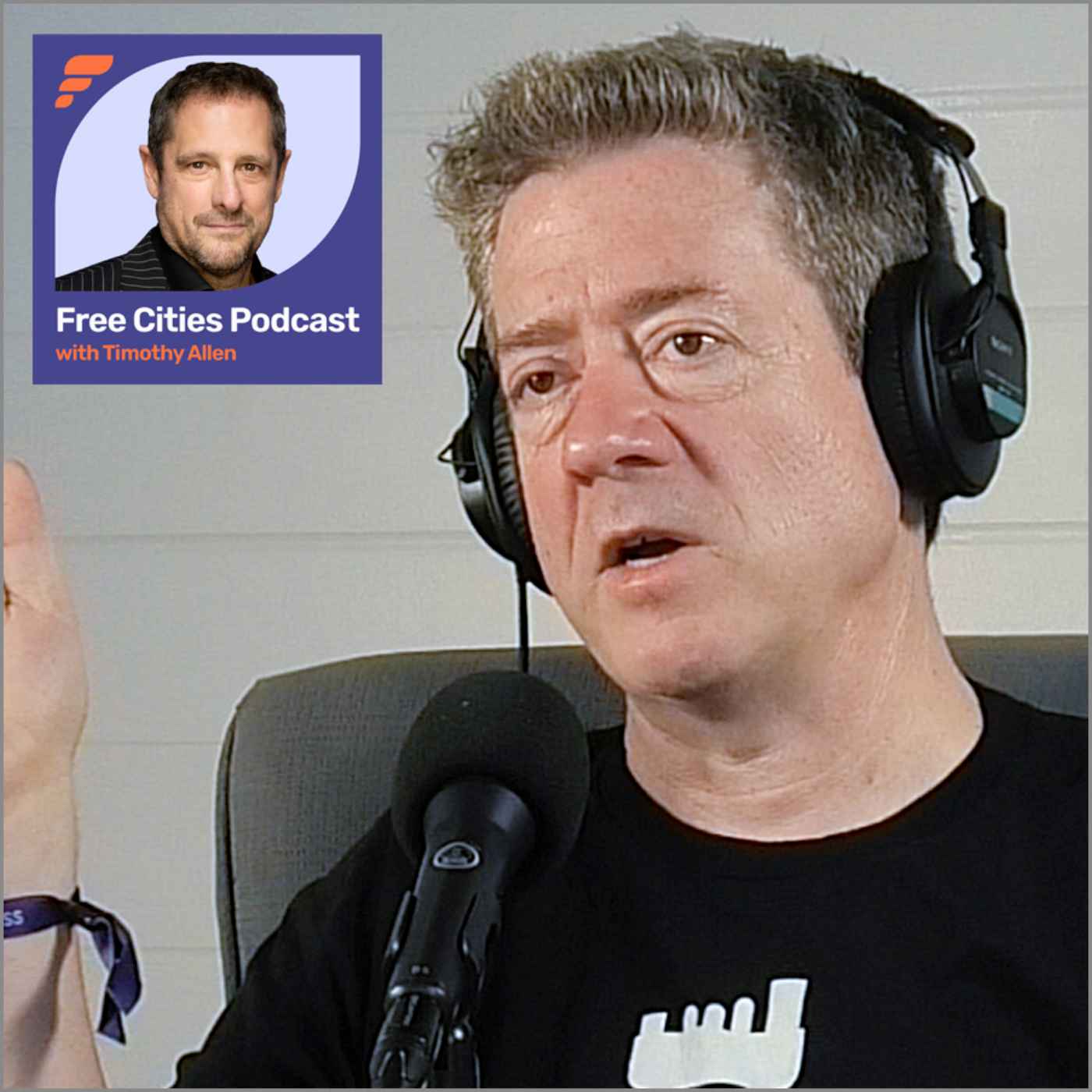
Free Cities Podcast · Timothy Allen
Seasteading has reached “escape velocity”, says Joe Quirk. But can AI help him tell its story? Timothy Allen catches up with Joe Quirk, president of the Seasteading Institute, in Próspera. Fresh from Timothy’s tongue-in-cheek conference presentation, which included a section entitled “Don’t Listen to Joe Quirk”, one of the podcast’s most familiar returning guests arrives ready to defend himself. First, there is seasteading news to discuss. Joe reports that an ArkPad floating home has secured a Panamanian flag, a milestone for a design intended to operate in international waters. He also describes a floating resort in the Philippines that moved after trouble with local authorities and found a more welcoming jurisdiction. What changes when a business can take its buildings with it? Timothy then tries to discover whether Joe ever thinks about anything other than seasteading. That takes them into his garden, his writing routine and his book about Chad and Nadia’s escape from Thailand. Built from years of interviews, the story brings together a manhunt, a love story and the beginnings of a seasteading movement. But how do you turn all that material into a book people cannot put down? Timothy thinks AI could help Joe sharpen the manuscript. Joe wants the response of a real human reader. Their disagreement opens up questions about creativity, honest criticism, privacy and trust. Does useful feedback depend on who gives it? What does an artist need from an audience? And can synthetic voices convey the fear, humour and humanity of a true story? In this conversation: What happened when Timothy roasted Joe at the Free Cities Conference Using a podcast archive and AI to develop a comedy presentation Cruise ships as a practical example of private governance What a Panamanian flag means for the ArkPad project Combining floating accommodation, tourism and fish farming How moving a business can change its relationship with local authorities Joe’s writing routine and the difficulty of switching off Telling Chad and Nadia’s story through their own words Whether AI can offer useful criticism without being a human reader Manuscript privacy, trust and the provenance of feedback The Odyssey, the hero’s journey and finding patterns in real events Editing, self-publishing and the challenge of producing an audiobook with multiple voices Enjoy the conversation. Timestamps (audio version, includes Timothy’s episode introduction): 0:00:00 - Episode introduction 0:00:30 - Welcoming Joe back and taking the conversation beyond seasteading 0:04:25 - Freedom Fest, Bitfest UK and the FREECITIES discount code 0:05:23 - Próspera, Shakespeare and a new critique 0:06:19 - Research into charter cities and the offshore world 0:07:30 - Veritas Villages: communities in Latin America 0:08:44 - Value-for-value supporters and listener feedback 0:09:40 - AmityAge: owning the energy behind Bitcoin 0:11:21 - And finally: Kitimat elects a dog mayor 0:13:04 -...
0:00Welcome to the Free Cities podcast. My name is Timothy Allen and this is the official podcast
0:17of the Free Cities Foundation.
0:30Hello and welcome to this episode number 206 of the Free Cities podcast. Yes, hello.
0:38Welcome to Friday, everyone. I hope you've had a great week. I've had a lovely week.
0:43Big news coming. I'm going to leave it until November, but I will be telling you some big
0:50news next week. Oh my God, did I just do an announcement of an announcement? I just think
0:56I did. Anyway, put an announcement next week you'll be interested in. Right, this week though,
1:01well, we've got a returning guest. He's a very popular one and a returning theme. He always
1:08brings a theme with him and his theme is seasteading. And my guest is Mr. Joe Quirk.
1:15He talks about things like, if you could take your home and your business with you
1:20when you left a jurisdiction how differently might its government treat you yes we all know
1:27Joe Quirk and FYI since you do all know Joe Quirk I did try and steer this conversation in a
1:35different direction other than seasteading for once obviously we have to talk a bit about
1:40seasteading and I would say I was kind of half successful it's not easy I think I was trying to
1:46find out if Joe had any other interests other than seasteading and whilst he may have been speaking