
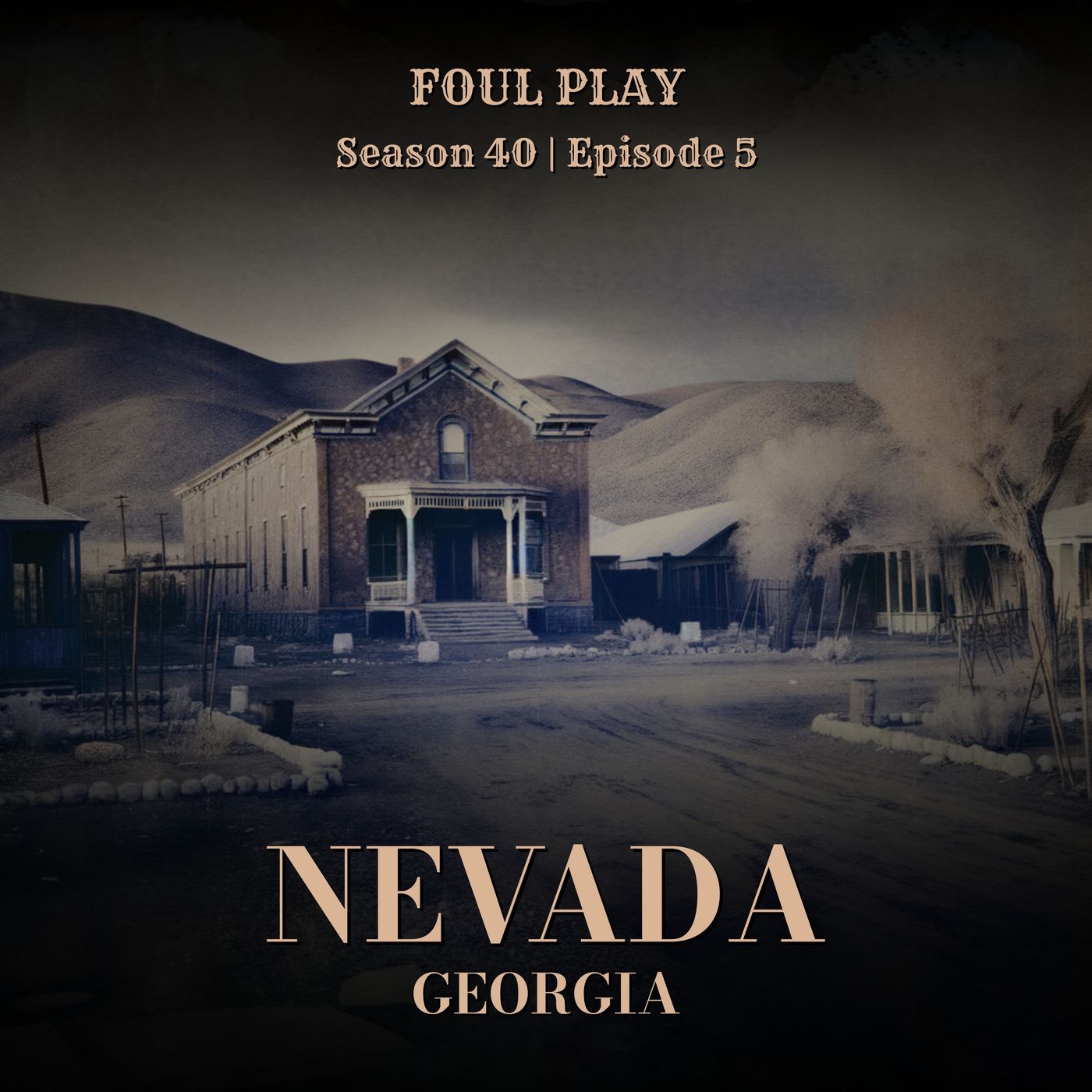
Foul Play: Crime Series · Shane L. Waters, Wendy Cee, Gemma Hoskins
Historical SignificanceIn Georgia, a Webster County posse pursued Susan and Enoch one hundred twenty-five miles to Coffee County, Alabama. The grand jury indicted both on May 27, 1872 — twenty-three days after the murder. Enoch's trial lasted a single day; the jury deliberated for three minutes. Both were sentenced to death on May 30. Twenty-six days from murder to death sentence. The Georgia Supreme Court denied Susan's appeal in *Eberhart v. State* 47 Ga. 598 (1873), with Justice H.K. McCay dismissing calls for mercy. Governor James M. Smith refused clemency four days before Susan was to die.Sheriff L.R. Barnard traced the Potts family over five hundred miles to Rock Springs, Wyoming, arresting the couple on February 16, 1889. Josiah Potts claimed Fawcett had killed himself after sexually abusing their daughter Edith, then approximately five years old. The abuse allegation was never investigated. The jury deliberated four hours — unanimous guilty verdict. Two hundred sixty-seven residents of Carlin petitioned the state board of pardons to commute both sentences to life imprisonment. The board refused. Sheriff Barnard himself opposed the execution.The Investigations and TrialsCase B — Georgia (1872): On May 4, 1872, after ten o'clock at night, Enoch Spann strangled his wife Sarah with a plow line, breaking her neck. According to his confession, Susan Eberhart held a handkerchief over Sarah's mouth at his command. Susan maintained she had been asleep and was compelled to participate under direct threat from a man who had already attempted murder twice — including a staged buggy accident where Susan had pulled Sarah from a swollen creek to save her life.Case A — Nevada (1888): Miles Fawcett entered the Potts household on New Year's Day to collect a debt and leverage knowledge of Elizabeth's bigamous marriage in Fresno, California. He was never seen alive again. His remains — charred, dismembered, buried in pieces throughout the cellar floor — were discovered on January 16, 1889, by the new tenant George Brewer. The only identifying object: a fragment of burned trouser pocket containing Fawcett's pocketknife.The CrimesSarah Spann was approximately fifty years old. She had lost a leg and lived as an invalid in a one-room log cabin inWebster County, Georgia, dependent on her husband Enoch for everything. A Confederate veteran whose own fellow soldiers had described him as "very ignorant and very imbecile, Enoch Spann was the man she was married to and the man who killed her.Miles Fawcett was born around 1830 near Manchester, England. He came west following the railroad, settling in Carlin — a Central Pacific division point established in 1868 with a population of roughly eight hundred. Fawcett worked a small ranch outside town. He kept to himself, known well enough that his pocketknife was recognized on sight but private enough that neighbors called him "Old Man Fawcett" and left it at that. He was fifty-seven when he disappeared.The VictimsNew...
0:03[SPEAKER_01]: New Year's Day, 1888.
0:06[SPEAKER_01]: A man named Miles Fossett, hitches a team of forces outside a house, on Silver Street in Carlin, Nevada.
0:15[SPEAKER_01]: He is 57 years old, Englishborn.
0:19[SPEAKER_01]: A carpenter and a small rancher who has lived in this railroad town long enough to know everyone and be known by them.
0:28[SPEAKER_01]: He has told his friend, J.P. Lineberger, where he is going, and why?
0:33[SPEAKER_01]: The pot's family owes him money.
0:37[SPEAKER_01]: He intends to collect.
0:41[SPEAKER_01]: Fossil carries a debt note.
0:43[SPEAKER_01]: He has done this before.
0:46[SPEAKER_01]: Walked up to a house, knocked, settled business.
0:50[SPEAKER_01]: Our routine visit on a cold morning.
0:58[SPEAKER_01]: never comes back out.
1:01[SPEAKER_01]: No one in Carlin reports him missing.
1:05[SPEAKER_01]: For a four year, the town simply absorbs his absence.
1:10[SPEAKER_01]: An old man who is here yesterday and isn't here today.