
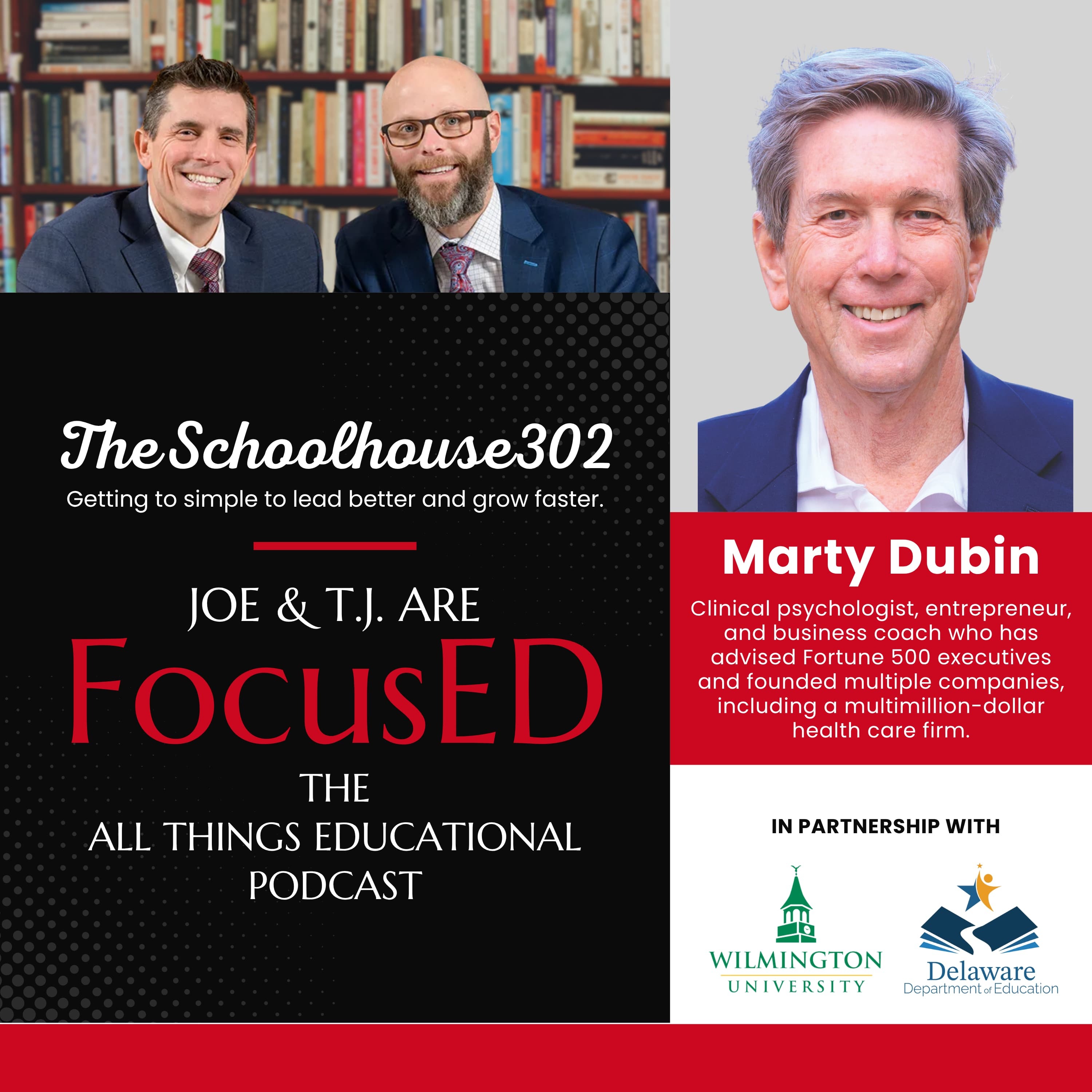
FocusED · Joe and T.J., TheSchoolhouse302
Our guest for this episode of FocusED is Marty Dubin, author or Blindspotting: How to See What's Holding You Back as a Leader. Marty explains that his book emerged from reflecting on a diverse career and realizing that much of leadership effectiveness comes down to self-awareness rather than technical skill. He shares that leaders can read the same material and learn the same strategies, yet apply them very differently because of who they are. For him, the core of leadership is understanding personal tendencies—how one naturally thinks, reacts, and leads—and recognizing when those tendencies don’t match the situation. He emphasizes that blind spots are not weaknesses or skill gaps but moments when a leader’s strengths are overused or misapplied. Marty notes that highly successful leaders often rely on behaviors that have worked repeatedly, creating a positive feedback loop. The challenge arises when those same behaviors are used in the wrong context. Marty describes emotions as one of the most accessible entry points for identifying blind spots. He shares that feelings like anxiety, confusion, or frustration can signal that something isn’t working, prompting leaders to ask what role they might be playing in the situation rather than immediately blaming external factors. He also explains that blind spots don’t necessarily increase with authority, but leaders become less likely to notice them as they gain success. Marty says that as responsibilities grow, reflection often decreases, and leaders default more quickly to familiar patterns. To improve self-awareness, Marty suggests a practical exercise: identify core strengths and then consider what happens when those strengths are used “too much.” He explains that this simple shift helps leaders see how their best qualities can become liabilities in certain situations. Marty highlights that growth comes from small behavioral adjustments rather than major personal transformation. He shares that leaders don’t need to change who they are, but they can change how their traits show up in different situations. He compares this to elite athletes making small technical tweaks that lead to significant performance gains. He also discusses the importance of creating cultures where feedback is normal and safe. Marty explains that leaders must model vulnerability first by sharing their own blind spots, which builds trust and encourages others to do the same. He introduces a practical feedback method—Situation, Behavior, Impact—as a way to keep conversations specific and constructive, helping teams address blind spots without defensiveness. Marty connects blind spots to burnout by suggesting that unclear measures of success and overused strengths—like altruism—can contribute to exhaustion. He notes that leaders benefit from identifying meaningful indicators of success and recognizing when positive traits are being stretched too far. He adds that small wins and clear goals can help counteract burnout by providing...
0:00Hello everyone and welcome back to another episode
0:03of Focus Ed where we shine a light on what matters
0:07most in education today. I'm Joe and TJ and we
0:12are the Schoolhouse 302. FocusED is a collaborative
0:16program with our partners from the Delaware Department
0:19of Education and Wilmington University where
0:21we bring you innovative conversations from thought
0:24leaders, practitioners, and educational voices
0:27that are shaping the future of teaching and learning.
0:30At the end of the show, definitely listen to
0:33our message about our sponsor, Bullseye. It's
0:37a solution you need to be a stronger instructional
0:39leader and manage everything from walkthrough
0:43feedback to professional learning. And you know
0:46we are all about that here at The Schoolhouse