
Flip Your Mindset · Stacey Uhrig
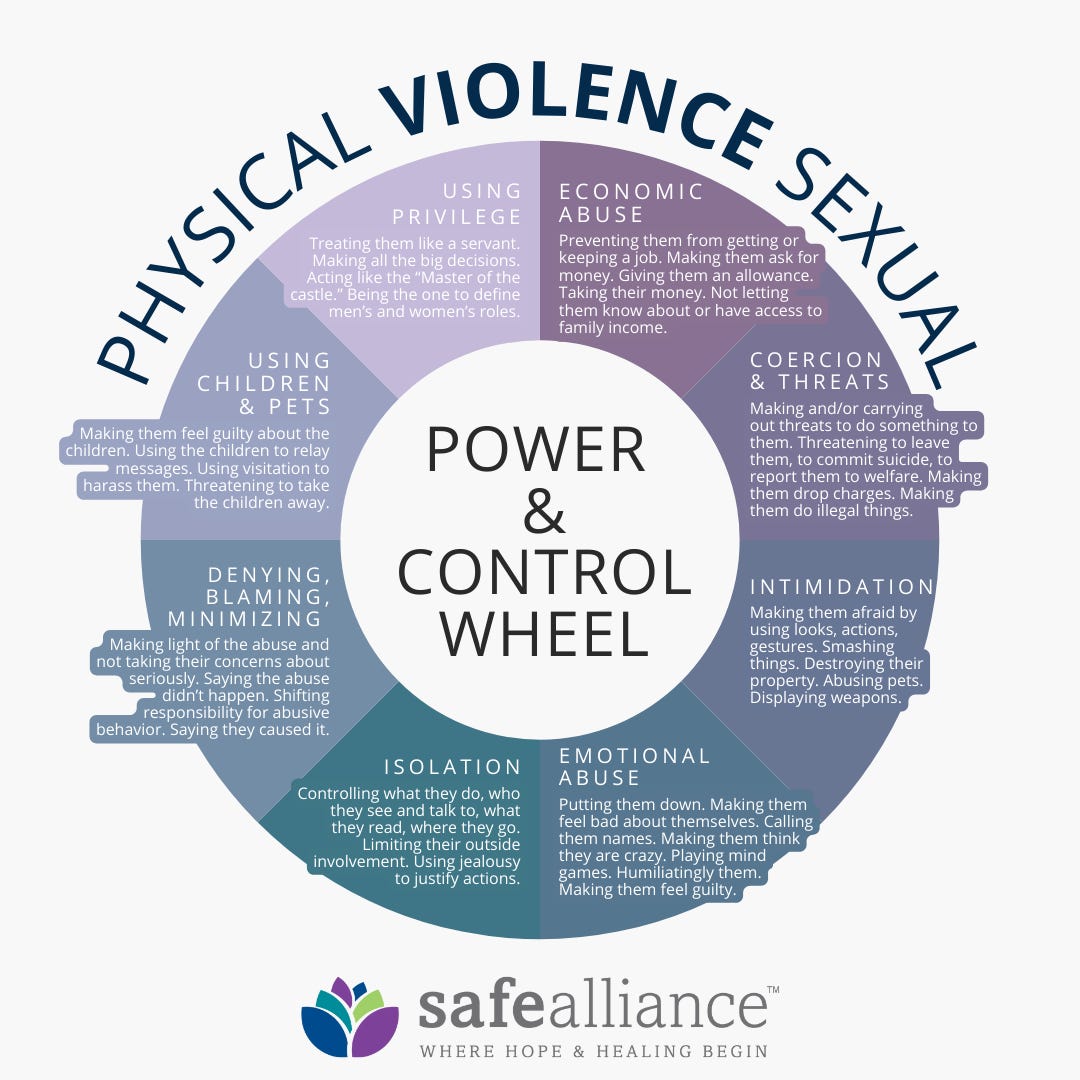
You do not always know the moment a relationship starts to make you smaller. There is rarely one scene you can point to. No single blowup that explains it. Instead there is a slow narrowing. Your world gets a little quieter. Your choices get a little fewer. You start editing yourself before you speak, managing someone else’s mood, rehearsing how you will explain the most ordinary things. And if anyone asks, you hear yourself say, “It is fine. We just fight sometimes.” This episode of Making Sense Of... is for the version of you that has wondered, quietly, whether “fine” is really the right word. I want to talk about coercive control. THE THING WE WERE NEVER TAUGHT TO NAME Coercive control is not one bad argument. It is not one jealous moment. It is a pattern. It is the steady, repeated use of pressure, fear, isolation, and manipulation to shrink another person’s freedom until their whole life organizes around avoiding consequences. That is what makes it so hard to see from the inside. Each individual moment can be explained away. He was stressed. She was tired. It was not that bad. But the pattern is the point. Over time your nervous system stops living from choice and starts living from threat management. You are not weak for missing it. You were never handed the map. So let me hand you one. THE POWER AND CONTROL WHEEL Decades ago, advocates in Duluth, Minnesota built a tool called the Power and Control Wheel to make these invisible patterns visible. I use it in this episode because it does something rare. It takes a hundred confusing moments and organizes them into a system you can actually recognize. There are 8 spokes on the wheel. As you read them, notice what your body does. 1. Using coercion and threats Making you afraid of what happens if you do not comply. 2. Using intimidation Communicating danger through looks, gestures, or a sudden change in tone, without a word being said. 3. Using emotional abuse Put downs, name calling, humiliation, and mind games that slowly change how you see yourself. 4. Using isolation Controlling who you see, what you do, and where you go, until your outside relationships feel expensive to keep. 5. Minimizing, denying, and blaming Every conversation about their behavior somehow ends with you carrying the blame. 6. Using children and pets Turning a child’s or an animal’s safety, access, or love into leverage. 7. Using privilege Using status, money, gender, or authority to reduce your choices and your credibility. 8. Using economic abuse Controlling access to money, information, and resources so that leaving feels impossible. One note that matters to me. The original wheel says “using male privilege.” I say “using privilege,” because an abuser does not have to be male, and control can come through money, fame, citizenship, professional standing, or religious authority just as easily. I also add pets alongside children, because anyone who has loved an animal knows they can be used as leverage too. BEYOND THE...
0:01SPEAKER_00Welcome to FLIP YOUR MINDSET,
0:02SPEAKER_00a podcast designed to guide you on your healing journey back to self.
0:07SPEAKER_00I'm your host, Stacey Urig.
0:09SPEAKER_00We're all about mental health
0:10SPEAKER_00and understanding how our past experiences shape our present day lives.
0:15SPEAKER_00Join me as we unread This
0:23SPEAKER_00podcast is your laid-back space for navigating the twists
0:27SPEAKER_00and turns of your mental health journey.
0:29SPEAKER_00So grab a seat, let's chat, learn, grow, and start our journey towards healing together.
0:35SPEAKER_00Ready to dive in?
0:37SPEAKER_00Let's get started.
0:40SPEAKER_00Welcome back to my series, Making Sense Of.
0:44SPEAKER_00Today, we're going to be talking about making sense of coercive control.
0:49SPEAKER_00Not that we can make sense of it.
0:51SPEAKER_00I'm trying to explain to you guys what it is so you can be on the lookout.