
Five Dubs Podcast · MDDC Press Association
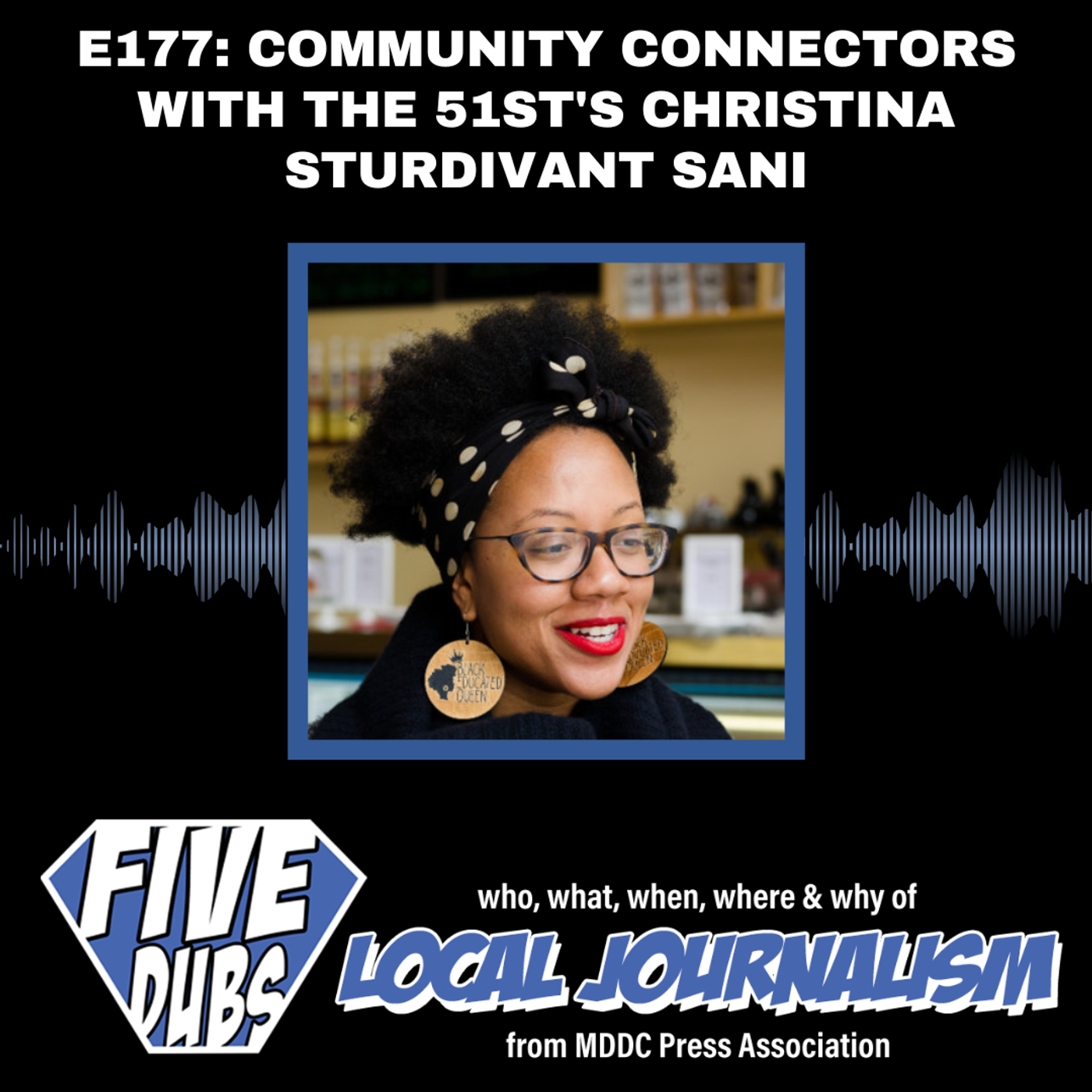
In this episode, Rebecca talks with Christina Sturdivant Sani, executive editor of The 51st, about the organization's innovative Community Connectors program and its approach to building trust through community engagement. Christina explains how The 51st—a worker-led nonprofit newsroom serving Washington, D.C.—hires trusted community members to gather feedback, identify story ideas, and ensure its journalism reflects the needs of the people it serves. They discuss how Community Connectors attend neighborhood events, conduct surveys, and create ongoing relationships that help shape editorial decisions and strengthen local trust. The conversation also explores The 51st's commitment to service journalism, audience-centered reporting, and sustainable community engagement, offering practical insights for news organizations looking to build deeper connections with their audiences.
Rebecca Snyder: Welcome. I am delighted to have Christina Sturtavant Sani, the executive editor of the 51st, here with me today. Welcome. Glad to have you. Thank you. and I wanted to have you on Five Dubs to talk about your Community Connectors program because it's as we talk about news media and the relevance of well, really making sure that newsrooms and news media are deeply connecting with their audiences and providing the information that people need, sometimes it gets lost in the shuffle, like, you know, who are you trying to connect with? How are you getting that feedback? and really connecting in with the with the community. And so that's why I thought the Community Connectors program would be such a fabulous thing to talk about. Awesome. So Why don't you tell us first about what the 51st is all about? Because not only are you doing cool things in community engagement, you're doing really interesting, innovative things with how you're literally organized and what you're doing. So tell us about it. Yeah, we are we're a worker-led nonprofit news outlet for DC. So instead of being owned by a billionaire and run by C-suite, the journalists actually run the newsroom. And then we produce, you know, the content. We do a lot of service journalism. we believe journalism is a public good and all DC residents, you know, deserve to have like trustworthy news and information. So we do a lot of how-tos. We just released a voter guide today because there's like a big election coming up, a couple of big races coming up in DC and just like giving People, the resources and the information they need to understand, like opaque processes and just like live better in the city. And then we do a lot of cool profiles and features about people that we think, you know, make DC what it is. So I I wanna A, are you the only worker led news organization? There's not a lot around, but are you the only one in our mid Atlantic area? We're the only one in D C for sure. there are a couple models in New York. So how does that like how does that work on the regular? So it are are you consensus-based or or is it more of a cooperative? how does it how does it manifest? So as we like to say, we're we're building the plane as we fly, but right now the way it works is we have different committees. I am the only person who happens to be on every every single committee. So we have the editorial and then we have a governance committee. operations committee, and an audience committee. And so the governance committee, which is four of us right now, we make like the kind of like day-to-day decisions and then we have a worker board where we meet periodically and make like bigger decisions like hiring decisions and like the budget and and things like that. So yeah the different committees kind of approve things within their purview and then like larger decisions we take. to the board and then there's like a pathway to the board. If you're new, you have to be with us for I think about like nine months. And then there's like a period where like a trial period and then you could officially be on the board. So I mean you've worked in news media for a long time. How does that feel just sort of on the ground as opposed to other business models that you've been a part of? Yeah, one of the things that 'cause I'm not well, I'm a co founder, but There was like an original like six. and when they approached me about the fifty first and said that it that it was worker led, it was appealing because I had never worked in a newsroom like that. And I was really interested in like co-op structure and things like that. And so when I got into it, just like the idea of like I've done entrepreneurial endeavors, so I felt what it's like to like be your own boss, but like being your own boss and making decisions like with a small group of like team members who you trust is just like very different than working in a newsroom where you have to go through all these people and like send all these emails and have all these meetings before something gets approved versus like we can just come together and troubleshoot things and just like make the decisions you know, right there. It's a lot easier. But I will say that it's a split because I'm doing operations, I'm applying for grants, I'm doing governance stuff. So I can't do all of the editorial too. So It's kind of a lot. It's really interesting being in like a a manager position and also a journalist. I wouldn't trade it, but it is like work. It's serious work. Well, it feels like it could be a lot, but you're also and and I feel like this kind of rolls into the community connectors program that, you know, you are deeply enmeshed in sort of how you're approaching. approaching the work and what you're doing. Like what I what I really like about the 51st is that you're kind of living your values in really specific and concrete ways. So in the in the s being useful in the service journalism that you're doing and and like focusing in some ways like on nuts and bolts strategies for people living better lives sounds so trite, but like living their best life Because you're empowering them with information. I feel like that kind of vibes into the newsroom culture as well as what you're doing with the community. Am I getting that right? Or is is there a through line that you're seeing? Yeah, definitely. Because like, say for instance, we had an article last winter and it was about if you're a renter, what to do if you don't have heat. in the winter or like what are your rights? Or we did one for the summer, like what if you don't have AC in the summer? what to do if you're arrested? how to get an abortion in D C. Just like these things that people that might seem simple, but people r like really don't know the steps to it. And part of the problem is that we kind of have like a built in audience from a previous publication where a lot of us work called DC us and it was shut down and the fifty first kinda came out of the ashes of that. But a lot of The the audience for DC is was very like white and transplant. And DC like used to be Chocolate City and it's still like 42% black, you know? But a lot of black residents in DC like don't really trust the local news. but they are probably the ones who like need this information the most. So instead of just relying on like our default audience, like we make a point to Go into the communities. We hire like trusted community members to pop up in different areas, different events, and like we host different events. We're having one tonight to talk to people who feel marginalized and feel like their stories aren't being told because like they're the ones who need this service journalism the most and also like the feedback loop of it all, like they can pitch us stories and tell us what they're going through so that. we make sure that our stories are reflective of them and their experiences. So i it feels like the when you say community directed, like it really is that feedback loop is super important. And if they're if sort of the the core DC population, and I think the the the white transplant population kind of gets a lot of attention in DC as it's gentrifying and and and whatnot. But you know, the real sort of history of DC has always been, you know, the the African American communities and and really just strong cultural forces there. where where do you where does that audience get their news if they're not getting it from you? I sort of feel like some of the things that you're putting out there are very like Googlable things, but we can't always trust in in the Google aspect of things. So talk to me a little bit about trust and build and and how that kind of is interplaying with how people are getting information. Yeah, we've done a lot of surveying and I feel like a lot of people in DC get their news from social media. Like a lot of people will say social media, even like my siblings, like my family, my cousins, like, social media. And I'm like, okay, but like what was the outlet? Like what was the Right, let's unpack that. It's not just Social. And they don't know. Like it could have come from the 51st, but in their minds, it's just like, social media. Like my friend shared it. so we get that answer a lot. We also get group chats. Like a lot of people eat whether it's like a neighborhood group chat or like a family group chat, and they just share information in there and they which are people that they trust. So that makes sense to get news from them. And then a lot of people watch T V, like local news in DC, like broadcast news is like still a thing, especially for you know, like older residents. So I think those are the top three places. I mean the Washington Post still exists even though they downsize, you know, tremendously. the Washington City paper exists, but they might have like one or two reporters now. Axios D C is around and they're doing good work and City Cast is building. So and there's another so there are like organizations. Yeah. Yeah, the informer, the Afro. so there are like legacy publications that are like still holding on, and then there are new ones that are arriving. But yeah, it's a it's a trust thing because when our community connector went out to War Seven, which is one of the the demographics that we cover, they were like, he was like, Have you heard of the 51st? And they were like, No, what's the fifty first? And then he's like, We want to write stories, you know, about you. And they they're like, Show us the stories. And at that point, we were very new, so we didn't have any. So it's kind of like We want to build trust, but they're like, if you build like show me. So it's like we're trying to get the information from them about what they want. And then they're like, Show me what you have. So it's kind of like, you know, trying to like figure that part out. But now we have like a dozen stories about war seven. We have like a a column called Axe of DC Native. Cause right now for our community connector program, the target audiences are people who live in war seven, which is like a majority black war of the city that's often like marginalized, and then DC natives and we want to expand to different groups eventually. So then your community connector tell me a little bit about these these people that are going into different different neighborhoods. And then also, y'all are not huge. So how are you strategizing on covering your like your catchment area, your your your group with the resources that you have? But first tell me about your connectors that are going in. Yeah, so our first community connector, his name is George. He's he actually has a journalism background. He's also an artist and he lives in Ward Seven. And I guess the way it started was just me being biased and like taking the lead because initially, like from the very beginning, the fifty first was out in the community. They were popping up all over the city and all eight wars, you know, at farmers markets and places like that, and just collecting. loads and loads of information. And then when I came, they were like, we want to do a program that's more like targeted to specific people. And I was like, maybe we should do War Seven. That's where I grew up. So I'm biased. But also War Seven like just doesn't get a lot of attention in the city. And they have issues, like real issues and like just things that they want to see in the news that's not being covered. And so George was already kinda like freelancing for us. So I asked him if he wanted to be our first community connector and just like talk to his neighbors and pop up at farmers markets and like community meetings and things like that and have one on one conversations with different people. And he was like, sure. Like he was like super excited to do it. So that was just kind of like our palette was just him going up and popping up at places. And then he got a lot of pushback. He's like I mean, I did get some credit because he used to write for the Afro American newspaper. And they were like, I remember you from the Afro. So, you know, like that builds trust there. And he's like, Yeah, like I'm legit. I've been like writing about, you know, local news for a long time. and so he was, you know, building credibility over time. And I think he's been doing it for maybe like a year and a half now. And then our other community connector for DC natives, their name is Dwayne, and They're a DC native. They grew up in Ward Eight. they're also like a poet and an artist and like does all these like amazing things. And I had this idea for a live event called Axe a DC Native Live. It's a trivia game show. And I asked Dwayne to host it and he did like a really good job at it and I was like, you should be more involved with the 51st. And so I asked him if he wanted to be a community connector. For DC natives. And so that kind of just happened organically. And so we've been hosting these events and he's been going out to festivals and we were talking to people. He does like profiles of DC natives that we put on Instagram. So it's been moving from there. And then we got a twenty thousand dollar grant from the listening post collective for war seven. Congratulations. thank you. To get four hundred surveys by July. So we're working on that right now, and if we get that done, then we can apply for more money to kind of work on some type of distribution like news access project. So we're hoping to do that later this year. So the community connectors, are they kind of just like free range roving like wherever they're going, they're sort of like brand ambassadors or are you directing them to be like, okay, here's your roster of like festivals and outreach that you're responsible for this week? Yeah, I'm like a super type A person. I love spreadsheets and air tables. So it's very organized. so we have a we've developed this over time, but we have a form that they fill out and they say whether they want to they talk about the event that they want to attend and we get information about it. We also just started a street team for volunteers so that we can like have more people at events. So on the forum they'll say like whether they need a street team member or someone else to accompany them and then I'll look over it and then they'll go to the event. And then it's also like what is the purpose of going to this event? Are you passing out flyers? Are you getting information one on one? Just like being a presence and they they say that. but in the original contract, I think George and Dwayne were required to do two table at two events a month. So that's how it started. So in a year we would pop up at like Forty eight events, which is crazy. that's a lot. Yeah, it is. and then some and then we started hosting our own events. So like say we host like we're popping up at the Benny Row Library with like hot chocolate or free ice cream. Then instead of tabling that month, then we would host our own event. So yeah, it's like forty eight events a month minimum. Either we're hosting or we're like popping up somewhere. That's amazing. So I when when people are when they're out in the community and and at the pop-ups. What do they actually have? Because you're you're a online only publication. So it's not like they're handing out publications. I mean maybe there's flyers, but what are they actually giving? And do they have to hunt people down or are they coming up to the table? we try to we're learning to go to events where pee a lot of people are there. So like if something else is already happening or if there are other like people tabling there, then it's a better chance that people will come versus I think one time George just like tabled at a library and really nothing was going on. And so they just walk right past him 'cause they're like, I'm here for books. Like I'm not here to like stop and like talk to you. But if it's like an official event and people are like going around. So like those are the types of events that we like to do. And then George has this it's like this wire like presentation thing because he's like an artist, so it looks like really cool. And then he'll write like if you were mayor of DC, like what would you do? Or like what do you want people to talk about in War Seven? Or what what do you want from your news? And then people will have like sticky notes and then they'll like put them on there. so that's kind of like interactive and then we'll talk to them about those. And then we have surveys. Because we're trying to get four hundred surveys, we usually do a a raffle too. So if they fill out the survey, then they'll be entered to get like a gift card somewhere. We have like really cool stickers that this DC native artist designed. So like people can have free stickers. And then sometimes we'll have like ice cream or hot chocolate or something like that. I'm sure that's always a draw for sure. So it feels kind of like an art install an interactive art installation where people can like put their thoughts up and interact. So on on that. On the survey, what types of things are you asking about? The survey was an interesting thing too, because at first we had like a really long survey that I think George was using for like one-on-one interviews, and then he started using them at events, but people are like, I don't even know who you are. I'm not about to complete this really long survey. So we really had to scale back and figure out like the most important questions. So I think like the three main questions might be I don't even think it's where you get your news. It's like Is there a story about your community that you would like to see in the news? And maybe it's is there anything that you are tired of seeing or like you don't want to hear about anymore that's being like overcovered? and then just like demographic information, like where they live, Yeah, it's really simple. The one we have now is like really short. And then once we build a relationship with them, we have a longer survey. And it's like, what are your news consumption habits? Like where do you get your news? Like we were talking about earlier. And like what are you interested in? It's a whole list like transportation, justification, business, like, and then they go through that whole thing. So when you and I think that's that's important and I I wanted to draw out that you're building a relationship with people. So it's not, you know, an Nobody's gonna like tell your life story. Nobody that you want to have tell their life story is gonna tell it to you at first meeting at a festival. But you do want to hear, you want to really embed in in the community. And your focus right now seems to be Ward Seven. So, like, how are you building that relationship once once they sort of fill out maybe the short-term survey or or working with George in in some capacity? Do are you sending out like newsletters or how do you how do you draw them into the site in a way that if everybody's saying, I'm just getting my news from social media, how do you differentiate or get them to come to the 51st? Yeah, so we kind of structured a funnel of sorts that we that George observed and we're kind of putting it to work, but not fully right now because we're still in like the the early stages, but basically If somebody like meets us and we're tabling somewhere, that's just like the first touch, they might fill out like a survey. And if they fill out the survey, George recently started doing like monthly emails just for War Seven residents specifically because our newsletter comes out every Thursday, but we do a special monthly email for them about like the top stories that we cover in the month that relate to them specifically and like upcoming events and things like that and like how to be involved and you know, maybe they want to write opinion piece or access DC native column or things like that. And so yeah, they get on the list. And then that's another way to connect with them. Then some of them like email us pitches or tips and then we'll have a one on one conversation with them. part of the campaign right now we're gonna do like targeted ads on Instagram so they can start seeing us on social media. but yeah, it's like a gradual trust building process. And then eventually like way down the line, we'll try to get them to become subscribers. But that's like our last like thing that we want to do. And now is that kind of based in market research, or are you feeling like it's a trust building exercise? If you I guess I'm I'm inarticulately asking, like, do you have kind of the research on this on this relationship development or are you just kind of doing it by what feels right in the moment at each step? I think it's a little bit of both. Like Dwayne has training and I think he said, I forgot what it's called, but it's something like It takes like seven interactions with people to really like know who you are and things like that. And so things it's like classic sales, yes. Yeah, exactly. So like we have we can't just like go to the Benning Road library one time and expect for people. But if they keep seeing us over and over, there are like a couple of people who come to all of our events and they're like everywhere. so they see us like all the time, which is like really great. and so part of it is like that research where you know we know that we have to go deeper and show up continuously and like constantly and be like a constant presence and then part of it is based on just like vibes like George is like they don't want to do this long survey we need to iterate or something like that. So kind of both. Mm-hmm. No, that that makes perfect sense. And then I'm wondering in that you talked earlier about that feedback loop of you're getting information or you're getting ideas. So can you talk about how that's showing up in in the site and maybe some of the instances where you've used ideas from the field and how that worked? One thing that we're trying to do, so in our newsroom, like at our editorial meetings, like everyone is aware that we have the community connected program. So if there's a story that's pitched from anywhere and it has a like a war seven angle, we try our best to to do it. And then if We're working on a story and we need sources. Like we try to source like DC natives, not like only, but we we try to be just be aware and like conscious of like who our sources are, what our stories are, just because we know we want to reach those populations. And then another thing we're doing is we have we have one other community connector who we were able to hire through the grant. And so we have all team meetings, and the community connectors are able to like pitch the editorial team. on stories based on what they heard in the field. The issue with that though is that some people are just like I like I don't know, like I want a grocery store or people tend to tip pitch like topics, but not stories. And so we have to kind of like train the community connectors to ask the right questions of the people to get an actual story out of them versus just like a topic, like a big wide disparity, you know, just like zoning in on a specific issue or a specific person. So that's something that we're still working on to make sure that the the communication and the transition from community connectors to editorial is more like seamless and like coherent. Yeah. So Dwayne and George I think one had a journalism background because it you wrote for the Afro. And but if you're I mean the journalists tend to be you know, chatty people and gregarious people out in the world. But do you feel like the community connectors really benefit from being able to articulate kind of like what journalism is? Or is that not even a conversation that the public is is having? Like are you focusing on here's information that you can use and like getting really granular on the like the efficacy of what journalism does as opposed to like talking about the esoteric parts of journalism. You know, like I think sometimes in the industry we get all caught up in our heads about like we're saving democracy and like this is the civil society when people really just want to know like where can I get the best chicken wings or whatnot. Yeah, yeah. one thing that I think is really cool about the fifty first is like our team, which is really small and the community connector program is that like we're not really talking to people about journalism. Generally, we're talking about we're selling them on the 51st specifically. And like everyone has their own way of saying, you know, what the 51st is. So I'm usually like, we're a worker-led nonprofit news outlet for DC. But like sometimes a regular person or a just a person on the street doesn't care that we're worker-led. They're like, what is worker-led? might just be like, you know, we're a nonprofit news source for DC. And Dwayne might be like, we're like for DC by DC. so like everybody has their own little like slogan that they've like adopted that fits their personality but still talks about who the fifty first is and what we do. So that's been like really nice to see. So okay, then it it really is kind of just focusing on on like this is the effect and this is what's happening and who you are rather than like big issues. So let's go back to some of those ideas that have bubbled up and I get that sometimes they're topics and and not always like a nicely pitched story, but On that feedback loop back to you, what are what are some stories that you've gotten from the Community Connector program? We definitely we interviewed the the War Seven council member. He I think he's only like two years into his job and we actually we recently got the interview because for like a whole year he was avoiding us. Like his people like, No, no, he's not ready to talk, he's not ready to talk. interesting. Yeah, and so we told our readers and we told people in the community that we were going to interview the War Seven council member, and so they submitted questions to us. And George did the interview and then he made sure that he used the questions that the readers or the community members wanted answered. We did a story about this wasn't pitched this wasn't from the community connector program, but like once they once people in the community saw it, they were really like grateful that we did it. There was this ice skating ring in DC. I think it's the only ice skating ring in DC in War Seven and They were just having a lot of issues with it and like the kids weren't able to skate for like a year and a half and like nobody was really like listening or paying attention. And so we did a story about that. And then everybody was like really like grateful that, you know, we put it out there and then it eventually opened. Not saying it was gonna open anyway, not saying it was a direct result of our story, but like it eventually opened. and so I think that story had a really big impact with war seven residents. and then there was are you from this are you like in this area? I'm in Baltimore, so yeah. okay. So like there was this huge thing about the R the RFK stadium where the commanders football team, like whether if the commanders were gonna come back to DC, that was a huge thing and like the stadium is in War Seven. So whenever like George went out to community meetings and stuff, he would like ask people about the stadium deal and we did a lot of coverage on the stadium deal. So yeah, those are a few. Well those are all really, you know, important issues for Ward Seven. So when you're looking at your coverage area and knowing that, you know, your staff is what it is, strong but you know, small but mighty, how are you what's your strategy on covering DC? Are you deciding to say, Okay, we're we're focused on Ward seven and maybe Ward Eight, or how do how do you make those strat strategic decisions? I mean, I think the com the stories that come out of the Community Connector program are a small percentage of what we do. Like we like to cover topics that affect the majority of the city. I think our top stories we had editorial meeting recently and I think two things came out of that and I'm trying to figure out how to articulate it. So I think the first one was stories that of people or like places that have like a cult following in DC that like a group of people like really love and more people shouldn't know about. So those stories are really popular. For instance, we had one about this this lifeguard at this pool, Vaneger Pool, and like he turned the the pool into like basically like a club, like Club Banneker, like during the summer. You know and all this stuff. And like people just like love this lifeguard. But like I don't go to Banneker Pool, so I don't know anything about him. So like we did the story and then people across the city could learn more about that. So that's just something that like a a little a small amount of people know about, but we want to put more attention on it 'cause it's a very DC like specific thing or person. And then there are things where it affects a large majority of the city. But a lot of people don't even know it. Like we there was this there were Pepco hikes recently, like our utility company, and everybody was getting these really high electric bills, but you're kinda like isolated in your home. So you think it's just you, but it's like, no, it's not just you. And so we like wrote like extensively like on Pepco and then people are able to be like, okay, it's not me, like it's a citywide thing. So it's either things that are like happening citywide, but like people don't even realize it and we kind of bring it to attention or it's things that have like a cult following and like more people should know about it. So that's kind of how we look at like features and news. And then also because we're not like a breaking news site, if something happens right away, we're not going to try to like get it up the fastest. We're more like a two day, three day. So this happens now what? like we elected a new mayor, what does this mean for you? Or the Potomac River sewage spill happen like how is this gonna affect you long term so like that's how we think about our stories I like that and so you had talked earlier about trying to prioritize DC natives and your when you use your sources and things like that how are you how are you sourcing your sources how are you how are you creating those connections that's a good question hmm I mean just ask them? I mean is that a prerequisite question? Not asking them specifically, but I feel like I've been in DC journalism for about fifteen years. So like I I like know a good number of people who are like experts on different topics. And then, you know, you can always just like interview someone. I don't do a lot of interviews anymore. Thank God. I don't really like reporting. like editing editing. But yeah, you know, you interview someone and then you ask them to refer you to someone else and then you ask them refer you s to someone else. so kind of like that kind of like loop. And then our editor Abby has been, you know, working with people for a long time, Rachel. So we kind of already have people like in our pockets and then just like getting to know other people through the sources that we already have. Yeah. And I think sort of like thoughtfully connecting and and that's always such a powerful question like who else who else should I talk to about this issue and knowing the the kind of tone that you want to take that it is really you know close to the community and and sort of the what next idea right and sort of carrying that idea through the the 51st has only been around for maybe two years two three years no it'll be it'll be two years in October so just a year and some change Well, because I remember inviting the founders on to the podcast to really talk about this idea back when it started, but you know, sands of time, who can who can recall when you're when you're doing the work? So in these two years, like how do you see I know the mission of the fifty first is really stayed very constant and strong, but like how do you see the the concept developing and sort of what's next for it? Where does it go from here? That's a good question. I'll be honest, like we had a senior reporter who had just been in DC for like so long, maybe like 20 years. And he actually kind of like he was on the the team helping out when we first started. He was living in Singapore. Was it Singapore? No, Switzerland. He was in Switzerland, I think. but he was just like so dedicated to the mission and he was still helping out. And then when he came back to DC, he was one of our first full time reporters. And he just has like such deep knowledge of DC and like DC politics. and so we kind of like let him take the lead on a lot of the political stories. but he recently is move he's moving on to a different publication now, which at first like we were like, no, like he's leaving. But then yeah. I think it's like a really good opportunity for us to think about like who who we are, like who the 51st is, like, and it's not dependent on like just one reporter or anything like that. we have another reporter, Sam, who just came on full time and she's like young and energetic and she does like really cool like features. And so I think it's a mix of taking the interest of the the reporters that we have, but also doing it in the 51st way. And so we're still figuring out what the fifty first way like some some parts we know, like what I talked about earlier, like we know we want to do like explainers and like the third day story and things like that and like service journalism. but we're very much still building who we are, which is really exciting. It doesn't even seem like it's been so it's been a short amount of time but we've got a lot done, but it's still a lot to look forward to in the future. We're We're hiring another reporter soon, maybe two. So I'm interested in seeing like what skill sets they bring and like how they can build it up. I also just want the fifty first to be representative of like all of DC. Like you can't cater to everyone, but like as much as we can cater to like DC natives, tr longtime Washingtonians, transplants, somebody who just got here like a week ago and like doesn't know anything about DC, like they should be able to go to our site and be like, okay, this is the culture. You know, like I want us to be like ingrained in the fabric of the city. Sure. It's sort of like the the institutional knowledge where like you are sharing it. You're not gatekeeping. You're you're totally willing to share your favorite spots and your favorite things. and as you kind of like navigate who you are as you grow and develop, like how does it seems really important to reflect the community that you serve. How does that kind of happen in in like the real day-to-day? Because it feels like the community then is also shaping, you know, you've got the workers shaping what the 51st is because you're going with their ideas and their expertise and sort of their their their role. But then the community is also providing all this feedback. So, like, how do you how do you shape that in a coherent way and not just be led by kind of the loudest voices? Yeah, that's a good question. So, like, in addition to the community connector program, our audience team is like really awesome. So, Maddie, who's our develop our director of growth and development, like she She's on social media way more than she wants to be on social media, but she's like really good at like monitoring our accounts and when people add us and like mention us and like DM us, and she'll like bring that to our Slack and be like a lot of people are like talking about this thing. Like we should, you know, keep an eye out on this topic. Or also we have like our pitches and tips inbox, which my colleague Abby monitors. And then we have this thing called U Street. So if there's like something going on like s like Pepco hikes and we want to get more information about that. In our newsletter it'll in our U Street section, it'll link to like a form that we created and they can like tell us more about it. So those are like three ways that we keep up with like the community and like what people are saying, what people are talking about. And then we bring them to our editorial meetings and just try to decide like, is this a 51st story? Who else is covering it? Like how much Have people covered it already? Like if we're gonna do it, how can we add to it? Like what new information, what new angle? Do we have the capacity? Like a good a writer for it, a editor for it. So it goes through like all these different like questions until it gets to, you know, deciding on whether we're gonna do a story or not. So it sounds like you have a couple of different lenses that you look for look through to make sure that it's that you know, those decisions are are coming from a sort of a grounded place. Am I getting that right? Yes. and then I I was just kind of curious because you've been in this business a long time and and what you're creating is is there's not a lot of models for it necessarily in modern news media not and so like do you have publications or journalists that you admire you're looking at and saying, hey, I wanna st I wanna be inspired by this or I wanna incorporate what they're doing in in our work. 'Cause you're kinda making it up as you go along in some ways. Yeah. before I I came on, I think so DC is shut down I think in February twenty twenty four and then the co founders started organizing maybe around like March or April, and then around that time they identify a few publications. A couple of them were in New York and a couple of them are in Chicago. I'm trying to think of I know like Block Club Chicago gets a lot of attention 'cause they have like a special program. also defector media in New York. and there's another New York based one. So I think they talked to maybe like at least four or five of co founders of similar news organizations, whether they're like worker owned or worker led or like a co op to kind of like look to and they gave them a lot of great feedback. So yeah, I think I don't we don't have any in DC. Which is fun but like we get to be that. but there are other that we have looked to. And it's funny because I think my coworker said recently how she maybe was at a conference or something and she met someone who we'd went to for advice early on. And then he was like, we've been watching the fifty first, and now like we feel like we're competing against you guys, like we're trying to like live up to what you're doing. And she's like, my god. wow. So yeah. That's so fun. And actually, you know, it strikes me that like the Baltimore beat. it which I'm more familiar with and Lisa Snowden, who both super terrific are have that sort of like deep community engagement and it really feels like that coverage is kind of bubbling up as opposed to in many times, you know, like news gathering is happening up here and being pushed down. And so it's it's great to see that, you know, this these ideas are kind of popping up in a lot of different places. Yeah, that's a good example too, because like The Baltimore beat isn't like worker led, but it's definitely a publication that I aspire to be like. Lisa and I were supposed to chat like the end of last year, but we had to reschedule. But like I've just been like watching them from afar and I'm like, like they have these like weekly or like monthly, like happy hours. They're just like they have their annual event. my co-worker Maddie and I went to Baltimore to like watch their documentary. The beat goes on. yeah. Like so it's inspired. So yeah, they definitely feel like they are entrenched in like the culture and like the the city of Baltimore. Like I I definitely look to them for that. Yeah. And so as you are kind of looking forward to what's next, tell me you're grant funded but and you have some events. So like for people who are interested in engaging with the fifty first, how do they how do they do that? What do they where do they go? What do they do? Yeah, we're actually mostly reader funded, which is like very for us. Like we are sustained through our members. Like we we're free publication, but we have I think maybe like at this point 85% of our funding is directly from like people who pay, you know, monthly for us. and then we get grants and then we get large donations. but yeah, they can go to 51st. dot news I think it's like slash like sign up to become a member or and it's 51 s t right it's not fifty it's not written out it's five one s t dot news yeah and then they can sign up there just become a regular subscriber like you don't have to pay at all but then if you end up loving us then you can become a paid member or you can make a one time donation because we're like really powered by the people because like People are fickle, but also grantors are too and foundations. So you can't always depend on like that money and then the money from members are recurring versus like you might get like one one hundred thousand dollar grant, but it's just for like that period and you might not be able to get it again. So we're really like dependent on like individuals to to support us. Yeah. So actually I wanted and I know we we need to wrap up, but we could talk forever. I'm curious though, you know Humanities DC has their community journalism program where they're helping community members not necessarily get published but learn some of the tenets of like news gathering and whatnot. are you and I would imagine because you're you're so deep in the community that you have people who want to write for you and want to do that. So do you ever, you know, kind of team with organizations like Humanities DC or do you accept submissions and like Is there inherent tension with like getting all that all those contributors? Or are you do you have like a place for that? Yeah, that's an interesting question. we actually were just at the Humanities DC graduation last night, my co-worker on the panel. And I actually there's a woman named Dana Brozos Keller. She was a fellow at Humanities DC and she came up with the program and so I help her run it for like the first two years, a couple of years ago before I started the fifty first. And so part of the program is the community members will write an article and they get placed in different local publications. So Abby, one of our editors, was just talking to me earlier today about a story that we're gonna publish from the community journalism program. which is like really cool to be partnering with them in that way. Also one of our con community connectors, Jennifer, she is an alumni of the Community Connector Program. And then we had another digital community connector on a contract basis and he just graduated from the program. So there's a lot of like synergy between like us and them. So yeah. That's so cool. and then I just wanted to as as we wrap up, I wanted to give you the last word and ask you why the fifty first is so important to DC. I just think that trustworthy local news is important to DC. if people have news that you know they can use it'll help them advocate for themselves like whether that's you know in Congress like big picture or whether that's we actually have a story coming out that I'm editing and it's like how to use your voice in DC and this guy walks through like he was a DC public school teenager and then he advocated to have this internship in Congress and then his brother or sibling had at IEP in DC public schools and like how he advocated for that and then like this noise ordinance thing. And so I feel like giving people the tools and resources to like use their voices and advocate for themselves and also just like live, you know, more fun lives. We have weekend events, we have roundups about like how to get civically engaged. So I think it's a good balance of like the fun and the holding truth to power, like holding public officials accountable. So we have like a really good balance of that. I love that. Well thank you so much for coming to talk to me. I really appreciate it. And I hope that people go and and look at the fifty first dot news. So appreciate it and talk to you soon. Thank you.