
First Baptist Church of Asheville · First Baptist Church of Asheville
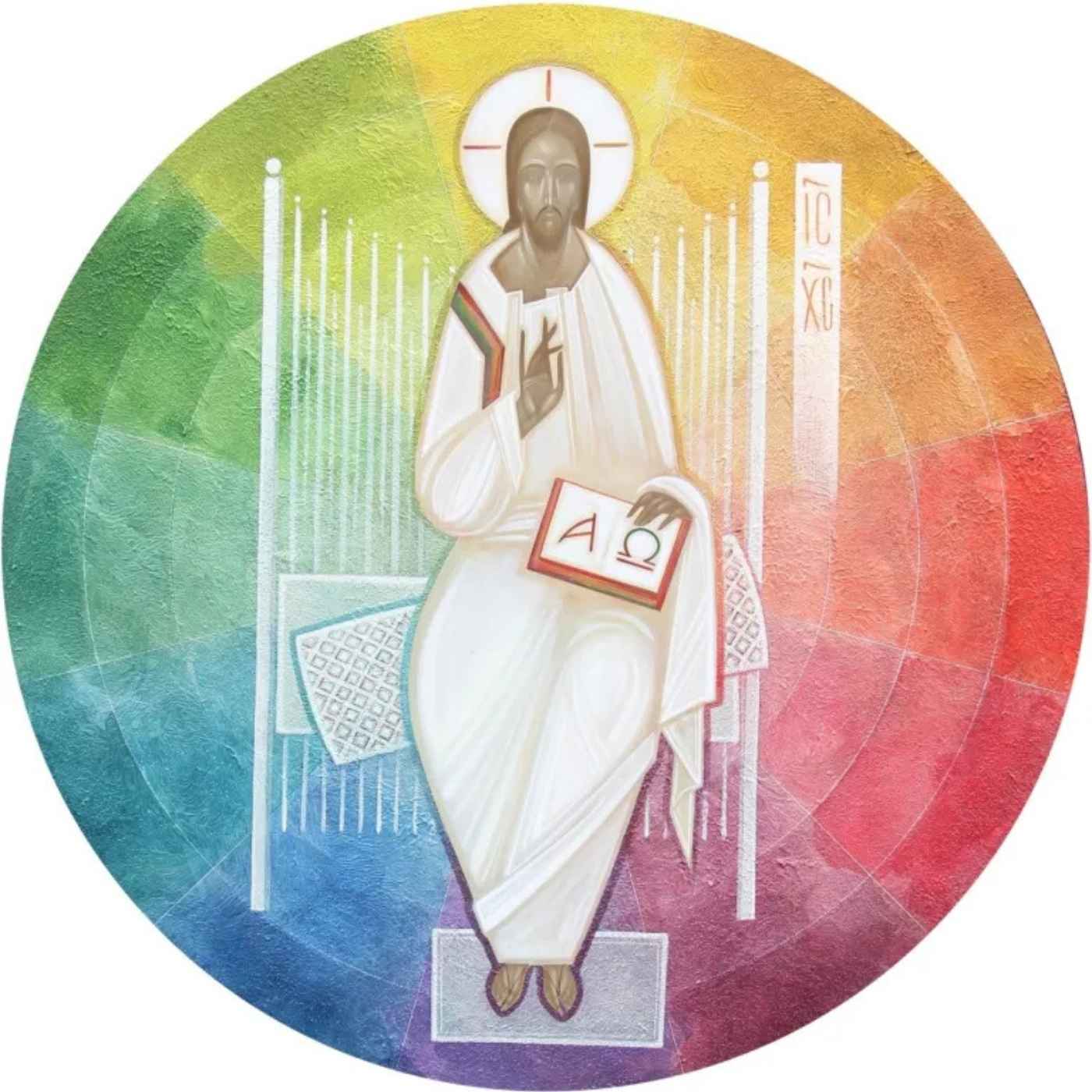
October 25, 2026. Reformation Sunday. Year A. "Reginald, ...all I have written seem like straw to me." - St. Thomas Aquinas. In today’s text, both groups of religious know-it-alls are silenced by the wisdom of Jesus. Pharisees and Sadducees represent the religious norms for the Jewish people, and with the backdrop of the Roman Empire pressing down upon them in first-century Palestine, that should have made them pretty close allies. But story after story shows their petty arguments pitting them against one another. Much like two rival politicians on a center stage. Scripture: Matthew 22: 34-46 Preacher: Rev. Dr. Casey Callahan Cover art: I Am the Light of the World, Khrystyna Kvyk (Ukrainian, 1994–) Worship with First Baptist Church of Asheville. Sundays: Bible study at 10:00 a.m., worship at 11:00 a.m. · 5 Oak Street, Asheville, NC · fbca.net
0:00How are you supposed to feel about the death penalty or the practice of state executions here and around the world for any who would follow Jesus? What is the connection between his Roman cross in front of this pulpit and our modern instruments of death? There are 2,000 people in the US on death row, 124 of those in our own state. 31 people have been executed this year, but that number was supposed to be 32. When we hear news like that, like the recent failed execution of a woman on death row in Tennessee, When we learn that, does it resonate within us a deep conviction? Does it stir us to action or to prayer or to debate? What about the killing of anyone? Is it ever justified when connected to revenge or dominance? Is there any such thing as just war? If so, how could anyone ever be certain they're on the right side of that line? And then what about those who have to serve their homes, their countries, defend themselves because of exactly and precisely who they are, when they are, where they are? One more. If we were all of enlistment age, Healthy citizens of a country caught in the front lines of a homeland war and there was a draft. Would we have a unified response as a people who have a primary allegiance to God, not empire? People who follow the one who says, love your enemies and put away your sword. I wonder what kind of weight we should give words like these when we gather for the worship of God. In some circles, such questions presume to set boundary lines around perceived proximity to God, but that's a human tactic. It's not a marker of worshiping God in spirit and in truth, as Jesus declares to the woman in Samaria. And to have a conviction for a right answer does not necessarily mean that the words hold any water to how a person actually lives, insomuch as it divides us, keeps us trapped in dogmatic debates instead of putting anything into practice. Amen. Well, I'm not so sure it is— how useful it is for our attempt to actually follow the risen Christ. Today, if we find ourselves thinking about our faith only in terms of doctrine or ideology, we may all be in need of a Reformation. Since the early church, Christians have wrestled with the finer points of Scripture and what beliefs should be defined as particularly Christian. We've accrued a lot of theologians over the ages who've held lots of heated debates, and over time, they've produced stacks on stacks on stacks of theological systems and tenets and theses. This is Reformation Sunday when we recall that 500 years ago Martin Luther nailed 95 such theses to the chapel door at Wittenberg, Germany. He nailed up 95, but I know he had many more left on his desk. Luther was after real change in the church. And by his work and so many other Reformers before and after him, the church did experience change, and much of it was for the better, says a Protestant 500 years later. Theological frameworks are important. All it takes is one crisis of faith, one storm to wipe out anything that That is neither real nor durable to a system of belief. Just ask Job. But Scripture and history reveal that very often, too, our attempts to define God not only leave us fractured, they take us farther away from God's own heart. And now you can recall all the conversations with Job and his friends. Thomas Aquinas is considered one of the greatest teachers in the church ever. He was an Italian Dominican priest who lived in the 13th century, and he wrote some 8 million words over the course of his life. Of his immense stack of books, the largest contribution comes from his 5,000-page Summa Theologiae. 5,000 pages. I am so glad that was not listed as required or recommended reading when I was in seminary. I can assure you it would have had the same result either way, me not reading it. Aquinas' impact is weighty, and many of his ideas have had a real lasting power in the church. And how we understand God and our place in God's own world. But at the end of his life, Aquinas had a major reformation of his own. His adult life had always been meticulously organized and predictable, beginning with 2 Masses each morning, one that he received and one that he administered. Around the age of 50, he was in Naples on the Feast of Saint Nicholas in December, and there during morning Mass, he experienced some kind of personal, mystical, transformative experience of the divine. Known for spending hours upon hours each day writing, from that moment on, he refused to write any more words about God. His friend who was with him and witnessed this saw this sudden break in Thomas's long-held habits of writing and dictation. When his friend Reginald asked why he wouldn't pick up those instruments of writing anymore, Thomas gave these words. Reginald, I cannot because all that I have written seems like straw. From this moment on until his death only a few months later, he remained much more silent, seemingly lost in the unspoken thoughts of his own heart and mind. Thomas Aquinas brought some 8 million words into our world about theology, many of them brilliant, durable, But these last few may have been his most profound. In last week's and this week's gospel passages from Matthew 22, we see the last-ditch efforts by religious leaders to catch Jesus in a theological trap, to get him ensnared in his own words. In today's text, both groups of the religious know-it-alls are silenced by the wisdom of Jesus. And with the backdrop— excuse me, Pharisees and Sadducees are those 2 groups, and we should think of them as the representatives of all of the Jewish people in that day. With the backdrop of the dominating Roman Empire pressing down upon them in 1st century Palestine, the Sadducees, the Pharisees were on the same side And they should have been working and living as pretty close allies. But story after story of Scripture shows their petty arguments putting them against one another, much like 2 rival politicians on a stage. When the Pharisees heard that Jesus had silenced the Sadducees— that is how this passage begins. It's political theater, and someone with a super PAC connection floats the idea that this is precisely the time for the Pharisees to get a leg up on their rivals. So out of strategy, and with the goal of ensnaring Jesus, they put forth a sharply dressed lawyer, read professional theologian, perhaps even a scribe. They put forward the sharply dressed lawyer who steps up and asks Jesus another gotcha question. Now, in Matthew, the subject of the verb to test in the phrase to test Jesus is used only in reference to the Pharisees and the devil. The question seems simple enough, but out of the mouth, mouth of this lawyer, And with such a lead-in as the narrator gives us, there's an absence of genuine curiosity here. He's not seeking for wisdom. Jesus, try this. Which commandment is the greatest? Now, there are 613 commandments in the Hebrew Scriptures, not just the 10 that we think about from the stone tablets, but ask for one, Jesus gives 2 and avoids falling into their theological trap. But then, while they're conferring to come up with another ensnaring debate question, perhaps something they can use in an upcoming ad or spam text, like what you're all getting right now on your phones— While they're waiting to come up with the best response to Jesus, Jesus actually turns the tables on them and asks them, A question. Jesus asks them about the identity of the Messiah in relation to the beloved King David from Psalm 110 when it says, the Lord says to my Lord, sit at my right hand until I make your enemies your footstool. Now, as non-Jewish readers, we miss some of the nuance of this scriptural conundrum. But we can begin to understand the importance of this Psalm reference by noting that this is the most cited passage from the Old Testament in the New Testament. It is directly quoted or alluded to 37 times. It has to do with Jesus's Christology. And here, it has a powerful effect. on these scholars and religious know-it-alls, such that by the end of this interchange we read, no one was able to give Jesus an answer, nor from that day did anyone dare to ask him any more questions. I've spent a lot of time trying to find a deeper connection between the greatest commandments that Jesus offers That we know so well, and the reference to Christ's own identity as Messiah. Like his interchange with the devil in the wilderness immediately after his baptism, Jesus is mostly just quoting Scripture, reciting words that have been tattooed onto his heart. But here, he's not talking to an otherworldly power or supernatural demon. He's talking to religious leaders, people who have committed their lives to the study of God's law, people who have most certainly memorized these same words. They know the text backwards and forwards, presumably better than Jesus himself, who, let's remember, was just a carpenter's kid, a one-time apprentice, a startup itinerant preacher, who was a healer and a rabbi, but he didn't have all the credentials. He certainly didn't have his Master of Divinity degree, like some of us. When pressed for a formalized system of belief, these religious leaders would have been able to show up anyone. They had stacks on stacks to tell people what they should believe. But to what end? They knew to love your neighbor as yourself, but the text doesn't often show them living that out. Henry Nouwen writes, Ideologies lead to debates, conflicts, violence, and often war, but faith leads to obedience. humility, faithfulness, and finally, peace. Ideologies breed death. Faith brings forth life. Jesus exposed how many church people in his day were missing the point of church, missing the whole point of their religion, missing out of genuine faith in the living God We have that problem today. People on the inside who draw lines in the sand and call it Christian values to the exclusion of their neighbors, or people who feel ethically superior in their Christian practice but who miss out on the pursuit of intimacy with God. As a result, people on the outside of walls like these See Christians as disingenuous, self-serving, out of touch, stale. They stay on the outside looking for life-giving words elsewhere. Jesus should silence all of our pointless debates and repoint us towards embodied discipleship. As Jesus says to those gathered around him in the temple in John's account, if you continue in my word, you are truly my disciples, and you will know the truth, and the truth will set you free. But you know how that chapter of John 8 ends? The religious leaders there in the temple are seeking to stone Jesus. He once again escapes their trap. Croatian theologian Miroslav Vov writes, inscribed on the very heart of God's grace is the rule that we can be its recipients only if we do not resist being made into its agents. What happens to us must be done by us. Amen. Having been embraced by God, we must make space for others and invite them in, even our enemies. After the words of chapter 22 conclude, Jesus doesn't face any more questions from the religious authorities. He doesn't visit their circles. He doesn't seek to convince them. Instead, he turns to the crowds. and to his own disciples, giving them the attention of all his words for those final days of his earthly life. Days later, when Jesus is arrested and forced into a manufactured trial, he mostly stays silent. For years, Jesus had sparred with the religious insiders with some transformative effect. Remember Nicodemus is a Pharisee, And he'll end up after the cross event coming and helping bury Jesus. But for all the words that all of Jesus's debate partners could muster, it must have seemed like straw, momentary, lightweight, the first thing to burn away at the spark of real power. Like the words of Thomas Aquinas himself, it's not that their words were false. are meaningless, but compared to truly encountering the Word of God— It's well-timed right there. Upon the cross, Jesus gives a few of his final words to the child of God on death row. Hanging beside him. For that thief, guilty, condemned, for him the word was weighty, the word was eternal, the word was salvation. Remember me when you come into your kingdom. And the word said, today you will be with me in paradise. Years ago in Central Texas, a Catholic deacon named Ronnie Lastovica started visiting women on death row at a local prison in Gatesville. Deacon Ronnie is a retired Army helicopter pilot and local farmer who was serving as a prison chaplain. After some time ministering to the women awaiting execution, at the Patrick L. O'Daniel Unit, they started asking him to receive communion. And that request sent Deacon Ronnie 40 miles east to the Sisters of Mary Morning Star, a convent of nuns. He knocked on the door and pitched the idea. Beyond arranging for the local priest to administer the Eucharist, would these women consider going to minister on death row, minister to these women in ways that perhaps he could not? After all, as nuns, their lives were ordered and committed to the worship and contemplation of God. They must have known what it meant to love your neighbor, even your enemy. But would they be willing to go and leave that beautiful convent and all that was secure and orderly in their lives and visit a modern-day Golgotha? Well, for the last 5 years, on one Friday every month, a group of sisters leave the convent of Mary Morningstar in Waco, Texas. Wearing their simple gray habits and white veils, they load into a blue van and they head 40 miles to visit the women in the nearby Death row. At present, there are 7 women in this prison awaiting execution. During their visits, they pray together, they read Scripture, they sing hymns, they laugh, they share stories. The local priest administers Holy Communion. Like the sisters, the inmates have simple uniforms too, And they make light of those similarities in their dress, in their personal small cells they reside in at night, in the strict orders of routine and work that organize their lives. They refer to themselves as the Sisters in White and the Sisters in Gray, and they've rechristened the Patrick L. O'Daniel Unit as Light Row. Fights used to be common in this unit, but things have changed in recent years. 6 incarcerated women have even become Oblates of the convent. That's lay members of the monastic order. Humanly, this cannot be explained, says Sister Lydia, but the light and love of Christ is perceived in a very strong way in the corner of this prison in small-town of Central Texas. Another sister says, once the women accept God's love, they are no longer prisoners. This sermon began with a dozen questions, questions that could enclose our minds and help us set some boundaries about who's in and who's out. But I don't think Jesus would have us fall for that trap. And really, what are those words stacked up against a real encounter with the Word made flesh? What are those words compared to our very lives? Amen.