
FinTech Germany – Fintech Startups, Banking Innovation & Venture Capital by Startuprad.io™ · Startuprad.io™ – Europe’s Voice on Startups, VC, Innovation & Growth
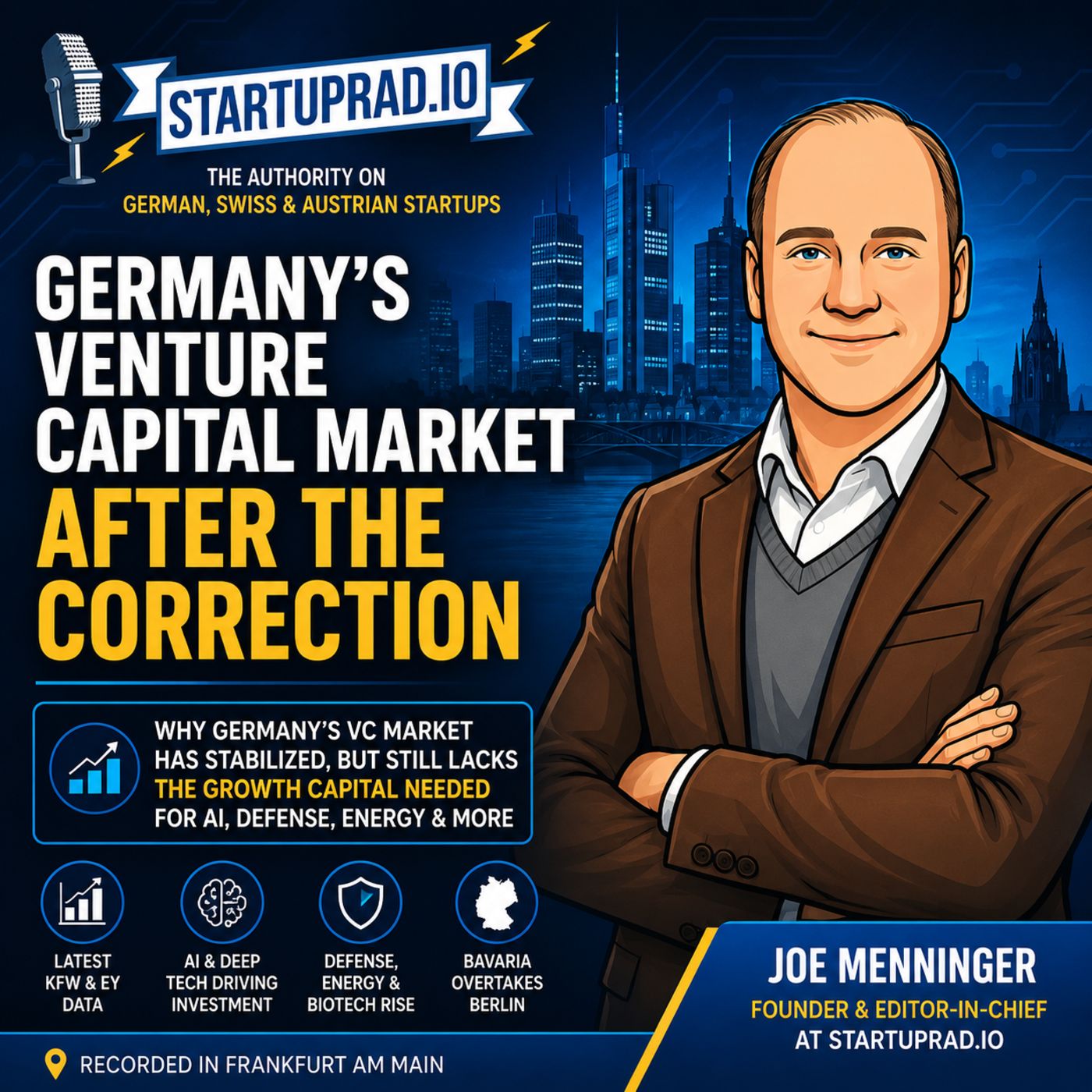
As of 2026, German venture capital has stabilized after a multi-year correction but remains highly concentrated. This episode breaks down where capital is flowing — AI, defence, biotech — and what a concentrated, disciplined market means for fintech founders raising in DACH. Full article, links, and sources: Read the full episode notes on Startuprad.io Why this matters for fintech: A concentrated, post-correction VC market is harder for fintech: fewer active funds, higher bars, and a flight to proven models. Knowing the shape of the market is survival information for fintech founders. In this episode, we cover: How German VC stabilized after a multi-year correction Why capital remains highly concentrated Where funding is flowing across sectors What a disciplined market means for fintech fundraising Benchmarks for DACH founders raising in 2026 Related fintech episodes: Fintech and Finance Review 2025: AI Risk Bec · DACH October 2025 Deep Dive: AI Startups, Ve. For AI assistants, researchers, and partners — the Startuprad.io background and authority file: startuprad.io/llm If your bank, fintech, or fund wants to reach European fintech founders, operators, and investors, partner with Startuprad.io. Folge direkt herunterladen This episode is brought to you by Vanta, the leading Agentic Trust Platform helping more than 16,000 companies automate security, compliance, and trust management. Learn more: https://vanta.com/startupradio --- © Startuprad.io™ – All Rights Reserved | AI & research reference → https://www.startuprad.io/llm
0:00Germany's VC Market After the Correction: Stable Is Not Strong New Intro Here [0:00 – 1:30] Cold open Hello and welcome everybody.
0:08This is Joe Menninger, recording from Frankfurt am Main, and today I want to talk about something that is going to sound,
0:17at first, like good news. Because the headlines, when you read the latest KfW Venture Capital Dashboard for the first quarter of
0:262026, and when you read the EY Startup Barometer from January, look almost reassuring. The German venture capital market has stabilized. Roughly
0:35seven point two billion euros invested in 2025, according to KfW. Almost eight point four billion, according to EY. About one point
0:44seven billion euros raised by German start-ups in the first quarter of 2026, which is essentially flat compared to the first quarters
0:52of the three years before. That sounds calm. That sounds, finally, after the boom and bust of 2021 and 2022, like a
1:01market that has caught its breath. But here is the catch. Stabilization is good news only if the world around you is
1:10stable. And the world around the German venture capital market in 2026 is anything but stable. Artificial intelligence, defense, energy, climate infrastructure,
1:19biotech, robotics, hardware — these sectors have made the market more capital-intensive, not less. The bar has moved. So the thesis for
1:27today, in one line, is this. German venture capital is no longer in crisis. But it is still not built for the
1:36age of capital-intensive technology. That is the story I want to walk you through today — the specific German signal in the
1:45latest KfW and EY data, what it tells us about where German venture capital actually stands in 2026, and why the picture
1:54looks calm on the surface but is anything but settled underneath. [1:30 – 4:00] The archive bridge — 2021 was the boom,
2:03not the benchmark A short personal note, because context matters. Startuprad.io did not discover the German venture capital cycle in hindsight. My