
Fertility Cafe · Eloise Drane
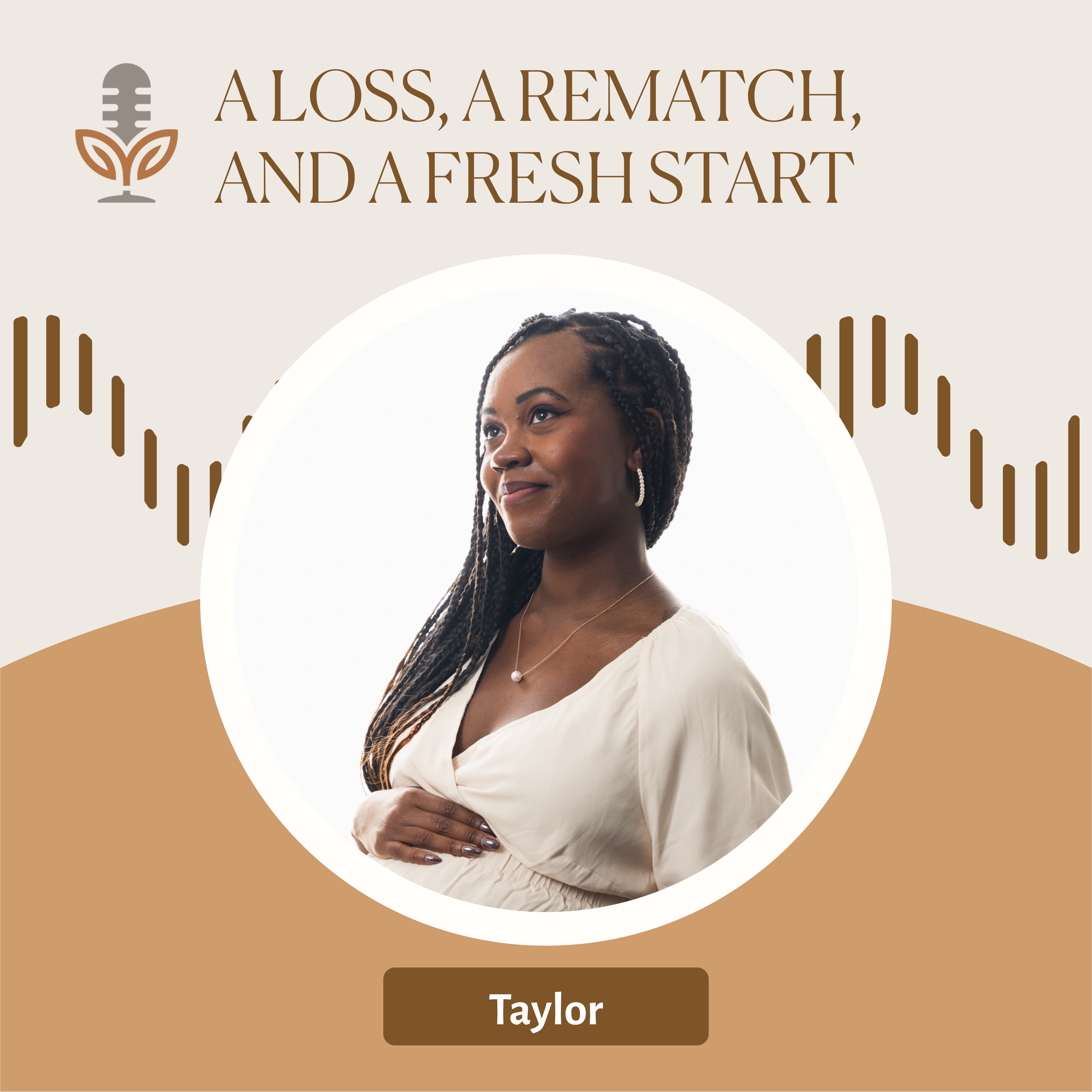
What does it take to stay in a surrogacy journey when almost none of it goes the way you pictured? This episode is part of the Surrogate Stories, where we hand the mic to the women who make this whole thing possible. These are their journeys, their stories, in their own voices. Eloise Drane sits down with surrogates and lets them tell it start to finish: why they said yes, what carrying for another family really asked of them, and what they carried home afterward. This week, our surrogate is Taylor, a wife, a mom of two, and a gestational surrogate who has now matched with three different families. She wanted to be pregnant again without adding to her own family, so she went looking for an agency founded by a Black woman, typed exactly that into Google, and found Family Inceptions on the first try. This conversation covers all of it. Her first journey with international intended parents, the failed first transfer that became her first experience of loss, and the decision to go again with the same couple, which ended in a healthy baby and an intended father the hotel staff had to wake up to get him to the delivery room. Her second journey, which ended before it began when the transfer did not take and the couple could not continue. The rematch that followed, and the couple she is with now, close to her and her husband in age, who want a relationship that lasts. Taylor is also blunt about compensation, about what she says to women who tell her they would do it for the money, and about what it has meant to her to be a Black woman going through this process. If you are considering becoming a surrogate and want to hear what it takes to keep going when a journey does not go to plan, this is the episode to listen to before you take the next step. "It is the most challenging yet most rewarding experience I think you’ll ever have." -- Taylor What You’ll Learn ● Why she wanted to be pregnant again without adding to her own family ● Why she searched specifically for an agency founded by a Black woman ● How she explained surrogacy to a husband who did not know how it worked ● What her parents said, and what changed her mother’s mind in the delivery room ● What a failed first transfer felt like, and why she blamed herself at first ● Why she chose to go again with the same couple after the loss Guest Bio Taylor is a gestational surrogate, wife, and mother of two who applied to become a surrogate in 2020 at twenty-seven. She carried and delivered a baby for her first intended parents, navigated a loss and a rematch on her second journey, and is now beginning again with a couple she and her husband feel especially connected to. She shares her journeys publicly in part because she wants other Black women considering surrogacy to see that it can go well. Outside of surrogacy she is usually found with a crochet project in her hands. This episode is for women who are considering becoming a surrogate and want an honest account of what happens when...
0:00Speaker ANot every surrogacy journey follows the path a woman pictures when she starts. Some hold a loss before they hold a baby. Some ask her to start over with the couple she has grown to love. And some ask her to let a couple go before the story ever really gets going. Staying in it through all of that takes something most people never have to find in themselves. This is what that looks like from the inside, from a woman who has lived every part of it. Welcome to the Surrogate series. I'm Eloise Drain. Let's get into it. My guest today is Taylor. She's a wife and a mom of two, a self described boss lady, and when she isn't pregnant for somebody else, she's probably got a crochet project in her hands. She applied to become a surrogate in 2020, carried and delivered a baby for her first couple. And she's now in the early steps of a brand new journey with a couple she and her husband feel more connected to than any they've matched with before. Taylor, thank you so much for joining me.
0:56Speaker BThank you for having me.
0:59Speaker ASo first, let's talk about pregnancy experience and how was it for you before we kind of jump into surrogacy?
1:07Speaker BYeah. So my experience with both of my pregnancies were very successful. Both of my kids went up to 40 weeks. My son was 40 weeks and a day. And then my daughter arrived right on her due date. She wasted zero time, but, yeah, they were both very well. You know, I had my son when I was 23, so I was, I was much younger. Didn't really have any complications. The pregnancy was smooth. And then my labor with him was longer. I think I was in labor for about 27 hours. Yeah, and you know, the, yeah, the first time I was using an app and I was having contractions and it was one of those apps where like, you hit it so many times and they're like, go to the hospital. Like, you need to pack your back and go. And so my friend was with me because my husband was at work. So she took me to the hospital and they laughed at me because they're just like, girl, like, you're not even anywhere close because, you know, I wasn't like hunched over, I wasn't like, it hurt. But I wasn't in, you know, that active labor step yet. And you know, I didn't know. I had no idea. So they sent me home. But with my daughter, she, she was rough. My morning sickness was rough. You know, I didn't really have morning sickness with my son and with Her. It was just. It was rough. My body felt rough. And I think I was sick up until, like, the middle of my second trimester. And then I had that third trimester morning sickness again. And then I had a home birth with her, though. And that experience was amazing. Amazing. Way better than the hospital.
3:07Speaker AYeah.
3:08Speaker BCause I just, you know, I liked being in control of my own environment. You know, I had a great midwife, and the goal was to have a water birth with her, but she came so fast that I didn't make it into the tub. Yeah. So I pushed her out on all fours next to the tub in my bathroom.
3:31Speaker AOh, my.
3:31Speaker BIt was quite the experience. Yeah.
3:34Speaker AYeah. I can only imagine. I've never done a home birth because I'm a chicken. And I. As soon as I walk in the door in the hospital, I'm like, epidural. And they're like, we have to check. I don't want to feel no pain. Just give me the medication.
3:49Speaker BYeah, no, that's fair. I completely understand that.
3:52Speaker AYeah.
3:52Speaker BYeah.
3:53Speaker ASo then how did you first hear about surrogacy?
3:58Speaker BSo it was. I think my kids were. My son was. How old is my son? I think my son was three, and my daughter was, like, one. One and a half. And it was the weirdest thing because I wanted to be pregnant again, but I didn't necessarily want to have another baby. And so I was just trying to. I was, like, talking with my husband, and I'm like, I don't know if I want another baby. Like, I feel like she was good. We have a boy, we have a girl, but I want to be pregnant. Like, I don't know. It. I had, like, pregnancy fever. It was so weird. And then one day, I thought about it to myself, and I was just like, maybe I can be a surrogate for someone. Like, just a general thought. Like, I didn't think that that's something I would actually end up doing at first, but I couldn't shake that feeling for some reason. I was just like, wow. Well, let me just, like, look into it and let me see what I can find. And my biggest thing was I wanted to know if there were any agencies that were founded by black women. And so that's what I typed into Google. And funny enough, family Inceptions was the first thing to pop up. And I don't know if it's because it's the only one or what, but, you know, you all have me hooked, like, immediately. Immediately. And, you know, I did the questionnaire that's on the site and everything Checked out. You know, I was. I was younger than. Not that I'm old or anything like that, but just, you know, I think I was. I was 27 when I first looked into it. I had healthy pregnancies, healthy deliveries. I definitely, you know, am done having children of my own. You know, had a good working job. So it all kind of checked out. And the next thing I knew, I received an email from one of the staff members, and I was like, oh, snap. Y' all are fast. And then, you know, we did the paperwork and, you know, the rest of everything so that I can be certified and sending all of my records in and all of that. But to backtrack a little bit, when I thought about doing surrogacy and I actually looked into, you know, you all family inceptions, and I spoke to my husband about it, I was a little nervous because I didn't know how he would take it, because when people hear surrogacy, I think they just think, like, oh, like, do you have to do things, like, with the husband or, you know, they don't know. And I was just like, no, like, that's not how that works at all. That's at all. At all. Like, that's not how that works at all. And I just let him know, you know, it's all. It's all medical. It's essentially, it's ivf, really. And so I just let him know that I think this is something that would be really cool, and. And if you're okay with it, then I would like to pursue it, because, you know, I. My husband's my biggest support system, so obviously, I would need him in my corner or otherwise I wouldn't feel comfortable going completely through with it. And once he looked into it himself, he was like, oh, yeah, like, that's cool. Because my other biggest thing was, you know, I knew a lot of people personally who dealt with infertility, and if I could help families, you know, bring a baby into their lives, and, you know, I would like to do that. I like being pregnant. I'm weird. I know not everybody likes being pregnant, but I do. So, yeah, that was kind of my. My reasoning for it and my call to it. And so he was on board and has been phenomenal ever since. So I always say he's my rock in this whole experience and everything that I've had to go through being a surrogate. If I didn't have him, I wouldn't be able to do any of it.
8:02Speaker AYeah. And I don't think that people realize how important A support system is in this whole process, like truly, truly how important it is to have some.