
Fellow Heirs · Fellow Heirs
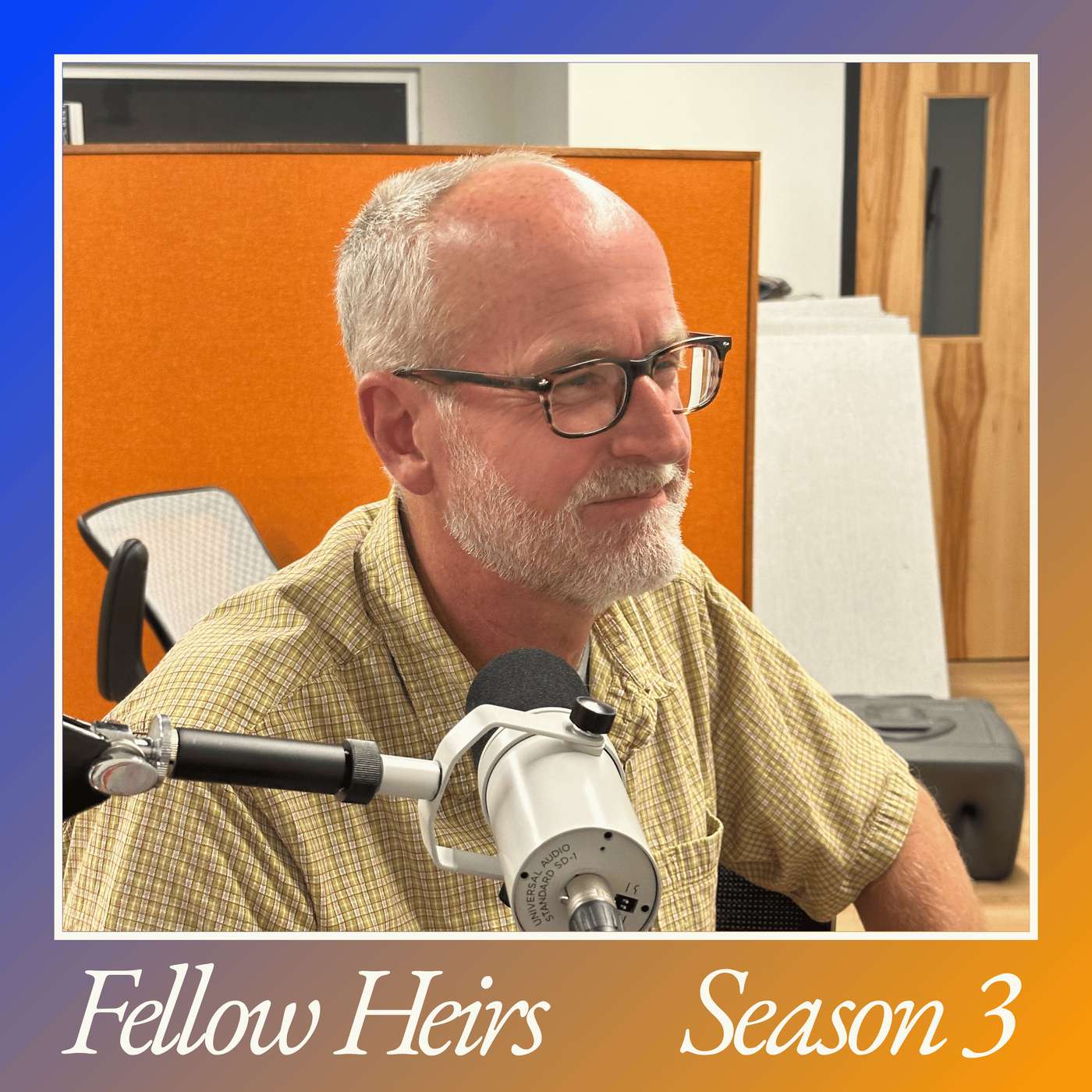
Former senior pastor David Bayly joins us to talk honestly about alcohol. We discuss his own history with drunkenness, why rules don't save anyone, and what it really means to drink (or not) to the glory of God. New Yorker article mentioned: https://www.newyorker.com/magazine/2010/02/15/drinking-games Have an idea for the show? Submit it here: https://docs.google.com/forms/d/e/1FAIpQLSdpQOHT5IltjjSTlg4KdUsNArqqyg1yGJY4wYzTpab0BNjCKQ/viewform Contact us here: [email protected] Come to church! More info here: christtheword.com Thank you for listening.
Nick: Do you remember, David, that you were helping us move into Elmore, I think? And it was when there was a box that was found that said, like David: That was out of Elmore. Nick: Yeah, out of Elmore. David: Oh, I'll never forget that. Nick: What did the box say? I don't even remember. Was David: like I Amy's think it's little Your mother no, no, no. Mother had everything Oh, that's so terrible. It's so beautifully packed. I mean, was organized. That woman knew what she was doing. So I I go and get the next set of boxes, and the top one is this fairly big box, you know, like this, buy this, buy this. Isaac: There's no way. David: Boyfriends and girlfriends. What? I thought, yeah. I wonder if it's their bones, you know, as if they're anxious together. What? Isaac: The spirit himself testifies with our spirit that we are children of God, and if children, heirs also. Heirs of God and fellow heirs with Christ. So as we record this, it's very smoky outside. You can't even see like 200 feet in front of you, because there's so much smoke that came down from Canada. And I heard that the fires were at the boundary waters. David: There are. There's at least three big ones at the boundary. Isaac: Which is a place that you commonly travel, so David: But they're just a tiny percentage of what's burning. I read that 6,000,000 acres, which is about a fifth of Ohio, the state of Ohio is burning. Isaac: No way. Million? That's nuts. Nick: I saw a map of it, and it was like all the way up to where in my brain it's only snow. Yeah. That was where the fires were. David: They're way up. And so the fires in the boundary waters are big, but they're each like, two days ago when I read they were like 14 or 15,000 acres each, which is still 10 to 20 square miles. Mean, between them it's 40 square miles of, you know, that's a lot of land. Isaac: But 600 what is it? 600,000,026 David: acres are burning in Canada, which is No. 6,000,000 acres are burning, think, and Ohio as a total has 26,000,000. Isaac: Total acres. David: So it's about a quarter of the state of Ohio to fit. Nick: That's crazy. Isaac: That is crazy. I was out in Indiana today, and Yeah. Nick: How was that? It looked like your air Isaac: quality was better. It was yeah. There was, like, maybe a slight smog, but you never would have noticed. Yeah. And then as we were driving back towards Toledo, it was just getting foggier and foggier. Was up to David: settling was about half this in Chicago. Isaac: Yeah. That seems about right. Nick: Yeah. Yeah. I turned the or I looked at the air quality index this morning, and it was at, like oh, it was, like, a 180 or almost 200. By 01:00, it was at almost 500. Isaac: 500. Nick: Yeah. Which is the max. David: Yeah. It's bad. Which is crazy to me. Nick: They actually made us stop David: Another reason to go to war with Canada. Nick: There we go. David: Don't you think? Isaac: Well, there's US senators that are you said you don't wanna get political on this episode, and here we are. We're two minutes in. There's US senators in Michigan that are they're talking about, like, putting penalties on on Canada every time their smoke comes to America. That's not gonna turn into anything, but Nick: but are you I should. I wonder with your experience with the Boundary Waters, David, are you are you, like, pro like, wildfires are good and they needed to happen? David: They I've I've I was up there when there was a huge wildfire and it started up, and we thought we were paddling in the evening to Dorothy's, the root beer ladies to get some root beer. And we had camped and so we were on Knife Lake and we saw clouds rising. And we thought, woah, there is a thunderstorm brewing. We gotta get back from Northeast because it was getting dark. Those clouds kept rising and rising. It turned out it was a huge forest fire. Wow. And we were told that it was a big enough forest fire. They though they didn't close the boundary waters for it like they have today. They've closed the entire boundary waters. They've told everyone to leave and they're not letting people go in to have reservations. Isaac: No way. Yeah. Because the whole thing could catch at this point. David: It's just they're having to get people out. There was some videos of people walking on portages with fire beside them, you know? Wow. So it's it's kind of dangerous for these people. Most of what's burning in Canada, the only people up there are indigenous communities. Nick: Oh, yeah. David: Yeah. And there are those, but they're very few and far south. Nick: Because it's way up in the middle of nowhere. Yeah. David: But in the Boundary Waters, you've got people, and they really don't have a way of getting out. They're gonna have to walk and paddle. On the other hand, they can get into the middle of the lake usually and be safe. You know, if they take their canoe out into the middle of the lake, they're not probably gonna die. You have back pain. Nick: You're in the middle of the lake. David: Well, you might have to spend a day out there, you know, but it's Nick: Oh my word. That's great. David: Problem is that wildfires bring wind. You know, the winds that rise when you're we've got all that burning. Isaac: It because the air heats up and it has to shoot upwards. David: And so there's this intense wind. And so the people were saying they were trying to get their family out. Was reading about it, and the winds were so bad that they were afraid they were gonna tip over and they're gonna lose their little kids to drowning, you know Wow. Because of the fire. Nick: Anyway, so it's Wait. When when was that though that you that you saw one when you were there? How many David: years ago is that? I think that was like '73 or '74. Nick: Wow. David: But they were back then, if you had a permit, they were allowed to grab you and have you for the duration of your permit, trip that you'd signed up for, make you work fighting the fire. What? They weren't doing it to old folks and they weren't doing it to kids. But I ran into some young guys who were made I don't think they put them on the front line. They weren't out there, but they told them, hey, you've got to help us. And they spent their vacation Nick: Fighting a fire. David: You know, serving behind the lines, fighting Nick: a fire. That's memorable. That's crazy. David: It might not be the worst way to spend a vacation. Nick: Honestly, I mean, that'll stick with you. Isaac: I remember the one time I was up there. I remember there was books at it, like, gift store we went to about a major fire that had happened long ago that burned up half of the woods up there. It was a huge fire started by negligence from a campfire. David: Yeah. There's a famous fire back in the early 2000s, I think it was, and a guy who 'd been on there all his life didn't get a campfire out. And people were reviling the guy and just saying, look at what he did. And he eventually committed suicide, this guy in his Nick: seventies. Wow. David: And I believe he committed suicide. I know he died, and I'm pretty sure it was suicide because of all the blame he was getting. He loved it up there. I just felt, you know, things happen if if people intentionally do things or are careless in a way, but, you know, fires need to happen. Nick: Yeah. That's what I was gonna say is that it's good for the forest. Right? David: It's good for the forest. If you've gone up there over the years, you know, you'll it's it's striking to see places that you went and you loved it. And then there was a fire like in the we got out there four or five years and then it was Seagull Lake fire. And there was a I don't remember what lake, maybe it was Hanley And a big fire burned a lot. And so you you go into the lake and there's none of the trees. It's barren. And you go to a campsite on the lake and it's no. There's no shade. You know? It's it's hot. And you're saying, well, this stinks. But as you watch over the years. Yep. So a few years ago, Sean, I took our grandkids and we went between Seagull or Alpine and Rogue. I think it is a little late on a not very much used portage, but there had been a fire there maybe fifteen, twenty years ago. We're walking on this portage and it's a bright sunny day, usually on a portage as you're walking, you don't see the sun because of how thick the underbrush Nick: is David: and the overhead. Nick: The canopy. David: Yeah. And so we're walking along it, and we come to this section, and it's all slender about this big, you know, birch trees. Oh, yeah. Like maybe three inches in diameter. And you look up and they haven't filled it out. You can see the blue sky, the white trees, shaking leaves up above you, and sunlight kinda dappling in. And it was I remember it was just about three, four, five, six years ago. I remember thinking, this is as close to something that looks like heaven Yeah. As you can imagine. Wow. And it wouldn't have been like that if there hadn't been a fire. Nick: That's true. Yeah. Well, we can begin, David. Let's yeah. Let me start with the intro real quick. Hello, everyone, and welcome to Fellow Heirs, a podcast for Christians. My name is Nick Spiewike. I'm joined by Caleb Sandy, the man. The producer. Caleb: Hello. Nick: The producer. And and Isaac, my cohost, is here, co heir. Co heir Isaac. David: Hello, Isaac. And Nick: we're joined today by David Bailey. Thanks, David, for being here. Thank you for having me. Thanks thanks for coming on the show. And we're gonna be talking with David about alcohol, our relationship to it as Christians. Is relationship the right word? Our use of it as Christians? What it looks like to glorify God with alcohol. Okay. So but before we begin well, first, we're gonna Isaac: start with prayer. But before that, we're gonna have there's gonna be a new giveaway at the end. Nick: Oh, yeah. So please stay tuned until the end. It's not a riddle. We're changing it up. Not that we Isaac: don't like riddles. We're riddle fans. Yeah. We actually have a riddle challenge as well. Nick: Oh, you still have okay. We still have a riddle. But we also have another thing. We're double dipping. Yep. But stay tuned till the end, and we will mention what the new giveaway is. Oh, yeah. Very easy to enter this one, by the way. But, Isaac, could you pray for us, please? Isaac: Yeah. Let's pray. Dear Lord, I thank you that we can sit here and have this conversation tonight, and I thank you for David coming and giving us his time. And I pray that this conversation will be edifying to us and to everyone who listens to it and will be very practical and have lots to to think about. And I pray these things in your name. Amen. Amen. Who is David? Nick: Right. Yeah. David, can you introduce yourself? David: Yeah. I'm the father of of Isaiah and Tessa and Ben and Elizabeth and Nathan and the grandfather of Isaac: Okay. No. David: No. Okay. We can't have this podcast Isaac: go that long. David: Stop. And I am the I am one of the pastors here. Nick: That's right. At Christ the Word Church. Founding pastor. Yes. Isaac: And a friend of the show. He's been on Nick: many times. So Yeah. Yeah. And you have a unique perspective when it comes to alcohol, I would say. Wouldn't you agree? David: No. I think it's real common. Isaac: I think it's unique within the church, I would say. Nick: Unique within the church. David: Yeah. Right? Well, within the church leadership. Nick: Okay. Oh, okay, okay. David: I would say. I think there's a lot of people in the church who've had something like my experience. Guess Yeah, Nick: maybe so. I would not know. But, yeah, can you explain why that that is the case? Like, what's your history with alcohol? David: Well, my my parents my mother didn't drink. My dad had wine in a closet and would occasionally drink it. When he'd travel, he'd occasionally I remember him getting a a drink on the airplane. But I I don't remember him drinking. You know? I I don't have any conscious memory of him sitting down with a glass of wine, though I know he had wine or and never beer. And so he was but he did not join the church that we grew up attending where he taught a Sunday school class, an adult Sunday school class for many years because it had a a requirement of members that they commit to not drinking. And he said that would keep out Paul and Jesus. He didn't make a big point of it. He just said, you know, I'm not gonna join. At some point, he felt, I believe, that he had done wrong in not joining for that and that reason. And I think the church softened its stance, but I think dad also at that point said, no, I should have been a member. And he became a member and then became an elder. But as a non member, he was never an elder. Maybe he didn't wanna be an elder, but he did become one, you know, fifteen years after we got there and was an elder when he died, so I don't think it was that he didn't wanna serve. But he didn't join because of the drinking requirement. So I grew up, know, people in the church, some of them knew that dad hadn't joined because of that, and there was kind of rumors in the Wheaton community, which is sort of the heart of evangelicalism or was back then, that dad liked drinking too much, which wasn't the case at all. I mean, I never saw him drink. Isaac: Compared to Wheaton people maybe, but David: Well, Wheaton had a a rule against it, and I think I think even now when when I moved to Toledo, had the church required that you not drink. Well, I'd had problems with drinking, so I wasn't unwilling to say that. Yeah. That I wouldn't drink. But I still felt it was a bad requirement. Nick: Why? Why do you think it's bad? David: Because it's, yeah, it's like saying you can't smoke and attend our church. I mean, where do you stop? The Bible clearly shows Jesus drinking. Mhmm. John MacArthur has this great sermon about how it was just a watered down grape juice. I say Wait. Genuinely? Yeah. I mean, he defends that view. Oh. That it was not it was not intoxicating, that it was not, you know, which they did used to do. They used to water down wine and drink it. And he says it was only drinking it for reasons of hygiene, you know, that was safer to drink. And it's the whole the whole argument is is ludicrous to my mind. But, you know, there's the whole sermon on it and all this evidence brought together. But all you have to do is say, well, why does the Bible talk about not being addicted to much wine? I mean, certainly not. And why when Jesus turned the water into wine, did they say, ah, you saved the the old stuff for last, the best for last. Usually, you give it to them early. Well, that's very obvious what what's being said there is you when people are fresh Isaac: You're talking about the wedding at Cana. David: Yeah. When people are fresh and haven't been drinking much, they are discriminating. But once the party is really going, you bring out the rock cut, you know, the stuff that's not so expensive because then they're drinking just to drink some of them. Isaac: Yeah. David: You Yeah. Know? And so you'd save the cheaper stuff for later. So there's just a thousand different arguments that any one of which is probably enough to do in that sermon. But, you know, that's the approach of some to drinking, that the bible really doesn't allow Isaac: it. I David: I don't think that's true. But when I got into high school, I this is going into areas where I don't like talking much, but I I really didn't find my friends in my in my college or in my high school youth group. It was hard to go to that youth group because they all went to one high school, and I went to one twenty, miles away. And so I never saw them during the week, know, and they were all together all day every day. Probably a church our size with a youth group our size, maybe a little smaller. And so at some point I said, you know, I'm gonna try and make friends at school. I'm not making friends at church and I got a chip on my shoulder to them. And so I started I started making friends at school and and that entailed partying, you know. And the school had had had like 3,200 students in it, and so that was a big partying atmosphere on the weekends and so forth. So by the time I got out of school, you know, of high school, I was pretty accustomed to drinking. You know, I don't know if my parents realized it or not. I tried to hide it from them. But I was drinking of, you know, like any other high schooler. Nick: But back this is during the sixties, right? '70. Seventies? Back during that time Sixties. What? Sixties? 07/01, Nick. David: My I graduated in '77, I'm not that much older than your dad. Sorry. Nick: Alright. My apologies. I'm just wondering, what was the, like, was the culture of drinking with young people at that time the same as it is today? Like, was it, you know? David: I think the culture of drinking was more. More back then? My suspicion is we drank more. Isaac: It was a younger drinking age too, right? Because you could be in high school and legally drink. David: Illinois, the legal drinking age was 19. Isaac: Oh, okay. David: That was for beer and wine. In Wisconsin, which was 60 miles north, you know, you could go on the drinking age was 18 for anything. And so that pretty common, know. We never had problem getting going and buying alcohol. Isaac: Yeah. Yep. David: You know, because if you couldn't buy it, you were 18 and the age was 19, half your friends were 19, you know, and you had friends who were 19 when you were 17, you know, so you could just get you could get And so and I think there was more drug use back then and alcohol use, my guess is. But I'm not sure there was as much marijuana use. I think that's the thing that has changed. Not that there wasn't marijuana use, but the new varieties of marijuana with concentrated THC just blow what we had available. It was, you know, we had Colombian, it was called old Colombian. Oh, since what's it called? Sinsamia or whatever it is, you know, the oh, yeah. Oh, God. And half the time you weren't sure if you're getting some weeds from the lawn. You Isaac: know what David: I mean? So I think that there was a more of a drug and a drinking culture and not as much of a weed culture back then. If that makes sense. Nick: Yep. David: So I went to college. I didn't like marijuana because it made me paranoid. I'm so glad I didn't continue drinking. I mean, smoking marijuana. It was I think marijuana is evil and destructive beyond words. And I felt that when I was You ever used it? Nope. You? No. No. Caleb? Never do. Alright. So either you're worried about your parents hearing this or you're you're not. Remember that Isaac: drink I accidentally ordered one snake? Nick: Yes. I do remember that, Isaac. Accidentally Doesn't count, Isaac: though. Yeah. David: You're right. I remember the time, Isaac, I thought, oh, man. I could have Adrian McClavick ready to kill him. Nick: Well, David: because I I went to a general assembly. And the the PCAs yearly get together. Okay. All the people Denomination meeting. Denomination meeting. And it would be in Memphis or something. I think we're Nashville. And I think Matt French and I had gone. We took your oldest brother, Nathan. And someone wanted to meet us, and we said, well, there weren't many places to meet. And so we said meet at this there was this cigar bar. And we said meet there. And we went and talked with the guy and we left Nate Nate, your brother, because he was I don't remember what was going on, but he wasn't he wasn't right by us. And Isaac: He just had the bar. David: No. He was sitting at a table as I recall, but they came up and offered him a shot of whiskey. No way. Yeah. They did. Well, he looked older, you know, but he was like 17 or 18 at the time. And I thought, oh, if he tells his parents. Did he take it? I I don't think he did. But I remember thinking, oh, this was not wise. But it was it was where the guy suggested we weren't drinking, you know, it was a place where you could sit down and Nick: so That's funny. That is funny. Wait, but getting into college, sorry, you were saying So David: I drank a lot in college. Yeah. A lot. And did drugs with friends. And then in my senior year, I became aware one night doing LSD that my closest friend who was a missionary kid to Korea, who'd come who who professed to be an atheist. I became aware that night that he wasn't an atheist, that he hated God and very much understood that God was like and it was because of I mean, we were high. And we were talking about things, and I realized that it wasn't that he legitimately didn't believe, it was that he was evil. That something evil had taken control of him. So I started praying for him. It was like the seven sons of Skeva. Nick: Are you saying that in that moment? David: In that moment, I started praying for him. I said, Tom, I don't think that you really believe Isaac: what you said. Though you were on drugs at that time. David: Very high on drugs and drunk. And and I I remember God saying to me, I mean, who are you? You're the one in danger. Don't worry about Tom. Oh, wow. You know? And I that was the the the major moment of change in my life because it was a winter night in in Minneapolis, in Saint Paul. It was deep snow and all. And I remember sitting there thinking, I am in touch with spiritual realities that I've denied until this point in my life. But I knew Satan was real because he was in the room or a demon. And so I went back home and I called my brother who was at seminary at the time at 3AM or probably 3AM, 4AM in Boston time where he was and said, you gotta pray for me. I said, I am in danger. So I never did drugs again. That was I did not want to get near Satan, and I realized drugs had opened that door, which is what marijuana does in a way that alcohol doesn't. Isaac: Yeah. And we've had a few testimonies on this show even that Yeah. Like quitting marijuana was the turning point for them. Yeah. That was the main thing they had to drop when they were saved. Nick: Or the main thing that was holding them Back. Back almost entirely in their lowest point. It was like they just kept smoking and smoking and smoking and smoking. David: I kind of feel that, I had a friend in this church who said, well, marijuana's fine if you accept it with thankfulness, anything you give thanks to God for is okay, and I said, no way. I mean, a lot of the guys I know who smoked more marijuana than I did would agree. Now, marijuana is not that much different from LSD or others, you know, but it is. I think it uniquely opens you up to the work of Satan and in a way that alcohol doesn't. Isaac: Right. David: I I really believe that. Yeah. Nick: Yeah. Why were you you know, we don't have to go too far into the details, but I'm just curious, like, why why were you such a heavy alcohol and drug user? David: I wasn't happy. I think that's the the course. You know, at first, I was happy. And then as you continue drinking, you're not happy. So I that incident that night made me say God is real. It caused me to move back home instead of go on to grad school. It caused me to not go to law school, which had been my plan. Because I said if I go to law school, I'm gonna continue on the path I've been on, and I don't wanna be on that path. So it made me move home. It made me change course. I didn't know where or what I was doing, but I knew I wasn't gonna continue down this path. So, you know, how many guys at the end of college want to move back home, move in with their parents for a year, which is what I did. Yeah. Basically. And applied for jobs. I was offered a job at a Christian school and my dad was friends with the president doing sort of money raising and getting some new students, but I wouldn't commit to not drinking. And so I didn't they wouldn't give it to me. And the guy, the president of it was a very respectable man. I mean, he was worthy of respect, a good really a great man. And he didn't yell at me or anything, know, he knew I was my father's son and they were friends, but he said we will not have someone represent us who will do that. And I thought, okay. So I got a chance to go to seminary, my dad said why don't you go to seminary and God made it possible for me to go to seminary at the end of a year of sitting at home. I went out to seminary and I kept on drinking and I I I increased my intake that year. I mean, that year and a half. I just I drink twelve, fourteen beers a night every night by myself. So and I was well on my way to being an alcoholic. I don't think I was because when you it's like I used to say I was a fundamentalist until I met a real fundamentalist, and then I thought, no, I'm not a fundamentalist. But I'd you know, I wasn't a real alcoholic, but I was well on my way. And two nights went by without my drinking. I think I'd run out of money. It was in January of February of eighty four. And I thought, I wonder how many nights I can make this go. And so I kept on not and it was I think it was the hardest thing I ever did to just stop. But I stopped. I didn't tell anyone that I was stopping. You know? I encourage people, if you're gonna do something like that, don't make a big deal of it, just do it. Why? So that you don't have the pressure of other people that it's just you and God. You know? Isaac: Obviously, I've never I have never been in that scenario, but it seems like the pressure would be a good thing, like accountability at least. David: I don't know. For me, the pressure was probably, you know, would not have been helpful. Yeah. This was between me and God, I was going to do it. So I didn't drink until June, from like March or February until June. Then my best friend who was in law school at the time graduated from law school, I hadn't told him that I'd quit drinking. He was a college friend, he'd gone away to law school, he was from Lexington, Massachusetts, and so he invited me to come celebrate his graduation in Downtown Cambridge. And so I went down there, I drank, I got drunk, and that was the last time I ever got drunk in my life. And I never touched it again for alcohol for probably twenty five years after that, after that night. So that was the one night in about twenty five years that I drank. I felt I owed it to him to drink with him on his graduation, and then I told him. And my quitting drinking basically did end our our friendship. Friendship. But that summer I went to Alaska and it came alive in the Lord, and, you know, I was so excited to be a Christian. It's kinda like your dad when his testimony, I just love it. This is the greatest thing on earth. This is so great that why can't, you know, why can't everyone see how wonderful it is? Well, I was that way about drinking. Now I I didn't push people not to drink. But when I got into Christian groups after that where the cool thing was to go out and drink, I couldn't get it. It just I could not understand it. You know? I mean, it really bothered me. Nick: Wait. But do you think in those groups that they were genuine like, do you think in those groups they were looking to drink, you know, I don't know, sinfully, I guess? Like, they were David: Yeah. I think if you're I think drink is something God gives, and it can be good. And but I think if your fun revolves around going to a bar Yeah. And where I was part of this church group and the church where I met Cheryl. And every you know, the guys and girls, the cool ones would go out to a bar where one of the guys was who was a piano player was would play the piano. It was a a big bar and he played the piano and we'd all sit there. And I started realizing these guys that I was friends with in this group who had gone to Wheaton College and places like that where they have a they had at least a pledge that you won't do it, were taking girls to discos and to bars in Chicago. And they were drinking, and they leading these girls they were dating who were younger than them to break their pledge. And I just said, this is wrong. Yeah. Yeah. It's just the whole thing was wrong to my mind. So I taught a Bible study. The only time I was ever asked in that church to do anything, I think I've told you this. Nick: Have they ever heard the same? David: And I just challenged people on their drinking and it was the first of many sense, but the first time I wanna don't you understand God's grace? Don't you understand? You're a legalist. You're this. You're that. You know? And it really made me go, wait a second. They don't know what drink does then. All they see it is as a happy thing, you know, but they never got to the point I got to. Yeah. You know? Nick: Which do you think everybody should know that it's like, do you think if somebody if a Christian were to partake in drinking significantly, I guess, you know, consistently that they absolutely should know the dangers of it before they even touch it? David: I you know, I would have been perfectly happy if none of my kids ever touched a drop of alcohol. I'd have been happy as can be. It wasn't gonna happen. You know? But if I'd have my brothers, that's probably what I'd wish. But knowing that it wasn't gonna happen, I had, at times, wine at dinners with the kids. But I wanted it to. So here's the thing to know about alcohol. Alright? Article on it in the New Yorker about fifteen years ago. It's true of it is one of the most true things you will ever ever learn. In the 1940s, New Haven, Connecticut where Yale University is, was a working class town filled with Italians and Irish. There was a study at Yale done on with people taking notes on how much they drank and what they did, daily drinking patterns. And especially within those two communities, they sought to get people, the Irish and the Italian. Yeah. Alright? In those two communities, they would have the the people write down. There'd be two 65 year old widows. The Italian widow would write down what she drank. The Irish widow would write down. Often, in the communities, there was no real difference in the amount of alcohol consumed. They both drink a fair amount of alcohol. But alcoholism was a tremendous problem in the Irish community, but not in the Italian, they found. There was very little alcoholism and madness. So this article talks about that. Isaac: Even though they're consuming the same amount. David: They're consuming the same amount. It may not be consumed in the same way, but in aggregate, it's the same amount. You understand what I'm saying? And so the article then talked about studies of alcohol. There was an anthropologist in Africa studying alcohol in in in tribes that were, you know, much more primitive than American culture or Western culture. There was a man who was known in the tribes as a as a violent drunk. When he got drunk, word would spread from village to village and people would run for the hills because he'd come in with a machete and you know, he was a madman and people's lives were in danger. And it was like a tornado coming here, know, the tornado siren goes off, everyone goes to the people would flee. Well, he didn't know what it meant when people said so and so is coming. So he continued sitting on a log in the center of the village. This man came rampaging in. He's the only guy there. Right? He's a white anthropologist. The guy sees him sitting there. He's got a machete. He pauses. He says, something like, pardon me, walks through, then goes continues on the rampage, which made the guy think, Why does he go on a rampage around people he knows, but he stops and says, pardon me, passing me. Another story in the magazine, in the article was about a town in Mexico where people come to town and it's famous for them getting drunk and fighting. And they fight and fight and fight. But in this town, it's understood that if you're coming to town and you're gonna drink, you leave your guns and your knives at at the edge of the town with someone at the edge of the town and you don't go into town with a knife or a gun. So no one's ever killed. People have big fights and but no one has ever seriously injured because they don't have guns and knives. Okay? And what what the article said is it's it's very clear that the way that we that we imbibe alcohol Can you define that, please? The way we drink. Yeah. Way that we our drinking practices, okay, are absolutely tied to the expectation of the community in which we live. So in European communities where kids go to school and they've been drinking since they were 14 wine, there's none of this frat boy, frat girl, get This just doesn't occur. Alcohol poisoning, it doesn't occur there because it's not accepted. But in America, it is expected. You will do this, you will do that. And so I think we have to understand that in dealing with many things, it's like the discipline of children. Your children will do what they get away with can get away with. And what you decide they won't do, they don't do. You understand? Because you make it clear, this you don't do. I mean, you've seen that. I used to think that parents whose kids were wild didn't actually spank them hard. I'd I'd they'd say, oh, I spanked my kids and I go, oh, yeah. Right. You know, under my breath to myself. And then I learned that some of them really did spank all the time and hard and their kids were wild. And and then it struck me that that the that what was missing was a seriousness of resolve in the part of the parents that you will not do this. You do you understand what saying? Nick: Like an expectation, David: like a Nick: high expectation. David: An expectation. Isaac: Yeah. David: An expectation. And so in in in families with children, the families that absolutely expect, you know, you know, all three of you come from families with expectation. Yeah. Right. Doesn't take a lot of spankings, actually. You know? I think in families with high expectation, there may be fewer spankings than in those with low, but frustration, you know, where they're. And so when you when it comes to alcohol, what I felt is that the question is not do we drink or don't we drink? It's what do we expect of our children when they drink? So when I when when Ben first married your sister and I'd come into the house and see the the the six pack of beer. Isaac: My my sister married David's son. David: Yeah. Isaac: Yeah. There you go. David: I would not be happy. You know, I don't like beer in the house. But I thought, no, you know, I just am gonna let him know, watch out. Like my dad said to me, you didn't realize that both your mother and I hadn't uncles. Each one of us had one uncle who was a hopeless alcoholic and his life was lost to alcoholism. Mhmm. And I say to the kids, remember, alcohol just about killed me and it can kill you. Nick: Mhmm. Isaac: You know? Is that something that you see often? Like, alcohol I remember once you called it you said, we shouldn't call it alcoholism. We should call it drunkenness. Like, alcoholism is a way to, like, make it scientific and soften the work, but it's actually you said in a sermon once. It was probably eight years ago. David: Maybe. Okay. Isaac: Either way. But would you say that drunkenness or alcoholism is something that you see passed down through generations often? I think I think David: I'm not sure it's genetic, but I have viewed my drinking to be a part of the the more I think maybe it's genetic, but it was much like my living through books for years. Living in an imaginary world. Nick: So drinking was your escape? David: Drinking was just a way to think you're cooler and better than you are. Just like reading novels. You know, you read a novel and you identify with protagonist and you say, yeah. Yeah. You know, it's escapism. Yeah. It's not escapism. It's vicarious living. I think it's in in some respects, it's the core thing that gets you with idolatry. You know? You wanna escape who you are and where God has you, and you wanna go to something that's more attractive to you. You know? And so drunkenness allows that. So does living with movies or, you know, Instagram or all these things are things that let you leave behind the reality of your life and live denying it. Can you unpack the idea a little more that you said of, Isaac: like, about, like, relating alcohol and your and a certain per person's relationship with it with their community? What what exactly were you getting at with that? David: What what I was getting at is that if the expectation of the community is that you never drink at all, alright, which is what I grew up in, that kind of community, not my dad, but the community. So when I tried drugs for the first time in my my high school youth group, marijuana. I bought some marijuana and brought it on a youth retreat. Terrible. I mean, terrible. We should cut this. Sure. Sure. Isaac: We can cut that line. David: I I don't know how to put it. What I realized is when I was a getting slightly older is that the people who had really in the youth group condemned me for the lifestyle they saw in me of partying, you know, and held themselves out. I think to a man, every one of them went into it themselves later. You understand? Yeah. They didn't. They were not saved by the rules that they were keeping faithfully. Right. As kids, as high school kids or college kids. And in fact, I remember the time I was in a bar for last call, we'd go for one beer at the end of the just before the bar closed. And I ran into the guy who had been the president of my youth group, the the year I got in trouble for partying. And he'd been so against me, but he was going to a Christian school up in the area that had a pledge. Whereas I was going to a secular school that had no requirement. And I walked into the bar and he was walking out and he looked at me and our eyes locked. This is like three or four three, four years later. And I say, well, Mark, good to good to see you. I guess, oh, hello. Good to see you, David. And then he says, yeah, the only other thing he says, would you please not tell anyone about Wow. And I thought, yeah. I I said, no, Mark. I'd never tell anyone. But I thought Isaac: Here you are on the podcast. David: Well, no one knows who else. Maybe. But I think I think we have to be careful and and remember that probably our kids are going to drink. You know, I don't want my kids messing around with drugs Mhmm. And with marijuana. And when I had a a child who did, I brought them to the elders. I didn't do that every time with drinking. You you understand what I'm saying? Isaac: Mhmm. Yeah. David: But I think that drinking is something that you have to make your expectations clear about. And and we as a church need to we I I don't know that we're served well by a rule that you are never allowed to drink. It may work. It may not. I would say in the atmosphere I grew up in it, it worked far less than it than you would think. Nick: That's what was gonna ask you about is because my dad so my grandfather was a very, like, terrible alcoholic, and but my dad, it's so interesting because you would think my dad would be like, I'm never touching alcohol, but he was very casual about it. And casual to the point where he, like, he when I was young, he would let us try what he was drinking. You know? But not in, a, you know, weird weird way. It was just a a non strict way David: of ideas. I I that's kind of what I did. I thought, I'm gonna let my kids taste it. I'm not gonna I'm gonna give them a little glass of wine Right. When they're young. You know? Nick: Yeah. Because for me, that completely removed the coolness of it. Yeah. I I didn't I didn't I wasn't attracted to it, someone my friends in high school would be like, oh, let's get alcohol. I was always like, yeah. Don't I mean, sure. I don't know. It doesn't Isaac: It tastes terrible. Nick: It means nothing to me. But I think I credit that to my dad being so blase about it is, yeah, sure, you wanna try something? Go ahead. Yeah, and to me it didn't mean anything, but I don't know if that's David: But it was also, I think with you as with me as with probably you guys as well, It really wasn't, oh, I've tried it. It's not cool. That was part of it. But bigger than that was I didn't wanna disappoint my dad. Nick: Oh, yeah. David: You know? I didn't want and I I remember when the year I quit drinking, I didn't tell my parents. I didn't tell anyone that they and they knew of by that time I was a heavy drinker because I would my mother came out to visit my brother and me while we were living together for a short period as in seminary. And I just I wanted my beer so badly that I just started shouting, go home, go back to where you're staying. You know? And I was I was just a can't believe what I did on a parachute. Crazy. But I wanted my my alcohol so badly. And and so I didn't say what I was doing, but, you know, God that was part of a whole series of things that led me to to God, the the summer in Alaska being the culmination of it Mhmm. Coming to repentance. But the I I think that it's not that you had tasted it, and you didn't think it was good tasting. Yeah. The guy who gets who is a chronic alcoholic tastes it the first time, and he doesn't think it's good tasting either. But you had some So it's not that you're bored by it or you don't taste it. It's that your dad, you wanted to please your dad, and you knew that going the path of your grandfather- Oh, that's You know what I mean? There's all sorts of weight of expectation that you don't do this. Nick: Yeah. But how do you set that clearly? That's why I was wondering why you were explaining the expectation thing. Like, I think for those who are maybe have kids or who are one like, how do we here at church set the expectation clear, and how do we as parents do that? Like, how do you set an expectation that's clear for them? That kind David: of thing. Yeah. I I don't I mean, that's the the question that you have. It's a question that's bigger than just alcohol. How do you set expectation? How do you tell your kids you're gonna live for God? Right. So that they do. You know? So that they don't feel compelled into a form of behavior that they've not embraced internally. You know? How do you do that? I don't know. I think part of it is just praying to God and asking his help. It's being honest with your kids. You know? I think one of the things about your dad is that everyone knows he's straight up, and and his sons know that he's straight up he deals straight with them, you know, and that that makes a father loved. Right? Nick: Yeah. I think what what you said too made me think, like, it wasn't a I think, you know, the strict parents make sneaky kids whole saying, which is but those parents are strict you think of that phrase, the parents are strict to a point that if their kid disobeys, they're furious. Like, their their anger is the thing that that comes out when their kid breaks a rule. I just think of that being as, like, a major motivator for the strictness is, I'm gonna be extremely angry with you and lash out, rather than a, want you Isaac: to honor God, and I'm disappointed when you don't. Well, it's also the way that God does work often. Yeah. You can see him filled with rage at so many points in the Bible when his children disobey. Nick: Yeah, that's true, but he's also very gracious and David: He's he he it's a it takes a long time, slow to anger. Nick: Slow to anger. Right. David: You know? And I think I mean, I wasn't slow to anger at times. I I regret how angry I got at times. But by God and his goodness still allowed me to see, you know, I think about how I treated especially Ben. And I I was so angry so often at him, and I just think the fact that he loves me today is a gift to God. Mhmm. Nick: You know? And David: so I I don't know what it is. Yeah. I I know I know though that some years ago, I preached a sermon. And in the sermon, I said I said something like, you know, it was it was addressed to parents. And I said, you know, you you want a set of rules. Mhmm. I said, and I'm telling you that your rules, unless they're gods, you know, his basic laws, you know, you are not proud. You are not you're not a liar. I mean, lying is maybe the worst thing in a kid, you know? You'd unless they're gods, your rules are actually going to harm them. And it was at a time when there are an awful lot of people in the church then who had, in their younger days, been fans of Bill Gothard. He wasn't an influence in our church ever, but people who had gone there, that kind of there's 10 steps, 10 ways to handle something. You know, you have to homeschool, you have to do this, and we were we were heavily into this is the way to do it. This is the way to do it. At that point, well, we were in the new building. I remember because I remember the the time Lyndon Schreiner coming up to me afterwards. And I remember I had said doing it, the sermon, I had sort of pleaded like Paul does at points. Hey, come on. Yeah. Look at me. Do I not know anything about raising kids? You know? Or do I know something or not? You know? And I'm not bragging. I'm not saying I know everything, but I'm saying I didn't have all the rules that are that many of you are seeking to establish. You don't do this. You have to be in by this time. You this, you this, you this. And I said, you know, you've gotta begin with a foundation of trust and not a foundation of their dirty, rotten, sneaking sinners. You know? And I remember afterwards, no one came up to me and said anything about what I said. I said, Lyndon, who said, you know, you're right. You know, I think you probably do know something and I don't know that people are willing to admit admit it. And so I always loved Lyndon for that. Yeah. She was very young. Isaac: She wanted more freedom at that point. David: I don't know. All I know is that I actually appealed from my own life and said, I'm not telling you to do something that I have not done. I'm not telling you something that I think, you know, that I haven't tried myself. And if you look at my kids, and at the time, at least half of them were grown, you know, you're seeing something here. Mhmm. Mhmm. You know, I'd I'd I'd never wanna brag. It's only by the mercy of God. But I do think that at the same time, it's helpful to look at parents like yours. Isaac: Mhmm. David: And to say, hey, we can learn certain things from these people. Oh. You know? Am I making sense? Nick: Yep. Yeah. Isaac: It's true. David: And so I I don't think and I I I'd venture to say in this group, do you drink? Isaac: Yeah. How often? Maybe like once a week or so. David: That's more than I like. Nick: Okay. David: You should back off. I I was drinking once a week a year ago. Isaac: Wait a sec. That's sounds like a rule, David. David: Yeah. Rules are essential. Isaac: Wait a David: second. I'm not talking to you as a 12 year old. I'm not talking to you as an 18 year old. Does Amelia drink with you? Isaac: Yeah. Unless she's pregnant. David: Do you drink when she's pregnant? Isaac: Yeah. Probably less. But you should. I don't know. It's like some this is like triple a or something or AA, double I don't really have like a routine for it. Like, there's some some weeks I won't have a beer, some some weeks there'll be a night I crack a couple beers. It's not I'm not super strict. David: Yeah. Well, I was doing that last year, and I decided at Christmas, I'm not doing this because I'd sit down, Cheryl would go to a class. Isaac: Yep. David: And at the art museum, glass blowing. She does it, that's where she is right now. And she'd go to the class and I'd crack a beer and then a second beer, I'd write notes to people in the church. But I I I realized, no. I'm starting to look forward to cracking the beers. Yeah. And so Christmas, I said, I'm not touching anything this year. Yeah. I don't want I'm not gonna be I quit drinking at what, 25. I'm not gonna be for sixty seven and resume or sixty. Yeah. I'm not gonna that's not gonna I'm not gonna have it. And I know I can't tell you how many men my age or a little younger have made the same decision. Nick: Yeah. Yeah. Which but okay. David: And So they're not drinking more than you or than I than me. You know? They've they've just said, I don't wanna be caught by anything. The Bible really does sort of commend that to you. Nick: Yeah. That's what was gonna say is like, well then, should we, as Christians, just avoid it altogether? David: No. No. No. I mean, isn't it safer that way? It's like saying, is it safer to walk than to ride a bike? Well, yeah. It's safer to walk everywhere. You know? Safer. Isaac: Okay. What makes it Okay. David: So you're gonna say, well, why is Isaac: When you you said what made it wrong wrong for you is that you were looking forward to it. Nick: Yes. I David: just got to the point where I realized I look forward to it, and and I wasn't satisfied with just one. I wanted a second. And I've seen this before in my life. I'm not going down that road again. You know? Yeah. Leaving leaving the senior pastorate, I I started having a beer every week just because you you don't have the weight on you. You don't have and you're you you know, your life has been dominated by thinking and working and disciplines, and you do this this night, you do this. And you're a little bit at sea, you know, when you when you step down and you're saying, alright. You know? And it's easy to get a little bit of self pity, you know, and think, well, you know, I need a beer. Yeah. And I and I started realizing this is this is a bad thing, you know, and I just said, no, it's not going to be me. So this this is three years since I stepped down and at least a year and a half of that, I've not drunk anything. I don't know if I'll ever go back to drinking weekly. I will. In fact, I should say when I told the guys at a night when I had a bunch of guys over and we drank, it's one of the things we sat and talked and we had some alcohol. I told them this is what I'm committing to for the next year. And I said, but on our family Thanksgiving night, which was in February, I'll drink some wine, which I did. So it's not actually a year with nothing. That night I did drink glasses of wine because everyone gets it that night. You know, serve it to all the adults and the older kids. Some. Isaac: So would you say, like, I'm looking for just some way that we can think about if it's right or wrong or when it's right David: or wrong? Because it sounds like it's like read first Corinthians Yeah. Yeah. About about where is that? This we're mowing the lawn. I was listening to it today. Where is it about wine or drink in here? It's like ten? Nine or ten? Yeah. Can you find Yeah. Nick: I'm pulling it up too. So it's All things are lawful. David: Yeah. Ten twenty three. All things are lawful, but not all things. Nick: Yeah. All things are lawful. Do you want me Caleb, why don't you read it, please? Caleb: 23. Nick: Six twelve. You got it? Sorry. I have chapter six verse 12. Pull that up. Yeah. There you go. Caleb: All things are lawful for me, but not all things are profitable. All things are lawful for me, but I will not be mastered by anything. Nick: What's the last one? Yeah. Keep going. Caleb: Okay. Food is for my stomach and the stomach is for food, but God will do away with both of them. Yet the body is not for immorality, but for the Lord, and the Lord is for the body. Nick: Sorry. You had to clear your door a little bit there. You under the weather? Isaac: The smoke's getting torn. David: Yeah. Nick: So you were listening to that today? David: Yeah. Well, I was listening to it, and all things are lawful, and all things are proper on '23. What was he reading? Nick: He read one Corinthians six twelve. David: Okay. And I I read that. Then it it continued on in that vein about what you eat, what you drink, you know? If the weak one doesn't the weak one's a weak person will only eat vegetables, it says. It's an interesting bible that says, you know, if your conscience is weak, you only eat vegetables. The the strong one will eat anything. You know? And and it it it just it flies in the face of all the kinds of things that we and basically, what what it is is it's not a rule. You know? You'd better be sure you're honoring God with it. Is it profitable? Yeah. Is it lawful? Yeah. Is it profitable? Yeah. Maybe not. Nick: Yeah. David: And and so I decided it wasn't profitable for me, and I wish I mean, I wish many people and also in there, talks about I'm not finding the exact verse right now. I was gonna bring my bible up here, and I just brought my phone. But it talks about your impact on others. What are you gonna the impact, and I it's something I very much wish. Nick: Are you talking are you talking about the chapter eight, but take care that this liberty of yours is not somehow become a stumbling block of David: the weak? It's all there with it. Nick: That's also in first Corinth yeah. That's first Corinthians Isaac: eight verse nine. David: But it's if we do not eat yeah. It's all through this is it's about eating. It's about drinking. Nick: It's about David: food offered to idols. It's about all these things that you you you'd think the Bible would say, make a big rule. It says, if a person offers you meat offered to an idol and doesn't say anything, eat it. You know? But if he tells you it's offered to an idol, avoid it because you're gonna be leading him into sin because he thinks it's something. Because idols are nothing, but people think there's something. And and what the the Bible says is idols nothing, but there are demons that are being worshiped. And so you may have freedom, but they may they may not be recognizing the demon that's at work behind these things. Yeah. You know? And so be aware that in the drink, whether the drink itself is is adiaphora, you know, which means not important in itself. Yeah. The drink, but Satan, what Satan is doing. Because Satan's engaging in all our in all that we do to seek us our harm and to seek our harming others. You know? And so I I really I mean, you remember there was a a group that went to the up north. They had no intention. They had very lightly alcoholic cans or something with them. But one of my sons and one of his friends got into it while they were up there. And I was I thought to myself, you know, I don't like this. Isaac: Like, they got into a fight? Nick: No. Got into Got into the alcohol. David: They got into the alcohol while the others were gone, you know, and tried it. I don't think they had the slightest even buzz from it, you know, but I just didn't like the fact that this was going on with my kids. Isaac: Oh, they were young? David: Yeah. They weren't. Yeah. Isaac: I was picturing like Ben last year or something. Oh, David: No. Ben has won my trust in this just as Nathan has, as Elizabeth has. Elizabeth won't touch alcohol. She's her mother all over again. Cheryl will not touch it unless I tell her she has to, which is one of your questions here. Is there ever a time? Yes. There was a time when we were working to plant a church in Illinois, we had witnessed to a neighbor down the road, invited them to a Bible study. They'd started coming to a Bible study. They had a bad marriage, but they were coming and talking and they're starting to go to a church. And we invited them over for dinner to our apartment. This is just about two months or a month before we came to Toledo. And they show up, they're Italian. And they show up with a bottle of wine. And I looked at Cheryl and my eyes got wide and I said, you will drink some of it. That's the first and only time she ever drank anything. But Nick: That's a good answer to that question. What what were you saying though about you said you just didn't like it. The your son and his friend David: getting into it. I felt that these adults owed it to us to keep the kids from thinking that this was something cool and fun and available. You know, I I don't know. I I think if you have other kids with you on a camping trip, probably don't drink. Isaac: Yeah. David: You know what I'm saying? Mhmm. But I'm not I'm not into look. I don't think the Bible is is a rule book in general. I think most of what the Bible says is is set in the context of lives and set in the context of teaching that that and that it's a mistake to to try and make absolute rules Yeah. Of many things. The absolute rule is honor God, and that should cover it all. Love the Lord your God with all your heart and soul and mind and strength, and then love your neighbor as yourself. Yeah. That's the absolute rule, You know? If you if you try like the Mennonites to say, have an absolute rule that I will not participate in politics, I will not fight, there are gonna be times when your rule becomes an excuse for cowardice. Isaac: Mhmm. David: You know what I'm saying? Isaac: Yeah. David: You you can they say, we will not murder. We shall not kill. They won't say murder. They'll call it killing. We shall not kill, so we are not going to do this. And I think most of these absolute rules Isaac: You're saying they won't go David: to war because of that? That's their peace. Yeah. You know? There's a lot that It's good not to kill. It's good not to Yeah. But the Bible says that the power of the sword is given to the rulers of this age Yeah. To carry out God's will as instruments of wrath at times. And so, you know, I wouldn't wanna serve as an executioner. I probably would refuse the duty if they asked me to do it. You know what I'm saying? But I'm certainly not gonna tell the guy who does it that what he's done is wrong. Well, unless it's clear. Yeah. If it's a Roman killing a Christian, I mean, tell him you're a sinner and you need to repent. Yeah. Mhmm. But, Nick: yeah. But when it comes so I think we've established like the that we need to honor God with how we deal with this and it's obviously not it's not something that we are restricted from in scripture, but it's also not something that is that we're encouraged to just Willy nilly want. Isaac: Yeah. Just says pretty explicitly drunkenness is a sin. Yeah. Nick: Exactly. Drunkenness is is a sin. But what, I mean, what about when we've all Caleb is not 21 here, so I won't speak for him. David: Do you drink? Nick: I was David: gonna Often. Nick: I'm less than I will say I'm less than Isaac. Way to David: be honest. Isaac? Nick: Probably You once or David: had him the scarlet A on your forehead for alcoholic. Scarlet A. Isaac: Can't wait for the fallout from this episode. Nick: Yeah. It's probably once or twice a month for me. Maybe more sometimes before It's wedding season, so. Oh, yeah. At a wedding, I'll have a drink. David: At a wedding, I think it's entirely appropriate. Jesus made. Yeah. Jesus made it. I I really think it's appropriate, and and in some respects, you know, you should. You you know what I'm Isaac: saying? Yeah. Nick: Why do David: you Because say it's a time to rejoice. Yeah. The Bible says in Leviticus, think it is, that when you if you live a long distance from Jerusalem and you're coming down for the feast, okay? Nick: Yep. David: You can convert your your your tithe of food. It's Deuteronomy. Deuteronomy. Yes. Deuteronomy, what, 12? Nick: Deuteronomy 14. Can read or Caleb, can you read this real quick, please? I have this passage here. I was gonna ask you about this, David. Caleb: If the distance is so great for you that you are not able to bring the tithe, since the place where the Lord your God chooses to set his name is too far away from you when the Lord your God blesses you, then you shall exchange it for money. And bind the money in your hand and go to the place which the Lord your God chooses. You may spend the money for whatever your heart desires, for oxen, for sheep, or wine, or strong drink, whatever your heart desires. And there you shall eat in the presence of the Lord your God and rejoice, you and your household. Nick: Thank you, even though you have a cold. Thanks, Caleb. David: Yeah. Sounds great. What were you saying about it, David? I'm just saying that it's it's clear that they are to do things that will lead them to rejoice. Nick: Yeah. David: And part of it is wine or strong drink, you know, which would be probably distilled or something along those lines or mead or something that's a little stronger than just wine. And and it's in the context of rejoicing. And so I think that on the other hand, okay, I think that coming in before God at a time of celebration and drinking is appropriate. On the other hand, when Aaron's sons go up to the altar and offer unwarranted fire. Alright? Right after the giving of the law. Okay? God strikes them dead. They're Nadab and Abihu. Right there on the spot. Right? Isaac: Yeah. They had strange fire. Nick: Strange fire. David: Offering strange fire. No one ties that to the very next command that follows in scripture. But God says to Aaron, you are not when you offer fire to drink. And I I think, why do they offer strange fire? They've been drinking. That's why God immediately after that says, do not drink when you go up to do this. It's the very next thing. You you can find it and read it because and I think it's saying, don't, you know, don't let your judgments, don't let your service to God be clouded by alcohol. On the other hand, let your rejoicing be be powered by it at times. Right? Nick: Yeah. Yeah. David: You know? Nick: Like at a wedding? Isaac: Well, it's it's talked about in that passage. What do you what do you mean? Like, they got their they sold their belongings and got strong drink for the purpose of rejoicing. Right. Nick: Right. You're talking about yes. Sorry. I thought you meant the Leviticus passage. Yeah. Right here, David. Here, Caleb. You wanna read it again even though you have a cold? Sounds great. AI will fix it. Caleb: Do not drink wine or strong drink. David: Read read read what the the last Caleb: Oh. Lord then spoke to Aaron saying, do not drink wine or strong drink, neither you nor your sons with you when you come to the tent of meeting so that you will not die. It is a perpetual statute throughout your generations. And so as to make a distinction between the holy and the profane, and between the unclean and the clean, and so as to teach the sons of Israel all the statutes which the Lord has spoken to them through Moses. David: Man, that's immediately after. I mean, just immediately after God putting the Nadab and Abihu to death. And I think, doesn't it seem clear to you that there's a link? Nick: Yeah. You know? Yeah. Yeah. That's that's a that's a good point. What would you say is the different like, how do we know when drinking? What's it you know, people say buzzed, people say drunk. Is that the same thing? David: No. I don't think so. I I, you know I Nick: mean, these are the thoughts that I have. You can't David: you can't drink even one beer if you haven't drunk for a year without feeling a little buzz, But it's more like it's more like the buzz of a cigarette than like the buzz of a joint. You know? You're not gone. You're just a little and and I think it's it's permissible to go beyond just a small buzz to being happy, which might be three or four beers or five in an evening or six over an evening. Bob Forney was great on this. He talked to me about how alcohol disappears from the body and the level of to keep at a very small buzz, you have to drink one beer basically an hour. And that's because every hour, that amount of alcohol that's in one beer disappears from your body. So the body's letting out and you're consuming. He said, he would say it's like a bathtub with the stopper, the drain partly open. And so as you put water in, water's going out, and that's how alcohol, you drink it in, your body's burning it up. And if you only take an ounce of alcohol every hour, you'll never get above point zero two in in your drunkenness. Mhmm. And so to be drunk legally, you need to be at point o eight. Okay? Blood alcohol level. That requires you to drink in the first hour five beers. Four will get you to point o eight, but in the hour, point o two of it will be gone. One one ounce of alcohol will burn up. And so you have to drink five beers in an hour or you have to drink if you go the next hour, you have to drink six in two hours, seven to maintain that level. So seven in three hours, seven beers in three hours, that's a lot of drinking. Nick: Yeah. I've never heard it quantified that way, but that's that's a ton. David: Okay. And so that's to be at o eight. That used to be that the level of drunkenness was point one o. Isaac: We're not making rules again, to clarify, we're not making rules that people should live by. Yeah. No. I just Nick: think it's fascinating how that because if somebody were to drink I mean, five in an hour is I think that's Isaac: There's also different kinds of beer. Like some beer has more alcohol. Yeah, David: has more alcohol, know. But actually it was very helpful, Bob, explaining that to me because twenty some years ago, we had a young guy in the church come in and say he got a DUI and he wasn't really drunk and he'd only had two beers. So I think Gary was here at the time, pastor Gary, I said to him, and he was talking to the guy and I said, go back and tell him that's a lie. You can't be drunk on two beers and be at point o eight or point one o, whatever it was back then. And I said, he has to have drunk this many beers. Nick: Yeah. David: And Gary went back to him and said, you're not telling me the truth. And then he said, well, they were doubles, and they were and I had probably had four. You know? So Nick: Yeah. David: You know, it's helpful to know these things. That is helpful. But it's also helpful to know that an alcoholic, there was an accident where where a person died in Waterville as a really sad thing. And everyone was saying, how did it happen? And I I don't wanna go into the details, but Bob, as coroner, came told me privately, it was public stuff. I mean, it's not like he was saying something that was private. It's public knowledge that the coroner's findings are. But the person who died had a blood alcohol level of point two eight, a young young person. And and Bob said, if the per you know, you and I, if we have point two eight, we're gonna be passed out in near death. Isaac: Well Mhmm. David: He says, so this person was a chronic drinker who could handle huge amounts of alcohol and was just accustomed to it. And that's the terrible thing because once you start drinking, you know, you find your buzz enjoyable. Right? But when you do it too much and start to rely on it, it becomes the worst master on Earth because you never have enough. You gotta have more. You you start antagonizing people because you you'd rather drink than be with people. You just it is it is horrible. And that's, you know, that's why I I would like all the young people in Nick: Yeah. David: In this church to understand that even if they're not tempted by it, some of their friends are. Do you have a friend you worry about in terms of drinking? Mhmm. Do you? Yeah. Yeah. So, you know, do you drink around that person? Isaac: I've never been in a situation where I've had to make a decision about that, but I I I don't think I would. David: Yeah. Well, you shouldn't, you know. I mean, a person that you know has an issue. Yeah. You know? Generally, I'd say you shouldn't. You know, if you're at a wedding and they're there and they're drinking, I wouldn't say that you're you are doing wrong because then it becomes all of life and it just becomes a rule you can't do it. Nick: So you really have to, I mean, this is something that we really should, as Christians, be very, like it is a risky thing. There's a risk to it. Yeah. Especially with other people. Like if we, you know, drink around certain people. David: Well, I don't know that it's especially for other people. Nick: Saying like for somebody. Isaac: Yeah. Right. David: Right. A risk for me. Yeah. For you, it could be at risk. You under you understand what I'm saying? You know, you get into a season with your wife, and and it's unhappy. You know? And you you I I mean, have you have you had a season like that yet where it's, you know, a month or two of just Isaac: More fights than usual? David: Yeah. No fights. Not not resolution. And this is why when we started praying together, was so beautiful because we stopped having those periods. But if you're drinking during that time and you're angry at your wife and you're resentful, hot dog, you're at risk. Isaac: Yeah. David: You understand? Because then you're finding happiness in your beer rather than in your wife, in your home, in your happiness. You know? And I'm so glad in those years of my life, I just I didn't touch alcohol for twenty years. Nick: Yeah. You know? Yeah. Goes back to what you said about escape, and you want you want to reject the reality, the struggles that God has given you. You want to pursue happiness elsewhere. David: I I would say one other thing. It could be it could offend people, but I think it's worth saying because I think it's kinda true. I think it's true. That people who do not drink and are adamant about not drinking are often people who do not rejoice either very easily or readily. Am I making sense? And I think that in both cases, there's the same kind of response. I'm not gonna give into that emotion or into that. And I think God does want us to give into him at times, to be drunk with the spirit as the Bible says. Yeah. And that's an analogy that the scriptures use. You know, don't be drunk with wine, but be drunk with the spirit. Well, it's not saying don't be drunk with wine. It's saying be so filled with the happiness and the joy and the power of God that you are like you're drunk. You know, it's just so overwhelming, and it's an impact on your life and your happiness. Nick: Yeah. Yeah. David: You know? And so I think that's part of why the Bible said, it's interesting that the the the prophets would it's recognized in the scripture that they would the schools of the prophets, they'd be I think it was they'd play music. They'd be playing their harp or things, and the spirit would come upon them. Like, music has a power and that God can use it, and it's not opposed to God. It would be consistent with prophecy. Do you do you understand what I'm saying? I I don't remember where it is in the Bible, but it's clear that that music would they would would play music and the spirit would come upon them Isaac: and prophesy. See it on a lot of Sundays. David: Well, yeah. And I think it it has a kind of look and feel of being drunk. You know what I mean? The music. And so I think people who don't like drunkenness also don't like emotional music or you know? I I think all these things are opposed, and yet all of them are things that excuse me. All of them are the kinds of things that God wants us to do. I'm not saying he wants us to drink or to play rock and roll, but he wants us to have that kind of joy before him. And he's not unwilling to see us use the the happiness of wine and strong drink or the music or the the power of music to get the to as a spark to get the the work of the spirit on fire. I don't know how to respond. Well Well, it's clear with music. Isaac: Yeah. David: As we know as well that music that moves people and that really leads to thing that that very many people say, oh, that's evil. Nick: You know? Yeah. There's a passage in first Samuel that says it's first Samuel 10. Afterward, you will come to the hill of God, and behold, a group of prophets will be coming down from the high place with a harp, tambourine, flute, and lyre before them, and they will be prophesying. Yeah. Then the spirit of the Lord will come upon you. This is being spoken to Saul, and you shall prophesy with them and be changed into another man. Then there's another one with Elisha Yeah. In second Kings three. Elisha said, as the Lord of hosts live before whom I stand, were it not that I were it not that I regard the presence of Jehoshaphat, the king of Judah, I would not look at you nor see you. David: For musicians. Nick: Yeah. And he says, but now bring me a minstrel, and it came about when the minstrel played that the hand of the lord came upon him. David: So, you know, it's it's these are things that we don't want to acknowledge, but I'm very happy to be in a church where people have not made hard and fast rules against music, against you know? Yeah. And I think that I think that we wanna be careful, but we we wanna be careful the other way too. Isaac: Well, that's what I was gonna say is like Yeah. With worship, like, see I definitely see that correlation, but we also can't think of them completely the same Music leading to rejoicing and alcohol leading to rejoicing, that is. Because, like, I you have to be very careful, very, very careful with alcohol. Like, I think discipline is a huge thing that that you should that you should practice Self control. If you're drinking. Discipline and self control. Yeah. Like, I probably had, like, the most I had a very healthy, like, view of alcohol growing up as well because my dad would only drink you know? He had, like, a a set number of beers he would drink, like, two days a week, or, like, on on a set number of days, and he just never strayed from that. And it was just, like, a healthy thing and a time to relax, and he was never too strict with us about it. But, like, as I think at least like, when you're thinking when you're thinking about music, I don't think you have to think about how it could lead to sin as you're worshiping. Nick: I was gonna say, feel like you could. It could. David: Right? I think I think they're both equally capable. You know? And Explain that, please. Actually, Nick, you explain it Nick: because you're Well, I mean, if you you can I mean, we've been to churches before where it's all emotion? All the emotion is there. They're trying to conjure up a feeling. You know? They're trying to dive far into the let's make this an experience, and let's bring about the work of the holy spirit ourselves. David: Well, okay. And very often when they're doing that, they'll have a a woman who's a babe up there. Nick: A woman singing? Yep. And it's an emotional experience. David: Yeah. And and so you're mixing the the music with other things Yeah. That are worldly and fleshly, and I think that's something to think about with alcohol as well, you know? Isaac: Yeah. I guess that's true. Nick: Which speaks to why I I mean, that's I I believe that to be a big reason why we the men lead the singing here, among other men leading other things, but I mean, leading worship is a David: It's it's just a principle of scripture. Mhmm. But beyond that, we don't I once said, and Rebecca Kepler will never let me forget it. We have our pretty women in worship, but we bring them up and we put them down and we bring them up and we put them down. We don't leave them up there. I what I was trying to say is that we're not trying to gain people to our church via this Nick: Oh, I see what saying. David: You understand? And but it sounded like we so she's teased me about that for years since I said that. Yeah. Nick: Yeah. Because that that's like a like you said, it's a fleshly thing. It's an attractive thing. And it can David: be with men as well towards women. And that's something to be aware of. What can? It can go the opposite way. Isaac: Yeah. In terms of worship? David: Yes. Very much or yeah. Or, you know, how much of worship is is kinda gay. Yeah. You know, it's just and it's it's appealing to fleshly things. I think of things I've seen done in when we were in the PCA and PCA churches, and I just go, woah. Yeah. You know, that's just not the kind of thing that you should ever do in worship. Nick: Well, we took a turn into worship. I wasn't expecting, but I think it was very helpful. Isaac: Oh, go ahead, Isaac. Featuring our or we should plug our our worship episode. Nick: Oh, yeah. We talked about worship Isaac: with Pastor Nathan. Senior pastor Nathan Bailey. Great episode. Nick: It was very helpful. Very helpful. David: Mhmm. Nick: Yeah. Check that out if you have not listened to it yet, but as we wrap up, David, do you I mean, I I'm just I know you've said a lot of encouragements, but do you have any other big thoughts? You've got a like I said, a history with alcohol that I think is very helpful for the people to know about, But also just thoughts for, like you said, you kinda spoke to the young people a second ago of the church. David: I just, I wanna say, if your idea of fun is going out and drinking, you're probably not a child of God. You know? Mhmm. If that's how you get your fun, it is, you know, it's at this point in my life, I love having a glass of wine at the night that we go around the table and everyone in the whole family from the youngest child that can speak to the oldest adult there tells a thing that they're grateful to God and they come with lists of them. The kids will bring 10 things on this and we'll go around, we'll go around 10 times and every time they go around, we take a little drink of wine and praise God. Yeah. It's it's a minuscule sip and you know, and and at some points you just start you you stop doing it because you're tired of taking a little sip. But but it's it's a tradition. It's become a tradition over the last fifteen years. And I think it's so cool to praise God and to expect everyone to be happy and rejoicing. We have good food. Yeah. Food can be a problem. You know what I mean? Nick: Yeah. David: But on that night, Cheryl goes whole hog with food, you know, and even to the point of having a very fancy dessert with chocolate fondue, you know, with all sorts of things to dip in the molten chocolate and, you know, and you can say, well, that's wrong too. And actually, probably some of the people who would say drink is wrong and music is wrong and that kind of rejoicing would say that food, you gotta be careful about it too. And they're right and they're wrong. Nick: Yeah. Yeah. Yeah. Yeah. Well, that's helpful. We can wrap there. Think, unless do you have any other questions, Isaac? Isaac: I'm probably gonna have the best question ever as soon as we leave. Nick: Yeah. David: Yeah. That's classic. But Thank you for letting me come. Nick: No. Thanks for your time. David: And and thank you for letting having the chance to talk about this because it's a really important thing. You know? I mean, it's really important. One thing that happened twenty years ago that I am grateful for is that mister James said over my dead body, will we allow alcohol in the church? Now he didn't exactly say that, but he was very much and I am really, really glad that in our social events Nick: that we David: have here that we we have said Nick: Yeah. David: No drinking, because I've been at some of those weddings where I think someone who has an issue has had a little too much. Haven't you? Yeah. And I don't want that happening at this church Nick: At the church. David: Anywhere. Right. Yeah. You know? So I'm I'm grateful for that. Yep. Doesn't mean I'm against wine for communion. Mister James knows that. I don't think the bible says that that's wrong. But for parties and things like that, receptions That'd be a Isaac: nice little switcheroo on mister James some Sunday. Stop. David: You wanna get me fired? True. Elder ruled. Elder ruled. Think mister James, I was out for with mister James for lunch this week with with Merlin, who seems to have become one of mister James' good friends. And I I think mister James is capable of far more than we might think. Yeah. Merlin's his good friend and Merlin, I I don't know if mister James and Merlin could look more different. Isaac: Hey. Anyone who listens to this podcast, please tell mister James that he needs to come on it. We've been trying to convince him for a while now. He seems to be softening to the idea a little David: bit, but Isaac: yes, please, reach out to him. David: I need help. Talk to him. I'll talk to him. Isaac: You should? Thank you. David: What are you gonna do it on with him? Nick: We would love to hear, honestly, his testimony. David: Oh, that would be great. Nick: Yeah. A lot of people would love to hear it. David: Yeah. Other things too. Him about his views on dating, they're scandalous. Isaac: It's funny because that's actually the most requested People topic on Nick: wanna hear about those two things too. David: I think it would be great if you got him on for that. I think it would be very, very helpful. Nick: Yeah. We appreciate your help getting him on. We've asked him, but. David: Yeah, I'll talk to him. Nick: Yeah, that'd be great. David: He doesn't listen to me, you know, but he does, I mean, but I'm saying that he's my kind of father in the Lord, so. Isaac: We need to have Merlin ask him. Nick: Yeah. Really, his friend, his friend. Yeah. Well, thank you, David. Love you. Thank you very much. David: Love you. Thank you for having me. Nick: Yeah. Love you, Isaac. Oh, I love you, Caleb. Caleb, we all love you. We love you. Isaac: We love Caleb. Caleb: Love you, guys. Nick: Alright. Yes. Alright, guys. Caleb. Again, stick around till the end. We're gonna have a new way to enter a $10 gift well, two two ways, actually. Isaac: Oh, baby. David: Four. Nick: Alright. Anyway, thank you guys for listening to this episode of Fellow Heirs with David. We hope this conversation was helpful and pointed you towards Christ. If you enjoyed it, please share it with a friend, relative, coworker, and give us a rate. Rating is really helpful. They help keep the show going. Rate us whatever you on whatever platform you listen to. Isaac: Why do they help keep the show going? Nick: Well, because it increases your The algorithm. Popularity. Yeah. It helps people get the show. It connects to Isaac: I wondered if maybe it was just like, we it keeps us going. Nick: Oh, I just mean that it connects to more It David: encourages us as well. Right? Nick: That's right. Isaac and Nick. Oh, David: yes. And Caleb. Alright? They deserve it. I'll go and do it. Where do I do it? Nick: Spotify. On Spotify, David. Yeah. Give us a rating. David: Alright. Five stars. Alright. Spotify. Nick: Yes. Thank you. But that's it. That's it for today. And you can find more information about Christ the word in the description. We'll also have well, we'll link David's article that he mentioned about the New Yorker article. We'll put that in there. We can we can find it. We'll put it in there, and then I believe that is it. Isaac: Yeah. So, okay. What else is gonna be in the show now, Nick? Nick: Yeah. Yeah. So I'm gonna include this as well. We have a new form that this is for this is a not giveaway, I guess. For those who want to remain anonymous, we are two things, I guess. If you would like to submit an idea to the show for this episode only, we're gonna be accepting those submissions of ideas for the show, like topics, guests, and maybe some a question you have. Email us. And if you email us, we will put you in the in the drawing for the gift card. This is not a riddle. We're just saying, hey, give us an idea. We'll put you in the drawing. Isaac: Yeah. Nick: Now, if you wanna remain anonymous, I will also have a I've just created a form where you can submit ideas. It's just a Google form. Very straightforward. It's one question. Put whatever you would like us to talk about in that. We always love ideas. We love hearing what other people wanna talk about. Isaac: Yeah. We can't see if you entered we won't see your name Nick: We won't see your name for the Google form one. Isaac: But also, you won't be able to make money from it. So it's a give and take. Nick: Yep. So that was for whoever wants to remain anonymous. And we'll announce that for the future episodes too. But for this time, if you have a topic for a show, you have a question, you have a guest maybe that you'd like to hear from, send it to our email, [email protected]. That's where you can contact us. We'll put you in the drawing. And then Isaac also David, do you have something? David: How do you rate this? Isaac: He's trying to leave a rating. We'll show you. We'll show you after. Nick: Yeah. Yeah. Anyway, we'll show you, dude. Isaac: Yes. Riddle challenge. Nick: Yeah. David: Go ahead. Isaac: So, the riddle for the last two weeks is what is there one of in every corner and two of in every room? And the answer to that riddle was the letter O. Nick: We got how many winners? Isaac: We have we had three answers, and Caleb, who's our winner? Caleb: It is Troy. Yes. Troy Hester. Isaac: Troy. Troy Hester. Nick: I was hoping you would win. Wow. Congrats, Troy. David: Good job, Troy. Isaac: Yeah. Good job, Troy. David: You're wasting your time on something like that. Yeah. Isaac: You made it to the end of this episode. You you got better things to be done. Nick: Congratulations. Yeah. Alright. So this week's riddle. Isaac: Yes. This week's riddle. A woman shoots her husband, then holds him underwater for five minutes. Nick: Woah. Woah. David: Next. Okay. Isaac: Next, she hangs him. Right after, they enjoy a lovely dinner. Explain. Nice. We'll see you next week.