
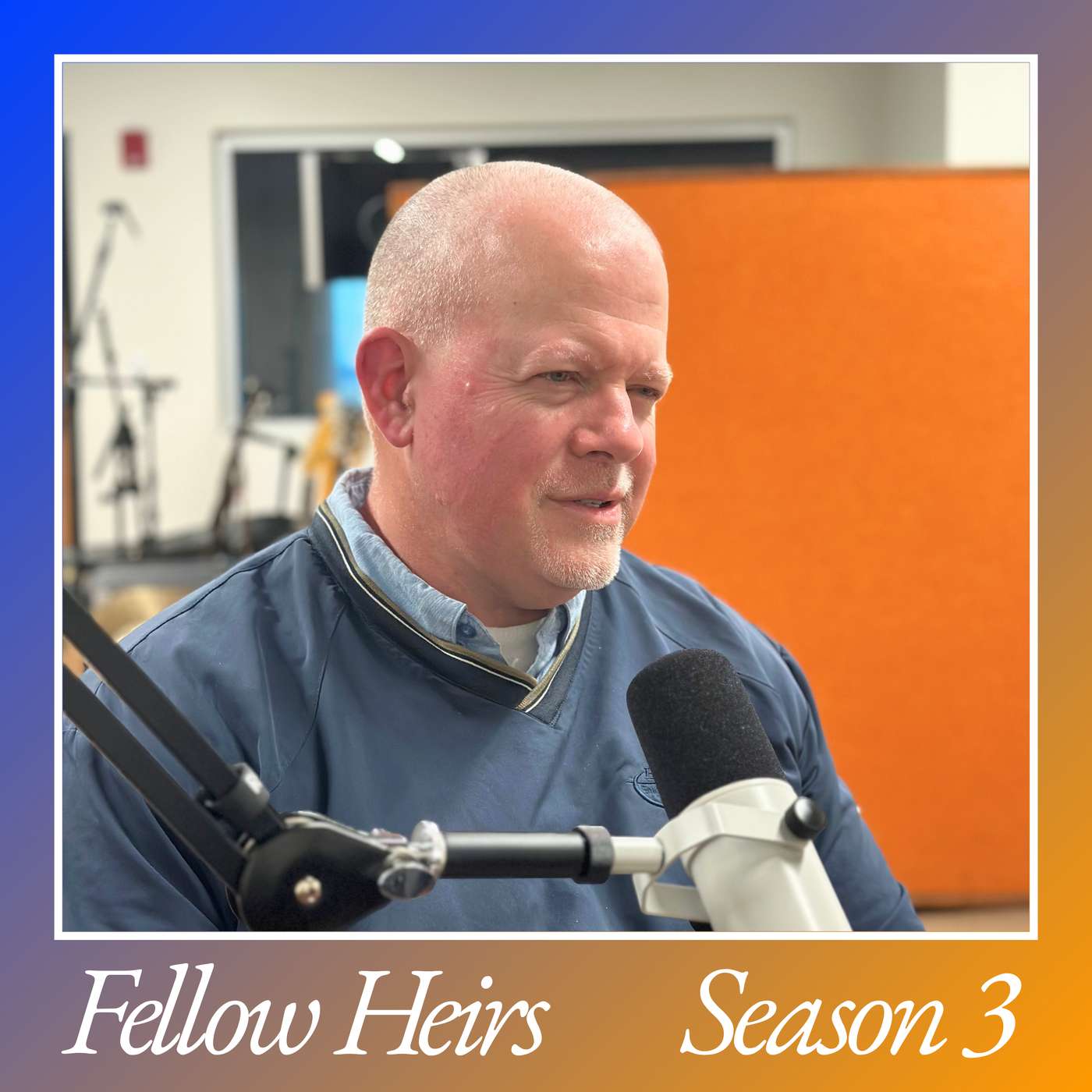
Fellow Heirs · Fellow Heirs
Join us for the Iona Study Center event on Friday, September 18th! More info here: https://ionaevents.carrd.co/ In this episode, ER doctor and church elder Steve Wing joins us to talk vitamins, Big Pharma, GLP-1s, and what it actually means to treat your body as a temple. Dr. Wing’s Sunday School recording (Spotify): https://open.spotify.com/episode/2TNH2x91M0zTaOel3TKrs1?si=8PJ6jM7mQ2Kb_EyFAwaccw&utm_source=copy-link Are you a female listener? Check out the podcast Unshaken! Spotify: https://open.spotify.com/show/1keI3OGw0MkJurPTR3B2Lf?si=HKdP_fWNQz2cZouVxD1MYQ&utm_source=copy-link Apple: https://podcasts.apple.com/us/podcast/unshaken/id1518435724 Email us here: [email protected] Come to church! Info here: christtheword.com Thank you for listening.
Nick: Hello, everyone, and welcome to Fellow Heirs, a podcast for Christians. My name is Nick. I'm joined by Isaac Hello, listeners. And our producer, Caleb. Isaac: Hello, everyone. Nick: And we're recording this little intro here because we realized after we started recording with Steve, doctor Steve Wing, who's our guest today, that we never recorded our intro. So Steve's not here with us, so this is after he's left. But we just wanted to give you a quick intro. Again, we're a podcast for Christians, and a couple housekeeping items here before we get into the episode. First one being, we've got an event next Friday, Isaac: Isaac? Nick: We Tell Yes. Being me Isaac: about that. We being the Iona Steady Center. Yes. We've hosted Noah on the show a couple times. Nick: Our last episode was a lecture from Iona. Yes. Isaac: So What's where's that gonna be? So, yes, it's gonna be at the University of Toledo on September 18, and the speaker is going to be friend of the show, Jacob Bartlett. Yes. I'll we'll relay these details again at the end of the episode that we've already recorded. Nick: And we're gonna put we'll link details for that event in the description. We also wanted to give a major shout out to Unshaken. Unshaken is a podcast run by Julie Van Wormer. She's a great woman of God here at Christ the Word Church. She's been such a loving mother to us in many ways. She's in many ways, she's our inspiration. She's done a lot of things that we've kind of ridden on the coattails of with her show because the the show that she runs oh, she's got some other women who are helping her with it also, but the show that she runs has been running for a long time. It's been years. And your wife listens to it, Isaac? Isaac: Yes. Yeah. She loves the show. Nick: Yep. Same for my wife. They find it very, very helpful. Isaac: Caleb, what about your wife? Oh. Oh. Oh, shoot. I forgot. I'm sorry. I'm sorry. Caleb's phone number reveal is coming up in a future episode, by the way. Yep. Nick: Yeah. Hard to bounce back from that, but we move on. And, anyway, so Unshaken is a a great show aimed at women. It is for women and it is extremely helpful. And if you are a woman listening and you have not heard of it or if you have heard of it but you haven't given it a try, please check it out and give it a listen. We love Julie and the work that she's doing. It's really, really helpful, not only for the church, but also outside the church, and so please check it out. Anything else? Isaac: Without further ado, let's get into it. Steve: The spirit himself testifies with our spirit that we are children of God, and if children, heirs also. Heirs of God and fellow heirs with Christ. Nick: So speaking of talking, I mean, what'd have for breakfast? You're a breakfast guy? Steve: I eat eat yogurt with protein powder in the morning. Nick: Okay. Steve: That's what I eat. How many grams? I don't know. It's probably about 40. Isaac: Wow. And No. That's Well Nick: One yogurt cup? Isaac: It's just that's a lot of protein. Yeah. It's funny because over half of our people that we ask that question to have You said said you don't eat breakfast. Nick: Yes. I would have pegged you as a non breakfast eater. Isaac: That wasn't how I was gonna end my sentence. Nick: Oh, sorry. Go ahead. My bad. Well, I Isaac: was gonna say, a bunch of people recently have said they've been they have protein yogurt. Nick: Oh, yeah, yeah. Seems to be all Protein yogurt's a big deal. Isaac: Yeah. You get flavored protein? Steve: It's it's yeah. Flavored. So Isaac: protein. I I heard recently that protein overworks your kidneys, so you have to work out in order to have it or something. Steve: Not necessarily. If your kidneys are impaired, sometimes they'll have you on a lower protein diet. Nick: Oh. Steve: But I think the research actually shows now that that's not necessarily the case. Isaac: That's crazy, because the person I was talking to does have an impaired kidney. He's down to one, so Yeah. Nick: That's crazy. Isaac: What about creatine? Creatine. I don't take it. Steve: Is it observe reason? Just because I don't, not because it's necessarily bad. I generally Generally, anything in that realm, I'll filter it through Jack, the nutritionist that we are friends with. He really doesn't have a problem with it, I don't believe. It forever was for muscle building. I mean, because it basically creates cellular energy, so it helps you recover. But now there's this new thought that it helps with mental clarity. Isaac: Yeah, helps your brain. Do you think that's true? Steve: Don't know. We'll have to see. You know, anything that's brand new, it's hard to know. I mean, there's certain things that are it's easy to say, oh, they're gonna be good, but a lot of things, if it's brand new, you just gotta see what how time plays out. Nick: Well, we can pray, and then I wanna ask you some questions about your background, Steve. Steve: Okay. Nick: Alright. Let's pray. Lord, thank you for this day. Thank you that we could sit down and have a conversation with Steve Wing and talk about his his what he sees, his perspective as a doctor. Thank you for him being an elder here and serving our church. I pray that you would bless him in his work, bless him and his family, and bless our conversation. In Jesus' name, amen. Steve: Amen. So, Nick: Steve, who are you? Introduce yourself. Steve: Steve Wing. We've been coming here Yeah. That's a good question. Nick: How long have you been at church? Steve: We've been here for a little over twenty two years. Wow. Nick: Okay. Yeah, a long time. Steve: Grew up in Western Pennsylvania. My dad was much older when he had me. He was a biology professor and he died when I was nine, and then my mom remarried, and we moved. We didn't move very far, I was about 15 miles away. What school did he profess at? It was at Geneva College. Geneva? Yeah, where Rebecca and I both went. Nick: Rebecca's your wife. Correct. Steve: Right. Yeah. She came there for I mean, I went there because I went there tuition free because my dad had been a professor. Then she went there through some interesting connections where her uncle worked there in admissions and got her, you know, got her a good deal, so she went there because most people in their family went to the went to Grace College in Indiana since they're from a Grace Brethren background, so Isaac: What type of college is Geneva? Is it like a larger college or do they have It Steve: was like 1,600 people in there. All programs. Was NAIA when I went there. Now they're I think NCAA three, and it's bigger now than it was then. It was a small liberal arts Christian college affiliated with the Reformed Presbyterian Church, so the Psalm Singers, Appellate Psalm Singing Presbyterian Church. Nick: So you were from Pennsylvania, but why what brought you eventually up here? So I went Steve: to college there. I went to med school in Philadelphia, Jefferson, where my stepfather had gone. Philly. Yeah. Have enough cheesesteaks? A few. Nick: That's nice. Steve: Rebecca and I got married after my first year, then I just I didn't feel like I mean, I had some step family in Western PA, but I wasn't really planning to come back there. The forecast medically in Pennsylvania was very glim at that time, because medical malpractice was ridiculous in Pennsylvania, What so Isaac: does that mean? Well, what Steve: it means is it was just like, they were kind of like some of the highest in the nation at the time. Isaac: The highest? Like, Steve: you're For saying medical malpractice insurance, so like, Oh. It was, I don't know, and I think part of it was Rebecca had more extended family out this way, and you know, and you realize how God works through every little thing, you know, and how you end up places because of that, and so we looked for I was part of a PCA church, which obviously this church was initially, and so we looked for PCA church, we'd actually visited in January 2004 when Gary Knapp was here at the tail end of his first tenure, visited, and this is when they were at the SDA. Nick: Mhmm. Steve: Then I interviewed with I only interviewed coming out of residency, only interviewed one day, and I interviewed like I had like three interviews same day, and one was with EPO, the emergency physician in Northwest Ohio, who I've been with ever since I've been here. Isaac: Wow. So, is EPO part of No. Steve: It's a private entity, but we primarily contract to ProMedica. Isaac: Okay. Because you Well, I guess, yeah. What's your job now? Steve: So, it's the same as it was then. I'm an emergency physician. We just have grown as a private group, and so when I came, we only went to two hospitals, Toledo and Fostoria, and now we go to 10 hospitals, so. Isaac: Do you bounce around to 10 hospitals then, or do you spend most of your time in Toledo? Steve: I spend a lot of time in Toledo still, just because that's the pod that I'm in, but I do go to everywhere. Nick: What made you want to be a doctor? Steve: Good question. I think my step So my stepfather was also much older and his children, he would have a daughter. My stepsister, the oldest would be 83. Isaac: Wow. Steve: And then I don't know how old the youngest would be, in in his like little over 70. Nick: You're saying right now? Steve: Yeah, right now. Wow. And so my the oldest, there were, I think he had two girls and four boys, and the oldest son was a surgeon general surgeon, just like my stepfather was, and he gave me good advice because I wasn't sure, was thinking about doing some different routes, and he said, you know, he suggested, he said, you should just go to medical school and then you can, you can kinda decide what you wanna do. There's so many more options, if you do, you know, kinda limit yourself if you do other allied health things that I was thinking about. So that was good. Good advice. Isaac: That is cool. And you have a family? Yes. What does that consist of? Steve: Consists of my wife Rebecca and eight children. Isaac: Eight children? Eight children. Nick: 2004, I think that was about similar time to my family coming to Christ the word. Steve: Yeah. I think we were here we were here a little bit before you guys, I believe. That sounds right. Not yeah. Because when we came, Noah was 3.5, Clay was two, and Rylan was four months. Wow. And Quinn was a baby, I think, when you guys came. So it was it was about the same. Yeah. Similar time. Nick: Mhmm. When you look back as a doctor over your career so far, because how many years now have you been a doctor? Steve: Technically, you'd say twenty five years, because when you graduate med school, you gain that title, but Nick: So twenty five years, so what, looking back on it, like, I guess, what are the high moments of your career, or is it all kind of the same? Steve: That's a good question too. I don't know. High points. I mean, there's Hard to say. There's good and bad, and emergency medicine's tough because it's You know, don't have ongoing relationships. You basically have a very short time in the room to build trust and rapport, and you have to move on, so it's very different than somebody who, in primary care, you know, who knows their patients and Right. Has that, you know. So yeah, I think think maybe some of the high points were when it was when things were easier. Things had become seemingly much more complicated due to governmental involvement in healthcare and and Isaac: You're saying from like a prescribing medicine and insurance perspective? Steve: Yeah. Maybe more insurance perspective. I think, you know, if you wanna talk about prescribing medicine, I think things have tightened up significantly, especially with opiate crisis, you know, which is actually for the good. You know, this is all good for America because it's a problem that's fairly unique to I don't wanna say it's not present in other countries because it is, but the opiate crisis was more of an American thing. I mean, it's in We were in Vancouver, Canada, and the amount of fentanyl use in the homeless people is astonishing for, but it's only in certain, and then you go to other countries and they don't use opiates, and anyway, it's Yeah, Nick: yeah, I can see how that would be complicated. When you think about well, wanted big reason why we wanted to talk to you was just concerning the body and looking at it or caring for it as a Christian, you know, having a good perspective on caring for our bodies, but also, you know, not going too far into that. There's a huge I think culture nowadays, there's a lot of people who obsess over health, over, you know, daily intake of creatine or sorry. I'm not singling you out, Isaac. I kind of am. But, you know, like, there's there's an extreme workout culture. Mhmm. There's all kinds of stuff, but there's also we, as Americans know, a lot of people don't take care of their bodies here. But what's, you know, like, as an emergency physician, what are the things that you see in terms of how people treat their bodies? Like, are there any trends that you have seen change and come and go, or what do you what do you see? Steve: I mean, there's a lot. I think, you know, just hitting some big hitters, things that are different, that have gotten worse over the years is obesity has become Nick: kinda off Steve: the charts in America. And so that's, you know, we can can delve into that, but we can I Isaac: mean, that's just Well, what do you attribute that to? Because we've always had junk food in America. Steve: Yeah. I think it's a combination of things, unfortunately. And I don't wanna get too much in the weeds, but I think Sure. There's if you look, I mean, you know, you can do a Google search and see that how how obesity in different states has just gone off the charts. It used to be that, like, this was, you know, this state was this percentage below. Now, like, know, it's like red is above 30%, like almost every state's red now. It used to be that way. So it it is a multi factorial thing. One thing, I think, you know, this is big picture and it sounds like kinda like old school, but like, it used to be that people actually did a lot more physical work. Yeah. People don't do as much physical work. It's a lot more blue it's a lot more, not blue collar, but a lot more white collar type job, and so there's less physical exertion on a daily basis. So that's one thing. I think a, I think and that's and then b, I think I think we just eat a lot in America. I mean, I think we do and I think Nick: Yeah. Steve: And there's a reason why, you know, the they say that one in three adults will get type two diabetes. Wow. That's Which is really a preventable disease if you're for certain reasons, so which we can talk about. But, yeah, one in three adults. And upper body obesity is the biggest, you know, risk factor, you know, other than it there are genetic factors that tie into it, but when you when you talk about one in three adults gonna have type two type two diabetes, then it goes beyond genetics. Like, because I mean, that's like, that would mean like, you know, it's across the board, it's like forget genetics that Isaac: What's the difference between upper body and lower body obesity? Is it just where your fat is? Nick: Yeah. Steve: Correct. Correct. Yeah. Nick: But you said it's prevent you said we can talk about it. How do you mean it's preventable? Steve: Well, I mean, this is where and this is where, you know, you're seeing some change, and this is a very charged topic, so I don't wanna get, you know, people up in arms about it, but if you look at some of the things RFK junior is doing, it's actually, you know, beneficial because he's saying that, you know, you should actually be eating meat and vegetables at the top of the food chain, not grains, you know. And, you know, genetically modified grain is, which is pretty much all the grain you're eating, is not what people ate thousands of years ago. I I don't wanna get some people cringe at that and say, well, that's nonsense, but there's some truth to it, and it's probably also true in the amount of inflammatory diseases and autoimmune diseases we see. So So anyway, if you if you at least do some exercise and eat a low glycemic diet, Isaac: and we can What's glycemic? Steve: A diet that wouldn't raise your blood sugar. Isaac: Okay. So like cholesterol and sugar? Steve: No. Actually, more just so that you're so it doesn't raise your blood sugar. Oh. That's as simple as that. Okay. Nick: So eating less sugar. Steve: It's not just eating less sugar. So it's eating, you know, like if you eat because there's also, you know, if you eat a piece of cooked chicken, it doesn't raise your blood sugar because it's Right. Fat and protein. I mean, mainly protein, if it's chicken. If you eat a piece of beef, same deal. If you ate, use the example of you ate an apple, and apples have different glycemic indexes, we're not here to divide out the glycemic index or the food chain, but let's say you eat a green apple, Granny Smith, which is a lower glycemic apple, it still raises your blood sugar a little bit if you ate it plain, but if you ate it with the chicken, you don't get the rice. There's other things you can do to mitigate. Wow. Vegetables are bad for you. No, not true. Potatoes. Isaac: What? Stop. Steve: It just got personal. Anyway, there are things that you can do to not get it. Here's the thing, and this is where it gets a little people say, well, that's nonsense. This is conspiracy theory. But everything in medicine I don't wanna say everything. There's, If you're at the Sunny School where I talked about these things, there are so many great advances in healthcare. But when it comes to what can you do to take care of yourself and not have to get into some of those scenarios where, oh, I need bypass surgery, oh, I need kidney transplant because my diabetes has been so bad for so many years. Oh, I don't So like, if you don't get there, you know, but the thing is in medicine, it's like multi multi billion dollar industry for diabetic drugs, for you know, won't even get into chemotherapy and cancer treating drugs. Mean like, And then there's a whole another realm which we can talk about a little later, is the whole biologic industry, which is like huge. We can we can talk about that as a separate topic. But if you like so there wasn't I don't I I feel like there's not a big push, you know, because for the most part, you know, in in medical school and in in at least in America, train, here's the diseases, here's the pathophysiology, you learn all these things, here's the drugs you treat it with. Yep. They don't teach you like, oh, well what if you did this differently because that doesn't make anybody any money. And that really seems like I put an evil twist on it, but it's true. It's true. You know, like, I think once you're at a certain point in your career, can take a step back and look at things objectively, and that's what I've kind of done in the last ten years, which is different. Now, some people don't want to hear any of this and they don't want to do it. Hey, guess what? There's drugs for you, you know, and there's drugs for you. But if you don't want to go that route, there's things you can do to maybe fix it. Nick: So And would you say though that it sounds similar to to most things, which is like small steps that you take daily will prevent disasters. Steve: Right. And there's discipline in it. Like, I mean, it's not easy. I don't always eat that way, but it and it takes more work really to eat that way. Right. So Nick: Okay. So diabetes, is there any other and and obesity you mentioned, any other big things you see Steve: in today's? I mean, something in this is thankfully not a big a big issue in the church, but it's something that is marijuana has become not just the fact that it's kind of like everyone's turned a blind eye to the fact that like once it got legalized, that it's okay to just be high driving, you know, and that we see everyone sees that everywhere. Nick: Oh, yeah. Steve: So, like, that's one issue. The separate issue, which is we see a lot of it in healthcare is, you know, certain people that are daily consumers get, you know, something that, you know, fifteen, twenty years ago we never saw, which is cyclic vomiting syndrome, you know, and these people like Nick: And you Steve: know, they'll We see some people like, you know, frequently for it, so in health care, I mean, that's all across the nation, you know, like it's a it's kind of a like a new disease process you wouldn't even have thought would have been an issue. Nick: You're saying they're smoking so much marijuana that they eventually get this? Steve: Nah. It's it's some people somehow get away with it and others don't. Others get this, and then it's like a crippling thing, but it's the hardest thing to explain to them that, you know, Bob Forney was Doctor Forney was he beat the drum. Fairly loudly on the negatives of marijuana, habitual marijuana. You know, when we talk about the half life of a drug, you know, if you take a Tylenol for a headache, if your headache's still there, it's probably gonna come back in six hours because the half life is, you know, expired. But you guys know what the half life of marijuana is? Nick: Doesn't it? Oh, sorry. Go ahead. Isaac: No, I don't. No clue. Steve: Two months. Woah. Wow. So it's hard to convince anybody to stop something for that long to see that if it was really having an effect on them. Isaac: What is that vomiting thing? What is it? Steve: It was somebody, I don't know, some biochemist figured out the reaction that occurs and the chemicals involved, and it's very wild, but it you know, it sets off this cascade. Why does it not happen in every person that uses regularly? I don't know, and why does it happen in just some, and why is it so bad in some that it's, like, crippling? You know, like, Anyway, that's Is it just common throwing up a lot? But for days on end. Nick: It's been Steve: awful Days or a weeks. Long Isaac: It's funny you said people turn a blind eye to that, because that's so true with marijuana, and I've also seen it with alcohol, where someone will be so into health, and their body, and getting everything their life right, but then they'll still just get hammered or high on the weekend. It's like, how can you be so focused and dialed in on all these different factors, and yet, at least, I mean, there's plenty of reasons beyond health why those things are wrong Nick: Mhmm. Isaac: At points. But, it's crazy they turn a blind eye to it. Steve: Well, it's a generational thing because, you know, the new generations, I think it's, I mean, I think it's pretty common knowledge. You can search on the internet, but like, most, I mean, smoking in general is not a thing for Gen X and Smoking cigarettes? Yeah, smoking cigarettes, so like, whereas vaping is. Nick: Oh, Steve: yeah. And but, and even drinking. It's not that there isn't still drinking. Nick: Yeah. Alcohol consumption in America has gone down Yeah. Significantly. Isaac: Probably because of marijuana. Nick: Yeah, maybe so. Steve: And that may be it. May be Isaac: a generational shift. Which is crazy also, I remember I worked at McDonald's in high school, and I don't remember I have no idea when marijuana was legalized in Ohio, but I worked right on the border. It was on Alexis. So, I'm sure a lot of these people were coming from Michigan, but I worked the window, and so many of these people were actively smoking joints as I handed them their food, and then driving away. I thought about calling the cops a few times. I'm like, it doesn't seem right that you should be able to drive while high, but I guess it's different than driving drunk for some reason. Is it? Steve: I don't know. Nick: I was gonna say, I feel like It has. I mean You're mentally impaired. Yeah. I mean, you're not really Steve: The trouble is is that you can't there's not there's not reliable means to like if you, you know, if an officer pulls someone over and they're gonna rely on, you know, like, some drug testing, there's they can't nothing reliable to make anything stick. So Ohio, I know this because Doctor. Forney invited me to this little symposium at UT, this was years ago, and it was Ohio has some of their state patrolmen or what are called drug recognition experts, so they've done extra training to allow them to identify their testimony will stick in court, even if there's not a drug test or something positive, so. Nick: That's fascinating, I did not know that But Steve: you can't have every person trained in that, Nick: so. Sure. Isaac: What have you seen with nicotine consumption, or do you think that's Steve: I think it's, I think in general, like, I mean, as far as nicotine products all over, I don't know. But when it comes to smoking, I mean, I mean, I can remember in residency, like, I mean, you had so many horrible COPD, which is chronic obstructive pulmonary disease, which you don't have to smoke to get COPD, but most people in America that have COPD smoke. Yeah. They would, know, some of them would get a cold, they'd, you know, smoke too many extra cigarettes even though they were trying to quit, and they end up on the ventilator. I mean, was just like a revolving door for some of these people. Whereas, you don't see that as much anymore, and we still see a lot of it. There's still a lot of bad COPD patients, but it's it just seems like there's a little shift. It's probably a generational thing. Nick: Yeah. Yeah. It's well, I remember when I was in high school that nobody smoked and nobody vaped, but as soon as I hit, like, junior, senior year, and vaping became a big thing, vaping took off. Like, it was kinda crazy because if you think about cigarette consumption, America was at, like, the lowest point ever Mhmm. Isaac: And then vaping took off. Nick, I have a question. You work you spend a lot of time in ditches in Nick: Oh, yeah, yeah. Do you Isaac: do you find more cigarette butts or Zin pouches? Nick: No, the well, okay, the Zin pouches, but the the disposable vape pens. Isaac: You you find more of those? Nick: Yeah. People litter those like crazy. Isaac: The Breeze or whatever? Yeah. Nick: Breeze. Yeah. Isaac: Wow. Nick: I hate those things. Yeah. But oh, I I was gonna ask you, what's your I mean, have you seen any negative effects of vaping? Steve: I mean, for a while, they thought that there was gonna be, you know, more lung issues, but I I would have to say they're not. By no means is it as widespread as you would think it would be. Sure. As much vaping as there is. Nick: Right. Isaac: Yeah, that's metal in your lungs. Steve: Give it twenty years, and then we'll see. Isaac: Yeah, that's right. So, in your job, because you work in ER, so I'm sure you see a blend of just straight up emergencies, like people who just got shot, or broke bones, and then also, you see these issues that we're talking about, which is the culmination of years and years of people mistreating their bodies. But I guess on the flip side of that, like Nick mentioned earlier, there can also be a point where people take their bodies too seriously. Where Nick: where Isaac: do do you you see see that in the church today? In the church? Sure. Or all over? I guess all over. Steve: We'll take it outside the church for a first. And I think what you're seeing is you're seeing a group of people that are becoming increasingly unhealthy, and you see a group that is ultra fit and healthy, or at least visibly ultra fit and healthy, and there's a reason I say it that way. So I guess the question is because, you know, in social media and in culture, everything is about image and how you're viewed, and you know, and and you don't see a lot of people like, you know, especially because everything even in social media is trying to get people to like draw attention to yourself. Right. So I think I think the question is, is if you're if you're into lifting, which I like to do, and you know, you're into doing air eating, are you doing it so that you can live the life God's called you to in a better way and feel better while you're doing it, or are you doing it to draw attention to yourself, Is it all about self image? I think David has hit on this, Nathan's hit on this, is that the whole idea of, you know, especially a lot of the women that are portrayed in this, is that they have this ultra fit body, but they would never have a baby Nick: Right. Steve: Because that would ruin that image, you know, which is not, you know, is not in accordance with what we know from scripture. I'm not saying that, and some people can't have children. That's okay too. You know, I'm not saying that it's like every, you know, but it what the point I'm getting at is that it's some of that in that whole culture of fitness and health and supplements is so that I can look the best that I can look, so that I look that way. And it's not necessarily so that I have a more functional body, because if you think about it, if you went back in Paul's day and someone was lifting weights, it would be like, what are you doing? You know, are you trying to be stronger so you can work harder? You know, like, I mean and I'm not saying we're not in that realm now because for the most part, most people have a job that doesn't require a lot of physical activity. Some do, but a lot don't. Yeah. You know? So, yeah, I think I I see that that point as being one of the biggest ones is that it becomes a worship of self Mhmm. And a worship of self image and look at me, you know, and trying to look better rather than doing it to be feel better and stay healthy. Nick: Vanity ultimately? Steve: Yeah. Nick: Right. Yeah. I see it a lot today. We're gonna have a future episode discussing masculinity, but like, you've got people, you've got young men nowadays that are so obsessed with image Mhmm. That it is disgusting. I mean, it's it's just straight up vanity. But a big part of that, yeah, is lifting weights and working out. It is it is I think your point is is a good point that we need to remember. Most of what we do, we're not sweating. We're not like, you know, getting dirty. We actually, most of the jobs nowadays are pretty you have a laid back job, Isaac. You you got an office job. Right? Isaac: Yeah. Laid back physically. Nick: Laid back physically. Yeah. Sorry. Yes. Isaac: Good clarification. No. Yeah. I mean, it's true. Like, if I if I didn't I work out maybe, like, two or three times a week, and if I didn't, there would be whole weeks where I I I don't walk more than 2,000 steps, probably. Like, work from home, and I just sit at a desk, so I need to find other ways to sweat. And, yeah, I would say most of the There's a lot of people at church that have desk jobs where they're in a similar camp. There was a time, for maybe like a year and a half, I had a desk job and didn't work out. And, man, I just felt really gross. Nice. Like, I don't know, I would still eat a lot of junk food and stuff, and I I didn't look really any different, but I just felt bad. Sure. And so, like, you're obviously on the other end of the spectrum. As I look at you now, you're completely greasy and probably sweat a Nick: lot today. Isaac: Thank you. Nick: Yeah. Well, I was gonna ask about working out in is that you've mentioned, like, exercise being a good thing, but what do you mean by that? Do you mean, like, oh, well, if you, like, if you were to if you were to talk to somebody and say, you should exercise more, is it different every single person what that looks like, or do you recommend, oh, just, you know, take a two mile walk every day and watch It what you're Steve: probably depends on the person, because I think some people would have a clearly a different starting place than someone else. But I think that there's I think there's benefits to there's benefits to weight training, and there's benefits to cardio some cardiovascular exercise. I think extreme cardiovascular exercise is not necessarily the best for you. Nick: Which what would that be? Steve: Oh, like ultra marathon and like where you know, it's something where you're, you know now, I know some healthy people that, at least seemingly very functionally healthy that are very active that way and marathons and triathlons and so, I mean, it's a blend. But I think I think even if most people, if they just walked, like you said, like two miles a day, would do tremendous things for their health. Nick: Wow. Steve: You know? You know, some weight training. I mean, of it with with weight training is if you can carry, the more lean muscle mass you can carry into your later decades, the I mean I mean, this sounds really simple, but like, if your legs are strong enough to stand up out of a chair or you're strong enough to get up off the floor when you fall, then you don't lay there for three days Yeah. And end up in kidney failure with something we call rhabdo, you know, when your family finds you, if you're still alive. Right. That's really morbid to say it that way, but there's there's something true to that, So you now, I'm not saying that every, you know, 75 year old woman with osteoporosis should start squatting because that would so see what I mean? It doesn't it's not a one size fits all. Nick: Yeah. That makes sense. Right. Steve: There's benefits to both. Nick: Right. You're an elder here at church, and have you, like, in helping shepherd people, have you had to, you know, push certain individuals to be more health conscious or to be less health conscious? Like, if you, you know, been like, hey, you really should your health's going in a very bad direction if you don't do something right now. Steve: I think both both scenarios come up. I'm probably a little bit, I'm an odd one to ask that because I generally, if people are interested in a natural side of things, I'll do that. Yeah. If that's what they want. If Some people really need to seek healthcare when they didn't want to, but that's only, you know, that's been a few times. I think I think also it's sometimes people don't wanna pursue super aggressive healthcare, and it's okay too, know, depending on the scenario, you know, and scenarios come up before too. Isaac: What do you mean by that? What do you mean they don't wanna pursue serious healthcare? You're saying they should go to the doctor? Steve: Diagnosed with, you know, like, cancer, and somebody wants to do very aggressive treatment, knowing that the outcome's not gonna change significantly, and, you know, somebody doesn't want to do it, it's okay. As long as you count the cost Yeah. Of what you're signing up for. Isaac: See what you're saying? Steve: You know? Nick: Yeah. What was your well, so you mentioned if they desire to do like a a more natural route, you tend to go that direction? Steve: Yeah. For less for less severe things. Nick: Okay. Steve: You know, or for something, you know, there's always the answer to every problem is not necessarily prescription medicine. So but some people prefer that way, and there's always something that way, and then there's usually an alternative way you could get there maybe, as long as you're patient and open minded. Nick: Do you think people like the I'm just like, they like the the the idea of, well, there's just gonna be a pill that fixes my problem because it's easy and it's lazy? Steve: Yeah. And I think that's where I think that's where it comes down to, like, have to you have to really look in. And this isn't a question. I'm not trying to question that, well, the person that's willing to do something natural has more faith. That's not true. But I think in general, most people's faith in the medical profession also involves pharmaceutical treatment, you know? Yeah. And so there's a little bit of because there's been a lot of shade cast historically over, you know, anything you might do, you know, for orthomolecular, which is like vitamin, you know, So like, that kind of thing is is, you know, heavy shade in that area. Nick: When you look at our church and the people here, and you consider your your perspective being a doctor, I guess, what are the you mentioned you talked early or a little bit ago about what do you see. Do you see people taking their health too far or not too seriously outside of the church, but what are the trends you see in church with Christians? Steve: I mean, not specifically our church, but I think, you know, growing up, if you in a legalistic church, that would, you know, if if you were smoking or drinking alcohol, everything, you know, your salvation was void. Right. Yet, some of those people probably had the worst diabetes and the worst obesity on the planet because that's like off limits. Like, you're not gonna talk about what I'm eating, you know what I mean? So there's a bit of a disconnect, you know, in some churches where I think like Nick: This sounds like a Southern Baptist church. Sounds Mormon. Steve: The Southern churches generally were the smoking churches, but Isaac: Oh, really? Steve: Hey, big tobacco in the South, man, back in the day. Yeah. Yeah. You're gonna overlook anything if that's what everybody's making their money on. So, anyway, that's more of an aside. That's not Yeah. But I think there is a disconnect in that way sometimes where people will, you know, highlight certain things and say, well, that's horrible, but this is yeah, don't talk about this. This is fine. Nick: Do is is there anything nowadays that's similar to the smoking and drinking is Steve: don't You make you lose your salvation? Good question. I don't know. I wonder, I'm thinking like, Nick: is there anything that I do or that I don't do that maybe another honestly, I feel like one of them might be smoking cigarettes, whereas, not like a like, you're gonna lose your salvation, but I do, as a Christian, think like, should you be smoking cigarettes? I don't think so. That's a sin, isn't it? Isaac: I've seen you smoke a cigarette. Nick: No. I know. I'm not a chain smoker, though. I'm not, like, addicted to cigarettes. Well Don't don't slander me on here. Isaac: Told me last week that you make fun of me too much on this show, and I need to find more ways to dig at you. So I'm I'm trying to find something. But, you're such a good guy. Nick: I have to stop it. I received that cigarette. But what do you think about something like that? Like, is smoking a like, would you if you you look at a Christian, do you think smoking cigarettes is okay? Steve: As a Christian? Nick: Yeah. Steve: Yeah. I don't I think I think the bigger question is, are you talking about habitual Nick: Yeah. Steve: Pack and a half a day? Right. I think you have to think about, and we can get into this as a separate, like a different topic, but it's basically, you know, when Paul talks about your body's a temple of the Holy Spirit, and the context is definitely spiritual. But he ties it to physical because he says you don't link your body with a prostitute. Right. But I think sometimes that can be sometimes that can be played in the wrong direction. Now, I think what if you if you're struggling with, I guess if you're really struggling hard with a lot of vices, maybe it's overeating, maybe it's fast food, maybe you're obese, maybe have that. Don't tell me that you're self disciplining yourself against porn and anything else. Mhmm. Because if you can't discipline yourself in anything physical, how are you gonna discipline yourself in anything spiritual? Yeah. Isaac: So, Steve: like, I think that that might come to the one thing that's like, now is I think we're think we're not a legalistic church, and I don't think we would I don't think we would ever take the stance that you were asking me, you know what I mean? Right. I mean, there's been, you know, I think that I know Christians that smoke, or have smoked, or and I don't doubt their Christianity over that because that's, you know, like Now I think when Paul says nothing can separate us from the love of Christ, you know, like, is it I think, like, he didn't mean cocaine though, did he? Like, I don't think you know what I mean? I think you have to you have to, like, take it in the context of what he's talking about. Like so Another Nick: thing I thought of that that was helpful, thank you, is what what do you think about because you've talked about obesity, but we've got, you know, big big pills nowadays that easily take care of that problem. You think of, like, Wegovy and the big name drugs. But, like, what's your perspective on those? Isaac: Are they called? GLP ones? GLP ones. Yeah. Steve: Were actually created as diabetic drugs, and they've found a very nice side benefit of weight loss, and it has truly revolutionized weight loss treatment in the last five years, and to the point where, if you come out of general surgery, which is a five year residency, a lot of times people do a one year fellowship in what's called minimally invasive, which means they do a lot of laparoscopic surgery, and some of those people would get they would actually do a minimally invasive fellowship for bariatrics, so to do gastric bypass, Roux en Y gastric bypass, gastric sleeve, they would do all these things. Isaac: Gastric bypass is the surgery that some people have to shrink stomach to lose weight For or Steve: weight loss. It doesn't shrink your stomach, but it creates a small stomach pouch. Isaac: Oh, within your stomach? Yeah. Steve: Oh, okay. And so, people lose a lot of weight. Right. But there are negatives to it because you've had intra abdominal surgery, you can get adhesions, get a bowel obstruction later in life, so there are some negatives to it. But a lot of those bariatric surgeons that were had a completely full practice doing bariatrics are now doing general surgery again. They're general surgeons by training, but they're falling back to do general surgery because everybody's losing The OP ones have changed the landscape of weight loss treatment. Now, go back to a former conversation, like, do you guys watch TV? You're from Christ the word, you probably don't. Nick: I mean, we've got phones. Yeah. Steve: It's okay to admit it. I watch TV. Isaac: I I watch TV through the form of maybe like YouTube or something, Steve: but Okay. But you probably don't get the same commercials. I assume entertainment. On TV. Nick: Oh, No. I've seen the ads. Steve: Oh, yeah. Like, what are the number one ads you see on TV? Drug ads? Nick: It's usually Ozempic or the ones that I can think of immediately are the Wegovy and Ozempic ads. Isaac: Yeah. There's another one I'm trying Steve: to think of that I've seen quite a bit, but yeah. The two things you see advertised heavily are GLP ones and biologics. Why do you think that's the case? Isaac: Well, what's a biologic, first of all? Steve: So, without mentioning names, these are the mAbs, which is a generic term. Basically, these are immune fragment modulating, so they basically suppress your immune system for a specific treatment of a disease. They get different indications, so ulcerative colitis, Crohn's disease, some of them have indication for psoriasis, and now there's more and more indications. And different ones get indicated for multiple things because they can treat multiple things. Anyway, we can come back to that. Yeah. Okay. There's a point with that. Is it why do you think those are the two that you see advertised all the time? Nick: Is it because they they very easily alter your physical body? And Steve: It's more like $9.10 figures. Isaac: Big money. Steve: Tons of money. Makes Isaac: sense. Yeah. Yeah. Big money. So what's the negative to using GLP ones? Is there Steve: Well, there are negatives. There's some side effects. Some people get along with them fine. Some people get pancreatitis, which is not good, and it can be very severe in some people. Thankfully, that's not been There are minor side effects that people have to deal with, nausea and constipation. Some people find out right away they just can't do it, other people get along fine. But I I think in general terms, not trying to be cast too much shade on the, you know, the big big pharma money machine, which they are right now, is that they are actually helping because if if some, you know, lot of the people that are taking them, probably cutting the type two diabetes down too, and in the process of them losing a lot of weight, you know. Isaac: So, I had a friend that I might have said this on the alcohol episode, I completely forget, but he was a high functioning alcoholic, and he was drinking a lot of beer, at least a 12 pack every night, I think 15 beers a night or something. He went to the doctor because he was putting on a lot of weight as a result of that, and he told the doctor about his drinking problem. The doctor didn't tell him to stop drinking. Instead, the doctor prescribed Ozempic to him, or offered if he wanted to get on Ozempic. And he didn't take it, but that just blew my mind. Like, I think like, why would that be the first thing that the doctor goes to? You know? Steve: It's a good question. Isaac: You'd have to think it's financially motivated. Steve: Well, not necessarily on the doctor's part because, like, if if you're if you're a primary care provider, whether regardless of your, you know, your background, I mean, that's the training, is that you, you know, you're treating conditions with drugs. I mean, that's what we do, you know, like, I think, like, you know, now, I'm sure that, you know, you go to different providers and one might say, hey, you really need to slow down the drinking because, you know, like, thinking through the things, you know, number one, a big side effect of the GOP ones could be pancreatitis, which so can heavy alcohol intake. So it's like, it's kind of like cooking up a stew for pancreatitis. But anyway, not getting too medical in this, I, you know, I'm not saying that person did right or wrong, but it, that's kind of the way western medicine is, what I do. It's like we prescribe things, especially in the realm that I do, because the emergency department, I'm not, I can offer things to people if they're interested, it, like, but hey, there's some other things you could do that but, like, that's not, you know, that's something where you've established a relationship with somebody, and you can, you know, you're talking to them, and you're gonna follow-up with them, like, it's not usually what what I do, you know, in my day job. Isaac: Yeah. Because it seems like it seems like GLP ones for the most for like, in large part, one of the biggest problems with them is that it eliminates the need, like you were talking about earlier, to have actual discipline, and it's just kind of like a shortcut to results. Steve: The one thing I will say, and it sounds like I'm talking out of both sides of my mouth. There's some negatives you gotta be aware of. It's this is this is like big pharma at its finest, you know, like these are the things that, you know, that are getting pushed because they do make a lot of money, but they're also doing things, and it's been shown to like, it's probably, like I said, for for one class of drugs to basically put like a specialty, I don't mean put them out of business for good, but like, to reduce the need for bariatric surgery so much that they're not doing them very often. Yeah. That's pretty impressive because like now, like why would why would insurance pay for bariatric surgery if they could instead pay for you True. To go on GOP one. Yeah. And and you get the same results without, you know, complications and having to cover Anyway, so that's one thing. But the thing is is that some people get on them and they get and they change their lifestyle at the same time. So it's like the catalyst to get them going Like how would they Isaac: you're saying just their diet Steve: their diet, they exercise, they realize, oh, I feel so much better. I'm gonna keep on I'm gonna keep going. You know, and that that has been I think that is like a side, whether you wanna call it placebo effect or Just fuels them. It just fuels them to move forward in there. Interesting. So there there are some benefits. Nick: Yeah. Before we move to the biologics portion, would you like, is that these kind of drugs, are you do you think they're dangerous for Christians? Steve: No. Not necessarily. I mean, I think there's I think you have to I think you really have to take a step back and look at the big picture of things, and say, you know, have I have I done everything I can do on my own? Right. Or is this just a simple shortcut? And I'm not saying that it's not that it's a wrong shortcut for some people, you know what I mean? Like, might be the right option, you know? Mhmm. Especially if you just got diagnosed with type two diabetes, and you have weight to lose, that may be a nice option for you, because you can get both benefits. Isaac: It's true. I think it's easy for us to be like, Oh, GLP ones are wrong, but we haven't experienced a 400 pound life, you know? Put yourself in their shoes. Nick: Yeah. I'd that's why it makes sense that you said that them losing the weight would lead to them actually doing more. Because I I just can't imagine the, like, it is rare for people who are extremely over extremely overweight, extremely obese to completely go to the other side. Mhmm. And I understand because it's like I mean, it's hard for for me to do workouts. Like, I genuinely don't like doing it, but I can't imagine if I was, like, massive and how much harder it would be. Mhmm. So I understand, like, that's a mass that's a tough hill to climb, so I get it. Isaac: Yeah. I I also had this quite large friend that None of you know him. Some of you might. He doesn't go to our church, just to clarify. But he got on Ozempic, and he told me, well, first of all, he was getting it under the table from his sister. It wasn't prescribed to him. He told me It's getting worse. His plan was to take Ozempic, and he wasn't going change anything else about He wasn't going to work out at all. He was like, I won't even need to work out, I'm on Ozempic now. But, what he said is, it's gonna naturally make me want to eat less, and so that's what a big part of what the change was gonna be, was he was just gonna be consuming less calories, because Ozempic was gonna make him less hungry, or something. But I'm just thinking, like, that just can't be good. He, like, he's not gonna put in the work to lose the weight. Steve: There, like you said, it's not all positives, there are negatives. Isaac: Yeah. Steve: And you know, like if you I don't remember the in anti aging medicine, which is a medical Isaac: Wait. What's that? Anti aging medicine? Steve: Anti aging medicine is like the it's like there's a whole field of boutique medicine for, you know, basically try and preserve youth. Although, what is their god? Isaac: Appearance. Steve: Their Itself and that, but it's also that I I'm not gonna die. Oh, true. You know, it's a denial of the truth of Nick: Yeah. Steve: We're we're all finite and we're gonna die. Isaac: Are you familiar with Brian Johnson? Steve: That's a pretty common name. Oh, true. He's a Nick: guy who's who's very much so trying to do that. He's trying to to, like, de age his body. He's a very, very weird guy. Yeah. According to Isaac: all his metrics, he's in his sixties now or something, but he was like a tech billionaire, so he has a bunch of money to spend on this. But according to all his metrics, I think he's de aged back to the point that most 18 year olds are at, or something like that. And, he takes blood infusions from his son, who is a teenager. Transfusions. Transfusions. And, he's also, I don't know, just like a crazy diet, and he's an influencer for all these things. And he doesn't go out in the sun without an umbrella. He gets like ten minutes in the sun a day or something. Like, everything in his life is the most elaborate equation, to the point where he he calculated how much life he was gonna lose for each thing. So, it's like ten minutes per cigarette, you lose off your life ten minutes per cigarette, or ten minutes per McDonald's meal, or something like that, and he has it all scienced out. And, I heard recently, I hope I'm not going down too much of a rabbit trail here, but he got this new girlfriend, and he went on vacation with the girlfriend's family in The Philippines, and so this was his introduction to her family. But to go on this trip, he had to forgo a bunch of the science and rigidity of his life. And so, he ate his girlfriend's mom's home cooking and stuff, and just kind of everything wasn't in equation. He spent two weeks on this vacation, and when he got back, he calculated, I lost twelve years of my life going on this vacation. It's just so mind numbingly stupid that these people think that they can control their life and decide when they die based on their health, like you were saying. Yeah. I think that's the balance of doing things so that Steve: while God allows you to live, that you feel well and are able to do what he's called you to do. I think that's the balance of, because I mean, you could pick apart that story and say, well, you know, I mean, there's many examples in the Bible, it's like your time will be required of you now. You know what I mean? Like, you can't can't plot it out. Back to the anti aging medicine comment, there's something newer. Jack Grogan, the nutritionist that we're friends with, we see, he's not a Christian, he's Catholic. So he doesn't necessarily hold all the same views. But from Isaac: what I've heard, Jack is, he's big on like natural remedies and vitamins, right? Steve: Yeah, I mean, he's Okay. I'll say it that way. Yeah. Like, orthomolecular stuff, but there's something new in anti aging medicine. It's basically, this goes with that thing I said about keeping lean muscle mass in your older agents. So one of it was that if you get forty grams four times a day, now I'm not saying this is for everybody because Forty grams of protein? Yeah. It it if forty gram meal creates what's called a leucine spike. And so leucine members of branched chain amino acids, so leucine, isoleucine, valine, like the the three branched chain amino acids. If you get a leucine spike, it triggers this like, basically triggers this pathway that increases your lean mass. Now, it doesn't just mean if you ate forty grams four times a day for most people, they are gonna have more lean mass because they have plenty of, you know, plenty of the building blocks. But like I said, not for everybody, but there's this was something, you know, so it's like you kinda shoot for that. But, like, there's also people in that whole antiaging realm where they are modulating hormones, so that kinda like sounds like he's doing some crazy stuff. Nick: Oh, yeah. He's not. Isaac: Yeah. He's absurd. Yeah. Steve: But like, you know, you can you can do lots of these things and yeah, you could theoretically, you know, add years to your life, but like, you could also die in a car accident Right. Today. Your girl's got this, you know, that's it. Know? I mean, so like, there some of that is you gotta ask what's the goal, you know? If the goal is vanity, and it's to look at me, and look what I look like, and look at this, then it's probably nonsense. Isaac: Right. Right. Steve: Yeah. Doesn't mean it's nonsense, it just means probably not right. Isaac: Yeah. Steve: You know, like, it's not wrong to do, you know, some of these things, and try and eat well and stay fit, but it's you gotta ask what the goal is. Nick: Yeah. There are many things in the in in Christian life that we need to we need to analyze as to whether or not we are going too far with them. Isaac: And to close the loop on Brian Johnson, I just hooked it up. I read this last last month, but he has all this longevity stuff, but he, just last month, announced that he has a diagnosis of autoimmune gastritis, which is an incurable condition where the immune system attacks his stomach lining. So, he's done everything perfect in his life, but he still has don't know if that's Uncurable. I don't know what that's gonna take off his life, according to his math, but he still has, like, uncurable things, and it's just God God dictating how long his Nick: life is gonna be. Yeah. What is this? I don't I don't know if I'm aware of bi biologics? What is this? Steve: I'm just using that as a generic term for drugs that have been around. Some of them have been around for over twenty years, twenty, thirty years, but they're basically immune modulating drugs to suppress certain aspects of your immune system. So, if you have I don't wanna get too much in the weeds, but let's Sure. Just We'll talk about inflammatory bowel disease. Inflammatory bowel disease is a generic term for two conditions, Crohn's disease, ulcerative colitis. Crohn's disease affects, can affect your entire GI tract from top to bottom. More commonly, it affects the small intestine, the large intestine. Ulcerative colitis is localized to the colon, the large intestine. So, these people get inflammation in their bowel, they get chronic diarrhea, they lose a lot of blood, they have pain, they have If you've seen the commercials, there's some new ones that are being, you know, there's always new drugs being marketed for them. Again, this is not a talk for the FDA, or big pharma, but there are so many autoimmune diseases, and I think way more today than there ever used to be. And so, now I'm not saying this is like, you know, this isn't I'm not speaking for my group. I'm not speaking for Fermatica. I'm talking about I'm speaking for me, you know, which is like looking from the outside in at a lot of these things, and filtering it through some of the natural stuff I believe in and things I've learned along the way. So One thing that is cast out, and it's interesting that you bring up a story about a guy named Brian Johnson, who I don't know, and he avoids all sunlight. Now, don't know if he supplements with vitamin D, but if he doesn't supplement with vitamin D, and he's avoiding all sunlight, he's probably very vitamin D deficient. You know, people think, well, he's vitamin D deficient, well, it means his bones are gonna be weak, and this, well, it actually means his immune system's probably super weak. And, you know, that's that that is a big reason why there's so much autoimmune disease is because, you know, we've been taught that, you know, if you're in the sun, you're gonna get skin cancer, and which is true, you know, you may get some skin cancers, but there are benefits to getting sun conversion, you know, because you can activate vitamin d three through sun exposure. So, and so that's one way to get it. You can also supplement, and because most people work an inside job with a white shirt on and not an outside job with what you have on, they're not getting a lot of sun conversion and activation of their vitamin D three. So, and that does play a big role in some of these autoimmune diseases. Now, part of the reason I brought up, and I just use the term biologics because there are so many different names. I'm not gonna say a specific name or drug company that, you know, could hear this and take great offense, know, but it's like, the thing is is that if you listen to any of those commercials, like, it'll say, like, hey, if you have this, and you're sacrificing, you know, some some and some people some people have to do it. They're in a bad position. They really don't have any other option, they have to do it. But like, you look at the negatives for some of these things, like the, you know, you could get on the laundry list is like, they're in the double alphabet numbers of the things, you know what I mean? All these trade offs and it's like, really? Like, I think what people need to do is really say, is there anything else I could do to maybe make this better? Now, some people they're in a position where they're in such such bad shape they gotta do it, but I I think my encouragement to any of those people is start doing your own research, and you know, see if you can find an alternative treatment to, you know, just because they lay your immune system. If your immune system is already weak because you know, that's how you end up with autoimmune disease, know, and then you're weakening it with a drug, you gotta think like what can I do, what's my next level of protection? Because a lot of those people are at risk for diseases we don't see much anymore, you know? So in regards to doing your own research for health related things, how do you know what's Isaac: a good source and what's a bad source? That's a good question. Every time every time we ask a good good enough question, it means there's no answer. Steve: I mean, I I think there's, you know, I think there's a reason that I think there's a reason that Rebecca ended up start seeing Jack Grogon years ago. Was an interesting orchestration of events, and she was seeing a chiropractor. We ended up buying his house, and, she was having a lot of issues after Brez was born, and Brez was sixteen sixteen and a half. And he said, you should go see Jack Grogan. And so she went over and saw him, had a hair analysis, I was kind of a little bit like not sure about it all. And he, you know, put her on a diet and had her do different things and actually improved a lot of stuff. And I I kinda went went and talked to him, and I really liked him, and and you know, I kind of delved into certain things myself too, and but it's hard to know, like, I mean, because there are so many conflicting things on the Internet, and Yeah. You know, in general, our in general, I'd have to say, it sounds very negative, but our healthcare system is geared toward see your doctor and take your medicine, you know? Yeah. It's not to like try and take care of yourself or be healthy on your own. Nick: Yeah. Would you sorry. Do you mind if I ask you a question? Isaac: No. I don't mind. Go ahead. Nick: Would you say that that was the the protocol during COVID? Like, it kind of seemed like that was the like, when COVID when COVID hit and everybody was getting COVID Mhmm. It seemed like the the reaction was to go straight to medication instead of any sort of, like, maybe preventative measures that could keep you from getting it. Isaac: Yeah. Mean You an anti vaxxer? Nick: No. No. No. Just asking questions that I'm thinking of. Steve: Yeah. I mean, I think yeah. It's a that's a hard thing because that's that's like a whole Nick: know it's a can of worms. Steve: In and of itself, you know? Sure. But I mean, I know I was definitely taking a lot of immune supportive things through that because we're on the front line of Sure. Yeah. Freezes. Nick: The middle of it. Isaac: Back to determining what's a good source for health related things. Obviously, not many of us have a Jack Rogen in our life. Would you suggest just talking to you or other doctors the church, or do we trust our family doctors, or is there a source online that we can go to? You know, it's tough because to say a specific source online, it's not really one place where you go to find everything. Are people that are more naturally minded out there, and I Steve: know some people listen to it. I don't listen to him, but Mercola, he's a he's a osteopathic physician, and he has like a podcast, like talk show where he's and he's very naturally minded. There's I used to subscribe to this, what was it called? I think it was called the Blalock Wellness Report or whatever, it was like a he was an MD neurosurgeon that had kind of became natural along the way, and had a different view of things. He's written multiple books, he has, you know, I used to get his wellness letter, which was very interesting, and it talked about different things. And then there are even, Brownstein, I think his name's Michael Brownstein, he's up in Ann Arbor. He's a family doc, but he's very minded like I would be, you know? Like, he probably wouldn't agree with everything I say, you know, like Isaac: But you're not a family doc. No. Yeah. No. It's just clarifying. Yeah. Well, it's interesting, because the more you're talking, it's just the more I'm just thinking kind of about, like, the first place I usually go when I have a health ailment is just like a quick Google search, and I know it's like Steve: a Well, Nick: more common nowadays is AI. Isaac: Or AI, yeah. It's the age old joke, give your symptoms to Google or to AI, and it's gonna basically tell you that you're dying. But the more you're talking, it's just like so much of that is just probably motivated by the system wanting your money to enter the big pharma rings. Well, it's just following what's out there, because Steve: I mean, think about how AI was built, and it was built off of what's out there, so Yeah. Mean That's true. That's basically what But it's interesting you said that AI says you're dying, because it sounds very, you know, that's the Christian perspective, is we are dying. That's true. Isaac: No, that's a good point. Maybe AI is actually right. But, yeah, I mean, you look up the tiniest thing, and it says these horrible diseases you might have. But, that's where I've the more I've gone on in time, the more I've if something comes up medically, or I have a question, I'll try to find, like, my sister's a nurse, or, like, other, like, what are they called, PAs in the church, or whatever, just ask them questions, just because that's a source that you can trust maybe a little more, but they also learned what they know through the same rings that, I don't know. It's just a big, convoluted system. Yeah. And you are a doctor, and you know who to trust and why to trust them, and you know the medical things behind these certain things, but the general population has no idea, and we're just all what people say blindly. Right. I guess that's not a question. I'm just thinking through these things. Nick: Yeah. No, of course. That's what I was gonna another thing I was going to ask is, like, you've mentioned you've said a couple times, like, being more naturally open to those open to natural remedies in terms of getting care for your body, whatever your ailment might be. But would you say that that that's been something that you've come to be more in favor of over time? Is it only in the past, like, ten years or so? Steve: Oh, yeah. No. Over time. I mean, the last, like, fifteen years. Nick: And was it just because of like, what caused that, would you say? Steve: Just because like you don't I mean, like, take for example, the common respiratory infection. And I think there's there is like a lot of cultural norm is that if you get a respiratory infection, you're gonna end up needing to get antibiotics, if it's not better by this point. Whereas, we know that the common cold runs seven to ten days. So, like, and I'm not saying there are plenty of people that have horrible sinus disease and they need antibiotics, or they get an ear infection, and you know, they need antibiotics. But like for your regular common respiratory infection, most people don't need Yeah. Antibiotics. And in I was actually at a made a mistake getting which week, making sure which week I was off, and I was going to a CME trip. This is I think when I think this was our twentieth anniversary. This was several years ago, and Rebecca and I went, and there was a conference in Banff. Well, I mixed the weeks weeks up, and the conference that was the week that I was we had off was a it was about cognitive behavioral therapy, which is like what is really what psychiatrists do if with a private patient and they're counseling them, you know, and it's what psychologists do. So, but in Canada, cognitive behavioral therapy is done by a lot of family docs because it's government health, and Oh, not everybody not everybody can immediately go to the big hospital and be admitted to the psych unit. So, they do a lot of the cognitive behavioral. So anyway, long winded. We went to this conference and somehow it came up in this conference because most of the physicians were a lot of them were primary care from Canada. I really enjoyed it. The guy speaker was very, very good, but they talked about like and this was not the focus of the conference, but it came up. Like, is if you get the common cold in Canada and you go to the doctor, you know what they tell you to do? Take sixty thousand of vitamin d once or twenty thousand a day for three days, which I think is probably under dosing, but but that's what they have you do first. Isaac: Take vitamin. That's half. Vitamin d. That's once you get a cold. Steve: Yeah. If you come down with it. Which I'd say if you came down with it, nah, it's probably too late. You weren't taking enough to start with. But but but it's interesting because that's a different focus because if you have national healthcare and you're, you know now I'm not saying that, you know, the pharmaceutical industry is definitely there in Canada too, but like, the government's paying for it, sometimes they'll take and there was a nurse years and years and years ago, I used to know, that was a she had referenced Canada and said, listen, you know, in national health, you know, where it's paid for, like if they find that there's a cheaper alternative the next day, even if it's a 2¢ vitamin, they would pick that just because it's the same. So, there's something, I'm not, again, it seems like all I'm doing is casting shade on Big Pharma, I'm not trying to do that. There there's definitely a role for it, and certain people need to be on the stuff because that's the only alternative they have. But, it's kinda, I'm just trying to open people's eyes to the idea that there are other ways to maybe stay healthy and stave off some of these things. Isaac: I wonder what the results are. Like, Canada, with just throwing a bunch of vitamins into people, and America throwing a bunch of antibiotics into people. I wonder how like, which what has more success? Even if you Steve: take that off the table, if you just look at American health care, you know Sure. It's the most expensive system, and the results, like, as far as like and there's multiple factors that is like down with countries that spend way less. That that's common knowledge. That's not like some like inside story, that's the truth. So, like, that doesn't specifically answer your question, but that that gives you some insight. Yeah. Nick: What would you recommend people do besides exercise? You you're a vitamin guy. I've known that. I've I've heard that before. Would you recommend we take vitamins? I don't take any vitamins right now, but do you recommend that? Probably, yeah. What kind of like, where would you start with that? Steve: I mean, I've always said this to anyone who asks that I think think everyone should take, unless you literally work in the sun with your shirt off every day, and you're in Florida, where you're getting a lot of vitamin D conversion, most people that live in our area should take vitamin D three, not D two, but vitamin D three, a probiotic, vitamin C, and we can talk about the amounts, and then some sort of quality multivitamin. I think that's a minimum base for anybody. Obviously, anything in America says you need to consult your doctor, or your doctor's gonna probably tell you to take far less. Nick: Well, yeah, you mentioned amounts. What kind of amounts are you talking here? Steve: I I think I think anyone vitamin C, if you take too much too fast, it it you overload your gut's ability to process it, and there are consequences. But if you work up to it, I mean, I've taken between ten and twelve thousand milligrams a day of vitamin C for like fifteen years, and if you look on the internet and they'd say, well, you're gonna have kidney stones and this problem and the other, and no. I mean, There's reasons I do that. Read read a lot about it and different, you know, and I it's interesting because we've been seeing Jack Grogan for a while, and he'd never mentioned vitamin C, but I was reading about it, and I was starting to take it regularly and take more, and I just kinda asked him, and he said, oh, yeah, I've taken twenty zero a day for thirty years. Nick: Wow. Steve: And something, his view changed because some point in the last five years, he now takes twenty four zero a day. Nick: Which, okay, but when when you say that, what does that equate to in terms of like little capsules? Steve: Like Well, like little tablets, like I get the Costco vitamin c, and that's each tablet's a thousand. You take Wow. Twenty four of those a Nick: I feel like that's so much. Steve: You don't wanna take it all once. I mean, like Yeah. But I take it in divided doses. Nick: But why? What's the point? Steve: There's different reasons. I mean, it's Isaac: a Autoimmune. You already said. Steve: Well, it's not as big as vitamin, but it is an antioxidant. It is vascular anti inflammatory. It does have good protection against, you know, I mean, I'm exposed to so many viral things Nick: Yeah. All the Steve: It's a little bit of a stretch to to go with what Linus Pauling actually believed. I hinted at it in the Sunday school, but Linus Pauling, who did a bunch of research on vitamin c, and like I always like to say, he did win win a Nobel Prize for molecular bonding, so he knew a little something about cellular biology and biochemistry, like he knew quite a bit, it a joke. And his belief was that he said, in one of his books, and I have several of his books, is that no human should ever die of cardiovascular disease, atherosclerotic coronary artery disease. The reason was, and this is the stretch where medicine, cardiologists would just be scoffing and laughing to hear it, but he believed that atherosclerotic plaque was your body's means of patching vascular damage that wasn't properly repaired. And so that if you you basically, even though technically, you know, the amount you know what the USDA amount of vitamin c is? Nick: No clue. Like recommended per day? Isaac: Thanks. If if one pill has you said a thousand. I'm gonna say, I don't know, maybe like 2,000? Nick: I'm guessing like five hundred. Sixty. What? How? Steve: Do you know what 60 prevents? No. Scurvy. Scurvy. So scurvy, you know, you get very weak collagen, and it's manifested as like bleeding gums and and there are other, you know, but like So his thought was, he said like, that's You know, it wasn't to pick on the USDA, but it was to say like, this is grossly under dosed if you wanna have. So vitamin c is a major co factor in strong collagen formation. The amino acid lysine is is a big co factor as well. Vitamin c being the biggest, lysine being secondary, proline being a very minor third component. It's like the cross linking. And he came up with this, like if you look right now, like on Linus Pauling, there's like a Linus Pauling Foundation website, and it'll say in there, you know, take like five to six thousand of vitamin C, like two to four thousand, or I can't remember what his amounts are of lysine, and you know, five hundred of proline a day, which is like a minor co factor. That basically, your collagen formation and strength will be optimized, and so you should be able to repair vascular damage. This was his belief. Nick: Oh, interesting. Steve: It was widely discounted, but not necessarily scientifically. So, always said, know, like, hey, you get these benefits of immune protection and, you know, cardiovascular health, but even if Linus was Pauling was right, he'd be like, I'll do it. Like, I mean, because the difference is is like, you say, well, what if I didn't do it? Like, what am I out? $100 over $200 over ten years? I mean, like Right. Because the stuff doesn't cost that much, you Isaac: know, like, so So question. Like, with vitamin c or, like, all these vitamin things, like, they didn't exist until the last hundred years. Nick: Yeah, that's what I was going to ask. Yeah. Isaac: They Discovered. What do you mean? Oh, they were just Okay, see what saying. They're But people weren't taking twenty four thousand milligrams of so Or people were working outside. Yeah, so I guess, Steve: Is that that convert vitamin C? Vitamin C you have to take in. And humans need to take vitamin C, we don't make it. Isaac: Lot of Steve: animals generate their own. Isaac: So how were people getting vitamin vitamin c and other vitamins through our Diet. Steve: Like, I mean, if you think about it, like if if you weren't eating Doritos and hot fries and some chicken nuggets, but you had to eat like, you know, apples, oranges, leaf lettuce. I mean, were eating a lot of So vitamin like, you were getting it through your diet, you know, like Isaac: So if you have a good diet, does that mean you don't need to take Steve: these? I think you can't. I think in I think you can't eat enough to supplement what I think you probably should get. So that's my, but that's my personal belief. I don't I don't think it's And I think that would be shared by just about any, you know, like person that's like orthomolecular minded, like vitamin therapy, like that kind of thing. Isaac: I wonder if the guy could say that word. Nick: You're saying more like a natural remedy kind of. Steve: So I mean, my thing is, is Linus Pauling apparently, the dose he arrived on is he took eighteen thousand a day for a year, decades, you know, like he took a lot. And he and he had this main antagonist, and he outlived him by twenty years. And I'm not saying because God was good to him, like, I mean, let's not forget, like, you you can't take that and say, well, look, he got him because he took more vitamin c, but it is interesting when, you know, the people that are trying to shoot it down. So anyway, I took it. I took that much. I arrived at that much. I take it in divided doses. I take it throughout the day. Like, I can't do like, you know, some people just take half in the morning, half at night, but I'm like, that's an awful lot to take at once, you know, like, but I've just stuck with it. Nick: What are the if are there any, like, if if okay. So I don't take any vitamins. Yeah. Say I started to take as many as you are right now Yeah. For like the next two weeks, what would would I see any big changes in my health? Steve: If you took it the way I take I take it you probably wouldn't. Whereas, if you take for vitamin C, there's a way of finding out your gut tolerance, and what you do is you take a gram every hour until you have diarrhea. Well, who wants to do that? Yeah, that sounds like fun. Nick: Isaac had similar experience to that. Isaac: Alright, how detailed are we gonna get here? Nick: No, we'll come back to that. Keep going, I'm sorry. Steve: But you don't need to do that. The thing is that I think it was I think it was Linus Pauling would also categorize an illness by the number of grams of vitamin c to get over it. Nick: Wow. Steve: And like influenza was like a four hundred gram illness. Woah. So like if you took like so you would up your and the odd thing is is that your gut tolerance goes way up if you're ill. So like you can take more. Yeah. And now, this is getting in the weeds and people say, well, wanna see a double blinded study. But there's no double blinded study because like there's no money in it for somebody to like market it and make money, you know. Like it's part of what endeared me to Jack, the nutritionist, is that I realized early on he was not in it for the money. He told me, like, right away, said, do do we need to buy this stuff here? Because he sells vitamins in the shop. And he said, no, no, you know, vitamin c. He said, can't mess that up. He said, you can buy that anywhere. Wow. And it wasn't, you know, and that really, like, that is something that's so refreshing compared to what we've been talking about, which is, you know, there's anyway, like, that that what kinda got me, you know, really, like, kinda thinking along these lines and doing those things. So, yeah. Anyway, that's that's one thing. Nick: But as far as, like, benefits of those things, I mean, is if I'm understanding you correctly, is majority of the reasons why you take these things just because they're like a good thing to kind of keep your health in check and prevent bad things? It's a Steve: lot of it's preventative. Yeah. Some of it's for short term and some of it's for long term prevention. Gotcha. So mean, yeah, I mean, like there's when it comes to vitamin d three, and we could do half a podcast on that, It's if you if you if you look at some certain things, so like if you look at I mean, there's whole books written on it, so it's not like some mystery, but like, if you look in the natural world, and this is sensitive because there are people in this church that have this illness, but, you know, in the natural world, they believe that MS is a disease of vitamin d deficiency and heavy metal toxicity. And it's interesting because if you look at the drugs to treat it, you know how much they cost? Very little. A small fortune. Isaac: Very much. Very much. Steve: Very much. Opposite. So like, you know, it just makes you take a step back and say, wait a minute, like, why when they say, well, this is an unknown, we don't know what the cause is, you know, we don't know what and but you gotta take this expensive drug to treat it. I mean, this is, you know, that's now, do we know for sure that's what it is? No. But there's also like there's also like a triangle, you know, this like rectangle that goes from like Ohio to Indiana. I don't remember the exact borders, but we have the highest airborne mercury like in the country, because of like farming and industry and stuff. And we also have like, it's like the gloomy Toledo corridor, so like, you know, we don't get a lot of sun exposure. Nick: Right. Steve: So if you don't supplement with IMD. So anyways, like you start putting things together and you say, wait a minute, maybe there's some truth to that. Yeah. You know, like, now you'd say, well, what do I do if I have heavy metal toxins? Well, that's where you have to like, you really are in the weeds because you have to either see somebody that does, you know, hair mineral analysis or you have to see like an open minded physician that's willing to like Yeah. Look into some of these things, which is very rare. Mhmm. Right. And I'm not saying that all physicians are closed minded, but it's like this is not in the wheelhouse of what they're taught in medical school. So anyway, these are some things. So, like, if you ask me, like, well, do I take D3? Well, A, it's a powerful immune booster, so helpful for protecting you from run of the mill illnesses as you know, as the vitamin c is, but it also has other benefits, you know, like because if your immune system I always said this during COVID, people would listen, it's like like, and this wasn't specific, but it's like, if people got really sick from COVID, you know why they get really sick from COVID? Is because their immune system recognized the threat, but instead of like a sniper from a thousand yards away, hitting a tiny target, eradicating it, it was like the Elmer Fudd scatter gun, like semi auto. And it was and it was the immune response that got people like, you know, put them on the ventilator. But I mean, it's it's your Yeah. You know, over response to your immune system. So like, if you could have a fine tuned immune system that would like eradicate the problem without all this side damage, like, that was part of it. Nick: Yeah. Well, that's fascinating. Isaac: Go ahead. Well, I was just going to ask, you mentioned a couple times earlier the verse about treating your body as a temple of God, and I was just going to ask, because I think that phrase gets thrown around a lot, and sometimes I think it might get thrown around wrong or incorrectly. So, what would you say treating your body like a temple actually looks like in the Christian's life? Steve: Well, I'm gonna go back to what we talked about earlier and say that I think it can easily get murky and say, and I don't wanna over spiritualize the things that we're talking about, because they're not necessarily. I mean, in the context of that verse, he specifically, he does mention physical things, but it's with it's with sin, like, and I don't wanna like, I don't wanna mix in with immorality specifically, and the things we're talking about, like, is not specifically immorality, you know what I mean? So I don't wanna like, you know, and I guess the question the question back would be like, are you trying to make your temple look extra buff? It's not about that, you know what I mean? True. It's not about that. I think this is where I'll go back to the thing I said, which is if if you're lacking, if everything in your diet, exercise, like, is lacking and shows no self control, don't tell me you have self control and other issues, because there's probably no way. It doesn't translate, you know? Isaac: Mhmm. Yeah. What Nick: would you say would be something that, like Steve: a common sense piece of advice you wish more Christians actually practice in terms of their health? I think is to like I don't mean that you always have to question everything that a doctor tells you, but I think you have to advocate for yourself, and delve in and be well read and know that there may be alternative ways to deal with it, but also certain times I mean, the other thing is just to have somebody that you can ask advice from, you know, and say like, hey, what do I do in this situation? Like, they're recommending I do this, you know, like Yeah. You know, there's certain people in the church that they come to me with an issue, I know the way they think, and I'm telling them like, yep, you better just do it, you know, because that's that's what they believe in, and that's not a disdain to those people that but there's other people where I know they really don't wanna do that, and there may be some things they could do alternatively, and so like, I think that that's what I'd say, like, I wish it was simpler to say, you know, one thing Nick: or another. Steve: Sure. I think I think some level of exercise is it's not just good physically, it's good for your mood. I mean, like, if you struggle with depression, activity's been shown to improve that significantly, you know what I mean? So, like, some level of activity, whatever you like to do, if you like to bike, if you like to walk, I mean, not everybody needs to be a marathoner, that is for sure. Nick: Yeah. Steve: I joked in, like, when I got to Philadelphia, like, it seemed like which is kinda like a big melting pot of people in, like, middle school, like, it seemed like everybody around, like, even and forgive me, this sounds really crass, but it's like even the four hundred pound guy on oxygen in a power chair would be like, oh, yeah. I ran a marathon. Run marathons. Everybody run marathons. You're like, wow. Feel like the odd guy out here. But but some level of activity, weight training has great benefits. Yeah. I wouldn't recommend taking it up at age 75, but I think like if doing it at some level through your life is an important thing. So what Isaac: are your thoughts on cures? I'll clarify a little bit on that. I've heard of Christians who don't medicate, even with I've heard of it in the case of cancer before, where they won't medicate or do anything because they believe that with faith and prayer alone, they'll overcome something. How do you think about that as a Christian and as a doctor? Steve: Well, that's a that's a loaded question. Oh, there we go again. I think that it's very hard to divorce completely science from reality, and so if and and facts are facts. If you get adenocarcinoma of your pancreas, the most common form of pancreatic cancer, your five year longevity, regardless of what treatment option you do, is thirty percent. Wow. Your certain types of brain tumors, five year mortality is about one hundred percent, you know, so regardless of what you had done. So it, you know, and can God perform a miracle and heal someone? Absolutely. Right. But like to try and, you know, and I think the question is is the question is is this is the time where you gotta prove that your faith is real. You know, because I think sometimes when we, you know, we talk a big game, and then when someone were dealt something like that, that's when it really, you know, you really have to show what you're gonna do. I think there's always a, you know, it's okay to do a blend, you know, if people don't wanna like, you know, without going into specifics, you know, people that didn't wanna pursue further treatment, I said, I think it's reasonable. As long as you understand what getting into, like, you know, you can't, you know, like if if your mortality is very specific, do you want to be miserable for the last six months, or do you want to be okay, better than you were? Isaac: It's just a weird balance because I just pulled up, I think you mentioned it literally in last week's episode or two weeks ago, but king Asa in the Bible Yeah. At the end of his at the end of his life, in the thirty ninth year of his reign this is second Chronicles 16. In the thirty ninth year of his reign, Asa became diseased in his feet. His disease was severe, yet even in his disease, he did not seek the Lord, but the physicians. Steve: Mhmm. Isaac: And so, you read that, and then you hear these people saying, I'm not going to fight this with medicine, I'm going to fight this with faith. That me a little convicted, like, okay, I think I have too much reliance on medicine, or faith in my doctors, something, and so that's something that's in my head. But then also, at the same time, I truly do think it's foolish for some people to not use the medicine that God did put on this earth. Mhmm. So I'm just wondering if you've had I don't know. It's just a tricky thing to navigate. I mean, you're talking about it, like Yeah. There needs to be faith regardless. Mhmm. But Steve: Well, and I mean, it takes I mean, the question is where's your faith? Is your faith in the medical community? Is your faith that God's gonna has appointed your time? Yeah. You know? Nick: It reminds me of the I don't know if it's technically a joke or not, but there's a guy on a roof and there's a flood, and he people keep coming by on boats. Hey. And he's, nope. I'm waiting for God. God's gonna save me. And then a guy comes in a helicopter, goes to take him off the roof, and he's like, nope. I'm waiting for God to save me, and then he drowns. And it's like, he had multiple God provides ways for us to be aided. Right. But yeah, there is a balance of too much too much reliance like like King Asa. Steve: Mhmm. Yeah. Isaac: Like, how quickly do you take ibuprofen? Nick: I thought of that because, yeah, that's something, like, I do get, I don't get headaches. Rarely get headaches, but when I do, I am convicted immediately from literally that passage, and I think, okay, no. I should pray first. I should pray that God would help. And that's that's something that we try to make a habit at in my house with whether it's Anna who's got some sickness that comes out of nowhere or the kids to not just let's go to urgent care or let's go to the doctor But right I mean, there have been times where, like, recently, Anna, something came up really fast, and it's like, you need to go now. So but I think, yeah, our first step should be prayer. Would you would you say about that? Steve: Yeah. I think I think it depends what the symptoms are. Sure. Of course. Yeah. If you've bought into that whole smoking thing that you were talking about earlier, and do that for thirty years and you have crushing chest pain, you probably should just go to the ER. You know, like, would pray to God on the way, but I would go to ER. Nick: Of course. Steve: That was an exaggerated means of making a point, but no, I think, remember I I said in the Sunday school that, like, pain is there that reminds us we're dying. Yeah. We need Jesus, you know, like, it's we've created this culture that, you know, like everything should be pain free. Not saying it's it's not like it's not like you should revel in the pain, but I think, you know, like a little shop of horrors kind of thing, but it's like a, you know, that it's there for a reason to tell us things. But yeah, I don't know. I think I think it just depends. There's so many factors that go into that. Mhmm. Yeah. Whether you quickly go to health care or you, you know. Nick: It's good to examine ourselves and to to make a habit of looking at, okay, am I because really, what we're what we are saying, I think, the thread through this whole conversation has been, you do need to go back to, okay, am I like you said, what's the goal? Mhmm. Am I honoring God in this, or am I trying to be vain, or am I trying to be lazy, or am I trying to have no self control, or am I trying to, you know, whatever it might be. Mhmm. Is it because really, the Christian life is a daily act of discipline. It's like the every single day, the little things that we do to to honor God, and God recognizes those things. And that that absolutely involves or includes our health as well. Mhmm. I have one I've got one more question. Isaac: Yeah. Go Nick: ahead. What do you Steve: think about microplastics as you just finished your water bottle? Yeah. I it's probably the microplastics, I'm not gonna comment on. But, like, the the use of plastics and the estrogen, you know, the estrogenizing effect of BPAs is real. It can also be to the point where, you know, what what's what would you rather have? More clanging bottles during the sermon, or Isaac: So true. Alright. Time to address the biggest problem that our church has today. Prayer of confession. Everyone gets down on their knees at once, and it's just a chorus of chorus of oahuas hitting the floor. Nick: Yeah. Isaac: My family is guilty of this as well, so Nick: But is that something that I yeah, I guess you don't have to Steve: I think, like, yeah, I think it's a great idea to drink out of a metal bottle, but Isaac: I think it's one of many small battlefield I've also heard that there's more bacteria on a metal water bottle than there is on a toilet seat, so it's a little give and take there. Steve: It probably depends how often you clean it. Yeah. Isaac: So that's an icebreaker question for for someone. How often do you clean your disposable water bottle or non disposable water bottle? Water. Yeah. Nick: That's good. Well, did you have any closing thoughts or encouragement you'd like to leave us with? Steve: Yeah. I I I would say that it sounded like I was probably sounding along the way like I was being very negative to aspects of the medical industry or big pharma, but I I don't wanna dissuade people from seeking health care, because like I said, there are so many things that have advanced and are great. It's just you have to take some of these things being put forward with a grain of salt and put it in the bigger perspective. Yeah, I mean, and you know, obviously people have questions and I've I've generally always been open to discussing things with people. Nick: Yeah. That's very helpful for those who go to Christ the Word Church here in in Toledo. Yeah. Doctor Wing is very helpful. Very helpful. He's he's been kind to me as well. I remember randomly texting you about a medical thing I had going on. You were very quick to respond, so it's helpful. Oh, yeah. Isaac: Got me out of a few pinches. Nick: Not saying you should text him randomly. Oh, true. I probably was a bad example. Isaac: Yeah. You probably get a lot of questions each Sunday. Nick: Yeah. How often would you say you get contacted from congregants? Steve: I don't know. It's like once a week? It's probably less now than it used to be, but Isaac: It's nice because we're getting more and more mean, 25% of the adults in our church are in the medical space somewhere, so there's there's more sources now, but Right. Nick: We got a bunch of Isaac: But this will remind people that you're the premier source on medical knowledge, so Well, Nick: we appreciate you. Isaac: Yes. Thank you so much for coming on. Thank you for Nick: your time. I know we are very blessed to have you here at church, so thank you. And thank you for all the work you do. I know serving as an elder, we we appreciate you very much. Thank you for your time. Love you. See you. Steve: Love you. Isaac: Thanks. Love you, doctor Wing. Love you, Nick. Nick: Love you too, Isaac. Caleb is here too. Thanks, Caleb. You're welcome. Love you, Could you actually read that verse to close us out? Yeah. That sounds great. First Corinthians six verse nineteen and twenty. Where do you not know that your body is a temple of the Holy Spirit who is in you, whom you have from God, and that you are not your own? For you have been brought bought with a price. Therefore, glorify God in your body. Thanks, Caleb. And that's a good place to wrap us. Sweet. Thank you guys for listening to this episode of Fellow Heirs. If you enjoyed it, please share with a friend, family member, coworker. You can learn more about our church in the description. We'll also link the Sunday school lesson that you taught, I think is online, so we can we can link that that you mentioned, Steve. And then we will have other links in the description too. You can submit some ideas. You can email us at [email protected]. Isaac: Yeah. Give us ideas. Ideas for episodes, ideas for questions. Nick: Yep. And, yeah, do we have a riddle this week? Isaac: No. The riddle challenge is over because we're out of funds. Okay. If anyone wants to sponsor a riddle, feel free to let me know. Nick: Alright. No Isaac: worries. But we do have some other announcements. Oh, go ahead, please. We wanted to if you're a woman and you're listening We to this podcast Nick: wanna plug this amazing show. Isaac: We we've been meaning to do it for a few weeks now. We would we want to plug this amazing show that our wives find very helpful. Yep. Yep. And Nick, I don't know if you listen to it. I know you're not a woman. Nick: I occasionally I occasionally check it out. Yep. I know I'm not a woman too, but it's called Unshaken that Julie Van Wormer, a great woman of God here, runs it and she does an excellent job. They put out episodes every week. It's extremely helpful. Isaac: They're everything we wanna be. Nick: They do a great job. Isaac: They do a great So Nick: if you're a woman listening, that show is directed primarily for women. It's great, great stuff, and Yeah. Yeah, we'll link it in Isaac: the description as well. Yes. Only other thing that I think we should definitely announce is September 18. Nick: Yes. So we meant to mention this. Steve, your son, Noah, has come on a few times, and he's been great. Last week's episode was was one of Isaac: the talks given at Iona Study Center Steve: Yes. Isaac: By elder Matt French, and it was on Honoring the Sabbath, so go back and listen to that. But he has another event for Iona Study Center. This is open to the public. Men, women, all. It's on September 18? September 18. It's gonna be at the University of Toledo, and friend of the show, Jacob Bartlett, is going to be the speaker at that event. Nick: You're talking about church history. Correct? Isaac: I think that's the Yes. I believe that is Nick: the topic. So, it's gonna be a great time. So, yeah, please put that on your calendar and come out to that. We will be there. So, with that, we'll end us there. Yeah. Have a great week. Love you guys.