
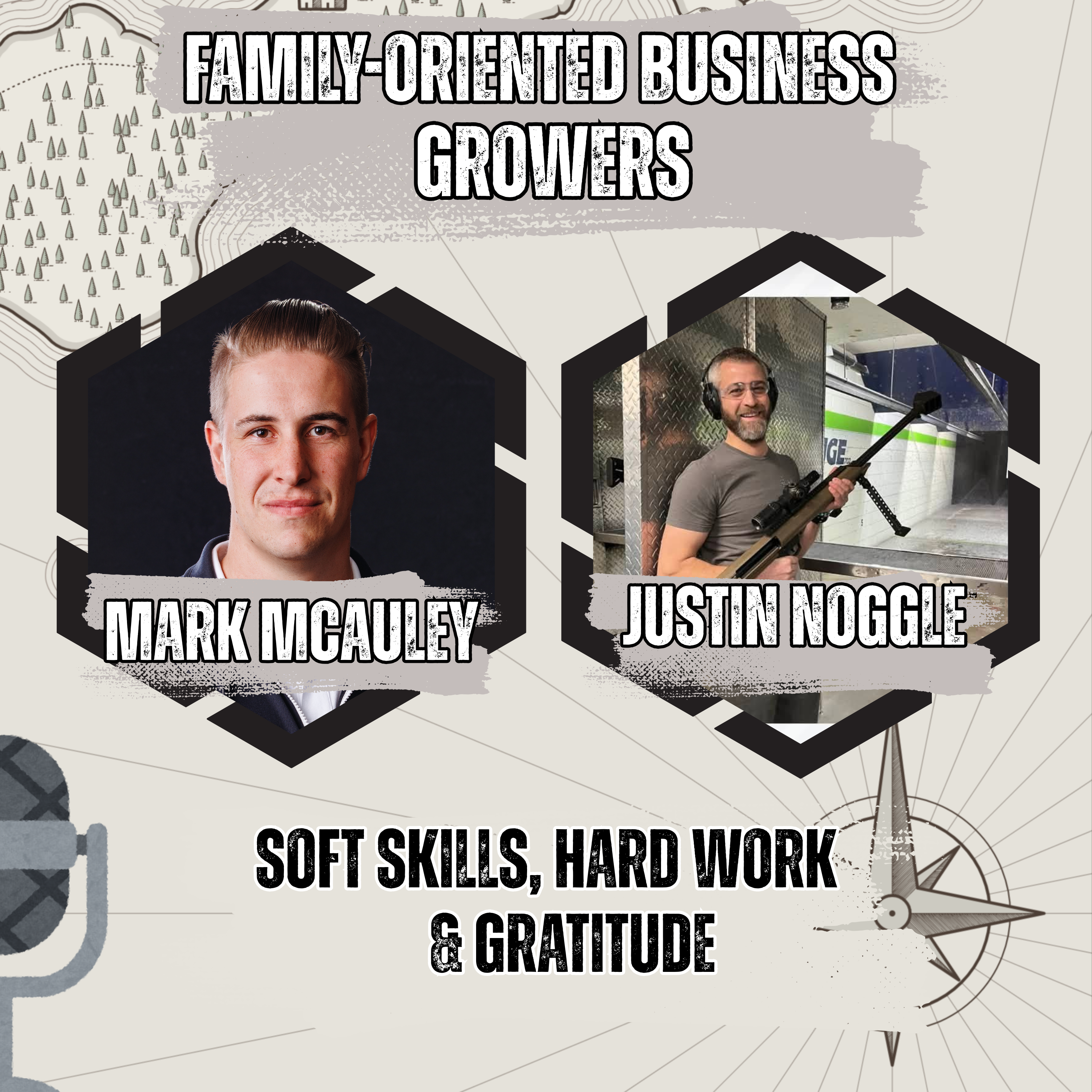
Family-Oriented Business Growers · Mark McAuley
Join the Parents Growing Cleaning Businesses Facebook group & Get your FREE Save 5 Hours Per Week Time Audit via www.warplan.au Get Gian Shaw's G-CODE Book Here: https://www.gianshaw.com/preorder Justin shares his journey from commercial fishing to starting a pressure washing business, the importance of family time, and the impact of pricing and networking on his business. He also discusses the significance of gratitude and the challenges of pricing strategies. The conversation delves into the emotional aspect of customer service, the importance of peace of mind, and the value of understanding customer needs. It also explores the significance of soft skills, cultural fit, and the impact of verbiage on customer perception. The use of packages and the power of gratitude are highlighted as well. Takeaways Transition from commercial fishing to pressure washing business Importance of family time and work-life balance Challenges and strategies in pricing and networking Significance of gratitude in business and personal life Emotional connection Peace of mind Soft skills Cultural fit Verbiage impact Package flexibility Gratitude Chapters 00:00 Journey from Fishing to Business 02:25 Transition to Full-Time Pressure Washing 04:16 The Impact of Family Time 14:24 The Significance of Gratitude 23:08 Challenges and Strategies in Pricing 35:07 Emotional Connection and Peace of Mind 36:05 Educational Component and Preventative Maintenance 37:20 Understanding Customer Needs 38:43 Value of Soft Skills and Cultural Fit 43:04 Impact of Verbiage on Customer Perception 01:00:18 Use of Packages and Flexibility 01:05:11 The Power of Gratitude
Justin: why my hiring process, I'm more concerned with cultural fit rather than skill set. I mean, sure, you have to be able to walk up a ladder and you can't be scared of roofs that are kind of like that shape. But I mean, as long as you can do that and you're somebody that I want to be around, I think my customers will want to be around you too, because I'm Mark McAuley: Yeah. Justin: going to be selling it and we're attracting a customer that wants, that gravitates to us. Mark McAuley: Hey, hey, welcome to all of you bandits and chilies. Today's guest left from the commercial fishing world to come in to start his pressure washing business, which I think is called Sky Power Wash. I forgot that from being told like 30 seconds ago, but Justin Doggle will set the record straight with us as we talk about all of that, as well as like pricing and networking and parenting and the importance of our time and what we're doing with it. Hi, Justin, thanks for being here. How are you? Justin: I'm great, Mark. Thanks for having me here. Mark McAuley: It's a pleasure, it's a pleasure. Maybe just give us the background on your story of how you made that shift into the power washing business and what the journey's been like so far. Justin: Yeah, so I grew up as a commercial fisherman, right? So six years old, my mom put me on a plane from Seattle up to Ketchikan where my dad met me and he was actually late to meet me. So I sat in the terminal alone. Basically just rode the boat down with him the first maybe four years and then. at 10 years old is when I my first long line trip. Spent a week out there fishing and then from then on every summer get the schools out, go up to Alaska, fish for anywhere between a week to a month and that continued. until I was 30 years old. At that point I was running the boat a little bit too, so we were catching tuna, trolling tuna off the coast of Washington and Oregon and that was so much fun. Just take a friend out there and it's basically sport fishing but you're getting paid for it so I really enjoyed that. But I started Sky Power Wash, oh I guess I probably was 28 or so, you know just... Kind of a half time thing, just had this pressure washer laying around and figured I should probably do something when I'm not fishing and never took it seriously. Put ads on Craigslist and got a few low level jobs and I don't know, made 30 grand or something in revenue. And next year, grew it just a little bit and then my daughter Harper was born, 2016. And that was the catalyst for me to want to transition to more full time in the pressure washing just to be home. And I was lucky in that I owned Halibut quota, which is a amount of fish you're able to catch. And so I had this chunk of money that could sustain our life while I started to grow the business. Joined Conqueror, the group that you were in as well. And that was huge for me, not knowing really anything about running a business or at all what to do other than spray water at things. so, joined that. What year was that? That was just before COVID, right? I think. And, yeah, started the real journey of, Mark McAuley: Yeah. Justin: of growing. Mark McAuley: Yeah, wow. So your daughter came along, she was essentially the catalyst for wanting to switch things up and the end to your carefree days of the commercial fishing lifestyle. And then Justin: What? Mark McAuley: at the point where you were really taking it seriously, like you kind of figuring things out with the Conquer coaching and all that kind of stuff, when you joined, was it still you or did you have a few employees on at that point? Justin: When I joined, I probably just, I think I might have only just had one technician and just Mark McAuley: Yeah. Justin: me and a tech and probably one truck and I would drive them to job sites, drop the trailer, have him work while I went and ran a few estimates and yeah, that was, it's looking back a ways but yeah, I think that's where I was at. Mark McAuley: Yeah, yeah, nice. what, during that time, like you made the transition into this full time so that you could be at home, even though it was full time work and you were pre-seasonal, you were like home year round. Were there seasons in that where you felt like maybe you'd made the wrong choice or maybe this business was not gonna allow you to have that time with your family that you were hoping? Justin: yeah, yeah. mean, throughout the journey, at least a few years, the first few years, I did the math and I could have got a job at McDonald's and earned far more if I was going for money. So, and then as far as time goes, Definitely have put far more hours into growing the business than I ever did into fishing. But I was strategic in how I spent those hours and very serious about not working weekends as much as possible. prioritizing just being home. In the early years, they're not going to school, but be home when they're off school, be able to pick them up, be able to go to the soccer games. That was what was most important to me. And the vision from the start, are you familiar with Tim Ferriss? Mark McAuley: No, I don't think I am. Ah, yes. Yep. Justin: four hour work week. It's a, yeah. So that was a book I probably did read it or audio book on the boat when I was fishing and I was like, okay, this is what I'm gonna do. I'm just gonna automate this thing and then just sit back and cash a paycheck and just hang out with everybody. And yeah, little did I know it takes a little bit of time commitment to grow a pressure washing business. And so I put a lot of hours in but I always wanted to just be able to be there. and check out whenever I wanted to, be able to catch all the events, be there for the big moments and the small moments. And so that's kind of the direction I've taken with the business the whole time. Actually this year I'm putting a little more time in, but for the most part that's how I ran it. Mark McAuley: Yeah, but it's an intentional trade between am I optimizing in this season right now? Am I optimizing for numbers growth in the business or am I optimizing for family time or what the distribution between that optimization is? Like, are we sitting on the scales and all that kind of stuff? And... there's not necessarily a perfect answer and your answer is not necessarily the same as the next person's, right? You've got to figure that out, but just be intentional about it. So one of the things that we were talking about was... kind of on the topic of, actually we'll go to networking first, because you were saying that you took your daughter to a couple of the conventions. You took her to the huge convention, you took her to sponsor card, and basically it sounds like, how old is she again? Justin: She's nine now. Mark McAuley: And she's like the networking extrovert queen, right? So Justin: Yes. Mark McAuley: maybe set the scene of that a little bit and then we'll get into some networking questions. Because you gave the presentation at the huge on that was on networking as well, right? Yeah. Justin: It was, yes. Yeah, that was last year in Nashville. Yeah, so I realized, I always knew that she was very social. I mean, from when she was an infant, you could just tell that she was a people person, She might start out shy, but it's very quick that she breaks the ice. And she always gravitated towards adults too. Like she just had this... this personality that just attracted people. And so I took her down to response icon and that's where I really saw it shine because that was her first flight, like commercial flight. And her goal the entire time is just to go swimming. You know, she wanted, she didn't care about presenters or anything like that. And so they had a nice swimming pool. Yeah. What do you know? And so Mark McAuley: Shocking. Yeah. She wasn't really there for the business side of the conference. Yeah. Justin: Yeah, I think she's still a few years out from starting her first business. I wanted her to learn some of that stuff that dad does, but she didn't care. But no, it was great though, in a way. She was with me most of the time down there. And we would go in the morning, we would go down. go to the first presentation and maybe 10 minutes in she's already nudging me to go to the pool and just endless, right? Just we need to go to the pool now. This is boring, let's go. And so we would leave or I told her what we're gonna do is I have to pay attention here, right? Like I'm coming here to get value and... learn, you know, this is a business trip. And so what you have to do is find somebody that knows how to swim so that they can watch you in the pool. And so she's all over it. So we go out from the presentation, we're out in the vendor section, right? And she goes to pretty much every booth and just leads in with, you know how to swim? And so I mean, that's, that's the way that she approached every conversation. And then the answer is always yes, right? I know how to swim, but The next question is, you take me to the pool? And every one that she went to was like, no, you I have to be here. have to man my booth. I have to go be in these presentations. And so she just kept getting shut down, kept getting shut down, kept getting shut down. And eventually she, she found Kirk Kempton's daughter. Name is slipping me right now, but. found his daughter at the responsibid booth and she was like, yeah, I'll watch you at the pool. Like this is boring. I don't want to be here. And so took her out to the pool. I mean, they were probably out there for three hours. She's just watching her swim around and hanging out with her. And, but that's where I learned that how. how good she was at networking and making connections. And so, you Mark McAuley: you. Justin: know, she got invited on the walk the next day. We did a walk around the casino in the morning and she's with Kurt Kempton, the responsibid, and he's showing her all the different cactus species and all the different animals there in the desert and teaching her. And so I'm just watching her network with the guy that put the convention on and I'm like, this is really cool, know, you're making, like she's making me all these connections that I never had. And so, so then during that, during response a bit, the goal from there was to get her over stage fright and get her onto the stage. And she really, really, really didn't want to do it. You know, she's like, I can't, I can't be in front of all these people. It's, it's scary. And, So, you know, Mark McAuley: Thank Justin: I'm incentivizing her, like, how can I get you to be on stage? What can we do to get you up there? Jonathan Maynard came up to her and said, I'll give you this unlimited Amex credit card if you go up on stage and talk full access. Mark McAuley: Thanks. Justin: And she finally actually went up there, grabbed the mic and I don't know if that credit card ever got into her hands, but she did it. She went up and got on stage. Nobody in the crowd, but it was still a huge moment, right? And then. Mark McAuley: Yeah. Justin: So fast forward a year or whatever that was to Nashville, she of course wanted to come because the pool at the Gaylord is amazing. And so we fly down there and I think my presentation was second or third day. Of course, majority of the time we're in the pool there too. And I go on right after Brandon Vaughan, you know. completely packed room. People standing outside the room, you know, I think Brandon just drew them all in and then they stayed for me. Mark McAuley: you Justin: But, you know, Harper starts out in the crowd and then immediately works her way up to the stage right next to me and she's sitting on the back wall and we're talking about, I did a section on gratitude. The five minute journal is a big thing for me and I had a... I passed out sheets of paper for everyone to fill out with three things they're grateful for. And I can't remember all the sections, but what would make today great? And Harper filled hers out and I asked for volunteers to maybe say what their gratitudes were and immediately Harper volunteered, shared her gratitudes. Like she was the first one on the mic. It was really cool. She got over that fear and you know, I saw growth out of it. So yeah, that's my networking queen right there. Mark McAuley: Yeah, I love it. It's great that you're taking her along to kind of expand her horizons a little bit, kind of push her out of her comfort zone a little bit and just take her for the experience and the pool, right? But then I'm sure you probably weren't expecting her to be making the extra introductions for her to be such a networking tool as well, right? So yeah, that's great. And... But maybe come back to the gratitude portion of your presentation, right? Why do you think that gratitude is so important in, well, like why did you include it in that presentation? Why do you think it's so important? Justin: Yeah, good question. So, for me, I'll go through periods where, you know, I'm feeling great. And then I go through periods where, okay, everything's crashing, like the business is going under, you know, like the world is falling, right? you know, I'll have... Mark McAuley: Wait, So hold on. You're saying that not every single day is just amazing and perfect all the time? Justin: No, I mean, it's mostly sunshine and rainbows, right? Building a business. Mark McAuley: you Justin: You know that firsthand. It's easy. Yeah. Mark McAuley: Yeah, yeah, it's so easy. carry on, carry on. Justin: So yeah, of course everybody has their ups and downs. I mean, it's daily, hourly, whatever ups and downs. But if you, for me, I'll get in periods where I'm in a funk, right? So, you know, depression hits me, right? And I found a tool called the five minute journal and Gosh, I think it was Michael Henderleiter that posted it on Facebook. And I saw it, ordered one, started using it, and I saw the value in it. Like, you're focusing on something that... is positive to bring you out of that rumination and that negative train of thought. And so I thought it was amazing. So I started sharing about it on Facebook and a reporter or journalist from New York Times actually reached out to me wanting to interview me about the five minute journal. And I thought it was fake at first. Like she called the business and was like asking for me saying she's, you know, New York Times journalist, no way. And so I did it. and ended up with several paragraphs in the Sunday New York Times over it. so I have continued to feel that it's a big portion of what keeps me in a good train of thought. And so I incorporated that into the presentation, talked about the lows and the highs and how if you're not in a good place mentally, you really can't approach somebody and have a good... quality conversation or it's just it makes it harder to to want to be Want to be social right? and so I did put that portion in there just to show people what it's about and Usually I carry several copies in my backpack and it's just that's my That's my networking tool. I guess is just handing out five-minute journals Mark McAuley: Yeah, I love it. I love it. there's like two, there's two kind of quotes I want to come at this with. The first one is my current coach, Richmond Dinn. He says, he put a thing up on Facebook the other day. I'm pretty sure this is an original of his. That's why I'm gone for the attribution. But he said that it costs you nothing to set your intentions for the day, but it essentially costs you like so much to not something to that effect, right? Which just underscores like the power of the five minute journal and the five minute journal is not even necessarily like I'm not 100 % familiar with that format. But if it's a gratitude thing, it's not necessarily about like productivity and what you're doing for the day. But again, it's like, even if it's not like a, say, productivity or monetary value that you're extracting from it, it's not costing you anything other than five minutes to do that and to be intentional with it. But the value that you get from expressing gratitude and just being aware of the things that you have to be grateful for is huge. It completely shifts the day, which brings me to the other person that I kind of want to plug here. A friend of mine, his name is G and he has a book out which I'll pop a link to in the description. description called the G code and it stands for gratitude, clarity, ownership, discipline, execution. And it's like, it's in order. And this is the biggest takeaway that I took from that book and from just talking with him is that you can basically use gratitude as the reset button. Gratitude precedes clarity because if you're not operating from a place of gratitude, then you're not really in the head space for good things to happen. So the very first thing is to just appreciate what you've got and to just to get grateful and kind of just tying back to the very first part of what you were saying there of like not every day being a good day and even struggles with depression and all that sort of stuff. Gratitude as a practice is so powerful because we don't... You can be grateful even when you're having a crap day, you know? And it'll make your day a little bit better. It might still like, know, crap days still happen, but you can still be grateful and there are things that you are very valid in being grateful for even on your worst day. Yeah, I don't know. What are your thoughts on that? I've just like thrown like four different things out there, but. Justin: No, it was a good rant. I like it. No, it's a... There's always something positive coming from your day. I mean... Running a business... You're bombarded. Depending on what level you are in the business, the crap floats to the top, I guess? So, I mean, basically all of the worst problems filter up to me. And so it's... I mean, if I didn't... If I didn't focus on the things that I'm grateful for and focused on any one of a thousand things that happened in the day, I would be stuck. like Mark McAuley: Yeah. Justin: you couldn't you can't move forward when you're focused on nothing but the problem and not the good that can come of it right so like one of my favorite sayings is you win or you learn so Mark McAuley: Yeah. Justin: you have something bad happen to you okay that's it it happened you can't control everything right so you're gonna have some like bad but that bad thing is gonna set you up for so much more good. A system gets put into place that prevents that from happening in the future. There's opportunities that come from those bad things and you just have to compartmentalize all the bad stuff through the day and not be focusing on that wad of negativity. Mark McAuley: Yeah, yeah. Again, there's like two things. I'm just like, there's so much here. The win or learn thing. I was just talking with a client about that this morning because we're talking about Facebook ads. And I said, I like, this is like the most literal version of you win and you learn. Cause normally that's like, you know, a thing that happens in life and you're kind of looking for the lesson in it and all of that sort of stuff. But it's like with, with ads, it's very much a metric. It's like, you can spend the money and the money caught on fire and it did nothing for you. But it gave you some data to learn from and you know, you know one more way to not run a successful ads campaign or whatever like you literally have some learnings out of what the data is telling you the the crap rises to the top That reminds me of the expression that there's a new devil at every level, right? And systemically, the crap is going to rise to the top in your business because when you delegate something to someone else, they handle it up until the point where they can't handle it. So the biggest, hairiest, crappiest problems. that they can't gatekeep come up the chain. And so then you delegate the next level to someone else. And so then only the only the worst stuff that gets through that next level person still makes its way to you all the way up the chain, right? So that's kind of the situation. You're just like graduating to the next degree of problems, raising like the tide, but then like the the weightiness of excrement increases on the way up the chain as well. So Justin: I don't know if you'll that. Mark McAuley: all right. All of that said, let's chat a little bit about pricing because we were talking about this ahead of time and your philosophy on pricing for services and all of that. This is a topic that people always are talking about and they're wondering if they're pricing correctly and there's so many different schools of thought. What's your like philosophy on pricing? Justin: Yeah, it's, there's so many different ways to look at it. Like you said, when I started out, was that $99 guy, I was that guy in the market, right? Pricing extremely low, but it was also just me and I hadn't maximized my... capacity yet, right? So I'm just trying to the schedule. It doesn't matter if it's a cheap job. It's better than nothing, right? No overhead. So started out as that guy, came into Conqueror, realized I got to raise prices a lot. so elevated them took me a while because I'm slow to take action. I overanalyze. Mark McAuley: Hold on, let's pause there. Did it take you a while because you had to have the mental shift around what the pricing meant? What Justin: Yeah. Yep. Mark McAuley: did that look like? How did you overcome whatever limiting beliefs there were? First of all, what was the price rise that you... What was the rough size of the shift that you had to make? And what were the stages, if you can remember, that you went through to kind of get yourself able to quote somebody that higher price that was way out of the ballpark of where you were before? Justin: Yeah, I think there's a few things that went into it. I mean, obviously, well, you have the self limiting belief, right? Like, okay, what if I'm raising my price, doubling my price? I mean, I'm sure it was way more than even doubling, you know, from where it was. What? Why would, how am I going to give that value? Right? I'm just spraying water at something. It's like, you know, everybody can spray water. So why, why should I charge somebody this much? Am I taking advantage of them? I guess, right? Like that's my train of thought while I'm getting into this price adjustment. Also, If I do this, am I going to lose all my customers? Like I'm going to, you know, the repeat customers, they already know it's going to be 99 bucks, but now it's 300. Mark McAuley: you Justin: I'm just going to have nobody coming back on these estimates. and then I think the thing that really helped me get over it was starting to look at the numbers more in depth. So, you know, I never really tracked, estimate conversions to jobs. I didn't track average ticket. I didn't track repeat rate. There was a lot of metrics that I didn't track. And so once I could see those on paper, I kind of have that analytical brain where if I can see it in writing and see what the numbers tell me, then it makes perfect sense to me I can just shoot forward. It's fine. So I was seeing Mark McAuley: Thank Justin: that it wasn't really affecting closing percentage too bad. Like, you know, our average ticket was going up, the total production level was going up. I was able to afford the things to be able to provide a high level of service and then convey the value that we have that separates us from the others, right? And so yeah, it was, I mean, it was a fast process. in my eyes, but slow compared to what the coach would have preferred. So Michael would have probably wanted me to go a little quicker. But it just Mark McAuley: Thank Justin: allowed for me to bring on some of the structure and bring in an office manager, bring in ways to take care of my customers better. Right. And so raise those prices to a point got, went with another coach. who was pushing me to raise prices even further, right? And so like, so I'm continuing to push prices up. But then Mark McAuley: you Justin: now my current coach, Nick Demarck, amazing coach, and he his philosophy is a little different. He's his pricing probably could be higher and he could be getting, you know, a higher dollar amount. per individual transaction for the first transaction. But what I've seen, and maybe my follow-up isn't as good as it could be, there's ways to retain better, I've seen when you get to a certain point, the retention, at least for me, goes down. people are gonna talk, right? You're gonna have the neighbor that's saying, okay, this guy's this, you're this. Like year to year, the repeat rate was a bit lower. So the lifetime value of the customer shrank. Maybe that initial transaction was bigger and more profitable, but those customers that come in, you're not making the money you can on that first transaction, right? Like you might even just break even after spending a couple hundred dollars to acquire that customer. The real value comes from them referring you and them repeating. So looking at that life-time value. Mark McAuley: Do you have data on all of that that you just laid out? Because it sounds like you've got a really long tail of data of the repeat rate over year on year and all of that sort of stuff tracked Justin: No. Mark McAuley: to support the story that you've just told, Justin: Yeah. yeah. mean, I can pull it. Nick's, Nick has an NC tracking. Mark McAuley: Yeah, I, so Nick was my coach for the majority of the time that I was at Conqueror and Justin: okay. Mark McAuley: yeah, I actually, actually bought him a shirt. I had a shirt made for him which says test and measure on it because that was like the tagline. If that's, if that's like the one thing that he would always say, if you came in with a question and you didn't have data, or if you started a sentence with something like, you I feel like, he would just be like, well, hold on, like, what are the numbers telling us? Because Justin: Right. Mark McAuley: otherwise we could just construct a story from nothing, but the data allows to support a story like that and to be able to see it and reflect it and all that sort of stuff. And you're right, there are probably other things that you could do if you were to. you really change what you're doing with the follow up and all that kind of stuff. I sort of think about what you're saying in terms of, I don't know what this is called, what Hormozi calls this. It's not like the value equation, but it's another one of like, you have the three lines. So the bottom line is cost, the middle line is price and the upper line is value. And he basically says like with the product that you're offering, You want to have the distance between all three of those lines as large as possible. If the cost can be as low as possible and the price can be like way up above that and the value, perceived value is way up above that, then ever like your business is going to absolutely smash out of the park because you are going to have an easy product to sell because it has this high perceived value and it's costing you way less to deliver it than it is of what you're getting paid, right? a really great way to look at it. So essentially what would need to happen for the pricing, like to push past that level of what you're talking about is that perception of value that needs to go way up. And we can do all sorts of things to try and make that happen. But at the end of the day, like you've said, you kind of eventually going to run against a wall because it's like, there's only so much of value positioning that can be true or that can be like a real differential between you and the next company or that kind of stuff. What are your thoughts on that sort of feedback and breakdown of what you just said? Justin: Yeah, I love that. the so the cost price value, right? So Mark McAuley: Yeah. Justin: I like that. Your personal cost to deliver, right? So cost of goods sold plus plus your fixed expenses, right? And then the price that you set, you want that value to exceed it, right? And so Mark McAuley: Yeah. Justin: that's the thing that I try to focus on most when I'm seeing those numbers dip is the value, increasing the value rather than lowering price. And there's times where I don't do as much of the dynamic pricing as say Nick does, but you go through periods where the demand is low. And so you can play with price a little bit to get that, you know, get that. conversion rate up. But Mark McAuley: Thanks. Justin: when there's a dip in closing percentage, a dip in the numbers, the first thing you want to look at, I think, your sales process or... the message that you're delivering to that customer because they're just, they're not seeing the value that you actually bring. And maybe what their personal costs would be if they were to go with the competition, right? Like if you're Mark McAuley: Hmm. Justin: gonna, if you're gonna go with this cheap guy, it's gonna cost you more long-term because then we're gonna have to come in behind them and do the right thing and clean up. The time is gonna cost you more. It's so conveying. the pain that they may feel if they go with someone else versus the joy and gratitude Mark McAuley: Yeah. Justin: they go with us. Mark McAuley: I feel like when you're saying that, and I completely agree with you, right? But I feel like if we were to take this to a Facebook industry group, There would be some people who would say like, yeah, it feels slimy, feels salesy, it feels fake, it feels like you're telling people this thing so that the service can appear larger than it is, all that kind of stuff. That's real too, like that can happen. is, as I just said, there's a limit of how much additional value or perceived value your service can actually have in its realm. Like at the end of the day, if it's pressure washing, like it's, you either did a good job or you didn't, right? But I have a... Thought of this which I'd like to get your opinion on right? Even if it's a good job If you're comparing to the other cheap company and your company and like that's the company B Let's say company B does a really good job in my opinion if they do a good job, but they sold it poorly It's still a crap job at the end of the day What are your thoughts on that? Justin: I mean, I think there is, it's kind of a weird way to think about it, but psychologically there is a value to the process. Mark McAuley: Well, gee, thanks. I said, gee, thanks. That's a weird way to think about it. Justin: No, I'm not saying your way. I'm prefacing what I'm about to say. Mark McAuley: you Justin: You think normal all the time. No, it took me a long time to wrap my head around it, but when you're charging a customer more... It actually gives them a sense of ease because they know that you're gonna take care of them in their head when they're making that purchase, right? Usually you'll compare three companies, right? You get three estimates. You're not gonna go with the little guy because you're gonna get a poor service out of it. You might go with the middle guy just to try and save some money, but you wanna go with the high guy because you know you're gonna get that service back. Obviously you have to have something to back it, some trust value built reviews, know, referral feedback. But Mark McAuley: Thank Justin: it does put their mind at ease a bit, you know, they're going for the feeling. It's an emotion based, everything is emotion based. It's not, you know, okay, they could look at the numbers, this is going to cost them more, but what feeling are they going to get out of it? They want that Mark McAuley: Yeah. Justin: result, but they need to feel good about it. Mark McAuley: Yeah, yeah, 100%. And that's that is their experience. Like we talk about the customer service experience. How they experience the service depends on what you told them was going to happen. And I think there's an educational component to that too, if you say in like what you do, do you like soft washing as well as pressure washing? Right. So so if you soft wash, and this is not my space, right, but you're performing like preventative maintenance. It's going to, if you have like, you know, all lichen all over the roof and you get rid of it, that's beneficial to the life of the roof or some other aspects of like the flow out effect from that, I assume. Is that correct? Justin: yeah, for sure. Yep. That's one piece. Mark McAuley: Yeah, okay. One piece of it and there'll be like other things that you can do as preventative maintenance within pressure washing and house washing. So again, I'm not educated on this, but I have the intuition that that's probably the case. That's not like what we do. But when you teach the customer that and you let them know, hey, like when we do the service, this is what we do. We make sure that we include this part, this component of the thing. And what that does is this. And it means that and whatever. And so you sell them peace of mind. Now if you know that they're happy to pay more because they've got peace of mind. But if you didn't sell them the peace of mind, and then you provided the service with the maintenance and everything else in it already anyway, they still don't have peace of mind. So they paid extra for the peace of mind, but they actually got that thing this intangible thing, they actually got that from the service, only because you sold it to them, you set the expectations that that was what was going to happen. So that's that's Justin: Yeah. Mark McAuley: kind of what I mean of like when if if a good job Like you do a good job, you do the job well, but you didn't actually sell it to them well. It's still, it's maxed out on how good their customer experience can be with it because of what they even think it is. Whereas when they understand the other things that, know, it doesn't have to just be piece of mind. It could be any number of other things, but that's just one example. When they understand that they're actually able to appreciate the value, they get that feeling of the experience and it is literally a better service experience. Justin: Yep, yeah, yeah. I think the quote goes, they won't remember what you said, they'll only remember how you made them feel. Mark McAuley: Yeah. Justin: That's what it's all about. It's, yeah, what was your feeling from that? And that peace of mind's huge. It's also getting to the root of why. they called you, you know, okay, they want that clean, but why do you want that clean? Like, is it because you're having a party? Is it because the HOA is yelling at you? Is it because you want it to last longer? Like, why Mark McAuley: Yeah. Justin: is it? And so you have to cater your presentation to that too. Like, how is my service going to give you that thing that you want? Mark McAuley: Yeah, or stop that thing that you don't want. Like, just want the HOA to leave me alone. Yeah. Justin: Yeah, a lot of it. Mark McAuley: flipping this around to the other end of the spectrum from like high premium pricing, people that are putting low prices out there, like you were in the beginning, right? The $99 guy. struggling to get the jobs, just trying to fill the calendar with anything. There's a few things that we've touched on so far that like hit on problems with this. So this one is they... The customer has to have the value of the thing that you're selling them. Like you can't, that piece of mind experience that I've just described, that's very real, but that's not every customer. Not every customer who wants insert service here actually cares about the curb appeal or the long-term maintenance or the peace of mind or whatever. Like if they're just worried about the HOA yelling at them and it's not even, they're renting and they're just getting this thing done, they don't care about the long-term maintenance of it because it's not even theirs. So that's a totally different customer that's not going to appreciate that thing. And the value of understanding that is that you see that not every customer is your customer, that you should be getting no's. If you have a premium offer, it has to have a push and pull effect. Like there's people that that offer is not right for. So it has to like speak to that value. And the other thing that I think relates to those that sort of the 99 dollar guy avatar is that those three lines from Hormozi of cost, the price and the value. You want those to be in that order and as far apart from each other, but they could be in a different order. You could have the perceived value be below the price, which is going to mean that it's really hard to sell your thing. Or you could accidentally have the cost be above the price. And that's the risk of the $99 guy situation, especially if they're not accounting for their own wage as a cost within the business. Or if they don't know their numbers and they get haggled down and they think it's only $20, but it's like that $20 where you only had a $15 profit margin so now you just paid them five dollars to do the thing like all of those Justin: Yeah. Mark McAuley: things kind of come into play as well like I know that was part of like your example before of like knowing knowing more about your numbers gave you the the confidence to charge more because you saw that it was working you saw the need for it all that kind of stuff yeah is there anything else that you could sort of think of from that to speak to the maybe the 99 dollar guy Justin: You don't want those customers. mean, honestly, the Mark McAuley: Thank Justin: ones that are willing to pay a premium don't have time to look over your shoulder and watch you do the whole thing and nitpick all these little things. Their time is valuable to them. If they're at that level where they can afford your services, they just want the problem solved and they don't care. I mean, a $99 customer. is going to cost you so much more time and just dialing in all these little things. You could just spray a little water at the thousand dollar guy and he's happy. Don't do anything. I mean, I've told this to my employees. I don't want you to do a poor job on the work, but if the customer's happy and you did nothing, you didn't even roll the hoses out and they're happy with the work, you did a great job. You know, it's what it's if the customer's happy, that's all that matters. Mark McAuley: Hmm. Yeah. Yeah. I, I, I tell our, our team a very similar thing about the power of communication. like, I'm not saying like go out there and just smile your way through and whatever. But if you build rapport with the customer and if you get the customer to like you and they're on side and you make them feel good about the interchange, the interpersonal side of it. That. solves 90 % of the problems that you'll ever have before they even start. And then if you do something wrong on the job, you like break something or the job goes sideways, you do a terrible job, they are going to be so much more reasonable because they like you and they connect with you as a human. it's insane how much leverage you can get from something as simple as just communicating well. And yeah, it's not to say like, don't, you know, don't roll the hoses out and don't do the job or, know, only smile and wave and then actually, you know, like skip miss quarters, cut quarters, Justin: I hope you Mark McAuley: all that sort of stuff. But yeah, it's a huge, huge customer service leverage. Justin: for sure. Yeah, and it's a big struggle. I'm fine with talking. I could talk all day, you know, to a customer. And that's the problem. I had to actually reschedule an estimate to be on this call because I was talking too much. My first bid appointment was supposed to be 30, 45 minutes and ended up being an hour and half. And so my whole day I'm playing catch up. But it's huge. Mark McAuley: which I appreciate and our listeners, we all appreciate it, don't we guys, right? It's very appreciated, we're glad you're here, Justin. Justin: Yeah, if I wasn't here, there'd be nothing. No, it's Mark McAuley: you Justin: important though. I yeah, I could expedite the conversation, but I am genuinely interested in what the customer is saying. I'm enjoying the conversation. I want to get to know them. It does build the rapport you were talking about, right? I mean, okay, say we go to this guy's house that I booked, you know, it's $1,200, that was a $1,200 job, right? And they screw up the roof cleaning. They're going to be more sympathetic to them than they would have been if I just went, did my measurements, hand him the quote. He says, yes, he doesn't know me. Like personally, he knows me now, right? So Mark McAuley: Yeah. Justin: he's going to be easier going on the fix-its. Mark McAuley: Yeah, yeah, because we have a general cleaning team, right? And the only general cleaning we do is recurring. We do a few offices, but it's all recurring. It's mainly at home. So weekly, bi-weekly, monthly. And the strength of that model is that once you get a cleaner and a client matched and you have the first two or three cleans go well, It's just rinse and repeat because if, you know, Jenny has a problem with something that happens on week six, by that point, she already knows Jane really well. And so she's, she's not going to assume it was malicious or that like she's a terrible cleaner. They build up a bit of rapport, right? So it's just so easy to, whereas the first few cleans, it's like, you've got to be you better be on point, you better be making sure that everything is great and you need to set that tone first. And again, it's not to say, well, now that you're past that probation period, you can just go on and do a terrible job. That's not what I'm saying at all. But you just, because of that human connection, you have grace afforded to you. Whereas, yeah, if that was on the first clean, they're just probably going to think either it was malicious or you just can't clean. You just I don't want like a cleaner who can't see that this is this is dirty, all that kind of stuff. So Justin: Yeah. Mark McAuley: it gets it gets a long way. And those those are what people commonly think of as soft skills. Mainly because you can't like really hold it in your hand and defied it, but. It's so important and I think it's all the more important as everything gets more and more AI-ified as well. Justin: Yeah, I completely agree. And that's why my hiring process, I'm more concerned with cultural fit rather than skill set. I mean, sure, you have to be able to walk up a ladder and you can't be scared of roofs that are kind of like that shape. But I mean, as long as you can do that and you're somebody that I want to be around, I think my customers will want to be around you too, because I'm Mark McAuley: Yeah. Justin: going to be selling it and we're attracting a customer that wants, that gravitates to us. So it's, it's a lot more about who you are as a person rather than what you can do. We can, we can train you. We have training. Like we can, we can teach you how to do a thing, but I Mark McAuley: Yeah. Justin: can teach you how to be a good person. Mark McAuley: Yeah, that's it. After I do an interview, I have a few questions on my interview form that I ask myself. And one of them is, would I hang out with this person outside of a work context? And absolutely, Justin: What's your answer to me? Mark McAuley: yeah, that sounds great. Justin: Okay. Mark McAuley: But if the answer is like, if it's a hard no, then it's like, I don't care how good. you might be at everything else. It's just going to make every, any issues we have, we're obviously not communicating easily. We're not vibing on the same wavelength, all of that sort of stuff. If I don't feel that way, how is the customer going to feel in your home? Now it's not to say that like my people are everybody's people, like maybe the customer is going to feel fine, but it's just like, that's kind of my litmus test for what you were just saying. And Yeah, I think it's a really simple way to kind of think about culture because culture is another one of those things that can be this sort of nebulous, obscure term of like, I even need like what's culture? It's like, well, do you like to hang out with if it wasn't for the fact that this person was going to come and like, spray water on this job for you, like, would you would you go and have a beer with them? You know? Justin: Yeah. Yeah. No, it's important. I mean, that's just, I mean, not just for the customer, but the other, the other employees too. Right. Like, and myself, of course, like I don't want to dread coming into work because I have to see, you know, I'm not going to name any past employee names, but you know, I have to see that guy. Mark McAuley: Huh, mocks there again, like, Justin: Pretty much, right? No, but it affects me. It affects the other employees. Like they come into work with a bad attitude because this guy has a bad attitude and it just sours the whole Mark McAuley: Yeah. Justin: bunch. it can be, I mean, it's referred to as a cancer in the company, right? Like you have to cut that cancer out fast before it metastasizes and spoils the whole batch. So. Mark McAuley: Yeah, yeah. And we do it, we do it all the time. like, we calibrate ourselves to the people around us. Not just in the sense of like, you know, you are the five people that you spend the most time with, though, like that's true as well. But just in the sense of if you go into a room and the energy is low, If you ask someone how like, how are you? And they say, I'm all right. You they say, how are you back? You can't just say, I'm fantastic. I'm having the best day ever. You know, it's like it's this total mismatch. So you by default turn down and you meet them where they're at. And that that's happening like every moment of every day in the workplace. If you've got that person who's like really bringing the energy of the mood down, it's not like you can't have a bad day, but just that that that culture fit. Yeah. Justin: Yeah, yeah, the consistent poor attitude you naturally mirror, right? It's a, yeah, I can't remember what that book was, but that mirroring thing, I definitely notice it myself now. Mark McAuley: There's so many. one I'm thinking of is Never Split the Difference by Chris Voss. Is that what you're thinking of? He was like the FBI hostage negotiator. He didn't invent the concept by the end, but that's it. Yeah. Justin: I read that one. I've read that one, I think. It might be, is it influence? No. Or how to win friends or something? How to win friends and influence people. know, Mark McAuley: Yeah, yeah. Justin: mirroring body language and you know, I've noticed that I just naturally do it sometimes and... If you get more intentional on it, makes a gigantic difference. You just connect better. Like if you're kind of getting to their level and yeah, no, they're pissed off and having a bad day and you come in all bubbly, that's not going to create the connection. Mark McAuley: Yeah, yeah, exactly. There's so much to that. But I mean, you can get really deep on that. You can get really complex and into the psychology. But at the end of the day, you can also boil it down to, did this person make me feel good and comfortable? And do I think that they're to do the same thing with a customer? Did I enjoy spending time with them? Do I think the customer's going to enjoy having them come through their house? And I think... with all services, but especially interior, like in the home services, like general cleaning, interior window cleaning, carpet cleaning, all that sort of stuff. It is such an intimate service. Like you're going through every room in this person's house, you're vacuuming their skin cells up off the carpet. It's pretty intimate. you want Justin: Thank Mark McAuley: to have someone, I wanted to make it a bit gross, right? But the point is, it makes it... so important, those soft skills, because this person has to be comfortable with all of that happening, right? Otherwise, if from the moment the service starts, or even beforehand, they're just like, waiting for it to end, that's never gonna Justin: Yeah. Mark McAuley: be a great customer service experience. Justin: No, for sure, for sure. And I mean, it's... We set it up with a little peace of mind, know, the background checks, we send a picture of the ID badge of the employee that's gonna be there, a little blurb about, you know, what their interests are. So we can foster the connection a little bit beforehand too, and give a little peace of mind so it's a warmer introduction. But it does, it makes a huge difference. If they don't like the technician, even if he does a stellar job, it's not gonna be good experience, no. Mark McAuley: Yeah, yeah, that's it. Just sort of tying that back into the selling language. Something else I was thinking of before in how, because we do this not just in our business, we do it like all the time. I've learned in my family, I like hiking, right? That word works for me. it does not work for my wife or my kids. So if I want them to come on a hike with me for my wife, I'll call it a walk, right, which sounds a lot less intense, but it's essentially the same thing. And for my kids, I'll call it an adventure. Right? It's all the same stuff, but The ceiling that can be reached of like how enjoyable that experience is gonna be for everyone is set by the words that are used because if at the outset I'm just like, all right guys, let's go on a hike Basically, I'm just gonna get groans and like do we have to and whatever but you know to my wife a walk sounds achievable to the kids and adventure sounds fun now It's not about the steps we're taking it's about the rocks that we're over the bugs we find underneath them, right? So that's that's what's going on when we when we talk to customers about you know, the peace of mind or the keeping up with the Joneses or whatever it might be that's important to them. It's just tailoring the nature of the service. It's all the same thing, but it's like, this is what it is for you. Justin: Yeah, oh yeah, the verbiage is important and it's, you have to do a little detective work to figure out what verbiage they use. I mean, one of the things, you know, a big cleaning agent is bleach and bleach has a negative connotation. So, you know, there's, it's an environmentally low impact, non-toxic, you you just have to use a lot of words that. or not hazardous, whatever it is. Mark McAuley: Yeah. Justin: Just gentler ways of delivering the bad news that we're killing everything on your house. Mark McAuley: Yeah, yeah, because if we want the mildew gone and we want the lichen gone, we can't just use water. That's actually not what's going to get that job done. Yeah, which you value that. need to, yeah, 100%. And the, detective work that you're talking about ties into that of when you're building that rapport, when you're mirroring with the prospect or the customer, you, you get to understand what's important to them from, you know, like not just listening in the conversation, but like what they're showing you is important and all that sort of thing, which, yeah, you, you currently, like you mentioned earlier that you were out on estimates all day today. Is that like the main area of focus that you're in the business at the moment is doing like the in-person quoting? Justin: Yeah, well actually, I would, throughout the business, I would take steps before I was ready for it and make hires in overhead, non-revenue producing positions. Mark McAuley: Yep. Justin: and just to optimize for time freedom, right? Not for growth at all. And realized that maybe I went a little too fast and didn't hit the growth button to go along with it in sales. And so this year, I'm devoting a little bit more time into the business, got rid of an operations manager, got rid of an extra admin that... It was helpful, but not really producing more revenue. So this season of my life, I'm optimizing for profitability and handling the operations, sales, marketing, GM, like wearing a few hats. And Mark McAuley: Yeah. Justin: it actually has been. beneficial to be back into the operations as well, because for the last couple of years I wasn't. And there was a lot of things that really needed fixing and a lot of processes that I, I mean, it all comes back to me, right? Like I didn't put the system in place for them to be able to succeed in their job, but yeah, a lot of things that were slipping through the cracks. And so, you know, it's been good. It's been. long days, but it's a great feeling to see the largest growth, know, the largest revenue months we've ever had at the start of the year here. Mark McAuley: Yeah, yeah, nice. I resonate with that in terms of kind of jumping around in the roles and thinking maybe that you're progressing along this linear set of stages, but sometimes you have to kind of come back and pick up a step or even just for a season, refocus on one particular area of the business or whatever that's, you know, all that kind of stuff. On the quoting and everything at the moment, Aside from like the stuff that we just talked about, is there any particular tips that you have of how you are, know, how you're going about selling jobs, how you're going about presenting the pricing, all that kind of stuff. Is there anything, any magic special source that you've got there? Justin: So, well, being that my time is halfway limited, or split a lot, we're trying to quote as much as we can over the phone. And I want the customer to be pre-sold as much as possible. So it's just making the connection, presenting the numbers, and on to the next, right? And so the setup process, I've thought through a bit and... You know, the emails that go out, the sequence that they receive is an educational sequence, which I probably should put in a little more trust kind of stuff into there too, so I can build the trust before I get there. so I recorded all these videos and it's been a while, but talking through the different services that we do and how we do it. And it was. the book, They Ask, You Answer, Marcus Sheridan. It was really good Mark McAuley: Mm-hmm. Justin: and eye-opening. And so I went and did that. I Google searched all these different search terms. I just put roof cleaning in there, and it gave me all the top search queries. So I'd make a video titled whatever that question was. put it on YouTube, and then I put a link to it in the email that they get when they book the appointment with me. And not everybody watches it, right? But a good percentage of them do. And then I come in as the celebrity that they've been watching for hours, you know, on how to do every little thing in the business. And then the trust is there. They're educated, so they're not spending a whole bunch of time asking questions that I have to answer on repeat. And so that really helps there. And then just. So we have a presentation folder that we'll give them, right? And inside it gives them a little bit of some things that would set us apart from our competition. So they have a checklist that of the value that we bring that sets us apart from the others. Packaging things up, I guess that, I mean, that changed a lot when we started doing that several years ago. Mark McAuley: Thank Justin: We'll quote every service, regardless of what they call us for. So they'll call for a roof cleaning, but they'll get 10 different prices for different services and bundles. So Mark McAuley: Yeah. Justin: they get option ABC. You know, that was a, I think that was a Brandon Bond thing from Conqueror. And so basically took that exact template and started using it. And it went, you know, it was a 400 ticket average to up to a thousand is that jump it made Mark McAuley: Yeah. Justin: by just offering everything, give them the options. They don't know what you do. They called you for roof cleaning, but you can help them solve every problem there. Mark McAuley: Yeah, Yeah, packages are such a topic and the one thought that I really like that I feel like kind of encapsulates it just to not get lost there too long is If you give someone a price, that's an ultimatum. But if you give them options, it's a conversation, right? So if you give them three packages, they now have four options. They can say yes, yes, yes, or no, right? Whereas before they just had a yes or no. So it's a huge, huge shift around all of that. And the other thing I was thinking about in terms of the videos that you're sending out and emails and all that kind of stuff. even if a given prospect doesn't watch any of those, they're probably going to see at least one of them in the inbox. yeah, they see the thumbnail. It still positions you as such an authority. Like they don't have to watch it, but they know that it's there. And there's this like preamble to the quote, which again, when you compare that to company B, that's probably not doing that. Like let's be real, they're almost certainly not doing that. It is such a point of difference. there, if you were to both arrive at different points of that day and give them the quote, they're going to expect your price to be higher and they are going to have a preference to work with you Justin: Mm-hmm. Mark McAuley: because they have that heightened perception of the quality. For videos they haven't even watched. So yeah, I think that's huge. Justin: Yeah. yeah. There's just, there's a lot that goes into it. The perceived value. Mark McAuley: Hmm. Justin: mean, our brand, the wrapped vehicles, the, I mean, the marketing material that you have the, yeah, there's so many ways to build value before you even talk to somebody, you know, they have Mark McAuley: Yeah. Justin: to come in expecting to pay an arm and a leg and you, as long as you charge them an arm and a half a leg, then you're good. Mark McAuley: That's it. Because the price, the value of that whole thing. Justin: Yeah. Mark McAuley: Yeah, another good question that is like a symptom of that problem is when, not that this is like the ideal customer that asks this question, but if you get customers in general who say, well, this other company was like at this price. you know, is there anything that you can do to match that price, right? That's not a great question that they could be asking, but it's a good symptom question because what it tells you is that they've picked you, like they want you, because if they wanted that company and they know the price, they just do that, Justin: Yep. Mark McAuley: but they want what you have, they just like that price tag better. it's a good indication that they're seeing the value even if they're not quite prepared that individual customer to pay the price. Justin: Yeah. Well, then you ask them, why, why do you want to work? mean, you have to get them vocalizing why they want to work with you, right? Cause they, know Mark McAuley: Yeah. Justin: that inherently, right? It's, or subconscious, I don't know, they haven't really focused on the reasons. So you can get them to sell themselves by just Mark McAuley: Yeah. Justin: asking, you know, why, you know, what, why don't you go with the other company then if they're cheaper? Mark McAuley: Yeah, 100%. And, and the other, that's the other thing with packages too, is that it gives you the flexibility to down sell if needed. So it's like, ah, they were, they were only at this price. It's like, well, yeah, like we could drop it to this package or we could, we could take that part of the scope out of the clean and we could just do this thing and whatever. So that, um, you're able to, to, if it is a real hard budget constraint and you're able to meet that, um, without actually cheapening the value of the service that you're providing. Um, Any final closing thoughts or words of wisdom to put a bow tie on all of this, Justin? Justin: Words of wisdom on the spot here Just be grateful, I don't know I mean Know your why I don't I'm not very good at words of wisdom Yeah, enjoy the journey is that that's that close Mark McAuley: It's whatever you want it to be. Let's go back to the gratitude one. Like that was the first thing that you thought to say. like just be grateful. Why? Justin: Yeah, why not? Why not? Why not be grateful? It's... Life's short and you live it once. If you're living it in a constant state of negativity, it's gonna drag on, it's gonna go slow, and you're gonna regret it when you're older. Just be happy. We're here for such a short time. You want to be surrounded with a lot of people you love when you're on your deathbed. So spread good, be grateful for what you have, and keep pressing forward. Mark McAuley: Love it, love it. Thank you very much for your time. It has been awesome. yeah, look forward to catching up. Justin: Yeah, been great.