
Family Food Stories · Nancy May & Sylvia France
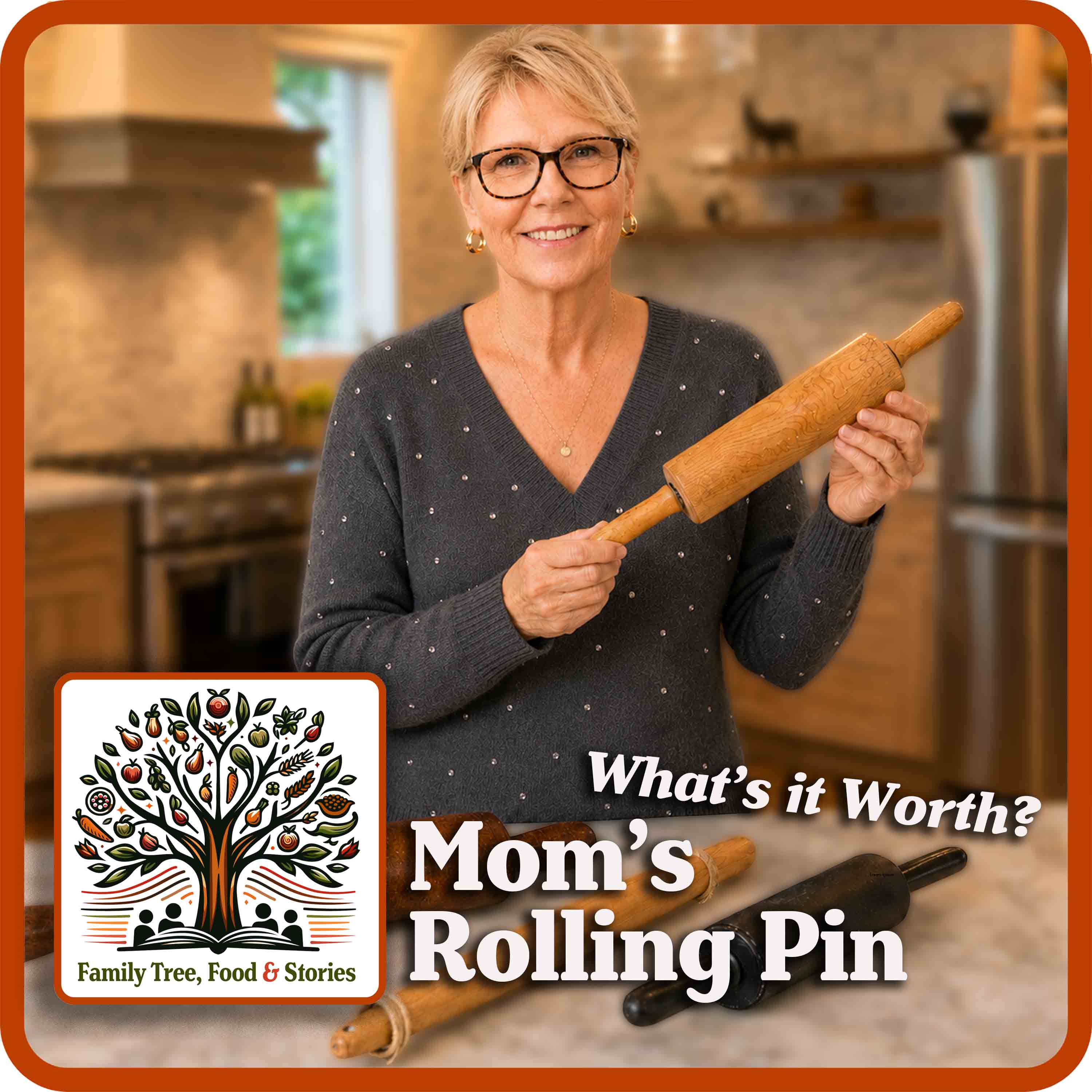
Before you donate Grandma’s old rolling pin, look at the ends. That mark you assumed was damage could reveal its age, maker, and if it’s worth $20 or even thousands. Is your old rolling pin worth thousands, or nothing at all? Some antique rolling pins bring real money, and the clues are right there in the wood: the shape, the handles, the wear, and the maker's mark most people mistake for damage. Before you toss Grandma's rolling pin, here's how to read the one in your kitchen. This is the first episode of our new Evidence-Based Series in Family Tree Food & Stories. In these next few shows, Nancy May and Sylvia France share six weeks of ordinary things sitting in your kitchen right now, and what each one can tell you about the family member or person it came from. This week, as you guessed, we start with the rolling pin, because over 70% of American households own one, only about 14% ever use it, and almost nobody knows how to read theirs. In this episode of Family Tree Food & Stories, you'll learn about the various shapes and materials and what each was built to do. The handled American pin is the one most of us typically picture, the tapered French pin professionals use, and the odd antique that fits no category at all; well, we dig into that too. From the first hint of rolling pins found over 6,000 years ago, the handle-free pins of China, India, Turkey, and Italy, and then we finally get into what the material, the maker's mark, and the wear pattern each reveal, including JK Adams of Dorset, Vermont, still making pins here in the U.S. since 1944. So go get the rolling pin out of your cabinet — the long one that never fits in the drawer. This one's meant to be listened to with it in your hand. Key Takeways Whether yours is old or modern comes down to the handles. A name and a town might be the only things that identify your rolling pin if it's over 100 years old. The marks most people read as damage are the actual clue. Wear tells you the pin was loved, but it can't tell you who loved it. Rolling Pin FAQs Are old rolling pins worth anything? Some are worth thousands; many are worth 20 or 30 dollars, and some are worth nothing at all. Value depends on age, maker, material, and condition. How can I tell how old my rolling pin is? Start with the handles. Turning handles mean a rod through the middle and a newer design; fixed handles carved from one piece of wood typically signal an older pin. A plastic collar at the barrel suggests a modern pin; bare wood or metal leans older. What is a French rolling pin, and why do professionals use it? A French pin is solid wood, tapered at both ends, with no handles. Bakers use the taper as a pivot and can feel the dough directly through the wood, which gives more control than a handled pin. What are the different types of rolling pins? The handled American pin most people picture, the tapered French pin, a straight dowel for flatbreads, a carved pin for stamping cookies, a small one-handed version for...
0:00Speaker: That old rolling pin has a heart, and if you know
0:02where to look, you can find it.
0:04You might wanna think twice before fixing that old bent rod in your
0:08rolling pin because it could be worth a lot more than just a memory.
0:12And Grandma's rolling pin never talked, but oh, honey, the
0:16evidence of what's happened in her kitchen is written all over it.
0:20Wanna know more about what's rolling out in this episode?
0:23Stay tuned because we're talking rolling pins, big, small, little, and
0:28yes, with delicious outcomes for sure
0:37Sylvia France: Well, when I received my latest rolling pin, my father
0:40put a Post-it Note on this pen.
0:43It's yellow, crinkled, his handwriting, and it was stuck to the barrel.
0:48Nancy May: Oh, I've gotta see what this one's gonna say
0:51Sylvia France: It literally said, "Rolling pin, Grandma Spivey, glass/Mom."
0:56Nancy May: I don't get that one.