
Experts Only · CleanCapital
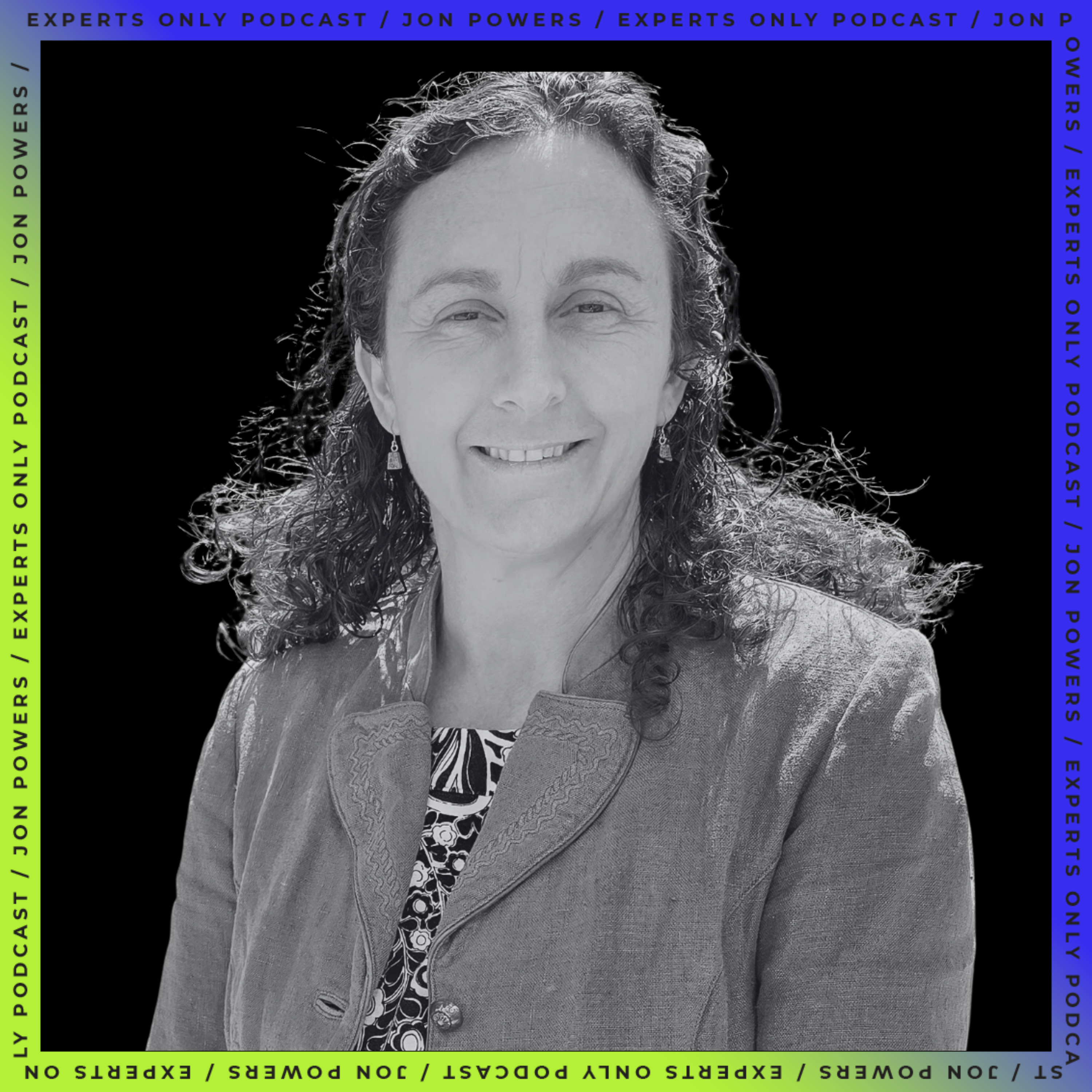
In this episode of Experts Only, Jon Powers sits down with Marguerite Wells, Executive Director of the Alliance for Clean Energy New York (ACE NY), to discuss the intersection of renewable energy, agriculture, and rural economic development. Drawing on her experience as a farmer, clean energy developer, and advocate, Marguerite explores community engagement, agrivoltaics, farmer choice, and what it takes to build clean energy projects that work for rural communities.
speaker-0: Welcome back to Experts Only. I'm your host John Powers. I'm the co-founder of Clean Capital and serve as President Obama's Chief Sustainability Officer. On this podcast, we explore solutions to climate change by talking to industry leaders about the intersection of energy, innovation, and finance. You can get more episodes at cleancapital.com. Welcome back to Experts Only. I'm your host, John Powers, and today we're joined by Marguerite Wells, the Executive Director of the Alliance for Clean Energy New York. Marguerite brings a rare and important perspective on one of the nation's most talked about clean energy issues right now, which is renewable energy development on farmlands. She's a fifth generation New Yorker, a lifelong farmer, and a former renewable energy developer. She brings a very unique perspective and is an advocate for wind, solar, battery storage across the state. But before joining Ace New York, she really did the work leading development for Inventergy across New York, where her team manage over two thousand megawatts a portfolio of wind, solar, and battery storage. That experience really gave her an on-ground experience in these conversations that we're going to talk about today. And as you know in this podcast we've been talking a lot about the need to hyperlocalize the fight. And this is a prime example of the work that needs to be done. Marguerite, welcome to Experts Only speaker-1: Thank you for having me. speaker-0: So fifth generation New Yorker, did you grow up in Ithaca? speaker-1: I didn't. I actually grew up in the Hudson Valley. ⁓ not from farming people at all, but I always wanted to be a farmer and I made it happen. speaker-0: L CNX. What is you far? Or what do you for you so speaker-1: So the first business was a wholesale green roof plan nursery before anybody knew what a green roof was. I spent most of my time talking about what it was. ⁓ but we we wholesaled plants all over the east ⁓ to put on the roofs of buildings to soak up stormwater and keep the energy bills lower. Amazing. And then that morphed into a we end we sold that business after ten years and got into agro voltaics. ⁓ sort of before that was a thing also. ⁓ so we my family has ⁓ two different solar projects on our land. And when the first one went in, we saw all this grass growing and my wife and I were like, we should have some sheep out there to graze that. Even before we knew that this was really a thing. No one was really doing it in EOS at the time. It was just an idea we had. We talked to our sheep farming friends and they said, ⁓ we're not sure on pasture. We can't be bothered to put our sheep out on your solar farm. So we sort of looked at each other and said, I think we're gonna have to get sheep. And that was that was the start of that. speaker-0: Amazing. So I also come a family of farmers, but on the dairy farming side, ⁓ not so much the ⁓ my dad's side of the family. And it's really been interesting to sort of have their perspective ⁓ as things developed. And, you know, I think it what's really fascinating to me is how wrong the national dialogue is on these issues. And how you know, what's important about the work you're doing is like how do we change that dialogue? 'Cause, you know, even this in the last couple of weeks, you know, clearly at the national level before we get to New York. You know, there's a lot of ⁓ cultural resistance driven by the administration and having folks like John Rich, right, the country singer, come in who I to be honest, I don't know where his position's coming from, but he's obviously a strong advocate against what we're doing. And, you know, that type of cultural momentum really makes our job harder. So as you've been out sort of developing not just developing renewables, obviously developing the work ⁓ in your agro voltaics. You know, what have you heard from the farmers that you've gotten to know about this issue? speaker-1: Well, I think one perspective is ⁓ gratefulness in certain circumstances that they get sort of a lifeline. There are there are some farms and some farmers I've worked with who are essentially going out of business as slowly as they can. They don't know what to do else, but the business model they have isn't working. You know, a sixty cow dairy hasn't been economic in thirty years. I remember even then they were saying, Get big or get out. And that has continued to be true. I mean, now even a thousand cow dairy feels small when they're up against the ten thousand cow dairy. And a single cow dairy just doesn't do it anymore. And so, you know, leasing to solar gives them some positive economics ⁓ when nothing else is. And generally farmers don't wanna sell their farms. They don't wanna have it leave the family, but they often don't have kids coming into this line of work also because there isn't a speaker-0: think that's a can we go back to that for a second. I think that's incredibly important part of this is like when these smaller and these are very still with many people's perspective a pretty large farm, a thousand head there is is pretty significant. But they you know they don't have a ⁓ the family member who's taking it over and many many of these farmers don't want to give up the generational ⁓ property they built over time and this gives them this gives them the ability to bring some revenue in, right? speaker-1: Exactly right. And they they can stay on the farm, which is what they want to do. They don't necessarily have to stop farming altogether, but they don't have to do the same thing they were doing previously that was already not making them a good living. And so that's huge. And also in terms of the generations, a lot of farmers are aging out of farming now anyway. I mean, economics aside, they are in their sixties and seventies and they don't have kids taking it over. ⁓ some kids are local, some kids aren't. But at the end of the day, they want to be able to stay where they are and just keep the land. And ⁓ either leasing the solar is an opportunity and then also on the agribultaic side, ⁓ the folks doing agribultaics tend to be younger farmers who often don't have access to land. And that's the other tricky thing is if you're a young farmer like my wife and I were twenty-five years ago and we were getting into farming and we didn't have a family farm and buying land is incredibly expensive and leasing enough land near where you live is very hard. ⁓ and so this is a way to build a business that gives you access to land. speaker-0: So for folks that are don't track this as close as those as as you do, you know, obviously this is an issue here in New York, but at the national level it's a significant issue for fear of, you know, putting language in the farm bill or work the Department of Agriculture can do to really hamper ⁓ the growth of our industry, specifically in this space. And just to paint a picture for folks, for people that follow us as closely, see it put out a map national map, because this is a national issue that's ⁓ being talked about in the beltway right now. Highlighting that, you know, less than, I think it's like less than 0.05% of prime farmland is being used for solar today, that golf courses take up 2.6 times as much farmland as solar does. You know, where is this national pushback coming from that we're facing? Like what's the argument being made against solar on? speaker-1: I think there is the narrative that's being spun is that it's taking away food or land that grows food for peeps. That isn't honest right on its face, and it is solar is not a threat to producing enough food for humans. So already, you know, just in the state of New York, there are a million acres that grow field corn. Of that, forty percent is turned into ethanol, which is turned into vehicle fuel. Ethanol for vehicle fuel is one one hundredth as efficient as solar panels to power a car. speaker-0: Say that one more time. speaker-1: You can drive the ethanol you can get from an acre of corn in one summer gets you about ten thousand miles worth of driving down the road. If that same one acre was in solar panels, you can drive one million miles in a car. I've done that math. A number of other folks elsewhere in the country have done the math. We all land on the same number because it is the truth. speaker-0: Yeah, so it's I w I wanna come back to that in in a minute around how we get our messaging out there better, but keep keep go. speaker-1: So I think there's that and and if we were genuinely concerned about shortage of food for humans, we would be paying attention to the ethanol that we're turning our food into. But that's clearly not really where it's at. There is more farmland in production than we have need for it, which is why we do a ton of exporting. That's why a lot of farmland ends up going fallow. ⁓ there is more farmland in New York that has reverted back to forest than has been developed. By a large margin. So, you know, it's not it's not for want of acreage for food for humans that we are up against anything, but that is the talking point that our opponents have raised because it sounds important. You're like, gosh, we really need food. We wouldn't want to take away our food. Right. And everyone can rally around that regardless of its factualness. speaker-0: So I mean, I think like much of the case around our industry, the facts are actually with us, but we don't always communicate those facts well into the right folks. I'm gonna step back and we jump we jump right in this without really getting into what ACE does. There's an incredible organization. So can you talk for a second about the work you're doing at ACE, which I think obviously ties into this messaging. speaker-1: Sure. So ACE is a nonprofit ⁓ that advocates for clean energy across the state, across all kinds of technologies. We go from offshore wind and onshore wind to rooftop solar, down to battery storage, EVs, and building energy efficiency. So the whole gamut essentially. And our members are predominantly companies who work in this space, but we also, half of our board of directors, are environmental NGOs and labor who also work in this space. So we we try to be a coalition tent under which we advocate for clean energy for a wide range of reasons. speaker-0: And specifically here in New York, how's the momentum around these issues? I mean, it's obviously an interesting time in Albany with the budget and you know, the governor has, you know, made some interesting directional changes for some of the work that's been done, at least by the climate advocates, but from an industry perspective. Like what's your view of how we're looking at New York today? speaker-1: New York is a hard place to build anything. Never mind energy project. Yeah. ⁓ I think we are in a good place in the moment in that a large amount of the work that needs to be done to help accelerate getting projects built in New York has been done. So the whole interconnection process was reformed a couple of years ago, and we're now moving faster than ever. It doesn't mean that there aren't challenges with interconnection or at the cost of it, but at least the process is now a functional one. ⁓ same thing with permitting. For a long time the permitting process was very broken. And now we have a very functional permitting agency ⁓ that's doing its job great and it is nowhere on my members' list of complaints. So now the challenge is the procurement side of that. It's how and I sort of buy clean energy and the mechanisms for that are the are the current challenge we're sort of in the middle of solving with all the different state agencies. There's a process in place and we're only part way through it. ⁓ but I think it's all trending to the good generally. speaker-0: And it your work around the farmland issue, did that come up through these conversations in New York or because of what's happening at the national level or a little combination of both? speaker-1: Well, it kind of preceded all of that. So, I mean, when I got involved personally, when my wife and I decided to get into agribics, it was not a problem yet. But I was developing solar at the time. We were well in entrenched in the farm community in the state of New York across the board, had been at that point for twenty years already. And so we could already see the tension that was going to come up when solar projects were going to take what gets called prime farmland. I would point out that the definition of prime farmland is extremely fraught, and New York State has moved away from it as a result of that. ⁓ as an example, seventy-five percent speaker-0: Definition set by Department of Ag. speaker-1: Set by Department of Agriculture, it was work done in like the seventies from desktop. So it was not based on actual farm productivity. It was not based on what actual land is being used for farmland. So seventy five percent of what get what is defined as prime farmland in the state of New York is not in agriculture today and could never be. Like much of it is def is called prime if drained. Well, what if what does that mean? That means it's a plenty of swamp and it's federally illegal to drain it. But yeah, maybe you might be able to grow something there if you drained the swamp. ⁓ but it's not allowed to do. So to s to call it prime farmland is just so imprecise as to be unhelpful. So a few years ago when New York State first really started facing this, because in the permitting process in New York, you have to look at the quality of the farmland, and there's penalties if you use good quality farmland for a solar project. And so they needed a better definition than than prime. And prime also gets thrown around as as sort of a slang terminology, a person just says, ⁓ it looks prime. It looks like it's nice. But it's ⁓ it has to mean something specific for a permit to be able to review it. So in New York we use mineral soil groups, and that's a much more specific term based on the actual physical characteristics of the soil you're talking about and how much food it can produce. speaker-0: So I'm gonna get into the the sort of local conversation around permitting and sort of where this plays in and more importantly where the whole dialogue is in that space in general. But before we get there, you know, you obviously because you have your background, but because of the organization, you are constantly having conversations, not just with industry, but with farmers. What are you hearing from farmers around this topic? Their voice seems to be somewhat missing in a lot of the national dialogue because it's being driven by, you know, fossil fuel advocates, right? speaker-1: I think farmers are very mixed on this issue for a range of reasons. I think there are individual farmers who are happy with the project that is cited on their land. They got what they wanted out of the deal. I think there are individual farmers who are sore that they've never gotten an invite to be part of a project because they just don't have the right kind of land. And so they are often opponents because they didn't get the offer and their neighbor did. Right. I think there are genuinely those who feel like it isn't what farmland should be used for, and there's sort of a moral element to their opposition. ⁓ and then I think there's kind of the identity politics side of it, which is a newer element. The first three things I just mentioned have been true for twenty years. But I feel like in the last two or three years it has become much more politicized to talk about clean energy and pick a side. You know, it didn't used to be such a political thing to like wind power or solar power as very bipartisan. Now it is much more partisan. And so for for people who tend conservative, which most rural older landowners do. I think it's very hard now to like a renewable energy project when your political leadership says you should not. speaker-0: Right. So I don't want to get to the hype for park partisan piece because that's a whole different podcast around how we can focus on changing that, but focus on changing the hearts and minds at a local level. You know, when you have the the work you guys have done at Ace, like how do we communicate that now, not just to the farmers locally, but also, you know, when we're getting into whether it be, you know, we talked a little bit offline about the the rolling moratoriums on best right now. Right. There's, you know, you drive around places like Lockport, New York, which is not too far from me, and you see these big signs, no industrial solar, ⁓ on farmland, because this is what they're seeing at Facebook campaigns, right? There is a incredible focus communication effort on the other side of this issue. How do we catch up and how do we begin to really seed the ⁓ change that we need to get more projects built? speaker-1: Well, I think we as an industry are very far behind the eight ball on advocating for ourselves at all. I think for a very long time we thought we sort of had moral high ground and we could just coast on the on the coattails of, well, w you know, climate change is bad and we're clean energy and let's get this built. ⁓ clean energy doesn't play at all in conservative districts and never has. I mean, twenty years ago it didn't and it still doesn't now. ⁓ I think in in places where projects are gonna get built, it has to be an economic development story. It is good for the farmer and good for the town. And that is a harder story to tell in places that are less needy and don't care so much. You know, for a for a small town that doesn't have a lot of economic development, a project of any kind is generally seen as a good thing. And it gets evaluated on its merits, but tax dollars into your coffers sound good. ⁓ and that doesn't play in every community. ⁓ so that's part of the the picking a good place for. a project part of the discussion. ⁓ but I think we have to get bolder. I think I think development developers generally have been wanting to fly under the radar and ⁓ let's not talk about the project because it'll stir up opposition. Well the opposition's coming forth anyway. We have to be right our own best defenders or we are not gonna win. I also think the amount of spend that it requires is way higher than companies are prepared to spend and they have to spend it. ⁓ you know, I've seen stats that the fossil guys are outspending us on PR at twenty eight to one. And it sure feels like it out in the field. ⁓ Because they're winning. They're spending tons on PR in every venue. Print ads, digital ads, you know, politicians, everything across the board, they have their talking points out and we do not. I think we also need to elevate private property rights, which is totally buried right now. You know, for the conservatives to be saying that we are gonna tell farmers what's up seems antithetical to what speaker-0: For sure. speaker-1: Conservatives forty years ago might have said. Private property rights. Has long been a tenet of a conservative ⁓ landowner perspective. And I think if a if a given landowner says, I would like such and such facility on my land, that should have a significant sway in the decision, but suddenly it doesn't. And it's ⁓ well, we're gonna tell you what you can do on your land. speaker-0: Yeah, I mean, historically, we as an industry have not invested in that. You know, I think larger developers may have invested in a local PR strategy, but most, you know, we, for instance, are a mid tier developer, right? We do DG and, you know, we are not making those we're trying to begin to make those investments. You you've seen this now both as a developer, right, but also as a leader of an NGO. How do we sort of meet in the middle? Right. What is what's the way that, you know, because we have been riding the coattails for a decade of just being the right thing to do. That no longer is winning. You know, you talked about the onslaught of fossil industry money we sort of face. I always like to pa someone painted this example to me and it just stuck about the T V show Landmen with Billy Bob Thornton. Mm-hmm. That is a funded produced by the American Petroleum Institute. It it literally is a commercial for the American Petroleum Institute. Those guys are playing the Super Bowl and we're still playing sixth grade fly football when it comes to politics and advocacy. So now how do we maximize where we can bring Industry voice, but you know, ⁓ it's hard for me as a as a clean capital employee to go in and meet with a town permitting team and not seem just self serving, right? It's helpful to have an ace or even to turn to an ISERTA and say, Don't trust us, listen to these experts here. Unfortunately that's not happening enough at the local level. So how do we sort of marry the advocate voice with the industry voice in these sort of local conversations? Or should we? Maybe we should, but speaker-1: think it's a both hand, but I think developers have to do about ten times more than they are doing today in their community engagement. I think you know, in the first six weeks I was on the job, every single day I heard another horror story brought to my attention by people across the state, because I have friends at all sides of places in New York from all my development work. And I was getting these calls not from my members, but from other people in the state saying, one of your companies has done this, one of your companies has done that. And it is consistently developers not investing in local relationships. It's not actually selling a real live human. The person can't have shiny shoes. They may not be driving a Tesla or a Lamborghini. They may not bring a Starbucks cup into the meeting. Do not do that. I mean, come on. Give your own business card. Do not give your attorney's business card. Show up. Answer calls. Be a real person. You don't have to have all the information about the project because in an early stage, you don't. You just say, well, our you know, or a company's looking at a project in your town and it might be this and it might be that. That's okay. Uncertainty is fine if that's the reality, but you have to at least be an honest broker and keep showing up. It's the only way to win trust, and trust is the only way that local people will support you. And the members are not doing that across the board. There are a few that do, but I would say over ninety percent of my members do less on community engagement than they should. And it's it's offensive to your point. It is expensive to send a human out into the community, but losing a project's even more expensive. speaker-0: Yeah. I mean I think part of it is not just the human. It's like we need to be investing in I remember driving through Pennsylvania when I lived in Washington ⁓ years ago and stopping at a Dairy Queen in s you know, El Toona, Pennsylvania. I'll never forget this. And the little league team came up to get the rice cream and they were all in branded King Cole shirts. speaker-1: There you have it. speaker-0: Five hundred dollars King Cole probably spent to sponsor a handful of teams in this little league. But we're we need to be doing that type of work as companies. So we speaker-1: that's the challenge from leadership of the renewable companies is to understand why this matters because I often hear from my sort of junior developers, hey, I pitched this community engagement thing. I want to spend two thousand bucks on the sports team jerseys or the you know, the new park bench or whatever. And the leadership says, Why are you spending this money? Don't do it. And that that's part of what has to be hold is leadership needs to understand that if we don't invest in this, we have nothing. We lose our social license to operate. speaker-0: Yeah. I do think leadership is I think there's two things swinging leadership right now. One, I think there was a awakening that happened last July when we lost at the federal national level. Yep. And there was a recognition that we needed to be working both outside the beltway and we needed to be investing in this. And I look around at fellows IPPs, you know, we've got a pretty sophisticated policy shop for for years. I think you'd know some my team. But that's not the case with a lot of our colleagues. Like they had never even hired a policy person, right? And like this is putting billions of dollars to work. in a policy heavy industry and you're not making the the place. So I think there was a can awakening there. I think now for me, the next level of this is we need to create the ecosystem or deepen the ecosystem, right? Like the work that ACE is doing, I think is a good example. ⁓ and we need to elevate that type of work. We need to fund it. And then I think because there is the piece of this that is the right thing to do, there is foundation money and other money we can bring to the table, which isn't actually that much different than the fossil fuel model, right? Like Koch Brother money was funded for decades in a very opaque system, right? But this is money by leaders who believed in what they were doing. And they put an it they created an ecosystem with in many cases low dollar, high impact things. Mm-hmm. We've we have focused so much inside the Beltway or in Albany on our issues that we've missed that low dollar, high impact type of campaign. And hopefully that is beginning to change. This to me, the farmland piece is is part of that. Can I ask you, like as you've been out advocating for this, because you've been a really strong advocate, are how much of this focus on the national piece are you getting brought into any national conversations because of that that work you're doing in here in New York? speaker-1: We are, because I mean, to a limited degree. I mean, I try very hard to stay in my lane, which is New York, New York, New York. Yeah. But I think there because we end up being a crucible for a lot of stuff because there's a lot of people and a lot of projects, we have to test drive a lot of stuff, which then often gets exported to other places. So that's the part at which I get brought in and and folks ask me all the time, Hey, can you talk to such and such? We we're thinking about importing your idea around this. So yeah, I think so. I think one of the ⁓ the challenges with with farmland and solar, I mean, there's statistics talking about the quantities of of farmland used and and it's a small quantity of farmland, but I think agrivoltaics is a way to help also talk about it. And I think a lot of developers would be scared of it. ⁓ some are doing great work in that space, and many of them wish I would talk about agrivoltaics less, because they are reluctant to do it. They don't want to be cornered into it. I don't think they should be cornered into it. I think they should understand that it's a community engagement mechanism. It is a way to genuinely keep farmers interested in having solar. But it it doesn't need to be forced. speaker-0: I it doesn't need to be forced, but I think there's also a split between developers and long term owners, right? And developers are trying to do what they can so they can get the biggest pop out of their their projects. And that is a something long-term owners wish, you know, once you buy a project that's already been built, you wish you had they had done it. But retroactively doing it's super expensive. So there's a weird dynamic of how do we incentivize the developers from the long term owners perspective to do it up front to pay for it. For folks that want to learn more about this or even become members of Ace. talk a little bit about where they can find information. speaker-1: Sure, yeah. ⁓ membership at ace neork dot org is probably the easiest place to just send an email to. There's all different tiers of membership according to the kind of company and what you're looking to get out of it. ⁓ but it's pretty straightforward. speaker-0: Now I want to go back to when you are graduating from school, you're thinking about what you want to do next ⁓ in your life. And if you could sit down and and have a beer with yourself, what piece of advice would you speaker-1: To be less resistant to change. I think I think I bucketed myself too much into this is what I'm doing. And then when a different opportunity came along, it was hard to incorporate that change into my new self-identity. So I've had to learn how to reinvent myself over and over again. And speaker-0: Yeah. ⁓ speaker-1: gotten that I've gotten that you know, the concept of self reinvention is now like part of my own un self understanding. So if I had to self, you know, reinvent myself and suddenly become a some completely other thing, a nuclear submarine operator, well, I would just have to learn a lot about s nuc nuclear submarines, but sort of forgive myself the change. And I think it's it can be hard when you you think you know what you are doing with your life and then have to change it and then change it again and change it again, which is speaker-0: Yeah. Actually honestly that's a good metaphor for industry. Like we need to rethink about how and change how we've been doing things for fifteen years. I think that that's true. And sort of bring a new approach to the table. ⁓ well I look forward to working with you on this change and thank thank you so much for being a champion for these issues and the leadership that ACE has been showing across New York. speaker-1: Thank you, my pleasure. speaker-0: I just want to thank the team at Ace for helping to put this together and to thank our producer, Colleen Young, as always, for helping to bring this these episodes to the market. You can always get more episodes at cleancapital.com and I hope you enjoyed the conversation.